Present Head

- Rajkumari Abha Kumari Singh
- Rajkumari Divya Kumari [HH Maharani Divya Kumari of Bharatpur], born in Lucknow, B.A., educated at Isabella Thorburn College, Lucknow, Uttar Pradesh; Member of the Zila Parishad, Bharatpur; elected to the 11th Lok Sabha in 1996; she was declared elected on 12th May 2006 to the Vidhan Sabha from Deeg constituency (BJP) in a bye election as a result of the death of Shri Arun Singh (Rajkumar Arun Singhji of Bharatpur; her leisure interests include wildlife photography; she married 15th February 1989, HH Shri Maharaja Vishvendra Singh Bahadur, 15th Maharaja of Bharatpur, and has issue, one son.
- Raja Shivendra Singh Ju Deo, born , married and has issue.
- Yuvraj Yajuvendra Singh Ju Deo, born .
- Yuvraj Raghuvendra Singh Ju Deo, born .
History
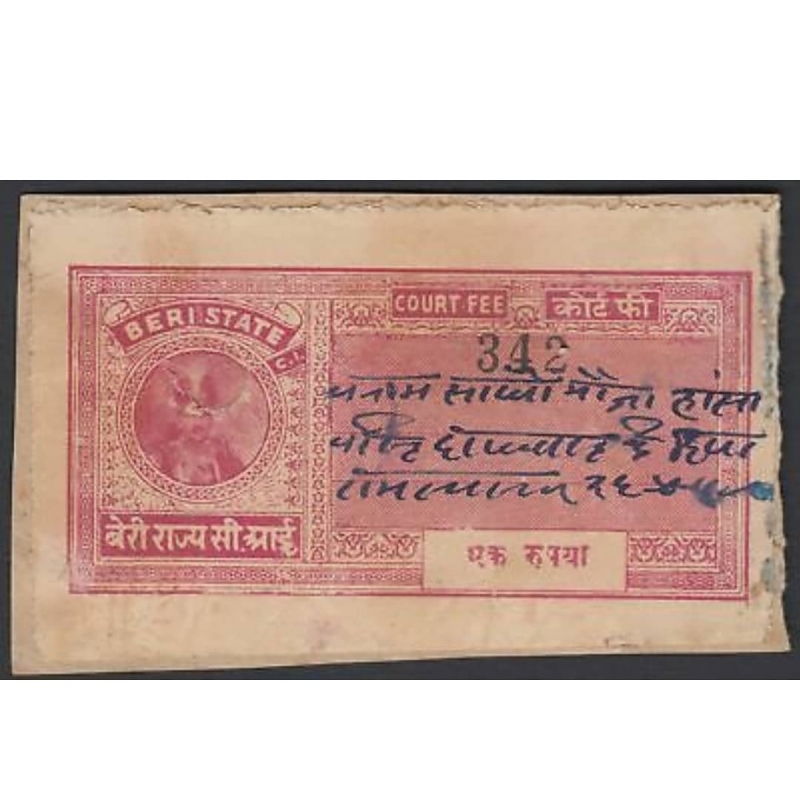
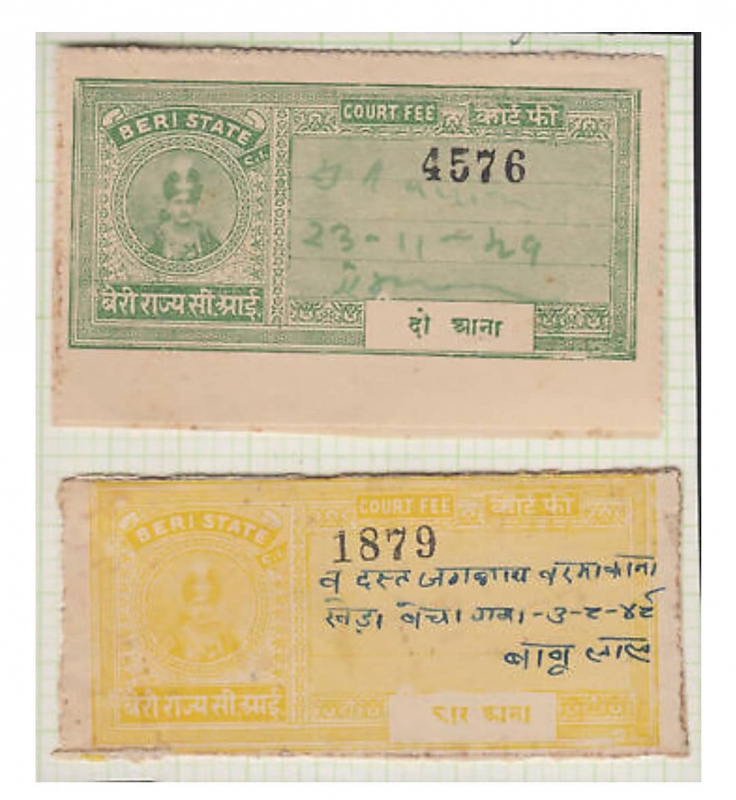
Origin and Foundation of Beri State
The Beri Princely State, nestled in the historic Bundelkhand region, was ruled by the Bundela Ponwars (or Pawar/Paramara), who proudly claimed descent from the illustrious Agnikula clan of the Paramaras of Dhar. The ancestral lineage of the Beri ruling house traces back to Diwan Mahma Rai of Karaiha, located in the Gwalior territory. His son, Diwan Achharaj Singh, migrated to Sandi in the Jalaun district toward the end of the eighteenth century.
Diwan Achharaj Singh established strong ties with the powerful Bundela rulers of the region. He married the daughter of Raja Jagat Raj of Jaitpur, a direct descendant of the legendary Bundela monarch Maharaja Chhatrasal. Through this matrimonial alliance, Achharaj Singh received the jagir of Sandi and several surrounding villages, laying the groundwork for what would become the sovereign state of Beri.
British Era and Treaty Obligations
With the expansion of the British East India Company into Central India and Bundelkhand during the early 19th century, the rulers of Beri sought to secure their ancestral holdings. Diwan Jugal Prasad, the grandson of Achharaj Singh, was in possession of the estate when the British established supremacy in the region. In 1809, the British government confirmed Jugal Prasad's rights over the territory, and a formal Sanad (charter) was granted to him in 1811, establishing Beri as a feudatory state under the political supervision of the Bundelkhand Agency.
Despite being a relatively small state, spanning an area of approximately 32 square miles on the banks of the Betwa River, Beri maintained strategic local importance. In 1893, during the reign of Rao Lokendra Singh, the state was officially permitted to maintain a modest military force consisting of 10 cavalry, 66 infantry, and 2 artillery guns to ensure internal security and ceremonial duties.
Rulers and Succession
The rulers of Beri bore the hereditary title of Diwan, which was later elevated to Rao. The succession of the state saw several notable transitions, including adoptions to keep the dynastic line intact:
- Diwan Jugal Prasad (r. 1809–1857) - Received the British Sanad and stabilized the state's borders.
- Diwan Phanjan Singh (r. 1857–1862) - Succeeded to the gaddi after the demise of Jugal Prasad's widow.
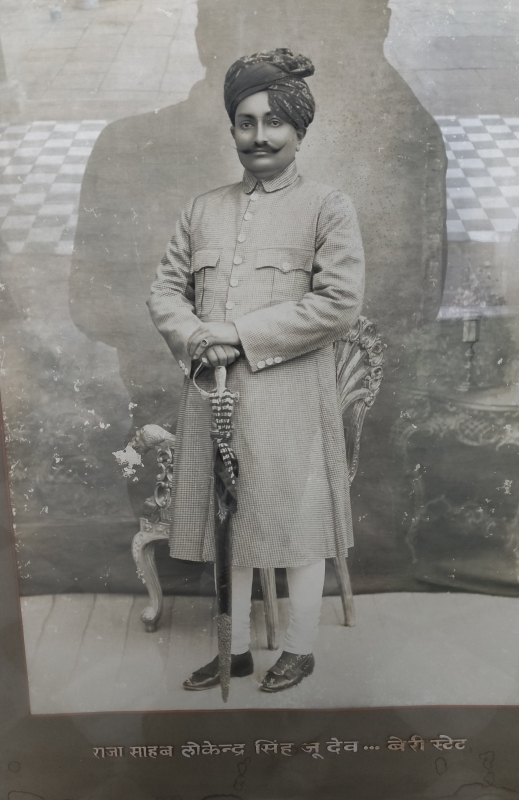
- Rao Lokendra Singh (r. 1862–1904) - Adopted from a collateral branch, his reign saw various administrative reforms and the official recording of the state's military capabilities.
- Rao Bahadur Raghuraj Singh (r. 1904–1945) - Continued the modernization of local governance.
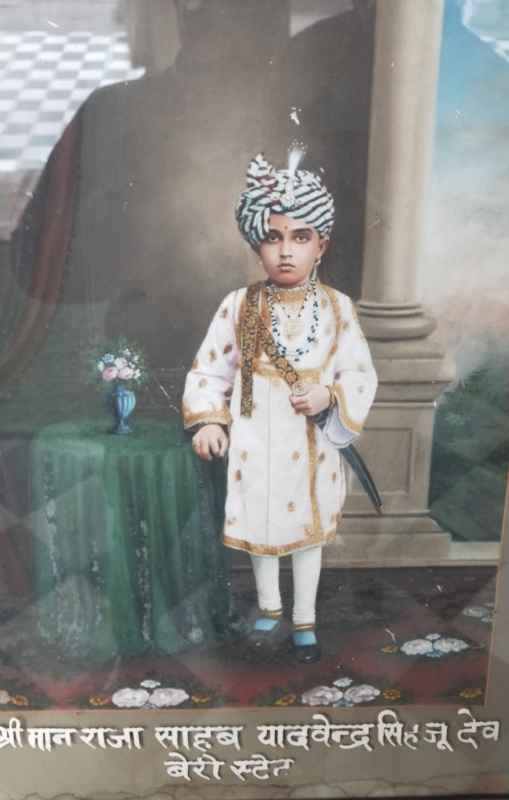
- Rao Yadavendra Singh (r. 1945–1948) - The final ruling chief of the state.
Post-Independence and Modern Era
Following India's independence from British rule in August 1947, the state of Beri prepared for integration into the newly formed union. On January 1, 1948, the last ruler of Beri, Rao Yadavendra Singh, signed the Instrument of Accession, merging his state into the Dominion of India.
Initially, Beri was integrated into the newly created state of Vindhya Pradesh. However, during the subsequent reorganization of Indian states in 1950, the territory of Beri was transferred to the state of Uttar Pradesh. Today, the historical lands of the Beri Princely State are situated within the Hamirpur district of Uttar Pradesh. For more detailed historical contexts of the region, you can read the historical profiles of the region on Wikipedia's Beri State Page.
Genealogy
- Diwan ACHARJYA SINGH [Achharaj Singh], 1st Diwan of Beri 1753/-, married the daughter of Maharaja Jagat Raj of Jaitpur, and received a jagir worth 12 lakhs, including the villages of Umri, Dadri and Chili, married and had issue, four sons.
- Diwan Kuman Singh (qv)
- Kunwar Gandharab Singh, married and had issue.
- Kunwar Raoju Singh, married and had issue.
- Rao Pheran Singh (qv)
- Kunwar Raoju Singh, married and had issue.
- Kunwar Umrao Singh
- Kunwar Vijay Singh
- Diwan KUMAN SINGH, 2nd Diwan of Beri -/1780, married and had issue. He died .
- Rao Jugal Prasad Singh (qv)
- Rao JUGAL PRASAD SINGH, 3rd Rao of Beri 1780/1814, received a sanad from Nawab Ali Bahadur Banda, confirming him in his possession of the three villages (see above), however on the establishment of British supremacy, he was, in 1809, confirmed in his possession of Umri only. Two years later, in 1811, his claim to the two other villages was admitted, but due to an inexpediency, they were exchanged for land of equal value, including the village of Beri, married and had issue.
- Rao Pheran Singh (qv)
- Rao PHERAN SINGH, 4th Rao of Beri 1814/1857, he succeeded by adoption, married and had issue.
- Rao Vishwanath Singh (qv)
- Rao VISHAWANATH SINGH, 5th Rao of Beri 1857/1861, he adopted his nephew as his successor. He died sp in 1861.
- (A) Rao Vijay Singh (qv)
- Rao VIJAY SINGH, 6th Rao of Beri 1861/1880, born , succeeded 18th March 1862, married and had issue.
- Rao Raghuraj Singh (qv)
- Rao RAGHURAJ SINGH, 7th Rao of Beri 1880/1904, married and had issue.
- Rao Lokendra Singh (qv)
- Diwan Ghanraj Singh, born .
- Rao LOKENDRA SINGH, 8th Rao of Beri 1904/1945, born , succeeded 8th June 1904, educated at Daly College, Indore; married 1910, a daughter of HH Maharaja Sawai Sir Sawant Singh of Bijawar, and had issue.
- HH Raja Yadavendra Singh Ju Deo (qv)
- HH Raja YADAVENDRA SINGH, 9th Raja of Beri 1945/1984, born , married Rajkumari Laxmi Kumari [HH Rani Laxmi Kumari of Beri], daughter of Rao Bir Singh Ju Deo of Bihat, and had issue. He died .
- HH Raja Surendra Singh Ju Deo (qv)
- Rajkumar Brijendra Singh, born , married 1966, Kunwarani Pushpa Kumari, daughter of Raja Pratap Singh of Garrauli, and has issue, three daughters.
- Raj Kumari Mandakini Singh, married.
- Raj Kumari Kirti Singh, married to Rajkumar Shailendra Shah Judeo of Jagmannpur State, U.P and has twin sons.
- Rajkumar Lavanasha Shah
- Rajkumar Kushagra Shah
- Raj Kumari Janhavi Singh.
- HH Raja SURENDRA SINGH Ju Deo (see above)
Notable Figures
Dewan Achharaj Singh
Dewan Achharaj Singh (also spelled Acharju Singh) was the founder of the Beri Princely State in the mid-18th century. Belonging to the Ponwar (Parmar) clan of Rajputs, his ancestors originally migrated from Dhar in Malwa to the Bundelkhand region. Achharaj Singh entered the service of the Bundela chiefs and married a daughter of Maharaja Jagat Raj of Jaitpur, who was the son of the legendary Bundela ruler Maharaja Chhatrasal. As a dowry or jagir, he received the territory of Beri along with several surrounding villages, establishing his independent seat of power.
Under his leadership, the foundations of the Beri estate were laid during a period of intense geopolitical transition in Central India, characterized by the decline of the Mughal Empire and the rise of Maratha influence. For more historical context on the region during this era, see the Beri State Wikipedia Page.
Dewan Jugal Prasad
Dewan Jugal Prasad succeeded to the gaddi in 1809. He is historically significant as the first ruler of Beri to receive an official written sanad (charter) from the British Government in 1809. Following a dispute regarding the exchange of certain villages, a revised sanad was granted to him in 1811, securing his possession of the state's territory consisting of Beri and Pipra.
Jugal Prasad's reign brought much-needed administrative stability and peace to the state after decades of warfare. He ruled for nearly five decades, maintaining strong ties with the British authorities in the Bundelkhand Agency. He died without direct male issue in 1857, just as the Indian Rebellion was unfolding across Northern India.
Rao Bahadur Raghuraj Singh
Rao Bahadur Raghuraj Singh was born in and succeeded to the gaddi in 1885 as a minor. Due to his young age, the state was placed under the direct supervision of a superintendent appointed by the Bundelkhand Agency. Raghuraj Singh was invested with full ruling powers in 1898 upon attaining majority.
During his brief personal rule, he introduced several modern reforms, particularly in land revenue and local administration. He was granted the personal title of "Rao Bahadur" by the British Raj in recognition of his efficient governance. He passed away prematurely in 1904, leaving the state to his young son.
Rao Lokendra Singh
Rao Lokendra Singh was born in and succeeded his father in 1904. Like his predecessor, he was a minor at the time of his accession, and the administration of Beri was temporarily managed by the British political agent in Bundelkhand. Lokendra Singh received his education at the prestigious Daly College in Indore before being invested with ruling powers in 1915.
His reign spanned both World Wars, during which he supported the Allied war efforts with financial contributions. He was a progressive ruler who modernized Beri’s judicial system, established primary schools, and improved agricultural infrastructure within his small state. More details about Daly College and the education of Bundelkhand's chiefs can be found on the Daly College Wikipedia Page.
Rao Yadvendra Singh
Rao Yadvendra Singh was the final ruling chief of Beri. He took charge of the state during the final years of the British Raj and navigated the complex transition toward Indian independence. Following the departure of the British in August 1947, Rao Yadvendra Singh signed the Instrument of Accession, integrating Beri State into the Dominion of India.
In 1948, Beri was formally merged into the new political entity of Vindhya Pradesh, which eventually became part of Madhya Pradesh, before the Beri region itself was administered as part of the Hamirpur district of Uttar Pradesh. With the abolition of royal privy purses and privileges in 1971, the official ruling powers of the dynasty came to an end, though the family remains historically respected in the region.