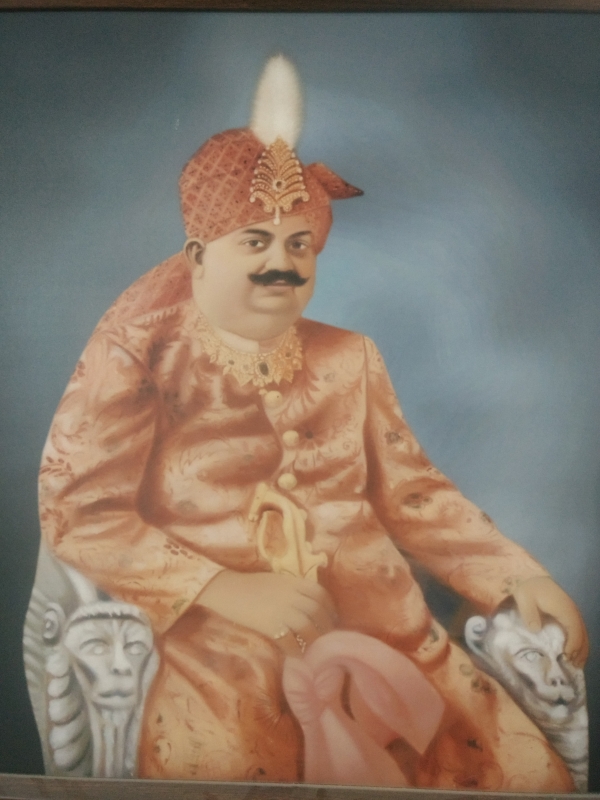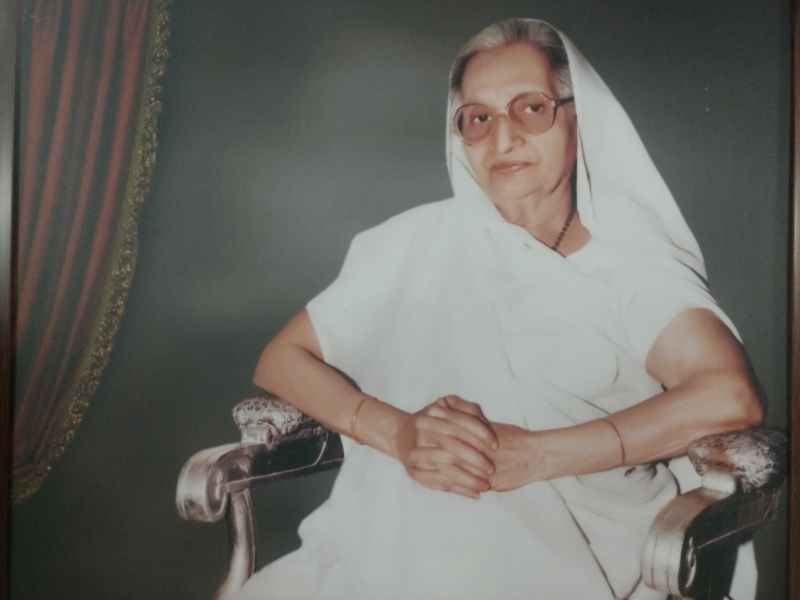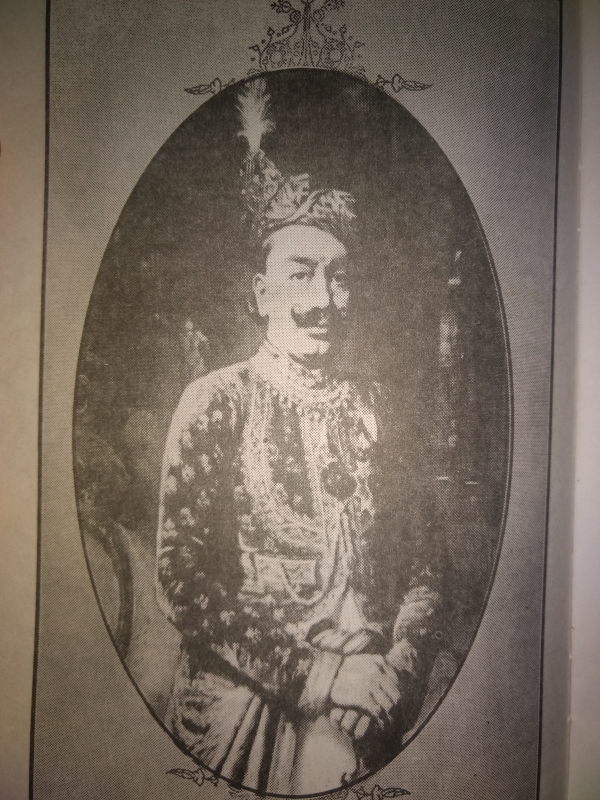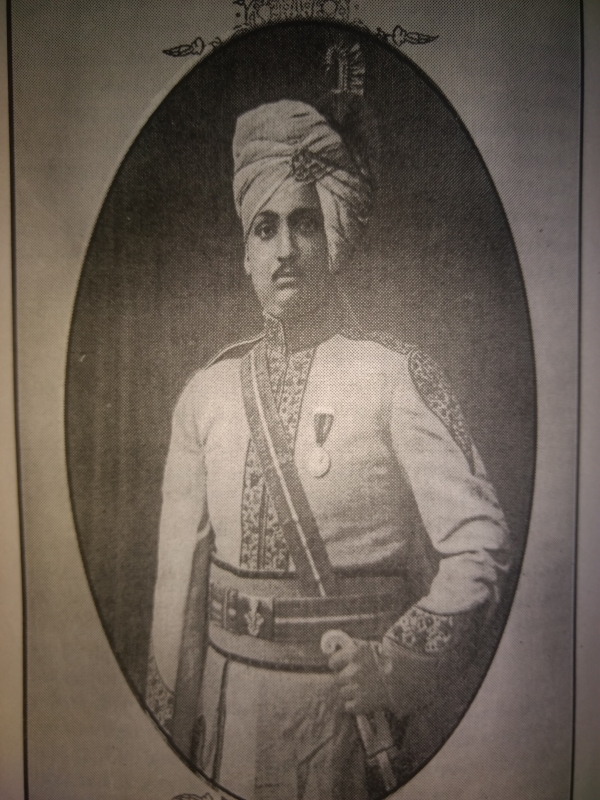
Present Head
- Rajkumari Nandita Kumari (by 1st wife), married in 2017 to Major Ajay Bahadur Singh Sidhu (Bathinda, Punjab), son of Sardar Bhalinder Singh Sidhu.
- Rajkumar Digvijay Sinh Jhala, born from his 1st wife, and later on passed away.
- Rajkumari Vamakshi Kumari, born on 27th November 2004 in Mumbai, daughter of Priyamvadha (2nd wife).
- Rajkumar Mritunjai Sinh Jhala, born in Ahmedabad, son of Priyamvadha (2nd wife).
History
Introduction and Foundation of Limbdi State
Limbdi was a prominent Second Class princely state located in the Kathiawar peninsula of Gujarat. Founded around 1500 AD, the state was ruled by the Jhala Rajput dynasty, a clan renowned for its chivalry, administrative acumen, and rich cultural heritage. Succession to the gaddi (throne) was strictly governed by the law of primogeniture. Historically, the Thakore Saheb maintained a disciplined military force; as of 1892, this consisted of 35 cavalry, 174 infantry, and 28 guns, safeguarding the sovereignty and peace of the region.
Origin and the Jhala Dynasty
The rulers of Limbdi belonged to the Jhala clan of Rajputs, who trace their ancestry back to Kundla, Sajjanpur, and eventually to the historic kingdom of Patdi. The branch that established Limbdi was an offshoot of the Dhrangadhra State, which is considered the parent house of the Jhalas in Kathiawar. The foundation of the Limbdi branch is attributed to Manguji (also known as Mangsthji), the second son of Harpaldevji and Shaktidevi. Over the centuries, the capital was shifted to various strategic locations before finally settling at Limbdi on the banks of the Bhogavo River around the early 16th century.
Under successive rulers, Limbdi expanded its territory, consolidating its hold over numerous villages in the Jhalavad region. The Jhalas of Limbdi maintained strong fraternal ties with the neighboring Jhala states of Wadhwan, Sayla, Chuda, and Wankaner, often forming defensive alliances to protect their borders from external invasions.
The Mughal and Maratha Epochs
During the height of the Mughal Empire, Limbdi, like other Kathiawar states, was subject to the authority of the Mughal Subahdar (governor) of Gujarat. The rulers paid a tribute known as peshkash to the imperial authorities, though they largely maintained internal autonomy.
With the decline of Mughal power in the 18th century, the Marathas exerted their dominance over the region. The Peshwa and the Gaekwad of Baroda conducted regular military campaigns (known as Mulkgiri) to collect tribute from the Kathiawar chiefs. Limbdi was forced to pay tribute to both the Gaekwad and the Peshwa. This era of political instability characterized by frequent Maratha incursions ended only with the intervention of the British East India Company in the early 19th century.
The British Period and Administrative Reforms
In 1807-1808, the British, represented by Colonel Alexander Walker, negotiated a settlement known as the Walker's Treaty with the chiefs of Kathiawar. This treaty stabilized the tribute payable to the Gaekwad and established permanent peace in the region. The British subsequently took over the Peshwa's share of tribute after the Third Anglo-Maratha War. Under British suzerainty, Limbdi was classified as a Second Class state with significant judicial powers, and its ruler was eventually granted a formal 9-gun salute.
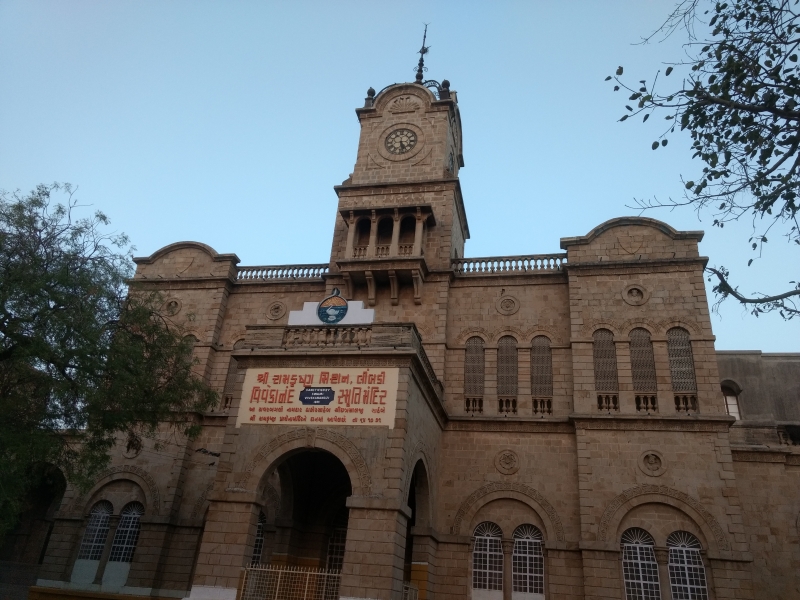
The administrative structure of Limbdi underwent rapid modernization during the late 19th and early 20th centuries. The state became famous for its progressive governance, structured judiciary, and efficient revenue collection systems. Detailed historical statistics of this administrative transition can be explored in the Imperial Gazetteer of India.
Key Reformers and Golden Era
Limbdi was highly regarded as a pioneer of socio-educational reforms in Western India, primarily due to the vision of its enlightened rulers:
- Thakore Saheb Sir Jaswantsinhji (r. 1862–1908): A highly educated and progressive ruler, Sir Jaswantsinhji was knighted as a K.C.I.E. for his contributions to governance. He established the first public schools, introduced municipal administration, and set up modern medical dispensaries in Limbdi. His governance model is highlighted in Sir Roper Lethbridge's The Golden Book of India.
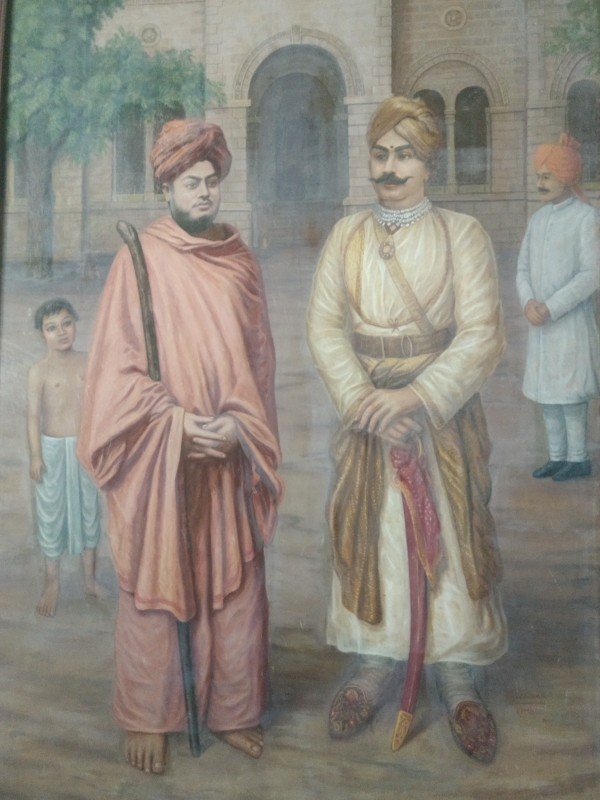
- Thakore Saheb Sir Daulatsinhji (r. 1908–1940): Sir Daulatsinhji continued the legacy of modernization. He was a champion of female education and agricultural reforms. He introduced free primary education, banned child marriage within the state, and initiated extensive afforestation and irrigation projects. He famously hosted Swami Vivekananda during his historic travels across India, leaving a deep spiritual impact on the royal household.
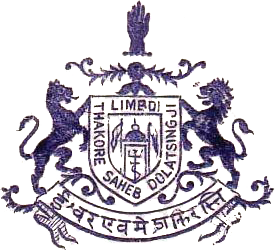
The State Flag of Limbdi was a traditional Rajput swallow-tailed banner of Kasumal (saffron/deep red) color, representing purity, valor, and the fire of sacrifice associated with the Jhala clan.
Post-Independence and Modern Era
Following India's independence in 1947, the last ruling Maharaja of Limbdi, Thakore Saheb Chhatrasalji, signed the Instrument of Accession, merging the state into the United State of Kathiawar (Saurashtra) on February 15, 1948. Saurashtra later merged into the bilingual Bombay State in 1956, and subsequently became part of the newly created state of Gujarat in 1960.
Today, the royal family of Limbdi continues to be respected for its philanthropic activities, preservation of heritage, and contribution to local culture. The historical palaces and educational institutions established by the former rulers remain as living monuments to Limbdi's progressive and glorious past.
Genealogy
- Raj Sahib MANGUJI, second son of Raj Sahib Harpal Dev of Halvad, founder of the successor state of Limbdi, married and had issue.
- Raj Sahib MADHUPAL [Manipal] (son), married and had issue.
- Raj Sahib DHAVAL [Dhamal], fl.1194
- .....
- Thakore Sahib NAGJI I, 12th in descent from founder.
- .....
- Thakore Sahib KHETOJI II, 17th in descent from founder, married and had issue. He died .
- Thakore Sahib SAGHOJI (son)
- .....
- Thakore Sahib ASKARANJI III, 23rd in descent from founder.
- Thakore Sahib ADERAJJI II fl.1600
- Thakore Sahib VERISALJI II
- Thakore Sahib HARBHAMJI I, Thakore Sahib of Limbdi -/1786, he founded the capital at Limbdi, died .
- Thakore Sahib HARISINHJI, Thakore Sahib of Limbdi 1786/1825, an able and intelligent administrator.
- Thakore Sahib BHOJRAJJI III, Thakore Sahib of Limbdi 1825/1837
- Thakore Sahib HARBHAMJI II, Thakore Sahib of Limbdi 1837/1856
- Thakore Sahib Shri FATEHSINHJI, Thakore Sahib of Limbdi 1856/1862, married and had issue. He died .
- HH Thakore Sahib Shri Sir Jaswantsinhji Fatehsinhji (qv)
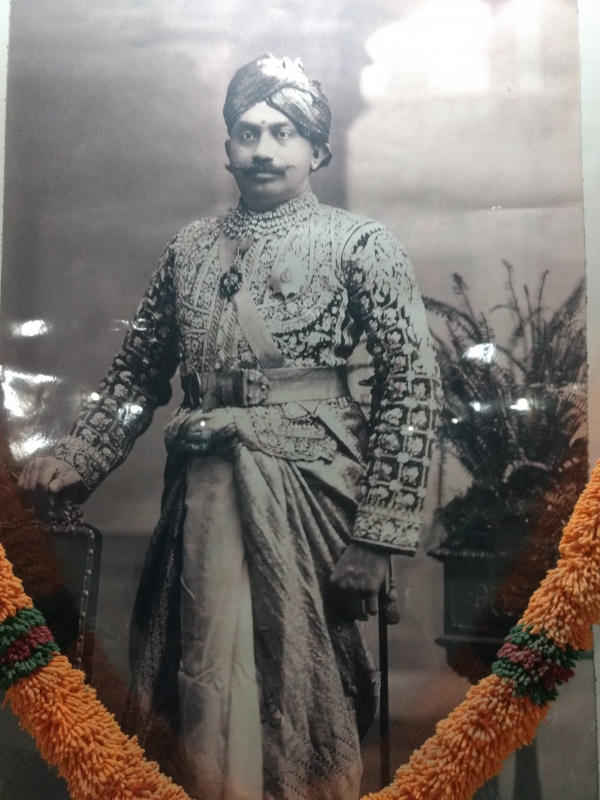
- HH Thakore Sahib Shri Sir JASWANTSINHJI FATEHSINHJI K.C.I.E., Thakore Sahib of Limbdi 1862/1907, born , he succeeded to the gadi as a minor on 30th January 1862, educated at Rajkumar College, Rajkot; installed as ruler on 1st August 1877, he was appointed an M.L.C. of Bombay in 1884; he was selected in 1887 as one of the representatives of the Princes of Western India to present their loyal congratulations to the Queen Empress on the auspicious occasion of the Jubilee of Her Majesty's reign, and on that occasion he had the honour of receiving from the Empress in person the insignia of a Knight Commander of the Most Eminent Order of the Indian Empire (K.C.I.E.); he is entitled to a salute of 9 guns (1892). He died sp in April 1907.
- Col. HH Thakore Sahib Shri Sir DAULATSINHJI JASHWANTSINHJI, Thakore Sahib of Limbdi 1907/1940, born as Kumar Shri Dadbha Muluji of a collateral line, installed on the gaddi on 14th April 1908, K.C.I.E. [cr.1921], represented India at the opening of the Federal Parliament in Australia in 1901; died , married with issue.
- HH Thakore Sahib Shri Digvijaysinhji Daulatsinhji (qv)
- Kumar Shri Ghanshyamsinhji Daulatsinhji, born in Limbdi, Gujarat; he was an Indian first class cricketer, who played for Western India; he was selected as vice-captain of India's tour of England in 1932. He died in Bhavnagar, Gujarat.
- HH Maharani Rupaliba Sahiba, married 5th February 1920, Lt.-Col. HH Maharaja Rana Saheb Shri Sir Natwarsinhji Bhavsinhji of Porbandar. She died sp 1943.
- HH Thakore Sahib Shri DIGVIJAYSINHJI DAULATSINHJI, Thakore Sahib of Limbdi 1940/1941, born , married 1stly 1910, Kunwari Shri Nandkunwarba, the only daughter of HH Maharaja Sir Kesri Singhji of Idar, married 2ndly, (name unknown), and had issue. He died .
- Yuvraj Saheb Ramrajendrasinhji Digvijaysinhji (by Thakorani Nandkunwarba), born , died vp(spm?) before 1941.
- HH Thakore Sahib Shri Chhatrasalji Digvijaysinhji (by 2nd marriage) (qv)
- Kumari Premkumari, married Yuvraj Udaybhansingh of Porbandar.
- Kumari Dharmendrakumari, married Yuvraj Jayendrasinh [later Rana Sahib Shri Jayendrasinhji of Kathiwada], and had issue, one son.
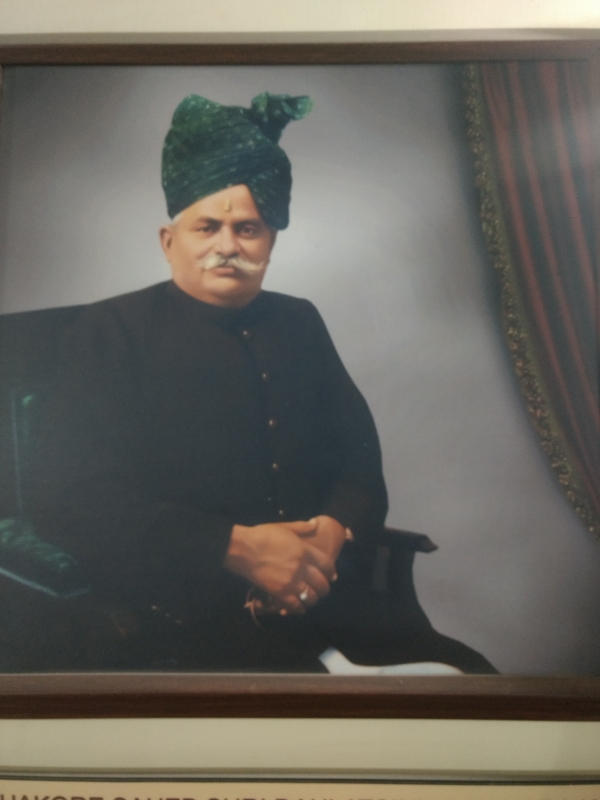
- HH Thakore Sahib Shri CHHATRASALJI DIGVIJAYSINHJI, Thakore Sahib of Limbdi from 1941 to 2020 (Dighbuvan, Gujarat, India). Born and succeeded 6th January 1941, married 1stly, 1960 (div.), HH Thakorani Saheb Hemant Devi of Jaisalmer, born , married 2ndly, late 1960's, HH Thakorani Saheb Snehlata Kumari, daughter of Thakore Sahib Jayendra Sinhji of Kathiwada, and has issue. Died in Ahmedabad.
- Yuvaraj Sahib Jaideepsinhji Chhatrasalji (qv)
- Raj Kumari Varsha Kumari, married.
- HH Thakore Sahib Shri JAIDEEPSINHJI CHHATRASALJI, Thakore Sahib of Limbdi (see above)
- Kumar Shri Himmatsinhji Jhala
- Kumar Shri Muluji, married and had issue.
- Kumar Shri Dadha Muluji, he was adopted by HH Thakore Sahib Shri Sir Jaswantsinhji Fatehsinhji, and succeeded as HH Thakore Sahib Shri Sir Daulatsinhji Jashwantsinhji, Thakore Sahib of Limbdi (see above)
- Kumar Shri Natwarsinhji Muluji
- Raj Rana Pratapsinhji Muluji, married Kumari Jasvant Kunverba Sahiba, and had issue.
- Rajkumar Shri Janaksinhji Pratapsinhji, first person in India to make fibreglass cars, married Kumari Laxmi Devi of Rajpipla, and had issue, five children.
- Kumari Shri Harinakshini Devi, married Kumar Indrapalsinhji of Rajpipla.
- Kumari Shri Unmani Devi, married Dr. Hasnain Patel
- Kumar Shri Shivpalsinhji Janaksinhji, educated at Rajkumar College, Rajkot (1972); married Parven Masani-Cama
- Kumari Shri Anjali Devi, married Arjunsinhji of Mudhol.
- Kumar Shri Mahipalsinhji Janaksinhji, educated at Rajkumar College, Rajkot (1979).
- Wing Cdr. Rajkumar Jayvantsinhji Pratapsinhji, born in Porbandar, educated at the Doon School, Dehra Dun (Class of 1945), a Fighter Pilot (GDP) serving with the Indian Air Force (Wing Commander 1947 to 1969), married August 1952 in Poona, Kauverani Indira Singh, and has issue. He died in the U.S.A.
- Kumar Vijit Singh Jhala, born in Bombay, educated at the Doon School, Dehra Dun (Class of 1969), M.S. Environmental Studies (USA), B.A. Communications (USA), married October 2001 in the U.S.A., Rajkumari Ameeta Singh.
- Kumar Shri Shivraj Singh, married Kumari Shivani Singh.
- Kumari Meenakshi Singh
- Rajkumar Shri Bharatsinhji Pratapsinhji, artist, painter, poet, and bohemian.
- Kumar Shri Rajvirsinhji Bharatsinhji, educated at Rajkumar College, Rajkot (1968), married to Mahima Shaktawat of thikana Occhadi, Rajasthan.
- Ira Jhala, married to Ravi Tomar (Indian Army) of Thikana Khairthal, Haryana.
- Priyadarshini Jhala, married to Chandan Singh (Indian Army) of Thikana, Jhalawar, Rajasthan.
- Kumar Shri Digvijaysinhji Bharatsinhji, educated at Rajkumar College, Rajkot (1975), married to Kumari Divya of Jamnagar.
- Harini Jhala
- Kumar Shri Chandravirsinhji Bharatsinhji, educated at Rajkumar College, Rajkot (1977).
- Kumar Shri Rajvirsinhji Bharatsinhji, educated at Rajkumar College, Rajkot (1968), married to Mahima Shaktawat of thikana Occhadi, Rajasthan.
- Rajkumar Shri Janaksinhji Pratapsinhji, first person in India to make fibreglass cars, married Kumari Laxmi Devi of Rajpipla, and had issue, five children.
- Kumar Shri Jadakaka Muluji
Notable Figures
Maharana Shri Manguji
Maharana Shri Manguji (also known as Manganguji) was the founder of the Limbdi branch of the Jhala dynasty. He was the second son of Harpaldevji, the common ancestor of the Jhala Rajputs who ruled over Patdi. Manguji was granted the estate of Jambu in the late 12th century, which became the nucleus of what would eventually develop into the Limbdi State.
Under Manguji's descendants, the capital shifted to Shiani and eventually to Limbdi in the late 18th century due to regional political shifts and security considerations. His lineage established a strong martial and administrative presence in the Kathiawar region, laying the groundwork for one of the prominent salute states in Gujarat.
Thakore Sahib Harbhamji I
Thakore Sahib Harbhamji I ruled Limbdi from 1786 to 1825. His reign was a crucial period of transition for the state as it navigated the turbulent political landscape of Kathiawar during the decline of the Maratha Empire and the rise of British influence. In 1807–1808, Harbhamji signed the historic Walker's Settlement with the British East India Company, represented by Colonel Alexander Walker, which established fixed tribute payments and brought long-term peace and stability to the region.
Harbhamji was known for his administrative pragmatism and efforts to safeguard his territory from external raids. By aligning with the British administration, he secured the sovereignty of Limbdi against aggressive expansionist neighbors, paving the way for the modernization of the state in the decades that followed.
Thakore Sahib Sir Jashwantsinhji II
Thakore Sahib Sir Jashwantsinhji II, who ruled from 1862 to 1907, is widely regarded as one of the most progressive and enlightened rulers of Limbdi. Ascending the throne as a minor, the state was initially managed by a regency, during which Jashwantsinhji received a modern western education at the prestigious Rajkumar College in Rajkot. Upon gaining full ruling powers, he embarked on a series of comprehensive administrative, educational, and judicial reforms.
Under his visionary leadership, Limbdi witnessed the establishment of modern schools, public libraries, and a well-structured municipal system. He was a patron of arts and literature and was deeply committed to social welfare, particularly during the devastating famine of 1899–1900, during which he organized extensive relief works. In recognition of his exemplary governance and loyalty, he was appointed a Knight Commander of the Indian Empire (KCIE) by the British crown.
Thakore Sahib Sir Daulatsinhji
Thakore Sahib Sir Daulatsinhji succeeded Sir Jashwantsinhji II in 1907 and ruled until 1940. He was a highly distinguished and globally recognized figure of the Jhala dynasty. Daulatsinhji was an honorary member of the British Army and served with distinction during the First World War. He also represented the Indian princely states at the League of Nations assembly in Geneva, showcasing his diplomatic stature on the international stage.
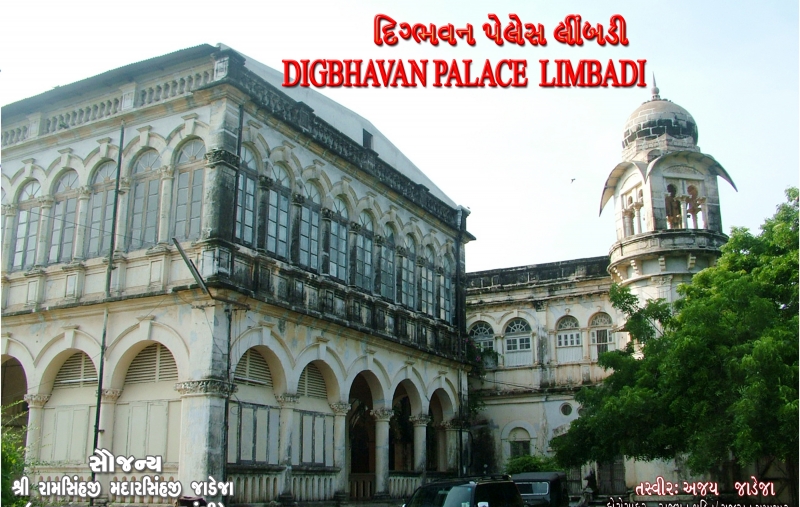
Domestically, Sir Daulatsinhji transformed Limbdi into a model state. He introduced free primary education, banned child marriage, and championed agricultural reforms, including the construction of irrigation tanks and the introduction of modern farming techniques. He also built the magnificent Digbhuvan Palace, an architectural marvel blending European and traditional Rajput styles. His reign is remembered as the golden age of Limbdi's socioeconomic development.
Thakore Sahib Sir Digvijaysinhji
Thakore Sahib Sir Digvijaysinhji ruled briefly from September 1940 until his untimely demise in January 1941. Despite his short reign, he left a lasting impression as an active administrator and a passionate patron of sports, particularly cricket. He was closely associated with the development of cricket in Kathiawar and encouraged local talent to excel on national platforms.
Digvijaysinhji had received extensive administrative training under his father, Sir Daulatsinhji, and was prepared to carry forward the welfare-oriented policies of his predecessor. His sudden death was widely mourned across the state and marked a tragic chapter in the modern history of Limbdi.
Thakore Sahib Chhatrasalji
Thakore Sahib Chhatrasalji ascended the gadi of Limbdi in 1941 as a minor under a regency council and was the last ruling chief of the state. His reign coincided with the tumultuous final years of the British Raj and the Indian independence movement. Upon attaining majority, he navigated the complex negotiations surrounding the integration of princely states into the newly independent Dominion of India.
Chhatrasalji signed the Instrument of Accession, merging Limbdi into the United State of Kathiawar (later known as Saurashtra State) in 1948, which eventually became part of Gujarat. He remained a respected figure in the region, actively engaging in community welfare and preserving the cultural heritage of the Jhala dynasty until his passing in 2020.