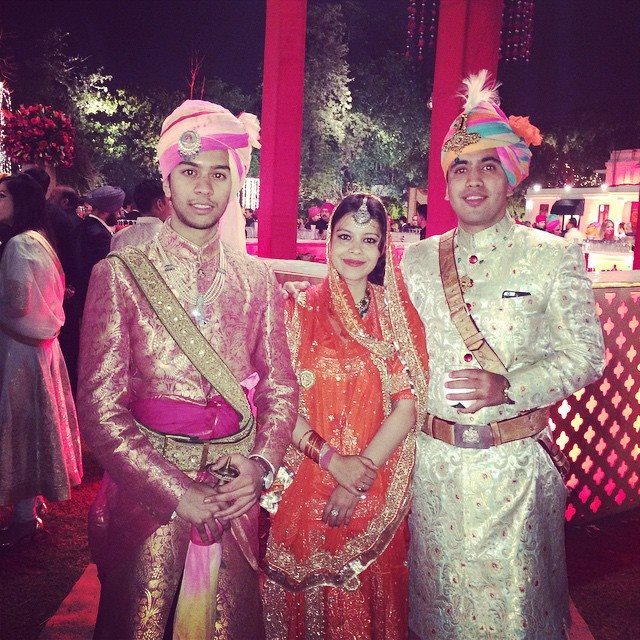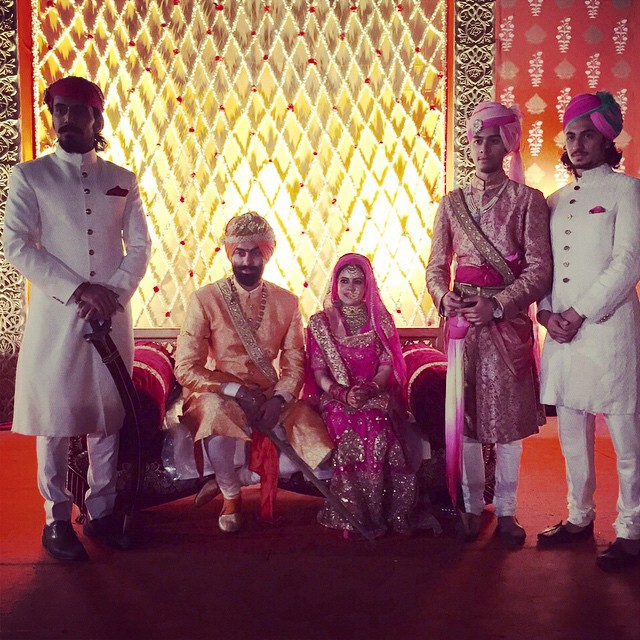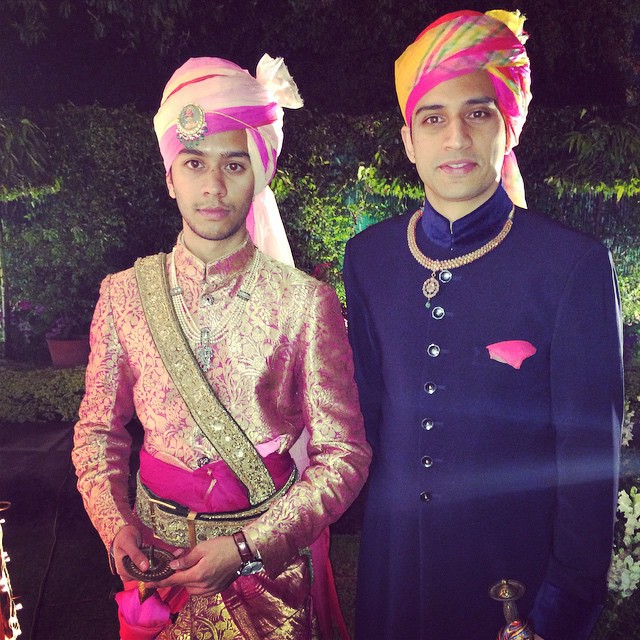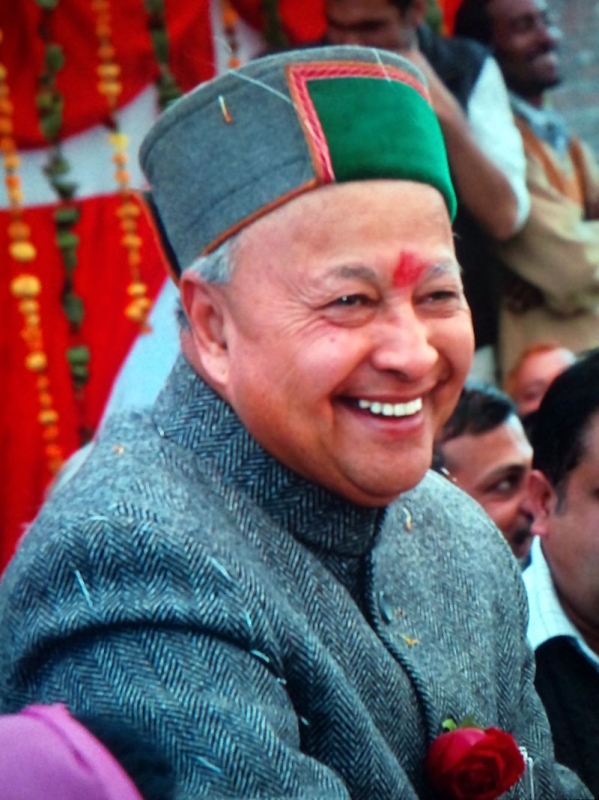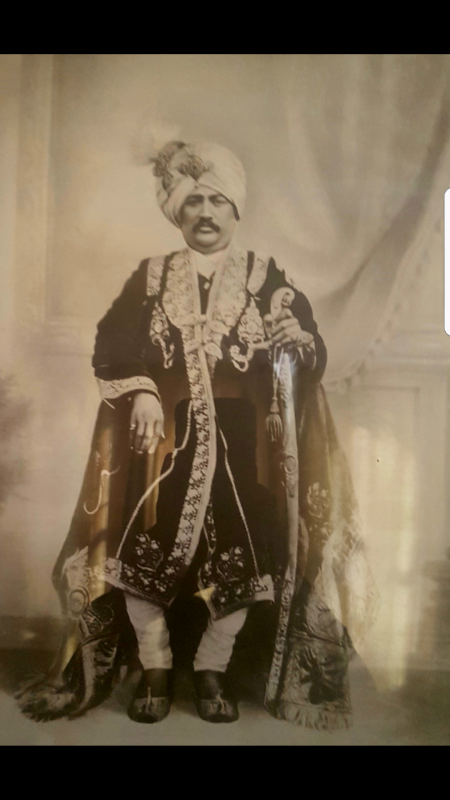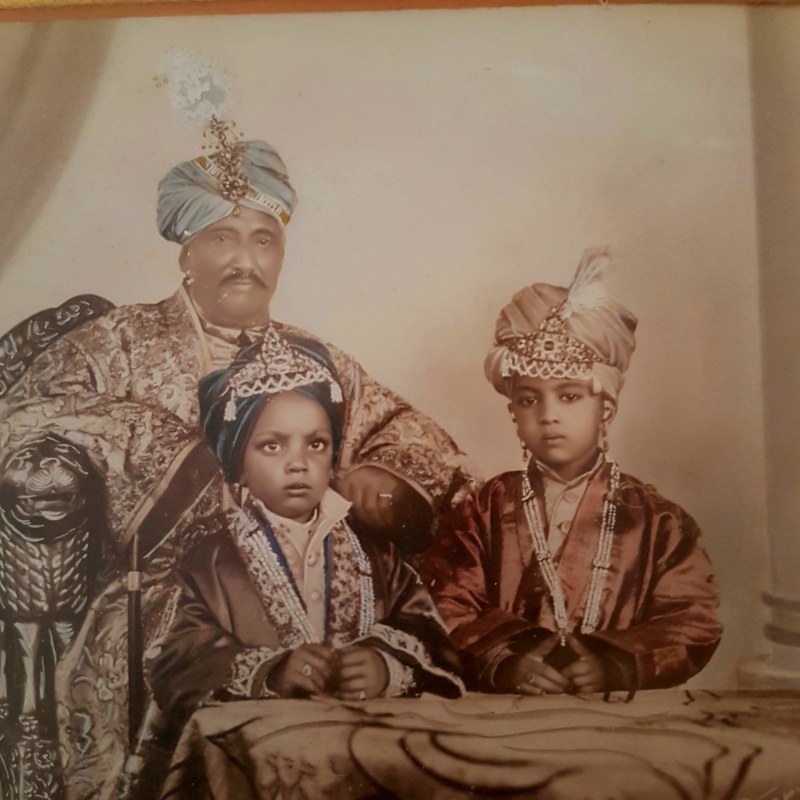
Present Head
History
Introduction and Geographical Significance
The princely state of Bashahr (also known as Bushahr, Bussahir, or Bushair) was one of the oldest, largest, and most politically significant states among the Shimla Hill States of Northern India. Nestled in the Western Himalayas, the state was bounded by Tibet to the east, Spiti to the north, and various small hill principalities to the south and west. Its strategic location along the ancient trade routes connecting India with Western Tibet and Central Asia made it a crucial commercial and cultural hub. The capital of the state was initially established at Kamru in the picturesque Sangla Valley, later shifted to Sarahan, and finally to Rampur on the banks of the Sutlej River.
Origin and Legendary Foundations
The ruling dynasty of Bashahr claims a highly prestigious lineage, tracing its descent from the Chandravanshi (Lunar) Rajput clan. According to dynastic tradition and local legends recorded in the History of the Panjab Hill States, the state was founded by Pradyumna, the son of Lord Krishna. Legend has it that Pradyumna travelled to the region to marry the daughter of the local chief, Raja Bawasa Deo. Upon the demise of the ruler, who had no male heir, Pradyumna was crowned as the ruler of Bashahr, initiating a line of kings that ruled uninterrupted for generations.
Historically, the early chiefs of Bashahr ruled from the fortress of Kamru in Kinnaur. As the state expanded through conquests of neighbouring fiefdoms (known as Mawis or Thakurais), the administrative headquarters were moved down to Sarahan, the seat of the powerful royal deity, Bhimakali. To learn more about the early historical framework of these hill principalities, you can refer to the History of the Panjab Hill States (Volume II) by J. Hutchison and J.Ph. Vogel.
The Mughal Period and Raja Kehri Singh
During the medieval era, Bashahr consolidated its territories and asserted its dominance over neighbouring hill states. The most celebrated ruler of this period was Raja Kehri Singh (who ruled in the late 17th century). Known for his physical prowess and military acumen, he is celebrated in Himachali folklore as the "Ajanbahu" (one whose hands reach past his knees) and "Chhatrapati" (Lord of the Umbrella).
Raja Kehri Singh’s reign marks a golden age in Bashahr's history. According to historical records, the Mughal Emperor Aurangzeb was highly impressed by Kehri Singh's stature and granted him the hereditary title of Chhatrapati. Furthermore, during the Tibet-Ladakh-Mughal War (1679–1684), Raja Kehri Singh sided with Tibet. Following the war, a highly lucrative trade treaty was signed in 1681 between Bashahr and the administration of the 5th Dalai Lama. This treaty established free trade relations and led to the inception of the famous Lavi Fair of Rampur, which remains one of the largest commercial fairs in the Himalayas to this day. Under this treaty, Tibet ceded several territories, including the area of Hangrang Valley, to Bashahr.
The Gorkha Invasion and British Suzerainty
The turn of the 19th century brought severe turbulence to the Shimla Hills. The expansionist Gorkha forces of Nepal, led by General Amar Singh Thapa, invaded the hill states west of the Yamuna River. By 1803, the Gorkhas had overmatched the forces of Bashahr. The minor Raja, Mahendra Singh, along with the Queen Regent, was forced to flee deep into the rugged terrains of Kinnaur, where the Gorkhas could not easily pursue them due to the difficult geography and the destruction of the bridges over the Sutlej River.
The British East India Company intervened in 1814, sparking the Anglo-Gorkha War. After the decisive defeat of the Gorkhas in 1815, the British restored Raja Mahendra Singh to his ancestral throne. Under the Sanad of 1815, Bashahr was recognized as a sovereign state under British protection, subject to the payment of an annual tribute (initially fixed at 15,000 Rupees, which was later reduced to 3,950 Rupees in exchange for the British acquisition of Kotgarh and other forest tracts). For further reference on treaty terms, see the Imperial Gazetteer of India.
Reforms, Resistance, and Modernization
The mid-to-late 19th century was characterized by administrative reforms and occasional socio-political friction:
- Raja Shamsher Singh (r. 1850–1914): His long reign was marked by mixed relations with the British. During the Indian Rebellion of 1857, Raja Shamsher Singh chose to remain neutral, refusing to aid the British with troops or resources. This stance of passive resistance strained relations with the British political agents, who eventually appointed British administrators to oversee the state’s finances and forestry departments.
- The "Dum" Peasant Protests: Heavy taxation and the forced labor system (known as Begar) led to agrarian discontent, resulting in peaceful peasant agitations known locally as Dum or Dhum. These protests forced the state administration to rationalize revenue collection and reform land rights.
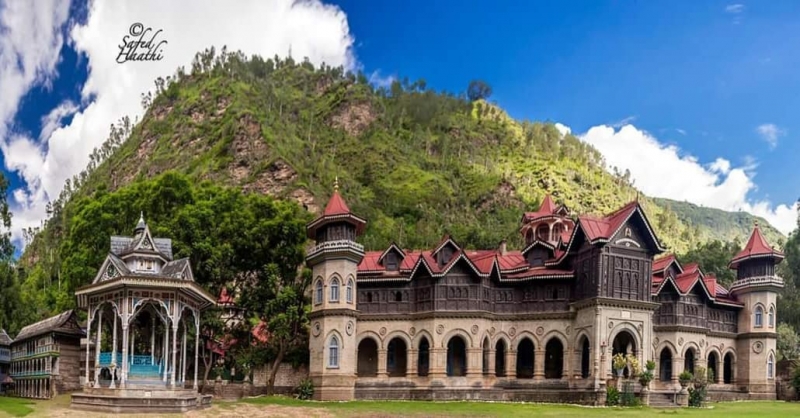
- Raja Padam Singh (r. 1914–1947): Succeeded to the throne in 1914 and proved to be an enlightened modernizer. He constructed the magnificent Padam Palace in Rampur, showcasing a unique blend of traditional Himachali woodwork, European arches, and stone craftsmanship. He laid the foundation for modern education, health services, and metalled roads in the Sutlej Valley.
The State Flag and Heraldry
The state of Bashahr possessed a distinct identity represented through its traditional flags and armorial bearings:
- The State Flag: The flag of Bashahr was a swallow-tailed, multi-striped design featuring horizontal bands of white, yellow, red, and blue, representing the elements of nature and the celestial heritage of the ruling house.
- Coat of Arms: The heraldic shield of Bashahr featured symbols of its mountainous terrain, a defensive fortress (representing Kamru Fort), and riverine fish (representing the Sutlej River). The shield was flanked by supporters—traditionally leopards or snow leopards—symbolizing the wild, high-altitude biodiversity of the Kinnaur region. The motto of the state emphasized righteousness and protection of the subjects.
Post-Independence and the Modern Era
Following India's independence in August 1947, the last ruling monarch, Raja Padam Singh, signed the Instrument of Accession, integrating the state into the Indian Union. On April 15, 1948, Bashahr officially merged with twenty-nine other hill states to form the new province of Himachal Pradesh, eventually becoming part of the Mahasu district, and later split into the Shimla and Kinnaur districts.
The royal family of Bashahr continued to play an exceptionally prominent role in the modern democratic history of India. Raja Virbhadra Singh, who succeeded as the titular head of the dynasty in 1947, went on to become one of Himachal Pradesh's most influential political leaders. He served as the Chief Minister of Himachal Pradesh for six terms, spanning over three decades, and held several key ministerial portfolios in the Union Cabinet of India. Following his demise in 2021, his son, Tikka Vikramaditya Singh, was crowned as the titular Raja of Bashahr in a traditional ceremony at the Padam Palace in Rampur, and he actively serves as a minister in the state government.
Today, the legacy of Bashahr thrives through its well-preserved heritage sites like the Bhimakali Temple complex in Sarahan, the vibrant celebrations of the international Lavi Fair, and the enduring cultural traditions of the people of Rampur and Kinnaur.
Genealogy
- Rana CHATTAR SINGH, 110th Rana of Bashahr, brought the whole of the state under his power during his reign.
- Rana KALYAN SINGH, 112th Rana of Bashahr
- Rana KEHRI SINGH, 113th Rana of Bashahr.
- Rana VIJAY SINGH, 114th Rana of Bashahr -/1708.
- Rana UDAI SINGH, 115th Rana of Bashahr 1708/1725, married and had issue.
- Rana Ram Singh (qv)
- Mian Pabar Singh [Shaminder Singh], married and had issue, the only legitimate collateral line of the royal family.
- Mian Madho Singh, married and had issue.
- Mian Asa Singh, married and had issue.
- Mian Saran Singh, married and had issue.
- Mian Man Singh, married and had issue.
- Mian Hira Singh, married and had issue.
- Raja Narain Singh, present head (1910), jagirdar and lambardar of Kakrola in the Dassau pargana of Rampur tahsil; married and had issue.
- Rajkumar Bhawani Singh
- Mian Raghbir Singh
- Mian Tej Singh
- Raja Narain Singh, present head (1910), jagirdar and lambardar of Kakrola in the Dassau pargana of Rampur tahsil; married and had issue.
- Mian Hira Singh, married and had issue.
- Mian Ishri Singh
- Mian Karam Singh
- Mian Man Singh, married and had issue.
- Mian Badri Singh
- Mian Diwan Singh
- Mian Narsingh Singh
- Mian Saran Singh, married and had issue.
- Mian Asa Singh, married and had issue.
- Mian Madho Singh, married and had issue.
- Rana RAM SINGH, 116th Rana of Bashahr 1725/1761, made Rampur his capital, lost much conquered land in wars with the Raja of Kullu; married (amongst others) (a), a daughter of Rana Anup Singh, Rana of Kumharsain, and had issue. He died .
- Rana Udar Singh (qv)
- Mian Bhim Chand, married and had issue.
- Mian Prem Singh, married and had issue.
- Mian Rai Singh
- Mian Jai Singh
- Mian Prem Singh, married and had issue.
- Rana UDAR SINGH, 117th Rana of Bashahr 1761/1785, married 1stly, a daughter of Raja Kirat Prakash of Sirmur, married 2ndly, a daughter of the Thakur of Dhami, and had issue. He died .
- Rana Ugar Singh (qv)
- Rana UGAR SINGH, 118th Rana of Bashahr 1785/1803, during his reign, Bashahr was conquered by the Gurkhas who maintained their hold until 1815, married 1stly, a Rani from Sirmur, she died sp, married 2ndly, a Rani of Dhami, and had issue (by second Rani). He died 1810.
- Raja Mahendra Singh (qv)
- Kumari (name unknown), married (as his second wife), Raja Ishwari Sen of Mandi.
GURKHA OCCUPATION 1803/1815
- Raja MAHENDRA SINGH, Raja of Bashahr 1815/1850 , born or 1809, confirmed in his possessions by the sanad of 6th November 1815, married and had issue, as well as further issue. He died .
- Raja Shamsher Singh (qv)
- Mian Fatteh Singh (natural son), died sp in 1876.
- Raja SHAMSHER SINGH, Raja of Bashahr 1850/1887 and 1898/1914, born , abdicated in favour of his legitimate son in 1887, married Ranis from Kangra, Koti and Kumharsain, and had issue, one son and two daughters, as well as further natural issue. He died .
- Kumari (name unknown), married Raja Shiv Raj Singh of Kashipur, and had issue.
- Rajkumar Raghunath Singh, adopted to Bashahr, but was overlooked in the succession.
- Kumari (name unknown), married Raja Shiv Raj Singh of Kashipur, and had issue.
- Tikka Raghunath Singh (by the Kumharsain Rani), later Raja Raghunath Singh (qv)
- Raja Sir Padam Singh (by a secondary union) (qv)
- Kumari (name unknown), married Raja Shiv Raj Singh of Kashipur, and had issue.
- Raja RAGHUNATH SINGH, Raja of Bashahr 1887/1898, C.I.E., born , married 1stly, and 2ndly, two daughters of Rana Bishan Chand of Koti, married 3rdly, in a double ceremony in 1884, twin daughters of Raja Bijai Sen of Mandi, and had issue, six daughters and one son. He died in .
- Tikka Marender Singh (by a Mandi Rani), born , died in .
- Kumari (name unknown) (by the Koti Rani), married Raja Udai Raj Singh of Kashipur.
- Kumari (name unknown) (by the Koti Rani), married into Kashipur.
- Kumari (name unknown) (by the Koti Rani), married into Kashipur.
- Kumari (name unknown) (by the Koti Rani), married into Tehri-Garhwal.
- Kumari (name unknown) (by the Koti Rani), married into Tehri-Garhwal.
- Raja Sir PADAM SINGH, Raja of Bashahr 1914/1947, born , succeeded 5th August 1914, installed 30th November 1917, C.I.E. [June 1931], married 9 wives (4 from Kotkhai, one fom Mandi, one from Suket, married (a), a daughter of Rai Mian Hira Singh, Rai of Sangri, married 8thly, Rani Jwale Dei, daughter of Col. Maharaja Sir Jai Chand of Lambagraon, died , married 9thly, Rani Shanta Devi [later Rajmata of Bashahr], daughter of Thakur Bir Singh of Dhadi, and had issue. He died .
- Shri Devinder Singh, died young in 1922.
- Shri Ranbir Singh, married and had issue. He died .
- Shri Hardev Singh, born , died .
- Shri Jagatjit Singh, born , married 1stly, 1929, Jai Devi of Karangla, married 2ndly, daughter of a Kanwar of Dada-Siba, and had issue, as well as further issue. He died .
- Kanwar Lokendra Singh
- Rani Mina Kumari, born , married 1949, Rao Raja Yogendra Singh Jamwal, and has issue.
- Rajkunwar Randhir Singh
- Rajkumari Seema Kumari, married Kanwar Bhanu Pratap Singh of Darkoti, and has issue.
- Kanwar Raj Pal Singh, born , married 25th November 1975, Kanwarani Romila Kumari, daughter of Kanwar Rajendra Singh of Kotkhai, and his wife, Kanwarani Rajpriya Kumari, and has issue.
- Kumari Ravija Kumari, born in Shimla, married 3rd May 1997, Tikka Danvender Singh of Kullu, and has issue.
- Kumari Vibha Kumari, born in Kotkhai, married 3rd August 2000, Kanwar Hiteshwar Singh of Kullu, and has issue.
- Kumari Devika Kumari
- Kumari Madhvi Kumari [Tikkarani Madhvi Kumari of Khaneti], married 2008, Tikka Gaurav Chand of Khaneti, and has issue, one daughter.
- Kumari Tushanika Kumari
- Kumari Krishna Kumari, married Kanwar Ishwari Singh of Bilaspur, and has issue.
- Kumari Santosh Kumari
- Kumari Nirmila Kumari, married Thakur Narender Singh of Dhadi, and had issue.
- Kumari Lakshmi Kumari, married 1959, Kanwar Dalip Singh of Mandi, and has issue.
- Kanwar Sagar Singh, born , married Kunwarani Savitri Devi (Manjit Sagar), daughter of Rana Goverdhan Sinh of Karangla (Jjagirdari) and has issues, 3 children, eldest son died after birth (9 months old).
- Deepika Kumari, born , married.
- Kanwar Ripudaman Singh, born .
- Shri Gopal Singh, born , married Kanwarani Sheela Kumari (born ) and has issues.
- Tikkarani Gitanjali Kumari, married Tikka Yogendra Chand of Madhan, and has issue.
- Pratibha Kumari, born , married Kanwar Mohender Singh of Madhan.
- Bhawna Kumari, born .
- Mamta Kumari, born , married Kanwar Yashpal Singh
- Kanwar Ravinder Pratap Singh, born , married Kanwarani Ronika Kumari (born ) and has issue.
- Kumari Suhavi Singh, born .
- Tikka Virbhadra Singh (by Rani Shanta Devi) [later Raja Virbhadra Singh (see below)]
- Kumari (name unknown) (by Rani Jwale Dei), married Lt. Rana NARENDRA SINGH of Manaswal.
- Rajkumar Rajendra Singh (by Rani Jwale Dei), born at Sarahan-Bashahr, married 20th June 1957, Rajkumari Rajendra Kumari, daughter of HH Maharaja Sir Brijnath Singh Ju Deo Bahadur of Maihar in M.P., born at Jabalpur in M.P., and had issue, three children. He died in , and was cremated at the Royal Cemetary in Rampur-Bashahr.
- Kanwar Rajeshwar Singh, born at Simla, Heir Apparent to the gaddi of Rampur Bushahr until 1989, married 1stly, 1984 (div. 1996), Miss Parminder Singh Oberoi, married 2ndly, 1st December 1997 at Simla, Rajkumari Shrikriti Kumari, born at New Delhi, daughter of Raja Rana Yogendra Chand of Jubbal, and his wife, Rani Sudha Kumari, and has issue. (Padam Castle, Jakhu Road, Simla, Himachal Pradesh, India)
- Kanwar Prakram Singh (by 1st marriage), born .
- Kumari Rajnandini Kumari (by 2nd marriage), born at Simla.
- Kumari Purnima Kumari, born in Shimla. Educated in Tara Hall Convent School, Shimla. Married on 27th April 1990 to Thakur Pranai Singh, son of Rawal Chakrapani Singh ji of Bissau and his wife Rani Saheb Sharda Kumari of Khairagarh and has issue. The wedding was a grand affair and took place in Holly Lodge and Padam Castle Shimla (residence of the Bashahr family and Chief Minister of Himachal Raja Virbhadra Singh ji). A massive number of attendees traveled from Jaipur to Shimla in the baraat including Late His Highness Maharaja Brigadier Sawai Bhawani Singh Bahadur of Jaipur.
- Kumari Namrata Kumari, born .
- Kanwar Rajeshwar Singh, born at Simla, Heir Apparent to the gaddi of Rampur Bushahr until 1989, married 1stly, 1984 (div. 1996), Miss Parminder Singh Oberoi, married 2ndly, 1st December 1997 at Simla, Rajkumari Shrikriti Kumari, born at New Delhi, daughter of Raja Rana Yogendra Chand of Jubbal, and his wife, Rani Sudha Kumari, and has issue. (Padam Castle, Jakhu Road, Simla, Himachal Pradesh, India)
- Kumari (name unknown) (by Rani Jwale Dei), married the Rana of Manswal.
- Raja VIRBHADRA SINGH, Raja of Rampur-Bashahr since 1947. (Holly Lodge, Jakhu Road, Simla, Himachal Pradesh, India and The Palace, Rampur-Bushahr, District Simla, Himachal Pradesh, India). Born in Sarahan District,Shimla. B.A.(Hons), M.A.; educated at Bishop Cotton School, Shimla and St. Stephen's College, Delhi; Honorary Captain in the Indian Army; elected Member of the Lok Sabha in 1962, 1967, 1972 and in 1980; Member of Indian Delegation to the General Assembly of the United Nations, 1976; Deputy Minister, Tourism and Civil Aviation, Govt. of India, 1976/1977; Minister of State for Industries, Government of India, 1982/1983. Associated with various Cultural and Social Organisations, remained President, Sanskrit Sahitya Sammelan and Friends of Soviet Union Society (H.P.State Branch); Elected twice to the Legislative Assembly from Jubbal-Kotkhai Constituency (first in 1983, in a by-election; and again in 1985 general elections), Chief Minister, Himachal Pradesh, 1983/1990 and again in 1993/1998, five times in total. Elected from nearby Rohru Constituency in 1990 and 1993; Elected President State Congress Committee, 1992/1994; re-elected to State Assembly in 1998; Leader of the Congress Legislative Group in the Assembly, he became Chief Minister of Himachal Pradesh in March 2003, and served till December 2007. He contested the Vidhan Sabha election from Rohru in December 2007 and won as an M.L.A. He remained an M.L.A.till June 2009, and then contested the Mandi Parliamentary seat on a Congress ticket. He won the election and was appointed Union Minister of Steel, Government of India, in June 2009; married 1stly, 28th May 1954, Rajkumari Rattan Kumari, born in Jubbal, died in Simla, daughter of HH Raja Rana Digvijay Chand of Jubbal, and his wife, Rani Hemant Kanwar, married 2ndly, 28th November 1985 at Junga, Rani Pratibha Kumari, born , Member of the Lok Sabha, daughter of Raja Hitendra Sen of Keonthal, and his first wife, Rani Shanta Devi, and has issue, four daughters by the first wife, and one son and one daughter by the second wife. He died on after a prolonged illness.
- Rajkumari Abhilasha Kumari, born , appointed a High Court Judge of the Gujarat High Court by the Government of India in May 2006; married 7th November 1979 in Simla, Kunwar Prithvindra Sinh Gohil of Dared in Gujarat, born , and had issue.
- Kunwar Raghavendra Sinh Gohil, born in New Delhi; married 7th December 2008 at Lucknow, U.P., Raj Kumari Shruti Devi, daughter of Raja Anand Singh of Khapradih, U.P.
- Rajkumari Jyotsna Kumari, born , married Rajkumar Rajiv Singh of Kashipur, and has issue.
- Rajkumari Anuradha Kumari, born , died unmarried 4th May 1999.
- Rajkumari Meenakshi Kumari, born at Simla, married November 1988 at Simla (div.), Yuvraj Jaideep Sinh Jhala of Limbdi, and has issue.
- Rajkumari Aprajita Kumari, born at Simla, educated at The Lawrence School, Sanawar, District Solan and at St. Stephen's College, Delhi University, studying for her B.A. in Mathematics, from 2005. Married on 7th March 2015 to Angad Singh, son of Sardar Gurpal Singh Sandhu of Delhi, and his wife, Sardarni Jai Inder Kaur, daughter of Capt. HH HH Farzand-i-Khas-i-Daulat-i-Inglishia Mansur-i-Zaman Amir-ul-Umra Maharaja Dhiraj Rajeshwar Sir Sri Maharaja-i-Rajgan Maharajadhiraj Shri Amarinder Singh Mahendra Bahadur, Maharaja of Patiala. [TOI]
- Tikka Vikram Aditya Singh (qv)
- Rajkumari Abhilasha Kumari, born , appointed a High Court Judge of the Gujarat High Court by the Government of India in May 2006; married 7th November 1979 in Simla, Kunwar Prithvindra Sinh Gohil of Dared in Gujarat, born , and had issue.
- Raja VIKRAM ADITYA SINGH (see above)
Notable Figures
Raja Chhatar Singh
Raja Chhatar Singh was an early consolidator of the Bashahr State. He is historically credited with bringing the disparate regions of the territory under a single, unified administration. Under his leadership, the state successfully defended its sovereignty against neighboring hill principalities and established the administrative foundation of the kingdom.
More information about the state's geographical and historical consolidation can be read on the Wikipedia Bushahr State Page.
Raja Kehri Singh
Raja Kehri Singh is widely regarded as one of the most illustrious and powerful monarchs of the Bashahr dynasty. Ruling in the late 17th century, he was a contemporary of the Mughal Emperor Aurangzeb, who bestowed upon him the prestigious title of Chhatrapati (Lord of the Umbrella) in recognition of his military prowess and sovereign status.
He is highly celebrated for negotiating a highly beneficial bilateral trade treaty with Tibet following the Tibet-Ladakh-Mughal War. This treaty established free trade between Bashahr and Tibet and laid the foundation for the historic annual Lavi Fair of Rampur, which remains a key cultural and economic event in Himachal Pradesh. Detailed historical accounts of his reign can be found in J. Hutchison and J.Ph. Vogel's History of the Panjab Hill States.
Raja Ram Singh
Raja Ram Singh played a pivotal role in the geographical and administrative reorganization of the kingdom. He chose to shift the capital of the state from its traditional, high-altitude seat at Sarahan to Rampur, situated along the banks of the Sutlej River. This strategic move facilitated better trade relations and administrative control over the thriving river-valley trade routes.
His reign marked a transition towards commercial prosperity, strengthening the state's position as a major trading hub between the plains of India, the Western Himalayan hills, and trans-Himalayan regions like Tibet.
Raja Mahendra Singh
Raja Mahendra Singh ascended the throne during a tumultuous period in Himalayan history, characterized by the aggressive expansion of the Gurkhas of Nepal. Between 1803 and 1815, the Gurkha forces invaded and occupied large parts of Bashahr, forcing the young Raja and his mother to seek refuge in the rugged and inaccessible upper regions of Kinnaur.
The state was eventually liberated following the Anglo-Nepalese War (1814–1816), when British forces, allied with local hill chiefs, defeated the Gurkhas. Consequently, a Sanad was granted to Raja Mahendra Singh in 1815, confirming his possessions under British suzerainty, subject to an annual tribute.
Raja Shamsher Singh
Raja Shamsher Singh succeeded to the gadi (throne) in 1850. His long reign is most notable for his defiant stance during the Indian Rebellion of 1857. Unlike most other hill state rulers who actively aided the British East India Company with men and resources, Raja Shamsher Singh chose to remain neutral and withheld his tribute, reflecting a quiet but significant resistance to British imperial authority.
Although the British contemplated taking punitive action against him after suppressing the mutiny, they ultimately refrained due to the strategic difficulty of the terrain and the potential for wider unrest. His reign also witnessed administrative modernization and the formalization of forest leases to the British.
Raja Padam Singh
Raja Padam Singh, who ruled from 1914 until the state's integration into independent India in 1947, was a progressive and modernizing monarch. He was deeply invested in education, public health, and infrastructure development. Under his patronage, the magnificent Padam Palace in Rampur was constructed between 1919 and 1925, showcasing an exquisite blend of traditional hill architecture and European influences.
He was the last official ruling chief of the princely state. Following the independence of India, he signed the Instrument of Accession, leading to the merger of Bashahr into the Union of India, which subsequently became part of the Union Territory of Himachal Pradesh.
Raja Virbhadra Singh
Raja Virbhadra Singh succeeded as the titular Raja of Bashahr in 1947 following the demise of his father, Raja Padam Singh. He went on to become one of the most prominent and influential political figures in modern Indian history, particularly within the state of Himachal Pradesh. Affiliated with the Indian National Congress, he served as the Chief Minister of Himachal Pradesh for six terms, spanning several decades, and held various union ministerial portfolios in the Government of India.
Affectionately referred to as Raja Sahib by his followers, his legacy is deeply intertwined with the development and modernization of Himachal Pradesh. His life and political career are extensively documented on his Wikipedia Profile.