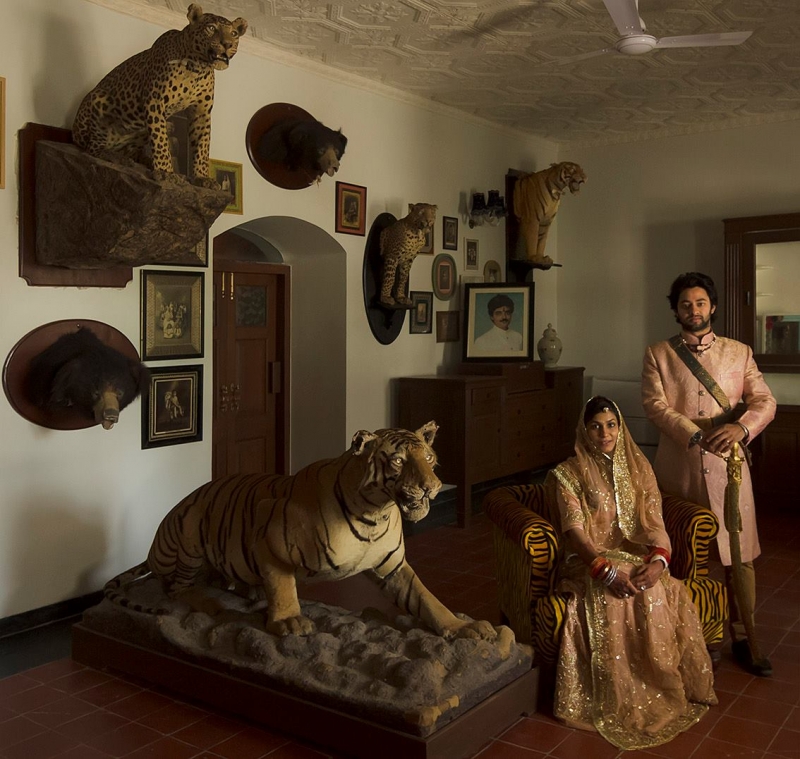
Present Head
History
The Princely State of Kathiwada (also historically spelled as Kathiwara) was a significant non-salute princely state situated in the rugged and scenic Vindhya hills of Central India. Strategically located on the borderlands of present-day Madhya Pradesh and Gujarat, the state was ruled by the Chandravanshi Jadon (Yadav) clan of Rajputs, who trace their legendary ancestry to the ancient Yaduvanshi lineage and the medieval ruling house of Karauli State in Rajputana.
Origin and Foundation
The state of Kathiwada was founded around 1485 by Rana Jadavji, a Rajput noble who migrated from the Karauli region. Seeking to establish an independent domain, he and his followers entered the dense, hilly forests of Central India. The territory was primarily inhabited by the indigenous Bhil communities. Through tactical alliances, marital unions, and military leadership, the Jadon Rajputs established their authority over the local chieftains and laid the foundation of the Kathiwada State, establishing their capital at the town of Kathiwada.
Mughal and Maratha Periods
Due to its highly inaccessible terrain—guarded by thick deciduous forests and the steep slopes of the Vindhyan range—Kathiwada maintained a high degree of administrative autonomy during the height of the Mughal Empire. The Ranas of Kathiwada were largely left undisturbed in their internal affairs, paying nominal allegiance to regional imperial governors.
By the 18th century, the expansion of the Maratha Empire brought new geopolitical pressures. The Holkars of Indore and the Peshwa's commanders demanded tribute (chauth) from the small states of the Bhopawar region, including Kathiwada, Alirajpur, and Jhabua. The Ranas of Kathiwada navigated this turbulent era through careful diplomacy, paying occasional tributes while successfully defending their core territories and preserving local sovereignty over their tribal subjects.
British Suzerainty and the Bhopawar Agency
Following the Third Anglo-Maratha War and the signing of the Treaty of Mandsaur in 1818, the British East India Company established paramountcy over Central India. Kathiwada entered into treaty relations with the British and was placed under the administrative oversight of the Bhopawar Agency, which was later integrated into the Malwa Agency under the Central India Agency.
Under British protection, the hereditary title of Rana was formally recognized. The British presence brought long-term stability to the region's borders, ending decades of external raids. In return, the Ranas cooperated with British authorities in maintaining regional law and order, controlling transit duties, and suppressing outlawry in the border forests.
Administrative Reforms and Key Rulers
The late 19th and early 20th centuries were marked by modernization, fiscal reforms, and welfare initiatives led by progressive Ranas:
- Rana Bahadur Singhji: He initiated early forest conservancy measures and stabilized the state’s agrarian economy, which was heavily dependent on timber and forest produce.
- Rana Onkar Sinhji (reigned 1903–1945): A highly regarded administrator, Rana Onkar Sinhji modernized the judicial, police, and revenue administrations. He established schools, opened public dispensaries, and constructed vital roads connecting remote forest tracts to neighboring trade centres in Gujarat and Malwa. A passionate conservationist, he regulated timber logging to preserve the local ecosystem.
- Rana Ram Sinhji: Ascending the gaddi in 1945, he was the last formal ruling chief of the state. He continued the welfare policies of his father and oversaw the transition of the state during the independence of India.
Under royal patronage, Kathiwada became famous for its dense orchards, particularly for cultivating the legendary "Noor Jahan" mango, an exceptionally large and rare mango variety native to the region, which remains a prized agricultural heritage of Kathiwada.
Heraldry and State Flag
The heraldic symbols of Kathiwada reflect its martial Rajput heritage and its unique geographical character. The state flag was a traditional rectangular bicolour/tricolour featuring the sacred saffron color of the Rajputs, representing valor and sacrifice.
The State Coat of Arms typically featured:
- A central shield depicting traditional weaponry, representing the defense of the realm.
- Shield supporters represented by local Bhil warriors alongside Rajput soldiers, signifying the historical alliance and harmony between the ruling clan and the indigenous population.
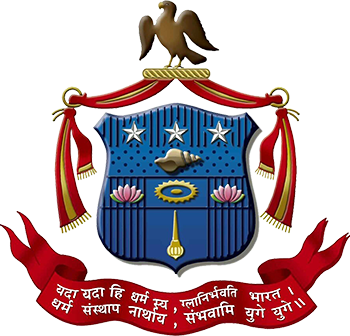
- A crest featuring the sacred Garuda or a falcon, the traditional mount of Lord Vishnu, symbolizing the Vaishnavite roots of the Jadon clan.
- A Devanagari state motto emphasizing righteousness, duty, and protection.
Post-Independence and Modern Era
Following India's independence in 1947, Rana Ram Sinhji signed the Instrument of Accession, merging the state into the Dominion of India. In 1948, Kathiwada was officially integrated into the newly formed state of Madhya Bharat. Following the States Reorganisation Act of 1956, Madhya Bharat was merged, and Kathiwada became a part of the Alirajpur district in Madhya Pradesh.
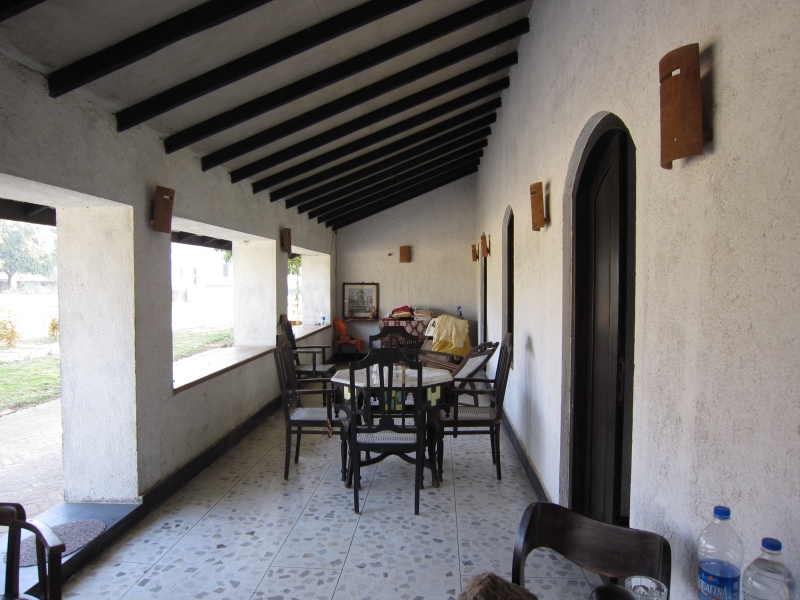
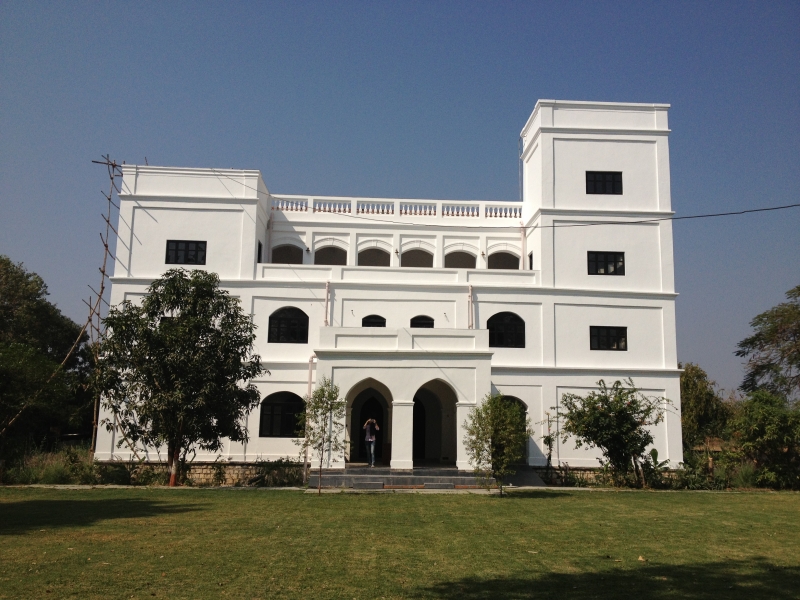
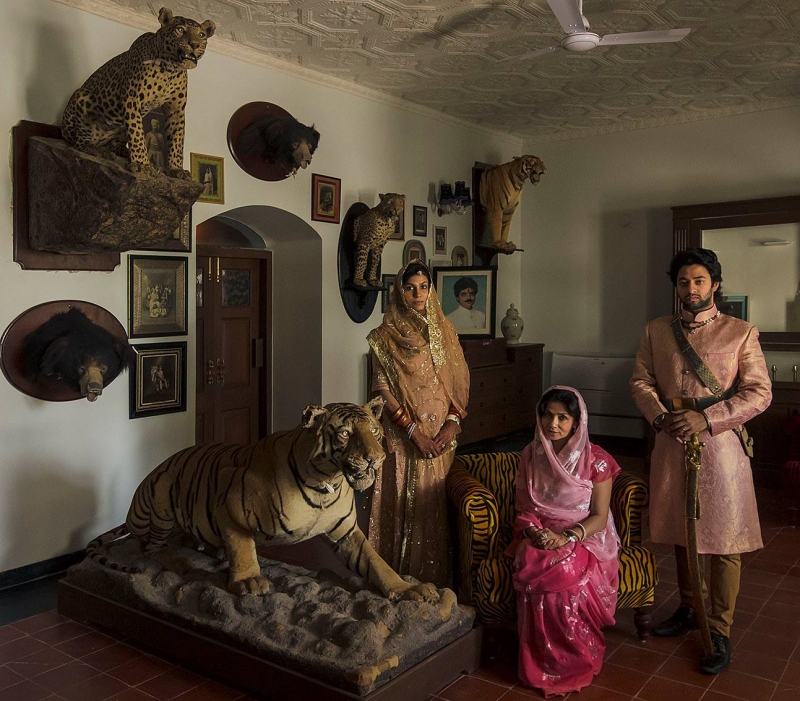
In the modern era, Kathiwada is celebrated as a major eco-tourism destination, renowned for its dense forests, waterfalls, and vibrant tribal culture. The historic royal palace, the Kathiwada Raaj Mahal, built in the early 20th century, has been meticulously restored by the descendants of the royal family. Today, members of the royal family, including Maharaj Srimant Digvijay Sinhji and Maharani Swati Sinhji, have converted the palace into a premier heritage retreat, promoting sustainable organic farming, conservation of the Noor Jahan mango, and local tribal empowerment through the Alirajpur District initiatives.
Historical References and Citations
- For details on the political treaties and administrative integration of the Bhopawar Agency, refer to the Central India State Gazetteer Series.
- Geographical and demographic accounts of the princely era can be accessed in the Imperial Gazetteer of India.
- To explore the contemporary cultural and administrative landscape of the region, visit the official Alirajpur District Government Portal.
Genealogy
- Thakur ZORAWAR SINH, Thakur of Kathiwada -/1865, died sp in 1865.
- Thakur BAHADUR SINH, Thakur of Kathiwada 1865/-, born , succeeded his brother in 1865 with the consent of the Government of India, married and had issue.
- Kumari (name unknown), married 1900 (as his first wife), HH Raja Pratap Singhji of Alirajpur, and had issue.
- Rana Thakur Sahib Shri ONKAR SINH, Thakur of Kathiwada 1903/1969, born and succeeded 8th June 1903, married and had issue. He died .
- Rana Sahib Shri Jayendra Sinh (qv)
- Thakur Gajendra Sinh
- Rani Pushpendra Kumari, married 1938 in Kathiwada, Raja Pratap Chandra Singh Mardaraj Jagadev of Hindol, and has issue.
- Rana Sahib Shri JAYENDRA SINH, Thakur of Kathiwada 1969/2010, born , married Rani Dharmendra Kumari, daughter of HH Thakur Sahib Shri Digvijaysinhji Daulatsinhji of Limbdi, and his first wife, HH Thakurani Nandkunwarba, and had issue. He died .
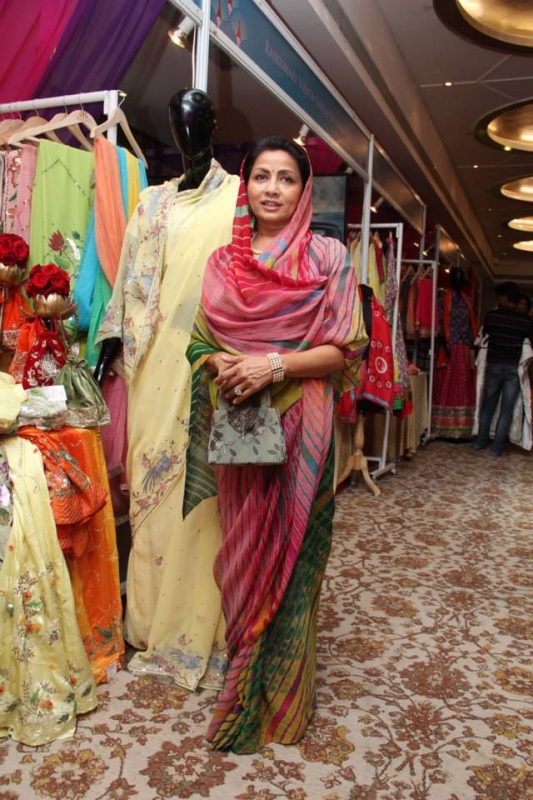
- Kunwar Bharat Singh Kathiwada, born , married Sangita Kailash Sureka [Yuvrani Sangita Singh Kathiwada], born , she manages a very successful fashion business in Mumbai called Melange, also actively involved with charitable work with the Morarka Foundation, founded by her uncle, Mr. Kamal Morarka, in conjunction with her son, she is renovating the Royal mansion in Kathiwada, and is developing the surrounding 100 acres to grow organic produce; he had issue. He died .
- Yuvraj Digvijay Singh Kathiwada (succeeded as Rana Sahib Shri Digvijay Sinh) (qv)
- Kunwar Bharat Singh Kathiwada, born , married Sangita Kailash Sureka [Yuvrani Sangita Singh Kathiwada], born , she manages a very successful fashion business in Mumbai called Melange, also actively involved with charitable work with the Morarka Foundation, founded by her uncle, Mr. Kamal Morarka, in conjunction with her son, she is renovating the Royal mansion in Kathiwada, and is developing the surrounding 100 acres to grow organic produce; he had issue. He died .
- Rana Sahib Shri DIGVIJAY SINH (see above)
- Thakur Sahib Bhawani Sinh, married and had issue.
- Kumari Hemant Kanwar
- Kumari Jayant Kunwar, married Kumar Shri Jayendrasinh of Pal Jagir in Gujarat, and has issue.
- Kunwar Pushpendrasinh, married Kumari Nandini of Chorangala and has issue.
- Kumari Sanyukta Rathod
- Kumari Archana Kumari, married Akshay Singh Shaktawat of Th. Bawal, Neemuch (M.P.) and has issues.
- Kunwar Shakti Raj Singh
- Kumari Rajshree
- Kunwar Pushpendrasinh, married Kumari Nandini of Chorangala and has issue.
- Ranveer Singh
- Kunwar Bharat Raj Singh, married to Sadhana Singh.
- Bhanwar Lakshyaraj Singh
- Kunwar Bharat Raj Singh, married to Sadhana Singh.
- HH Thakurani Saheb Snehlata Kumari, married late 1960's (as his second wife), HH Thakur Sahib Shri Chhatrasalji Digvijaysinhji of Limbdi.
- Thakur Moti Singh, married and had issue.
- Thakur Suryaveer Singh