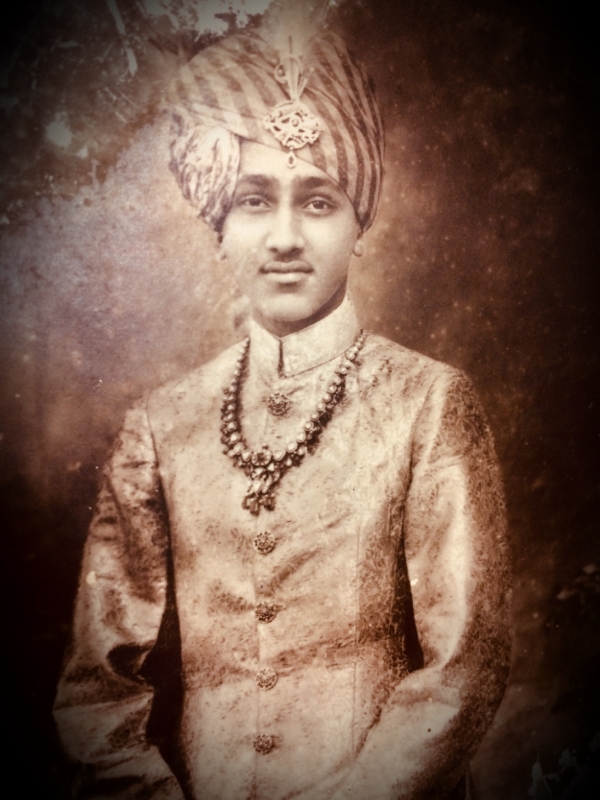
Present Head
- Kunwar Rajanya Singh Kushalgarh, born on
History
Origins and Foundation (1680)
The foundation of Kushalgarh stems from the internal migrations and martial expansions of the Rathore clan outside of Marwar.
- The Jodhpur-Ratlam Connection: The ruling family of Kushalgarh was an offshoot of the royal house of Ratlam, which in turn descended directly from Rao Jodha of Jodhpur.
- The Conquest of Kushal Naik: In the late 17th century, Thakur Akhai Raj (a great-grandson of Raja Udai Singh of Jodhpur) marched into the dense, hilly terrains of the southern Vagad region. The area was heavily populated by the local Bhil tribe and ruled by a powerful Bhil chieftain named Kushal Naik.
- The New Seat: In 1680, Akhai Raj defeated Kushal Naik. In a gesture that was common among Rajput conquerors to appease local spirits, Akhai Raj named the newly conquered territory Kushalgarh in honor of the defeated Bhil chief.
The Feudal Conflict: Kushalgarh vs. Banswara
Geographically trapped between Malwa, Gujarat, and Rajputana, Kushalgarh was forced to pay a nominal allegiance to the neighboring Maharawal of Banswara. However, due to their elite Rathore lineage, the Chiefs of Kushalgarh viewed themselves as structurally superior to or independent of the Sisodia-ruled Banswara court.
This deep-seated friction erupted into a major geopolitical crisis in the late 19th century under Thakur Zorawar Singh (r. 1891–1916).
- The Armed Standoff: Banswara attempted to enforce strict vassalage demands, high taxation, and judicial oversight on Kushalgarh. Zorawar Singh flatly refused, maintaining that his estate was a sovereign entity.
- The Raid of 1904: Tensions peaked when the Maharawal of Banswara sent an armed force to assert dominance over a disputed border village. The Chief of Kushalgarh retaliated with his own forces, resulting in casualties and prompting a direct intervention by the British Empire.
The Unique British Settlement: A Semi-Sovereign Chiefship
To prevent a localized war in southern Rajputana, the British Political Agent stepped in to arbitrate. The result was a highly unique legal compromise:
- The Direct British Nexus: The British ruled that while Kushalgarh was technically a Thakurat under the nominal suzerainty of Banswara, it would be granted semi-sovereign administrative independence.
- The Political Settlement: The Chief of Kushalgarh was exempted from attending the Banswara court, paid a strictly fixed, nominal tribute directly through British channels, and was given full civil and criminal judicial powers over his subjects. For all practical purposes, the British Political Agent handled Kushalgarh as a separate entity, putting it on par with minor salute states.
Modernization under Rao Ranjit Singh (1916–1947)
The estate witnessed its golden age of administrative stability under Rao Ranjit Singh.
Ranjit Singh was an exceptionally progressive administrator who leveraged Kushalgarh's position near the border of the Bombay Presidency to boost local trade. He established organized grain markets (mandis), modern primary schools, and rural dispensaries.
Because Kushalgarh had a massive Bhil demographic (nearly 80% of the population), Ranjit Singh introduced targeted agricultural reforms, providing low-interest loans to tribal farmers to protect them from exploitative moneylenders, a move that ensured complete internal peace during the turbulent decades leading up to Indian independence.
Vexillology and State Symbols
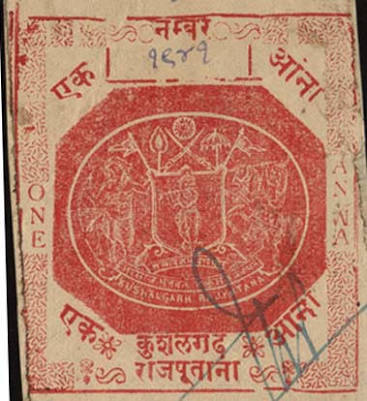
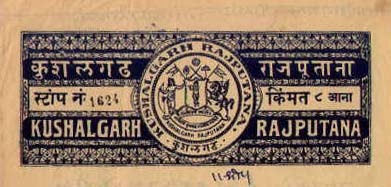
- The State Flag: The flag of the Kushalgarh Chiefship was a triangular saffron (amaranthe) banner, proudly bearing the Mahi-Maratib (the fish insignia) or a white crest of a kite, honoring the family's Rathore origins and their traditional reverence for the warrior goddess Karni Mata.
- The State Status: Due to its immense strategic size and population (larger than some of the smaller full-fledged states), the British granted the Rao of Kushalgarh a permanent seat in the Chamber of Princes (Narendra Mandal) in his own right, bypassing the Banswara administration entirely.
Integration into Independent India
When British paramountcy ended in 1947, Rao Harendra Singh signed the Instrument of Accession to join the Union of India independent of Banswara's signature.
However, during the massive administrative reorganization of Rajasthan, maintaining a tiny independent enclave was unviable. In 1949, Kushalgarh formally merged into the United State of Greater Rajasthan. Today, it stands as a prominent historical subdivision and municipality within the Banswara district of Rajasthan, retaining its distinct cultural identity as the gateway to the tribal heartlands of southern Vagad.
Genealogy
- Rao Jodhaji, founder of Jodhpur, married (amongst others), a daughter of Raja Kheema Santawat of the Sonigra Chauhan clan of Jalore, and had issue.
- Kunwar Bar (by Rani Chauhaniji) (qv)
- Rao Dudaji (by Rani Chauhaniji), born at Mandaur, he was granted the Jagir of Merta in 1461 and became ancestor of the Mertia Rathore clan, including the Thakurs of Rian, Bijathal and Jiliya, married and had issue. He died .
- Thakur BAR SINGH, Thakur of Merta, he was granted the Jagir of Merta in 1461, married and had issue, the Barsinghot Rathore clan.
- Kunwar Sinhaji, married and had issue, the rulers of Jhabua.
- Kunwar Askaranji, he succeeded as Thakur Askaranji of Merta (qv)
- Thakur ASKARANJI, Thakur of Merta, married and had issue.
- Thakur Malaji (qv)
- Thakur MALAJI, Thakur of Merta, married and had issue.
- Thakur Rama Singh (qv)
- Thakur RAMA SINGH, Thakur of Merta, married and had issue, the Ramawat BarSinghot Jodha clan. He died about 1631.
- Thakur Akhairaj (qv)
- Thakur AKHAIRAJ, Thakur of Kushalgarh, he was granted the Jagir of Kushalgarh in 1671, married and had issue.
- Thakur Ajab Singh (qv)
- Thakur AJAB SINGH, Thakur of Kushalgarh, married and had issue.
- Thakur Kirat Singh (qv)
- Thakur KIRAT SINGH, Thakur of Kushalgarh, married and had issue.
- Thakur Achal Singh (qv)
- Thakur ACHAL SINGH, Thakur of Kushalgarh, married and had issue.
- Thakur Bhagwat Singh (qv)
- Thakur BHAGWAT SINGH, Thakur of Kushalgarh, married and had issue.
- Rao Zalim Singh (qv)
- Kunwar Salam Singh, married and had issue.
- Kunwar Hamir Singh, he was adopted by his uncle, Rao Zalim Singh (qv)
- Kunwar Sardar Singh, he was granted the Jagir of Himmatgarh as his share of the patrimony.
- Rao ZALIM SINGH, Rao of Kushalgarh, he was granted the title of Rao by the Maharana Bhim Singhji of Udaipur, married and had adoptive issue.
- (A) Kunwar Hamir Singh, son of Kunwar Salam Singh, he succeeded as Rao Hamir Singh (qv)
- Rao HAMIR SINGH, Rao of Kushalgarh, he succeeded by adoption, married and had issue.
- Rao Zorawar Singh (qv)
- Kunwar Takhat Singh, he was granted the Jagir of Tambesara as his share of the patrimony.
- Rao ZORAWAR SINGH, Rao of Kushalgarh -/1891, married and had issue. He died .
- Kunwar Daulat Singh
- Rao Udai Singh (qv)
- Kunwar Jaswant Singh, born , he was granted the Jagir of Chudabar (Ramgarh) as his share of the patrimony.
- Kunwar Deep Singh
- Rani Nath Kanwar, married 1886 (as his third wife), Raj Rana Rai Singhji III of Bari-Sadri. She died sp.
- Rao UDAI SINGH, Rao of Kushalgarh 1891/1916, born (1858), married 1stly, at Panched in Ratlam, married 2ndly, Kumari Shri Nalini Kunwarba Sahiba, daughter of Kumar Shri Shivsinhji Govindsinhji of Hampar in Dhrangadhra, Halvad, and his second wife, Kumar-Rani Shri Monghi Kunwarba Sahiba, and had issue, three sons. He died .
- Yuvraj Ranjit Singh (by 2nd wife), he succeeded as Rao Ranjit Singhji (qv)
- Rajkumar Laxman Singh (by 1st wife), he was granted the Jagir of Mohkampura (Pargana Patan).
- Rajkumar Chattar Singh (by 1st wife), he was granted the Jagir of Sarwa (Pargana Patan) as his share of the patrimony, married and had adoptive issue. He died spm.
- (A) Rajkumar Inderjeet Singh, son of Rao Harendra Singhji of Kushalgarh, and his second wife, Rani Niranjana Kumari (see below).
- Rao RANJIT SINGHJI, Rao of Kushalgarh 1916/-, born , succeeded 27th January 1916; married 1stly, at Bansi in Mewar, Rani Rasaal Kanwar, daughter of Rawat Man Singhji, 15th Rawat of Bansi, married 2ndly, at Kundla, and had issue, four sons and four daughter.
- Yuvaraj Brijbihari Singh (by 1st wife), married in Khajurgaon, and had issue, one son. He died vp.
- Bhanwar Harendra Singhji, he succeeded as Rao Harendra Singhji of Kushalgarh (qv)
- Rajkumar Bharat Singh (by 2nd wife)
- Rajkumar Dr. Ramchander Singh (by 2nd wife)
- Rajkumar Udai Narayan Singh (by 2nd wife)
- Kunwarani Goverdhan Kunwar (by 1st wife), married (as his second wife), Maharaj Shivdan Singhji of Shivrati in Mewar.
- Rajkumari Mohan Devi, married Raj Kumar Sri Shesh Pratap Singh Deo, third son of Raja Shura Pratap Singh Dev Mahendra Bahadur of Dhenkanal, and his wife, Rani Krushna Priya Devi, and had issue, two daughters and one son.
- Rani Pritam Kumari, married Raja Amarendra Mansingh Bharambar Rai, Raja Saheb of Dompada in Orissa, and had issue, one daughter.
- Rani Jaswant Kumari, married 1947, Rawat Shambhu Singhji of Lunda, and has issue.
- Rajkumari (name unknown), married the Thakur of Kalwad in Jaipur State.
- Gajendra Kumari, married to Maharaj Ramchandra Singh Ji Judev of Maihar.
- Yuvaraj Brijbihari Singh (by 1st wife), married in Khajurgaon, and had issue, one son. He died vp.
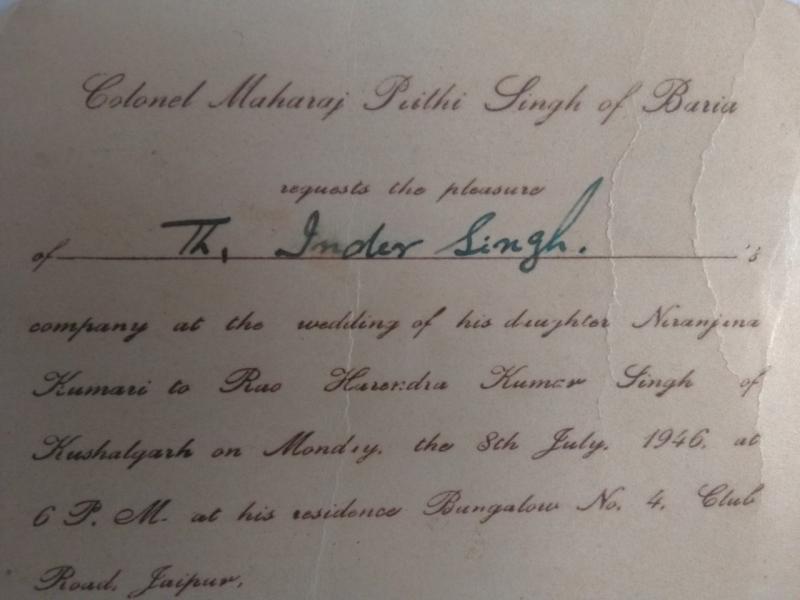
- Rao HARENDRA SINGHJI, Rao of Kushalgarh -/1967, born , educated at Mayo College, Ajmer, married 1stly, 23rd May 1943 (separated 1948), Maharajkumari Jayvant Kunwarba Sahiba, daughter of Major HH Maharana Shri Maharaja Shri Raj Sir Ghanshyamsinhji Ajitsinhji Sahib Bahadur of Dhrangadhra, and his fifth wife, HH Maharani Nawal Kunwarba Sahiba, married 2ndly, Rajkumari Niranjana Devi, born , died , eldest daughter of Maharaj Prithi Singh of Baria, and had issue. He died .
- Rao Manvendra Singhji (qv)
- Rajkumar Indrajeet Singh (by Rani Niranjana Devi), born , he was adopted by Rajkumar Chattar Singh of Kushalgarh (see above) and succeeded to his jagir of Sarwa; married Rajkumari Madhu Kumari (sister of Rani Gyaneshwari Kumari of Kushalgarh, see above), and has issue, a son and a daughter.
- Kumari Urvashi Singh
- Kunwar Bhartendu Singh
- Rajkumari Prasanyta Kumari, born , married 1stly, Kanwar Upendra Singh Jamwal of Barnai, born , married 2ndly, Captain Arpan Anand, and has issue, one son and three daughters. -
- Kumari Harshaeta Jamwal (by Upendra Singh Jamwal), born , married Rajkumar Mrinal Singh of Dumraon, born , and has issue.
- Kunwar Hitendra Singh Jamwal (by Upendra Singh Jamwal)
- Kumari Mahagrita Jamwal (by Upendra Singh Jamwal)
- Arpanyta Sevati Anand (by Captain Arpan Anand)
- Rao MANVENDRA SINGHJI, Rao of Kushalgarh [1967-2013]. Born , married Rani Gyaneshwari Kumari, and has issue, one son. He died on .
- Rajkumar Hemendra Singh Kushalgarh (qv)
- Rao HEMENDRA SINGHJI, Rao of Kushalgarh (see above)
- Maharani Moti Kunwari, married Maharawat Dalpat Singh of Pratapgarh 1808-1864
- Unnamed Princess, married Thakur Niranjan Singh Ranawat of Kankarwa.
- Maharaj Bhanupratap Singh (P.O.Tambesara, Kushalgarh, via Udaigarh (W. RLY.), Banswara, Rajasthan, India)