Present Head

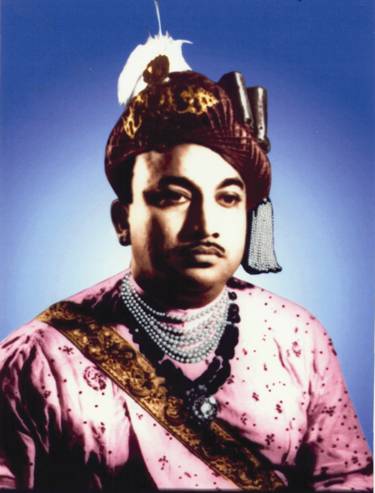
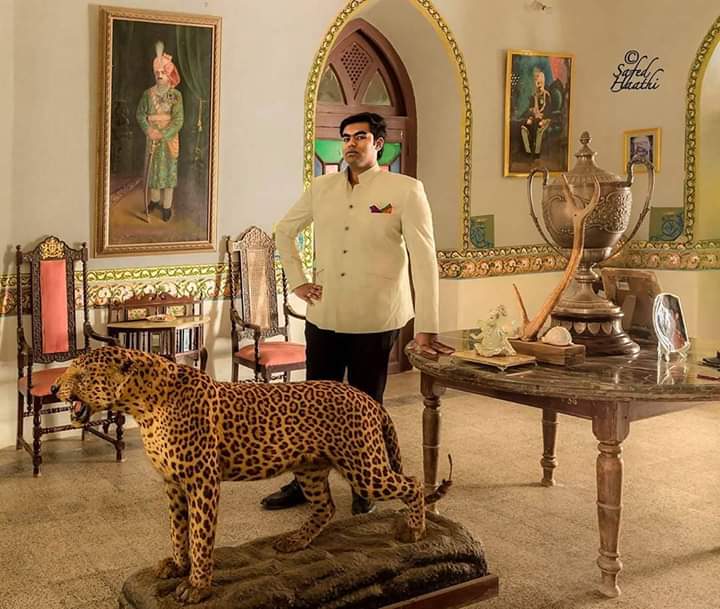
- Kunwar Arunoday Singh, born .
- Kunwar Nirbhay Singh, born .
History
Origin and Foundation of Baria State
The history of Baria State is intimately linked with the illustrious Khichi Chauhan clan of Rajputs, who trace their lineage back to the legendary Emperor Prithviraj Chauhan of Delhi. Following the fall of Delhi, the Khichi Chauhans established their stronghold at Ranthambore, and later migrated southwards to establish the kingdom of Champaner near Pavagadh in modern-day Gujarat.
The immediate ancestor of the ruling family of Baria was Rawal Patai (also known as Jaysinh Deva), the last Chauhan King of Champaner. In 1484, Champaner was besieged and captured by Mahmud Begada, the Sultan of Gujarat. Following the fall of Champaner, the royal family sought refuge in the deep forests and rugged hills of eastern Gujarat. Rawal Patai’s son, Rawal Raisinghji, succeeded in maintaining the family's independence in these wild highlands. Rawal Raisinghji had two sons: the elder son succeeded to the principality of Chhota-Udaipur, while the younger son, Raja Dungarsinghji, moved north-eastward and laid the foundation of the state of Baria (Devgadh Baria) around 1524.
Raja Dungarsinghji chose the strategic valley surrounded by the scenic Devgadh hills as his capital, constructing a fort that would safeguard his clan from external invasions. Under his leadership, the territory was consolidated, and the local Bhil chieftains were pacified and integrated into the state’s administration, forming a resilient frontier principality.
Mughal and Maratha Periods
Due to its highly rugged and forested terrain, Baria largely retained its internal sovereignty during the height of the Mughal Empire. While they acknowledged nominal Mughal suzerainty when pressed, the rulers of Baria paid little to no regular tribute and maintained a highly independent stance. The state commanded the vital trade routes and passes connecting the fertile plains of Gujarat with the high plateau of Malwa, giving it immense strategic leverage.
During the 18th century, as the Mughal power waned, the Maratha confederacy expanded into Gujarat. Baria faced severe pressure from the Maratha Peshwas, the Gaekwads of Baroda, and the Scindias of Gwalior. The Marathas frequently levied chauth (tribute) on the state, leading to frequent skirmishes. Despite these continuous incursions, the rulers of Baria valiantly defended their borders and preserved their independence, resisting complete subjugation by the Maratha forces.
British Alliance and Modernization
The entry of the British East India Company into Gujarat politics permanently altered the region's dynamics. In 1803, during the Second Anglo-Maratha War, the British under General Wellesley came into contact with Baria while operating against Daulat Rao Scindia. The Raja of Baria, recognizing a powerful ally against Maratha encroachment, assisted the British forces by protecting the mountain passes and ensuring safe passage for British troops.
Consequently, in 1803, the British entered into a treaty of alliance with Baria. Under British protection, the tribute previously demanded by the Marathas was regulated. Baria was recognized as a Second Class State within the Rewa Kantha Agency of the Bombay Presidency. In 1893, the state was officially permitted to maintain a disciplined military force consisting of 38 cavalry, 250 infantry, and 3 artillery guns.
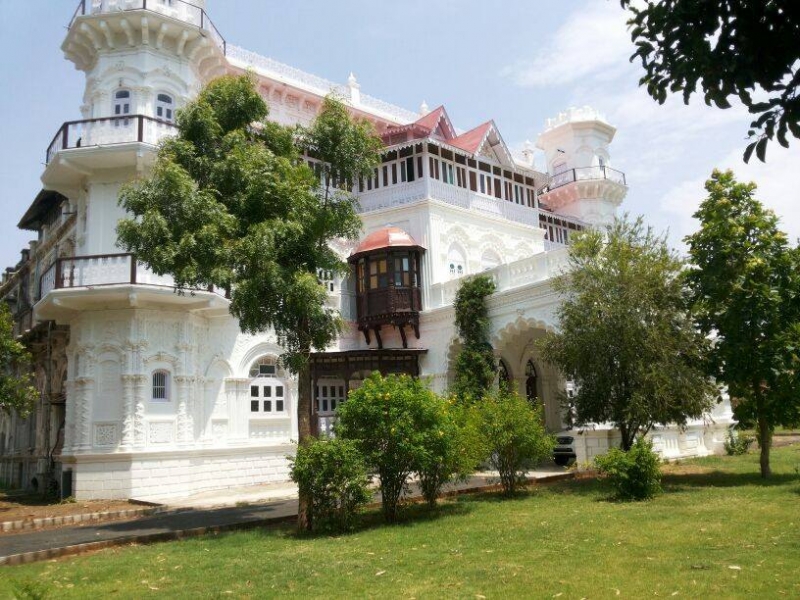
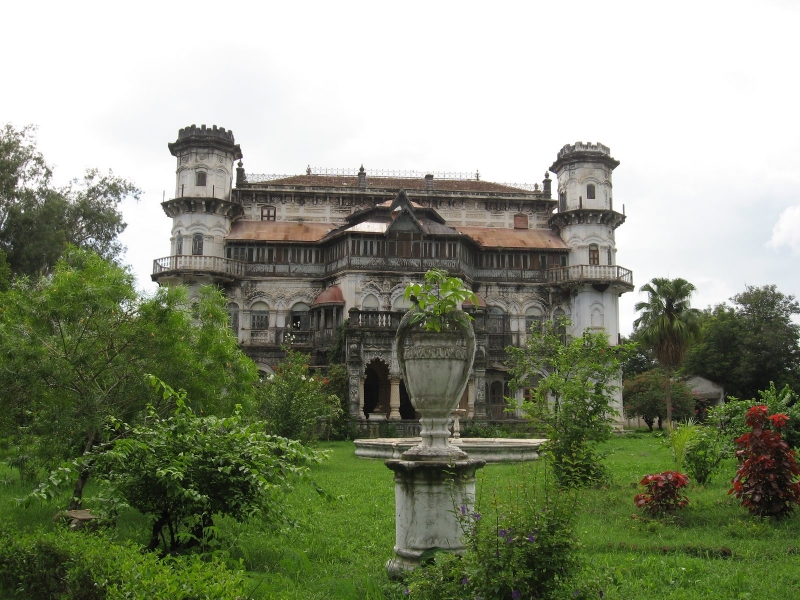
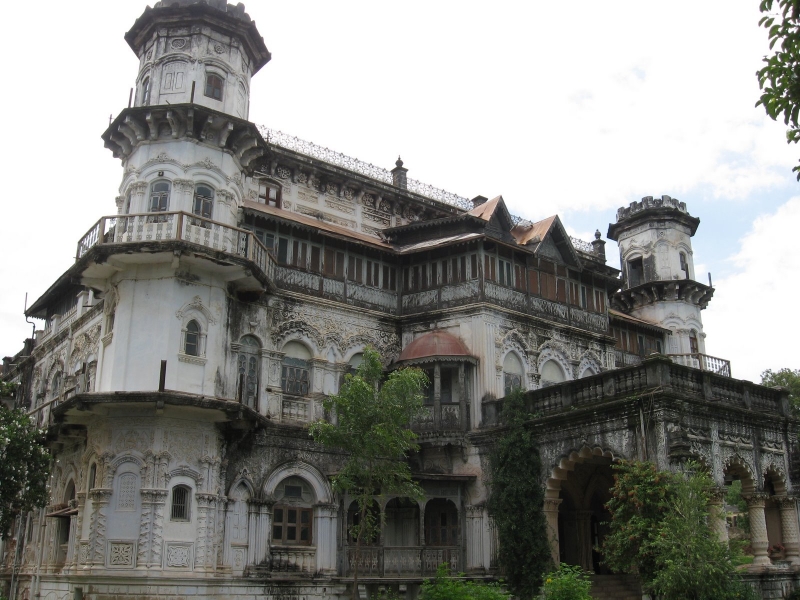
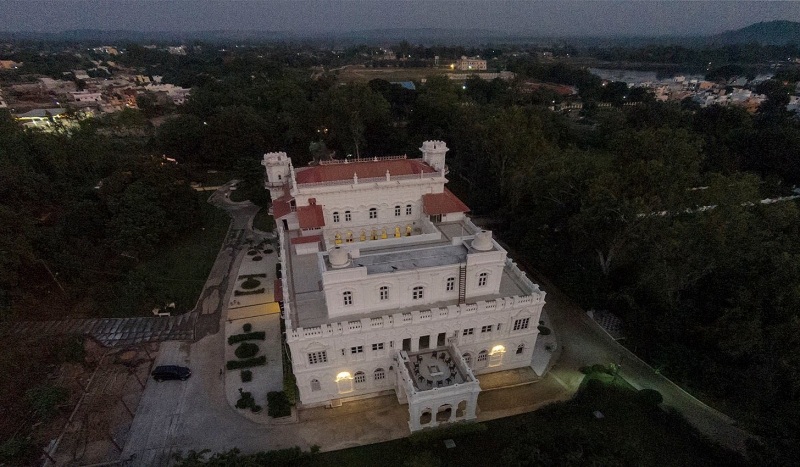
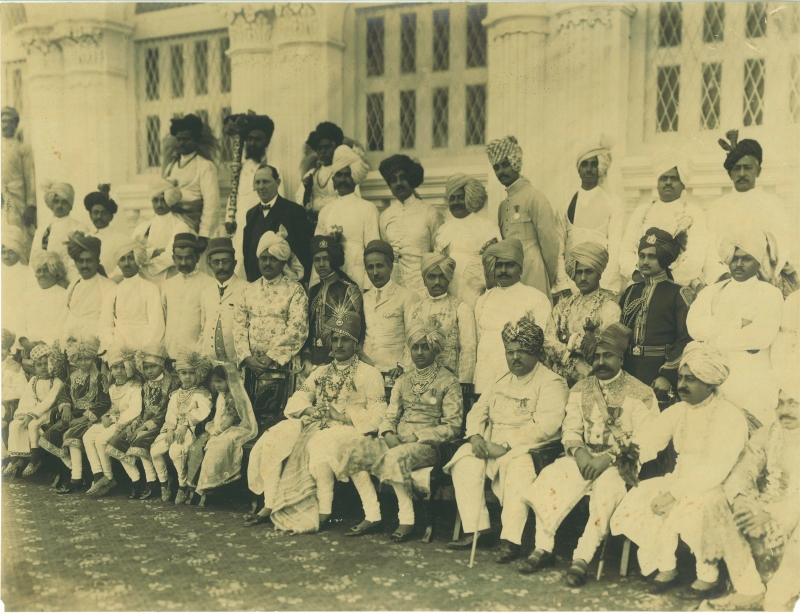
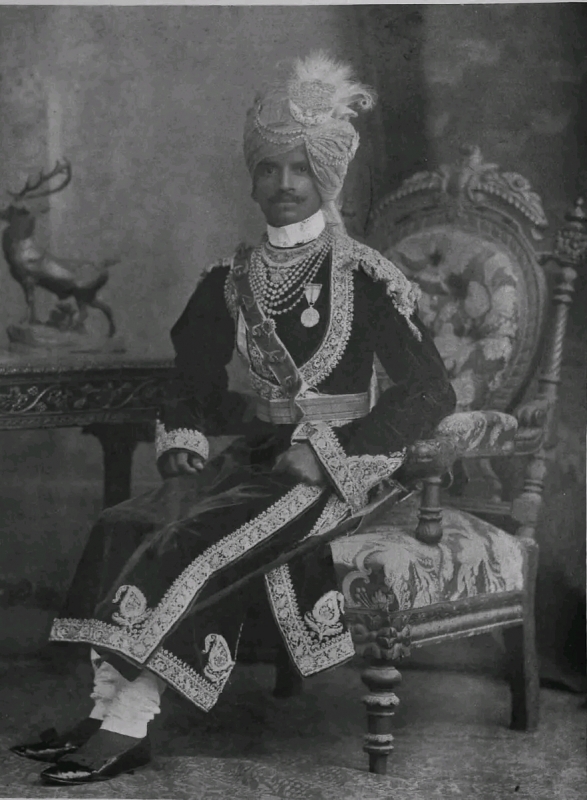
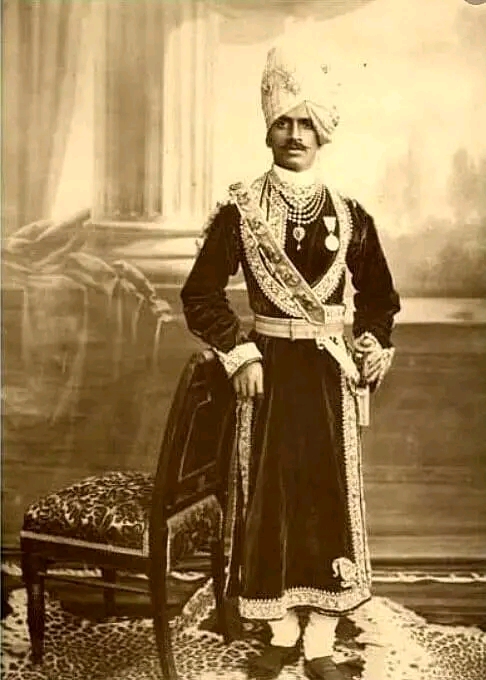
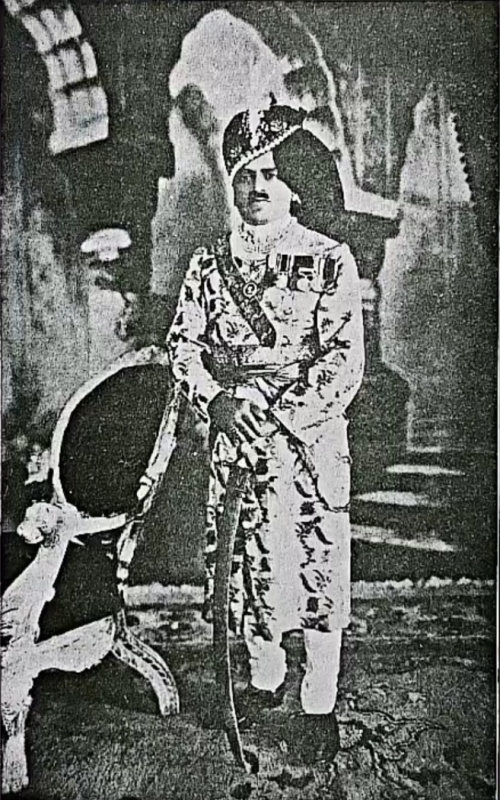
The late 19th and early 20th centuries marked a golden era of reform and development in Baria, particularly during the reign of Maharawal Ranjitsinhji (who ruled from 1908 to 1948). A highly educated and forward-thinking ruler, Maharawal Ranjitsinhji transformed Devgadh Baria into a modern, model state. He introduced free primary education, established modern hospitals, constructed extensive waterworks, laid down the Baria State Railway, and abolished many oppressive feudal taxes. His administration was so efficient that the town of Devgadh Baria earned the moniker "The Paris of Gujarat" due to its planned avenues, elegant public gardens, and magnificent neo-classical palaces like the Rajmahal.
Heraldry, Emblem, and State Flag
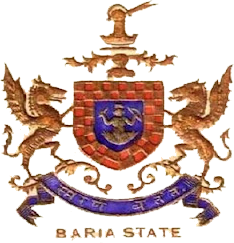
The coat of arms of Baria State reflects its martial heritage and its geographical position. The heraldic description of the state’s arms is as follows:
- Arms: Or, a basilisk (dragon/serpent) vert, on a chief azure a sword argent hilted or. The basilisk symbolizes the local guardian deity and the wilderness of the Devgadh hills, while the sword represents the Rajput right to rule by conquest and valor.
- Crest: A demi-lion rampant proper holding in its paws the state flag.
- Supporters: Two tigers proper, representing the dense forests of Baria which were famous for their wildlife.
- Motto: "Asya Sahayasri Bhairavah" (Under the protection of Lord Bhairava).
The State Flag of Baria was a rectangular flag featuring five horizontal stripes of different colors (a traditional Panchranga flag popular among Rajput states), with saffron (kesariya) holding the place of honor, symbolizing sacrifice, purity, and courage.
Post-Independence and Modern Era
Following India's independence in 1947, the last ruler of Baria, Maharawal Jaideepsinhji, signed the Instrument of Accession to the Dominion of India on August 15, 1947. In 1948, Baria was officially merged into the Bombay Province, which was later reorganized in 1960, making Baria a part of the newly formed state of Gujarat.
Maharawal Jaideepsinhji transitioned successfully into democratic India. He became a prominent politician, serving as a Member of the Legislative Assembly (MLA) of Gujarat and as a Member of Parliament (MP). He was also an acclaimed international polo player. Today, Devgadh Baria is a municipality in the Dahod district of Gujarat. The heritage of the royal family is preserved by their descendants, and the grand architectural monuments of the princely state remain major cultural and historical landmarks of Gujarat.
References and Historical Sources
- Detailed historical account of Baria State in the Imperial Gazetteer of India (Volume 6).
- Genealogy and historical sketches of the ruling family in The Golden Book of India by Sir Roper Lethbridge.
- Administrative records and military contributions in Ruling Princes and Chiefs of India.
Genealogy
- Raja DUNGARSINHJI I, 1st Raja of Baria, married and had issue. He lived around 1524.
- Raja Udaisinhji Dungarsinhji (qv)
- Raja UDAISINHJI DUNGARSINHJI, 2nd Raja of Baria, married and had issue.
- Raja Rayasinhji Udaisinhji (qv)
- Raja RAYASINHJI UDAISINHJI, 3rd Raja of Baria, married and had issue.
- Raja Vijaysinhji Rayasinhji (qv)
- Raja VIJAYSINHJI RAYASINHJI, 4th Raja of Baria, married and had issue.
- Raja Mansinhji Vijaysinhji (qv)
- Raja MANSINHJI VIJAYSINHJI, 5th Raja of Baria, married and had issue. He died about 1720.
- Raja Prithvirajji Mansinhji (qv)
- Raja PRITHVIRAJJI MANSINHJI, 6th Raja of Baria, married and had issue. He died after 1732.
- Raja Rayadharji Prithvirajji (qv)
- Raja RAYADHARJI PRITHVIRAJJI, 7th Raja of Baria, married and had issue.
- Raja Gangadasji Rayadharji (qv)
- Raja GANGADASJI I RAYADHARJI, 8th Raja of Baria, married and had isssue.
- Raja Gambhirsinhji Gangadasji (qv)
- Raja GAMBHIRSINHJI GANGADASJI, 9th Raja of Baria, married and had issue.
- Raja Dhiratsinhji Gambhirsinhji (qv)
- Kumar Shri Sahebsinhji Gambhirsinhji, married and had issue.
- Raja Jashwantsinhji Sahebsinhji (qv)
- Raja DHIRATSINHJI GAMBHIRSINHJI, 10th Raja of Baria.
- Raja Jaswantsinhji
- Pratap Kunverba, married to Maharaja Bhawani Sinhji of Idar.
- Raja JASHWANTSINHJI SAHEBSINHJI, 11th Raja of Baria, married and had issue. He lived around 1803.
- Raja Gangadasji II Jashwantsinhji (qv)
- Chandra Kunverba, married to Maharaja Gambhir Sinhji of Idar.
- Raja GANGADASJI II JASHWANTSINHJI, 12th Raja of Baria -/1819, married and had issue. He died .
- Raja Bhimsinhji Gangadasji (qv)
- Raja Prithvirajji Gangadasji (qv)
- Raja BHIMSINHJI GANGADASJI, 13th Raja of Baria 1819/1820
- Raja PRITHVIRAJJI GANGADASJI, 14th Raja of Baria 1820/1864, married to Sisodiniji Umaid Kunverba, daughter of Rana Mohan Singh II of Barwani and had issue. He died .
- HH Maharawal Shri Mansinhji II Prithvirajji (qv)
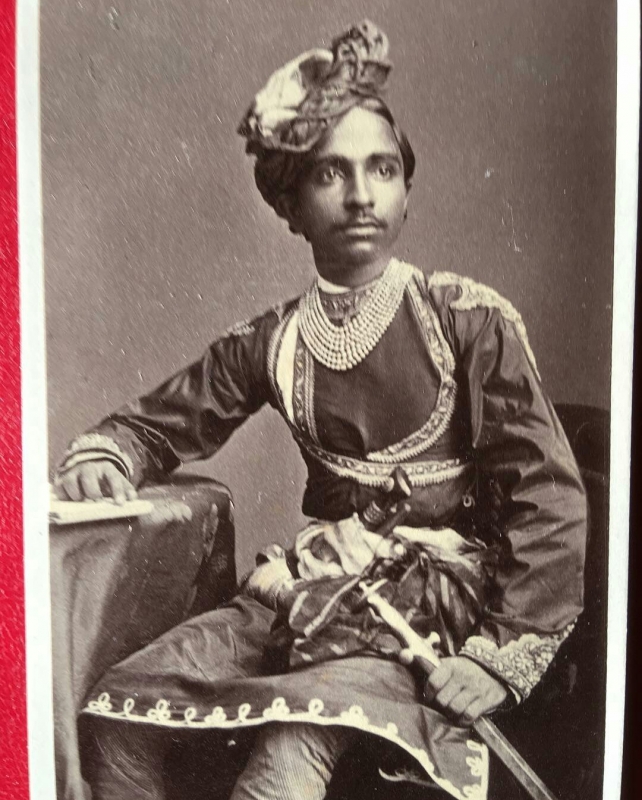
- HH Maharawal Shri MANSINHJI II PRITHVIRAJJI, 15th Raja of Baria 1864/1908, born , succeeded 5th March 1864, educated at Ahmedabad Talukdari School and at Rajkumar College, Rajkot, married 1873, HH Maharani Chandra Kunverba Sahiba, daughter of Maharana Vairisalji Naharsinhji of Rajpipla, and had issue. He died .
- Lt.-Col. HH Maharawal Sir Shri Ranjitsinhji Mansinhji (qv)
- Maharaj Naharsinhji Mansinhji, married Rani Drupad Kunverba Sahiba, died , daughter of Maharana Shri Gambhirsinhji Vairisalji of Rajpipla, and had issue.
- Maharaj Prithisinhji Naharsinhji, married twice and had issues.
- Rajkumari Niranjana Devi (from 1st wife), born , married (as his second wife), Rao Harendra Singhji, 18th Rao of Kushalgarh, born , died , and has issue.
- Maharaj Digvijaysinhji Prithisinhji (from 1st wife)
- Vandana Gaekwad (from 1st wife)
- Maharaj Virvijaysinhji Prithisinhji (from 1st wife), married and had issue.
- Rajkumari Preeti Singh, married Rawal Raja Raghvendra Singh of Samode, and has issue, a son and a daughter.
- Air Cmde Pritam Singh (retd.) (from 2nd wife), married and has issues, one son and a daughter.
- Shayne Prithi Singh
- Rio Singh (from 2nd wife)
- Viraj Singh
- Shana Singh
- Viraj Singh
- Maharaj Prithisinhji Naharsinhji, married twice and had issues.
- HH Maharani Suraj Kunverb Sahiba, married HH Maharaja Shri Sir Lakhdirji Waghji Bahadur of Morvi, and had issue.
- HH Maharani Dev Kunverba Sahiba, married 1893 (as his first wife), HH Maharaja Rao Bhavsinhji II Takhatsinghji of Bhavnagar, and had issue.
- Lt.-Col. HH Maharawal Sir Shri RANJITSINHJI MANSINHJI, 16th Raja of Baria 1908/1949, born , K.C.S.I. [cr.1.1.1922], served in France and Flanders during WWI and on the N.W. Frontier during the Afghan War 1919, married 1stly, HH Maharani Takhat Kunverba Sahiba, died , daughter of HH Maharana Shri Sir Chhatrasinhji Gambhirsinhji of Rajpipla, married 2ndly, HH Maharani Dilhar Kunverba Sahiba, daughter of Maharana Shri Gambhirsinhji Vairisalji of Rajpipla, and had issue. He died .
- Yuvaraj Sobhagsinhji Ranjitsinhji (by Maharani Takhat Kunverba), married Yuvarani Bibhasprabha Devi, daughter of HH Maharaja Birendra Kishore Dev Varman Manikya Bahadur of Tripura, and had issue. He died .
- HH Maharawal Jaideepsinhji Sobhagsinhji (qv)
- Maharaj Pradeepsinhji Sobhagsinhji, married and had issue.
- Maharaj Jitendrasinhji Pradeepsinhji, educated at Rajkumar College, Rajkot (1980), married and has issue, two sons.
- Rajkumar Varun Singh Chauhan
- Rajkumar Aditya Singh Chauhan
- Maharaj Udayendrasinhji Pradeepsinhji
- Maharaj Jitendrasinhji Pradeepsinhji, educated at Rajkumar College, Rajkot (1980), married and has issue, two sons.
- Maharaj Shri Hirasinhji Ranjitsinhji (by Maharani Dilhar Kunverba), married Rani Ranjana Devi of Rajpipla, and had issue.
- Rajkumar Prithviraj Singh, died .
- Rajkumari Geeta Devi, married Dr. Uday Saraiya.
- Kunwari Sahiba Rajendra Kunwar Ba, engaged 19th July 1915, to Yuvraj Fateh Singh of Alirajpur.
- Yuvaraj Sobhagsinhji Ranjitsinhji (by Maharani Takhat Kunverba), married Yuvarani Bibhasprabha Devi, daughter of HH Maharaja Birendra Kishore Dev Varman Manikya Bahadur of Tripura, and had issue. He died .
- HH Maharawal JAIDEEPSINHJI SOBHAGSINHJI, 17th Raja of Baria 1949/1987, born , Member of the 8th Lok Sabha, a renowned polo player, married 27th May 1948, HH Maharani Prem Kumari, daughter of HH Saramad-i-Rajahai Hindustan Raj Rajendra Shri Maharajadhiraj Sir Sawai Man Singhji II Bahadur of Jaipur, and his first wife, HH Maharani Marudhar Kunwar, and had issue. He died ?
- Maharajkumari Urvashi Devi [Princess Bambi], born in Devgadh-Baria, Dahod; B.A. (Hons.), Member of the 8th Gujarat Legislative Assembly, married Rajkumar Kanak Singh of Dumraon, and has issue, one son.
- Rajkumar Tushar Singh (qv)
- Maharajkumari Urvashi Devi [Princess Bambi], born in Devgadh-Baria, Dahod; B.A. (Hons.), Member of the 8th Gujarat Legislative Assembly, married Rajkumar Kanak Singh of Dumraon, and has issue, one son.
- HH Maharawal Tusharsinhji Kanaksinhji (see above)
- Maharani Kanak Kumari, married Maharaja Bahadur Ram Ran Vijay Prasad Singh of Dumraon, and had issue.
Notable Figures
Maharawal Dungarsinhji (c. 1524 – 15..)
Maharawal Dungarsinhji was the founder of the Baria State. He belonged to the Khichi Chauhan clan of Rajputs, who were the rulers of the historic fort of Champaner. Following the fall of Champaner to Sultan Mahmud Begada of Gujarat in 1484, the family retreated into the safety of the surrounding forests and hills. Dungarsinhji established his capital at Baria around 1524, carving out an independent principality that successfully defended its sovereignty against neighboring regional powers.
Maharawal Prithvirajji (r. 1782 – 1803)
Maharawal Prithvirajji ruled during a highly turbulent period in Western Indian history, characterized by the expansionist campaigns of the Maratha Empire. Under his leadership, the Khichi Chauhan state of Baria navigated intense pressure from the Marathas, particularly the Scindias of Gwalior. Despite frequent military incursions and demands for tribute, Prithvirajji managed to maintain the structural independence of his state through tactical diplomacy and defensive warfare.
Maharawal Yashwantsinhji (r. 1803 – 1864)
Maharawal Yashwantsinhji succeeded his father, Prithvirajji, at the turn of the nineteenth century. In 1803, during his reign, Baria entered into treaty relations with the British East India Company. This alliance proved crucial in safeguarding the state from the aggressive tributary demands of the Maratha powers. His exceptionally long reign of over six decades provided much-needed political stability, allowing the state to recover from decades of regional conflicts and systematically organize its internal administration.
Further historical details regarding his treaty with the British can be found in the historical records of the Devgadh Baria State on Wikipedia.
Maharawal Mansinhji (r. 1864 – 1908)
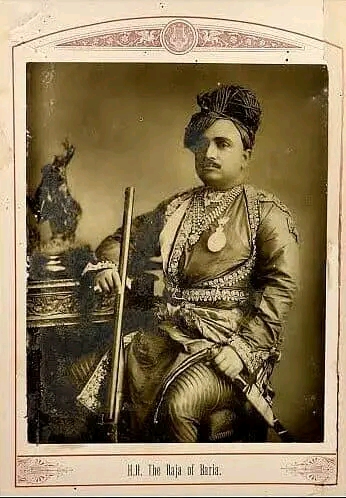
Maharawal Mansinhji succeeded to the gaddi of Baria in 1864. His rule marked the beginning of modern administrative reforms in the state. He focused on developing a structured judicial system, reforming the land revenue administration, and establishing formal police forces. Mansinhji was recognized by the British Crown and granted a sanad of adoption, ensuring the dynastic continuity of the Khichi Chauhan line. His progressive policies laid the groundwork for the modernization of Baria's infrastructure.
Biographical records of his reign are documented in Sir Roper Lethbridge's The Golden Book of India.
Maharawal Sir Ranjitsinhji Mansinhji (r. 1908 – 1949)
Maharawal Sir Ranjitsinhji Mansinhji was one of the most visionary and reformist rulers of the Baria State. Educated at Rajkumar College in Rajkot, he introduced progressive measures that transformed Devgadh Baria into a model state. He abolished several oppressive taxes, made primary education free, constructed modern healthcare facilities, and built an extensive network of roads and railways. Ranjitsinhji was also a patron of fine architecture, commissioning the majestic Rajmahal Palace and various public buildings that define the town's landscape today.
During the First World War, he actively supported the Allied forces, offering both personal service and state resources. For his contributions and administrative excellence, he was honored with a knighthood (KCSI) by the British Empire. Details of his developmental initiatives are preserved in the history of Devgadh Baria State.
Maharawal Jaydeepsinhji (r. 1949 – 1987)
Maharawal Jaydeepsinhji was the last ruling prince of Baria. He succeeded his grandfather in 1949, shortly after signing the Instrument of Accession which merged the princely state into the newly independent Indian Union. Following the integration of his state, Jaydeepsinhji transitioned into democratic politics, becoming an influential public figure in Gujarat. He served multiple terms as a Member of the Legislative Assembly (MLA) of Gujarat and later as a Member of Parliament (Lok Sabha).
In addition to his political career, Jaydeepsinhji was a highly acclaimed sportsman, recognized nationally for his prowess in polo and his contribution to sports administration in India. Complete biographical details are available on his official Wikipedia Biography.