Present Head

- Rajkumari Reshma Singh, married Shri Narsingh Pravin Rana of Kathmandu (Nepal).
- Rajkumari Himani Singh [HRH Princess Himani Rajya Lakshmi Devi], born in Kathmandu, Nepal, married 26th January 2000 in Kathmandu, Nepal to HRH Crown Prince Paras Shah of Nepal, and has issue.
- Rajkumari Aparna Singh
History
Origin and Foundation
The history of Sikar is deeply intertwined with the Shekhawat clan of the Kachwaha Rajput dynasty. The rulers of Sikar trace their ancestry back to Rao Shekha, the ruler of Amarsar, who successfully established his independence from the parent state of Amber (Jaipur) in the 15th century. Generations later, his descendant, Raja Rai Sal of Khandela, earned high military ranks and the title of "Raja" under the Mughal Emperor Akbar.
Sikar was founded in 1687 by Rao Daulat Singh, the son of Rao Jaswant Singh of Kasli. At the time, the area was a small village known as "Beer Bhan Ka Bass." Rao Daulat Singh laid the foundation of the modern town and began constructing its initial fortifications. In 1724, his enterprising son and successor, Rao Shiv Singh, ascended the throne. Rao Shiv Singh built the formidable Sikar Fort, completed the city walls (Parkota), and formally declared Sikar as the capital of his rapidly expanding estate.
The Golden Era and Territorial Expansion
Sikar flourished under a succession of capable and ambitious rulers who expanded the estate's boundaries and established its preeminence within the Shekhawati region. Among the most notable rulers was Rao Raja Devi Singh (who ruled from 1754 to 1795). A patron of architecture and military strategy, he consolidated Sikar's defense by constructing the magnificent hilltop forts of Deogarh and Raghunathgarh.
He was succeeded by Rao Raja Laxman Singh (who ruled from 1795 to 1834), under whose reign Sikar reached its zenith of wealth and cultural influence. In 1805, he founded the historic town of Laxmangarh and constructed its imposing fort, modeled on the town-planning principles of Jaipur. Rao Raja Laxman Singh was a great patron of literature, art, and trade, attracting wealthy merchants (Marwaris) to settle in Sikar and Laxmangarh, which led to the creation of the region's famous painted havelis.
Relations with the Jaipur Durbar and the British Raj
As the largest and wealthiest Thikana under the suzerainty of the Jaipur State, Sikar often maintained an uneasy relationship with the Jaipur Durbar. Due to its size and military strength, the Rao Rajas of Sikar enjoyed significant administrative autonomy, including maintaining their own standing army, judicial courts, and revenue collection systems. This frequently led to disputes over the payment of annual tribute (mamla) to Jaipur.
During the British Raj, the British East India Company, and later the Crown, intervened to mediate these disputes. Under the terms of the British-supervised settlements, Sikar's internal autonomy was largely preserved. However, tensions erupted again in the 1930s during the reign of Rao Raja Kalyan Singh. The Jaipur State, guided by British administrators, attempted to curtail the privileges of Sikar. This culminated in the famous Sikar Agitation of 1938, a major public protest supported by local citizens and the Jaipur Praja Mandal, which drew national attention to the constitutional relationship between the princely states and their vassal Thikanas.
Social Reforms and Modernization
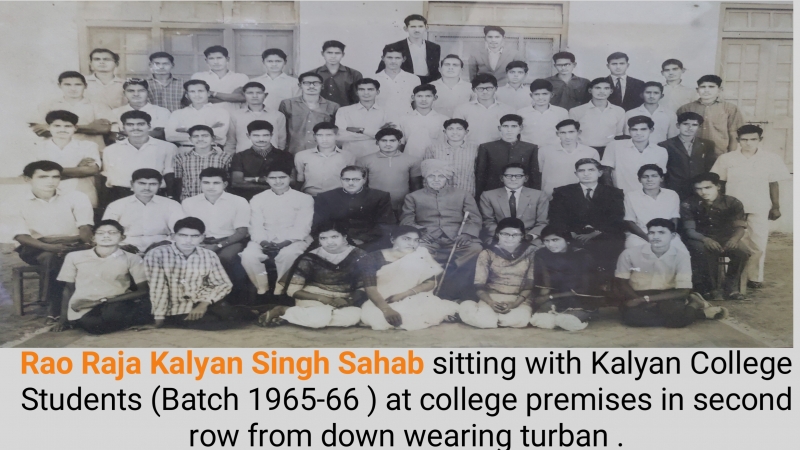
Rao Raja Kalyan Singh (who ruled from 1922 to 1954) was the last ruling chief of Sikar. Despite the political friction with Jaipur, he was a highly progressive ruler who dedicated his reign to public welfare and modernization. He established the Kalyan Hospital and the Kalyan College, which provided free medical care and higher education to the public, transforming Sikar into an educational hub in northern Rajasthan. He also built roads, modern reservoirs for drinking water, and promoted female education and social reforms within the state.
Post-Independence and Modern Era
Following India's independence in 1947, Rao Raja Kalyan Singh signed the instrument of accession, and the Sikar Thikana was merged into the United State of Greater Rajasthan in 1949. The administrative structures of the old estate were integrated into the modern democratic framework, and Sikar became a district headquarters within the state of Rajasthan.
Today, Sikar is a major urban center and a key part of the cultural landscape of the Shekhawati region. Famous for its intricately painted havelis, historical stepwells, and ancient temples—including the globally revered Khatu Shyamji Temple and the Harshnath Temple—Sikar attracts historians, art lovers, and tourists from all over the world. It is also celebrated as one of India's premier educational hubs, continuing the legacy of learning initiated by its historical rulers.
References and External Links
- To learn more about the administrative division and history, visit the Sikar District Wikipedia Page.
- For details on the geographical and cultural landscape, see the Shekhawati Region History on Wikipedia.
- For more on the parent dynasty of Sikar, refer to the Kachwaha Dynasty on Wikipedia.
Genealogy
- Rao DAULAT SINGH, 1st Rao of Sikar 1687/1721, son of Rao Jaswant Singh of Dujod, he laid the foundation of Sikar in 1687, married twice and had issue. He died .
- Rao Shiv Singh (qv)
- Kunwar Swarup Singh of Shekhsar, Seewod, and Gododa Bagdoda.
- Kunwar Vishnu Singh of Seewod, Paiwa and Roru.
- Rao SHIV SINGH, 2nd Rao of Sikar 1721/1748, completed the fort and palaces of Sikar in 1724, conquered Fatehpur in 1731, married 1stly, Rani Mertaniji of Maroth, married 2ndly, Rani Champawatiji of Pali, masrried 3rdly, Rani Mertaniji of Loonwa, married 4thly, Rani Bidawatiji, a daughter of Thakur Bhao Singh Bidawat of Dantru, and had issue. He died in or about August 1748.
- Rao Samrath Singh (by Rani Mertaniji of Maroth) (qv)
- Kunwar Kirat Singh (by Rani Champawatiji), married and had issue.
- Kunwar Padam Singh of Bethoth and Patoda.
- Kunwar Medh Singh (by Rani Champawatiji), married and had issue.
- Kunwar Bhao Singh of Sarwari and Deepura, married and had issue.
- generations
- Thakur Saheb of Sarwari, married and had issue.
- Thakur Phool Singh, married Thakurani Pushpa Kunwar of Daulatgarh and Dhanoli in Idar.
- Kunwar Bikram Singh, he was adopted by Kunwar Bikram Singh, and succeeded as Rao Raja Bikram Singh of Sikar (see below)
- Thakur Saheb of Sarwari, married and had issue.
- generations
- Kunwar Bhao Singh of Sarwari and Deepura, married and had issue.
- Raja Chand Singh (by Rani Mertaniji of Loonwa) (qv)
- Kunwar Budh Singh (by Rani Mertaniji of Loonwa), Regent of Sikar 1763/1767, died sp in the battle of Maonda in 1767.
- Baisa (name unknown), married Rajadhiraj Umaid Singhji of Shahpura.
- Rao SAMRATH SINGH, 3rd Rao of Sikar 1748/1754, married and had issue. He died .
- Rao Nahar Singh (qv)
- Kunwar Guman Singh of Mugloona.
- Kunwar Bagh Singh of Koodan.
- Rao NAHAR SINGH, 4th Rao of Sikar 1754/1756, deposed by his uncle, given Balaran for his maintenance.
- Rao CHAND SINGH, 5th Rao of Sikar 1756/1763, married and had issue. He died .
- Rao Devi Singh (qv)
- Rao DEVI SINGH, 6th Rao of Sikar 1763/1795, born , constructed the fort of Devgarh in 1787, founded the town of Ramgarh in 1791, built Raghunathgarh fort in 1791, married 1stly, Rani Mertaniji, married 2ndly, Rani Kanlotiji, married 3rdly, Rani Chandrawatiji, and had issue, one son. He died .
- Rao Raja Lakshman Singh (by Rani Kanlotji) (qv)
- Rao Raja LAKSHMAN SINGH, 7th Rao Raja of Sikar 1795/1834, born , usurped the gaddi at Khandela in 1812 but was convinced to return it soon afterwards, he was granted the title of Rao Raja by Maharaja Jagat Singh, married 7 wives, including, a daughter of Maharaj Jai Singh of Bikaner, and had 8 paswan, including Veera, she became sati, and had issue, as well as further issue. He died .
- Kunwar Hamir Singh
- Rao Raja Ram Pratap Singh (qv)
- Rao Raja Bhairon Singh (by Rani Mertaniji of Ghanerao) (qv)
- Kunwar Hukam Singh (natural son by paswanji Kisturi)
- Kunwar Mukund Singh (natural son by paswanji Kisturi), Chief Minister of Sikar 1851/-, married and had issue.
- Kunwar Paneh Singh, Chief Minister of Sikar.
- Kunwar Chiman Singh (natural son)
- Kunwar Rambux Singh (natural son)
- Rao Raja RAM PRATAP SINGH, 8th Rao Raja of Sikar 1834/1850, born , constructed the marble palace, noted for its attractive golden paintings, married 1stly, Rani Ranawatiji of Shahpura, married 2ndly, Rani Bhatianiji. He died sp on 17th September 1850.
- Rao Raja BHAIRON SINGH, 9th Rao Raja of Sikar 1851/1865, born posthumously in 1834, originally granted the jagir of Seemalala, adopted by the widow of his predecessor, but only confirmed in the succession after a year in 1851, married and had issue as well as adoptive issue. He died .
- (A) Kunwar Madho Singh, succeeded as Rao Raja Sir Madho Singhji Bahadur of Sikar (qv)
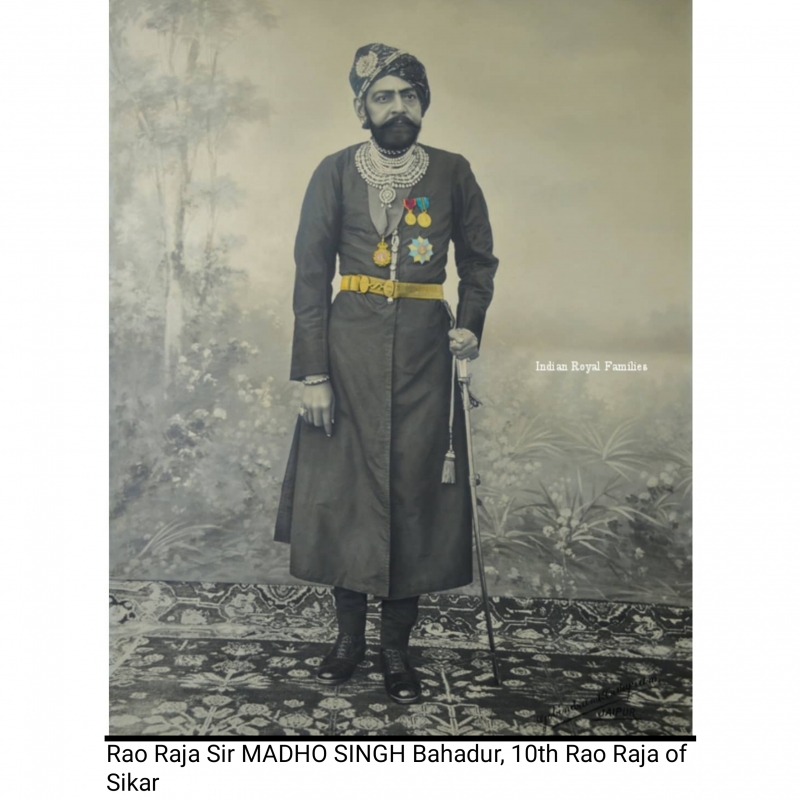
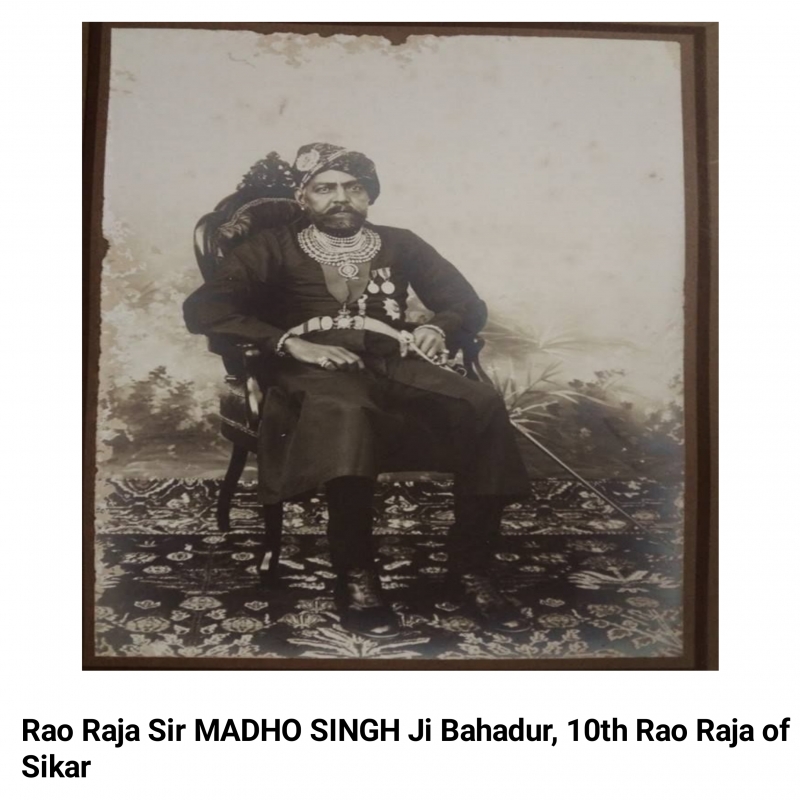
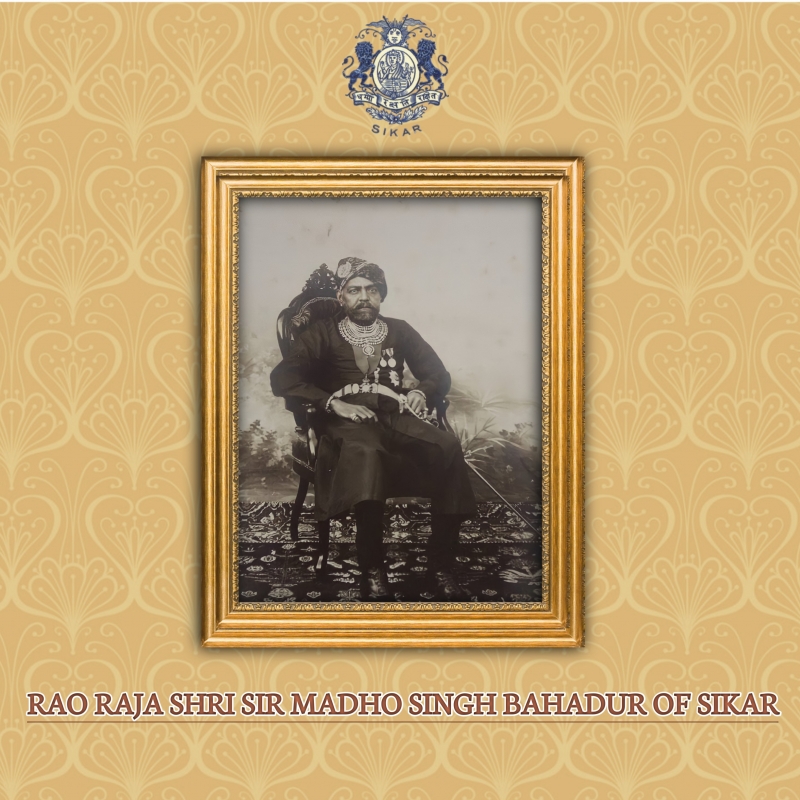
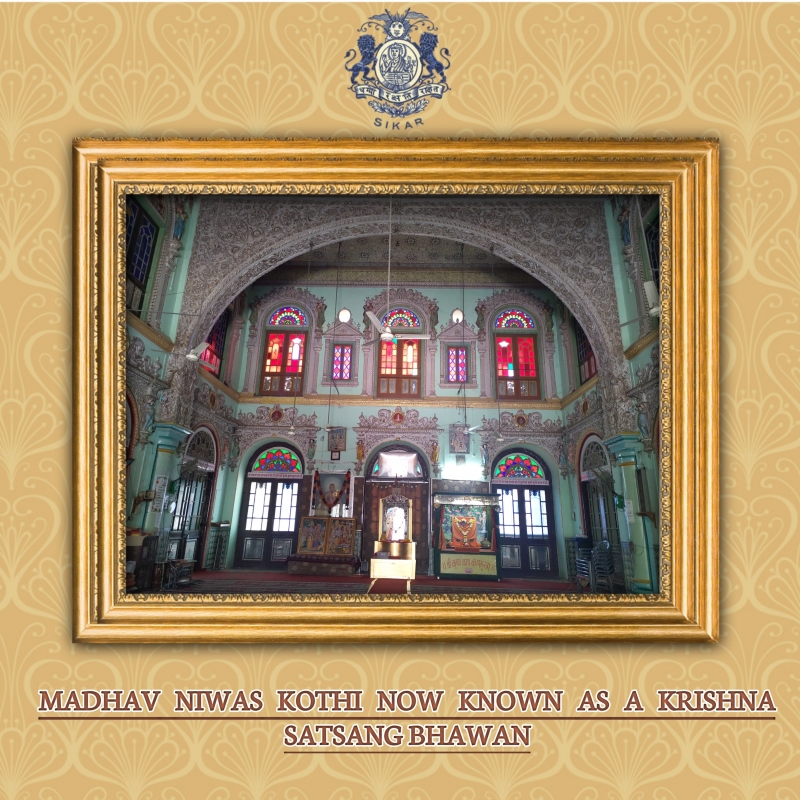
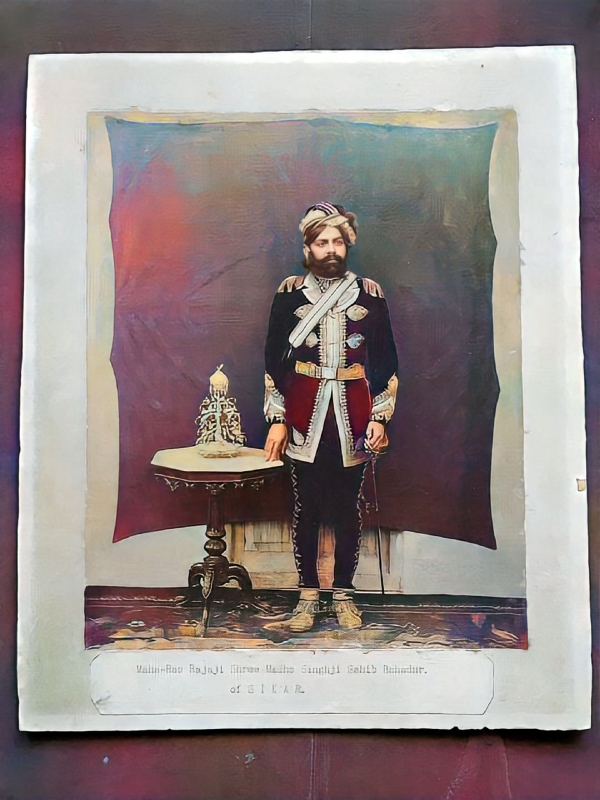
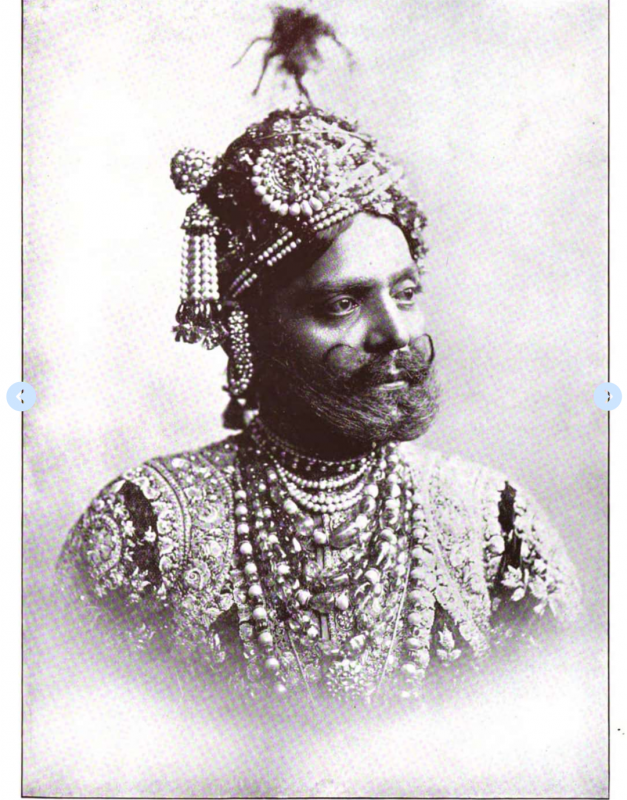
- Rao Raja Sir MADHO SINGH Bahadur, 10th Rao Raja of Sikar 1866/1922, born , adoptive son of his predecessor and second son of Thakur Birad Singh of Deeppura, he was granted the title of Bahadur in 1886, K.C.I.E [cr.1.1.1922], he constructed the Madhav Niwas Kothi; married four wives, including 3rdly, Suraj Kanwar, daughter of Kumpawat Thakur Gajsinghpura in Jodhpur by his wife Raj Kanwar, daughter of Nathawat Th. Ganga Singh of Asote in Jaipur in 1897 at Gajsinghpura, 4thly he married Rani Bhatianiji, and had issue. He died at Sikar.
- Maharani Raj Kunwar (by Rani Bhatianiji), married 14th May 1924, HH Maharawat Sir Ram Singhji II Bahadur of Pratapgarh, and had issue, one daughter. She died .
- Rajkumari Bhupeswari Kumari (by Rani Bhatianiji), married to Maharajkumar Chandikeshwar Saran Singh Deo of Surguja.
- Rajkumari (name unknown) Kanwar (by Rani Bhatianiji), married Raja Kalyan Singhji of Bhinai.
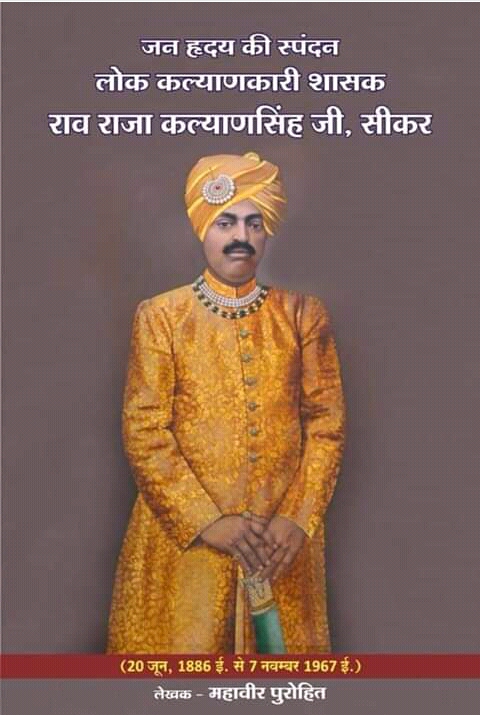
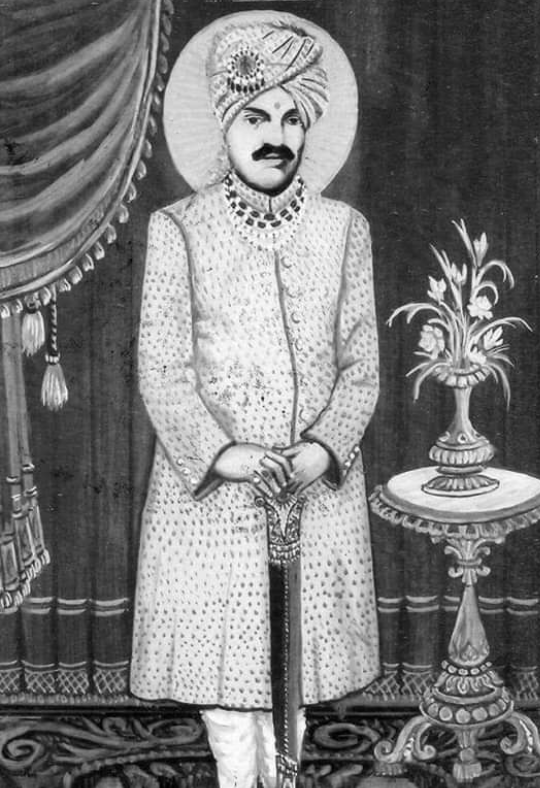
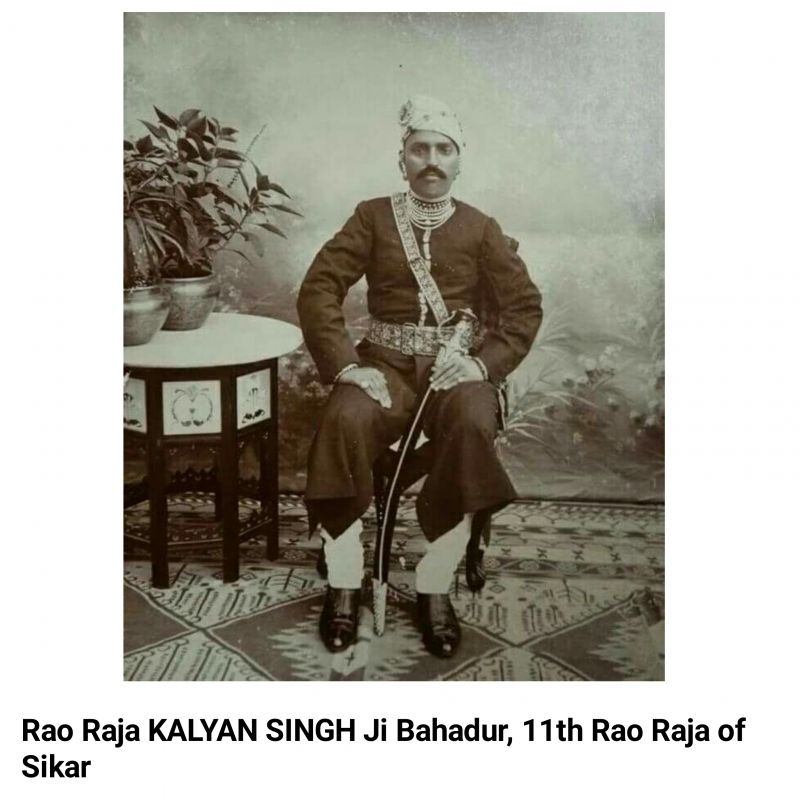
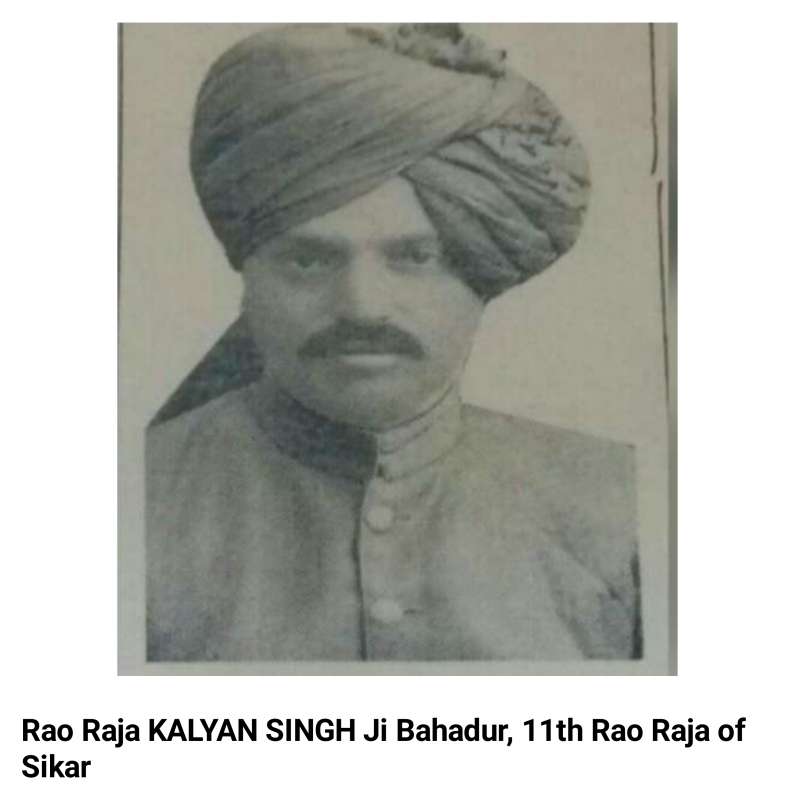
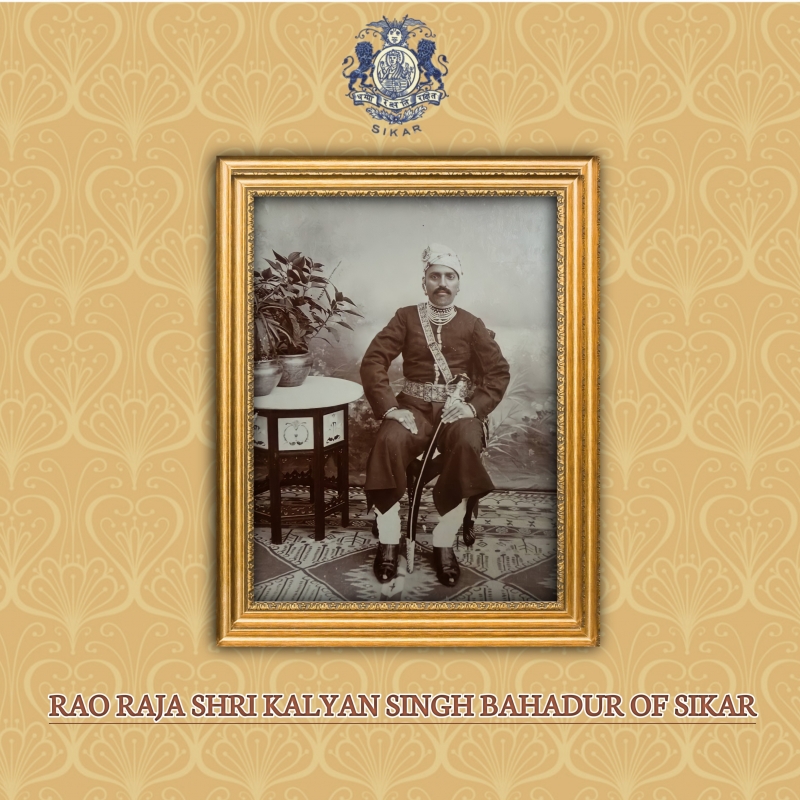
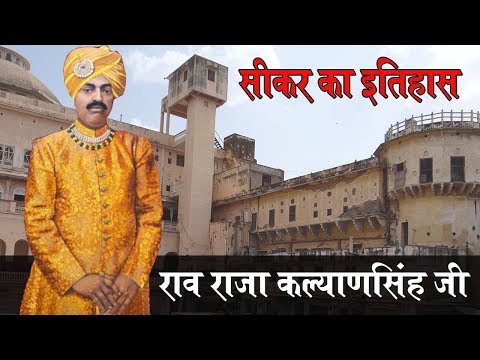
- Rao Raja KALYAN SINGH Bahadur, 11th Rao Raja of Sikar 1922/1967, nephew of his predecessor, son of Thakur Dalip Singh, elder brother of Rao Raja Mado Singh Bahadur, born at Deeppura; he constructed the clock tower as well as the Kalyan Hospital and College for the welfare of public; married, a daughter of Thakur Madho Singh of Sirana in Ajmer, and had issue. He died in Jaipur.
- Kunwar Narain Singh, died young.
- Thakurani Phool Kanwar, married 1927, Thakur Umaid Singhji of Neemaj.
- Thakurani (name unknown) Kanwar, married Thakur Chiman Singhji of Chanod.
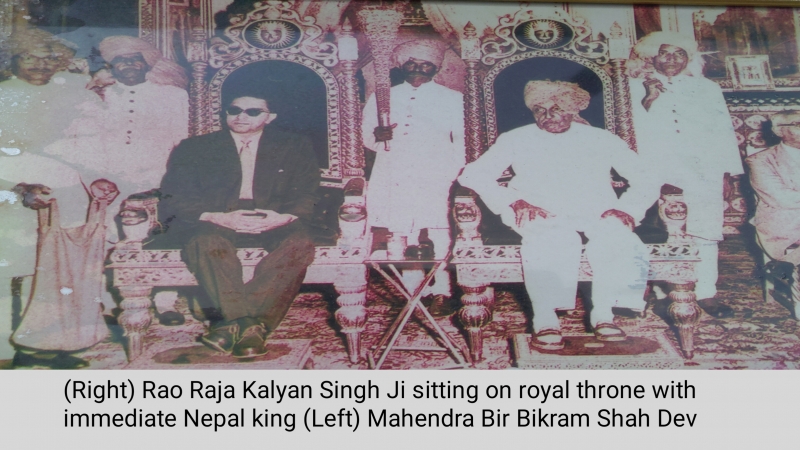
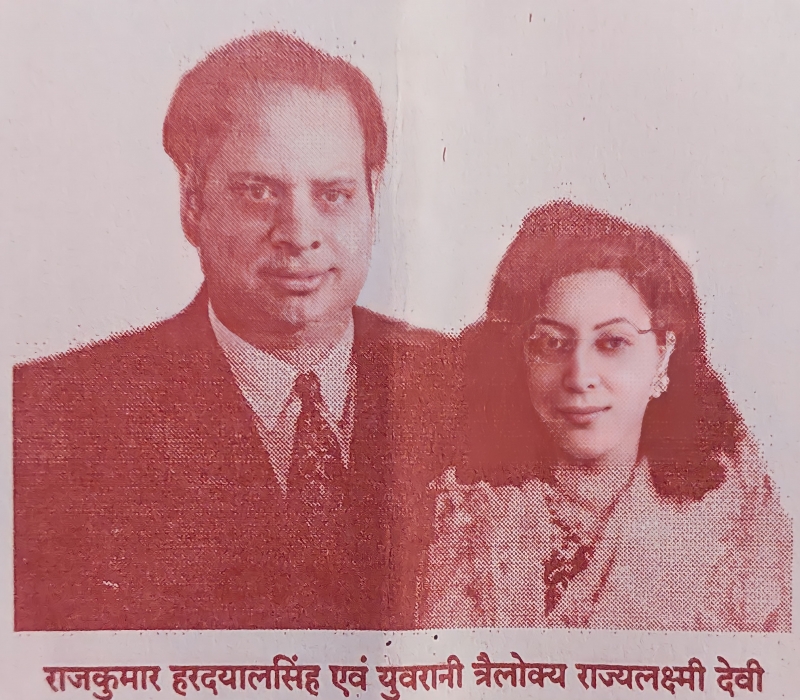
- Kunwar Hardayal Singh, born , educated at Mayo College, Ajmer, married 1stly, 1938 in Lucknow, a daughter of Shri Mussoorie Shumsher Jung Bahadur Rana of Nepal, married 2ndly, February 1948, HRH Princess Triloki Rajya Lakshmi Devi, daughter of HM King Tribhuvan Bir Bikram Shah Dev of Nepal, and had adoptive issue. He died spm on 15th June 1954 in Jaipur.
- (A) Kunwar Bikram Singh, succeeded as Rao Raja Bikram Singh of Sikar (qv)
- Rao Raja BIKRAM SINGH, 12th Rao Raja of Sikar (see above)
- Kumari (name unknown), married Maj. Kuwar Yashwant Singh Ranawat of Kankarwa.