
Present Head
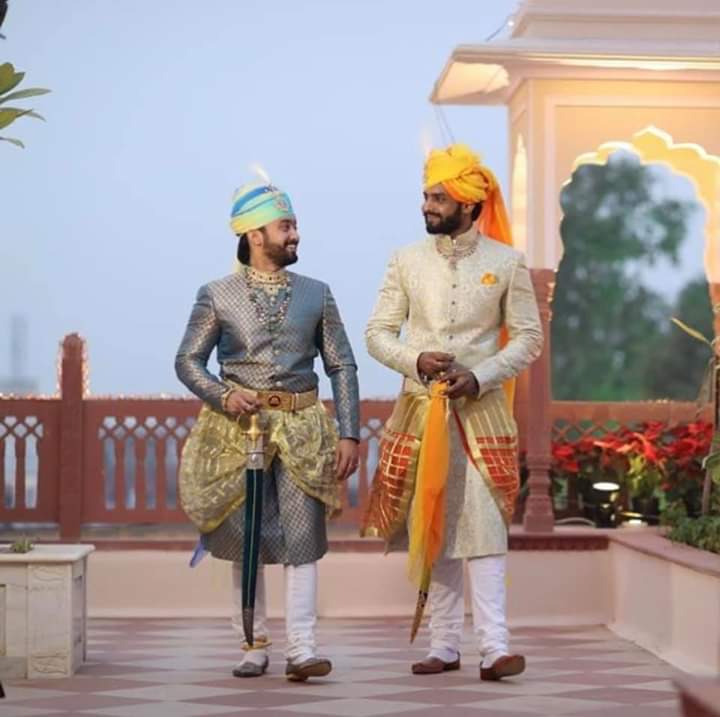
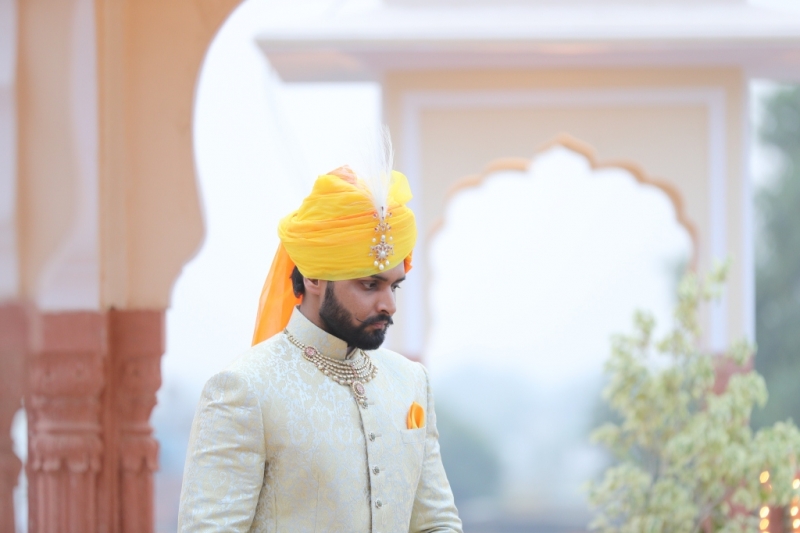
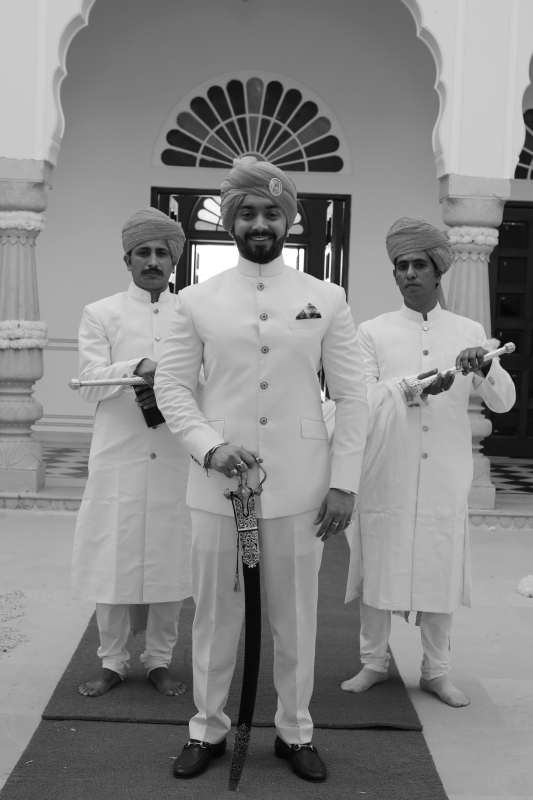
- Rajkumar Devayush Singh, married to Rajkumari Katyayeni Singh, daughter of Raja Ratnakar Singh Ji of Ramnagar-Dhameri.
History
Introduction and Origins
The Thikana of Shahpura (formerly known as Manoharpur) holds an illustrious and unique position in the history of Rajasthan. It is recognized as the Tikka or the premier head seat of the entire Shekhawat clan, a prominent sub-clan of the Kachwaha Rajputs. The ruler, historically styled as the Rao Saheb of Shahpura, is traditionally acknowledged as the ceremonial and genealogical head of all Shekhawats. The principality traces its origins to the legendary 15th-century warrior Rao Shekha Ji, the founder and namesake of the Shekhawat clan, who carved out an independent estate from the parent kingdom of Amer (later Jaipur).
The Ancestral Lineage: From Amarsar to Manoharpur
The original capital of the Shekhawat clan was Amarsar, established by Rao Shekha. Following generations saw the expansion of Shekhawat territories. Rao Shekha was succeeded by his son Rao Raimal, who in turn was succeeded by his son Rao Lunkaran. Rao Lunkaran ruled Amarsar with great distinction.
Rao Lunkaran’s son, Rao Manohar Ji, was an exceptionally gifted warrior and diplomat. He founded a new seat of power, which was named Manoharpur in his honor. This estate became the primary seat of the senior-most branch of the Shekhawats. Over the centuries, due to administrative, strategic, and geographic reasons, the seat of the Thikana was relocated to the nearby town of Shahpura (located on the modern Delhi-Jaipur National Highway), which subsequently became the head seat of the family.
Mughal Alliance and the Golden Era of Rao Manohar
During the medieval period, the rulers of Manoharpur-Shahpura played highly influential roles in the Mughal empire. Rao Manohar Ji was a contemporary of Mughal Emperors Akbar and Jahangir. He was highly esteemed at the imperial court not only for his military prowess in various imperial campaigns but also for his literary genius. Writing under the pen name "Tus" or "Manohar Kavi", he was a celebrated poet in both Persian and Hindi, and is frequently mentioned in contemporary Mughal chronicles like the Ain-i-Akbari and the Tuzuk-e-Jahangiri.
The close alliance with the Mughals elevated the status of the Manoharpur rulers. They enjoyed high imperial mansabs (military ranks) and were granted extensive autonomous territories, cementing their position as the premier chieftains among the Shekhawat clansmen.
Transition to Shahpura and Relations with Jaipur State
As the political landscape of Rajputana evolved, Shahpura emerged as the premier Tazimi Thikana of the princely State of Jaipur. The Rao Saheb of Shahpura held a supreme position of honor at the Jaipur court. During royal durbars, the Rao Saheb was accorded the highest protocol among the Shekhawat nobles, reflecting his status as the head of the clan.
The rulers of Shahpura built formidable fortifications, palatial residences, and public stepwells. They maintained a well-equipped army and administrative machinery to govern their vast territories, which spanned numerous villages and revenue-generating lands.
The British Period and Clan Supremacy
During the British Raj, Shahpura maintained its internal autonomy under the overarching treaty system between the British East India Company (and later the British Crown) and the Jaipur State. The British administrators recognized the historical importance of the Rao Saheb of Shahpura as the titular head of the Shekhawats, a clan known for providing some of the finest soldiers to the British Indian Army.
The rulers of this period were active reformers who contributed significantly to local education, water conservation, and agricultural development. They established schools and patronized traditional arts, including local musicians, painters, and genealogists (Charans and Bhats) who preserved the rich history of the Shekhawat clan.
Post-Independence and Modern Era
Following India's independence in 1947, the last ruling chieftain of Shahpura signed the instrument of accession, merging the Thikana into the United State of Rajasthan, which formally became a part of the Republic of India in 1949.
In the modern era, the royal family of Shahpura has successfully transitioned into the preservation of their vast cultural heritage. The historic family forts and Havelis, including the famous Shahpura Haveli, have been meticulously restored and converted into premier heritage hotels. These initiatives have not only preserved the exquisite Rajput architecture for future generations but have also put Shahpura prominently on the international tourism map, continuing the family's legacy of hospitality and leadership in the region.
References and Historical Sources
- To learn more about the history of the Shekhawat clan, visit the Shekhawat Wikipedia Page.
- For details on the founding ancestor, see the biography of Rao Shekha on Wikipedia.
- For the administrative and historical context within the larger princely state, consult the Jaipur State Wikipedia Page.
- Refer to standard historical texts such as Annals and Antiquities of Rajasthan by James Tod and History of the Shekhawats by Ranbir Sinh for detailed clan genealogies.
Genealogy
- Rao MANOHAR, Rao of Shahpura 1584/1616, granted a mansab of 1000 zat and 600 sawars later increased to 1000 zat and 800 sawars, founder of the Thikana named after himself, Manoharpur, married and had issue. He died in the Deccan.
- Rajkumar Rai Chand, married and had issue. He died in the battle of Bangash.
- Rao Tilok Chand (qv)
- Rao Prithvi Chand (qv)
- Rajkumar Rai Chand, married and had issue. He died in the battle of Bangash.
- Rao PRITHVI CHAND, Rao of Shahpura 1616/1620, granted a mansab of 500 zat and 300 sawars later increased to 700 zat and 500 sawars, died in the siege of Kangra Fort in 1620.
- Rao TILOK CHAND, Rao of Shahpura 1620/1655, granted the jagir of Manoharpur and a mansab of 1000 zat and 600 sawars.
- Rao ANAND CHAND, Rao of Shahpura 1655/1686, married and had issue.
- Rajkumar Amar Chand, married and had issue. He died vp.
- Rao Jagat Singh (qv)
- Rajkumar Shiv Singh
- Rajkumar Arjun Singh
- Rajkumar Kalyan Kanwar [Jamilatunnissa Begum], married 10th August 1681, Shahazada Kaim Baksh of Delhi.
- Rajkumar Amar Chand, married and had issue. He died vp.
- Rao JAGAT SINGH, Rao of Shahpura 1686/1702, married and had issue.
- Rao Sagat Singh (qv)
- Rajkumar Sardar Singh of Deobandh-Bakri
- Rao SAGAT SINGH, Rao of Shahpura 1702/1738, married and had issue.
- Rao Jaswant Singh (qv)
- Rajkumari (name unknown), married 1719, Maharaja Ajit Singh of Jodhpur. She committed sati in June 1724.
- Rao JASWANT SINGH, Rao of Shahpura 1738/1756, he was killed in 1756 by Sawai Raja Jai Singh II of Jaipur, who proclaimed Shahpura as khalsa land.
- Rao NATHU SINGH, Rao of Ajitgarh 1756/1793, married and had issue. He died at Ajitgarh.
- Rao Bishan Singh (qv)
- Rajkumar Prithvi Singh of Garh, married and had issue.
- Rao Hanuwant Singh (qv)
- Several generations
- Rao Balwant Singh, married and had issue.
- Rao Pratap Singh (qv)
- Rajkumar Harnath Singh
- Rajkumari Sahiba Shekawatji, married 1904, (as his fourth wife), Maharaj Sher Singh of Chokelov in Jodhpur.
- Rao Balwant Singh, married and had issue.
- Rajkumar Berisal Singh of Palri.
- Rao BISHAN SINGH, Rao of Shahpura 1793/1810, shifted the capital from Manoharpur to Shahpura, died sp 3rd August 1810.
- Rao HANUWANT SINGH, Rao of Shahpura 1810/1856, married and had issue.
- Rajkumar Lakshman Singh, died vp 3rd May 1854.
- Rao Baldeo Singh (qv)
- Rao Shivnath Singh (qv)
- Rao BALDEO SINGH, Rao of Shahpura 1856/1858, died sp 1858.
- Rao SHIVNATH SINGH, Rao of Shahpura 1858/1881, he succeeded by adoption, married Rani Lad Kunwar, daughter of Thakur Jhujhar Singh of Geejgarh, and had adoptive issue. He died sp in 1881 at Allahabad.
- (A) Rao Pratap Singh Bahadur (qv)
- Rao PRATAP SINGH Bahadur, Rao of Shahpura 1881/1942, born , son of Thakur Balwant Singh of Garh, he succeded by adoption, he was granted the title of Bahadur by HH Maharaja Sawai Man Singh II of Jaipur, married 1stly, Rani Udawatji of Ras, married 2ndly, Rani Hadiji of Ratangarh, and had issue. He died (18th October 1939).
- Rajkumar Kalyan Singh (by 1st wife), married twice, and had issue. He died vp 30th November 1938.
- Rao Dhir Singh (by 2nd wife)(qv)
- Thakur Veer Singh (by 2nd wife), married and has issue.
- Baisa Manjula Kumari married to Yogendra Singh of Bajekan-Dhingsra.
- Thakur Dilip Singh married to Preity Kumari of Gudha (Barmer).
- Baisa Madhu Kumari, married 7th March 1991, Kunwar Rajveer Singh of Bhainsrorgarh, born , and has issue.
- Baisa Parshvani Kumari married to Mandaata Singh of Jawali.
- Rajkumar Kalyan Singh (by 1st wife), married twice, and had issue. He died vp 30th November 1938.
- Rao DHIR SINGH, Rao of Shahpura 1942/1974, born , educated at Mayo College, Ajmer and then at Maharaja College, Jaipur, earned his B.A. LL.B. from Rajasthan University, married Rani Gunwant Kumari, daughter of Thakur Mukund Singh of Chanod in Marwar, and had issue. He died .
- Rao Rajendra Singh (qv)
- Thakur Surendra Singh, born , married 10th December 1987, Thakurani Ratan Kumari, daughter of Kunwar Balbhadra Chand of Chenani in Jammu, and his wife, Kunwarani Prabha Kumari, and has issue.
- Kunwar Digraj Singh
- Kunwar Adhiraj Singh
- Rajkumari Anurekha Kumari, married 1974, Kunwar Yaduvendra Singh Bhati
- Rajkumari Chandrakala Kumari, married 1976, Kunwar Chandan Singh Rathod.
- Rao RAJENDRA SINGH, Rao of Shahpura (see above)
Notable Figures
Rao Manohar
Rao Manohar, a direct descendant of Rao Shekha, was a distinguished nobleman and warrior who served during the reign of the Mughal Emperor Akbar. He was highly regarded in the imperial court and was granted a prestigious mansab (rank) and jagir for his exceptional military services to the empire. He founded the historic town of Manoharpur (initially known as Shahpura-Manoharpur), which became the primary seat of this branch of the Shekhawat clan. His close association with the Mughal court elevated the status of his lineage among the nobility of Jaipur State.
The strategic location of Manoharpur and Shahpura allowed his descendants to wield significant influence in the regional politics of Dhundhar (Jaipur region). Over the centuries, the rulers of this branch came to be known as the Rao Rajas of Shahpura. Information on the historical seat founded by him can be explored on the Manoharpur Wikipedia Page.
Rao Dhir Singh
Rao Dhir Singh was a prominent twentieth-century head of the Shahpura Thikana. During his tenure, India transitioned from the British Raj to an independent democratic nation. He played a crucial role in overseeing the integration of the Shahpura estate into the United State of Greater Rajasthan, cooperating with the national integration policies laid out by Sardar Vallabhbhai Patel and the Jaipur State administration. Under his leadership, the transition of the thikana's traditional rights into modern administrative frameworks was managed smoothly, preserving the cultural heritage of the Shekhawats of Shahpura.
Rao Rajendra Singh
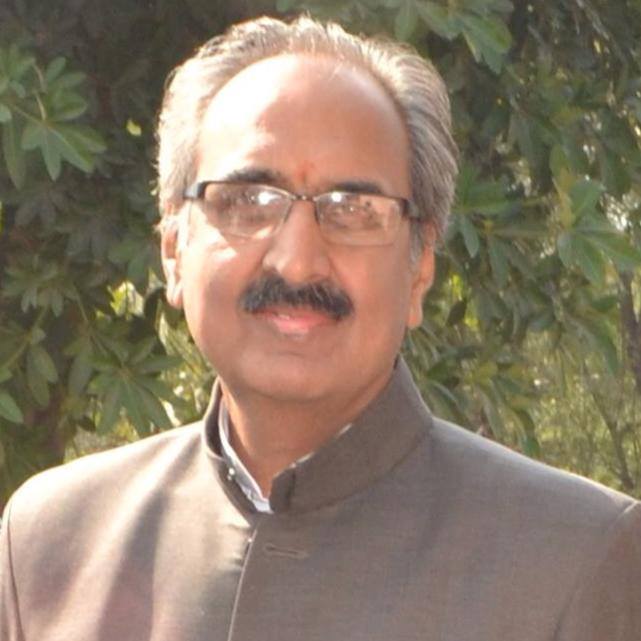
Rao Rajendra Singh, born in , is the contemporary head of the Shahpura (Jaipur) Thikana and a highly prominent political figure in Rajasthan. He represents the modern face of the erstwhile nobility, successfully transitioning from traditional leadership to democratic public service. He is an active leader of the Bharatiya Janata Party (BJP) and has represented the Shahpura assembly constituency in the Rajasthan Legislative Assembly multiple times.
He served with distinction as the Deputy Speaker of the Rajasthan Legislative Assembly from 2013 to 2018. Known for his deep understanding of parliamentary procedures, local development, and rural welfare, Rao Rajendra Singh remains an influential voice in the politics of Rajasthan. For more details on his political career and legislative contributions, visit the Rao Rajendra Singh Wikipedia Page.