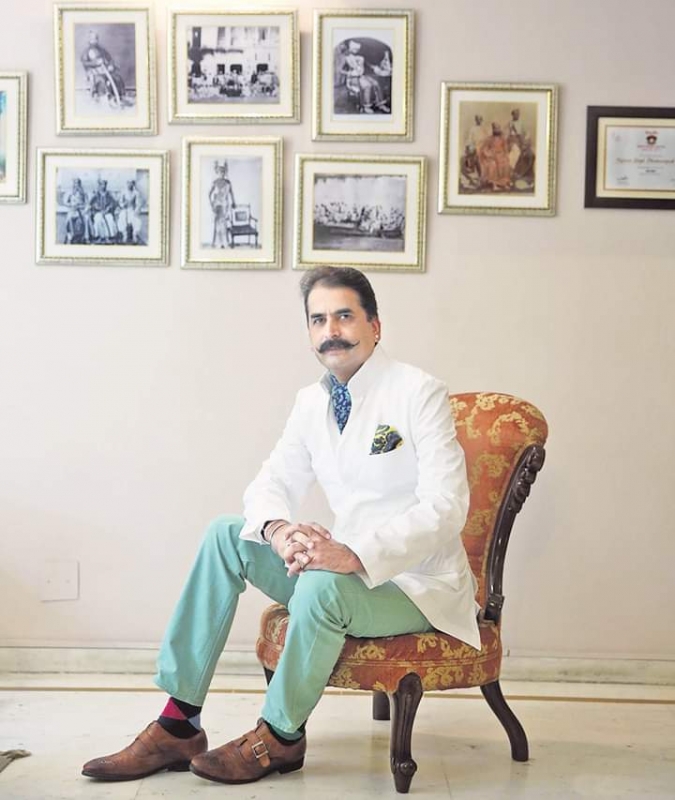
Present Head
- Kunwarani Harsh Kumari, born , married 23rd January 1988, Thakore Harshvardhansinghji Indrajeetsinghji of Eral-Panchmahal in Gujarat.
- Kunwranai Chitrangda Kumari, born , married 17th June 1994, Maj. Kunwar Manvendra Singh, elder son of Maj.(retd.) Thakur Jaswant Singh of Jasol.
- Kunwar Rajveer Singh, born , married 7th March 1991, Kunwarani Madhu Kumari, daughter of Thakur Veer Singh of Shahpura in Jaipur, and has issue.
- Bhanwar Chakradhar Singh, born .
- Kunwar Hemendra Singh, born , married 11th December 1996, Kunwarani Vrinda Kumari, daughter of Thakore Govind Singh of Limbdi-Panchmahal in Gujarat and has issue.
- Bhanwar Abhiveer Singh, born .
- Bhanwar Yashodhar Singh, born .
History
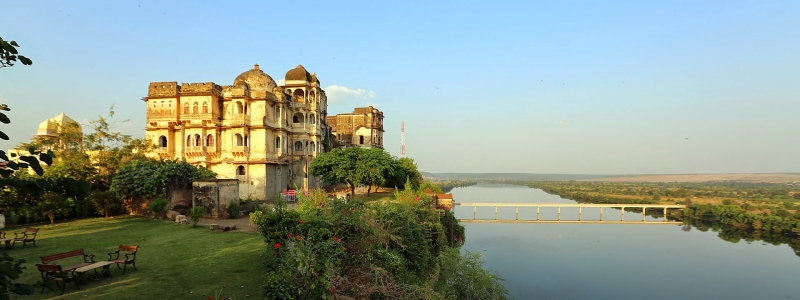
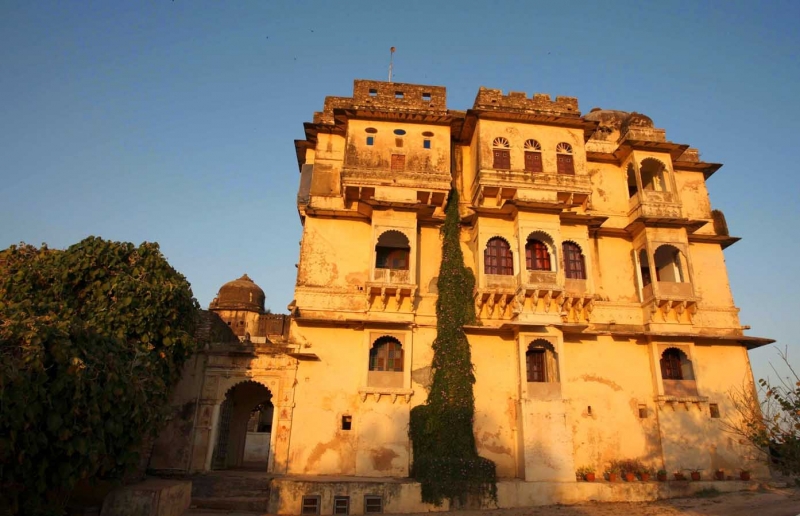
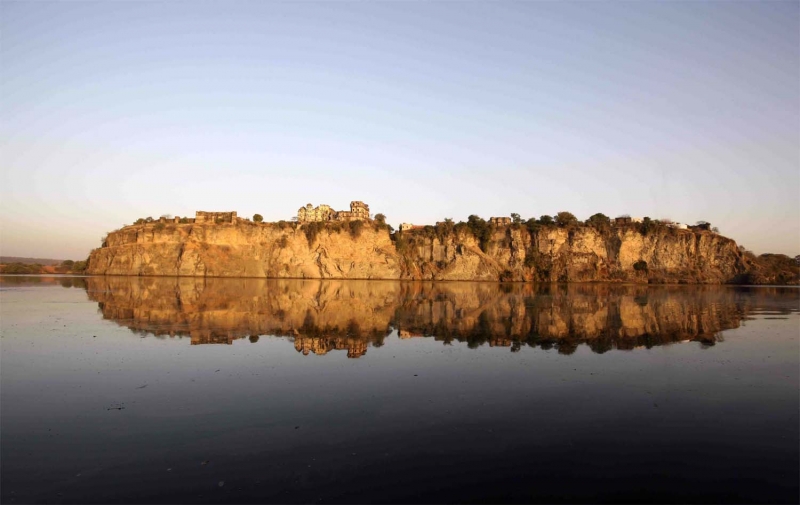
Bhainsrorgarh is a fortified outpost of the kingdom of Mewar. It crowns a 200-foot rocky ridge overlooking the Chambal River. This fort was built by Rawat Lal Singh in 1741 A.D. The famous British historian Col. James Tod, after seeing the splendid and mesmerizing beauty of Bhainsrorgarh, famously remarked that if he were offered a Jagir (fiefdom) and given an option to choose it anywhere in Rajasthan, he would have chosen Bhainsrorgarh.
Origin and Foundation
The historical origins of Bhainsrorgarh date back long before its establishment as a premier Chundawat Thikana of Mewar. According to local folklore and historical manuscripts, the original fort was constructed by a wealthy merchant named Bhainsa Sah and a merchant-warrior named Rora Charan, from whose combined names "Bhainsrorgarh" is derived. It was strategically built at the confluence of the Chambal and Bamani rivers to protect trade caravans passing through this vital route connecting Malwa and Mewar.
Over the centuries, control of this formidable fort passed through various hands, including the Paramaras, the Delhi Sultanate, and eventually the Sisodia rulers of Mewar. In the 18th century, Mewar's sovereign granted the estate to the Chundawat clan, a sub-clan of the Sisodias, recognizing their military valor and allegiance to the throne.
The Chundawat Thikana and Mewar State
The Chundawats, descendants of the legendary Crown Prince Chunda of Mewar—who selflessly renounced his right to the throne of Chittorgarh in the 15th century—held a position of unparalleled honor and privilege (known as the Solah Umraos or the Sixteen First-Class Nobles) in the Mewar court. In 1741 A.D., Maharana Jagat Singh II of Udaipur granted the estate of Bhainsrorgarh to Rawat Lal Singh, a descendant of the Chundawat branch.
Rawat Lal Singh reconstructed and heavily fortified the outpost, transforming it into an impregnable bastion. Under the Chundawat chiefs, Bhainsrorgarh became a crucial military stronghold, guarding the eastern frontier of Mewar against external incursions, particularly from the rising power of the Marathas and neighboring hostile states.
The British Period
During the early 19th century, when Mewar entered into a treaty of subsidiary alliance with the East India Company in 1818, Bhainsrorgarh’s strategic importance shifted from active warfare to administrative stability. Colonel James Tod, the Political Agent to the Western Rajputana States, visited the fort during his extensive travels. Captivated by its dramatic location, sheer cliffs, and medieval charm, he recorded his high praise for the estate in his seminal work, Annals and Antiquities of Rajasthan.
Post-Independence and Modern Era
Following India's independence in 1947, and the subsequent merger of the princely state of Udaipur into the United State of Rajasthan, the feudal jagirdari system was abolished. The family of the Rawats of Bhainsrorgarh retained ownership of their ancestral fort.
In recent decades, to preserve this architectural marvel, the royal family transitioned the fort into a world-class boutique heritage hotel. Today, it stands as one of the most celebrated heritage destinations in India, acclaimed internationally for its conservation, hospitality, and spectacular vistas. For more details on Rajasthan's rich cultural heritage, you can visit the official site of Rajasthan Tourism.
Genealogy
- Rawat LAL SINGH, 1st Rawat of Bhainsrorgarh 1741/- , second son of Rawat Kesri Singh of Salumber, he was granted the Thikana of Bhainsrorgarh and the title of Rawat in 1741 by Rana Jagat Singh II of Udaipur, married and had issue.
- Rawat Man Singh (qv)
- Rawat MAN SINGH, 2nd Rawat of Bhainsrorgarh
- Rawat RAGHUNATH SINGH, 3rd Rawat of Bhainsrorgarh fl.1820, married to Thakurani Abhai Kanwar, daughter of Deewan Thakur Vijay singh of Khejdiya in Malwa (M.P).
- Rawat AMAR SINGH, 4th Rawat of Bhainsrorgarh, married and had issue.
- Rawat Bhim Singh (qv)
- Rawat Pratap Singh (qv)
- Rawat BHIM SINGH, 5th Rawat of Bhainsrorgarh -/1881, died aged 35.
- Rawat PRATAP SINGH, 6th Rawat of Bhainsrorgarh 1881/1897, born , married and had issue, as well as an adopted son. He died spm 1897.
- Rajkumari (name unknown) [Rani Sahiba of Indargarh], married Maharaj Shri Sher Singh of Indergarh in Kotah.
- (A) Rawat Inder Singh (qv)
- Rawat INDER SINGH, 7th Rawat of Bhainsrorgarh 1897/1946, born as Kunwar Inder Singh, son of Rawat Bhupal Singh of Bhadesar, he succeeded by adoption in 1897; married 1897, Rani Gulab Kanwar, daughter of Thakur Kanh Singh of Geejgarh in Jaipur, and had issue. He died .
- Rawat Himmat Singh (qv)
- Kunawr Khuman Singh, he was adopted into Chavand and then later into Salumber, and succeded there as Rawat Shri Khuman Singhji of Salumber.
- Rawat HIMMAT SINGH, 8th Rawat of Bhainsrorgarh 1946/1972, born , married 1stly, 1926, Rani Suraj Kanwar, daughter of the Raja of Sheopur-Baroda, married 2ndly, 1929, Rani Sampat Kanwar, daughter of the Thakur of Baghera in Ajmer, and had issue. He died .
- Rani Devendra Kanwar (by Rani Suraj Kanwar), born , married 1946, Maharaj Shri Kesri Singh of Kapren, younger brother of HH Maharaja Bahadur Singhji of Bundi.
- Rani Kush Kanwar (by Rani Sampat Kanwar), born , married 1951, Maharaj Shri Prithviraj Singh Hada of Bada Khera in Bundi.
- Rawat Shiv Charan Singh (by Rani Sampat Kanwar) (qv)
- Rawat SHIV CHARAN SINGH, 9th Rawat of Bhainsrorgarh (see above)