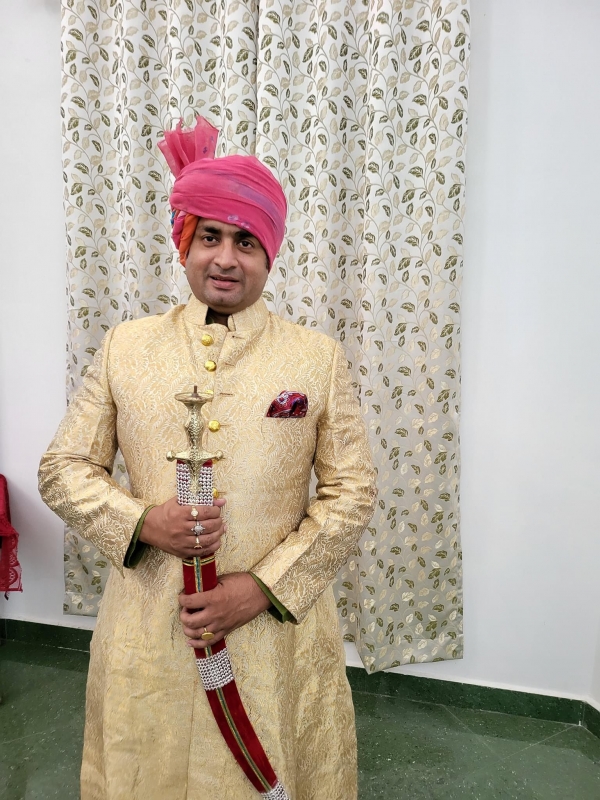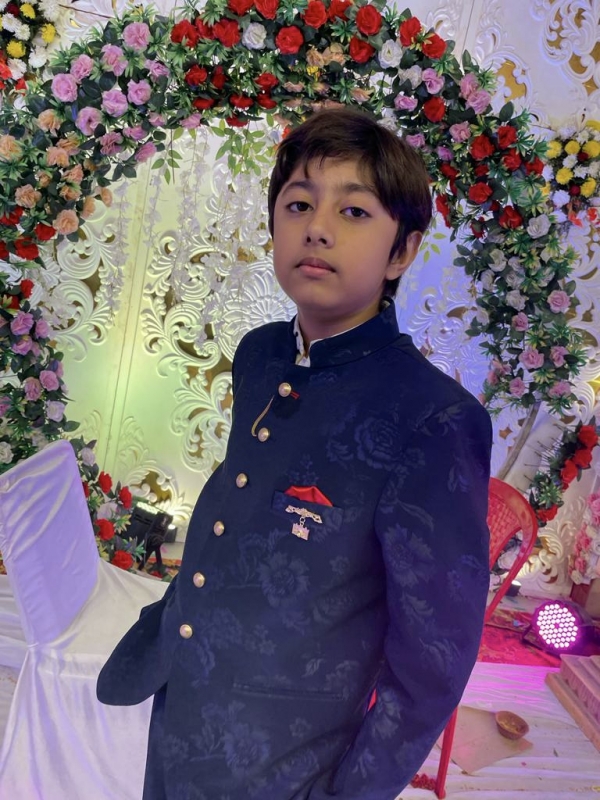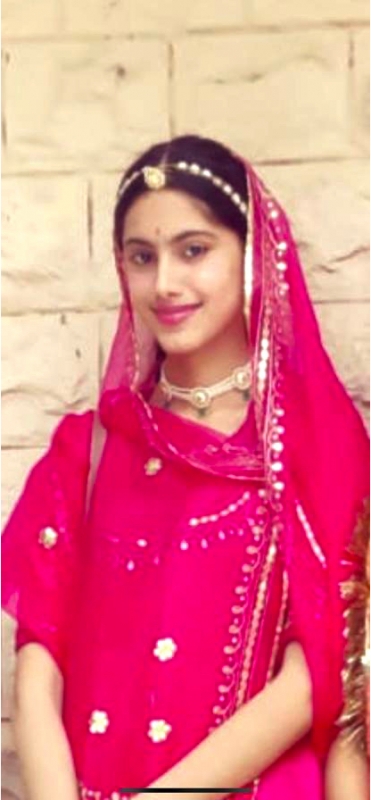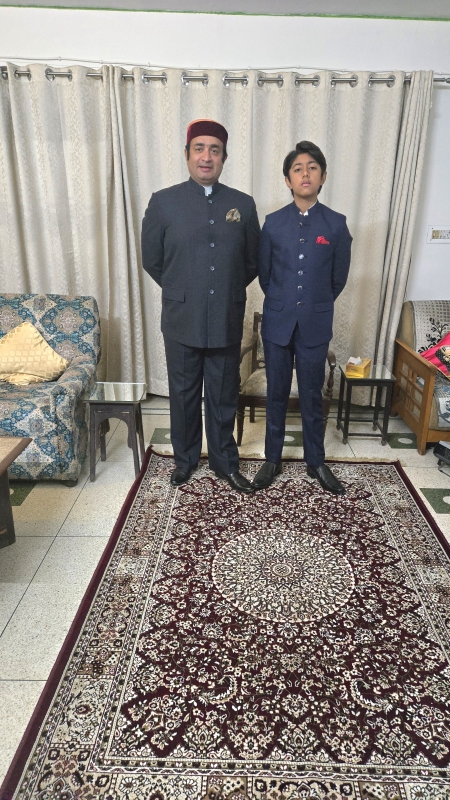
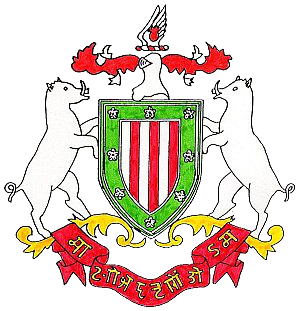
Present Head
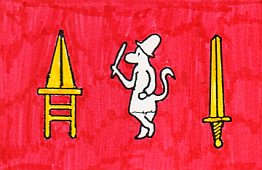
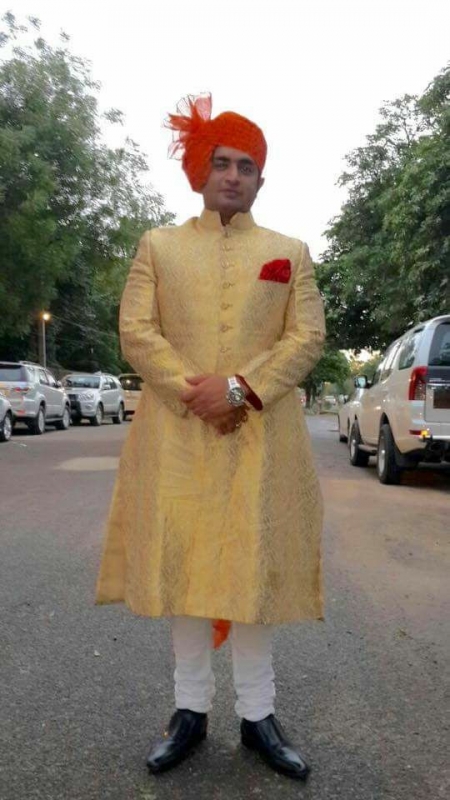
- Maharaj Kumar Veer Vikram Singh, born in Indore, married Neha Mathur of Delhi, and has issue.
- Bhanwarbai Saheba Ujjaiti Kumari Singh, born .
- Bhanwarbai Saheba Tvisha Kumari Singh, born .
- Bhanwarbai Saheba Tavishi Kumari Singh, born .
- Maharaj Kumar Vishwa Pratap Singh, born in Indore.
- Bhanwarbai Sahiba Vanshika Singh, born .
- Bhanwar Sahib Vrishdhwaj Singh, born .
History
Origin and Foundation
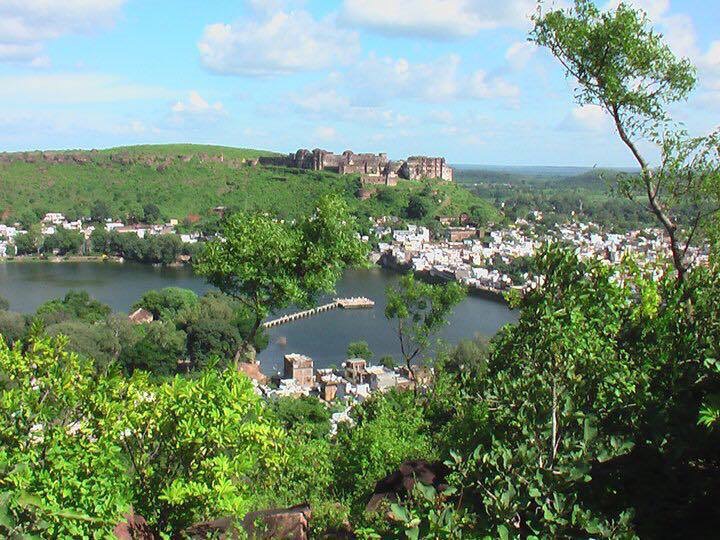
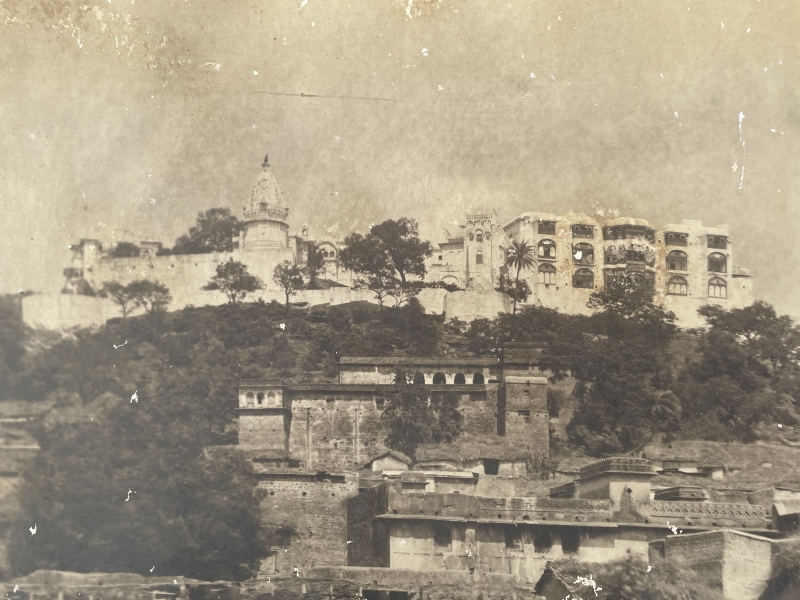
The history of Narsinghgarh is deeply intertwined with the Umat clan of the Paramara Rajputs, who held sway over the region historically known as Umatwara in the Malwa plateau. During the 17th century, the joint rulers of Umatwara, Rawat Mohan Singh and his younger brother Paras Ramji, mutually agreed to partition their ancestral territory. Consequently, in 1681, the independent state of Narsinghgarh was established by Paras Ramji. He selected a picturesque site nestled among the Vindhya hills and built a fort, naming the new capital Narsinghgarh in honor of Lord Narsimha, the lion-man incarnation of Lord Vishnu.
The Maratha Influence and British Protectorate
With the decline of the Mughal Empire in the 18th century, the Marathas established their dominance in the Malwa region. Narsinghgarh, like its neighbor Rajgarh, was forced to pay tribute to the Maratha rulers, particularly the Holkars of Indore. Following the Third Anglo-Maratha War and the subsequent Treaty of Mandsaur in 1818, the British East India Company assumed control over Central India. A settlement was mediated by the British administrator Sir John Malcolm, under which the ruler of Narsinghgarh agreed to pay a fixed tribute to Indore State through the British political agent, thereby ensuring the internal autonomy of Narsinghgarh under British suzerainty.
The Heroic Rebellion of Kunwar Chain Singh (1824)
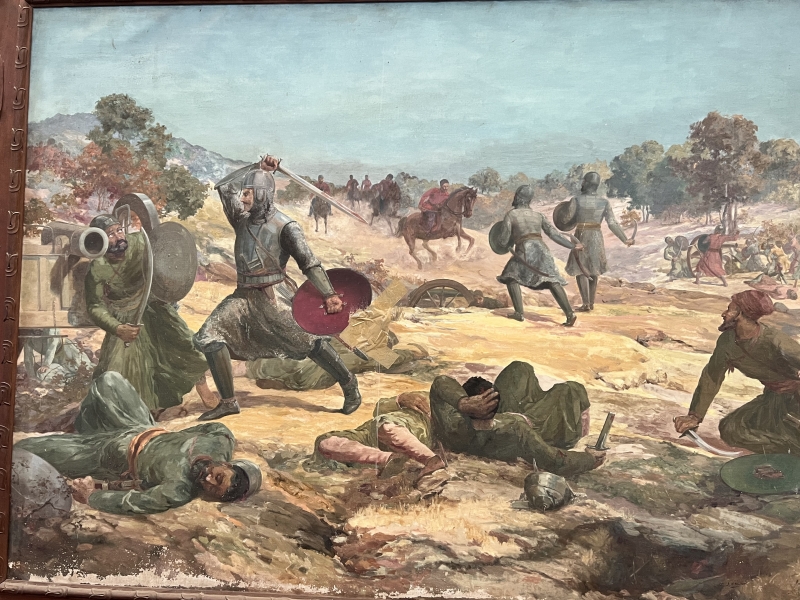
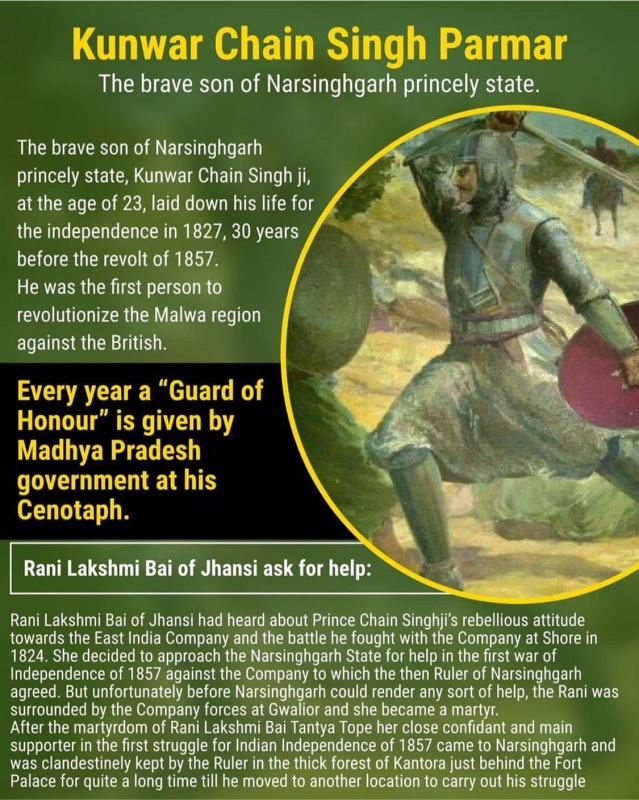
Narsinghgarh holds a prestigious place in the annals of India's freedom struggle due to the rebellion of Kunwar Chain Singh. The young prince of Narsinghgarh fiercely opposed the growing interference of the British East India Company in the state's internal affairs, spearheaded by the British Political Agent at Sehore, Mr. Maddock. On July 24, 1824, Kunwar Chain Singh, along with his loyal soldiers including Himmat Khan and Bahadur Khan, fought a valiant but unequal battle against the British forces at Sehore. He fell in battle, becoming one of the earliest martyrs of Central India, decades before the Revolt of 1857. His cenotaph (Chhatri) in Sehore remains a symbol of patriotic pride, and he is widely commemorated as the "Mangal Pandey of Malwa." Detailed records of this historic event can be explored on the Official Rajgarh District Website.
The Era of Modernization and Reform
During the late 19th and early 20th centuries, Narsinghgarh witnessed significant administrative and social modernization. In 1872, during the reign of Rawat Hanwant Singh, the hereditary title of 'Raja' was recognized by the British Crown, along with an 11-gun salute. His successor, Raja Arjun Singhji, who was educated at the prestigious Mayo College in Ajmer, introduced extensive administrative, judicial, and educational reforms. He built modern schools, hospitals, and developed the infrastructure of the state. He was succeeded by Raja Vikram Singhji in 1924, during whose reign further progress was made in the fields of agriculture and public welfare.
Post-Independence and the Modern Era
Following India's independence in August 1947, the last ruling Maharaja of Narsinghgarh, His Highness Raja Bhanu Prakash Singhji, signed the Instrument of Accession to the Dominion of India. In 1948, the state was formally merged into the newly created union of Madhya Bharat. Following the States Reorganisation Act of 1956, Madhya Bharat was integrated into the state of Madhya Pradesh. Raja Bhanu Prakash Singhji later entered democratic politics, serving as a Member of Parliament and as a Union Minister in the Government of India. More information on the historical transitions of Central Indian states can be accessed through the Digital South Asia Library of the University of Chicago.
Today, Narsinghgarh is celebrated as a major tourist destination in Madhya Pradesh, affectionately called the "Kashmir of Malwa" because of its scenic lakes, dense forests, and the majestic Narsinghgarh Fort overlooking the town.
Genealogy
- Raja PARAS RAMJI, Raja of Narsinghgarh 1681/1695, son of Raja Chhatar Singh of Umatwara; Diwan of Rajgarh 1660/1681 and founder of Narsinghgarh in 1681, a just and a capable Ruler, he named his state after Shri Narsingh Bhagwan, who was his deity and aradhya Dev; afterwards he founded the town of Narsinghgarh and transferred his capital there and constructed the temple of his aradhya Dev Shri Narsingh Bhagwan, he also constructed a tank known as Paras Ram Sagar, married and had issue.
- Rawat Dalel Singhji (qv)
- Rawat DALEL SINGHJI, Rawat of Narsinghgarh in 1695, married and had issue. He died .
- Rawat Moti Singhji (qv)
- Rawat MOTI SINGHJI, Rawat of Narsinghgarh 1695/1751, married and had issue. He died .
- Rawat KHUMAN SINGHJI, Rawat of Narsinghgarh 1751/1766, during his rule, Mughul power declined in Malwa and the Marathas gained the ascendancy; he married and had issue.
- Rawat Achal Singhji (qv)
- Rawat ACHAL SINGHJI, Rawat of Narsinghgarh 1766/1795, a brave and wise ruler, he married the daughter of the Maharana of Udaipur, and had issue. He died .
- Rawat Sobhagh Singhji (qv)
- Rawat SOBHAGH SINGHJI, Rawat of Narsinghgarh 1795/1827, his reign witnessed the advent of the British in Malwa and also the signing of treatise and engagements between the Ruling Princes of Malwa and Sir John Malcolm, who represented the British Government; he married the niece of Maharana Udaipur, and had issue. He died .
- Rajkumar Chain Singhji, born , courageous, brave and intelligent, he was placed in charge of the administration of the state due to the illness of his father, but he fell foul of the British Government and a battle ensued at Sehore in 1824, a town about 37 kilometers west of Bhopal, in he which he died fighting valiantly, married and had adoptive issue. He died in battle in 1824 at Sehore.
- (A) HH Raja Hanwant Singhji (qv)
- Rajkumar Chain Singhji, born , courageous, brave and intelligent, he was placed in charge of the administration of the state due to the illness of his father, but he fell foul of the British Government and a battle ensued at Sehore in 1824, a town about 37 kilometers west of Bhopal, in he which he died fighting valiantly, married and had adoptive issue. He died in battle in 1824 at Sehore.
- HH Raja HANWANT SINGHJI, Raja of Narsinghgarh 1827/1873, Raja (Hereditary)[cr. xx.5.1872], as the nearest heir and rightful successor to the gaddi, he was adopted from Batkhera by the dowager Rani of the late Rawat Saheb with the consent of Sirdars of Narsinghgarh State in 1827; a generous, noble and high-minded Ruler with a great administrative capabilities for which he was rewarded with a salute of 11 guns and the style of His Highness by the British Government, he married and had issue. He died in .
- Rajkumar Bhawani Singhji, married Rajkumari Rukmani Kumari, born , daughter of Raja Shivnath Singh of Khetri, and had issue. He died vp before 1873.
- HH Raja Pratap Singhji (qv)
- HH Raja Mehtab Singhji (qv)
- Rajkumar Chhatrashalji
- Rajkumari Bijai Kunwar Bai Sahiba, married HH Maharaja Jashwant Singhji II of Jodhpur, and had issue.
- Rajkumar Bhawani Singhji, married Rajkumari Rukmani Kumari, born , daughter of Raja Shivnath Singh of Khetri, and had issue. He died vp before 1873.
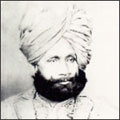
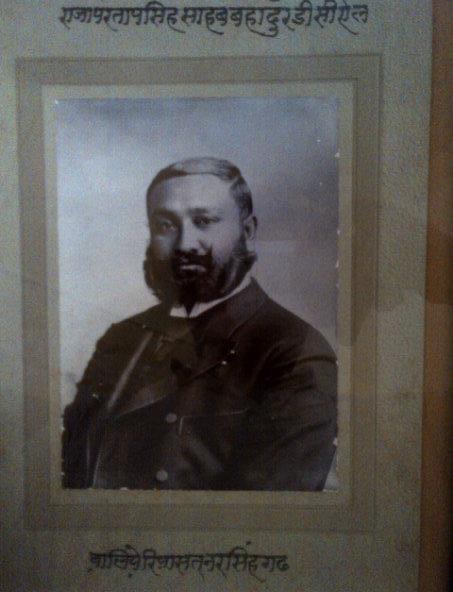
- HH Shri Huzur Raja PRATAP SINGHJI, Raja of Narsinghgarh 1873/1890, succeeded his grandfather in March 1873 (on this occasion, Maharaja Holkar demanded the succession nazrana, but his claim was not admitted by the British Government). In 1880, he abolished all transit duties on salt passing through his territories. On January 1, 1885, he abolished all transit duties within his territory, with the exception of opium, and in the same year, contributed Rs. 56,000 towards the construction of the Biaora-Sehore road. He attended the Imperial Assemblage at Delhi in 1877. He visited England in 1887, and during his visit, he was received by Queen-Empress Victoria. Hon. D.C.L. (Uni of Edinburgh, 1887). Married 1890, Rani Fateh Kanwar, a niece of Maharaja Shri Jaswant Singhji of Jodhpur. He died without issue in April 1890 and was succeeded by his uncle, Mehtab Singh.
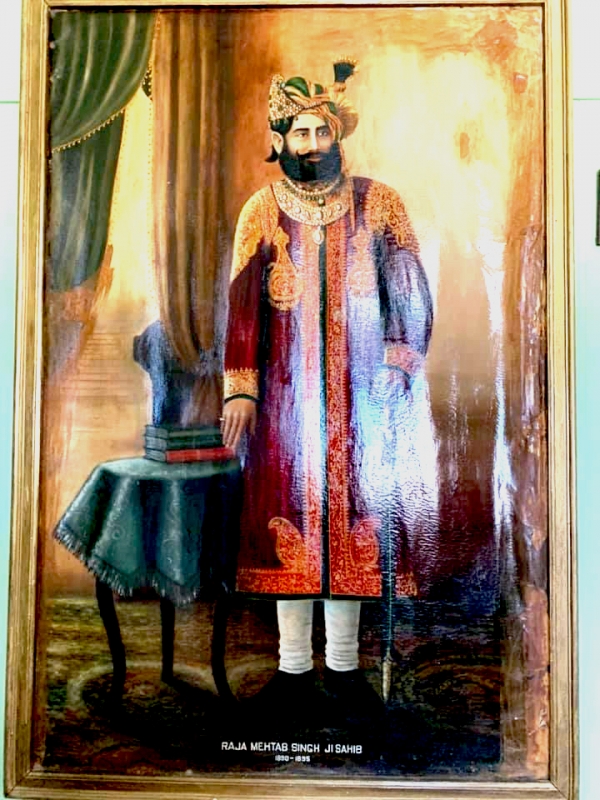
- HH Raja MEHTAB SINGHJI, Raja of Narsinghgarh 1890/1895, succeeded 28th June 1890, the only surviving son of Raja Hanwant Singhji, he was as capable as his father, and often toured his state every year and dispensed even-handed justice to all his subjects on the spot, whenever it was required. He died sp 1895.
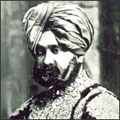
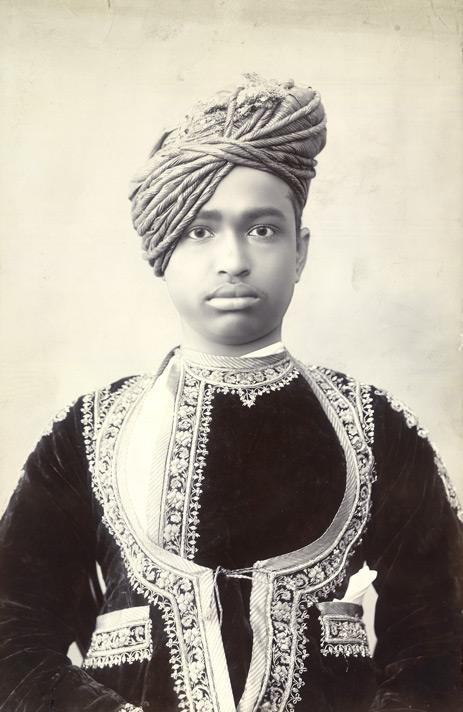
- HH Shri Huzur Raja Sir ARJUN SINGHJI Sahib Bahadur, Raja of Narsinghgarh 1895/1924, selected by the Government of India from Bhatkhera as successor, born , educated at Mayo College, Ajmer and Daly College, Indore; trained with the Imperial Cadet Corps in Dehradun; K.C.I.E., married 1stly, 1907, HH Rani Shiv Kunwarji, daughter of HH Raja Sir Jashwant Singhji Bahadur of Sailana, D.B.E.(civil) [cr.1924], married 2ndly, a Princess of Talsana in Gujarat, and had issue, one son and three daughters. He died .
- HH Shri Huzur Raja Sir Vikram Singhji Sahib Bahadur (by Rani Shiv Kunwarji) (qv)
- Rajkumari Damyanti Kumaribai Sahiba [HH Maharani Damayanti Devi of Jaisalmer] (by Rani Shiv Kunwarji), married 1926 (as his first wife), HH Maharajadhiraj Maharawal Girdhar Singhji of Jaisalmer, and had issue. She died .
- Rajkumari Hemant Kumaribai Sahiba [Rani Hemant Kanwar of Jubbal] (by Rani Shiv Kunwarji), born in Narsingarh, married 31st January 1932, Raja Rana Digvijay Chandra of Jubbal, and had issue. She died in Delhi.
- Rajkumari Basant Kumaribai Sahiba [Rani Basant Kumari of Indargarh] (by the Talsana Rani), she married Raja Sumer Singhji of Indargarh in Rajasthan.
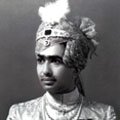
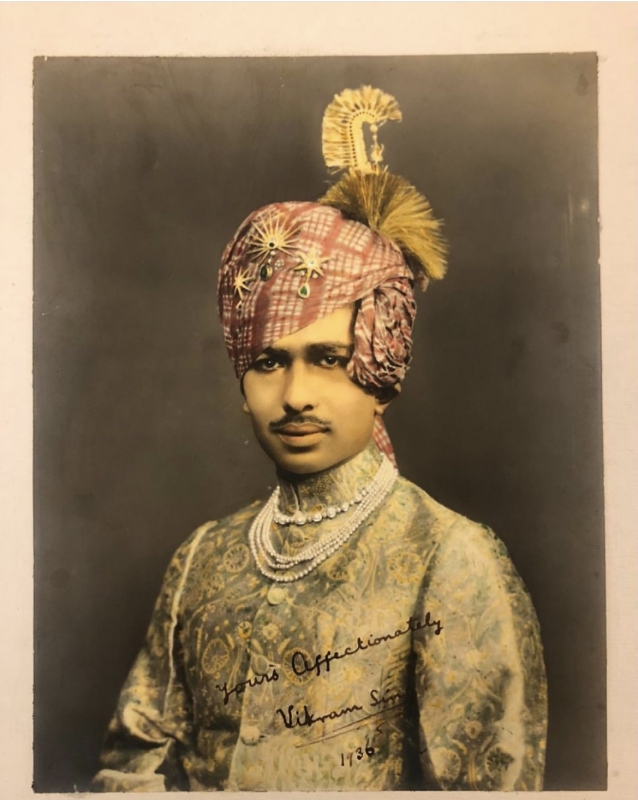
- HH Shri Huzur Raja Sir VIKRAM SINGHJI Sahib Bahadur, Raja of Narsinghgarh 1924/1957, K.C.I.E. [cr.1941], born and succeeded 23rd April 1924, invested with full ruling powers in 1929; educated at Daly College, Indore, and Mayo College, Ajmer; he was generally acknowledged by all as a kind hearted and highly respected Ruler who enjoyed good standing amongst his brother Princes and Rulers of India; he signed the Instrument of Accession to the Dominion of India on 15th August 1947 and concluded an agreement to form Madhya Bharat on 15th June 1948 with other rulers; he was engaged to Maharajkumari Jeet Kunwarba Sahiba, daughter of HH Maharao Swaroop Ram Singhji of Sirohi, but the princess fell ill the very morning of the marriage and died just before the marriage ceremony, he married 1929, HH Rani Dev Kumariji, daughter of HH Maharajadhiraj Mirzan Maharao Shri Vijayarajji Khengarji Sawai Bahadur of Kutch, and his wife, HH Maharani Shri Padmakunwar Ba Sahiba, he adopted Kunwar Bhanuprakash Singhji, son of Maharaj Prabhunath Singhji of Dhuwankheri in 1942. He died sp 17th July 1957 dearly loved and respected by all his subjects.
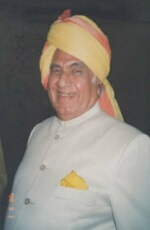
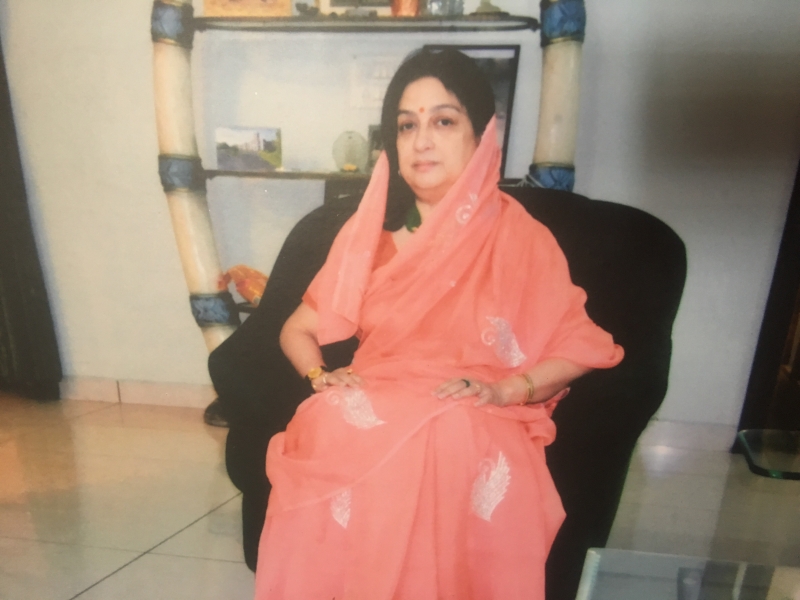
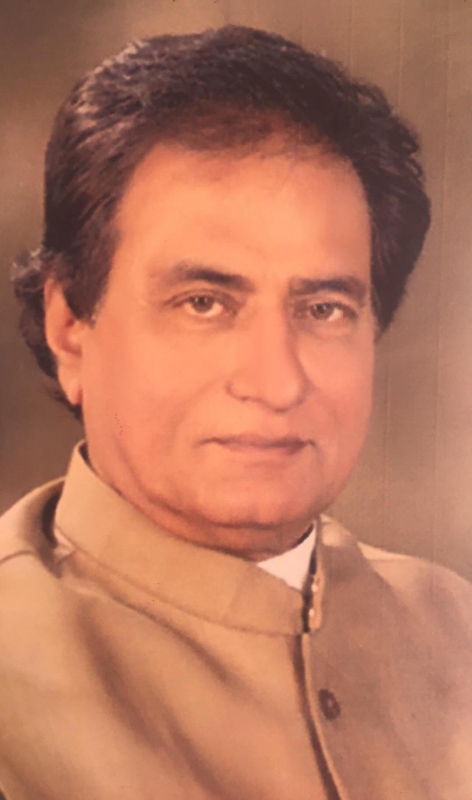
- HH Shri Huzur Maharaja BHANUPRAKASH SINGHJI Sahib Bahadur, Maharaja of Narsinghgarh from 17th July 1957 to 24th January 2019. Born , son of Maharaj Prabhunath Singhji of Dhuwankheri, uncle of HH Shri Huzur Maharaja Sir Vikram Singhji, who adopted him in the 1942, he succeeded to the gadi on 17th July 1957; educated at Mayo College Ajmer, Daly College, Indore and St. John’s College, Agra; entered politics in 1962 and fought the general election as an Independent candidate and won both the Assembly seat from Narsinghgarh and the Rajgarh Lok Sabha seat from Madhya Pradesh, Convener of the Madhya Pradesh Youth Congress to 1966, Parliamentary Secretary to the Minister of Communications in 1966, he donated the Arjun Niwas Palace, to be used as a college for post-graduate classes in Arts, Science and Commerce, appointed as Secretary to the Central Citizens Council in 1966, elected to the 4th Lok Sabha in 1967 and was appointed a deputy Minister in the Ministry of Industrial Development, Internal Trade and Company Affairs, appointed to the Ministry of Petroleum and Chemicals and Mines and Metals in 1970, delegate from India to the World Conference of the Working People’s Socialist Union in Belgrade in 1966, Leader of the Indian Delegation to the Second Session of the United Nations Industrial Development Organisation (UNIDO) held at Vienna in April 1968, led the official Indian Delegation for Small Scale Industries to Japan in 1969, Convener of the Madhya Pradesh Rashtra Bhasha Prachar Samiti and President of the All India Rajput Parishad, President of the Board of Governors of the Daly College Indore 1971/1980, appointed as the Governor of Goa and Administrator of Daman & Diu and Dadra & Nagar Haveli from 18th March 1991 to 4th April 1994, the Maharaja Sahib is widely travelled and is interested in sports, particularly hockey and cricket, a lover of wild life, he was a keen Shikari in his earlier days; he married Rajkumari Lakshmi Kumari [HH Maharani Lakshmi Kumari of Narsinghgarh], daughter of Maharajkumar Shri Bijai Singhji of Bikaner, and has issue, five sons and an adopted daughter. He died on in Indore after a prolonged illness.
- Maharajkumar Shiladitya Singh, born , married Rajkumari Madhulika Kumari (div. 1980), born , daughter of Maharaja Mahendra Ripudaman Singh of Bhadawar, and his wife, Maharani Braj Shree Devi, and has issue, two daughters.
- Maharajkumari Sahiba Yogeshwari Kumari [HH Maharani Yogeshwari Kumari of Ajaigarh], born , married HH Sawai Maharaja Ajayraj Singh of Ajaigarh (div. 2011), married 2ndly to Sameer Parikh, living in Mumbai.
- Maharajkumari Sahiba Poornamrita Kumari, born .
- Maharajkumar Rajyavardhan Singh (qv)
- Maharajkumar Giri Ratna Singh, born , married Rajkumari Gayatri Kumari of Gabhana, U.P., daughter of Rajkumar Raghuraj Singhji, and grand daughter of Captain Raja Devraj Singhji, and has issue, one son.
- Bhanwar Saheb Divya Ratna Singh, born .
- Maharajkumar Bhagyaditya Singh, born , married Kumari Yashodhara Kumari from Ujjain (div. 1995), and has issue, one daughter.
- Bhanwarbai Sahiba Shraddha Kumari
- Maharajkumar Yashovardhan Singh, born , he renounced the World and became a Sanyasi at the age of 22 years and succeeded to the gadi of his guru Avadhoot Bhagwan Ram in 1992 at Aghorpeeth Shri Sarveshwari Samooh Sansthan Devsthanam (Awadoot Bhagwan Ram Kushta Seva Ashram, Padav, Varanasi - 221102, U.P.); he is now known as Gurupad Sambhav Ramji.
- Maharajkumar Shiladitya Singh, born , married Rajkumari Madhulika Kumari (div. 1980), born , daughter of Maharaja Mahendra Ripudaman Singh of Bhadawar, and his wife, Maharani Braj Shree Devi, and has issue, two daughters.
- HH Shri Huzur Maharaja Rajyavardhan Singh Sahib Bahadur, Maharaja of Narsinghgarh (see above)
Notable Figures
Rawat Paras Ram (1681–1695)
Rawat Paras Ram was the founder of the Narsinghgarh State. He belonged to the Umat clan of the Parmar Rajput dynasty, which originally co-ruled the joint territory of Rajgarh. In 1681, due to internal administrative differences, the territory was partitioned between Rawat Mohan Singh (who retained Rajgarh) and Rawat Paras Ram, who carved out Narsinghgarh as an independent principality. He established his capital at Narsinghgarh and named it in honor of Lord Narsimha, an incarnation of Lord Vishnu.
Under his leadership, the foundation of the iconic Narsinghgarh Fort was laid, which became the political and military stronghold of the state. He ruled until his death in 1695, setting up the basic administrative structures of the new state. For more details on the state's foundation, you can refer to the Wikipedia page on Narsinghgarh State.
Kunwar Chain Singh (died )
Kunwar Chain Singh is celebrated as one of the earliest freedom fighters of Central India, often regarded as the "first martyr of Malwa." He was the crown prince of Narsinghgarh. In 1824, he fiercely opposed the growing interference of the British East India Company in the internal administration of the state and the surrounding region, particularly objecting to the oppressive terms laid down by the British Political Agent, Thomas Maddock.
On 24 July 1824, Kunwar Chain Singh, along with his loyal companions, fought a valiant but unequal battle against the British forces at Sehore. He was martyred during this encounter. Today, his cenotaph (Chhatri) in Sehore is a revered national monument, and he is remembered annually for his early resistance to British colonial rule. Further historical context can be found on his dedicated Wikipedia page on Chain Singh.
Rawat Sobhag Singh (1824–1827)
Rawat Sobhag Singh, the father of the martyr Kunwar Chain Singh, ruled the state during an incredibly turbulent era marked by heavy British military and political oversight. Following the tragic death of his son in 1824, Sobhag Singh had to navigate the administrative and financial pressures imposed by the British East India Company, which sought to curb any further rebellion in the Malwa region.
His short reign was defined by efforts to maintain the territorial integrity of Narsinghgarh while dealing with the aftermath of the 1824 uprising. He passed away in 1827, passing the mantle of leadership to his successor under heavily supervised British diplomatic conditions. His reign is documented in historical records such as the Imperial Gazetteer of India.
Rawat Hanwant Singh (1827–1873)
Rawat Hanwant Singh enjoyed an exceptionally long and stabilizing reign of forty-six years. Ascending the throne in 1827 after the death of Rawat Sobhag Singh, he dedicated his early years to restoring order and reviving the state's depleted economy. He successfully negotiated administrative settlements with the British authorities and maintained a policy of cautious diplomacy during the turbulent Indian Rebellion of 1857.
Under his administration, agriculture and trade in Narsinghgarh saw significant revival. His long-standing rule provided the state with much-needed institutional continuity, laying the groundwork for the modernization programs undertaken by his successors in the late 19th century.
Raja Pratap Singh (1873–1890)
Raja Pratap Singh succeeded to the gaddi in 1873. He is highly regarded for his modern administrative reforms and development projects. In recognition of his loyalty and efficient administration, the British Government conferred upon him the hereditary title of "Raja" in 1872 (confirmed with full powers upon accession) and a personal salute of 11 guns, elevating the prestige of Narsinghgarh among the princely states of Central India.
He was a patron of learning and public works. He established modern schools, healthcare facilities, and constructed the Pratap Canal to boost agricultural productivity. He died without direct male issue in 1890, leading to the selection of his cousin as his successor.
Raja Mahendra Singh (1890–1895)
Raja Mahendra Singh, previously known as Maharaj Mahendra Singh, was adopted from a cadet branch of the ruling Umat clan and ascended the throne in 1890 following the death of Raja Pratap Singh. His reign, though short, was focused on continuing the infrastructural and welfare policies initiated by his predecessor.
He focused heavily on improving road connectivity and communication channels within the state to link Narsinghgarh with neighboring markets in Bhopal and Indore. He passed away in 1895, leaving the state to his young son and successor.
Raja Arjun Singh (1895–1924)
Raja Arjun Singh was educated at the prestigious Mayo College in Ajmer and later received military training. Since he was a minor at the time of his accession in 1895, the state was initially managed by a superintendent under the supervision of the British Political Agent. He was invested with full ruling powers in 1909.
He was an enlightened ruler who attended the historic Delhi Durbar in 1911. During his active rule, he introduced several modern reforms, including the reorganization of the state police, the establishment of a high school, and the expansion of medical facilities. He also contributed resources to the Allied war effort during the First World War. He ruled until his death in 1924.
Raja Vikram Singh (1924–1957)
Raja Vikram Singh was the last official ruling prince of the Narsinghgarh State. Ascending the throne in 1924, his reign witnessed the momentous transition of India from British colonial rule to independence. He was known for his progressive outlook and oversaw significant judicial and educational reforms, ensuring that primary education was highly accessible to his subjects.
Following India's independence in 1947, Raja Vikram Singh signed the Instrument of Accession, merging Narsinghgarh into the newly formed union of Madhya Bharat in 1948, which later became part of Madhya Pradesh. He continued to hold his titles and privy purse until his death in 1957.
Maharaja Bhanu Prakash Singh (1957–2007)
Maharaja Bhanu Prakash Singh succeeded his father as the titular head of the Narsinghgarh Royal House in 1957. He successfully transitioned from royal ruler to a prominent democratic politician in post-independence India. He was elected to the Lok Sabha (the lower house of the Indian Parliament) and served as a Union Minister in the cabinet of Prime Minister Indira Gandhi, holding portfolios such as Industrial Development and Petroleum.
He was a vocal advocate for the development of Central India and remained highly active in public service and philanthropic activities even after the abolition of royal privy purses and titles by the Indian Government in 1971. Read more about his political career on his Wikipedia page on Bhanu Prakash Singh.
Maharaja Rajyavardhan Singh (2007–Present)
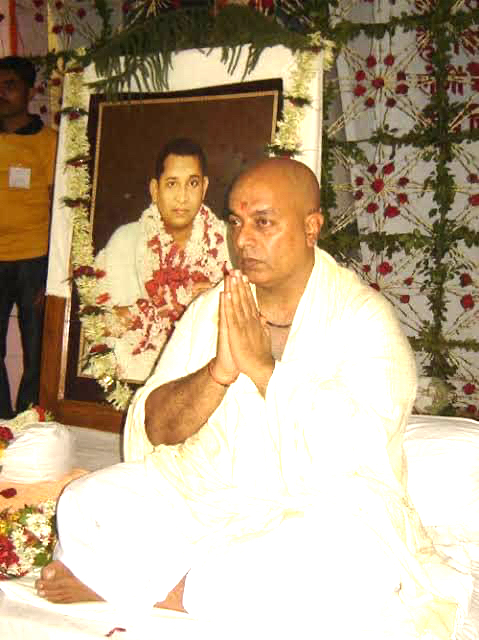
Maharaja Rajyavardhan Singh is the current head of the Narsinghgarh Royal Family, succeeding to the title after the passing of his father in 2007. Educated and deeply involved in the welfare of the region, he has active ties to both his heritage and modern regional politics, representing his constituency in the Madhya Pradesh Legislative Assembly.
He continues to manage the ancestral properties of the royal family, including the historic Narsinghgarh Fort, while working toward preserving the local cultural heritage, environment, and history of the Umat Parmars of Malwa. You can find more details on his public life on his Wikipedia page on Rajyavardhan Singh.