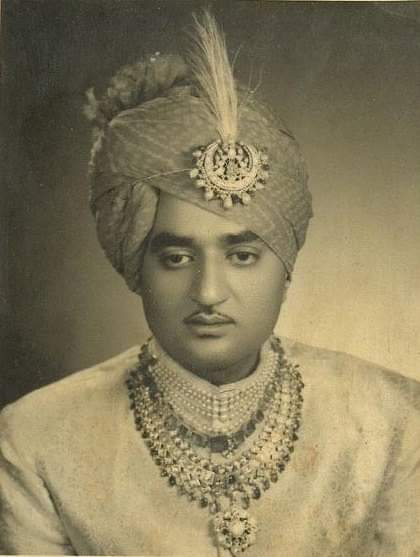
Present Head
- Yuvraj Krishneshwar Singh, born .
History
Multhan was a prominent guaranteed chiefship (Thakurat) located in the Malwa region of Central India, operating under the political oversight of the Bhopawar Agency (later integrated into the Malwa Agency) within the princely state of Dhar. It stands as a vital example of a Rathore Rajput estate that successfully maintained its regional identity and territorial autonomy through a complex web of Maratha and British feudal guarantee treaties.
Origins and The Ratlam Connection
The ruling family of Multhan belonged to the elite Rathore clan of Rajputs, claiming a proud genealogical descent from the imperial royal house of Marwar (Jodhpur). Specifically, Multhan was a direct offshoot of the premier state of Ratlam.
- The Founding Migration: The estate was carved out in the fertile black cotton soil tracts of western Malwa by adventurous Rajput princes migrating from Ratlam.
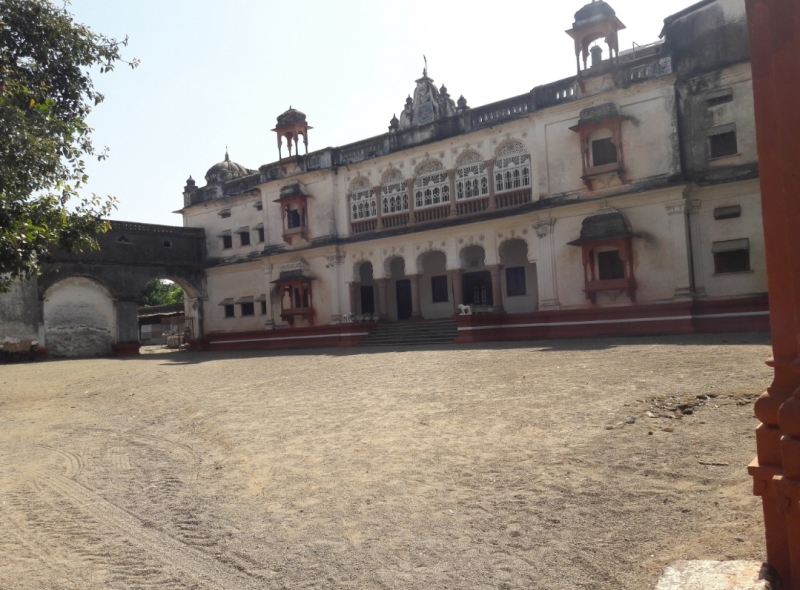
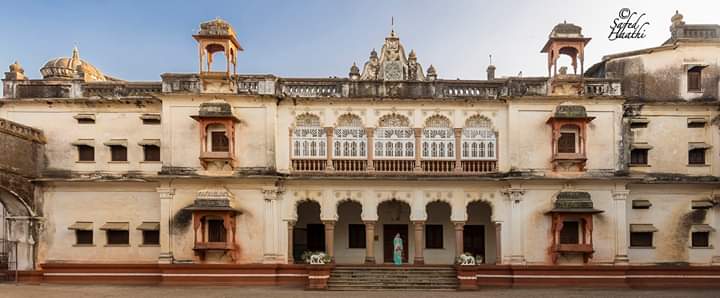
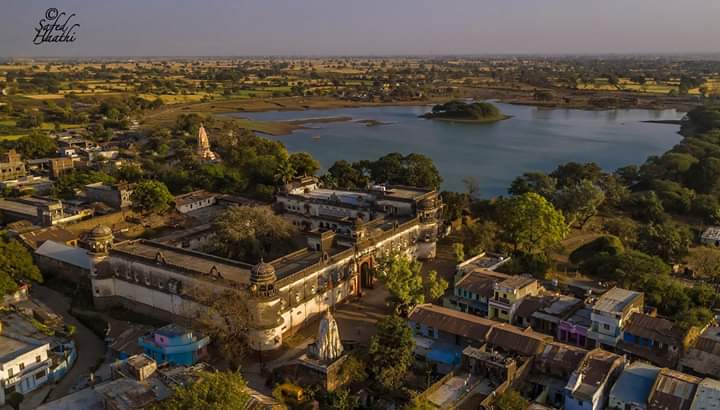
- Establishing the Gadi: Over successive generations, the Thakurs of Multhan established a heavily fortified palace-complex and consolidated their authority over a lucrative cluster of agricultural villages, positioning themselves as key territorial gatekeepers on the frontiers between Dhar and Indore.
The Chaos of Malwa and the British Guarantee (1818)
By the turn of the 19th century, the entire Malwa plateau was plunged into brutal instability. Relentless Maratha civil wars, extortionate tax demands from Gwalior and Indore, and devastating raids by Pindari freebooters left minor Rajput estates like Multhan on the brink of absolute economic collapse.
The situation was permanently stabilized following the Third Anglo-Maratha War (1817–1818), when the British East India Company assumed paramountcy over Central India. Under the historic Malwa Settlement mediated by Sir John Malcolm:
- The Mediation: The British stepped in to formally arbitrate the long-standing, volatile boundary and revenue disputes between the Rajput Thakur of Multhan and the Maratha Puar (Pawar) Maharajas of Dhar.
- The Guaranteed Treaty: A formal agreement was executed under which Multhan was recognized as a "Guaranteed Thakurat." The Thakur was legally bound to pay a strictly fixed annual tribute (tanka) of 20,000 Rupees to the Dhar Durbar.
- Administrative Autonomy: In exchange for this regular financial tribute, the Maharaja of Dhar was legally prohibited from interfering in Multhan's internal administration. Backed by the absolute guarantee of the British Crown, Multhan operated as a semi-sovereign entity with its own internal revenue, civil, and police powers.
Administrative Status and Jurisdictional Power
Despite being technically categorized as a subordinate chiefship under Dhar, Multhan was a highly affluent and sizable estate, encompassing nearly 30 to 40 revenue-generating villages.
The Thakur exercised full civil administrative powers over his subjects. However, under the colonial administrative framework of the Central India Agency, heinous criminal offenses or capital cases were referred to the British Political Agent stationed at Sardarpur. The estate maintained its own modest internal police force, primarily composed of loyal Rajput clansmen and local Bhil tribal archers, to maintain law and order and protect the vital trade routes slicing through the estate limits.
Vexillology and Heraldic Symbols
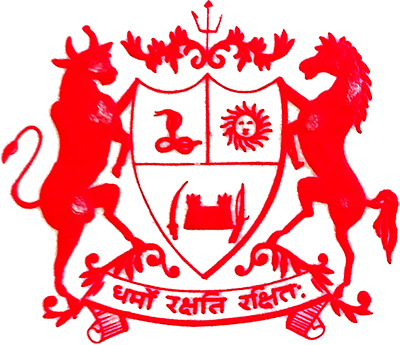
- The State Flag: Honoring their elite northern desert lineage, the flag of Multhan was a traditional rectangular saffron (amaranthe) banner, the universal symbol of Rathore military sacrifice, courage, and solar heritage.
- The Royal Seals: In alignment with their ancestral traditions, the administrative seals of the Multhan court prominently invoked the protection of Shri Charbhuja Ji (the four-armed manifestation of Lord Vishnu/Krishna), who served as the patron deity of the ruling house.
Modernization and Late Princely Era
During the late 19th and early 20th centuries, Multhan witnessed an era of peaceful administrative stability. The ruling Thakurs focused heavily on transforming the agrarian economy of the estate. They introduced modern land-revenue surveying methods, built state-funded primary schools, and established medical dispensaries in Multhan town. The state capitalized on its exceptionally fertile agricultural lands, turning the region into a major local center for the cultivation of high-quality cotton and grain.
Accession into Independent India
Following the end of British paramountcy in August 1947, the British guarantees lapsed, and the last ruling Thakur signed the Instrument of Accession to join the Union of India.
In June 1948, Multhan formally merged into the newly created state union of Madhya Bharat. Following the systemic reorganization of Indian states on linguistic lines in 1956, Madhya Bharat was dissolved, and the historic territories of Multhan were permanently integrated into the Badnawar tehsil of the Dhar district in Madhya Pradesh.
Genealogy
- Maharaj SAKAT SINGHJI, Raja of Multhan 1657/1691, a younger son of Raja Ratan Singh of Ratlam, and his wife, Rani Sukhde Kunwar of Sirohi; as the Rao Sahib of Multhan he held a mansab in the Mughal Empire, he served with distinction in the imperial expeditions in the Deccan, and greatly distinguished himself in the storm of Golcunda Fort in 1689, earning rich tributes from historian Shamsuddolah Shah Nawaz Khan in his Persian commentary Maasir-ul-umra; he played important roles in the battles of Bijapur and also in the treaties with the Marathas, he also held the important southern outposts of Jinji as fort keeper for the empire and died there in its siege by Mirza Kambaksh in 1691; married 1stly, Rani Maya Kunwar, daughter of Rao Man Singh of Jaisalmer, married 2ndly, Rani Gulab Kunwar, daughter of Thakur Vijay Singh of Dhamotar, and had adoptive issue. He died in battle at Jinji in 1691.
- (A) Maharaj Anoop Singhji (qv)
- Maharaj ANOOP SINGHJI, Raja of Multhan 1691/-, son of Maharaj Rai Singhji of Kacchi-Baroda, he succeeded by adoption; like his adoptive father, he also served in the imperial expeditions and bravely led the charge in the victorious battle at Panhala in the Konkan in 1708; married and had issue.
- Maharaj Indra Singhji (qv)
- Maharaj INDRA SINGHJI, Raja of Multhan -/-, he assisted his relatives, the rulers of Ratlam and Sailana in their conquest of Jhabua in Ashar Krishna 14, Samvat 1787; married and had issue.
- Maharaj Raj Singhji (qv)
- Maharaj Roop Singhji (qv)
- Maharaj RAJ SINGHJI, Raja of Multhan, his short reign was uneventful, he died sp.
- Maharaj ROOP SINGHJI, Raja of Multhan 1756/-, he succeeded to the gaddi in 1756, maried (amongst others), Rani Sunelji (Junior Rani), committed sati, daughter of the Sunel ruler of Barwah.
- Maharaj CHHATRA SINGHJI, Raja of Multhan, he was the nephew of Maharaj Roop Singhji, and ruled for a short period of seven years. He died sp.
- Maharaj ANAND SINGHJI, Raja of Multhan, he was the younger brother of Chhatra Singhji; he proved to be a worthy successor, during his reign, he fortified Multhan, built a strong bastion at Borda at the triple junction of rivers Mahi, Bagedi and Rattagiri, and in a pitched battle he defeated and drove away the Makrani mercenaries, ably assisted by the brave Umat (Parmar) and tribal Meena subjects; married and had issue.
- Maharaj Lakshman Singhji (qv)
- Maharaj LAKSHMAN SINGHJI, Raja of Multhan, during his reign he successfully repelled the forces of the Gaekwad ruler of Baroda but succumbed to the wounds inflicted upon him by the Marathas; married and had issue.
- Maharaj Sawai Singhji (qv)
- Maharaj SAWAI SINGHJI, Raja of Multhan 1810/1849, he had an eventful reign, during which he personally aided his brotherly state of Ratlam against the large army of Scindia ruler of Gwalior, even against the wishes of Sir John Malcolm, in the Battle of Uchangarh on the banks of river Mahi, where the forces of Scindia were routed and the Maratha commander Bapu Scindia fled from the battle field; soon afterwards, the British mediated treaties between the native Rajput rulers and the Marathas; in 1820, under the aegis of Sir John Malcolm, a treaty was signed at Bhopawar between the Puars of Dhar and Multhan, with the British Government signing as guarantor against infringement of standing rights of the Rajput ruler, the exact import of this clause in the treaty was to remain a perennial cause of friction between the two parties; Maharaj Sawai Singhji also mediated in the succession of Balwant Singhji of Ratlam under the auspices of Maharana Bhim Singhji of Mewar; he married Rani Waghelji Man Kunwar of Mansa, and had issue. He died .
- Maharaj Dalpat Singhji (qv)
- Maharaj DALPAT SINGHJI, Raja of Multhan 1849/1900, born , succeeded as a minor in 1849; Multhan remained largely unaffected by the upheavals of the revolt of 1857 against the British, the Rajmata Wagheliji Man Kunwar, while she was the guardian of the minor ruler gave protection and shelter to the residents of Badnawar during the anarchy that resulted from the revolt, the Diwan, Ismail Khan, under his protection led the women and children of the British officers to safety to Mandsaur; Raja Bakhtawar Singhji of Amjhera and Raja Padam Singh Rathore of Chadawad is said to have taken refuge at the Borda fortress during his struggle with the British; Maharaj Dalpat Singhji outlived his sons who having no male issue left the ageing ruler without an heir; his widow in 1901 adopted Rajkumar Bharat Singh, second son of HH Raja Jaswant Singhji of Sailana, and his wife, HH Rani Yashwant Kunwar of Dhariawad; married Rani Wagheliji Sardar Kunwar, and had adoptive issue. He died without surviving issue.
- Yuvaraj Hindu Singhji, married and had issue, one daughter.
- Yuvrani Sajjan Kunwar, married Yuvaraj Ranjitsinhji Vakhatsinhji of Lunawada, and had issue.
- Rajkumar Abhay Singhji, married and had issue.
- Rani Daulat Kanwar, married (as his third wife), Rawat Takhat Singh of Bansi.
- (A) Dharmalankar Dharm-Bhushan Dharm-Diwaker Sahityabhusan Shreeman Maharaj Bharat Singhji Sahib (qv)
- Yuvaraj Hindu Singhji, married and had issue, one daughter.
- Dharmalankar Dharm-Bhushan Dharm-Diwaker Sahityabhusan Shreeman Maharaj BHARAT SINGHJI Sahib, Raja of Multhan 1901/1971, born and succeeded by adoption on 26th August 1901, educated at Mayo College, Ajmer; Maharaj Bharat Singhji is often referred to as the second founder of Multhan for the progress that Multhan made under his tenure; he was widely known and respected on the one hand for his just and efficient administration and on the other for his wisdom, strength of his character and his commanding knowledge of religious matters, for which he was awarded many titles, including, Dhramalankar, Dhramabhusan, Dharmadiwakar, Sahityabhusan etc.; he increased the state's revenue through benevolent means viz. low taxation, improved irrigation, quick justice and provision of civic amenities; he placed much emphasis on education and maintenance of law and order; he built a new palace at Multhan in 1919, which he himself designed; he was fond of gardens and architecture, which was manifested in the planned layout of Multhan and the laying of the Dalapat Bagh Gardens which were a connoisseur’s delight; the Maharaj Sahib was the last ruler of Multhan till the formation of Indian Union as a republic; he married 1stly, Rani Aman Kunwar, second daughter of Thakur Kesri Singhji of Achrol, married 2ndly, February 1935, Rani Jayendra Kunwar [Rajkumari Baiji Lal Jam Kunwarba Sahiba], daughter of HH Raj Sahib Sir Ajitsinhji Jashwantsinhji of Dhrangadhra, and his second wife, HH Rani Majiraba Sahiba, and had issue. He died .
- Maharaj RAMESHWAR SINGHJI, Raja of Multhan 1971/1973, born , a prince of great intellect, he was educated at Daly College, Indore, Loughborrow, Oxford and the Swiss Federal Institute of Technology, Zurich where he had the privilege of being a pupil of the celebrated Noble Laureate, Albert Einstein; he was also a good player of chess and won a championship in Zurich defeating his Egyptian rival, his untimely death at the age of forty one was a big loss for his people and the society at large; married Rani Jhaliji Kusum Kumari, daughter of Thakur Indra Singhji of Lakhtar, married 2ndly, Rani Jadeji Kusum Kumari, daughter of Kumar Shri Kishore Singhji of Mengni, and had issue, one son and four daughters.
- Rajkumari Rajshree Kumari (by Rani Jhaliji), born .
- Rajkumari Meenakshi Kumari (by Rani Jadeji), born , married Maharaj Brijraj Singh Judev of Datia.
- Rajkumari Sumitra Kumari (by Rani Jadeji), born .
- Rajkumari Neelambari Kumari (by Rani Jadeji), born , married Yuvraj Prabhan Pratap Singh of Katesar.
- Maharaj Raghuveer Singhji (by Rani Jadeji) (qv)
- Maharaj Shri RAGHUVEER SINGHJI, Raja of Multhan (see above)