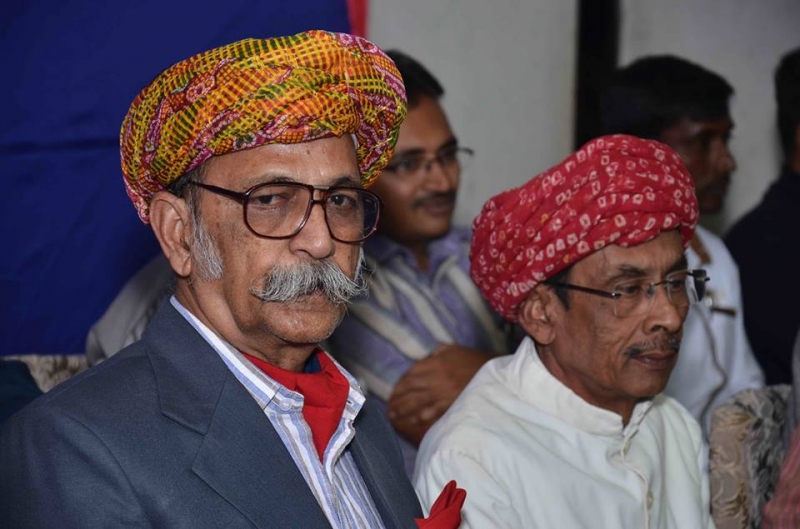
Present Head
- Kumar Shri Satyajitsinhji Kirtikumarsinhji
- Kumari Shri Hemangini Devi, married Kumar Shri Falgunsinhji Dharmendrasinhji Jhala of Chuda, and has issue, 2 daughters.
History
Origin and Foundation: The Gohil Dynasty
The history of the Lathi princely state is deeply intertwined with the migration and expansion of the Gohil Rajput clan in the Kathiawar peninsula. The lineage traces its origin back to Thakore Sejakji, a prominent Gohil chieftain who migrated from Khergarh in Marwar around the year 1260 CE. Seeking new territories, Sejakji established his authority in Kathiawar and founded the town of Sejakpur. His strategic alliances, particularly with the Chudasama rulers of Junagadh, solidified the Gohil presence in the region.
Upon Sejakji's death, his territories were divided among his sons. His fourth son, Thakore Saheb Sarangji, received the estate of Arthila. Sarangji established Arthila as an independent seat of power, where his descendants ruled successfully for four generations, expanding their agricultural and political influence across the surrounding plains.
The Fall of Arthila and the Transition to Lathi
The prosperity of Arthila was cut short during the reign of Thakore Saheb Dudoji. A severe conflict arose between the Gohils of Arthila and the powerful Chudasama dynasty of Junagadh. Raja Mandalik (Ra Mandalik III) of Junagadh marched upon Arthila, besieged the town, and sacked it. Thakore Saheb Dudoji was slain in the battle, defending his capital.
Following the destruction of Arthila, the surviving Gohils, led by the descendants of Dudoji, withdrew further east and established their new capital at Lathi. Despite the loss of their original seat, the Gohils of Lathi successfully consolidated their rule over this new territory, retaining their independence and sovereignty through centuries of regional turbulence until the mid-20th century.
The Reign of Kalapi: A Literary and Social Renaissance
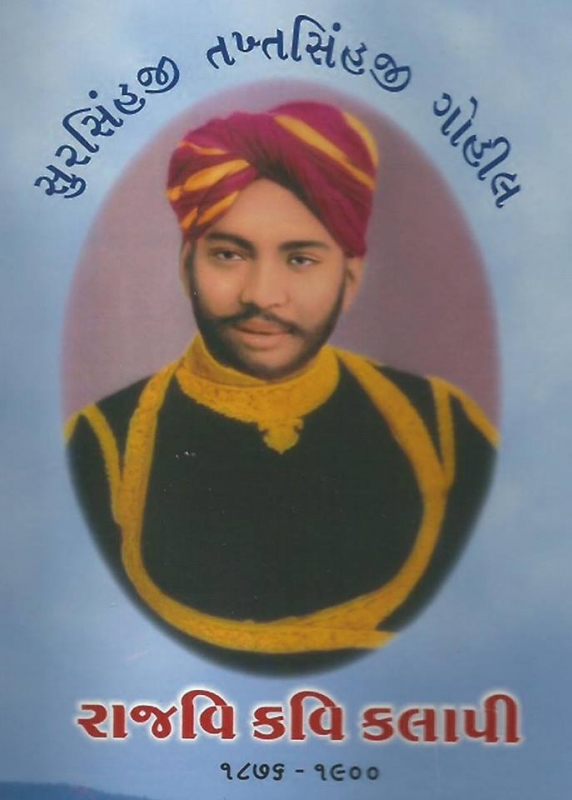
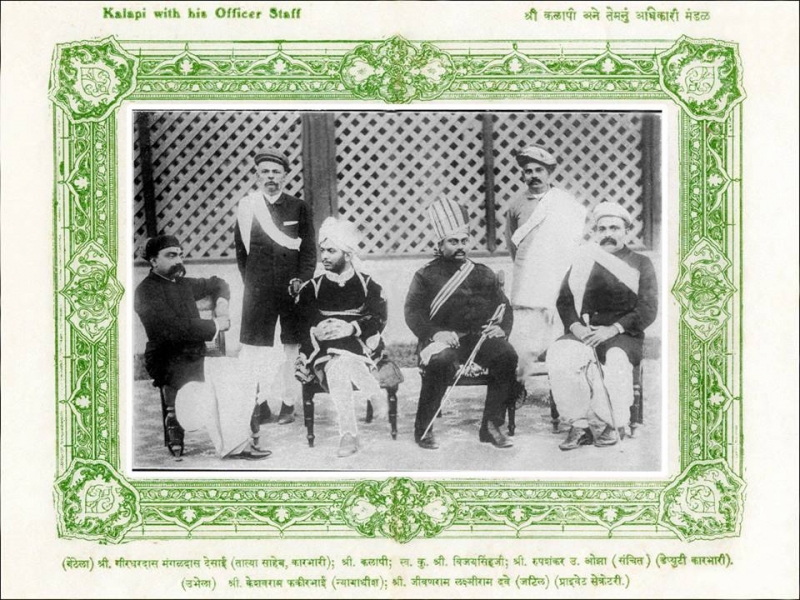
The most celebrated ruler of Lathi was Thakore Sursinhji Takhtasinhji Gohil, widely known by his pen name, Kalapi (1874–1900). Ascending the throne of Lathi in 1895, Kalapi was not only a benevolent ruler but also an extraordinarily gifted poet of the Gujarati language. His collection of poems, Kekarav, and his travelogues remain cornerstones of Gujarati literature.
Despite his short life, Kalapi introduced significant social and educational reforms in Lathi. He advocated for modern education, established schools, and sought to alleviate the tax burdens on the local peasantry. His deeply humanistic outlook and his tragic love story with a royal maid named Shobhna heavily influenced his literary works and left an indelible mark on the cultural heritage of Saurashtra. A detailed account of his life and works can be explored through the Gujarati Sahitya Parishad.
The British Era and State Administration
During the British Raj, Lathi was classified as a Fourth Class state within the Kathiawar Agency. Under the colonial administrative framework, the state paid annual tribute (known as Peshkash or Pratabgiri) to both the British Crown and the Gaekwad of Baroda.
Historically, the administrative and military capabilities of the state were modest but highly organized. As of 1892, the Chief of Lathi maintained a compact military force consisting of:
- 12 Cavalrymen
- 25 Infantrymen
- 10 Artillery Guns
This force was primarily used for ceremonial purposes, maintaining internal security, and protecting trade routes passing through the state. Historical records detailing the administrative classification of Kathiawar states can be referenced in the Gazetteer of the Bombay Presidency: Kathwar (Volume VIII).
Post-Independence Integration and Modern Era
Following the end of British rule in India in 1947, the last ruling chief of Lathi, Thakore Saheb Prahladsinhji, signed the Instrument of Accession, merging the state into the United State of Kathiawar (later known as Saurashtra State) on February 15, 1948. This historical transition is documented in V.P. Menon's classic work on the unification of India, available via the Internet Archive's Digital Library.
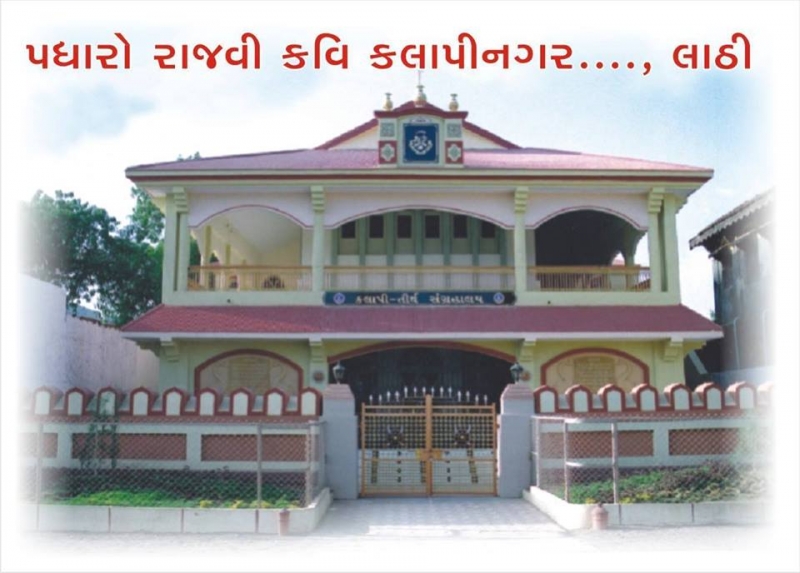
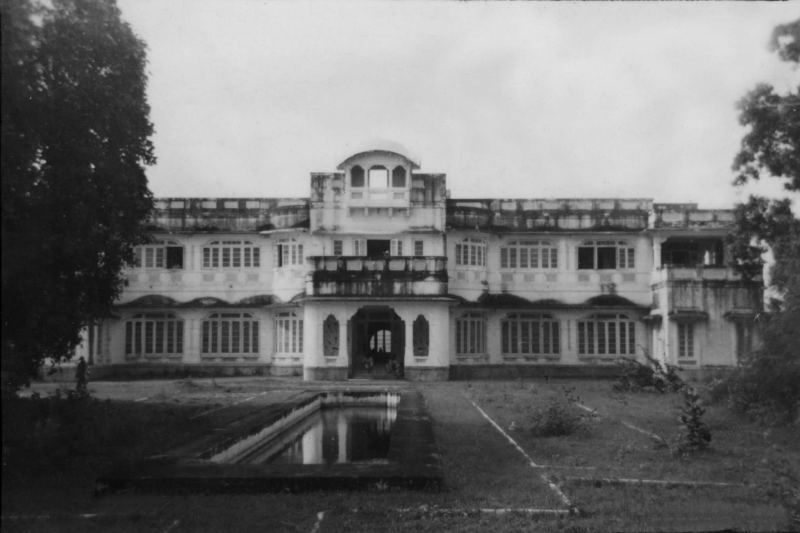
In 1960, with the reorganization of states on a linguistic basis, Lathi became a part of the Amreli district in the state of Gujarat. Today, Lathi is remembered for its rich literary associations with Kalapi, and the erstwhile royal palace stands as a historic monument drawing tourists and literary enthusiasts from across India.
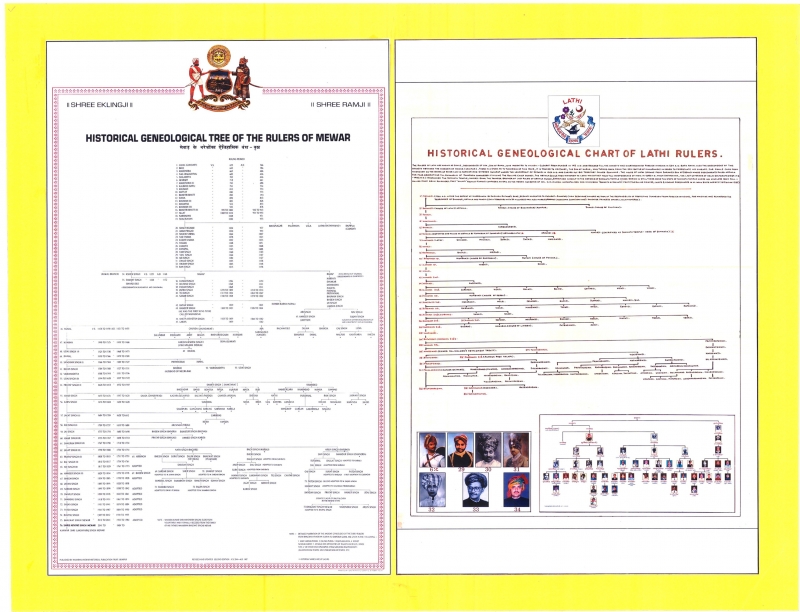
Genealogy
- Thakore Saheb SARANGJI SEJAKJI, 1st Thakore Saheb of Arthila, married and had issue.
- generation
- Thakore Saheb Nonghanji (qv)
- generation
- .......
- Thakore Saheb NONGHANJI, 3rd Thakore Saheb of Arthila fl.1350, married and had issue.
- generation
- Thakore Saheb Dudoji (qv)
- generation
- ......
- Thakore Saheb DUDOJI, 4th Thakore Saheb of Arthila, married and had issue.
- Thakore Saheb Limshaji Dudoji [Jijibawa] (qv)
- Thakore Saheb LIMSHAJI DUDOJI, Thakore Saheb of Lathi
- .......
- Thakore Saheb Shri JIJIBAWA, Thakore Saheb of Lathi, married and had issue.
- Thakore Saheb Shri Lakhaji Jijibawa (qv)
- Kumar Shri Prithiraj Jijibawa
- Thakore Saheb Shri LAKHAJI JIJIBAWA, Thakore Saheb of Lathi 1750/-, during his reign, he suppressed the Kathis who had harassed the people of the region around Lathi; married and had issue.
- Thakore Saheb Shri Dajirajji Lakhaji [aka Kumar Shri Amarsinhji Lakhaji] (qv)
- Thakore Saheb Shri Takhatsinhji Lakhajji (qv)
- Kumari (name unknown), married Maharaja Gaekwad Damajirao Gaekwad Shamsher Bahadur of Baroda.
- Thakore Saheb Shri DAJIRAJI LAKHAJJI, Thakore Saheb of Lathi, married and had issue, one daughter.
- Kumari (name unknown), married HH Thakore Sahib Shri Dajirajji of Wadhwan.
- Thakore Saheb Shri TAKHATSINHJI LAKHAJI, Thakore Saheb of Lathi -/1878, born , married and had issue.
- Kumar Shri Bhavsinhji Takhatsinhji, died a premature death whilst studying at Rajkumar College, Rajkot.
- Thakore Saheb Shri Sursinhji Takhatsinhji (qv)
- Kumar Shri Vijaysinhji Takhatsinhji, married and had issue.
- Kumar Shri Pravinsinhji Vijaysinhji Gohil, married and had issue.
- Kumar Shri Arunkumar Pravinsinhji, educated at Rajkumar College, Rajkot (1957), married Kumari Shri Kiran Kumari of Nagod.
- Kumar Shri Yateendra Sinh, educated at Rajkumar College Rajkot (1982), married Kumari Shri Kiran Kumari and has issues, one daughter and a son.
- Kumari Shri Mandavi Singh, married to Maharaj Kumar Harishchandra Singhji of Jasol.
- Kumar Shri Jai Sinh
- Kumar Shri Virendra Sinh
- Kumar Shri Kalpendra Sinh
- Kumar Shri Yateendra Sinh, educated at Rajkumar College Rajkot (1982), married Kumari Shri Kiran Kumari and has issues, one daughter and a son.
- Kumar Shri Arunkumar Pravinsinhji, educated at Rajkumar College, Rajkot (1957), married Kumari Shri Kiran Kumari of Nagod.
- Kumar Shri Natwarsinhji Vijaysinhji Gohil
- Kumar Shri Raghurajsinhji Natwarsinhji
- Kumar Shri Gambhirsinhji Vijaysinhji Gohil, married and had issue.
- Kumar Shri Janakkumar Gambhirsinhji Gohel, educated at Rajkumar College, Rajkot (1951).
- Kumar Shri Jayendrasinhji Gambhirsinhji Gohel, educated at Rajkumar College, Rajkot (1951), married 1965, Kumari Shri Jyoti Devi, eldest daughter of Thakore Saheb Mahendrasinhji Jorawarsinhji of Mengni, and his wife, Thakorani Nirmala Kunverba Saheba, and had issue.
- Kumar Shri Amarsinhji Jayendrasinhji, educated at Rajkumar College, Rajkot (1983)
- Kumar Shri Udaysinhji Gohel, educated at Maharaja SayajiRao University, and is unmarried.
- Kumari Shri Kanak Kumari, educated at Sophia, Mt Abu (with Masters in English Literature), married Kumar Shri Bhupendrasinhji Jadeja of Kutchh, and has issues, two daughters.
- Kumari Shri Kushal Kumari Jadeja
- Kumari Shri Padmini Kumari Jadeja
- Kumar Shri Pravinsinhji Vijaysinhji Gohil, married and had issue.
- Thakore Saheb Shri SURSINHJI TAKHTSINHJI, Thakore Saheb of Lathi 1878/1900, born , he succeeded to the gadi as a minor on 4th November 1878, educated at Rajkumar College, Rajkot to 1891; he was a poet and published a number of works, still popular today viz. Kalapi-no-Kekarav, Harirji Gohel, Mala and Mudrika; married 1stly, Thakorani Rajba of Roha (Kutch), married 2ndly, Thakorani Anandiba of Kotda Sangani, and had issue. He died .
- Thakore Saheb Shri Pratapsinhji Sursinhji (qv)
- Ramnik Kunverba, married to Thakore Saheb Sir Lakhajirajji of Rajkot.
- Thakore Saheb Shri PRATAPSINHJI SURSINHJI, Thakore Saheb of Lathi 1900/1918, born , succeeded to the gaddi on 10th June 1900, married and had issue. He died .
- Thakore Saheb Shri Prahladsinhji Pratapsinhji (qv)
- Kumar Shri Mangalsinhhji Pratapsinhji Gohil
- Kumar Shri Harishchandrasinhji Pratapsinhji Gohil
- Thakore Saheb Shri PRAHLADSINHJI PRATAPSINHJI, Thakore Saheb of Lathi 1918/-, born and succeeded 14th October 1918, he was a man of literary bent and contributed to Gujarati literature under the pseudonym of Rajhansa; married and had issue.
- Thakore Saheb Shri Bhupendrasinhji Prahladsinhji (qv)
- Kumar Shri Dharmendrasinhji Prahladsinhji Gohil
- Thakore Saheb Shri Kirtikumarasinhji Prahladsinhji (qv)
- Kumari Shri Niladevi, married Maharajkumar Divya Dip Singh of Dumraon.
- Thakore Saheb Shri BHUPENDRASINHJI PRAHLADSINHJI, Thakore Saheb of Lathi, educated at Rajkumar College, Rajkot (1950), married Thakorani Durgaraje of Baroda, and had issue.
- Kumari Chanchallaraje (Rani Mruganainaraje Mrugendrasinh Ghatge of Kagal-Junior), married 16th May 1979, Meherban Shrimant Rajamanya Rajashri Mrugendrasinh Ajitsinh Ghatge Sarjerao Deshmukh, 5th and present Chief of Kagal-Junior, and has issue.
- Rajkumari Sanyuktadevi, married to Rajkumar Puranchandrasingh Jhala of Chuda
- Rajkumari Priyalakshmiraje, married to Shrimant Raghunathraje Naiknimbalkar of Phaltan.
- Thakore Saheb Shri KIRTIKUMARASINHJI PRAHLADSINHJI, Thakore Saheb of Lathi (see above)
- Kumar Shri Mahendrasinhji Jitendrasinhji, educated at Rajkumar College, Rajkot (1967)
- Kumar Shri Rajendrasinhji, married 18th March 1994 (as her second husband), Rajkumari Pratima Devi, born , daughter of Raja Prasanna Chandra Deo of Jarada, and his wife, Rani Swarna Prabha Manjari Devi.
- Kumar Shri Narendrasinhji Chandrasinhji Gohil B.Com., Bayat of Lathi, Teacher, born in Lathi, married 3rd November 2008 in Lathi, Kumari Nanbhu, and has issue, one son.
- Kumar Nilrajsinh Narendrasinhji Gohil.