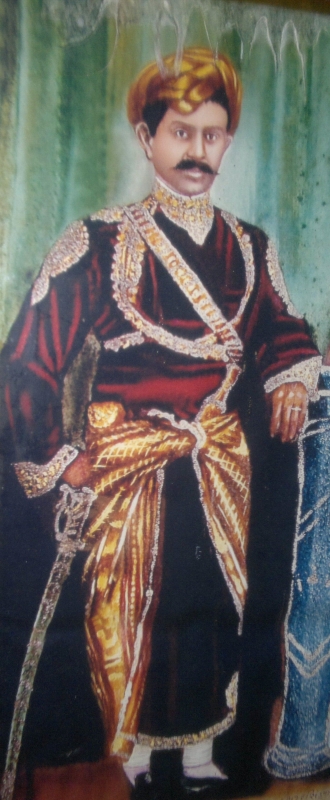
Present Head
History
Origin and Foundation
The history of Kharedi is intricately connected to the ruling Jadeja dynasty of the Virpur State, a prominent princely state located in the Saurashtra (Kathiawar) peninsula of Gujarat. The Jadejas are a major branch of the Chandravanshi (Lunar) Rajput clan, tracing their divine ancestry to the Yadavas and Lord Krishna. They established their dominance in the Kathiawar region through branches originating from Nawanagar (present-day Jamnagar). Virpur was established as an independent principality in the 16th century. Over the generations, the ruling Thakur Sahebs of Virpur created several appanages (known locally as jiwai estates) to provide land and administrative authority to their younger sons, ensuring regional stability and agricultural development.
The Kharedi Estate and the Virpur Branch
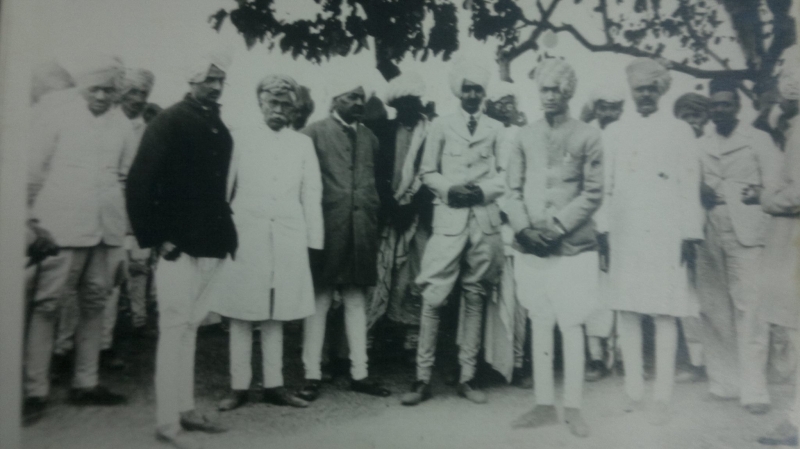
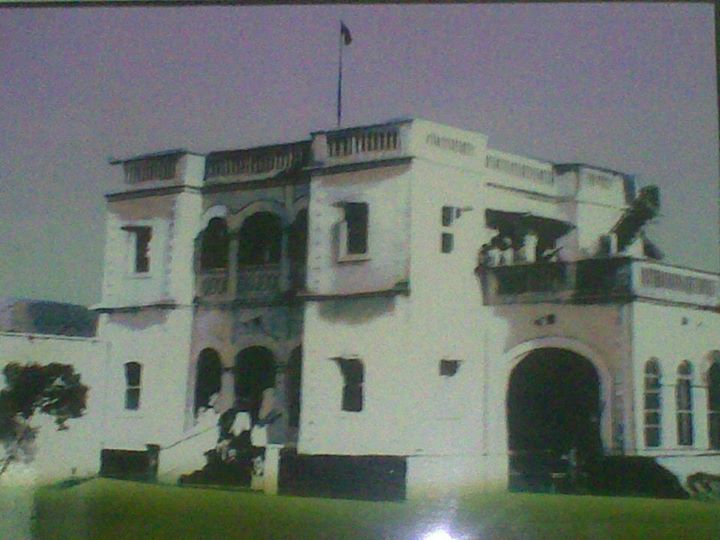
Kharedi emerged as a significant estate under this system of territorial division. In 1938, the younger son of Thakur Saheb HAMIRSINHJI SURAJI of Virpur, Darbar Saheb Shri DIGVIJAYSINHJI HAMIRSINHJI got Kharedi, Metiya, Gunda, Moridad etc. villages from Virpur. Under the stewardship of Darbar Saheb Shri Digvijaysinhji, these villages developed an organized agrarian economy. The ruler took a keen interest in maintaining local law and order, arbitrating regional disputes, and patronizing agricultural communities who cultivated cash crops like cotton and groundnuts, which were central to the economy of the Halar region.
British Period and Administrative Status
During the British Raj, Virpur State and its subsidiary estates like Kharedi fell under the political supervision of the Kathiawar Political Agency, which was later reorganized under the Western India States Agency. Classed as a non-salute state, the rulers of Virpur exercised civil and criminal jurisdiction within their territories. The land tenure system in Kharedi was characterized by the traditional Girasdari system, under which the landholders (Girasdars) collected revenues while acknowledging the suzerainty of the British Crown through the central state authority of Virpur. This dual system preserved local Rajput customs while aligning the region with broader British colonial administrative reforms.
Heraldry and Cultural Heritage
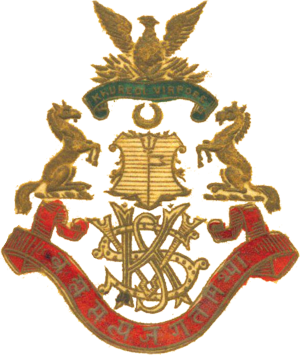
As descendants of the royal house of Virpur and the broader Jadeja clan, the family of Kharedi shared the traditional heraldic symbols of the Kathiawar Rajputs. The clan's heraldry typically features a crescent moon representing their Chandravanshi lineage, flanked by traditional weapons such as the talwar (sword) and the katar (dagger) that symbolize their martial heritage. The rulers of the estate were active patrons of local cultural traditions, supporting regional folk arts, traditional equestrian sports, and religious institutions, including temples dedicated to their family deities (Kuldevis).
Post-Independence and Modern Era
With India gaining independence in 1947, the princely states of Saurashtra underwent rapid political integration. In 1948, the ruler of Virpur signed the Instrument of Accession, leading to the merger of Virpur and its constituent estates, including Kharedi, into the United State of Kathiawar (later known as Saurashtra State). Following subsequent administrative reorganizations, the region became part of the bilingual Bombay State in 1956 and ultimately the newly created state of Gujarat in 1960. With the passage of the 26th Amendment to the Constitution of India in 1971, royal privileges and privy purses were formally abolished. Today, the descendants of the Kharedi ruling family are integrated into modern Indian society, working in agriculture, business, and public service while preserving their historical legacy.
References and Historical Sources
- For detailed information on the administrative classification of Kathiawar states, refer to the Gazetteer of the Bombay Presidency: Kathiawar (Volume VIII).
- Historical records regarding the political agencies of Western India are preserved in the digital archives of the Imperial Gazetteer of India.
Genealogy
- Thakore Saheb Shri HAMIRSINHJI SURAJI (1918-1938), 13th Thakore Saheb of Virpur.
- Thakore Saheb DILIPSINHJI HAMIRSINHJI (1938) (Virpur)
- Darbar Saheb Shri DIGVIJAYSINHJI HAMIRSINHJI (1938-1988) (Kharedi)
- Darbar Saheb Shri DIGVIJAYSINHJI HAMIRSINHJI (1938-1988), 1st Darbar Saheb of Kharedi.
- Yuvraj Shri Divyarajsinhji, married daughter of Raja Saheb Balvirsinhji Gohil of Monpur.
- Kumar Shri Mayurdhwajsinhji.
- Kumari Ushadevi, married to Thakore Saheb Kirtikumarsinhji Prahladsinhji of Lathi.
- Darbar Saheb Shri DIVYARAJSINHJI DIGVIJAYSINHJI (1988-2012), 2nd Darbar Saheb of Kharedi, B.A., LLB Advocate in Gujarat High Court, ex-Member of Jilla Panchayat Jamnagar, ex-Member of Taluka Panchayat Kalawad, ex-President Karobari Taluka Panchayat Kalawad, ex-Director of Agri and Rural Devlopment Bank Gujarat, ex-President Kharedi Credit Cooperative Society, ex-President Advocates Asociation Kalavad, ex-President and Mahamantri of Jamnagar Dist. Congress Commity, ex-Member of Jamnagar Dist Co-op Bank, ex-Member of Jamnagar Dist Kharid Vechan Sangh, ex-President Aryasamaj Bhavan Kharedi, ex-Director of Agriculture Univercity Gujarat, ex-Leader of Jamnagar Rajput Samaj, ex-Sarpanch of Village Panchayat Kharedi.
- Kumar Shri Adityarajsinhji Divyarajsinhji (qv)
- Kumari Padmini Divyarajsinhji Jadeja, married to Yuvraj Saheb Shri Anirudh Singh Padmendra Singh of Narauli (Uttar Pradesh).
- Kumari Brindakini Divyarajsinhji Jadeja, married to Kumar Saheb Shri Parikshitsinhji Shaktisinhji of Khandha Estate.
- Kumar Shri Jaydityarajsinhji Divyarajsinhji
- Kumar Shri Kaladityarajsinhji Divyarajsinhji
- Darbar Saheb Shri ADITYARAJSINHJI DIVYARAJSINHJI (see above)