Present Head

History
Origin and Foundation
The early history of the Khairagarh ruling family is deeply intertwined with the folklore of the Nagvanshi dynasty of Chhota Nagpur. According to historical records and state traditions, the ancestors of the Khairagarh chiefs migrated from Chhota Nagpur (in modern-day Jharkhand) around the 11th or 12th century. The family established their influence in the region after receiving a grant of land from the Gond Rajas of Garha-Mandla as a reward for military services.
Initially, the estate was centered at Kholwa, but due to strategic reasons and regional expansions, the seat of power was later shifted to Khairagarh. The name 'Khairagarh' is derived from the abundant Khair (catechu/acacia) forests surrounding the fort constructed at the confluence of the Amner, Muska, and Piparia rivers.
The Maratha and British Periods
During the 18th century, the rise of the Maratha Empire under the Bhonsles of Nagpur brought significant changes to the Chhattisgarh region. The chiefs of Khairagarh were forced to acknowledge the suzerainty of the Nagpur Marathas and paid a tribute known as takoli.
Following the defeat of Appa Sahib of Nagpur in the Third Anglo-Maratha War (1817-1818), the administrative control of the region passed into the hands of the British East India Company. The British recognized the strategic value of the local chiefs. In 1867, the British administration formally acknowledged the Khairagarh chief as a Feudatory Chief, granting them sanads that guaranteed their territorial integrity in exchange for loyal administration and annual tributes.
Elevation to a Princely State (1898)
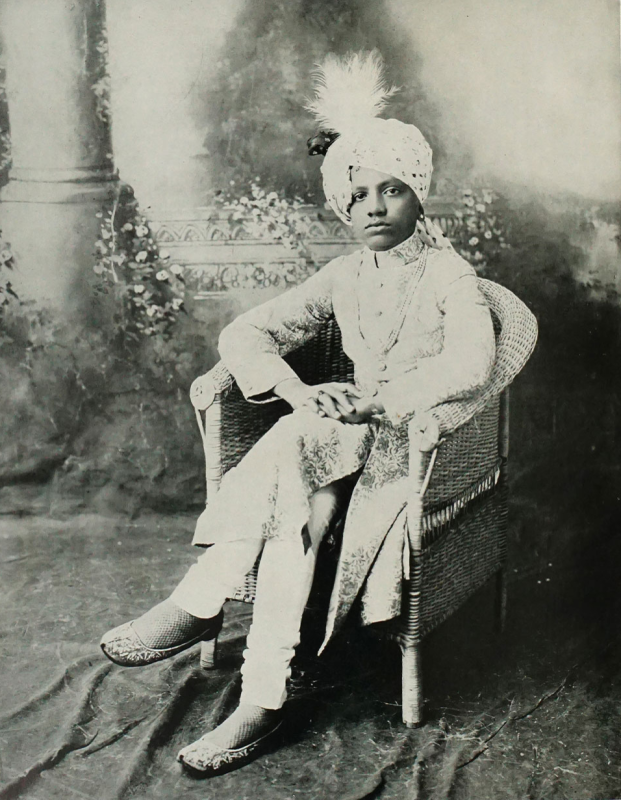
A watershed moment in the history of the province occurred under the reign of Raja Kamal Narayan Singh (r. 1890–1908). Known for his progressive administrative reforms and loyalty to the Crown, he was initially granted the personal title of "Raja" in 1896. Recognizing the stability and progress of the estate, the British Government elevated Khairagarh to the status of a hereditary Princely State in 1898, formally making him the ruling chief with hereditary rights.
Key Reformers and Progressive Administrators
Khairagarh was fortunate to be ruled by a succession of enlightened rulers who prioritized public welfare, education, and civic infrastructure:
- Raja Kamal Narayan Singh: He introduced modern judicial reforms, constructed schools, hospitals, and connected the state with postal services. He was also a patron of literature and local arts.
- Raja Lal Bahadur Singh: Continuing his predecessor's legacy, he focused on agrarian reforms, building irrigation tanks, and improving the economic condition of the peasantry.
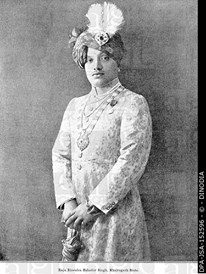
- Raja Birendra Bahadur Singh: Ascending the throne in 1918, he oversaw the final decades of the princely era. His reign is remembered for democratic concessions, the establishment of municipal bodies, and extensive patronage to educational institutions.
State Heraldry and Flag
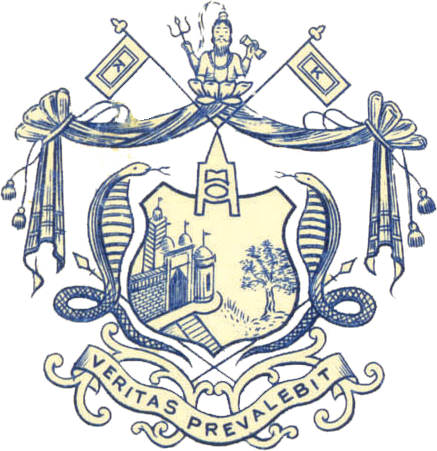
The heraldic symbols of Khairagarh reflect the dynastic pride and ancestral legends of the Nagvanshi clan. The state coat of arms features two protective Nagas (hooded cobras) facing each other, symbolizing their descent from the mythical serpent king Pundrika Naga. The state flag was a rectangular tricolor featuring stripes representing valor, peace, and prosperity, with the central emblem of the Nagvanshi dynasty proudly emblazoned in the middle.
Post-Independence and Modern Era
Following India's independence in 1947, Raja Birendra Bahadur Singh signed the Instrument of Accession on January 1, 1948, merging the princely state of Khairagarh into the Dominion of India. The state subsequently became a part of the newly formed Madhya Pradesh province.
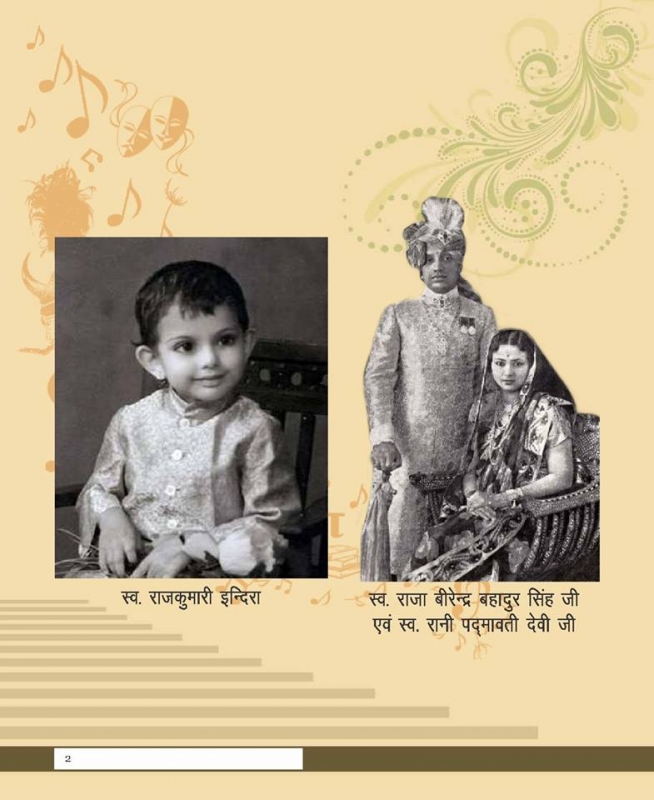
The most enduring legacy of the Khairagarh royal family in independent India is their extraordinary contribution to art and music. In 1956, Raja Birendra Bahadur Singh and his consort, Rani Padmawati Devi, donated their magnificent ancestral palace, the Kamal Vilas Palace, to the nation. This was done to establish the Indira Kala Sangit Vishwavidyalaya (IKSV), named in memory of their late daughter, Princess Indira. It stands as Asia's first university dedicated exclusively to music, dance, and fine arts.
In modern times, Khairagarh remains a vital cultural hub in central India. Recognizing its historical and administrative importance, the Government of Chhattisgarh officially declared Khairagarh as the headquarters of the newly formed "Khairagarh-Chhuikhadan-Gandai" district in September 2022.
References and Citations
For further historical inquiry, readers may consult the following authentic sources:
- For detailed administrative accounts of the British era, see the Central Provinces District Gazetteers: Chhattisgarh Feudatory States (1909) compiled by E.A. de Brett.
- The geographical and economic overview of the state is recorded in the Imperial Gazetteer of India, Volume 15 (Page 208) available at the Digital South Asia Library.
- To explore the royal family's cultural legacy, visit the official website of the Indira Kala Sangit Vishwavidyalaya.
Genealogy
- Lal FATEH SINGH, Thakur Saheb of Khairagarh 1833/1874 (deposed)
- Lal UMRAO SINGH, Thakur Saheb of Khairagarh 1874/1891, died .
- Raja KAMAL NARAYAN SINGH, Thakur Saheb of Khairagarh 1891/1898 and 1st Raja Saheb of Khairagarh 1898/1908, born , succeeded to the gadi as Zamindar on 19th February 1891, he was granted the title of Raja as a Hereditary distinction in 1898, married and had issue. He died .
- Raja Lal Bahadur Singh (qv)
- Rajkumari Bhuvaneshwari Kumari, married Raja Bahadur Ram Gopal Singh of Manda in the United Provinces.
- Rajkumari (name unknown), married Shri Kharag Jung Bahadur Rana, son of Cdg. Gen. Maharajkumar Padma Jung Bahadur Rana (see Lambjung and Kaski).
- Rajkumar Raj Bahadur Singh, died at young age.
- Rajkumar Lal Chandra Bahadur Singh
- Lal Shankar Bahadur Singh, educated at Rajkumar College, Raipur; represented the University Lawn Tennis Team which visited Sri Lanka in 1950.
- Lal Vishnu Bahadur Singh
- Late Lal Hari Bahadur Singh
- Raja LAL BAHADUR SINGH, 2nd Raja Saheb of Khairagarh 1908/1918, born , formally installed 13th December 1912, married a daughter of Cdg. Gen. Maharajkumar Padma Jung Bahadur Rana, and had issue. He died O ctober 1918.
- Maj. Raja Bahadur Birendra Bahadur Singh (qv)
- Rajkumar Bikram Bahadur Singh, born , educated at Rajkumar College, Raipur; was the first Officer of Imperial Police (Scotland Yard, England); married Rajkumari Brijraj Kanwar, daughter of Rawal Harnath Singhji Bahadur of Dundlod, and his wife, Rani Sireh Kanwar, and had issue.
- Kunwarani Jagriti Kumari, married 14th December 1978, Kunwar Lakshman Singh of Raghogarh, and has issue.
- Maj. Raja Bahadur BIRENDRA BAHADUR SINGH, 3rd Raja Saheb of Khairagarh 1918/- , born and succeeded 22nd October 1918, educated at Rajkumar College, Raipur (Diploma 1932), Ewing Christian College, Allahabad and Mayo College, Ajmer; M.L.A. (Madhya Pradesh) for four terms, married Rani Padmavati Devi, born in Pratapgarh, Uttar Pradesh, daughter of Raja Bahadur Raja Pratap Bahadur Singh of Pratapgarh, and had issue.
- Raja Ravindra Bahadur Singh (qv)
- Rajkumar Shivendra Bahadur Singh, born in Nagpur, Maharashtra, B.A., educated at Doon School, Dehradun and Bombay University, Bombay; elected to the Lok Sabha for three terms, agriculturist, Political and Social worker, Musician and Management Consultant, married 19th April 1968, Kumari Geeta Devi, born , State Social Welfare Minister, daughter of Rajkumar Chandra Bhan Singh of Kashipur, and his wife, Rajkumar Rani Rashal Manjari Devi, and had issue, two sons. He died . (Lal Niwas, P.O. Dungargarh, Distt. Rajnandgaon, Madhya Pradesh)
- Kunwar Bhawani Bahadur Singh, married Kunwarani Caroline Devi Singh from Manipur, and has issue, two children.
- Kumari Shivantika Raje
- Kunwar Shivrajeshwar Singh
- Kunwar Bhawani Bahadur Singh, married Kunwarani Caroline Devi Singh from Manipur, and has issue, two children.
- Rajkumari Indira Devi, died young.
- Rani Sharda Kumari, married 5th February 1955, Rawal Chakrapani Singh of Bissau, and has issue.
- Rawal Sanjay Singhh of Bissau, born , educated at Bishop Cotton School at Shimla and the University of Rajasthan, earning a B.A. (Hons.), Proprietor and Manager of the Bissau Palace Hotel in Jaipur, married Rani Vasundhara Kumari, daughter of Raja Vishwaraj Pratap Singh of Kawardha, and his wife, Rani Shashi Prabha Devi daughter of Raja Ganga Pratap Singh of Mallapur (U.P.)
- Rawal Eklavya Singh of Bissau.
- Rawal Sanjay Singhh of Bissau, born , educated at Bishop Cotton School at Shimla and the University of Rajasthan, earning a B.A. (Hons.), Proprietor and Manager of the Bissau Palace Hotel in Jaipur, married Rani Vasundhara Kumari, daughter of Raja Vishwaraj Pratap Singh of Kawardha, and his wife, Rani Shashi Prabha Devi daughter of Raja Ganga Pratap Singh of Mallapur (U.P.)
- Raja Shri RAVINDRA BAHADUR SINGH, 4th Raja Saheb of Khairagarh (Kamal Niwas, Khairagarh, Chattisgarh, India). Born , Member of the Executive Committee of Rajkumar College at Raipur, married Kumari Rashmi Devi Sinh, daughter of Maharaja Rajendra Sinh Jadeja of Sarodar, Nawangarh (Gujarat), and have issue, one son. He died on .
- Yuvaraj Shri Devwrat Singh (qv)
- Raja Shri DEVWRAT SINGH, 5th and present Raja Saheb of Khairagarh since 30th July 2016 (Kamal Niwas, Khairagarh, Chattisgarh, India), born , educated at Rajkumar College, Raipur; Member of the Rajya Sabha, M.L.A. (Madhya Pradesh) for two terms, married 1stly to Padma Devi Singh (div.), daughter of Raja Bahadur Balwant Singh of Chhatarpur and they had one daughter and one son from the wedlock, married 2ndly to Vibha Singh, daughter of Late Shri Tej Bhadur Singh of Antu Princely Estate and have issue, one daughter. He died on due to Cardiac Arrest [Tribune India].
- Yuvaraj Shri Aaryawrat Singh (qv)
- Raja Shri AARYAWRAT SINGH, 6th and present Raja Saheb of Khairagarh (see above)
- Kumari Rashmi Devi
- Rajkumar Shatrushal Bahadur Singh, married Rajkumari Jyotee Kumari, daughter of Maharaj Sajjansinhji Naharasinhji of Chhota Udepur, and his wife, Rani Geeta Devi.