Present Head
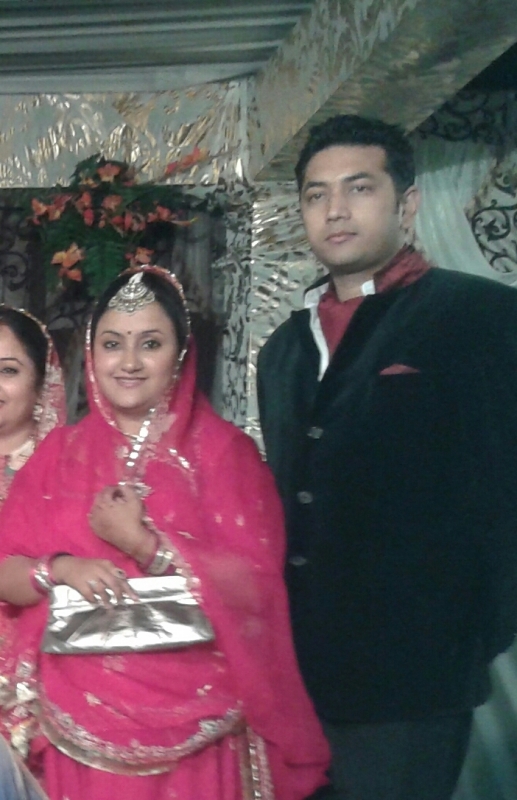
- Tikka Gaurav Chand, born in , married in 2008, Kumari Madhvi Kumari (Tikkarani Madhvi Kumari of Khaneti), daughter of Kanwar Raj Pal Singh of Bashahr, and his wife, Kanwarani Romila Kumari, and has issue, a daughter.
- Kumari Aprajita Kumari
- Kanwar Saurav Singh, in born , presently (2007) undertaking an M.B.A. in Australia.
History
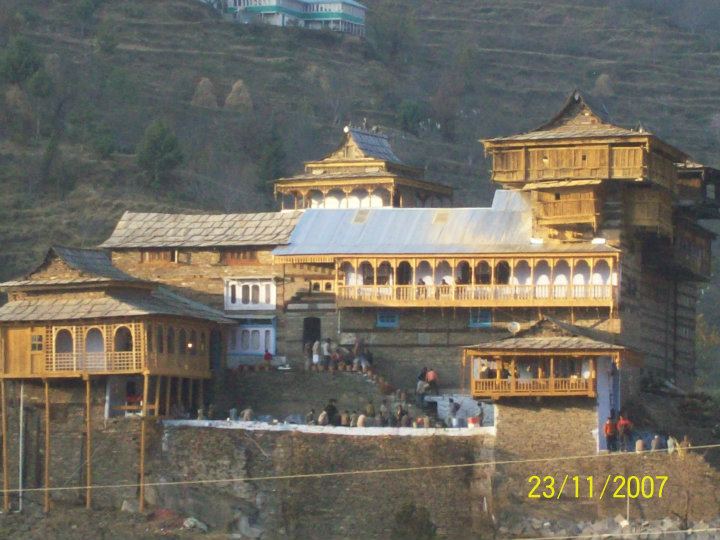
Khaneti (also spelled as Khaneti or Khanethi) was a prominent princely state, categorized under the Simla Hill States during the British Raj. Situated in the rugged, mountainous terrain of the Western Himalayas, the state played a vital role in the socio-political landscape of the Satluj valley in present-day Himachal Pradesh. Throughout its history, Khaneti maintained a complex relationship of feudatory allegiance and hard-won autonomy with its larger neighbors, notably the Bashahr State and the British Empire.
Origin and Foundation
The ruling family of Khaneti belonged to the Suryavanshi clan of Rajputs, tracing their ancestry back to the ancient rulers of Gaya in Bihar. According to historical traditions recorded in the colonial gazetteers, three Rajput brothers—Kirat Singh, Kartar Singh, and Sabir Chand—migrated northward to escape the waves of Islamic invasions in the plains of northern India during the late 11th or early 12th century.
Upon entering the hills of the Shimla region:
- The eldest brother, Kirat Singh, founded the state of Kumharsain.
- The second brother, Kartar Singh, established the fiefdom of Karangla.
- The youngest, Sabir Chand, established himself in the territory that would become Kotkhai.
The state of Khaneti was later carved out as an offshoot of Kumharsain. The rulers of Khaneti shared a deep agnatic kinship with the rulers of Kumharsain and Kotkhai, which heavily influenced regional alliances and diplomacy for centuries. Authentic records of these migrations and state foundations can be found in the Punjab State Gazetteers: Simla Hill States, 1910.
Medieval Period and Feudatory Relations
During the medieval era, Khaneti was situated in a highly contested geopolitical zone. Because of its relatively small size, it was often subjected to the dominance of larger neighboring states. For much of its pre-colonial history, Khaneti was a feudatory (or thakurai) of the powerful Kingdom of Bushahr (Bussahir). The Thakurs of Khaneti were required to pay an annual tribute and provide military contingents to the Rajas of Bushahr during times of war.
Despite this subordination, the Thakurs maintained internal administrative autonomy, managing local disputes, collecting land revenue, and patronizing local deities (Devtas), which formed the backbone of the socio-religious life of the hill people.
The Gurkha Invasion and British Intervention (1803–1815)
In the early 19th century, the expansionist Gurkha Empire of Nepal launched an invasion of the Simla Hill States. Led by General Amar Singh Thapa, the Gurkha forces overran Khaneti, forcing the ruling Thakur, Lal Chand, and his family to seek refuge in neighboring territories or pay heavy war indemnities. The Gurkha occupation was marked by severe economic strain and administrative disruption across the region.
The situation changed with the outbreak of the Anglo-Gurkha War (1814–1816). The British East India Company, led by General David Ochterlony, allied with the local hill chiefs to expel the Gurkhas. Following the Gurkha defeat, the British reshaped the political map of the region. Under the Sanad of 1815, the British restored the Thakur of Khaneti to his ancestral lands. However, instead of making it entirely independent, the British placed Khaneti under the nominal suzerainty of Bushahr, requiring the Thakur to pay an annual tribute of 900 Rupees through the Bushahr state, with the British acting as the ultimate arbiters. Detailed accounts of these arrangements are preserved in the Imperial Gazetteer of India (Volume 22).
British Period and Administrative Reformers
During the late 19th and early 20th centuries, Khaneti experienced a period of modernization under British supervision. The British appointed superintendents to oversee the administration and settle land boundaries, particularly regarding the highly valuable timber forests of the Satluj valley.
Key reformers of this era included:
- Thakur Saran Chand: He worked closely with British forest officers to implement sustainable timber extraction policies, which became a primary source of state revenue.
- Thakur Gop Chand: Under his reign, modern land revenue settlements were introduced, replacing arbitrary traditional levies with structured cash assessments. He also patronized primary education and improved the bridal paths connecting Khaneti to the Hindustan-Tibet Road.
Heraldry and Flag
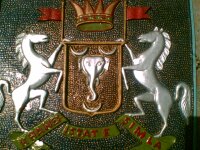
The state of Khaneti used a traditional Rajput heraldic design to assert its sovereign identity. The state flag was a rectangular banner of deep crimson or red, symbolizing bravery, sacrifice, and their Suryavanshi (solar) lineage. The state seal featured the representation of the sun, reflecting their ancestral claims to the solar dynasty of India, flanked by traditional weapons of Rajput warfare, such as the Katar (dagger) and sword.
Post-Independence and the Modern Era
Following the departure of the British from the Indian subcontinent, the state of Khaneti chose to integrate with the newly independent Indian Union. On April 15, 1948, the ruling Thakur signed the Instrument of Accession. Khaneti, along with 30 other historic hill states, was merged to form the province of Himachal Pradesh.
Initially integrated into the Mahasu district, the territories of the erstwhile Khaneti state are now part of the Kotkhai and Nankhari tehsils of the modern-day Shimla District. Today, the descendants of the ruling family reside in the region, preserving their ancestral heritage, while the area has transitioned into a highly prosperous agricultural belt famous for its world-class apple orchards. For more information on the transition of these hill states into modern administrative units, refer to the Official Portal of the Government of Himachal Pradesh.
Genealogy
- Rana UGGAN CHAND, Rana of Khaneti, married and had issue.
- Rana Sansar Chand of Karangla.
- Rana Sabir Chand, married and had issue.
- Several Generations
- Rana Duni Chand of Khaneti
- Rana Ahimal Singh of Kotgarh and Kotkhai.
- Several Generations
- Rana Jai Singh of Kumharsain.
- .....
- Rana TARA CHAND, Rana of Khaneti fl.1495
- Rana BIR CHAND, Rana of Khaneti fl.1550
- .....
- Rana PARTAB CHAND, Rana of Khaneti
- Rana RASAL CHAND, Rana of Khaneti 1802/1829, the state was overrun by the Gurkhas in 1803 until 1815, and during that time, the Rana was in self imposed exile at Bashahr; married and had issue. He died .
- Rana Nain Chand (qv)
- Kumari (name unknown) [Rani Chandra Kuar of Kotkhai], married Rana Bhagwan Singh of Kotkhai, and had issue.
- Rana NAIN CHAND, Rana of Khaneti 1829/1858, married and had issue. He died .
- Rana Saran Chand (qv)
- Mian Puran Singh
- Mian Bhagirat Singh
- Mian Alam Singh
- Rana SARAN CHAND, Rana of Khaneti 1858/1888, married and had issue. He died .
- Rana Lal Chand (qv)
- Mian Zalim Singh, born , Regent for his brother 1888/1898
- Kumari (name unknown), married Thakur Narindar Singh of Delath, and had issue.
- Rana LAL CHAND, Rana of Khaneti 1888/1899, born , of unsound mind, the state was under the control of his brother, married and had issue. He died .
- Rana Amogh Chand (qv)
- Kumari Kamla Kumari, married Rana Jai Singh of Kotkhai, and had issue.
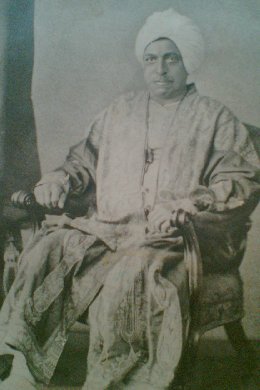
- Rana AMOGH CHAND, Rana of Khaneti 1899/1961, born , educated at Aitchison College, Lahore; married seven wives, and had issue, eight children. He died .
- Rajkumar Bahadur Chand
- Rajkumari Gajgamini, married into Isanagar (Isengarh).
- Rana Krishan Chand (qv)
- Rajkumar Tilak Raj Singh, married and had issue.
- Rajkumari Sharda Devi, married Rana Raghubir Singh of Sangri.
- Rajkumar Vikram Singh, married (a), Rajkumarani Vidhya Devi, daughter of Kanwar Katar Singh of Jubbal, married (b), Rajkumarani Maheshwari Kumari, daughter of Rajkumar Durga Singh of Jubbal.
- Rajkumar Lakha Singh, married to Kanwarani Chandramani Devi and has issues, one son and four daughters.
- Kumari Sheela Devi, married to Ranbir and had issues.
- Dr. Nitesh
- Anupam
- Kumari Anusuiya Devi, married to Ravinder Singh Rathore of Samra and had issues.
- Arpit Singh Rathore
- Kanpuriya Rathore
- Kumari Raksha Devi, married to JE Virender Thakur of Palath and had a issue.
- Surbhi Singh
- Kanwar Yashpal Singh, married to Mamta Sarahan of Sarahan.
- Kumari Meenakshi Devi, married to Sanjay Singh Thakur of Rahana and had issues.
- Rudrpriya Singh
- Pradeuman Singh
- Kumari Sheela Devi, married to Ranbir and had issues.
- Rajkumari Sumitra Kumari
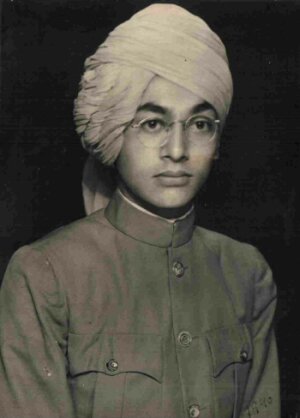
- Tikka (now the Rana Sahib) Omkar Chand (qv)
- Raj Kumar Someshwar Singh, born , educated at Solan, obtained a degree as a Bachelor of Arts (B.A.) and is an agriculturist, married in June 1984, Kumari Vidya Kumari, daughter of Mian Kaur Singh of Jubbal, and his wife, Kanwarani Chandra Kanta, and has issue, two sons.
- Kunwar Anirudh Singh, born in .
- Kunwar Aditya Singh
- Raj Kumari Chandra Prabha Kumari, born , married 1968, Thakur Vijay Chand of Beja State.
- Raj Kumar Verinder Singh, born , educated at Solan, married 7th April 1987, Kumari Sarla Kumari, daughter of Kanwar Devi Singh of Kashu in Theog, and his wife, Kanwarani Satya Devi.
- Raj Kumari Sneh Prabha Kumari, born , married, Kanwar Surinder Singh of Jubbal, born , and has issue, three daughters.
- Raj Kumari Kanti Prabha Kumari, born , married 1985, Lieutenant Kanwar Lalit Kumar Singh of Manswal, and has issue, one daughter.
- Kumari Ganeshwari Kumari, born .
- Raj Kumar Bhuvaneshwar Singh, born , educated at Deori, married and has issue, two sons.
- Raj Kumari Kirti Prabha Kumari, born .
- Raj Kumari Shashi Prabha Kumari, born , married and has issue, two sons.
- Raj Kumar Bhopinder Singh, born , educated at Deori, married and has issue, two daughters.
- Kumari Geetanjali Kumari
- Kumari Nandini Kumari
- Raj Kumar Lokinder Singh, born , educated at Chandigarh Khalsa College, married and has issue.
- Kunwar Aryavir Singh
- Rana OMKAR CHAND, Rana of Khaneti (see above)
- Kumari Rajeshwari Kumari, married Kanwar Kuldeep Singh of Jubbal, born , and has issue, two sons.