
Present Head
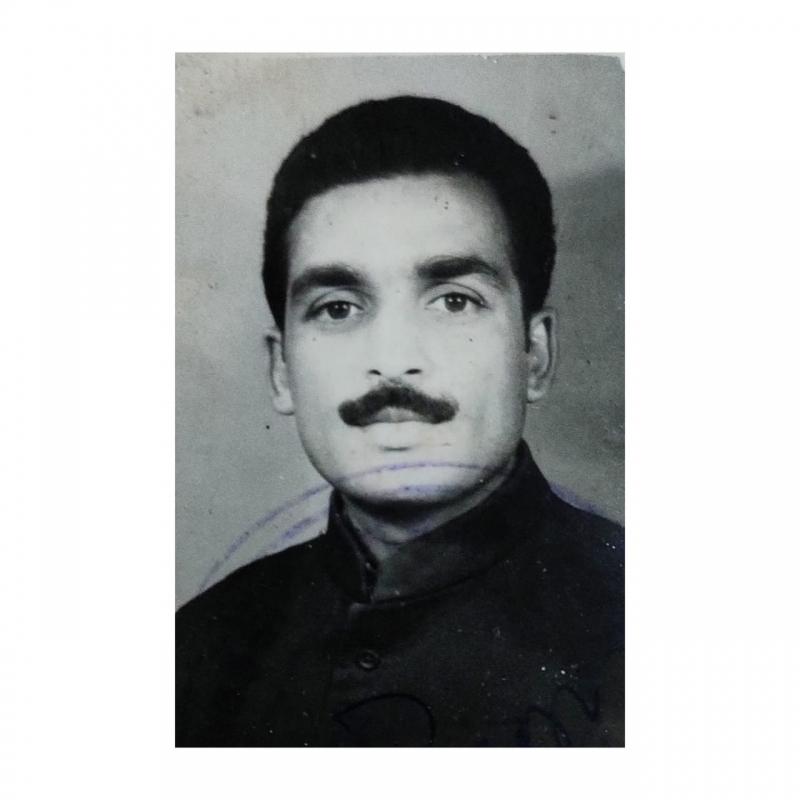
- Yuvraj Sahib Shri Kunwar Puspendra Singh Ji Rathore (B.COM, LLB), born ; he is a Politician, agriculturalist, served as Convenor Of Legislative Assembly Uttar Pradesh from Bhartiya Janta Party Kheri division, Chairman of subdivision of Joint Ramiyabehar of Bhartiya Janta Party, Vice Chairman of Bhartiya Janta Party Yuva Morcha and member of District Working Committee Bhartiya Janta Party. Presently Secretary Bhrastachar Virodhi Sagharsa Samiti. Also Working as Officer of the Court at Allahabad High Court, Lucknow bench, Uttar Pradesh. Married on 24th February 1999 to Yuvrani Shrimati Renuka Singh Ji Sahib Chauhan and has issues, two sons.
- Raj Bhanwar Yash Vardhan Singh Rathore
- Raj Bhanwar Kirte Vardhan Singh Rathore
- Rajkumari Geetika Singh Rathore, married to Thakur Narendra Pratap Singh Chauhan.
- Rajkumari Preetika Singh Rathore, married to Kunwar Surya Pratap Singh Chauhan.
History
Lakhahi was founded in about 1461 as Usiya by Maharaja Kalyan Mal Ji. Lakhahi is situated in the present-day Kheri District of Uttar Pradesh. Rao Kalyan Mal Ji, who migrated from the historical kingdom of Jodhpur, was the founder of Lakhahi. He conquered local tribal estates and other surrounding territories to establish his sovereign control. The Royal Family of Lakhahi is descended from the illustrious Royal House of Rathores of Jodhpur-Marwar.
An enormous temple of Lord Shiva was built by Maharaja Rambaksh Singh Ji Rathore in the 1700s. It was decorated with a prominent Golden Pot or Kalash. Lakhahi State transitioned into a prominent estate (Taluqdari) under the British administration in the 19th century.
Origin and Foundation
The origin of the Lakhahi estate is tied to the migration of Rathore Rajputs from Rajputana to the fertile plains of Awadh (Oudh). In 1461, Rao Kalyan Mal Ji (referred to in some colonial records as Rao Kalyan Sah), a scion of the Jodhpur royal line, travelled eastward and settled in the region then known as Usiya. At the time, the region of Kheri was densely forested and controlled by indigenous tribal chieftains, primarily the Pasis and local Ahirs. Rao Kalyan Mal Ji successfully waged campaigns against these local chieftains, subjugating their territories and establishing a fortified seat of power at Usiya, which later came to be known as Lakhahi.
The Mughal and Nawabi Era
During the Mughal Empire and the subsequent rise of the Nawabs of Awadh, the Rathores of Lakhahi maintained a high degree of autonomy and held a prominent seat in the Nawab's durbar. Because of their strategic location near the Terai region, they served as crucial regional administrators, maintaining law and order and securing the northern borders of the Awadh province. Under Maharaja Rambaksh Singh Ji Rathore in the 18th century, the estate witnessed a cultural renaissance. Maharaja Rambaksh Singh Ji was a devout ruler who commissioned the construction of a grand Shiva temple. This temple, featuring an imposing architecture topped with a golden Kalash, became a major pilgrimage site and a symbol of the estate's prosperity.
British Period and Taluqdari Status
Following the annexation of Awadh by the British East India Company in 1856 and the subsequent Indian Rebellion of 1857, the land tenure system in Kheri was thoroughly restructured. Under the British Raj, the rulers of Lakhahi were recognized as Taluqdars. The estate was formally registered under the Oudh Estates Act, confirming their hereditary land rights and revenue-collecting authority over numerous villages in the Kheri district.
According to historical documentations compiled in the Kheri District Gazetteer by H.R. Nevill (1905), the Rathor taluqdars of Lakhahi were recognized for their agricultural management and efforts to develop the local economy, particularly in sugarcane and rice cultivation, which remain primary crops of the Kheri District to this day.
Post-Independence and Modern Era
With India gaining independence in 1947 and the subsequent passage of the Uttar Pradesh Zamindari Abolition and Land Reforms Act in 1950, the official intermediary rights and privileges of the Lakhahi Zamindari were abolished. The royal family transitioned their focus toward modern agriculture, local business, and public service. Today, the descendants of the Rathore dynasty of Lakhahi continue to reside in Uttar Pradesh, maintaining their historical legacy, conserving the ancestral Shiva temple, and contributing to the social fabric of the Lakhimpur Kheri region.
Genealogy
- Rao Akhai Raj Ji Rathore
- Raja Kalyan Mal Ji Rathore, 1st Raja of Usiya, founder of Lakhahi as Usiya.
- Raja Beetal Das Ji Rathore, 2nd Raja of Usiya (Lakhahi).
- Raja Beni Singh Ji Rathore, 3rd Raja of Usiya (Lakhahi).
- Raja Fateh Singh Ji Rathore, 4th Raja of Lakhahi.
- Raja Shiv Singh Ji Rathore, 5th Raja of Lakhahi.
- Raja Ram Baksh Singh Ji Rathore, 6th Raja of Lakhahi. He build the Shri Janglinath Mahadev temple.
- Raja Bakhat Singh Ji Rathore, 7th Raja of Lakhahi.
- Kunwar Jai Gopal Singh Ji Rathore (qv)
- Kunwar Harharatmak Singh Ji Rathore (qv)
- Raja Jai Gopal Singh Ji Rathore, 8th Raja of Lakhahi. Later he was dethroned by the British government.
- Thakur Shri Raj Bahadur Singh Rathore
- Thakur Shri Vishveshwer Singh Rathore
- Thakur Shri Mahesh Baksh Singh Rathore
- Thakur Shri Shiv Prasad Singh Rathore
- Thakur Shri Vishambhar Baksh Singh Rathore
- Thakur Shri Rajeshwer Baksh Singh Rathore
- Rajkumari Shree Munni Devi Singh
- Raja Harharatmak Singh Ji Rathore, 9th Raja Of Lakhahi, born in the year 1850, married 2 times, 1stly with Rani Sahiba (name unknown) and 2ndly to Rani Sahiba Suraj Kanwar and from 1st Rani Sahiba he had issues, two sons and a daughter. He died in .
- Kunwar Shankar Baksh Singh Ji Rathore, born , he served as a Nazir, a native court official in District magistrate court; married to Thakurani Sahiba Raghuvansh Kumari Singhji and had issues, one son and six daughters. He died on .
- Thakur Shri Suraj Bux Singhji Rathore, born , served as joint Secretary to the government of Uttar Pradesh Rental Department; married to Thakurani Sahiba Shreemati Purnima Devi Singhji. He died on without any issue.
- Rajkumari Shreemati Lal Devi Singhji Rathore
- Rajkumari Shreemati Munni Devi Singhji Rathore
- Rajkumari Shreemati Manohar Devi Singhji Rathore
- Rajkumari Shreemati Savitri Devi Singhji Rathore
- Rajkumari Shreemati Munni Devi Singhji Rathore
- Rajkumari Shreemati Vimala Devi Singhji Rathore
- Kunwar Viswanath Baksh Singh Ji Rathore (qv)
- Kunwar Shankar Baksh Singh Ji Rathore, born , he served as a Nazir, a native court official in District magistrate court; married to Thakurani Sahiba Raghuvansh Kumari Singhji and had issues, one son and six daughters. He died on .
- Raja Viswanath Baksh Singh Ji Rathore, 10th Raja of Lakhahi, born in , served as first Sarpanch and Gram Pradhan throughout his life. He was the last ruling chief of the Raj of Lakhahi. He was expert of Ayurveda. He died on at Lakhahi House, Lucknow. Married 3 times, first two wives died and 3rdly with Rani Sahiba Rajrani Singh Ji of Saraiya, she also Served as last Sarpanch throughout her life, had issues, two sons.
- Kunwar Chandra Prakash Singh Ji Rathore (qv)
- Kunwar Munendra Pal Singh Ji Rathore (qv)
- Raja Chandra Prakash Singh Ji Rathore, 11th Raja Of Lakhahi, born . He detached himself From the Royal Family and left the throne and continued his Government Service. He Served as the Chief district medical officer, now practicing privately in his own Medical Hospital. Married to Rani Sahiba Manglesh Kumari and has issues, two sons and three daughters.
- Dr. Kunwar Udit Prakash Singh Ji Rathore, married and has issues, two daughters.
- Dr. Kunwar Aditya Prakash Singh Ji Rathore, married and has issue, one daughter.
- Dr. Raja Munendra Pal Singh Ji Rathore (see above)