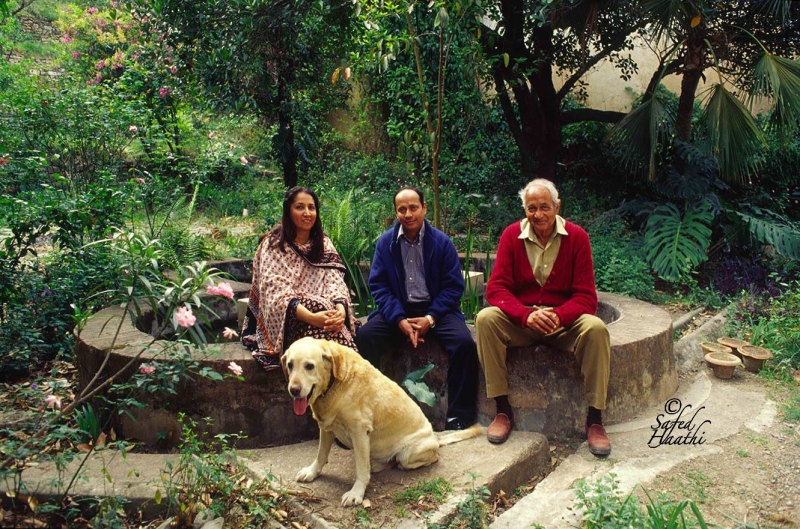
Present Head
History
Origin and Foundation
The history of the Bhajji State is deeply intertwined with the ancient Pal dynasty of Kutlehar. The state was founded around the late 11th century (often traditionally ascribed to the 10th century) by Cheru Prasad (also known as Raja Ram), a younger brother of the ruling Raja of Kutlehar. Belonging to the Chandravanshi clan of Rajputs, the founders established their authority over the rugged mountainous terrain along the Sutlej River valley. The capital of the state was established at Suni (or Seoni), a town strategically positioned on the banks of the Sutlej, famous for its natural hot sulfur springs.
The Gurkha Invasion and British Protection
In the early 19th century, the expansionist Gurkha Empire of Nepal launched an invasion across the Sutlej, overrunning several hill states, including Bhajji, between 1803 and 1815. During this tumultuous period of Gurkha occupation, the ruling family and local populations faced severe hardships, with the rulers often forced to seek refuge in neighboring territories. Following the outbreak of the Anglo-Nepalese War, the British forces under General David Ochterlony successfully expelled the Gurkhas from the Simla Hill States. On 4th September 1815, the British administration restored Bhajji to its traditional ruler, Rana Rudar Pal, through a formal sanad. This document confirmed his sovereignty over the ancestral territories, subject to a yearly tribute and the obligation of assisting the British during times of military necessity.
Development and Modern Administration
Throughout the 19th and early 20th centuries, the Ranas of Bhajji worked progressively to modernize the state's administration. Rana Rudar Pal abdicated the throne in 1842 to lead a spiritual life in Varanasi, passing the rule to his son, Rana Bahadur Singh. He was succeeded by Rana Durga Singh in 1875, whose long reign brought significant administrative, judicial, and land revenue reforms. Under his leadership, the land settlement was systematically organized, and primary education and basic healthcare services were introduced in the state. By 1893, the military capabilities of the state were formally regulated under British suzerainty, allowing the Rana to maintain a small ceremonial force of 60 infantry soldiers and one gun.
Post-Independence and Integration
The last ruling chief of the state, Rana Ram Chandra Singh, succeeded to the gadi (throne) in the mid-20th century. Following India's independence from British rule, the princely state of Bhajji signed the Instrument of Accession to join the Dominion of India. On 15th April 1948, Bhajji was formally merged into the newly formed Union Territory of Himachal Pradesh, initially becoming part of the Mahasu district. Today, the territories of the erstwhile Bhajji State are located within the Shimla district of Himachal Pradesh, with Suni continuing to serve as an important local administrative and tourism hub.
Genealogy
- Raja AMRIT PAL, Raja of Bhajji; married and had issue.
- Rana Rudra Pal (qv)
- Rana RUDRA PAL, Rana of Bhajji 1800/1842, confirmed in his state by a sanad dated 4th September 1815, he handed over control to his son in 1828 and retired to Hardwar, married and had issue. He died .
- Rana Ran Bahadur Singh (qv)
GURKHA OCCUPATION 1803/1815
- Rana RAN BAHADUR SINGH, Rana of Bhajji 1842/1875, born about 1824, married and had issue. He died .
- Rana Durga Singh (qv)
- Mian Parmatan Singh, born , married and had issue, six sons and one daughter.
- Kumari Yamunawati, married Rana Shamsher Singh of Ratesh, and had issue.
- Mian Bijai Singh, born , married and had issue, one son.
- Kanwar Lakshman Singh of Thog, married and had issue.
- Kanwar Jitendra Singh, married Kanwarani Uma Devi, daughter of Kanwar Kidar Singh of Theog, and has issue.
- Kanwar Vibhu Pal Singh
- Kanwar Jitendra Singh, married Kanwarani Uma Devi, daughter of Kanwar Kidar Singh of Theog, and has issue.
- Kanwar Lakshman Singh of Thog, married and had issue.
- Rana DURGA SINGH, Rana of Bhajji 1875/1913, born , he succeeded to the gadi on 18th November 1875, married Ranis from Mandi, Suket, Kangra and Mahli, and had issue, three sons. He died .
- Tikka Indar Singh, died young.
- Kanwar Praja Pal, born about 1898, died young.
- Rana Bir Pal (qv)
- Rajkumari (name unknown), married (as his first wife), Raja Mahendra Chand of Nadaun, and had issue.
- Rajkumari (name unknown), married (as his second wife), Raja Mahendra Chand of Nadaun, and had issue.
- Rajkumari (name unknown), married (as his first wife), 1913, Rana Vidyadhar Singh of Kumharsain. She died sp.
- Rana BIR PAL, Rana of Bhajji 1913/1940 (deposed), born and succeeded 9th May 1913, educated at Aitchison Chiefs' College, Lahore; Bishop Cotton School, Shimla; married 25th November 1925, Rani Sarat Kumari Devi, died , daughter of Raja Pitamber Deb of Aul, and his wife, Rani Swarna Manjari Devi, and had issue. He died .
- Rana Ram Chandra Pal Singh (qv)
- Rajkumar Shyam Chandra Pal, born in Suni, married 14th July 1959, Kunwarani Shyama Devi, daughter of Raja Brij Dev Narain Singh of Daltanganj (Chainpur), and his wife, Rani Prafulla Manjari (see Kharsawan), and has issue.
- Kumari Punam Pal, married Kanwar Ranvijay Singh, son of Babu Ram Singh, and his wife, Babuain Sharda Devi, daughter of Kanwar Ranjit Singh of Koti.
- Kumari Sunam Pal, married Kanwar Ravinder Singh of Ghund.
- Kunwar Pradeep Pal, born in Bihar, married 2nd February 2000 in Jaipur, Kumari Ritu Kumari, born in Jaipur, daughter of Thakur Narain Singh of Siras, and has issue.
- Kumar Adhiraj Pal, born in Jaipur.
- Kumar Bhavyaraj Singh, born on .
- Kanwar Sher Singh, born in Sunni, married Bimla Devi, and has issue.
- Kunwar Bhupender Pal, born in Shimla, married on 7th November 1991 in Mandi, Kumari Sunita Devi (born ) in Chandigarh, daughter of Mian Atma Singh Sen of Jogendernagar, Mandi, and his wife Sumitra Devi, and has issues.
- Kumari Kiran Pal
- Kumar Dhroov Pal
- Kunwar Bhupender Pal, born in Shimla, married on 7th November 1991 in Mandi, Kumari Sunita Devi (born ) in Chandigarh, daughter of Mian Atma Singh Sen of Jogendernagar, Mandi, and his wife Sumitra Devi, and has issues.
- Rana RAM CHANDRA PAL SINGH, Rana Saheb of Bhajji 1940/2012, born at Cuttack, Orissa, he was granted full ruling powers on the 17th April 1947, educated at Queen Mary's College, Lahore, Pakistan and later at Aitchison's Chief's College, Lahore, he graduated from St. Stephen's College, Delhi University; Member of the I. A. S., retiring in 1982; he married November 1951, Rani Nirmala Devi, born , died , daughter of Col. HH Maharaja Mahendra Sir Yadvendra Singh Ju Deo Bahadur of Panna, and his second wife, HH Maharani Shri Gopal Kumari, and had issue.
- Tikka Moh Chandra Pal Singh, born at Cuttack, Orissa, educated at the Mayo College, Ajmer, Rajasthan; graduated from Hindu College, Delhi University; married 3rd November 2000 in Simla, Tikkarani Naintara Kumari of New Delhi. He died at Delhi.
- (see above)
- Kanwar Moti Singh, married and had issue.
- Thakurani Gyan Devi, married Thakur Sher Singh, Thakur of Delath, and had issue.
- Kanwar Narender Singh, married Kumari Rekha Kumari, daughter of Kanwar Homendra Singh of Jubbal.
- Kanwar Jawala Singh, married and had issue.
- Rani Shanta Devi, married Rana Ranbir Singh, Rana of Mangal, and had issue.
- Kanwar Gopal Singh, married and had issue.
- Kumari Sushila Kumari, married Rajkumar Devinder Singh of Kotkhai, and had issue.