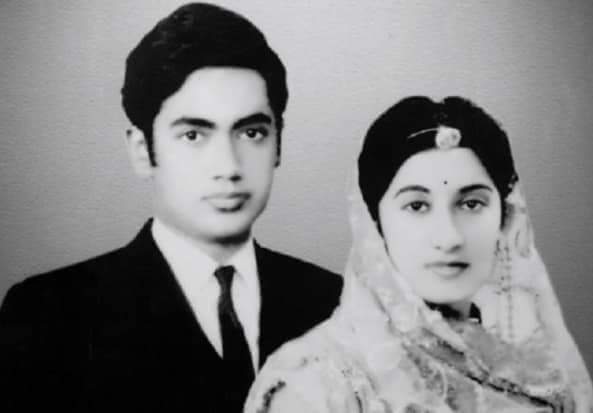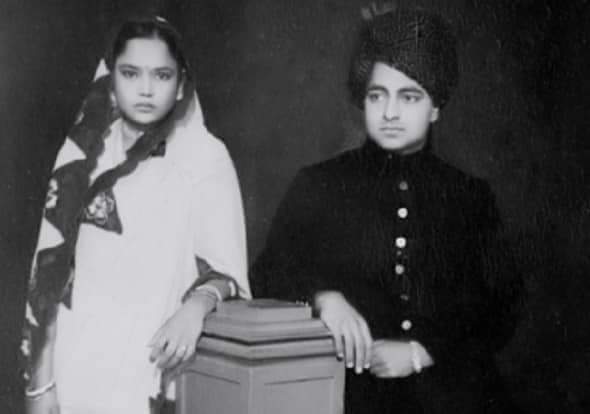
Present Head
- Rajkumari Mrinalini Kumari, born , married 1992, Rajkumar Ratnakar Singh of Ramnagar-Dhameri, educated at Mayo College, Ajmer, and has issues, four daughters.
- HH Maharani Mandakini Kumari, born , married 9th December 1993, HH Maharana Shri Paranjayaditya Krishnakumarsinhji, Raja of Sant, and has issue.
- Rajkumari Mradima Kumari, born , married Yuvraj Saheb Ranjitsinhji of Muli.
- Yuvrani Karnika Kumari, born , married 23rd November 2005, Yuvraj Siddharthsinhji Chaitanyadevsinhji Jhala of Wadhwan, and has issue. She died on .
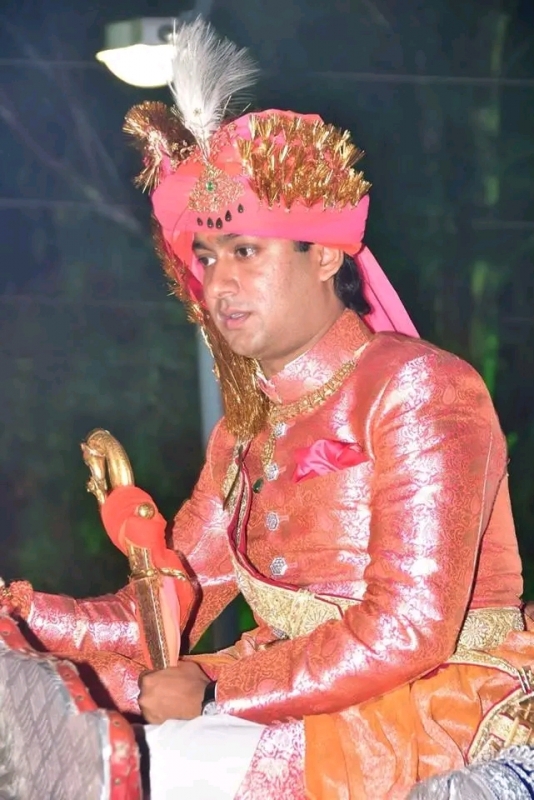
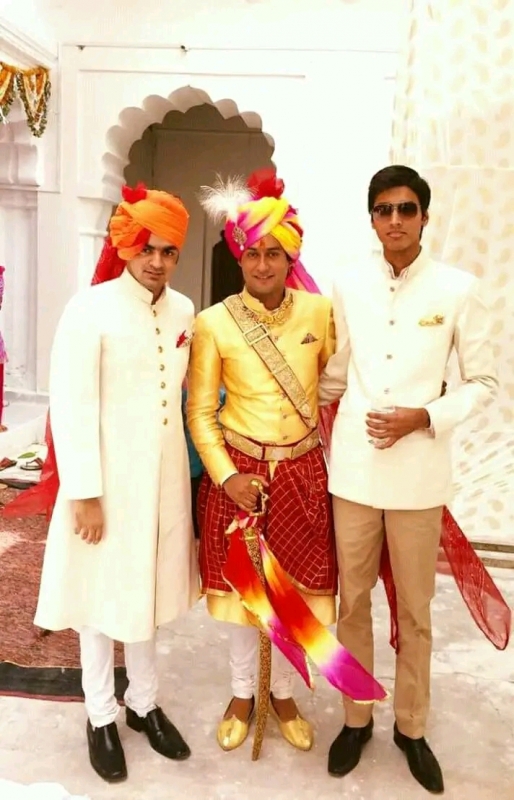
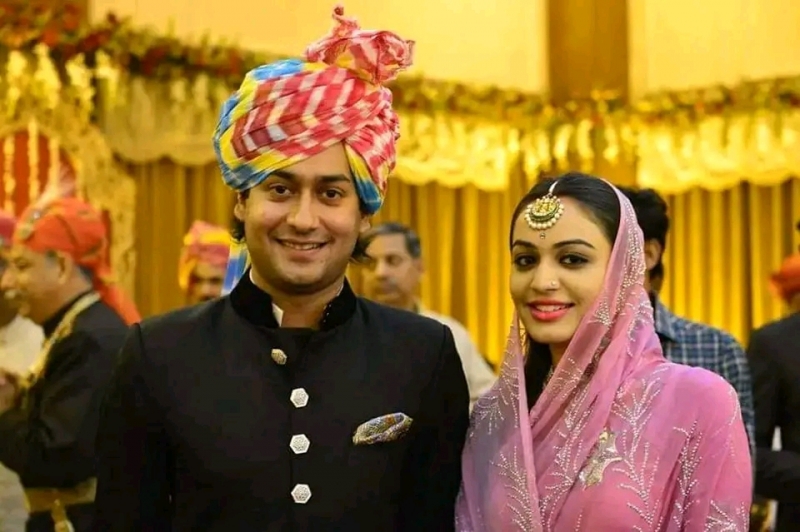
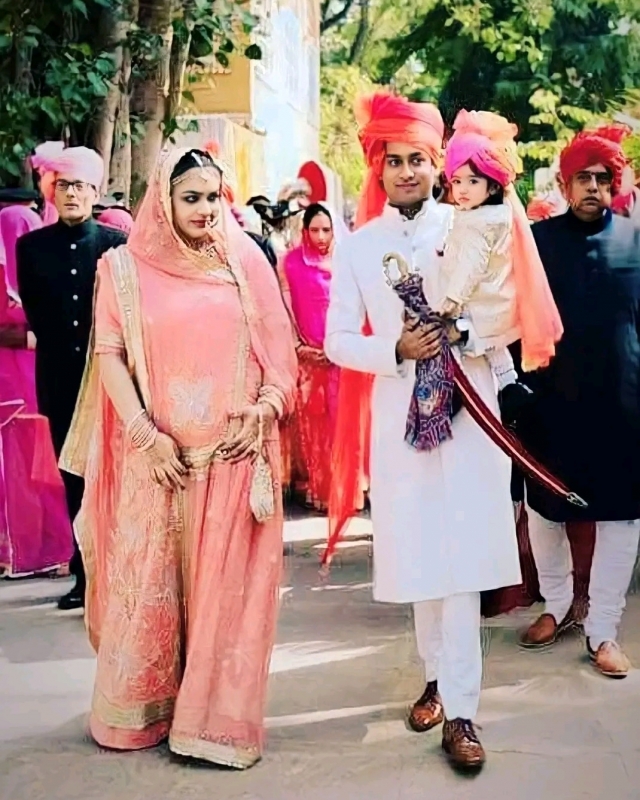
- Yuvaraj Jaivardhan Singh, born , educated from Doon School, graduation from SRCC in Delhi University; a notable politician and the youngest member of Madhya Pradesh's 14th Vidhan Sabha. He represents Raghogarh Vidhan Sabha constituency in Madhya Pradesh. He won the assembly election in 2013 with a margin of over 59,000 votes, the highest among all candidates in the Congress Party that year; married on 15th May 2015 to Sreejamya Shahi, daughter of Rajkumar Shatrundam Shahi of Dumaria.
- Bhanwar Sahastravardhan Singh
History
The Foundation of Khinchiwada
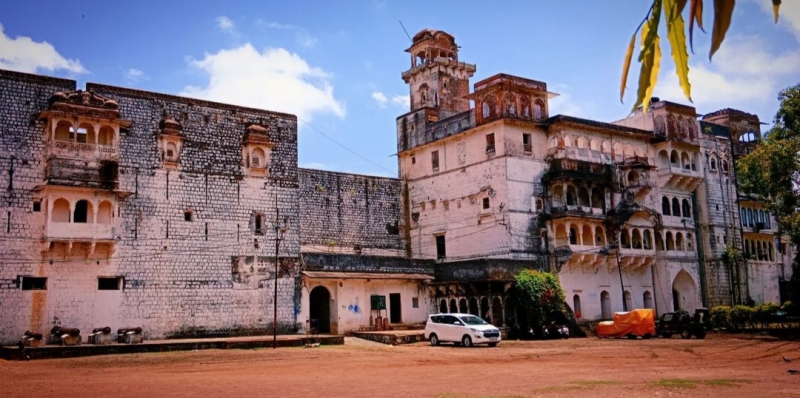
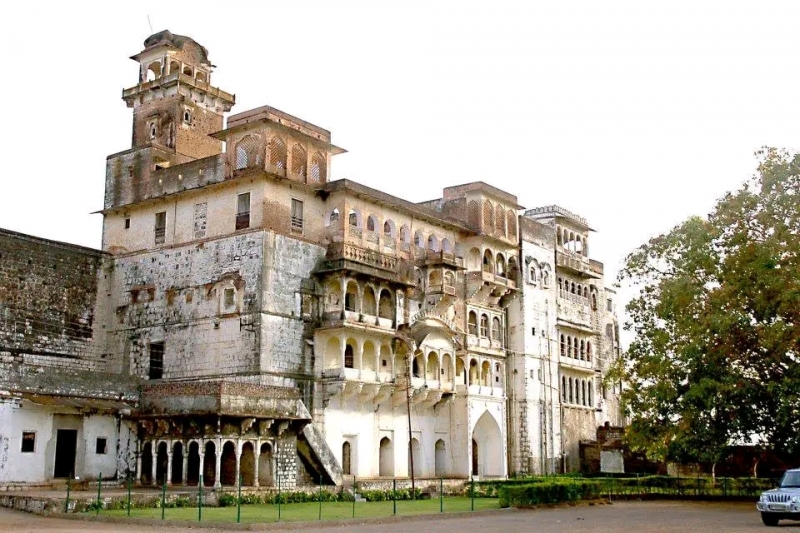
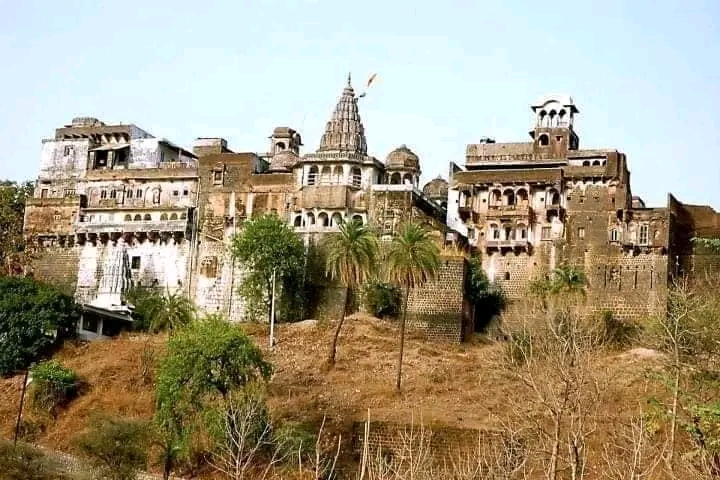
The State of Raghogarh, historically known as Khinchiwada, was established in 1673 AD by Raja Lal Singh Khinchi, a celebrated warrior of the Khinchi Chauhan dynasty. Prior to this, the Khinchi rulers had governed for nearly four centuries from their stronghold at Gugor Fort (Chhabra) in the present-day Baran district of Rajasthan. Facing relentless territorial friction with their neighboring kinsmen, the Hada Rajputs of Kota and Bundi, the Khinchi rulers chose to migrate eastward to avoid fratricidal bloodshed within the broader Chauhan lineage. Raja Lal Singh established his new capital at a strategic hill site, constructing the formidable Raghogarh Fort. Within its walls, he installed a sacred saptdhat (seven-metal) idol of Raghoji Maharaj—the child manifestation of Lord Ram—giving both the fortress and the kingdom the name Raghogarh. Holding the prestigious title of Hindupat, Lal Singh's reign was marked by extensive civic construction, including temples, stepwells, and reservoirs, while his brothers established prominent branch estates, including Garha-Jamner and Maksudangarh.
The territorial region of Khinchiwada historically spanned a large area between the Parbati and Betwa rivers. The Khinchis trace their lineage directly to the legendary Agnikula clan of the Chauhans, specifically descending from Rao Gungunji or Gugorji, who established their early footprint in the Malwa region. The strategic location of the new capital, protected by dense forests and the rugged terrain of the Vindhyan range, provided Raghogarh with a natural defensive advantage that would prove crucial during the tumultuous centuries of Mughal decay and Maratha expansion.
Military Alliances and Resistance
The Khinchi Chauhans maintained a fierce legacy of independence, tracing their ancestry back to the legendary Raja Achaldas Khinchi of Gagron, famed for his historic resistance against the Malwa Sultans in the 15th century. This martial prowess was demonstrated on a grand scale in May 1715 AD at the Battle of Pilsud. There, Raja Dhiraj Singh Khinchi of Raghogarh allied with Maharaja Sawai Jai Singh of Jaipur and a coalition of Rajput rulers to decisively defeat a massive, combined Maratha-Afghan force under the command of Kanhoji Bhonsle and local Maratha generals.
As the 18th century progressed and the Mughal Empire's central authority weakened, Raghogarh became a focal point of resistance against the expanding Gwalior State ruled by the Scindia dynasty. Rulers like Raja Vikramaditya Singh I and Raja Balbhadra Singh I waged continuous campaigns to protect their autonomy. They successfully recaptured ancestral strongholds like Chhabra-Gugor and the formidable Bajranggarh Fort, turning the region into a hotbed of anti-Maratha resistance that continuously challenged Gwalior's hegemony over Central India.
The Guerrilla War and the Confrontation with Gwalior
The kingdom's defiance peaked during the reign of Hindupat Maharaja Jai Singh Khinchi in the early 19th century. Facing a massive invasion by Gwalior's forces led by Jean-Baptiste Filose (locally remembered as Colonel Flosz)—a commander of European descent operating disciplined, modern brigades—Raja Jai Singh refused to capitulate. When Raghogarh was besieged on Basant Panchami in 1816, the Raja evacuated the fort and launched a brilliant guerrilla campaign across the rugged ravines of the Parbati River.
In a masterstroke of tactical warfare, he captured Sheopur Fort on the Rajasthan border and held Filose's family hostage, forcing the French-Creole commander to negotiate and acknowledge defeat. This era of resilience against external subjugation is still celebrated in Raghogarh today through the traditional Hilla Festival, which commemorates the triumph of local spirit over overwhelming imperial forces.
British Suzerainty and Mediatized Status
Following the conclusion of the Third Anglo-Maratha War and the signing of the Treaty of Gwalior in 1817-1818, the British East India Company intervened to stabilize the volatile region of Central India. Under the British settlement negotiated by Sir John Malcolm, Raghogarh was recognized as a "mediatized" state under the Gwalior Residency of the Central India Agency.
An agreement was brokered between Gwalior and Raghogarh, restoring a portion of the territory to the Khinchi rulers under British guarantee. Although the state lost its absolute sovereign independence and was forced to pay tribute (tanka) to Gwalior, the Khinchi chiefs retained administrative autonomy within their domestic territories. The British administration valued the martial character of the Raghogarh rulers, often relying on them to maintain order in the difficult terrain of the Guna and Khinchiwada districts.
Heraldry, Flag, and Royal Insignia
The heraldic tradition of Raghogarh is deeply rooted in its Chauhan lineage and devotion to Lord Ram.
- The State Flag: The traditional flag of Raghogarh is a triangular saffron (kesariya) banner, representing courage, sacrifice, and the Agnikula origin of the Chauhan Rajputs.
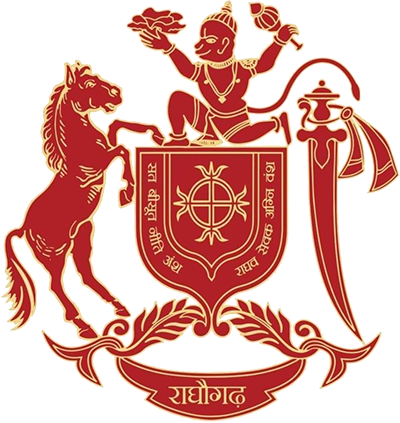
- The Coat of Arms: The state emblem features a shield depicting the sacred fort of Raghogarh, supported by two Rajput warriors in traditional military attire, symbolizing their historic role as defenders of the realm.
- Crest and Motto: The crest is surmounted by a falcon (Shahin), which is the sacred bird of the Chauhans, representing vigilance and high aspirations. The state motto underlines their devotion to duty, honor, and the defense of the weak.
Post-Independence and the Modern Era
Following India's independence in 1947, the princely state of Raghogarh signed the Instrument of Accession and integrated into the newly formed state of Madhya Bharat in 1948, which later merged into Madhya Pradesh in 1956. The royal lineage of the Khinchi Chauhans transitioned seamlessly from feudal rulers into modern democratic public service, maintaining a profound influence over the socio-political landscape of Central India.
The post-independence transition was led by Raja Balbhadra Singh, who entered democratic politics and served as a Member of the Legislative Assembly (MLA). His legacy was carried forward by his son, Raja Digvijaya Singh, who served as the Chief Minister of Madhya Pradesh for two consecutive terms (1993–2003) and remains one of India's most prominent national political figures. Today, the family's legacy of service is represented by his son, Kunwar Jaivardhan Singh, an alumnus of Columbia University, who serves as the Member of the Legislative Assembly (MLA) for the Raghogarh constituency, ensuring that the historical bond between the people of Khinchiwada and their traditional leaders remains unbroken in the modern democratic era.
Historical References and Citations
- For the administrative and geographical history of Raghogarh under the Central India Agency, see the Imperial Gazetteer of India, Volume 21, Page 34.
- Detailed historical accounts of the Khinchi struggle against Gwalior can be found in the Gwalior State Gazetteer (1907) compiled by Captain C.E. Luard.
- For background on the Battle of Pilsud and early Rajput-Maratha relations, consult The Rajput Rebellion against Aurangzeb on the Internet Archive.
Genealogy
- Raja LAL SINGH, 1st Raja of Raghogarh 1673/1697
- Raja DHIRAJ SINGH, 2nd Raja of Raghogarh 1697/1726
- Raja GAJ SINGH, 3rd Raja of Raghogarh 1726/1729
- Raja VIKRAMJEET SINGH, 4th Raja of Raghogarh 1730/1744
- Raja BALBHADRA SINGH I, 5th Raja of Raghogarh 1744/1770, married and had issue.
- Raja Balwant Singh (qv)
- Raja Budh Singh, he was granted a tract of land by his brother in 1776, which later became the state of Maksudangarh, married and had issue (see Maksudangarh). He died .
- Raja BALWANT SINGH, 6th Raja of Raghogarh 1770/1797, married and had issue.
- Raja Jai Singh (qv)
- Raja JAI SINGH, 7th Raja of Raghogarh 1797/1818, died sp 1818.
- Raja AJIT SINGH, 8th Raja of Raghogarh 1818/1857, married and had issue.
- Raja Jaimandal Singh (qv)
- Raja JAI MANDAL SINGH, 9th Raja of Raghogarh 1857/1900, born , succeeded 1857, married (amongst others), Rajkumari Anand Kumari [Rani Anand Kumari of Raghogarh], daughter of Raja Udai Singhji of Banera, and his wife, Rani Jhaliji, and had issue.
- Raja Bikramajit Singh (qv)
- Rajkumari (name unknown), married 1875, the Raja of Sheopur-Baroda.
- Raja BIKRAMAJIT SINGH, 10th Raja of Raghogarh 1900/1902
- Raja BAHADUR SINGH, 11th Raja of Raghogarh 1902/1945, born , succeeded 14th December 1902; married (a), Baijilal Krishna Kumari [Rani Krishna Kumari of Raghogarh], daughter of Raja Akshay Singh of Banera, and his third wife, Rani Shubhra Kumari, married (b), Baisaheb Manak Kunverba, daughter of Maharaj Saheb Dalel Singh of Kachhi-Baroda, and had issue.
- Raja Balbhadra Singh [from Rani Krishna Kumari of Banera] (qv)
- Raja BALBHADRA SINGH II, 12th Raja of Raghogarh 1945/1967, born , elected to the first Vidhan Sabha, married Rani Aparna Kumari, died , daughter of Maharaja Bahadur Chandra Mouleshwar Prasad Singh of Gidhaur, and had issue. He died .
- Raja Digvijay Singh (qv)
- Kanwar Laksman Singh, B.A. (Hons), educated at St. Stephen’s College, University of Delhi in Delhi, born in Indore, Madhya Pradesh. Member of the Madhya Pradesh Legislative Assembly 1990/92 and 1993/94, Member of the 10th (1994), 11th (1996), 12th (1998), 13th (1999) and 14th (2004) Lok Sabha, Member of the following committees.. Committee on Labour and Welfare 1996/97; Consultative Committee, Ministry of Non-Conventional Energy Sources 1996/97; Committee on Human Resource Development and its Sub-Committee on Drug Control 1998/99; Consultative Committee, Ministry of Tourism 1998/99; Committee on Agriculture 1999/2004. Interests and pastimes include.. music, travelling, social work, meeting people and reading, squash and cricket; Member of the Yeshwant Club, Indore, Madhya Pradesh; represented Parliament XI in Cricket at Goa in 1996, married 1stly, 14th December 1978, Kanwarani Jagrati Devi, daughter of Rajkumar Bikram Bahadur Singh of Khairagarh, and his wife, Rajkumar Rani Brijraj Kanwar, married 2ndly, 14th January 2002, Kanwarani Rubina Kumari [née Bal], and has issue, one son and a daughter.
- Sukriti Singh Rao
- Kunwar Aditya Vikram Singh, married 2012, Kunwarani Geetanjali Singh, daughter of Ravle Uday Bhanu Singh Panwar of Thikana Bhensola and has issue, one son.
- Bhanwar Devaditya Singh, born .
- Raja DIGVIJAY SINGH, 13th Raja of Raghogarh (see above)
Notable Figures
Raja Lal Singh (r. 1673 – 1697)
Raja Lal Singh was the founder of the Raghogarh state. He was a prominent descendant of the Khichi Chauhan clan, who originally ruled from Gagron and later Gugor. In 1673, he laid the foundation of the Raghogarh Fort, naming it after Lord Rama (Raghunath). Lal Singh was a courageous ruler who consolidated the Khichi territory and established Raghogarh as a formidable principality in Central India, resisting the expansion of neighboring powers.
For historical records of the region's gazetteer history, refer to the Gwalior State Gazetteer on the Internet Archive.
Raja Dhiraj Singh (r. 1697 – 1726)
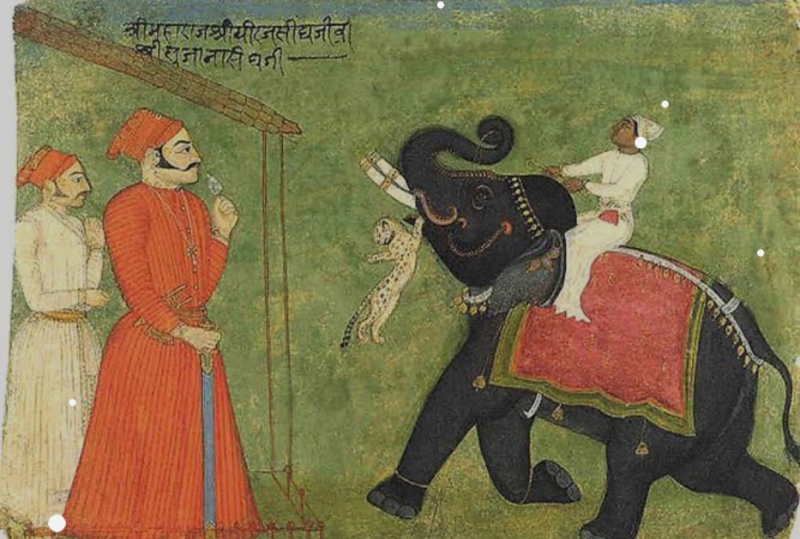
Raja Dhiraj Singh succeeded his father, Lal Singh, and oversaw a period of peace, prosperity, and cultural enrichment. He is highly celebrated as a patron of arts, specifically the distinct "Raghogarh School of Painting." Under his patronage, local artists blended Rajasthani and Mughal styles to produce brilliant miniature paintings depicting themes from the Ramayana, Bhagavata Purana, and contemporary court life. Dhiraj Singh also expanded the territorial reach of the state through strategic marriages and alliances.
To learn more about the art of this region, see the Malwa Painting Wikipedia Article.
Raja Gaj Singh (r. 1726 – 1729)
Raja Gaj Singh had a relatively short reign. During his rule, the Maratha Empire, under the leadership of the Peshwas, began extending its influence northwards into the Malwa region. Gaj Singh worked diligently to maintain the defensive preparedness of the Raghogarh Fort and preserve the sovereignty of the Khichi Chauhans amidst growing external pressures.
Raja Vikramaditya Singh I (r. 1730 – 1744)
Raja Vikramaditya succeeded Gaj Singh. His tenure was marked by intensifying Maratha incursions, particularly from the rising Scindia (Shinde) dynasty of Gwalior and the Holkars of Indore. Vikramaditya engaged in various diplomatic negotiations to shield his state from total subjugation, though Raghogarh began to face heavy financial demands and tribute expectations from the Maratha confederacy.
Raja Balbhadra Singh I (r. 1744 – 1770)
Raja Balbhadra Singh I was a warrior-king who spent much of his reign defending Raghogarh against military expeditions. He actively resisted Maratha hegemony in Malwa and fought several skirmishes to protect his borders. Despite the constant warfare, Balbhadra Singh successfully preserved a high degree of administrative autonomy for his state.
Raja Balwant Singh (r. 1770 – 1797)
Raja Balwant Singh’s reign was marked by severe crises. The Scindias of Gwalior, under the leadership of Mahadji Scindia, launched aggressive military campaigns to completely subjugate the Khichi rulers. In 1780, Scindia forces captured the Raghogarh Fort, taking Raja Balwant Singh and his young son, Jai Singh, as prisoners. Although he was later released and restored to a portion of his territories, this conflict severely weakened the state.
Raja Jai Singh (r. 1797 – 1818)
Raja Jai Singh was one of the most heroic and legendary figures in the history of Raghogarh. Refusing to accept the absolute suzerainty of the Gwalior State, he waged a relentless, decades-long guerrilla war against the Scindia forces. Operating from the rugged hills and dense forests of Guna, Jai Singh successfully resisted several massive armies, including those led by the famous European mercenary commander Jean-Baptiste Filose. His defiant struggle made him a celebrated hero in local folklore.
For historical context on the regional conflicts involving Gwalior, see the Gwalior State Wikipedia Article.
Raja Ajit Singh (r. 1818 – 1856)
Raja Ajit Singh succeeded Jai Singh during a transitional period in Indian history when the British East India Company was consolidating its power over Central India. Through British mediation, a formal settlement was negotiated with Maharaja Scindia of Gwalior. Raghogarh was recognized as a guaranteed Thikana (estate) under Gwalior's suzerainty, bringing much-needed stability. Ajit Singh spent his long reign rebuilding the war-torn economy, settling displaced farmers, and restoring peace.
Raja Jaimin Singh (Raja Jai Mandal Singh) (r. 1856 – 1900)
Raja Jaimin Singh ruled during a turbulent period that included the Indian Rebellion of 1857. Under his administration, Raghogarh navigated the delicate political landscape between the British Empire and the Gwalior Durbar. His long, peaceful reign allowed for administrative consolidation, the introduction of basic civic reforms, and the preservation of the family's heritage.
Raja Bahadur Singh (r. 1900 – 1902)
Raja Bahadur Singh had a very brief reign at the beginning of the twentieth century. He worked towards stabilizing the state's finances, which had been severely affected by the devastating Great Famine of 1899–1900 (locally known as the Chhappanya Akal).
Raja Mankan Singh (r. 1902 – 1948)
Raja Mankan Singh ruled Raghogarh through the final decades of British rule in India. He was a progressive ruler who promoted modern education, supported the establishment of schools, and improved healthcare facilities within the estate. He signed the instrument of accession to the Indian Union in 1947, and his formal ruling powers ceased in 1948 when Raghogarh merged into the state of Madhya Bharat.
Raja Balbhadra Singh II (r. 1948 – 1967)
Raja Balbhadra Singh II was the first titular Raja of Raghogarh following the integration of princely states into independent India. He successfully transitioned from a royal ruler to a democratic leader. Highly respected by his former subjects, he entered public service and was elected as a Member of the Legislative Assembly (MLA) from the Raghogarh constituency in the 1957 elections.
Details about his legislative tenure can be verified on the official Madhya Pradesh Legislative Assembly Website.
Raja Digvijaya Singh (b. 1947)
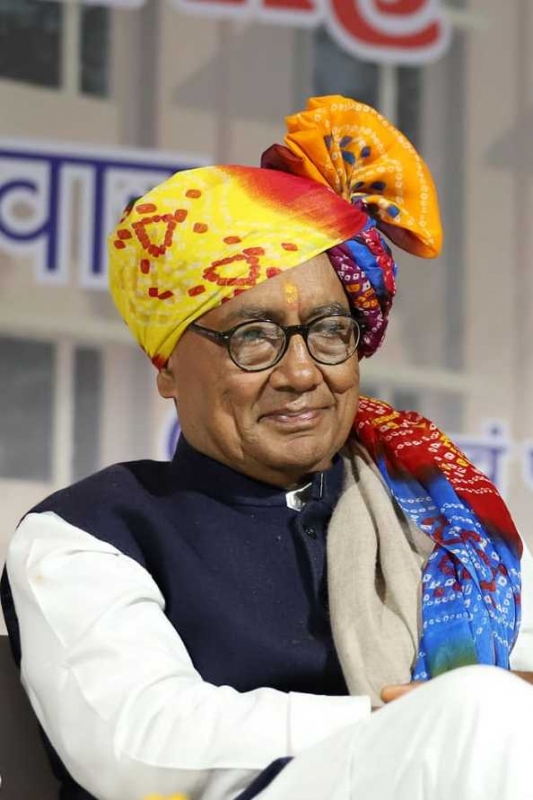
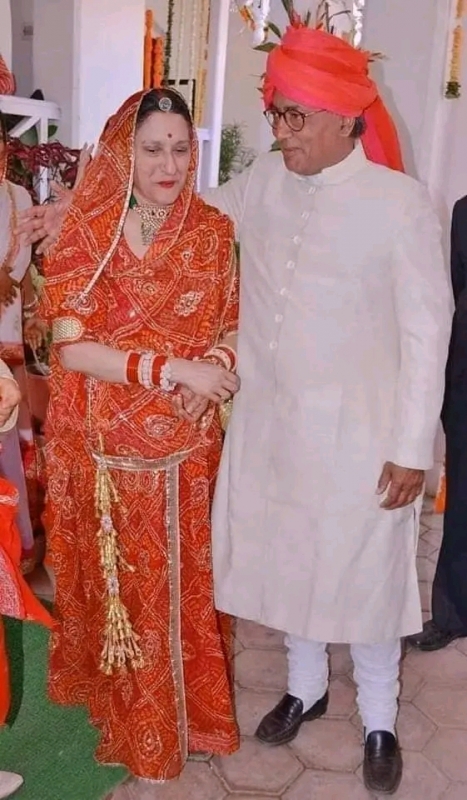
Raja Digvijaya Singh is the current titular head of the Raghogarh Khichi Chauhan dynasty and is one of the most prominent national political figures in contemporary India. He entered active politics in the 1970s and served as the Chief Minister of Madhya Pradesh for two consecutive terms from 1993 to 2003. He is a senior leader of the Indian National Congress and has served as a Member of Parliament in both the Lok Sabha and the Rajya Sabha.
Read about his extensive political career and achievements on the Digvijaya Singh Wikipedia Page.
Laxman Singh (b. 1955)
Laxman Singh, the younger brother of Digvijaya Singh, is a highly influential political figure from the Raghogarh family. He has had a long and distinguished career in Indian public life, having been elected multiple times as a Member of Parliament (MP) to the Lok Sabha representing the Rajgarh constituency, and also serving multiple terms as a Member of the Legislative Assembly (MLA) in Madhya Pradesh.
His legislative career is detailed on the Laxman Singh Wikipedia Page.
Jaivardhan Singh (b. 1986)
Jaivardhan Singh is the son of Digvijaya Singh and represents the younger generation of the Raghogarh royal lineage. Educated at Columbia University, New York, he entered public service and was elected as the youngest member of the Madhya Pradesh Legislative Assembly from the Raghogarh constituency in 2013. He later served as a Cabinet Minister for Urban Development and Housing in the Government of Madhya Pradesh.
For more details on his political and academic background, visit the Jaivardhan Singh Wikipedia Page.