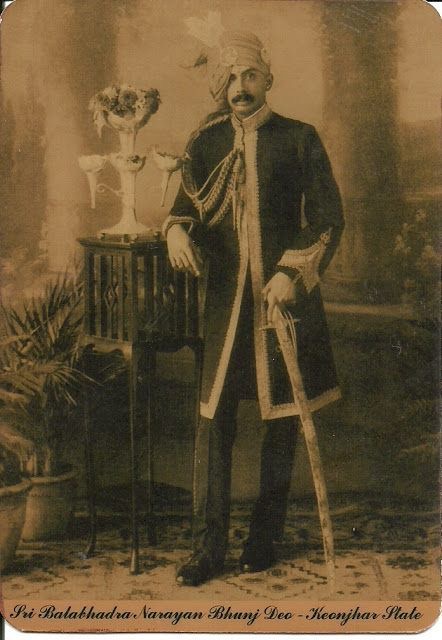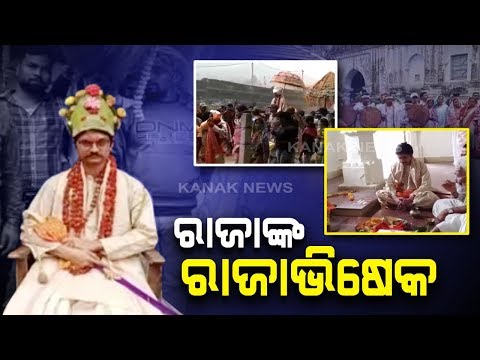
Present Head
- Pat Jema Hemsudha Manjari Bhanja Deo, born on .
History
Origin and Foundation
The princely state of Keonjhar (also known as Keunjhar) has its origins deeply rooted in the medieval history of Odisha. According to local historical chronicles and the Madala Panji (the temple chronicle of Puri), the ruling dynasty belonged to the Bhanj clan of Rajputs. Historically, Keonjhar was initially an integral part of the larger Mayurbhanj State. During the 12th century, a formal division occurred. Jyoti Bhanj, the younger brother of Adi Bhanj (the ruler of Mayurbhanj), established himself as an independent ruler in the northern highlands of Keonjhar, making Jyotipur his initial capital.
The local folklore also links the dynasty's origin to a divine blessing from the peacock, which became the royal emblem of the state. Over successive generations, the Bhanj rulers consolidated their territory by negotiating alliances with the indigenous tribal populations, predominantly the Bhuiyans and the Juangs, who played an essential role in the coronation rituals of the Keonjhar Rajas.
Mughal and Maratha Eras
During the medieval period, as the Mughal Empire expanded its influence into eastern India under Emperor Akbar, the rulers of Keonjhar paid nominal tribute to the Mughal Subahdar of Bengal and Odisha. The state managed to retain a high degree of internal autonomy due to its dense forests, mountainous terrain, and remote geographical location.
With the decline of the Mughal Empire in the mid-18th century, the Marathas of Nagpur established their authority over Odisha. During this period of Maratha dominance, Keonjhar was subjected to periodic demands for tribute (known as Chauth). Despite these financial pressures and occasional incursions by Maratha forces, the Bhanj rulers successfully defended their sovereignty and maintained internal administrative control over their estates.
The British Raj and the Bhuiyan Rebellions
Following the defeat of the Marathas in the Second Anglo-Maratha War, the British East India Company took control of coastal Odisha in 1803. In 1804, Raja Janardan Bhanj of Keonjhar entered into a treaty relationship with the British, recognizing their paramountcy in exchange for protection and confirmation of his ancestral territories. The British administration classified Keonjhar as one of the tributary mahals of Odisha.
The 19th century was marked by significant socio-political upheavals in Keonjhar, most notably the Bhuiyan Rebellions (also known as the Keonjhar Uprisings):
- The First Keonjhar Rebellion (1867–1868): This uprising broke out following the death of Raja Gadadhar Bhanj without a direct legitimate heir. The British administration supported the succession of Dhanurjay Narayan Bhanj Deo, which was fiercely opposed by the local Bhuiyan tribe led by Ratna Naik. The Bhuiyans favored an adopted successor and launched a violent guerrilla campaign that was eventually suppressed by British military forces.
- The Second Keonjhar Rebellion (1891–1893): Led by the charismatic tribal reformer Dharanidhar Naik, this rebellion was a direct response to the oppressive tax policies, extortion, and the system of forced labor (vethi) imposed by Raja Dhanurjay Bhanj Deo's administration. Dharanidhar Naik successfully mobilized the tribal peasantry, briefly establishing a parallel administration before he was captured and imprisoned by British forces. This rebellion forced the British authorities to introduce administrative reforms to alleviate tribal grievances. More details can be read in historical records preserved by the Odisha State Archives.
Key Reformers and Administrative Modernisation
Despite the turbulent uprisings, late 19th and early 20th-century rulers introduced progressive administrative, educational, and infrastructural reforms in the state. Raja Dhanurjay Narayan Bhanj Deo, followed by Maharaja Kabichandra Harichandan Jagadeb, worked towards modernising the revenue assessment methods and establishing courts of law.
The final ruling chief, Maharaja Balbhadra Narayan Bhanj Deo (who ascended the gadi in 1926), was a highly educated and forward-thinking ruler. He championed the cause of modern education, built networks of roads connecting remote forest areas, and encouraged the exploration of Keonjhar's vast mineral reserves, particularly iron ore and manganese. His administration laid the groundwork for the industrial development that characterizes the region today. For more information on the regional transitions, refer to the Official Portal of Keonjhar District.
Heraldry, Emblem, and the State Flag
The heraldry of Keonjhar reflected its historical lineage and its deep-rooted connection to the natural landscape and native traditions. The arms of the state featured:
- The Shield: Depicting a peacock (the legendary progenitor of the Bhanja dynasty), symbolizing grace, heritage, and the state’s natural abundance.
- Supporters: Two tigers rampaging on either side, representing courage, strength, and the dense forest tracts of the region.
- Crest: Featuring a representation of the local deity, Maa Tarini, or a peacock crest.
- Motto: A Sanskrit phrase emphasizing righteousness, duty, and protection of the subjects.
- The State Flag: A rectangular banner featuring horizontal bands of yellow, blue, and white, with the peacock emblem emblazoned in the center, representing the sovereign authority of the Bhanj rulers.
Post-Independence Era and Modern Transition
Following India's independence from British rule in August 1947, Maharaja Balbhadra Narayan Bhanj Deo signed the Instrument of Accession, merging the princely state of Keonjhar with the Dominion of India. On January 1, 1948, the state officially merged into the province of Orissa (now Odisha), forming a separate district of the same name.
Today, the erstwhile capital town of Keonjhargarh (Kendujhar) serves as the administrative headquarters of the Keonjhar District. The region has evolved from a secluded forest kingdom into one of India’s premier mineral-producing hubs, rich in iron ore, manganese, and chromite, while still preserving its rich tribal heritage and historical monuments, including the royal palace of Keonjhar.
References and Bibliography
- Senapati, N. & Sahu, N. K. (1986). Orissa District Gazetteers: Keonjhar. Government of Orissa Press. Available via the Government of Odisha Official Website.
- Hunter, W. W. (1872). Orissa: Or, The Vicissitudes of an Indian Province Under Native and British Rule. London: Smith, Elder & Co.
- Mishra, P. K. (1983). Political History of Orissa: 1900-1936. New Delhi: Intellectual Publishing House.
- The Imperial Gazetteer of India profiles on Orissa Tributary States, accessible via the Digital South Asia Library (DSAL).
Genealogy
- Raja GOVIND BHANJ, Raja of Keonjhar fl.1480
- ......
- Raja JAGANNATH BHANJ, 35th Raja of Keonjhar 1688/1700
- Raja RAGHUNATH BHANJ, 36th Raja of Keonjhar 1700/1719
- Raja GOPINATH BHANJ, 37th Raja of Keonjhar 1719/1736
- Raja NARSINGH NARAYAN BHANJ, 38th Raja of Keonjhar 1736/1757, married and had issue.
- Raja Daneshwar Narayan Bhanj (qv)
- [?Raja Chakradhar Bhanj, adopted by Raja Raghunath Bhanj of Mayurbhanj]
- Raja DANESHWAR NARAYAN BHANJ, 39th Raja of Keonjhar 1757/1758
- Raja JAGATESHWAR NARAYAN BHANJ, 40th Raja of Keonjhar 1758/1762
- Raja PRATAP BALBHADRA BHANJ, 41st Raja of Keonjhar 1764/1792 or 1762/1797, married and had issue.
- Raja Janardhan Bhanj (qv)
- Raja Tribikram Bhanj, adopted by the Raja of Mayurbhanj.
- Raja JANARDAN BHANJ, 42nd Raja of Keonjhar 1794/1825 or 1797/1832, he received the estate of Pal-Lahara as dowry, but the people there objected to his succession and Pal-Lahara subsequently became independent, married 1794, Rani Krishnapriya, died , daughter of Raja Munipal of Pal-Lahara, aand had issue.
- Raja GADADHAR NARAYAN BHANJ Deo, 43rd Raja of Keonjhar 1825/1861 or 1832/1861, married (a), Senior Rani Bishnupriya, married (b), a daughter of Kunwar Ajambar Singh of Seraikella, and had adoptive issue, as well as natural issue. He died spl in March 1861.
- (A) Kumar Brundaban Bhanj Deo, adopted by Rani Bishnupriya, as the intended successor, but he was not recognized as such by the British Authorities.
- Maharaja DHANURJAI NARAYAN BHANJ Deo, 44th Raja of Keonjhar 1861/1905, born , he succeeded to the gadi on 4th September 1861, he was formally confirmed in the title of Raja as a hereditary distinction in 1874 and the title of Maharaja was granted on 1st January 1877 as a personal distinction, married and had issue.
- Raja Gopinath Narayan Bhanj Deo (qv)
- Routrai Saheb Basudev Bhanj Deo, married and had issue.
- Kumar Janardan Bhanj Deo, educated at Rajkumar College, Raipur (Undergraduate); entered politics after the merger of the Princely States into the Republic of India; M.L.A. (Orissa) 1952/1965 (three terms); interests were Reading, Sports, Shooting and Horse riding; married Kumari Sarada Sundari Devi, and had issue, one son and two daughters. He died .
- Prabir Bhanj Deo
- Kumar Radheshyam Bhanj Deo.
- Prasanta Bhanj Deo
- Mukesh Kumar Bhanj Deo
- Pratap Bhanj Deo
- Pradyumna Bhanj Deo
- Prasanta Bhanj Deo
- Kumar Janardan Bhanj Deo, educated at Rajkumar College, Raipur (Undergraduate); entered politics after the merger of the Princely States into the Republic of India; M.L.A. (Orissa) 1952/1965 (three terms); interests were Reading, Sports, Shooting and Horse riding; married Kumari Sarada Sundari Devi, and had issue, one son and two daughters. He died .
- Raja GOPINATH NARAYAN BHANJ Deo, 45th Raja of Keonjhar [27.10.1905] - [12.8.1926], born , he succeeded to the gadi on 27th October 1905, married and had issue. He died .
- Raja Shri Balbhadra Narayan Bhanja Deo (qv)
- Chotrai Saheb Shri Laxmi Narayan Bhanj Deo M.A., born , educated at Rajkumar College, Raipur; M.L.A. (Orissa) 1946/1957 (two terms); Member of the Lok Sabha; Development Commissioner, Keonjhar; Revenue Minister, Keonjhar (xx.8.1945) - (xx.6.1947); Chief Minister, Keonjhar in 1947 (June to December); Nominated Member, Orissa Legislative Assembly 19491952; Member, Orissa State Red Cross Society; Member, Nrutya Natyakala Parishad, Orissa; Member of Senate, Utkal University since its inception till February 1948; an Elected Fellow from Registered Graduates Constituency till 1952; Fellow, Royal Economic Society and Royal Society of Arts, London; Member, South Club, Calcutta; National Sports Club, New Delhi; and Gymkhana Club, New Delhi; interests were Shikar and Photography, Motoring and Travel; married A. Sau. Preemlatika Raje, and had issue, one son and three daughters. He died .
- Raja Shri Anant Narayan Bhanja Deo (qv)
- Rajkumari Laxmi Priya, married (as his first wife), Raja Kishor Chandra Deo Samant of Athmalik.
- Raja Shri BALBHADRA NARAYAN BHANJA Deo, 46th Raja of Keonjhar [12.8.1926] - , born and succeeded 12th August 1926, educated at Rajkumar College, Raipur; married Rani Manoj Manjari Devi, daughter of Raja Sriram Chandra Singh Deo of Kharsawan, and his wife, Rani Giriraj Devi, and had issue, one son and one daughter.
- Raja Shri NRUSINGH NARAYAN BHANJ Deo, 47th Raja of Keonjhar fl.1970, married (div.), a daughter of HH Thakore Saheb Shri Pradyumansinhji Lakhajirajsinhji of Rajkot, and his wife, HH Thakorani Padma Kunverba Sahiba, no issue. He died after 1970.
- Raja Shri ANANT NARAYAN BHANJA Deo, 48th Raja Saheb of Keonjhar, married and has issues. He died on .
- Tikayet Sahab Dhananjay Narayan Bhanja Deo (qv)
- Rajkumar Janmejay Narayan Bhanja Deo
- Raja Shri DHANANJAY NARAYAN BHANJA Deo, 49th Raja of Keonjhar (see above)
Notable Figures
Raja Jyoti Bhanj (c. 12th Century CE)
Raja Jyoti Bhanj is recognized as the traditional founder of the Keonjhar State. According to royal chronicles and regional historical records, he was the brother of Adi Bhanj, the founder of the neighboring Mayurbhanj State. The dynasty traces its origin to the Solar clan (Kachwaha Rajput lineage), claiming migration from Rajputana to Puri, and eventually establishing their rule in the northern hill tracts of Odisha.
Under Jyoti Bhanj, the state established its separate identity from Mayurbhanj. His reign marked the beginning of the Bhanj dynasty's long-standing rule over the territory, which was characterized by a synthesis of Rajput courtly traditions and the cultural integration of the indigenous tribal populations of the region.
Raja Janardan Bhanj (Ruled 1794 – 1825)
Raja Janardan Bhanj was a crucial ruler who steered Keonjhar through a period of immense geopolitical transition in eastern India. During his reign, the Maratha Empire's influence over Odisha waned, and the British East India Company established its dominance over the region.
In 1803, following the British conquest of Odisha, Raja Janardan Bhanj signed a treaty of fealty with the East India Company, accepting British suzerainty. This treaty, detailed in historical accounts such as L.E.B. Cobden-Ramsay's Feudatory States of Orissa, secured Keonjhar's status as a tributary state, ensuring internal autonomy under British protection while setting the stage for modern administrative integration.
Raja Gadadhar Bhanj Deo (Ruled 1825 – 1861)
Raja Gadadhar Bhanj Deo succeeded Janardan Bhanj. His reign was characterized by efforts to consolidate the internal administration of the state and manage delicate relations with the local tribal populations, particularly the Bhuyan and Juang clans who held significant agrarian and ritual power in the state.
Raja Gadadhar maintained loyal relations with the British administration and assisted them during regional insurgencies. His death in 1861 without a direct natural heir led to a severe succession dispute, which drew heavy British intervention and sparked decades of local unrest.
Maharaja Dhanurjai Narayan Bhanj Deo (Ruled 1861 – 1905)
Maharaja Dhanurjai Narayan Bhanj Deo was one of the most prominent yet controversial rulers of the Keonjhar State. His accession to the throne in 1861, supported by the British, was fiercely contested by the local Bhuyan tribal leaders who favored a rival claimant. This dispute culminated in the first Keonjhar Rebellion (Keonjhar Melia) of 1868, which was suppressed with British military assistance.
Despite these conflicts, Dhanurjai initiated significant modernization efforts, establishing schools, roads, and modern dispensaries. His high-handed revenue policies, however, triggered a second major tribal uprising in 1891–1893, led by the charismatic leader Dharanidhar Naik. For his developmental works and administrative cooperation, the British government conferred upon him the personal title of Maharaja in 1877 during the Delhi Durbar, as recorded in the Keonjhar State historical records.
Raja Balbhadra Narayan Bhanj Deo (Ruled 1905 – 1926)
Raja Balbhadra Narayan Bhanj Deo succeeded his father in 1905. His reign was a period of reconciliation and relative peace. He focused on healing the divisions left by the 19th-century tribal rebellions by adopting a more inclusive governance style and engaging directly with tribal chiefs.
Under his administration, Keonjhar saw substantial progress in forestry management, mineral exploration, and Western education. He was highly regarded for establishing the local forest department and setting up infrastructural foundations that made the state's vast mineral wealth accessible for future development.
Maharaja Anant Narayan Bhanj Deo (Ruled 1926 – 1948)
Maharaja Anant Narayan Bhanj Deo was the last ruling chief of the Keonjhar Princely State. His reign saw Keonjhar gain national prominence due to the discovery and exploitation of its massive iron ore and manganese deposits, which attracted major industrial enterprises to the region.
Following India's independence, Maharaja Anant Narayan Bhanj Deo signed the Instrument of Accession on January 1, 1948, merging the princely state of Keonjhar into the Dominion of India. The territory was subsequently integrated into the state of Odisha as the Kendujhar district, marking the end of the formal rule of the Bhanj dynasty while preserving their legacy in the region's modern administrative structure.