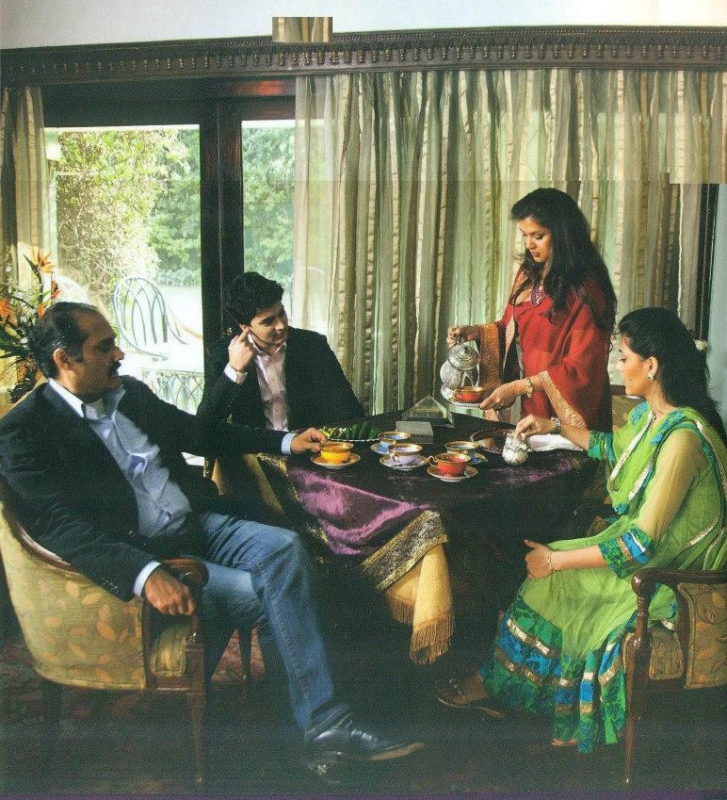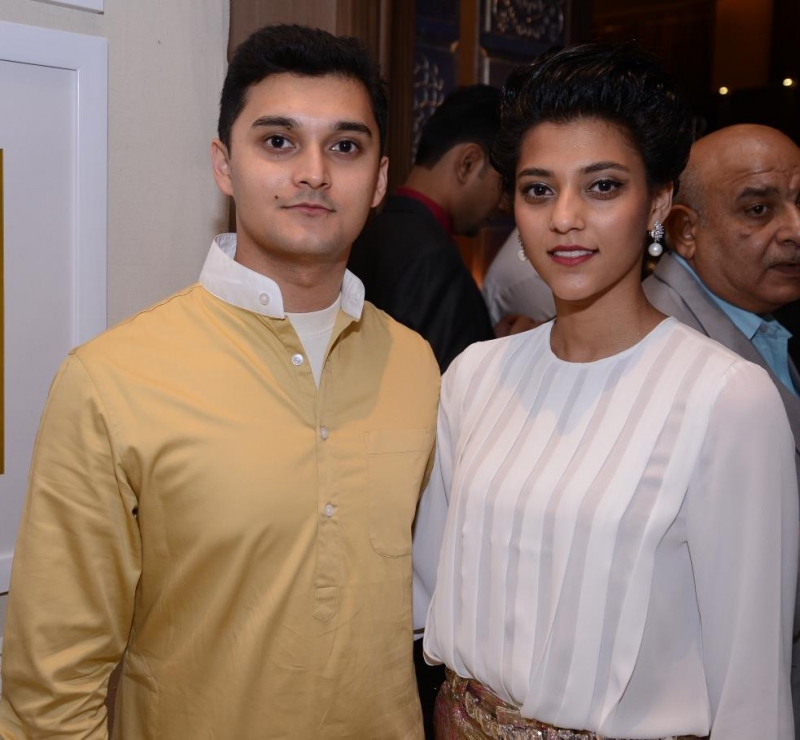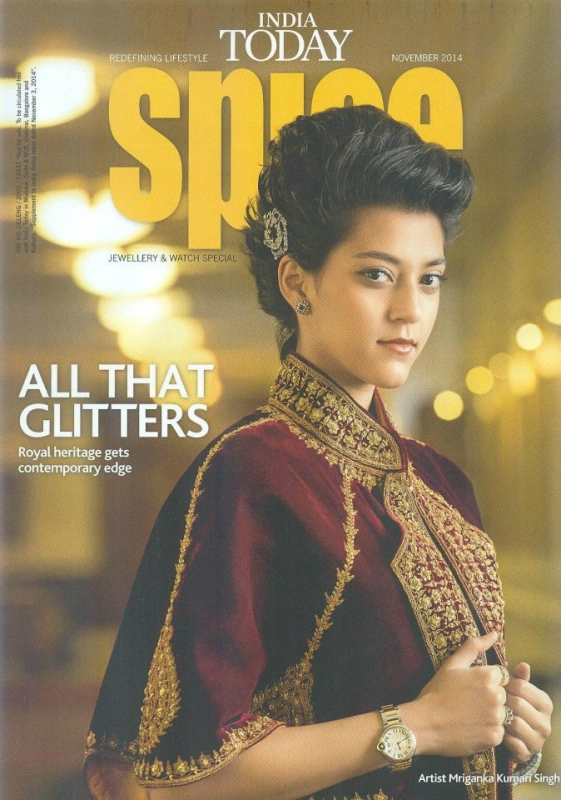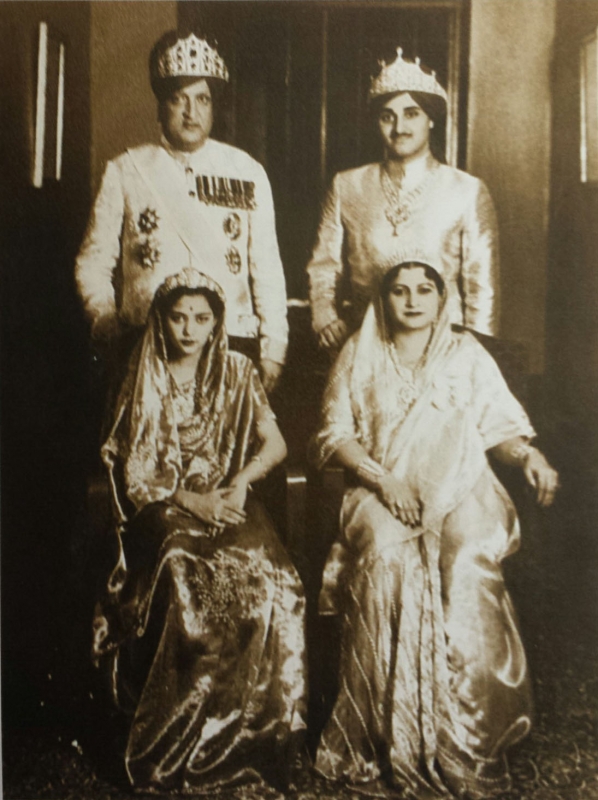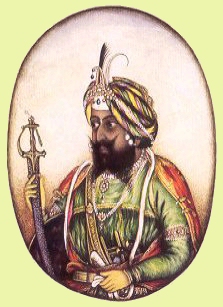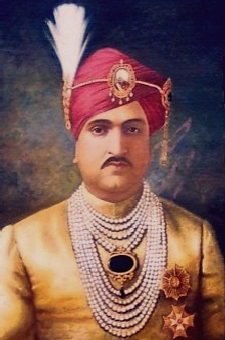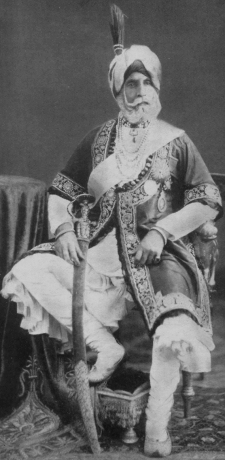
Present Head

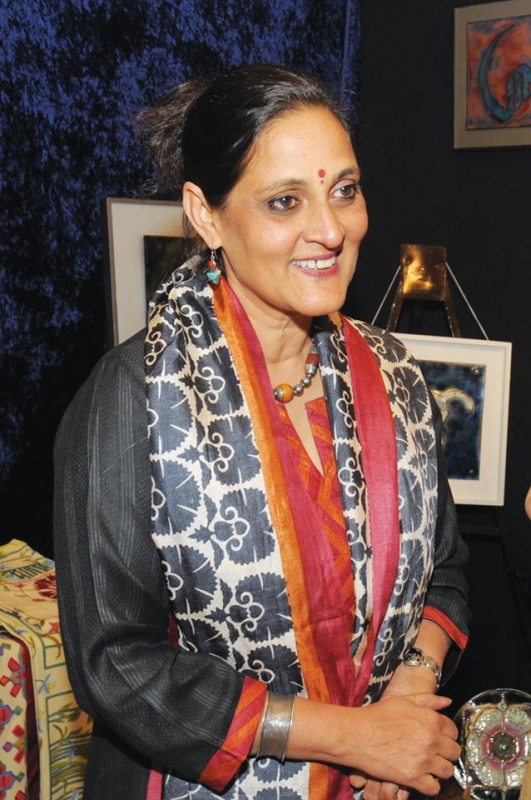
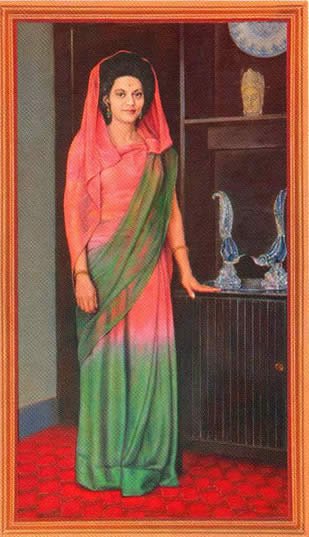
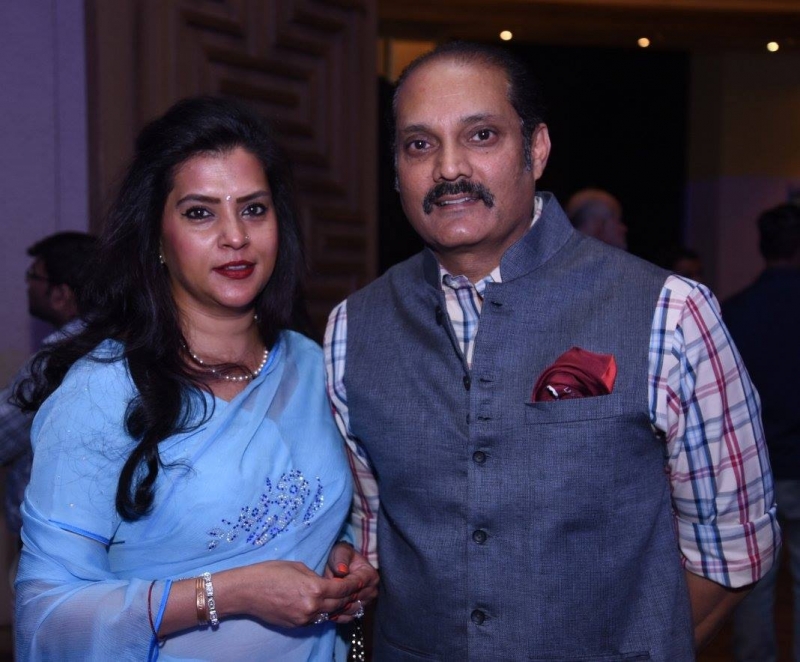
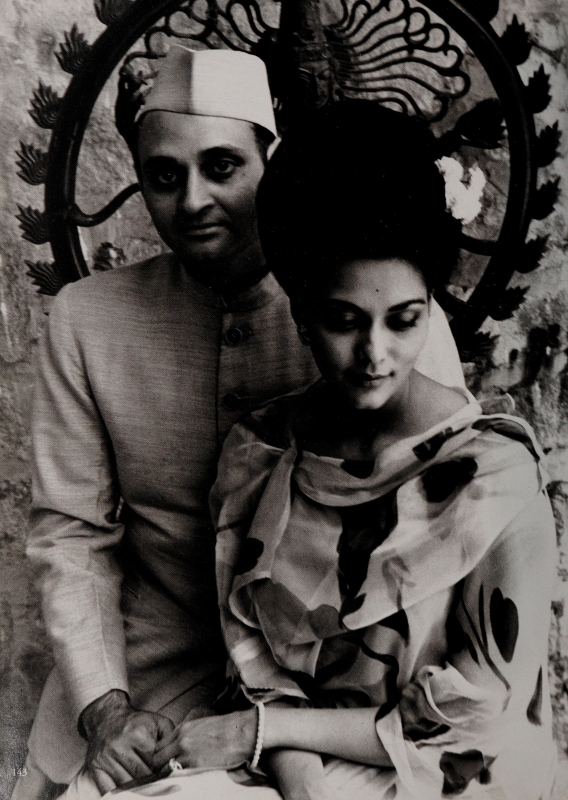
- Maharajkumari Dr. Jyotsna Devi, born in Bombay, educated at Lady Sri Ram College (M.A.), and at Delhi University, Department of Philosophy (Ph.D.), married Shri Dhirendra Singh Chauhan from Mainpuri, and has issue.
- Kunwar Visvat Singh
- Kumari Viveka Devi
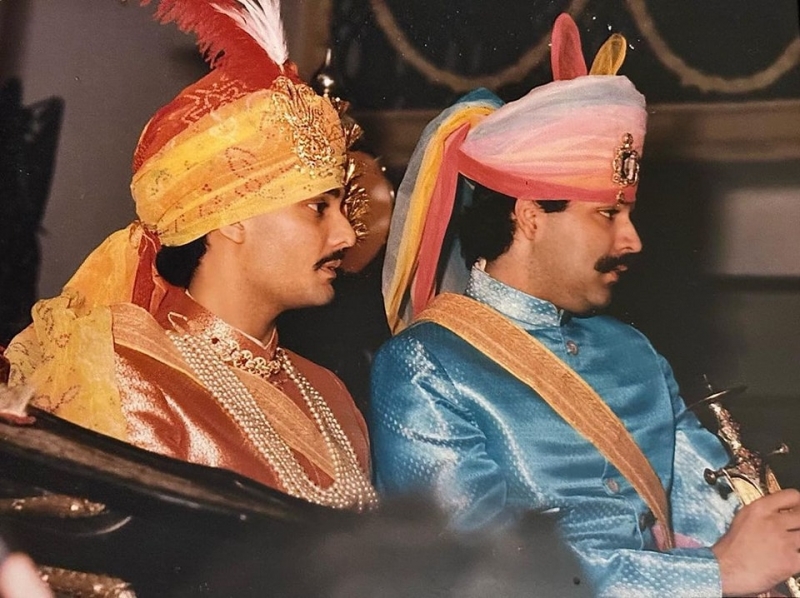
- Yuvraj Vikramaditya Singh, born in Bombay, Managing Director of Taragarh Palace Hotel, in the Kangra Valley, Himachal Pradesh, married 1987, Yuvrani Chitrangada Scindia, born , daughter of HH Maharaja Scindia Madhavrao III Scindia of Gwalior, and his wife, HH Maharani Madhavi Devi, and has issue. [Wikipedia]
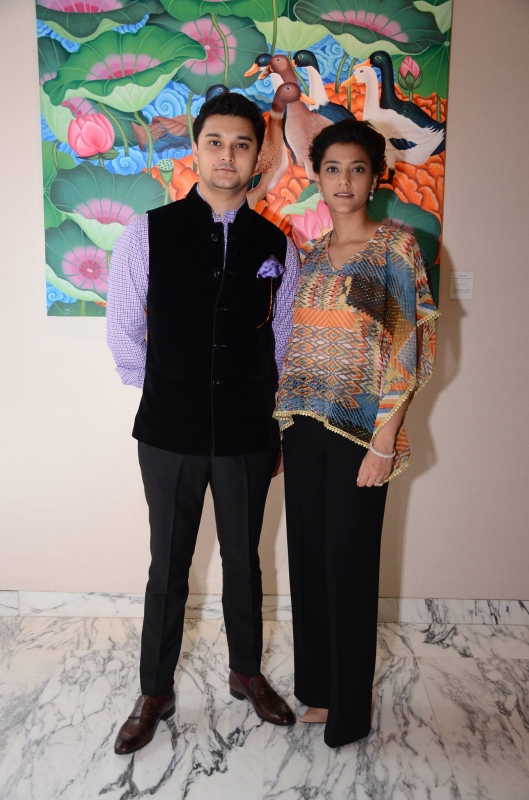
- Kumari Mriganka Devi, married on 4th February 2017 to Nirvan Singh, son of Jayainder Kaur (daughter of Captain Amarinder Singh and Maharani Preneet Kaur of Patiala Royal family) and Gurpal Singh. [Hindustan Times | Times of India]
- Mian Martanday Singh
- Maharajkumar Ajatshatru Singh, M.L.A. (Jammu and Kashmir); born in Delhi, married Maharajkumari Ritu Devi [Ria Kapur], daughter of General Shiv Nath, and has issue.
- Kumari Adishree Devi
- Mian Ranjay Singh
History
Introduction and Origins of the Princely State
The historical tapestry of Jammu and Kashmir is a grand convergence of diverse cultures, ancient dynasties, and strategic geopolitical developments. The region comprises three distinct territories: the plains of Jammu, the lush alpine valley of Kashmir, and the high-altitude cold desert of Ladakh. According to regional folklore, Jammu was founded by Raja Jambu Lochan in the 14th century BCE during a hunting expedition, where he witnessed a tiger and a goat drinking water peacefully from the same spot on the banks of the Tawi River. Captivated by this display of peace, he founded the city of Jambupura, which later morphed into Jammu.
Kashmir, conversely, boasts a rich documentary history preserved in the legendary Sanskrit chronicle Rajatarangini, written by Kalhana in the 12th century CE. The valley is traditionally believed to have been reclaimed from a vast lake by the Hindu sage Kashyapa. For centuries, Kashmir was a global epicenter of Sanskrit scholarship, Shaivism, and Mahayana Buddhism. It was ruled by powerful indigenous empires, notably the Karkota Dynasty under whom Maharaja Lalitaditya Muktapida (724–760 CE) built the famous Martand Sun Temple and expanded his empire across Northern India and Central Asia.
Medieval Period and External Empires
The transition to Islamic rule began in the 14th century with the establishment of the Shah Mir Dynasty. The most celebrated Muslim ruler of this period was Sultan Zain-ul-Abidin (1420–1470 CE), affectionately remembered as Bud Shah (the Great King), who was renowned for his religious tolerance, patronization of arts, and agricultural infrastructure projects.
In 1586, the Mughal Emperor Akbar annexed Kashmir, transforming it into a summer retreat for the imperial court. The Mughals built exquisite terraced gardens, such as Shalimar Bagh and Nishat Bagh, leaving an indelible mark on the landscape. Following the decline of the Mughal Empire, Kashmir fell under the brutal occupation of the Afghan Durrani Empire in 1752. This period of oppression ended in 1819 when Maharaja Ranjit Singh, the sovereign of the Sikh Empire, annexed Kashmir following a plea from local nobles, integrating it into the Lahore Durbar.
The Rise of the Dogras and the Treaty of Amritsar (1846)
The modern political entity of Jammu and Kashmir was forged by Gulab Singh, a courageous Dogra Rajput warrior from Jammu. Gulab Singh entered the service of Maharaja Ranjit Singh in 1809 and rose rapidly through the ranks due to his military brilliance. In 1822, Ranjit Singh personally anointed Gulab Singh as the Raja of Jammu.
Gulab Singh and his brilliant general, Zorawar Singh Kahluria, expanded their territory by conquering Ladakh and Baltistan in a series of daring high-altitude campaigns. Following the defeat of the Sikh Empire in the First Anglo-Sikh War, the British East India Company sought indemnity. Under the terms of the Treaty of Amritsar (1846), Gulab Singh paid 7.5 million Nanakshahi rupees to the British in exchange for independent sovereignty over the valley of Kashmir, Jammu, and Ladakh. This treaty officially marked the creation of the Princely State of Jammu and Kashmir, with Gulab Singh as its first Maharaja.
The Dogra Era: Consolidation and Modern Reforms
The Dogra dynasty ruled Jammu and Kashmir for just over a century. Each successor contributed significantly to the administration, infrastructure, and legal frameworks of the state, as documented in Frederic Drew's authoritative historical work, The Jummoo and Kashmir Territories (1875).
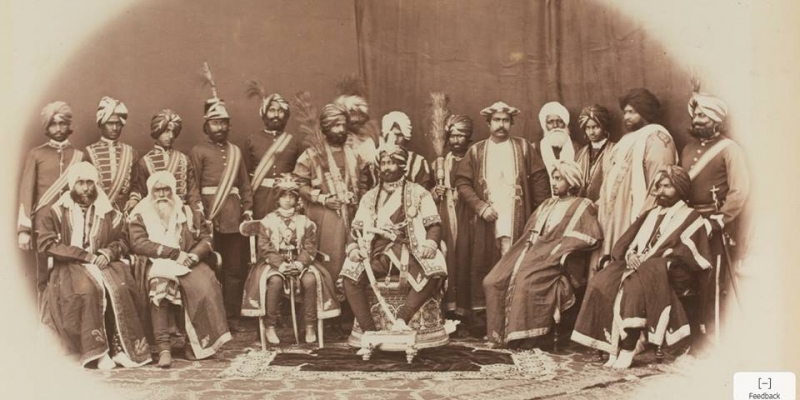
- Maharaja Ranbir Singh (1857–1885): A patron of classical learning, Ranbir Singh overhauled the judicial system and introduced the Ranbir Penal Code. He patronized the translation of Sanskrit and Persian texts and expanded the state's frontiers by reclaiming Gilgit.
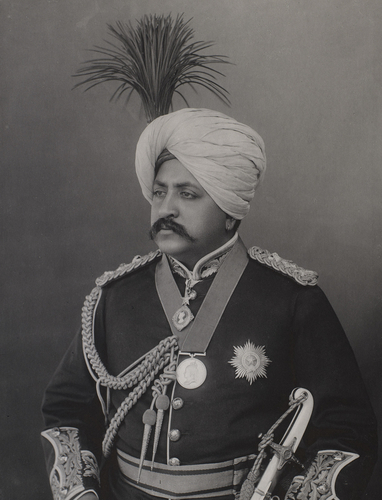
- Maharaja Pratap Singh (1885–1925): Pratap Singh’s reign was marked by extensive modernization. He oversaw the construction of the Jhelum Valley Cart Road and the Banihal Cart Road, which linked the isolated valley with the plains of Punjab. He also introduced modern healthcare, the first hydroelectric power plant in Asia at Mohra, and western education.
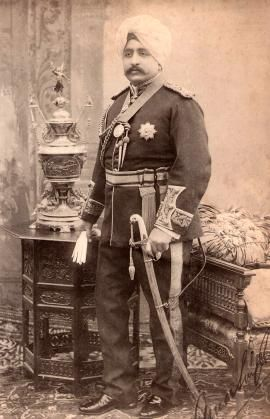
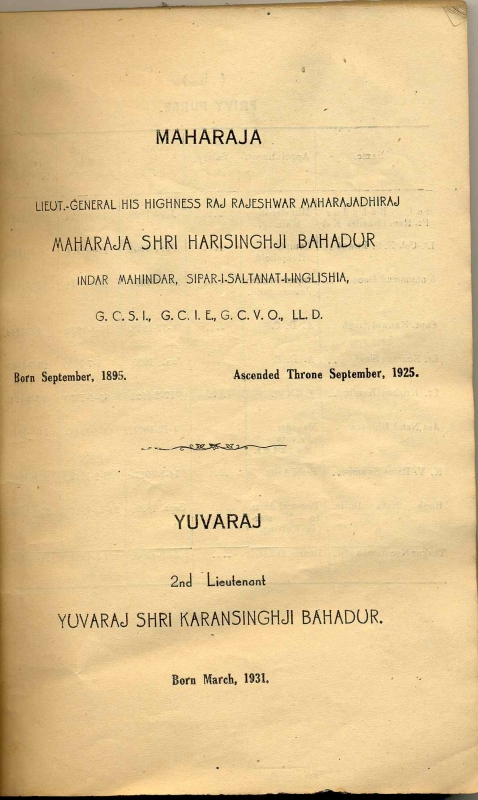
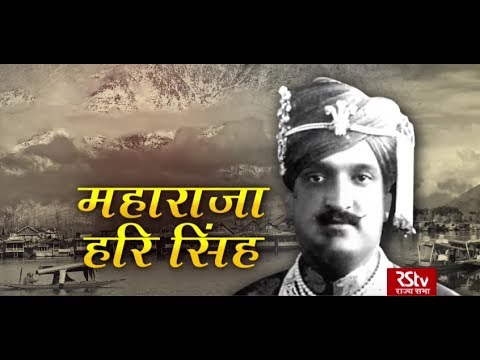
- Maharaja Hari Singh (1925–1952): Ascending the throne in 1925, Hari Singh was a progressive reformer. He made primary education compulsory, banned child marriage, opened Hindu temples to Dalits, and introduced the Hereditary State Subject Laws in 1927 to protect native residents from losing land ownership to wealthy outsiders.
Heraldry and the Royal Flags of Jammu and Kashmir
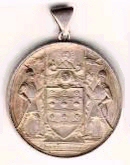
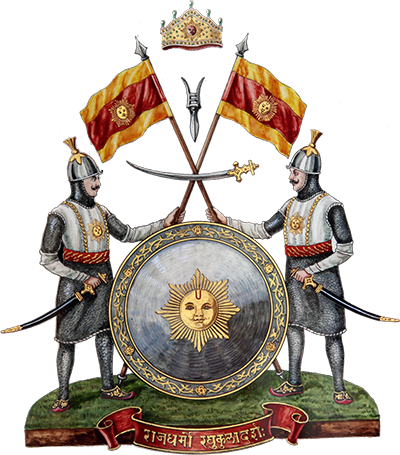
The coat of arms of the Princely State of Jammu and Kashmir was deeply symbolic, representing the military honor of the Dogra Rajputs and the geography of the territory. It featured a shield supported by two fully armored Rajput warriors carrying spears and flags. The central shield depicted a radiant rising sun over mountain peaks, with water currents below, signifying the mountainous terrain and the rivers flowing through the state. Above the shield rested the Royal Crown (Gaddi), symbolizing sovereign authority.
The state flag during the princely period was a solid red field containing a golden/yellow shield and arms. In 1939, a new red flag featuring a white plough (hal) and three vertical white stripes (representing the distinct regions of Jammu, Kashmir, and Ladakh) was introduced as a symbol of the peasant movement and democratic reforms, which later became the official state flag under the Indian Union until 2019.
Post-Independence Integration and the Modern Era
In August 1947, British India was partitioned into the independent dominions of India and Pakistan. Maharaja Hari Singh initially aspired to keep Jammu and Kashmir independent, signing a Standstill Agreement with Pakistan. However, in October 1947, armed tribal militias backed by the Pakistani military launched a violent invasion of the state.
Faced with the imminent fall of Srinagar, Maharaja Hari Singh appealed to the Indian Government for military assistance. India agreed on the condition that the state accede to the Indian Union. On October 26, 1947, Maharaja Hari Singh signed the historic Instrument of Accession. Indian paratroopers immediately landed in Srinagar, successfully repelling the invaders, though a portion of the state remained under Pakistani control (now known as Pakistan-administered Kashmir and Gilgit-Baltistan).
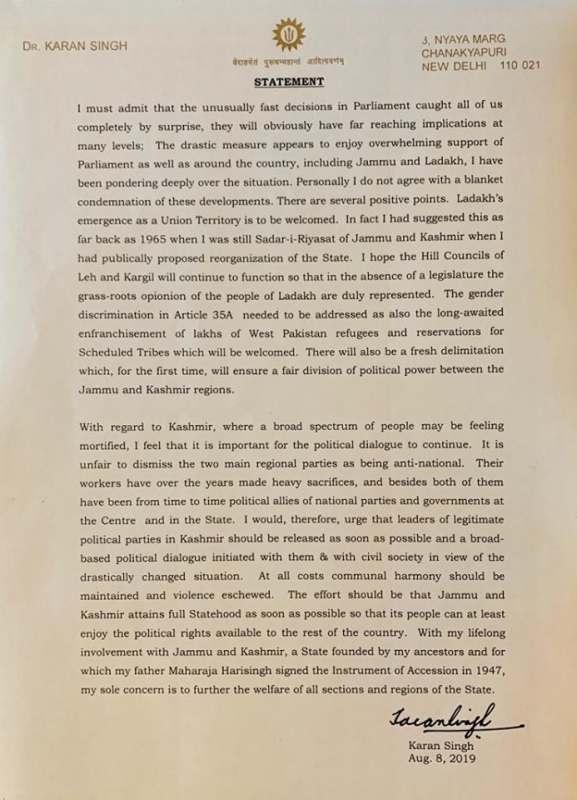
Following integration, the state was granted a special autonomous status under Article 370 of the Indian Constitution. In August 2019, the Parliament of India passed the historic Jammu and Kashmir Reorganisation Act, which revoked the special status under Article 370 and reorganized the territory into two separate Union Territories: Jammu & Kashmir, and Ladakh. Today, the region continues to transition into a new era of socio-economic development, tourism, and direct integration with the mainstream Indian republic.
Genealogy
- Maharaja GHULAB SINGH, 1st Maharaja of Jammu and Kashmir 1846/1857, born , son of Mian Kishor Singh, Raja of Jammu, succeeded his father on 4th May 1822, by conquest of Kashmir in 1846, he became the 1st Maharaja of Jammu and Kashmir, married 6 wives, and had issue. He died .
- Mian Udham Singh, died .
- Mian Sohan Singh, died .
- Maharaja Ranbir Singh (qv)
- Mian Chiman Singh
- Mian Hutoo Singh, died .
- Maharaja RANBIR SINGH, 2nd Maharaja of Jammu and Kashmir 1857/1885, born , married 6? wives, including a daughter of Raja Bijay Singh of Siba, and had issue. He died .
- Maj.Gen. HH Maharaja Sir Pratap Singh Sahib Bahadur (by Rani Sibaia) (qv)
- Raja Ram Singh, he was granted the former princely state of Bandralta in jagir, but on his death it reverted to Jammu State, married and had issue. He died spm after 1885.
- Kumari (name unknown), married (as his first wife) in February 1883, HH Raja Saheb Shri Shyam Singh, Raja of Chamba, and had issue.
- Gen. HH Raja Sir Amar Singh, born , K.C.I.E., Commander-in-Chief of Jammu and Kashmir State Army, Vice-President of Kashmir Administrative Council 1891/-, married 6? wives, and had issue. He died .
- Maj.-Gen. HH Raj Rajeshwar Maharajdhiraj Maharaja Shri Sir Hari Singh Bahadur Indar Mahindar Sipar-i-Saltanat-i-Inglishia (qv)
- Kumari (name unknown), married (as his first wife) 1871, Raja Raghunath Singh of Jaswan.
- Kumari (name unknown), married (as his second wife) 1871, Raja Raghunath Singh of Jaswan.
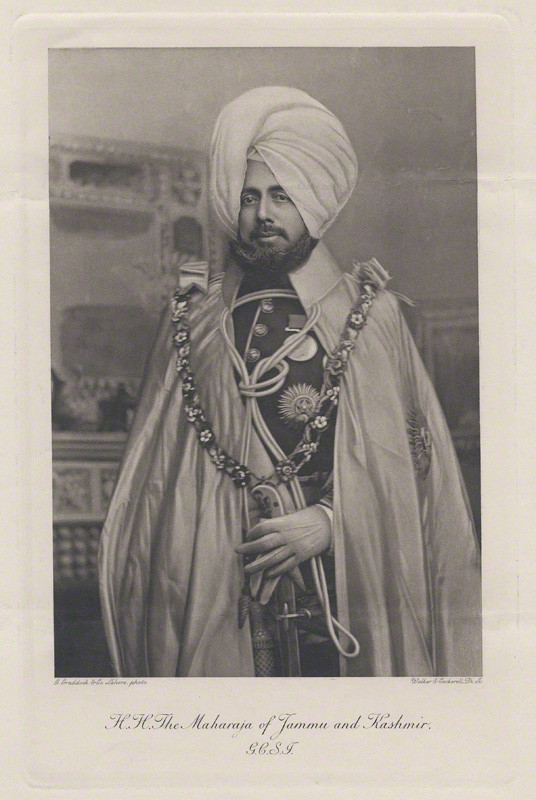
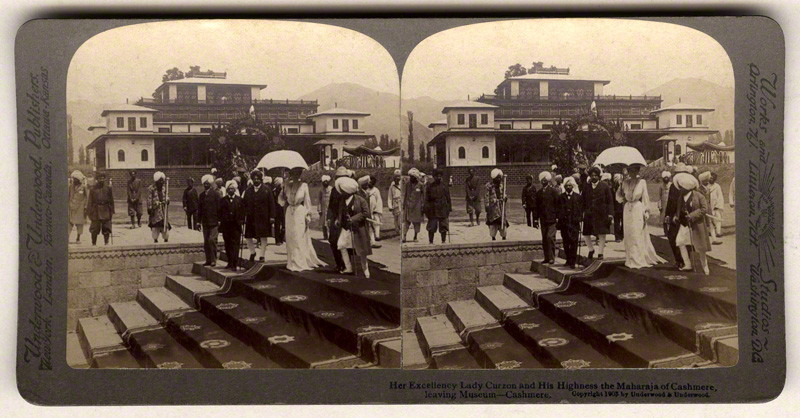
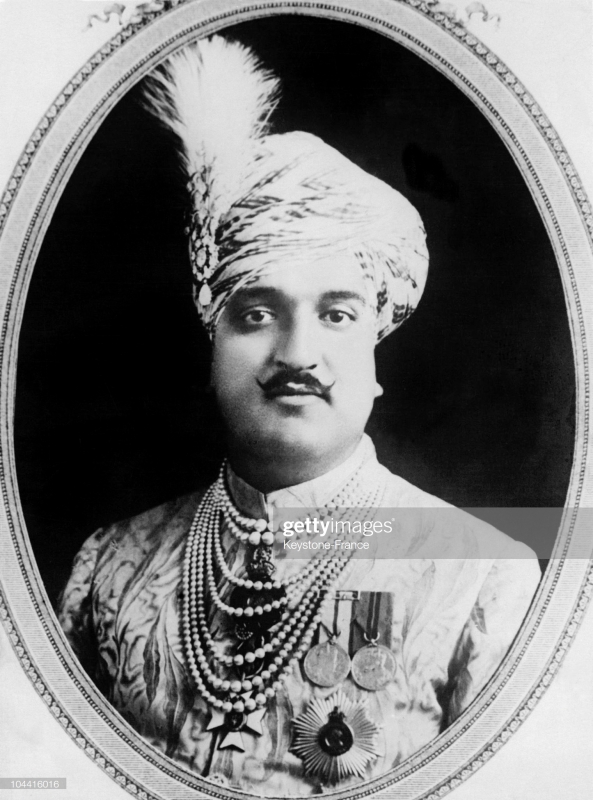
- Maj.Gen. HH Maharaja Sir PRATAP SINGH Sahib Bahadur, 3rd Maharaja of Jammu and Kashmir 1885/1925, born , G.C.S.I. [cr.25.5.1892] , G.C.I.E. [cr.1911] & C.B.E. & LL.D., he was granted the title of Indar Mahindar Bahadur Sipar-i-Saltanat, married 6? wives, and had issue. He died spm on 25th September 1925.
- Maharajkumari (name unknown), married Raja Kedar Chand of Chenani, and had issue.
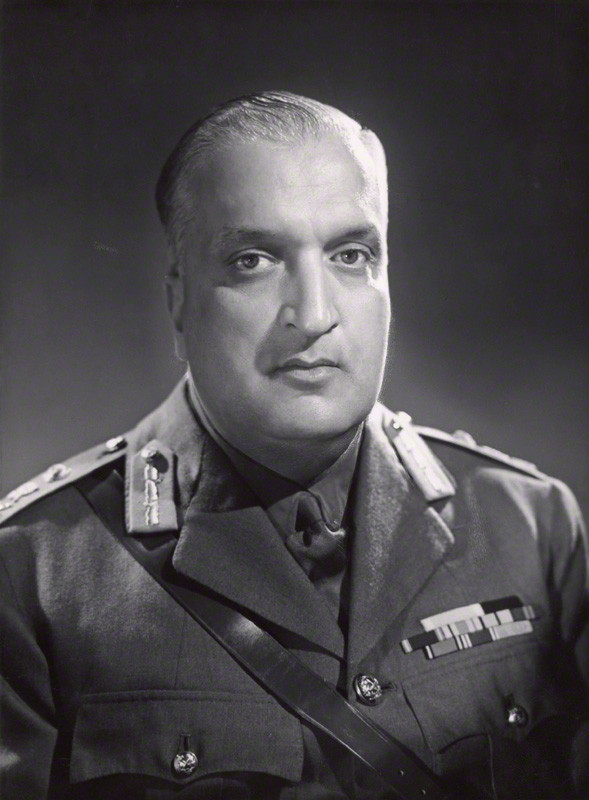
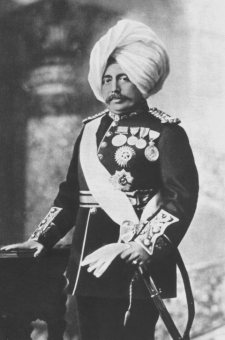
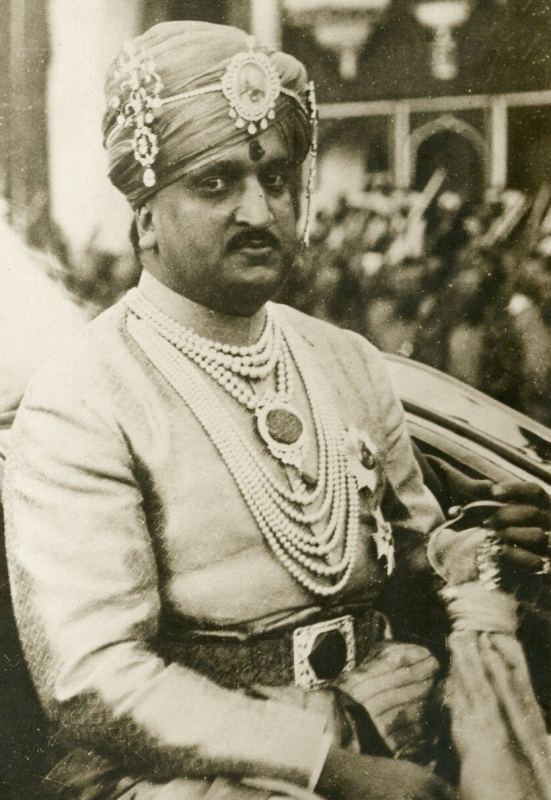
- Maj.-Gen. HH Raj Rajeshwar Maharajdhiraj Maharaja Shri Sir HARI SINGH Bahadur Indar Mahindar Sipar-i-Saltanat-i-Inglishia, 4th Maharaja of Jammu and Kashmir 1925/1961, born in Jammu, educated at Mayo College, Ajmer; Hon. Commander-in-Chief Kashmir Army, K.C.I.E. [cr.1918], K.C.V.O. [cr.1922], G.C.S.I., G.C.I.E., married 1stly, 1913, a niece of the Maharana of Dharampur and niece of the Thakur Sahib of Rajkot, she died , married 2ndly, 1915, a daughter of HH Raja Saheb Shri Sir Bhuri Singh of Chamba, she died , married 3rdly, 1923, HH Maharani Mohini Kunwari Bai Sahiba, daughter of HH Maharana Sahib Shri Mohandevji Narayandevji of Dharampur, married 4thly, 1928 (divorced 1950), Maharani Tara Devi, born , died , daughter of Raja Beli Chand of Bijapur, and had issue. He died in Bombay.
- HH Raj Rajeshwar Maharajdhiraj Maharaja Shri Dr. Karan Singh Bahadur Indar Mahindar Sipar-i-Saltanat-i-Inglishia (qv)
- HH Raj Rajeshwar Maharajdhiraj Maharaja Shri Dr. KARAN SINGH Bahadur Indar Mahindar Sipar-i-Saltanat-i-Inglishia, 5th Maharaja of Jammu and Kashmir (see above)
Notable Figures
Raja Ranjit Dev (r. 1733–1782)
Raja Ranjit Dev was a highly influential ruler of the Jammu Kingdom, belonging to the Jamwal Dogra dynasty. He ruled during a turbulent period marked by the decline of the Mughal Empire and the rise of Afghan and Sikh powers in northern India. He is remembered for bringing peace, stability, and administrative efficiency to the Jammu region. Under his rule, Jammu became a safe haven for merchants, traders, and political refugees fleeing the chaos of the Punjab plains.
Ranjit Dev was remarkably progressive for his time, practicing religious tolerance and allowing people of various faiths to build places of worship within his territories. His reign laid the geopolitical and economic foundations for the future expansion of the Jamwal dynasty. For more detailed insights, you can visit his Wikipedia page.
Maharaja Gulab Singh (r. 1846–1856)
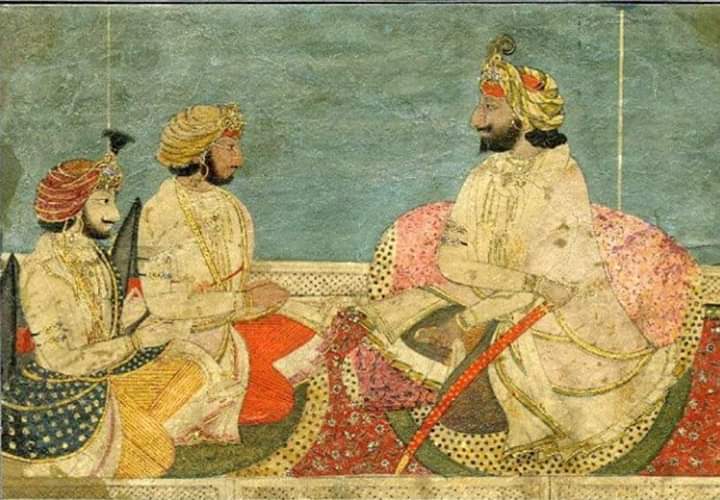
Maharaja Gulab Singh was the founder of the princely state of Jammu and Kashmir and the first Maharaja of the Dogra dynasty. He began his career as a soldier in the army of Maharaja Ranjit Singh of the Sikh Empire. Through his exceptional military acumen, administrative skills, and diplomatic maneuvers, he rose to become the Raja of Jammu in 1822. He expanded his territories by conquering Ladakh and Baltistan under the brilliant leadership of his general, Zorawar Singh Kahluria.
Following the First Anglo-Sikh War and the subsequent Treaty of Amritsar in 1846, Gulab Singh acquired the Kashmir Valley from the British East India Company in exchange for a sum of 75 lakh Nanakshahi rupees, thereby creating the modern state of Jammu and Kashmir. His life and achievements are extensively documented in the historical text Gulabnama, written by his dewan, Kirpa Ram. You can read more about his life on Wikipedia or refer to scholarly works like The Founding of the Kashmir State: biography of Maharajah Gulab Singh.
Maharaja Ranbir Singh (r. 1856–1885)
Maharaja Ranbir Singh succeeded his father, Gulab Singh, as the ruler of Jammu and Kashmir. He was a highly cultured and visionary monarch who significantly consolidated and modernized the state administration. His reign was marked by the reorganization of the judicial, civil, and revenue departments. He also successfully integrated Gilgit and Astor into the state's territory, ensuring the northern frontiers of the state were secure.
Ranbir Singh was a great patron of arts, education, and literature. He established translation bureaus to translate classic Sanskrit, Persian, and Arabic manuscripts into Hindi and Dogri, and set up the Ranbir Library in Jammu. His progressive reforms and cultural contributions are detailed on Wikipedia.
Maharaja Pratap Singh (r. 1885–1925)
Maharaja Pratap Singh was the eldest son of Ranbir Singh and succeeded him to the throne. His long reign was characterized by extensive infrastructure and developmental reforms that connected the isolated kingdom with the rest of India. He oversaw the construction of the Jhelum Valley Cart Road and the Banihal Cart Road, which drastically improved trade and travel. He also introduced modern education, Western medicine, state-of-the-art irrigation projects, and railways to Jammu.
Although his administrative powers were briefly curtailed by the British Residency in the early years of his rule due to geopolitical maneuvers, he successfully regained his authority and spent his remaining years focusing on public welfare, land revenue reforms, and forestry management. Learn more about his infrastructure achievements on Wikipedia.
Maharaja Hari Singh (r. 1925–1949)
Maharaja Hari Singh was the last ruling monarch of the princely state of Jammu and Kashmir. He ascended the throne in 1925 and instituted several progressive reforms, such as making primary education compulsory, outlawing child marriage, and opening state temples to lower-caste citizens (Dalits). He also championed the representation of locals in state administrative services.
His reign witnessed the tumultuous period of the Partition of India in 1947. Facing an invasion by Pakistani tribal militias supported by Pakistani forces, Maharaja Hari Singh signed the historic Instrument of Accession to the Dominion of India on October 26, 1947. His decision led to the integration of Jammu and Kashmir into the Union of India. Further details on his life and political decisions can be found on Wikipedia.
Dr. Karan Singh (b. 1931 - Present)
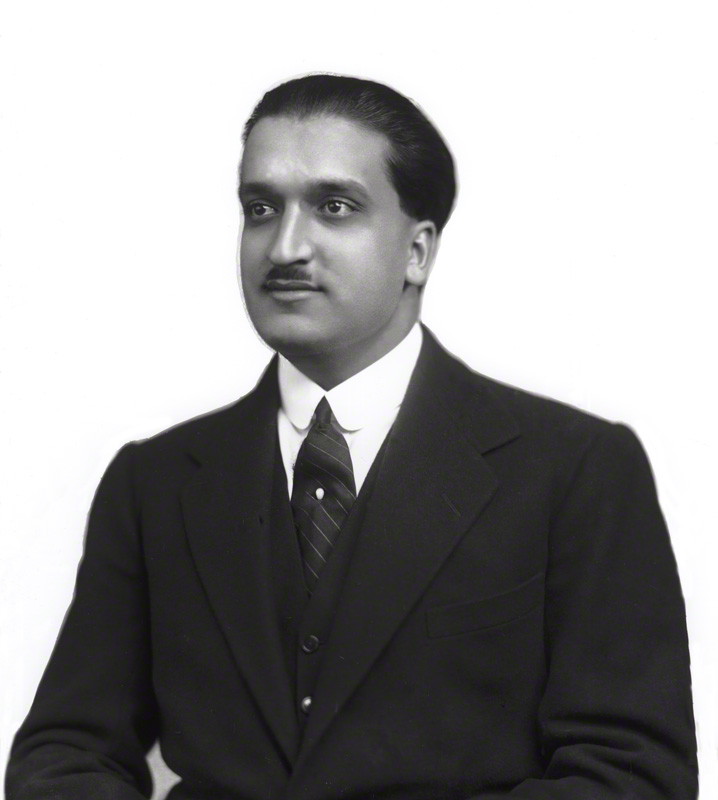
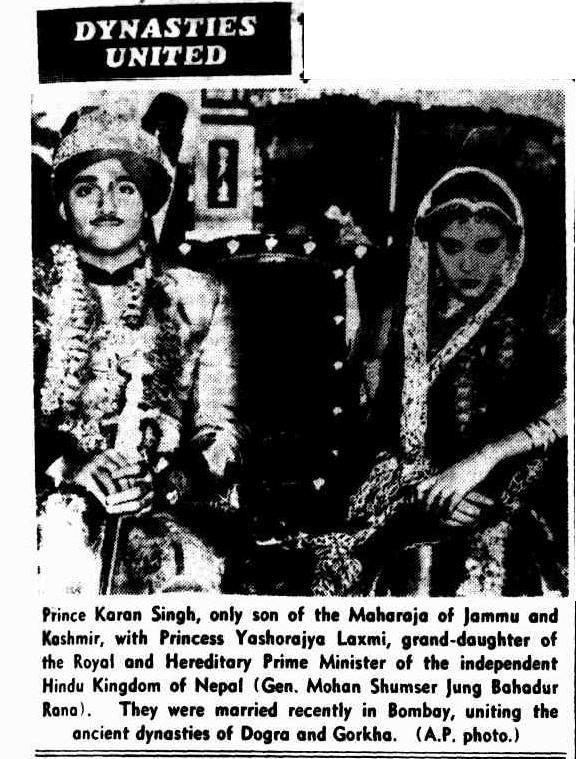
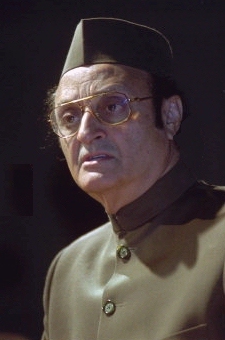
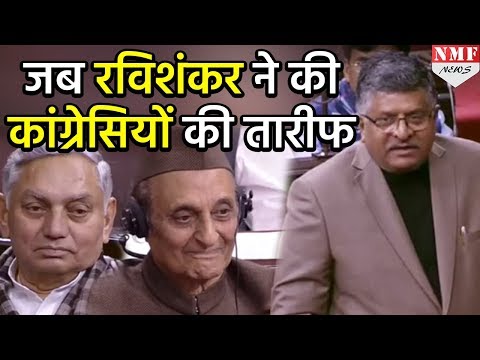
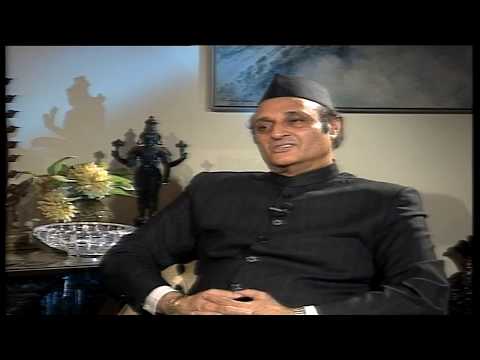
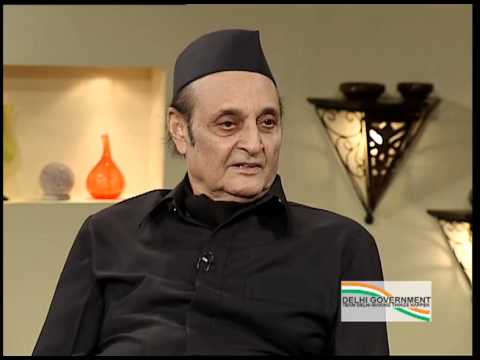
Dr. Karan Singh is the son of Maharaja Hari Singh and the last heir apparent of the princely state of Jammu and Kashmir. At the young age of 18, he was appointed Regent of the state by his father. He later served as the first Sadar-i-Riyasat (President) of Jammu and Kashmir, and subsequently as its Governor. He transitioned successfully into democratic India's political framework, serving as a prominent Member of Parliament and a Union Minister holding various key portfolios.
In addition to his political career, Dr. Karan Singh is a world-renowned scholar, author, and orator, highly regarded for his works on Indian philosophy, Upanishads, and the teachings of Sri Aurobindo. He has served as the Chancellor of Banaras Hindu University, Jawaharlal Nehru University, and Jammu and Kashmir University. Read more about his long public career on Wikipedia.