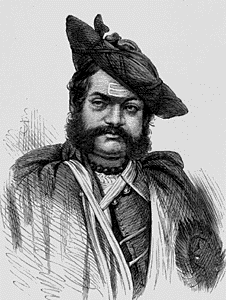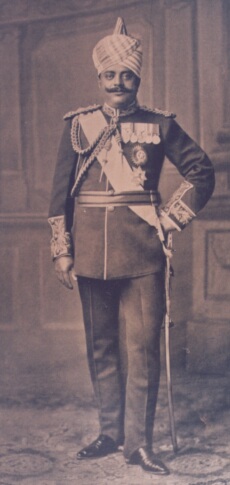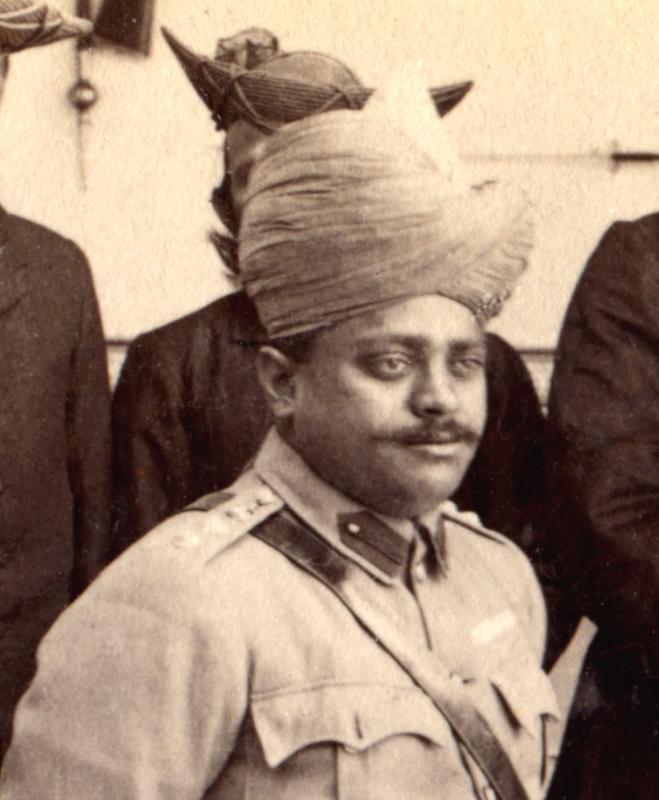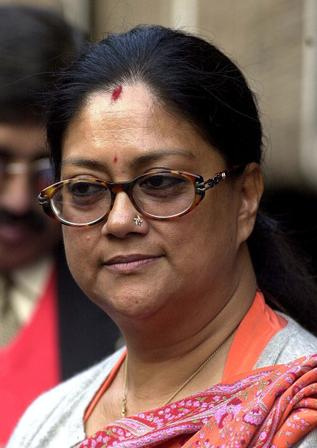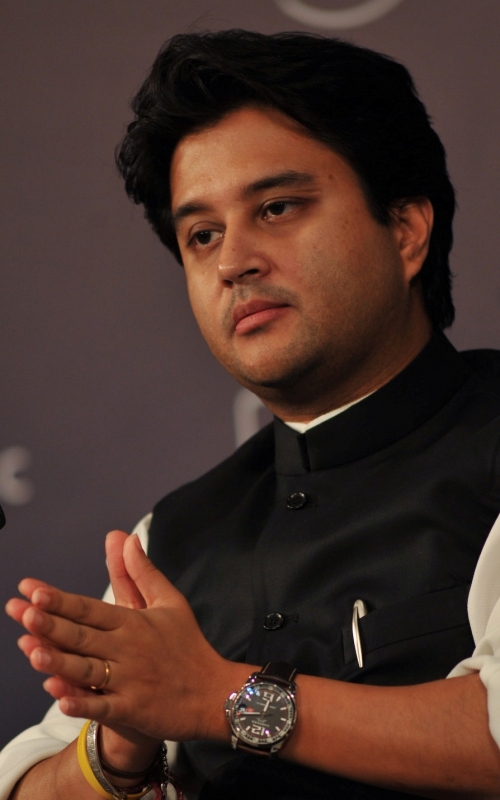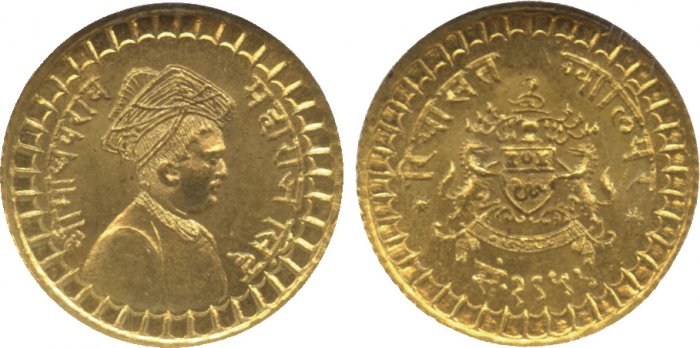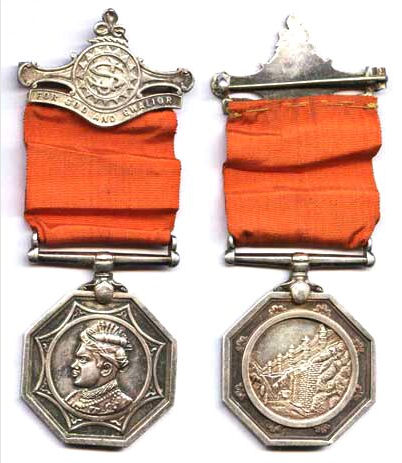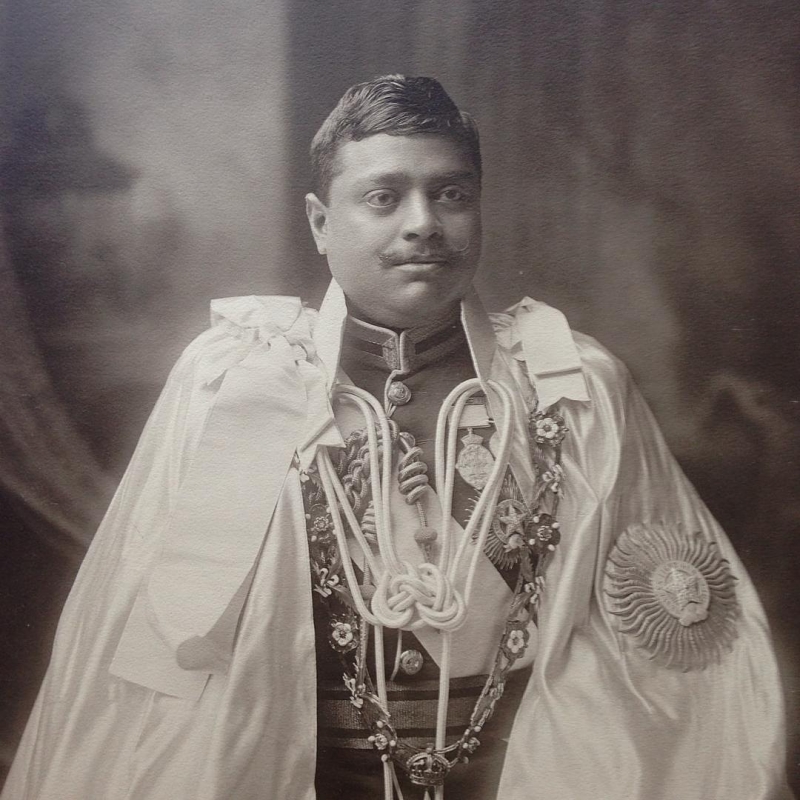
Present Head
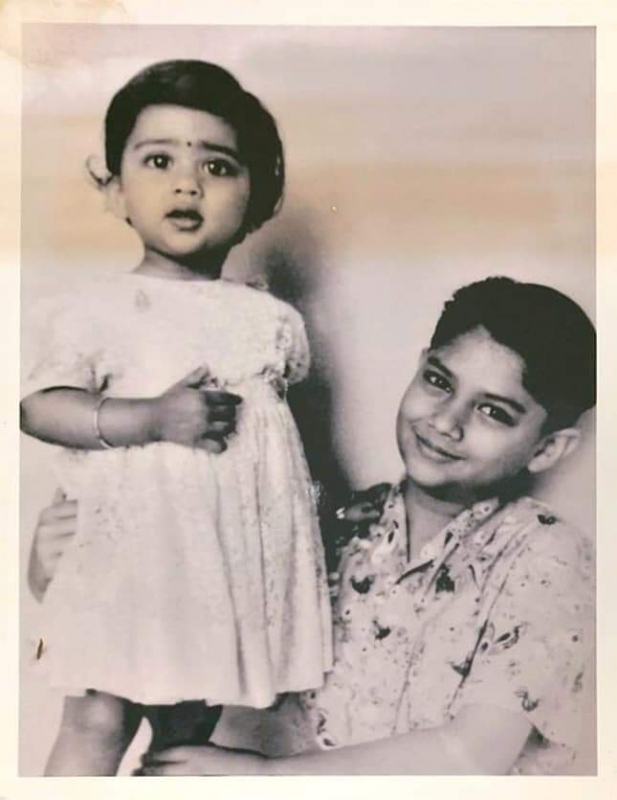
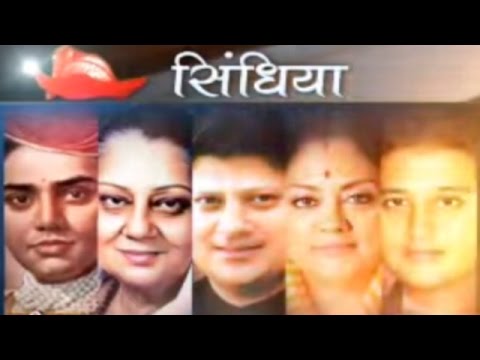
- Yuvaraj Mahanaryaman Scindia, born .
- Maharajkumari Ananya Raje Scindia, born .
History
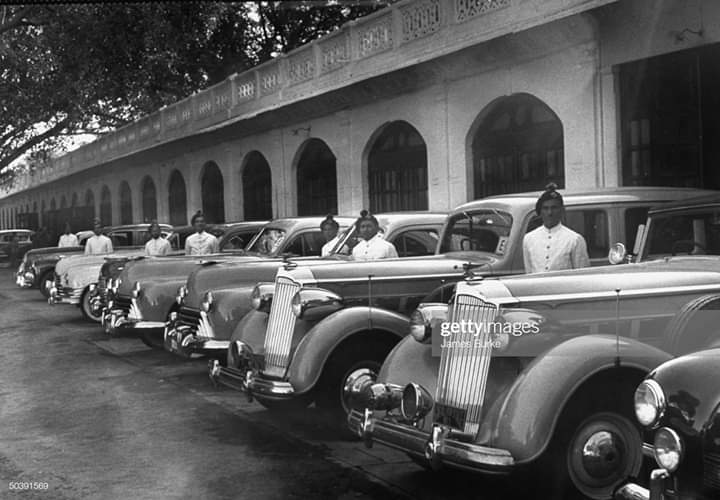
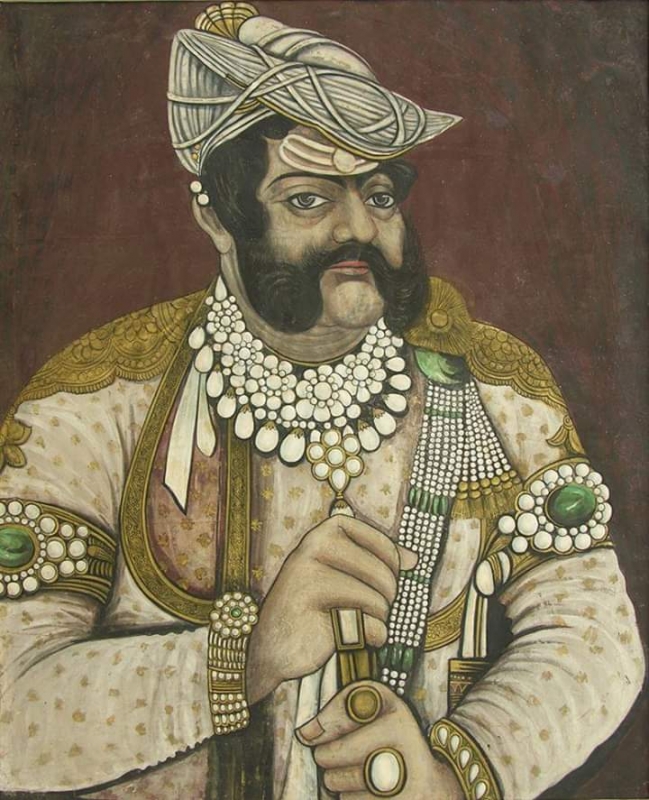
Gwalior was ruled by Scindia dynasty which was founded by the famous Ranoji Scindia, whose ancestors were the hereditary Patels of Kanherkhed in Satara. His Highness the Maharaja Scindia of Gwalior maintains a military force of 5504 cavalry, 11,040 infantry, and 48 guns. His Highness is entitled to a salute of 21-guns.
Origin and Ancient History of Gwalior
The historic city of Gwalior, dominated by its hill fort, has been a cradle of northern Indian history for over a millennium. According to local lore, the fort was founded in the 8th century CE by a local chieftain named Suraj Sen. He was cured of leprosy by a wandering ascetic named Gwalipa, in whose honor the fort and the surrounding town were named Gwalior.
Over the centuries, the strategic fortress of Gwalior changed hands multiple times. It was ruled by the Kachchhapaghata dynasty in the 10th and 11th centuries before being captured by the Delhi Sultanate. Under the Tomar dynasty in the 15th century, Gwalior reached a cultural golden age, especially during the reign of Maharaja Man Singh Tomar (1486–1516). He was a patron of the arts, built the magnificent Man Mandir Palace inside the fort, and popularized the Hindustani classical music genre of Dhrupad. The fort subsequently fell to the Mughals, who used it as a state prison for high-profile royal captives. For further information on the ancient roots of the city, see the Encyclopaedia Britannica's Gwalior entry.
The Rise of the Scindia Dynasty
The modern political history of Gwalior is synonymous with the rise of the Scindia (also spelled Shinde) dynasty. The family originates from Kanherkhed, a village near Satara in Maharashtra, where they served as hereditary village headmen (Patels). The fortune of the house was founded by Ranoji Scindia, an enterprising military commander under Peshwa Baji Rao I.
Ranoji Scindia was appointed as the Peshwa's deputy in the Malwa region in 1726, spearheading the Maratha expansion into northern India. He established his initial headquarters in the ancient city of Ujjain, which served as the early capital of the Scindia dominions. Following Ranoji's death in 1745, his successors expanded their territories, cementing their status as one of the primary powers within the Maratha Confederacy.
Mahadji Scindia and Maratha Hegemony
The most celebrated ruler of the dynasty was Mahadji Scindia (reigned 1761–1794). Having survived the disastrous Third Battle of Panipat in 1761, Mahadji set about rebuilding Maratha power in northern India. He recognized the superiority of European-style military organization and employed the French general Benoît de Boigne to train and modernize his infantry and artillery.
Under Mahadji’s leadership, Gwalior's army became a formidable force. He captured Delhi in 1771, restored the Mughal Emperor Shah Alam II to his throne as a puppet ruler, and acted as the Emperor's protector and de facto regent of the Mughal Empire. This period marked the zenith of Scindia influence, as Mahadji dominated the politics of northern India, asserting authority over Rajput states and countering British expansion. Learn more about his military campaigns through Britannica's Biography of Mahadji Sindhia.
The British Era and the Princely State
Following the death of Mahadji Scindia, his grand-nephew Daulat Rao Scindia ascended the throne. Daulat Rao shifted the capital from Ujjain to Gwalior in 1810, establishing a military encampment that grew into the modern city of Lashkar (literally meaning "the camp").
The expansionist policies of the British East India Company led to the Second and Third Anglo-Maratha Wars. Following the Treaty of Surji-Anjangaon in 1803 and subsequent treaties, Gwalior was forced to cede significant territories and enter into a subsidiary alliance with the British, transitioning into a princely state.
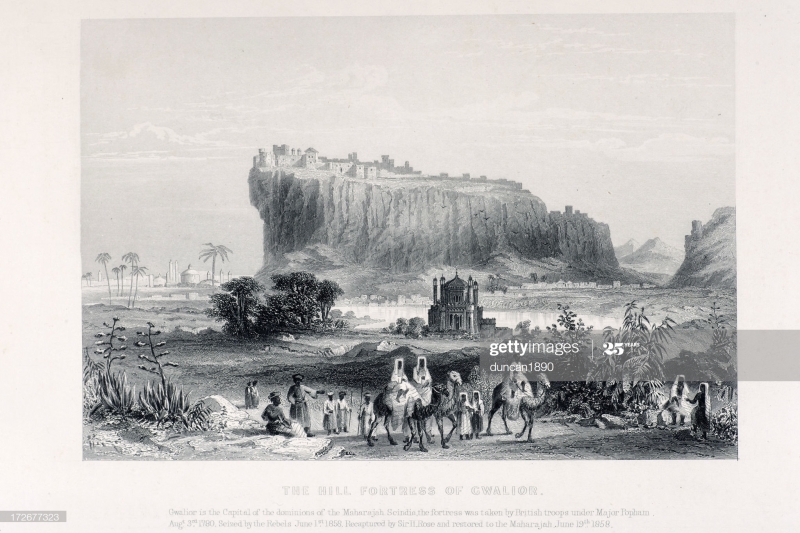
During the Indian Rebellion of 1857, Gwalior played a pivotal role. Although Maharaja Jayajirao Scindia remained loyal to the British, his state troops mutinied and joined the rebel forces led by Rani Lakshmibai of Jhansi and Tatya Tope. The rebels briefly captured the Gwalior Fort in June 1858 before British forces under Sir Hugh Rose recaptured it. Consequently, the British retained a strong military presence at Gwalior, maintaining a garrison in the fort until it was handed back to the Maharaja in 1886. Details of these administrative structures are preserved in the historical Gwalior State Gazetteer (1908).
Key Reformers and Modernization
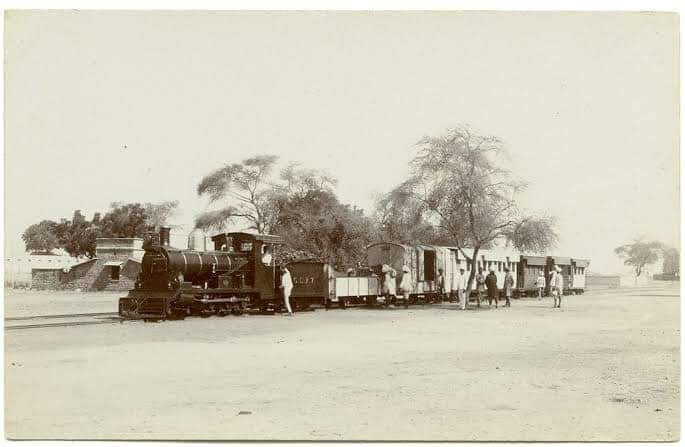
Gwalior transitioned into a highly progressive state under Maharaja Madho Rao Scindia II (reigned 1886–1925). A visionary administrator, he initiated comprehensive reforms across education, agriculture, and public infrastructure. He was responsible for:
- The construction of the Gwalior Light Railway to connect remote districts with the capital.
- Developing large-scale irrigation projects, most notably the Tigra Dam.
- Establishing municipal corporations and local self-governing boards.
- Creating the Gwalior State Trust to fund industrial and commercial enterprises, laying the foundation for modern industries in the region.
His successor, Maharaja Jiwajirao Scindia, continued these developmental policies, steering the state through the turbulent years of the early 20th century up to the independence of India.
State Heraldry and Flag
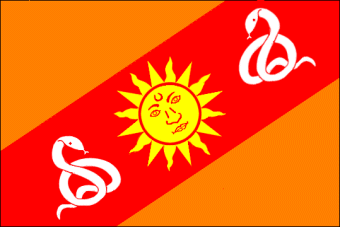
The princely state of Gwalior possessed a distinct heraldic identity. The state flag was a rectangular bi-color of red over saffron, representing Maratha heritage and martial valor.
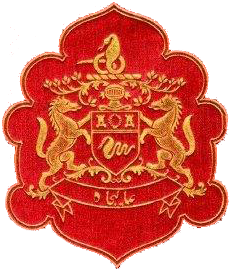
The Gwalior coat of arms featured a shield bearing a Maratha spear and sword, supported by two crowned cobras. The cobras refer to a family legend wherein a cobra protected the infant Ranoji Scindia from the scorching sun. The crest featured a hand holding a lance, while the state motto read "Ali Jah Bahadur" (The Illustrious Brave), a title originally bestowed upon the Scindias by the Mughal Emperor.
Post-Independence and the Modern Era
Following India’s independence in 1947, Maharaja Jiwajirao Scindia signed the Instrument of Accession, merging Gwalior into the Dominion of India. In 1948, Gwalior was combined with several other princely states to form the new state of Madhya Bharat, with Jiwajirao Scindia serving as its first and only Rajpramukh (Governor). In 1956, Madhya Bharat was integrated into the larger state of Madhya Pradesh.
The Scindia family smoothly transitioned from royal rulers to democratic leaders. Rajmata Vijaya Raje Scindia, her son Madhavrao Scindia, and his son Jyotiraditya Scindia have all served as highly influential figures in national and regional Indian politics, maintaining a deep connection to the civic life and heritage of Gwalior.
Genealogy
- Maharaja Scindia RANOJIRAO SCINDIA, 1st Maharaja of Gwalior 1731/1745, died .
- Maharaja Scindia JAYAPPARAO SCINDIA, 2nd Maharaja of Gwalior 1745/1755, died .
- Maharaja Scindia JANKOJIRAO I SCINDIA, 3rd Maharaja of Gwalior 1755/1761, died .
- Maharaja Scindia MADHAVRAO I SCINDIA, 4th Maharaja of Gwalior 1761/1794, born , died at Poona.
- Maharaja Scindia DAULATRAO SCINDIA, 5th Maharaja of Gwalior 1794/1827 , born /1780, died
- Maharani Scindia Baija Bai 1827/1833 (Maharani Regent)
- Maharaja Scindia JANKOJIRAO II SCINDIA, 6th Maharaja of Gwalior 1827/1843, died .
- HH Maharaja Scindia JAYAJIRAO SCINDIA, 7th Maharaja of Gwalior 1843/1886, born as Bhagirath Shinde, married and had issue. He died .
- HH Maharaja Scindia Madhavrao II Scindia (qv)
- Shrimant Balwant Rao [Bhaiya Sahib Scindia] (natural son), born , ADC to his father in 1872.
- Shrimant Ganpat Rao [Bhaiya Saheb Scindia] (natural son, by Chandrabhaga Bai, a famous dancer in Gwalior), born , was a highly talented musician, an unparalleled Dhrupada and Dhamar singer, a well-known Harmonium player and a fine composer of thumris. He composed many thumris under his nickname "Sugharapiya," and gave a new dimension to the thumri style. He was a court musician of Rampur for some time. Later, he settled in Calcutta. Several first-rate musicians of India are said to have studied under him. He died 1920.
- Shrimant Maharajkumari Gunvantabai Raje Saheb Scindia [Shrimant Akhand Soubhagyavati Gunvantaraje Saheb Shitole], married Sardar Raj Rajendra Raja Ramchandrarao Shitole Deshmukh, born , died , and had issue.
- Sardar Raj Rajendra Maloji Narsinghrao Shitole Deshmukh
- Shrimant Maharajkumari (name unknown) Raje Saheb Scindia, married Lieut.-Col. Amir-ul-umra Sardar Appajirao Shitole Anklekar, C.I.E., born , appointed Private Secretary to HH the Maharaja of Gwalior.
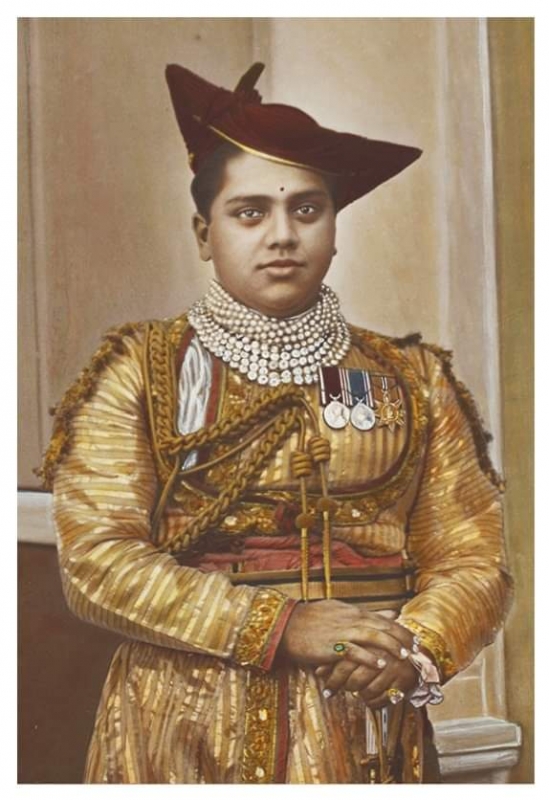
- HH Maharaja Scindia MADHAVRAO II SCINDIA, 8th Maharaja of Gwalior 1886/1925 , born , married 1stly, 1891, HH Maharani Chinkuraje, awarded the Kaiser-i-Hind Medal in 1900 and the Order of the Crown of India in 1928, died at Bombay, married 2ndly, 8th August 1913, HH Maharani Gajraje Sahiba, daughter of the Sar Desai of Sankli, died , and had issue. He died in Paris.
- HH Maharaja Scindia Sir Jivajirao Scindia (qv)
- Rani Kamalaraje Scindia, 11th November 1914, married 1933, Meherban Shrimant Raja Vijaisinghrao Bhonsle of Akalkot.
- HH Maharaja Scindia Sir JIVAJIRAO SCINDIA, 9th Maharaja of Gwalior 1925/1961, born , married 21st February 1941 Maharani Vijaya Raje, born , as Lekha Divyeshwari Devi, dau of Thakur Mahendra Singh of Kotla, Member of the Lok Sabha 1957/1967 and 1971/1977, Member of the Madhya Pradesh Vidhan Sabha 1967/1971 and the Rajya Sabha 1978/1989; Vice-President of the Jana Sangh 1973 and the B.J.P., died , and had issue. He died .
- Maharani Padma Raje Scindia, born , married 6th March 1960 HH Maharaja Kirit Bikram Kishore Deb Burman of Tripura, and had issue, two daughters. She died .
- Maharajkumari Usharaje Scindia, born , married June 1967 Shri Pashupati Shumsher Jung Bahadur Rana of Nepal and has issue.
- HH Maharaja Scindia Madhavrao III Scindia (qv)
- HH Maharani Vasundhara Scindia, born in Bombay, B.A. (Hons.) (Economics and Political Science), educated at Sophia College, Bombay University, Mumbai. Currently the Chief Minister of Rajasthan. Member of the National Executive of the BJP 1984/-, Member of the Rajasthan Legislative Assembly 1985/89, Vice-President of Yuva Morcha B.J.P. for two years. Vice President of the BJP, Rajasthan 1987/- , Member of the 9th, 10th, 11th and 12th Lok Sabha. Member of the following committees... Library Committee 1990/91; Consultative Committees, Ministries of Commerce and Tourism 1990/91; Consultative Committees, Ministries of Power, Science and Technology, Environment and Tourism 1991/96; Committee on Science and Technology, Environment and Forests 1996/97; Consultative Committees, Ministries of Power, Science and Technology and Tourism 1996/97; Joint Secretary, B.J.P. Parliamentary Party 1997/-, Union Minister of State, External Affairs 1998/99; Union Minister of State (Independent Charge), Small Scale Industries and Agro & Rural Industries; Department of Personnel and Training; Department of Pensions and Pensioners’ Welfare in the Ministry of Personnel, Public Grievances and Pensions; Department of Atomic Energy and Department of Space 1999/2001; Union Minister of State, Small Scale Industries; Personnel, Training, Pensions, Administrative Reforms & Public Grievances; Planning; Department of Atomic Energy; and Department of Space (Independent Charge). In November 2003, she resigned her cabinet post to run as BJP candidate for Chief Minister of Rajasthan; she married 17th November 1972, HH Maharaj Rana Hemant Singh of Dholpur, and has issue.
- Shrimant Maharajkumari Yashodhara Scindia, born in London, educated at the Cathedral and John Connon School in Bombay, then the Presentation Convent, Kodaikanal, and her final 2 years at the Scindia Kanya Vidyalaya Gwalior; moved to New Orleans, USA after her marriage and was appointed board member of the Delta Festival Ballet, an Advisory Board Member of the Contemporary Art Center, and a Fellow of the New Orleans Museum of Art; she returned to India in 1994 and went into formal politics, contesting the Madhya Pradesh State Assembly Elections in 1998 and then being re-elected 5 years later, for a second term in 2003 in the State Assembly elections. She is an active member of her State Legislative Party; presently serving in the Madhya Pradesh Government as a Cabinet Minister for Tourism, Sports and Youth Welfare; she married Dr. Sidharth Bhansali, cardiologist, and has issue, three children.
- Akshay Bhansali, born , a producer at MTV Desi in New York
- Abhishek Bhansali, born , a student at the NYU Stern School of Business
- Trishala Bhansali, born , a student at NYU
- HH Maharaja Scindia MADHAVRAO III SCINDIA, 10th Maharaja of Gwalior 1961/2001, born in Bombay, married 9th May 1966, HH Maharani Pratima Rajya Laxmi Devi [Madhavi Devi, born as Kiran Rajya Laxmi Devi], daughter of General Shri Yuvraj Shumsher Jung Bahadur Rana of Nepal, and his wife, Rani Indira Kumari, and had issue. He died in a plane crash near Motta, 30th September 2001 and was cremated at Amma Maharaj Ki Chhatri, Gwalior on the 4th October 2001.
- Yuvrani Chitrangada Scindia, born , married 11th December 1987, Yuvraj Vikramaditya Singh of Jammu and Kashmir and has issue.
- HH Maharaja Scindia Jyotiradityrao Scindia (qv)
- HH Maharaja Scindia JYOTIRADITYARAO SCINDIA, 11th Maharaja of Gwalior (see above)
Notable Figures
Ranoji Rao Scindia (r. 1731–1745)
Ranoji Rao Scindia was the illustrious founder of the Scindia dynasty of Gwalior. Originally serving as a personal state-carrier or slipper-bearer (Khasbardar) to Peshwa Baji Rao I, his exceptional military acumen and unwavering loyalty quickly propelled him through the ranks of the Maratha Empire. He became one of the key Maratha commanders responsible for expanding their influence into Northern India.
In 1731, the Peshwa granted him a share of the revenues of the Malwa region, establishing his administrative headquarters at the historic city of Ujjain, which became the initial capital of the Scindia dominions. For more details on his early career and achievements, please refer to the Wikipedia article on Ranoji Rao Scindia.
Mahadaji Shinde (r. 1768–1794)
Commonly known as Mahadji Scindia, he is widely celebrated as one of the most formidable Maratha statesmen, generals, and diplomats of the 18th century. Following the disastrous Maratha defeat at the Third Battle of Panipat in 1761, Mahadaji played a monumental role in resurrecting Maratha supremacy in Northern India. He successfully modernized his army with the help of European mercenaries, most notably the French military adventurer Benoît de Boigne.
Mahadaji established his supremacy over the Mughal capital of Delhi and acted as the de facto ruler of the Mughal Empire by securing the title of Wakil-i-Mutlaq (Regent of the Empire) for the Peshwa from Emperor Shah Alam II. His brilliant military campaigns and diplomatic negotiations are documented extensively in historical archives, including his detailed Wikipedia biography and records preserved by the Encyclopædia Britannica.
Daulat Rao Scindia (r. 1794–1827)
A grandnephew of Mahadaji, Daulat Rao Scindia succeeded to the throne at a young age. His reign marked a turbulent era of conflict and transition, during which the Scindia state clashed directly with the expanding power of the British East India Company in the Second and Third Anglo-Maratha Wars. In 1810, he permanently shifted the capital of the Scindia state from Ujjain to Gwalior, establishing the new military cantonment town of Lashkar.
Following defeats in battles against British forces led by Arthur Wellesley (later the Duke of Wellington), Daulat Rao was forced to sign the Treaty of Surji-Anjangaon and later the Treaty of Gwalior in 1817, which reduced the state to a British protectorate. To learn more about his military campaigns and political struggles, visit the Daulat Rao Scindia Wikipedia page.
Baiza Bai (Regent, 1827–1833)
Baiza Bai was the prominent and highly influential wife of Daulat Rao Scindia. Following her husband's death in 1827, she assumed the regency of the Gwalior State. She was renowned for her exceptional administrative skills, financial intelligence, and fierce independence. She actively opposed British interference in the state's internal governance and maintained a powerful presence in Northern Indian politics.
Her tenure as regent was marked by significant court intrigues and a subsequent power struggle with her adopted son, Jankoji Rao Scindia II, which eventually led to her retirement from active administration. Read more about her fascinating life on the Baiza Bai Wikipedia page.
Jayajirao Scindia (r. 1843–1886)
Jayajirao Scindia ascended the throne as a minor and ruled Gwalior during one of the most critical junctures of modern Indian history, including the Indian Rebellion of 1857. Although his troops mutinied and joined forces with iconic rebel leaders like Rani Lakshmibai of Jhansi and Tatya Tope, Jayajirao himself remained staunchly loyal to the British Raj, which helped secure the long-term survival of the Gwalior State.
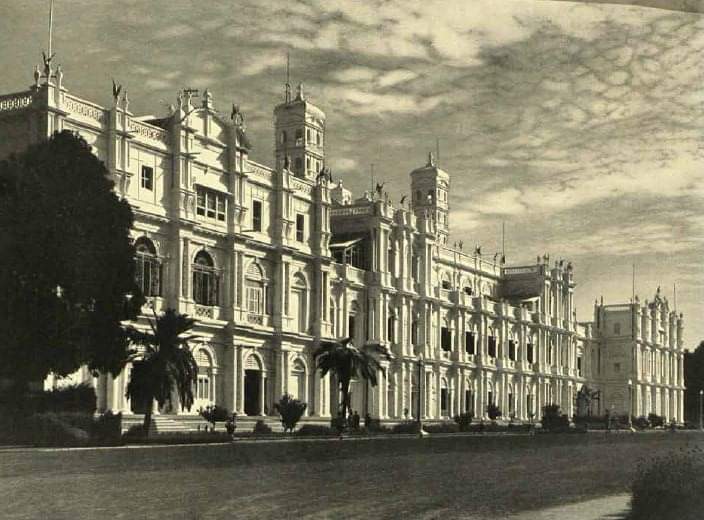
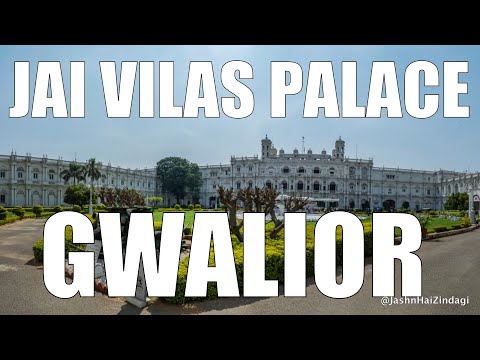
He was a passionate builder and a patron of the arts. He commissioned the construction of the magnificent Jai Vilas Mahal in Gwalior, designed by Sir Michael Filose in the style of European palaces. More information regarding his governance and architectural legacy can be found on Jayajirao Scindia's Wikipedia page.
Madho Rao Scindia II (r. 1886–1925)
Madho Rao Scindia II is widely revered as the architect of modern Gwalior. Assuming full ruling powers in 1894, he initiated extensive administrative, educational, and judicial reforms. He championed infrastructural development, constructing the Gwalior Light Railway, building extensive irrigation networks, and establishing modern municipal systems, schools, and hospitals across his territory.
He was highly respected by the British administration, receiving a personal 21-gun salute, and was an active philanthropist on the national stage. For a comprehensive overview of his developmental works, view his Wikipedia article.
Jiwajirao Scindia (r. 1925–1948)
Jiwajirao Scindia was the last ruling Maharaja of the Gwalior Princely State. He ascended the throne as a minor and assumed full ruling powers in 1936. Following India's independence in 1947, he demonstrated great statesmanship by signing the Instrument of Accession, merging Gwalior State into the newly formed Dominion of India.
Upon the integration of the princely states, Gwalior was merged with neighboring territories to form the state of Madhya Bharat, and Jiwajirao served as its first and only Rajpramukh (Governor) from 1948 until the linguistic reorganization of states in 1956. For further historical context, visit the Jiwajirao Scindia Wikipedia page.
Vijaya Raje Scindia (Rajmata of Gwalior, 1919–2001)
Widow of Maharaja Jiwajirao Scindia, Vijaya Raje Scindia—popularly known as the "Rajmata of Gwalior"—was one of the most prominent, influential, and resilient political figures in post-independence India. She entered democratic politics in 1957, initially winning a seat in Parliament under the Indian National Congress banner before breaking away due to ideological differences.
She subsequently played a monumental role in national opposition politics, aligning with the Swatantra Party, the Jana Sangh, and later becoming a founding and towering leader of the Bharatiya Janata Party (BJP). Her political career and memoirs are detailed on the Vijaya Raje Scindia Wikipedia page.
Madhavrao Scindia (1945–2001)
The son of Jiwajirao and Vijaya Raje Scindia, Madhavrao Scindia was a charismatic leader, highly popular statesman, and senior minister in the Indian Government. After the formal abolition of princely titles and privy purses in 1971, he established a formidable political legacy as a member of the Indian National Congress, winning nine consecutive elections to the Lok Sabha without ever losing.
He served with distinction in several key union cabinet portfolios, including Minister of Railways, Minister of Civil Aviation, and Minister of Human Resource Development, before his tragic and untimely death in a plane crash in 2001. Detailed records of his political achievements are available on the Madhavrao Scindia Wikipedia page.
Jyotiraditya Scindia (b. 1971)
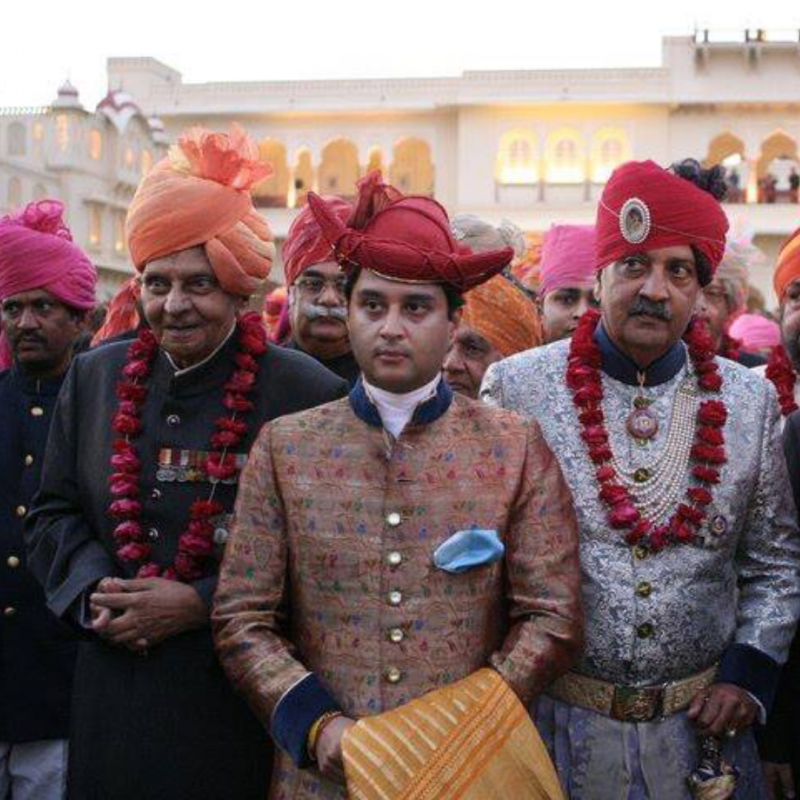
The son of Madhavrao Scindia, Jyotiraditya Scindia is the current titular head of the Scindia dynasty of Gwalior and a prominent political leader in contemporary India. Educated at Harvard University and Stanford Graduate School of Business, he entered politics following his father's demise and was elected to the Lok Sabha in 2002.
He has served as a Union Minister in both the United Progressive Alliance (UPA) and the National Democratic Alliance (NDA) governments, holding critical portfolios such as Civil Aviation, Steel, and Communications. To learn more about his ongoing career and public life, refer to the Jyotiraditya Scindia Wikipedia page.