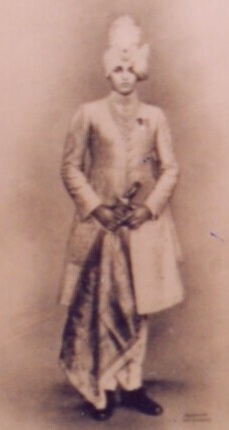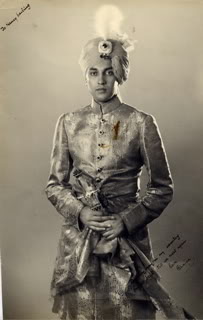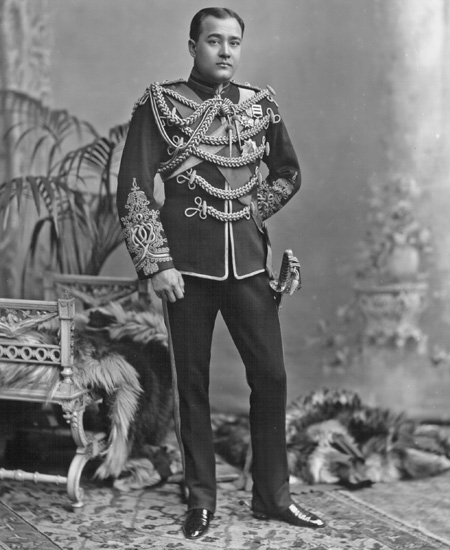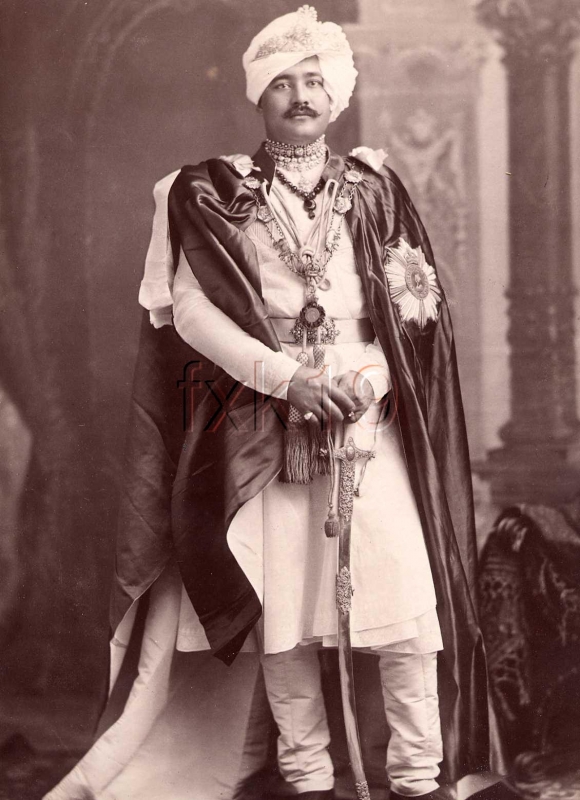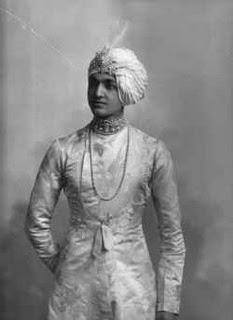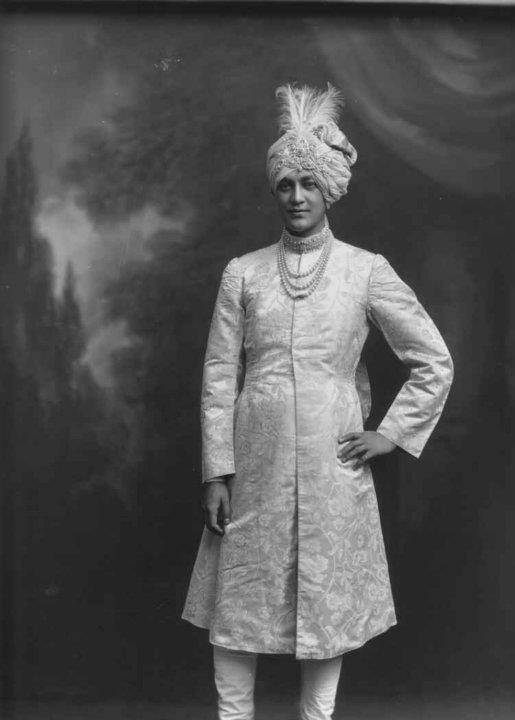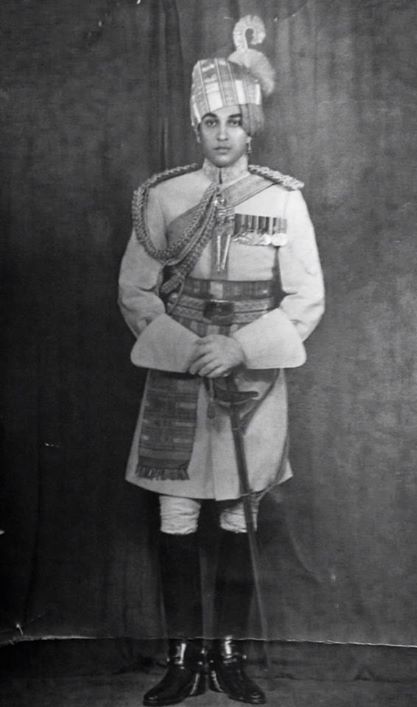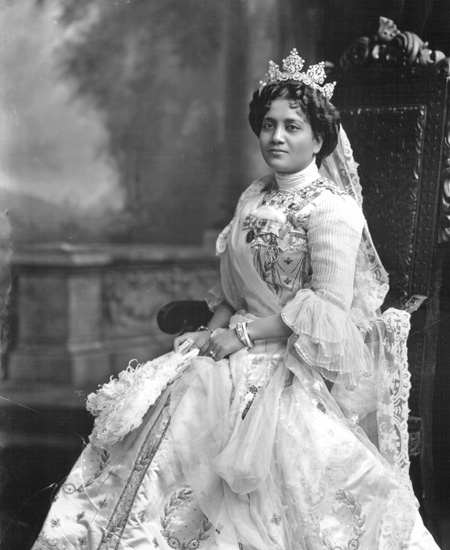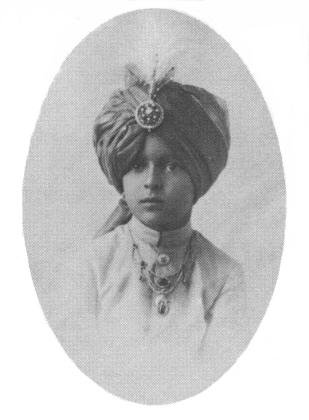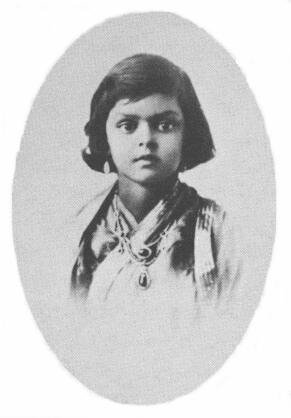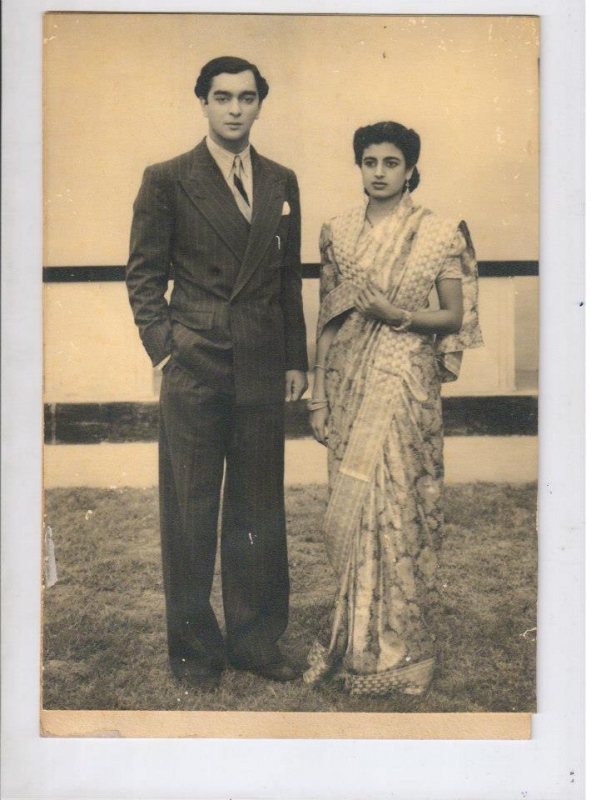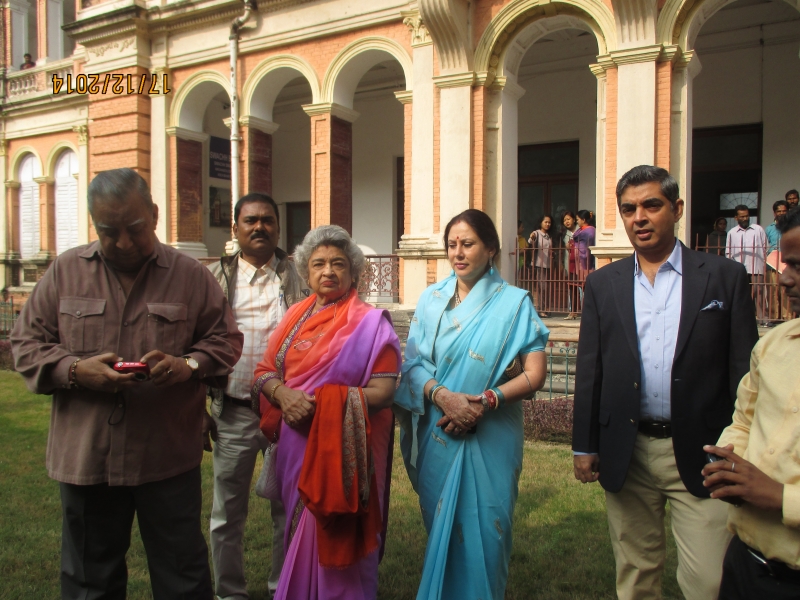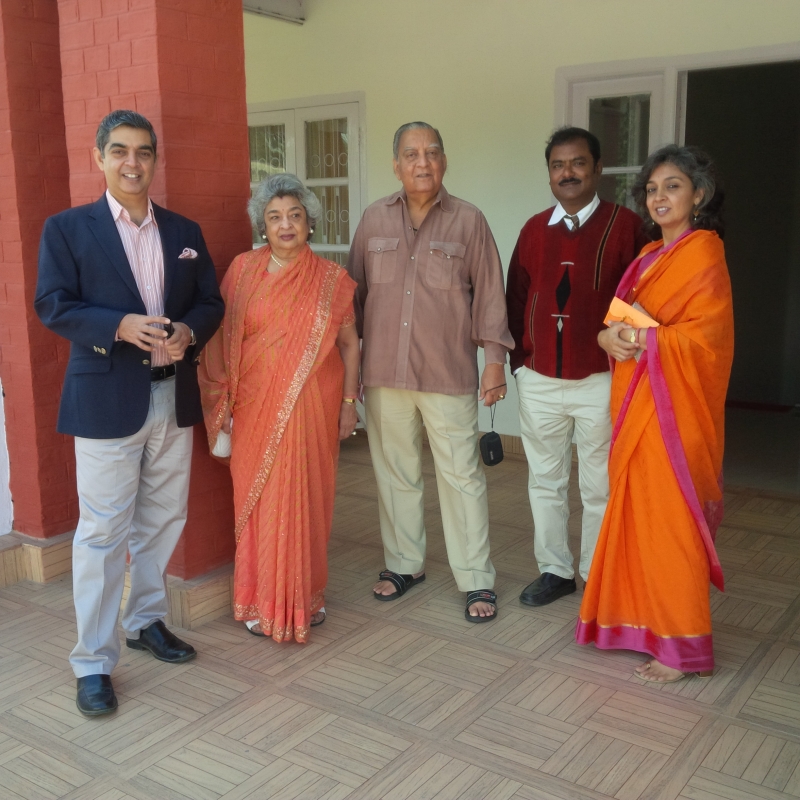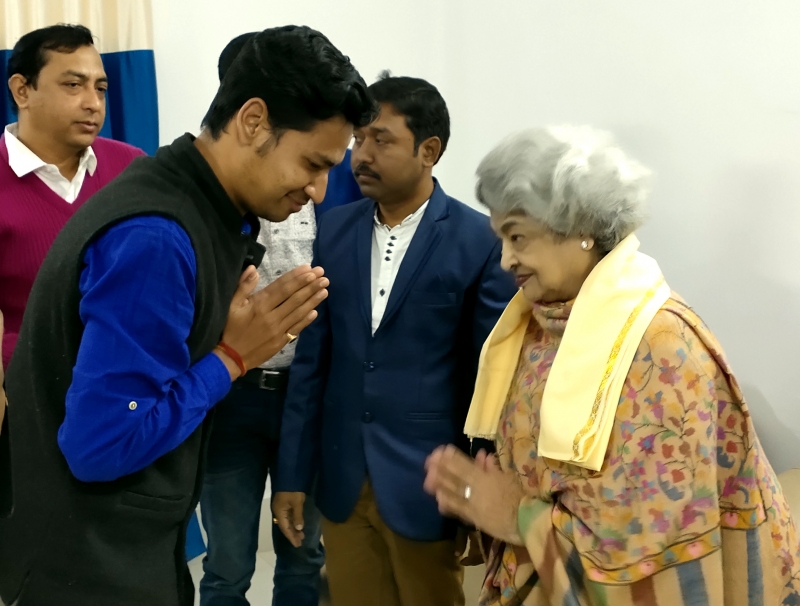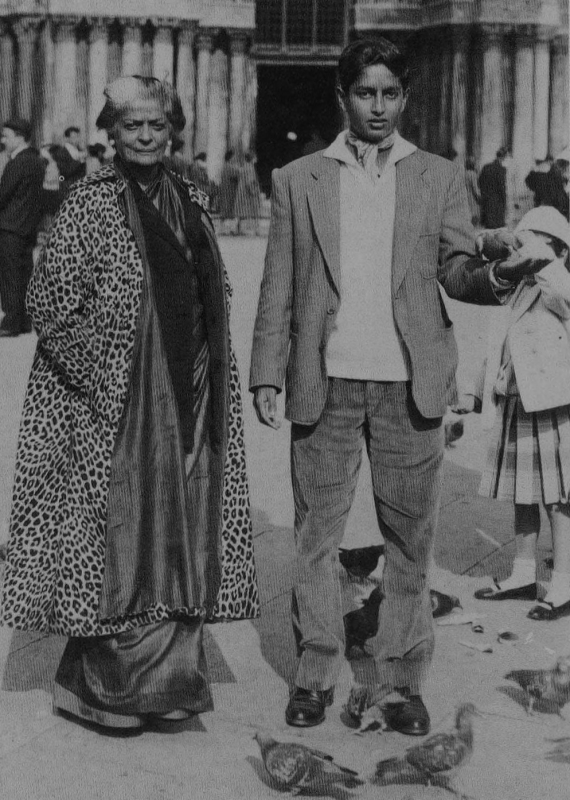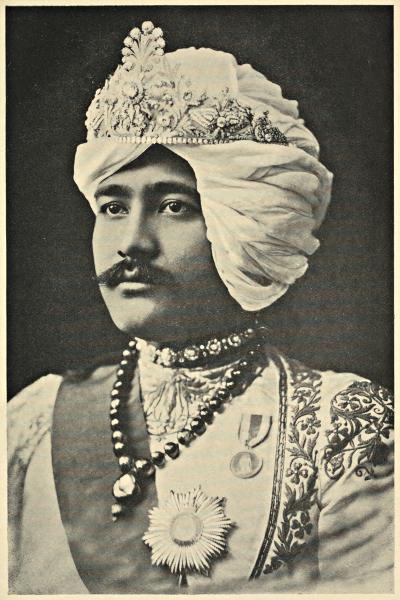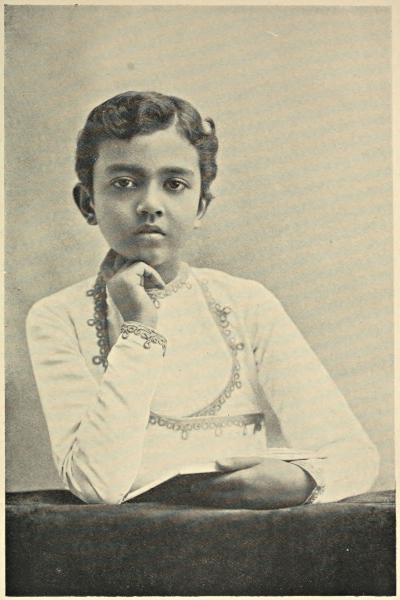
Present Head

History
Introduction and Origins of Cooch Behar
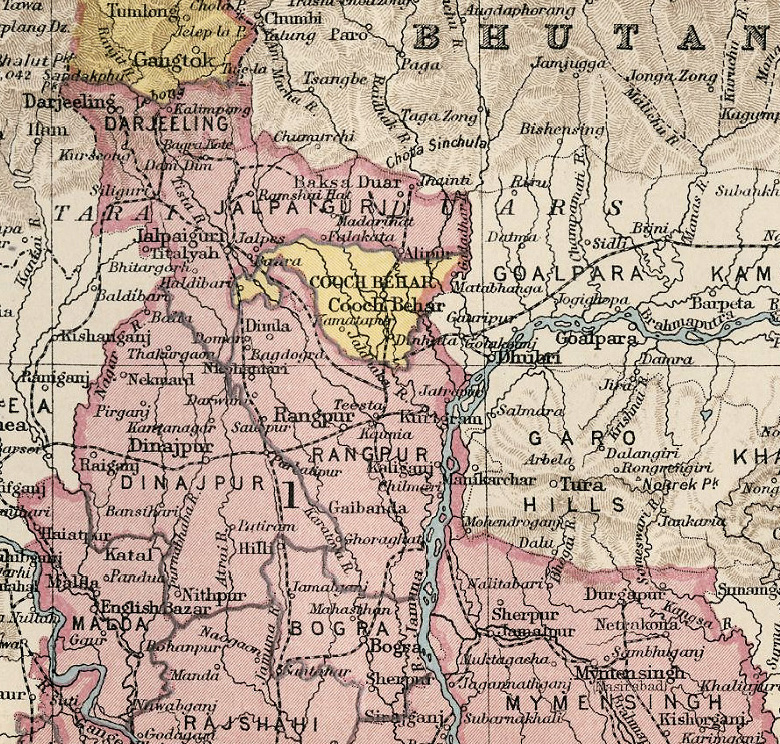
The history of Cooch Behar (historically known as Koch Bihar) is intricately woven into the socio-political fabric of northeastern India. Originally a part of the ancient kingdom of Kamarupa, the region emerged as an independent geopolitical entity in the early 16th century under the Koch dynasty. The dynasty was founded by Hariya Mandal, a chief of the Koch and Mech tribes, but it was his visionary son, Bisu, who consolidated power and ascended the throne as Maharaja Vishwa Singha in 1515 CE. He established his capital at Koch Bihar and embraced Hinduism, initiating the sanskritization of the region and laying the groundwork for a highly organized administrative state.
The Golden Age: Maharaja Nara Narayan and Chila Roy
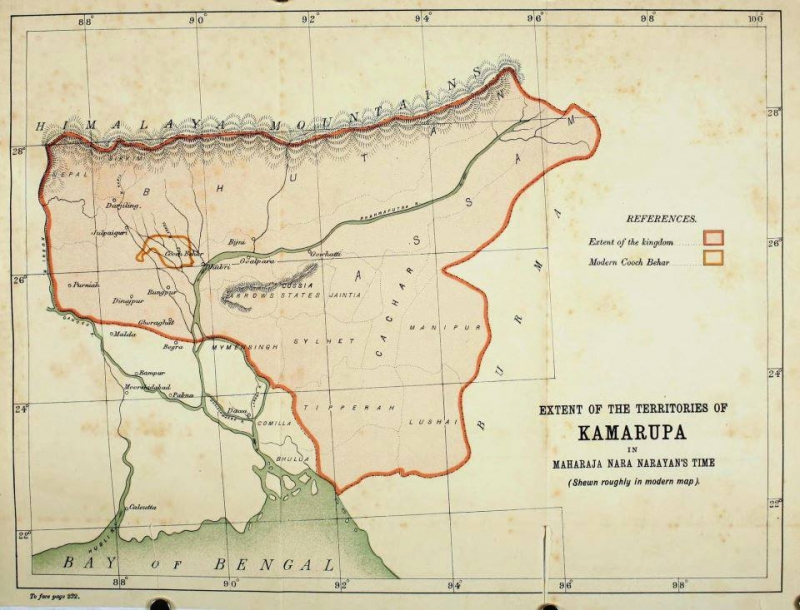
The Koch kingdom reached the zenith of its territorial expansion and cultural renaissance during the reign of Vishwa Singha's son, Maharaja Nara Narayan (reigned 1554–1587 CE), ably supported by his brother and commander-in-chief, Sukladhwaj, famously known as Chila Roy (the "Kite Prince" due to his lightning-fast military maneuvers). Under Chila Roy's military genius, the Koch army subdued the kingdoms of Ahom, Kachari, Manipur, and Tripura, establishing hegemony over a vast swath of Northeast India.
This period was also a golden age for culture and religion. Nara Narayan rebuilt the sacred Kamakhya Temple in Guwahati after its destruction. The royal court patronized the monumental socio-religious reformer Srimanta Sankardev, who propagated the Ekasarana Dharma (Neo-Vaishnavite movement) under the state's protection. However, the death of Chila Roy and subsequent administrative strains led to the division of the empire into Koch Bihar (the western kingdom under Nara Narayan's son, Lakshmi Narayan) and Koch Hajo (the eastern kingdom under Chila Roy's son, Raghudev).
Mughal and Bhutanese Interferences
Following the partition, the western kingdom of Koch Bihar faced constant threats from both the eastern branch (Koch Hajo) and the rising power of the Mughal Empire. In 1596, Maharaja Lakshmi Narayan sought an alliance with the Mughal governor of Bengal, Raja Man Singh, declaring Koch Bihar a tributary vassal under Mughal suzerainty. This alliance protected the state but embroiled it in decades of geopolitical conflicts between the Mughals and the Ahoms.
By the late 17th and 18th centuries, as the Mughal Empire weakened, Koch Bihar fell prey to aggressive expansionism from neighboring Bhutan. The Bhutanese Deb Raja began interfering in the internal succession disputes of the Koch royal family, eventually establishing a puppet regime and stationing a representative in the capital. Facing complete loss of sovereignty, the Dewan Deo (Prime Minister) of Cooch Behar appealed to the British East India Company for military assistance.
The British Alliance and Treaty of 1773
In response to the appeal, Warren Hastings, the Governor-General of India, dispatched British troops to expel the Bhutanese forces. This intervention culminated in the signing of the Anglo-Cooch Behar Treaty on 5 April 1773. According to the treaty, Cooch Behar acknowledged the suzerainty of the British East India Company, agreed to pay an annual tribute, and became a princely state under British protectorate rule. This treaty stabilized the state's borders but permanently curtailed its external sovereignty.
Renaissance and Modernization: Maharaja Nripendra Narayan
The late 19th century ushered in an era of unprecedented modernization, education, and social reform under Maharaja Nripendra Narayan (reigned 1863–1911 CE). Having received a thoroughly Western education under British guardianship, he became the epitome of a modern Indian ruler. He married Maharani Suniti Devi, the daughter of the famous Brahmo Samaj reformer Keshub Chandra Sen, and together they transformed Cooch Behar into a model state.
Key reforms during this period included:
- Education: The establishment of Victoria College (now Acharya Brojendra Nath Seal College) in 1888 and the Sunity Academy (1881) for girls' education, making Cooch Behar a premier center of learning in Eastern India.
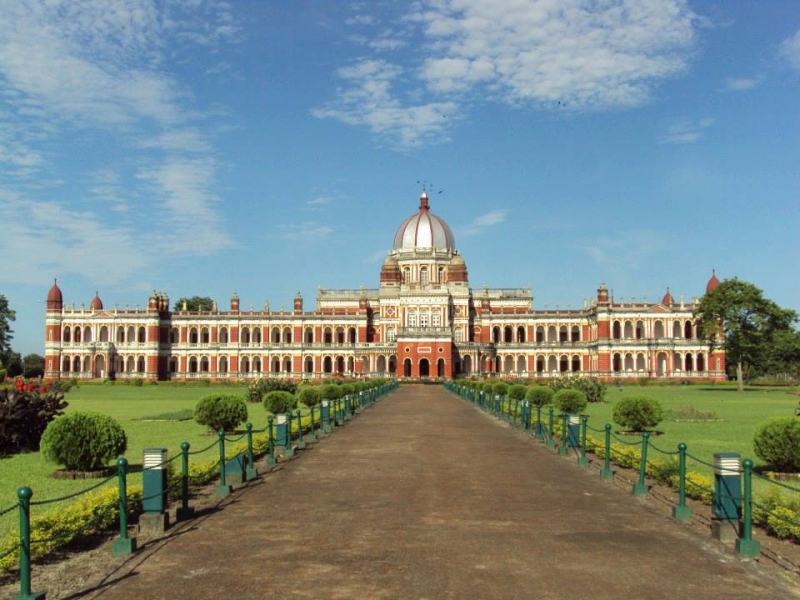
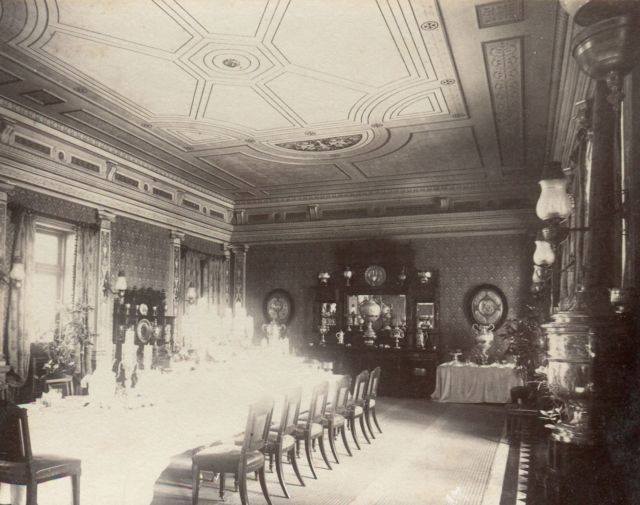
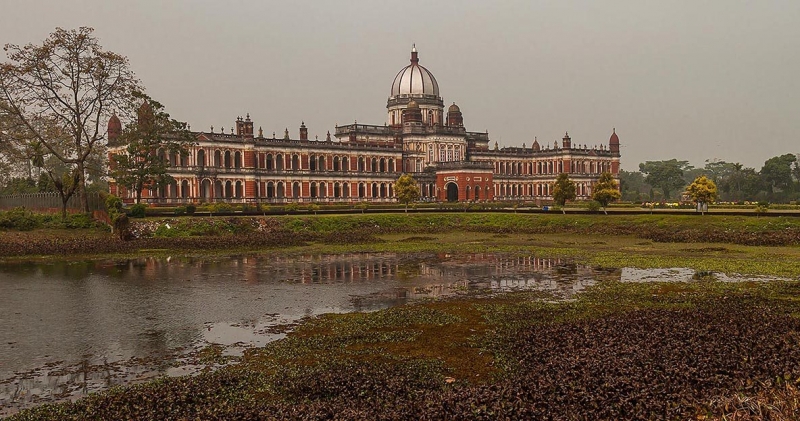
- Infrastructure: The construction of the magnificent Cooch Behar Palace (Victor Jubilee Palace) in 1887, modeled on London's Buckingham Palace, and the introduction of the Cooch Behar State Railway.
- Judiciary and Law: Modernization of civil and criminal courts, abolition of slavery, and implementation of advanced land revenue systems.
Heraldry, Crest, and State Flag
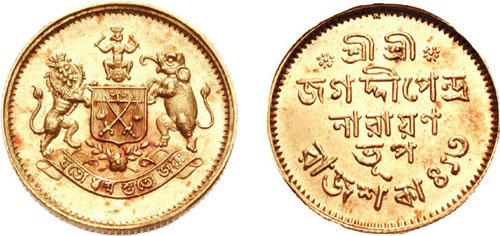
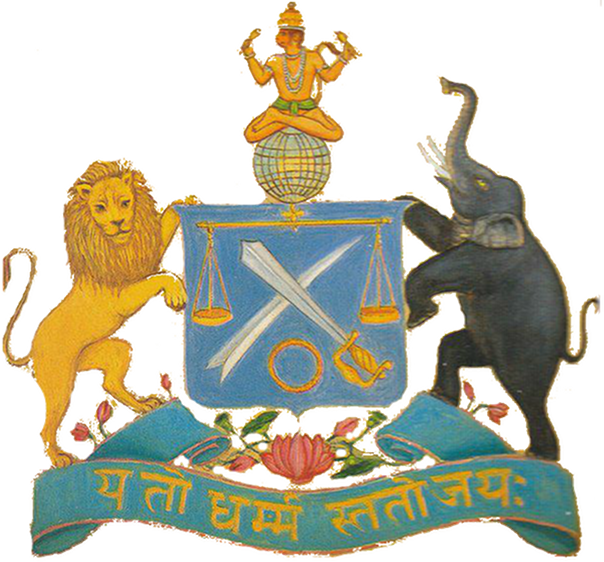
The princely state of Cooch Behar possessed a distinctive heraldic identity. The State Coat of Arms consisted of:
- Supporters: A Hanuman (monkey deity) on the right (sinister) and a mythical lion/yali on the left (dexter), representing devotion and martial strength respectively.
- The Shield: Featuring a crescent moon, a katar (traditional Indian dagger), and a sword, symbolizing the state's historical defensive prowess and ancestral weapons.
- Motto: Underneath the shield was the Sanskrit motto: "Yato Dharmastato Jayaha" (Where there is righteousness, there is victory).
The State Flag of Cooch Behar was a rectangular bicolor flag, featuring a saffron/red background with the state's royal emblem positioned centrally, signifying sovereignty, religious duty, and royal heritage.
Post-Independence and Modern Era
During the partition of India in 1947, Maharaja Jagaddipendra Narayan (the last ruling Maharaja) guided the state through geopolitical transitions. On 28 August 1949, the Maharaja signed the Instrument of Accession and Merger Agreement, transferring the administration of Cooch Behar to the Government of India. Initially, it was administered as a Chief Commissioner's Province.
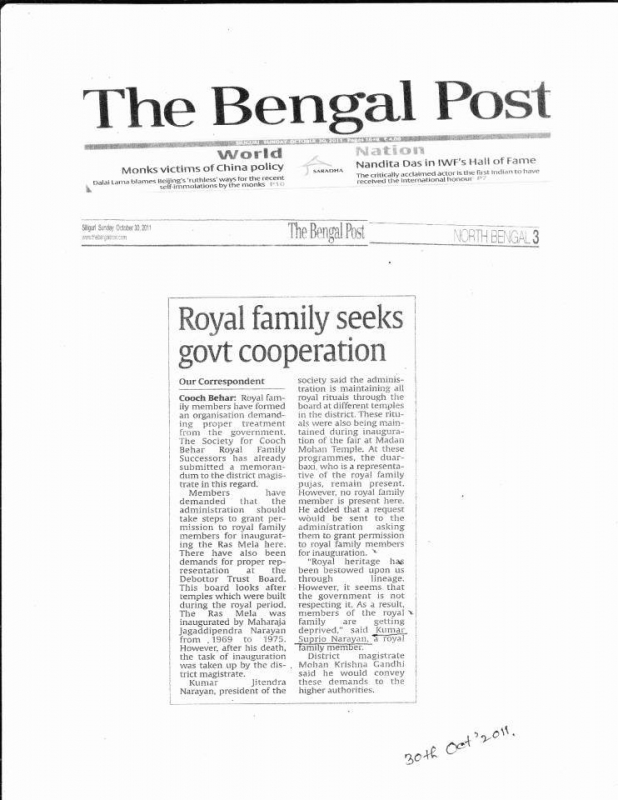
On 1 January 1950, Cooch Behar was officially merged with the state of West Bengal, becoming the Cooch Behar district. Today, the district remains a culturally rich region, with the majestic Cooch Behar Palace preserved as a national monument under the Archaeological Survey of India, standing as a testament to the glorious heritage of the Koch dynasty. For further detailed administrative and historical updates, visit the official Cooch Behar District Portal.
References and External Links
- Detailed geographical and administrative profiles can be found on the Official Cooch Behar Government Website.
- For comprehensive geographic and socio-cultural overviews, refer to the Encyclopædia Britannica Entry on Cooch Behar.
- Information on heritage preservation in the region is available on the West Bengal Heritage Commission Website.
Genealogy
- Raja Haridas Mondal, ruler of an area near the Chikna Mountains, belonged to the Mech caste of the Haihoi dynasty, married 1stly, Rani Jira, elder daughter of Bhuiyan Hajo, married at the same time, 2ndly, Rani Hira, younger daughter of Bhuiyan Hajo, and had issue.
- Madan (by Rani Jira, eldest son), died about 1510 in battle.
- Maharaja Chandan Narayan (by Rani Jira) (qv)
- Raja Sisya Singha [Sishu] (by Rani Hira), Raikat [=family guardian], King of Baikunthapur, married and had issue, the later Prime Ministers of Cooch Behar and the Raikat Kings of Jalpaiguri.
- Raja Monahar Dev, married and had issue.
- Raja Manikoth Dev, married and had issue.
- Raja Bhaba Dev, married and had issue.
- Raja Dharma Dev, married and had issue.
- Raja Darpa Dev, married and had issue.
- Several generations
- Raja Fanindra Dev Raikot, said to be the 20th Raikat in succession and had provided good service in the Bhutan War. He died after 1891.
- Several generations
- Raja Prosanna Dev Raikot, last Raja of Baikunthapur in Jalpaiguri District, West Bengal; married 1stly (in Gandharba form), Rani Renchi Devi, a Lepcha by birth, married 2ndly, Rani Asrumati Devi, died , and had issue, three sons and one daughter. He died .
- Kumar Rupendra Dev Raikot (by Rani Renchi Devi), he filed a suit on 7th August 1947 for recovery of a large estate in Jalpaiguri District in West Bengal named Baikunthapur Raj; died after 1963.
- Kumar Shiva Prasad Dev (by Rani Renchi Devi)
- Kumar Deva Prasad Dev (by Rani Renchi Devi)
- Kumari Prativa Devi [Mrs. Prativa Bose] (by Rani Asrumati Devi)
- Raja Prosanna Dev Raikot, last Raja of Baikunthapur in Jalpaiguri District, West Bengal; married 1stly (in Gandharba form), Rani Renchi Devi, a Lepcha by birth, married 2ndly, Rani Asrumati Devi, died , and had issue, three sons and one daughter. He died .
- Several generations
- Raja Fanindra Dev Raikot, said to be the 20th Raikat in succession and had provided good service in the Bhutan War. He died after 1891.
- Several generations
- Raja Darpa Dev, married and had issue.
- Raja Dharma Dev, married and had issue.
- Raja Bhaba Dev, married and had issue.
- Raja Manikoth Dev, married and had issue.
- Raja Monahar Dev, married and had issue.
- Maharaja Viswa Singh [Vishu] (by Rani Hira) (see below)
- Maharaja CHANDAN NARAYAN, 1st Maharaja of Cooch Behar 1510/1523, expanded the territory greatly. He died sp 1523.
- Maharaja VISWA SINGHA, 2nd Maharaja of Cooch Behar 1523/1554 (abdicated), born , shifted the capital from Chikna in the mountains to Hingulabas on the plains, married many times, and had issue, 19 sons. He died after 1554.
- Raja Nri Singha, King of Panga.
- Raja Shukladhaj [Chilarai], King of Assam, appointed the army commander conquering Assam in 1562, he was granted a portion of the new territories, which included East Assam, married Rani Chandraprabha, niece of Pratap Roy, and had issue. He died .
- Raja Raghudev Narayan, Raja of Darrang, married and had issue (see Darrang).
- Maharaja Nar Narayan (qv)
- Maharajkumar Kamal Narayan [Gosai Kamal]
- Maharaja NAR NARAYAN, 3rd Maharaja of Cooch Behar 1554/1587, captured Manipur and Tripura, adding them to his Kingdom, married (amongst others), Rani Bhanumati, daughter of Pratap Roy, Buiyan of Pandu, and had issue. He died .
- Maharaja Lakshmi Narayan (qv)
- Rani Kshama Devi, married 23rd December 1596, Mirza Raja MAN SINGH I of Jaipur, and had issue. She committed sati 1614.
- Maharaja LAKSHMI NARAYAN, 4th Maharaja of Cooch Behar 1587/1621, married and had issue. He died .
- Maharajkumar Braja Narayan, died vp.
- Maharajkumar Bhim Narayan, died vp.
- Maharajkumar Vil Narayan
- Maharaja Bira Narayan (by the Senior Queen) (qv)
- Maharajkumar Gosai Mahi Narayan, Najir Dev, married and had issue. He died 1666.
- Kumar Shri Jagat Narayan, married and had issue. He died after 1682.
- Kumar Shri Viswa Narayan
- Maharaja Rup Narayan (qv)
- Kumar Shri Yajna Narayan, married and had issue. He died after 1682.
- Kumar Shri Shanta Narayan, Najir Dev.
- Kumar Shri Satya Narayan, appointed as the Dewan (financial minister), married and had issue.
- Kumar Shri Deena Narayan, adopted by Maharaja Upendra Narayan, but rebelled and died before being able to succeed.
- Kumar Shri Chandra Narayan
- Kumar Shri Darpa Narayan, died 1665/1666.
- Kumar Shri Jagat Narayan, married and had issue. He died after 1682.
- Maharaja BIRA NARAYAN, 5th Maharaja of Cooch Behar 1621/1626, he was first to open schools in his kingdom, married and had issue. He died .
- Maharaja Pran Narayan (qv)
- Maharani Rupamati Devi, married (as his first wife), Maharajadhiraja Paramesvara Paramabhattaraka Sri Sri Pratapamalla Vijayarajye Nepala, Raja of Kathmandu in Nepal. She died before 1649.
- [?Maharani Ananta Priya Devi, married (as his third wife), Maharajadhiraja Paramesvara Paramabhattaraka Sri Sri Pratapamalla Vijayarajye Nepala, Raja of Kathmandu in Nepal.]
- Maharaja PRAN NARAYAN, 6th Maharaja of Cooch Behar 1626/1665, invaded Ghoraghat, the center of Mughal power in Banga (Bengal). In 1661 he captured Dhaka, capital of Banga, but was forced to capitulate, a peace treaty being signed in 1664, married and had issue, three sons. He died .
- Maharajkumar Vishnu Narayan (eldest son), married and had issue. He died vp.
- Kumar Shri Man Narayan, married and had issue.
- Maharaja Mahendra Narayan (qv)
- Kumar Shri Man Narayan, married and had issue.
- Maharaja Mod Narayan (qv)
- Maharaja Vasudeo Narayan (qv)
- Maharajkumar Vishnu Narayan (eldest son), married and had issue. He died vp.
- Maharaja MOD NARAYAN [Madan Narayan], 7th Maharaja of Cooch Behar 1665/1680, completed the construction of Jalpesh temple. In 1665 he helped Raja Ram Singh, army commander of the Delhi sultanate and king of Amber, with 5 thousand soldiers in the war against king of Assam. He died sp 1680.
- Maharaja VASUDEO NARAYAN [Basudev Narayan], 8th Maharaja of Cooch Behar 1680/1682. He died sp 1682.
- Maharaja MAHENDRA NARAYAN, 9th Maharaja of Cooch Behar 1682/1693, born . He died sp 1693.
- Maharaja RUP NARAYAN, 10th Maharaja of Cooch Behar 1693/1714, shifted his capital, later called Behar, from Atharokotha to Guriahati Gram on the eastern bank of river Torsha, married and had issue. He died .
- Maharaja Upendra Narayan (qv)
- Maharajkumar Kharga Narayan, 2nd Dewan Deo, married and had issue.
- Maharaja Dhairjendra Narayan (qv)
- Maharaja Rajendra Narayan (qv)
- Kumar Shri Ram Narayan, 3rd Dewan Deo, married and had issue.
- Kumar Shri Bijendra Narayan (qv)
- Kumar Shri Surendra Narayan, married and had issue.
- Kumar Shri Nagendra Narayan
- Kumar Shri Jibendra Narayan
- Maharajkumar Vidya Narayan, died vp.
- Maharajkumar Narendra Narayan, died vp.
- Maharaja UPENDRA NARAYAN, 11th Maharaja of Cooch Behar 1714/1763, he adopted Kumar Shri Deena Narayan, son of Dewan Satya Narayan, conferring upon him all authority to run the state administration, married 2ndly, Rani Lalbai, and had issue. He died .
- Maharaja Debendra Narayan (by 2nd wife) (qv)
- Maharaja DEBENDRA NARAYAN, 12th Maharaja of Cooch Behar 1764/1765, born , during his rule, the administration of the state totally broke down, with Bhutan invading the Kingdom and demanding tribute from the Maharaja. He died .
- Maharaja DHAIRJENDRA NARAYAN, 13th Maharaja of Cooch Behar 1765/1770 and 1775/1783, during this reign many regions came under the rule of the Butanese, eventually being imprisoned by them in 1770, married 6 wives, including, Maharani Kamteswari Devi, and had issue. He died .
- Maharaja Dharendra Narayan (qv)
- Maharaja Harendra Narayan (qv)
- Maharaja RAJENDRA NARAYAN, 14th Maharaja of Cooch Behar 1770/1772, Maharaja in name only, married in 1772, and died five days later of a fever. He died sp 1772.
- Maharaja DHARENDRA NARAYAN, 15th Maharaja of Cooch Behar 1772/1775, during his rule, the British helped drive out the Bhutanese, restoring peace in the country. He died sp 1775.
- Maharaja HARENDRA NARAYAN, 16th Maharaja of Cooch Behar 1783/1840, born ?, granted ruling powers in 1799, married (amongst others), the daughters of Jadunath Ishore and Padmanath Karjee, and had issue. He died on pilgrimage in Benares.
- Maharaja Shivendra Narayan (qv)
- Maharajkumar Brajendra Narayan, married and had issue.
- Maharaja Narendra Narayan [Chandra Narayan](qv)
- Maharajkumar Meghendra Narayan, born .
- Maharajkumar Mahendra Narayan
- Maharajkumar Nilendra Narayan
- Maharajkumar Yogendra Narayan
- Kumar Bhabendra Narayan
- Kumar Girindra Narayan
- Kumar Jogendra Narayan
- Kumar Dwijendra Narayan
- Kumar Swapan Narayan
- Kumar Supriya Narayan
- Kumar Swapan Narayan
- Kumar Debendra Narayan
- Kumar Prafulla Narayan
- Kumar Girindra Narayan
- Kumar Bhabendra Narayan
- Maharaja SHIVENDRA NARAYAN, 17th Maharaja of Cooch Behar 1840/1847, born , he adopted Kumar Shri Karindra Narayan, son of Kumar Shri Shambhu Narayan of Balarampur, who was then eight years old, dying in 1845, he adopted his nephew, married the daughter of Bajradhar Karjee of Chapgur Gram and daughter of ex-Jowar Brajendra Narayan Chowdhury [Rajmatas Kamteswari and Brindeswari Devi]. He died sp 1847 in Benares.
- Maharaja NARENDRA NARAYAN, 18th Maharaja of Cooch Behar 1847/1863, born , adopted by his uncle, granted full ruling powers in 1860, banned the practise of sati, married (amongst others), Maharani Mishimayi Devi, and had issue. He died .
- Maharajkumar Jatindra Narayan
- Col. HH Maharaja Sir Nripendra Narayan (by Maharani Nishimayi Devi) (qv)
- Maharajkumari Anandamoyee
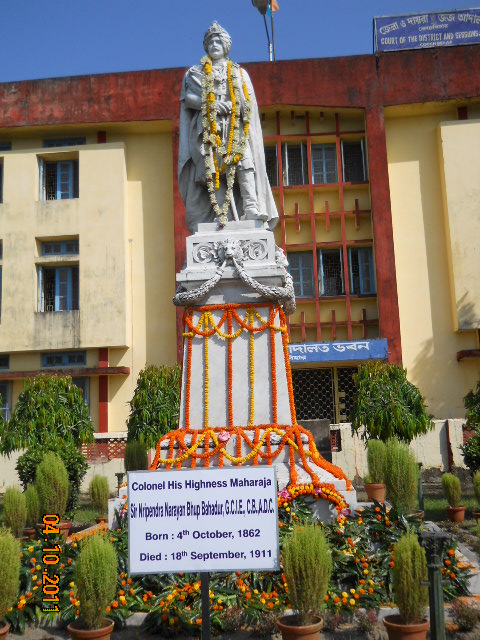
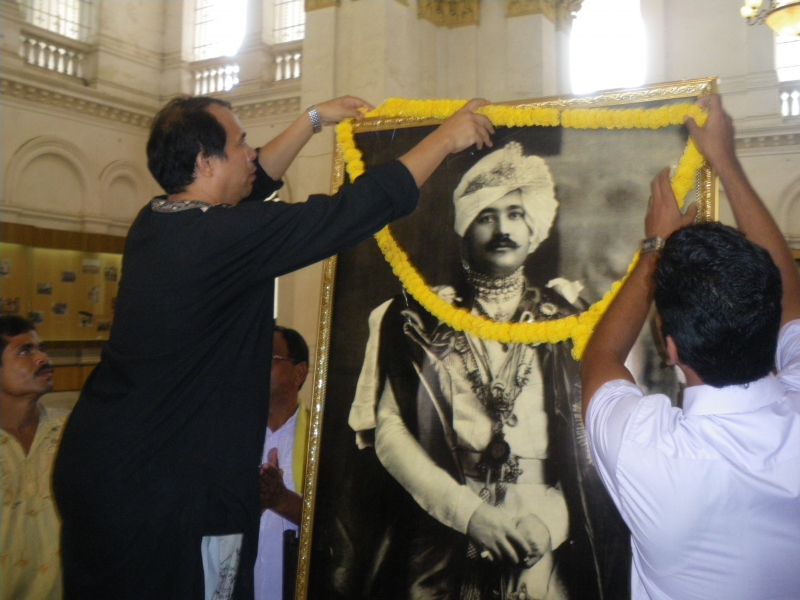
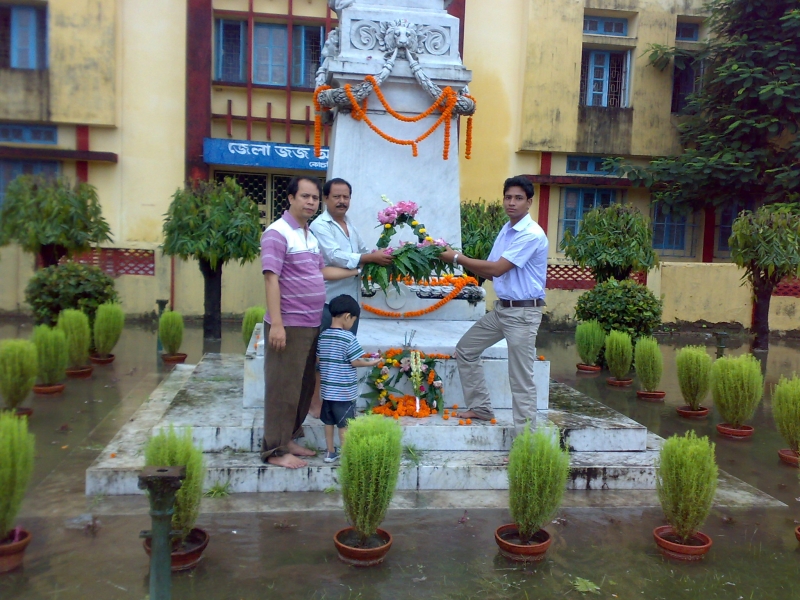
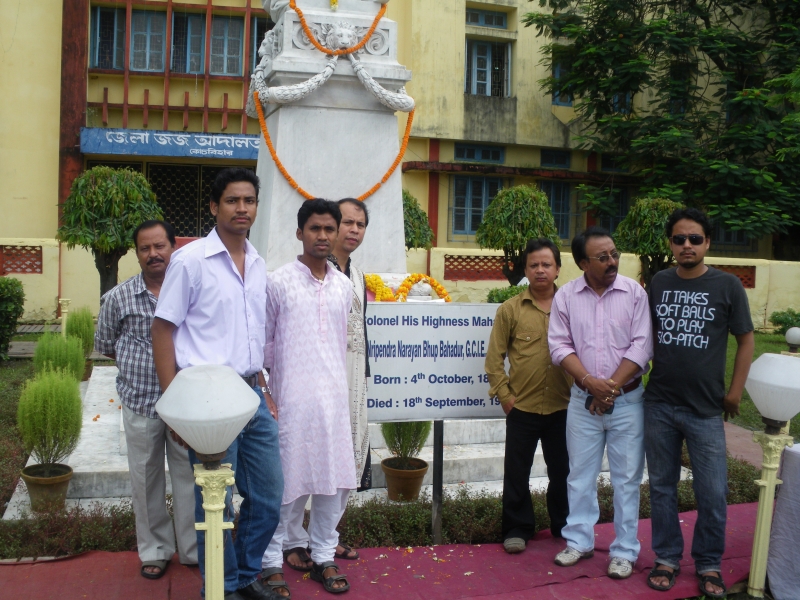
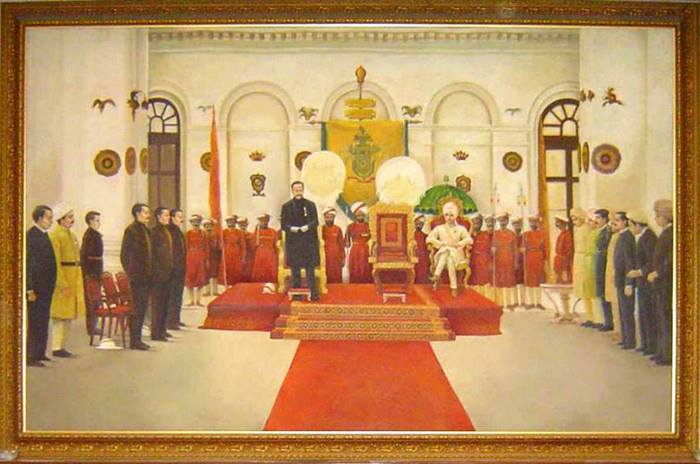
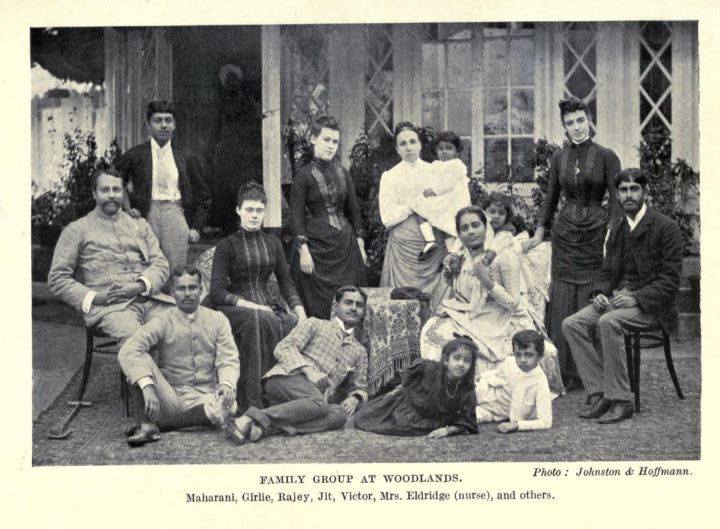
- Col. HH Maharaja Sir NRIPENDRA NARAYAN G.C.I.E., 19th Maharaja of Cooch Behar 1863/1911, born , he succeeded to the gadi on 6th August 1863, educated in the Wards Institute at Benares then under the guardianship of Mr. H. St. J. Kneller, in the Bankipur College, Patna, and next, he was admitted to Presidency College to study Law till 1881, he was presented with a medal and sword in 1877 at the Imperial Assemblage at Delhi, on the occasion of the Proclamation of Her Most Gracious Majesty as Empress of India; formally installed on the gadi on 8th November 1883, the titles of Maharaja Bhup Bahadur were recognised as hereditary by the Government of India in 1885; he was appointed Honorary Major in the British Army also in 1885; he was invested with the Insignia of Grand Commander of the Most Eminent Order of the Indian Empire by Her Most Gracious Majesty the Queen Empress herself in 1887; he was made Honorary Aide-de-camp to His Royal Highness the Prince of Wales, with the rank of Lieutenant-Colonelin the British Army; he established the India Club at Calcutta in 1882, founded Nripendra Narayan Hall at Jalpaiguri in 1883, and established the "Anandamayi Dharmasala" (almshouse) in 1889; married in March 1878, HH Maharani Suniti Devi, born , died , daughter of Maharishi Keshub Chandra Sen, invested with the Imperial Order of the Crown of India in 1887, and had issue, four sons and three daughters. He died .
- HH Maharaja Rajendra II Narayan Bhup Bahadur [Prince Rajey] (see below)
- HH Maharaja Jitendra Narayan Bhup Bahadur [Prince Jit] (see below)
- Lt.Col. Maharajkumar Shri Victor Nitendra Narayan, born , Godson of Queen Victoria; married Rani Nirupama Devi, a distant cousin, and had issue, two sons. He died .
- Rajkumar Gautam Narayan, married 1952, Patricia Joan Quinn, and had issue, two daughters. He died .
- Kumari Victoria Pia Narayan, born in Calcutta, married 15th March 1984, Michael John Anderson, born , and has issue, one son and one daughter. (Australia)
- Tana Victoria Narayan Anderson, born .
- Nicholas Peter Narayan Anderson, born .
- Kumari Deepa Elizabeth Narayan, born in Calcutta .
- Kumari Victoria Pia Narayan, born in Calcutta, married 15th March 1984, Michael John Anderson, born , and has issue, one son and one daughter. (Australia)
- Rajkumar Nidhendra Narayan, died young.
- Rajkumar Gautam Narayan, married 1952, Patricia Joan Quinn, and had issue, two daughters. He died .
- Lt.Col. Maharajkumar Shri Hitendra Narayan [Prince Hitty], born at Cooch Behar, played First-Class cricket for Somerset. He died at Darjeeling.
- Maharaj Kumari Sukriti Devi [Princess Girlie], born , married 28th November, 1899 (sep'd.), Jyotsanath Ghosal, C.I.E. [cr.1918], Zamindar of Belgaum, and had issue. She died .
- Archie Ghosal
- Romas Ghosal
- Maharaj Kumari Pratibha Devi [Princess Pretty], born in Calcutta, married 21st February 1912 in Calcutta, (div. 1921), Lionel Henry Mander, born , died , son of Samuel Theodore Mander, and his wife, Flora Paint. She died sp 23rd July 1923 in Calcutta.
- Maharaj Kumari Sudhira Devi [Princess Baby], born , married 25th February 1914 at Woodlands, Alan Jocelyn Mander, born , died , son of Samuel Theodore Mander, and his wife, Flora Paint, and had issue. She died .
- Pamela Geeta (Ghita) Mander, born in London, died .
- Derek Anjum Mander, born , married 1stly, Edwina, married 2ndly, and had issue.
- Monisha Vida Garbo Mander, born , married 1952, George Leslie John Garnham, and had issue.
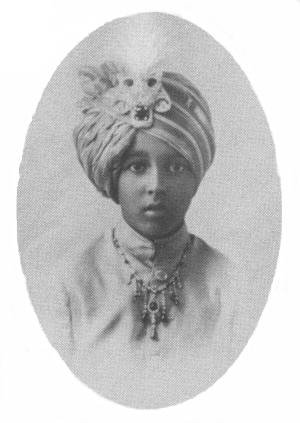
- HH Maharaja RAJENDRA II NARAYAN Bhup Bahadur, 20th Maharaja of Cooch Behar 1911/1913, born in Calcutta, educated at Mayo College in Ajmer in 1893, then sent to England in 1894 for further studies, gained entry to Oxford College in 1900, he died unmarried 1st September 1913 in London, and was buried in Cooch Behar.
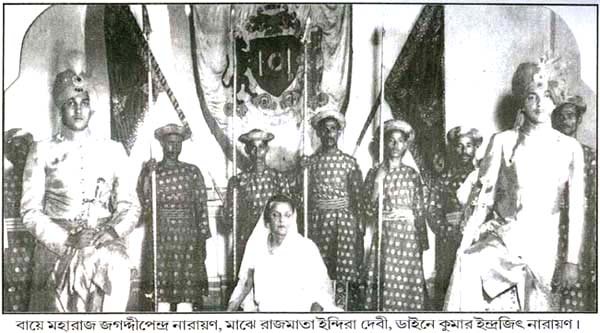
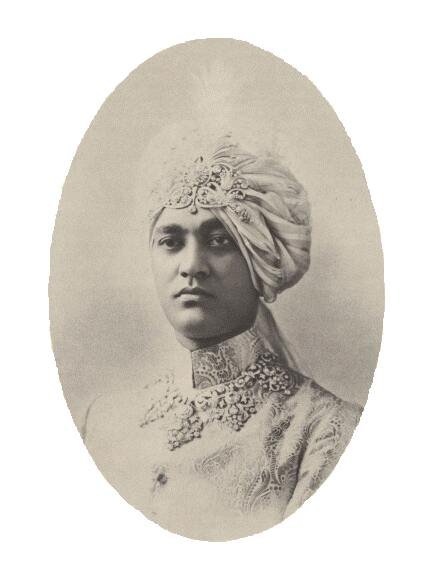
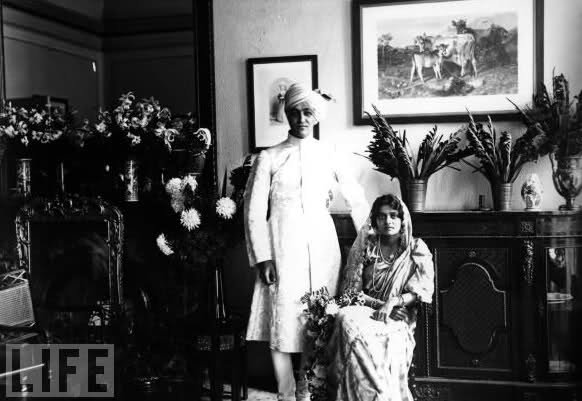
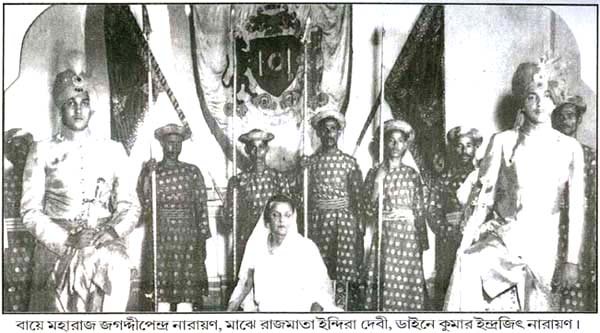
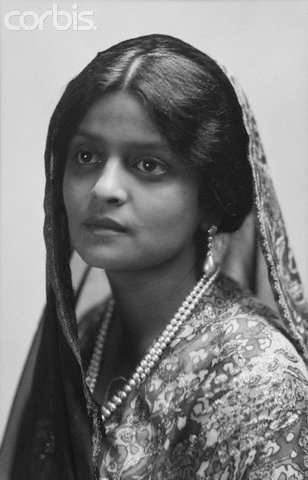
- HH Maharaja JITENDRA NARAYAN Bhup Bahadur, 21st Maharaja of Cooch Behar 1913/1922, born at Cooch Behar Palace, educated privately under a British home tutor, admitted to Itan School in 1900, then admitted to Edinburgh University, married 25th August 1913 in London, HH Maharani Indira Devi, born , died , daughter of HH Maharaja Gaekwad Sir Sayajirao III Khanderao Gaekwad Sena Khas Khel Shamsher Bahadur Farzand-i-Khas-i-Daulat-i-Inglishia of Baroda, and his second wife, HH Maharani Gajra Bai, and had issue. He died .
- Lt.Col. (Hon) HH Maharajah Sir Jaggadipendra Narayan Bhup Bahadur (see below)
- Maharaj Kumar Indrajitendra Narayan, born in Poona, educated at Mayo College, Ajmer, married Rani Kamala Devi, born , died 198x, daughter of Raja Saheb Meharban-I-Dostan Sri Raja Rao Venkata Kumara Mahipati Suryarao Bahadur Garu, Maharaja of Pithapuram, and his wife, Sri Rani Chinnamamba Devi, and had issue. He died 1951 in Darjeeling.
- HH Maharaja Virajendra Narayan Bhup Bahadur (adopted by HH Maharaja Sir JAGADDIPENDRA NARAYAN Bhup Bahadur, see below)
- Maharani Uttara Devi, born , married 1963, HH Maharao Brijraj Singhji of Kotah.
- Maharajkumari Ila Devi, born , married Maharajkumar Ramendra Kishore Dev Varma of Tripura, and had issue. She died .
- HH Maharani Gayatri Devi, born in London, educated at Shantiniketan, Laussane, Switzerland, London School of Secretaries, Brilliantmont and Monkey Club London; President of the All India Badminton Association, and Rajasthan State Swatantra Party, Vice-President of the All India Lawn Tennis Association and All India Swatantra Party, Director Rambagh Palace Hotel, Jaipur, and Gee Stud Farm Pvt Ltd., Chairman of the Governing Council of Maharani Gayatri Devi Girls Public School, Jaipur, Chairman of the Board of Trustee of Maharaja Sawai Jai Singh Benevolent Trust, Jaipur, the Maharani Gayatri Soldier's Welfare Fund, Jaipur; the Sawai Ram Singh Shilp Kala Mandir, Jaipur; M/s Jaipur Durries Pvt Ltd, Jalpur and Rajasthan State Tourist Development Corporation, Jaipur; Member of the 3rd, 4th and 5th Lok Sabha, author of: "A Princess Remembers" and "A Government's Gateway", interests include photography, Fine Arts and Museums, married (as his third wife), 9th May 1940, HH Saramad-i-Rajahai Hindustan Raj Rajendra Shri Maharajadhiraj Sir Sawai Man Singhji II Bahadur of Jaipur, and had issue. She died at the Satokben Durlabh Memorial Hospital in Jaipur and was cremated the following day in Jaipur.
- HH Maharani Menaka Devi, born , married 1942, HH Maharaja Sir Yeshwantrao Sadashivrao [Bhau Sahib] Puar of Dewas-Junior, and had issue. She died .
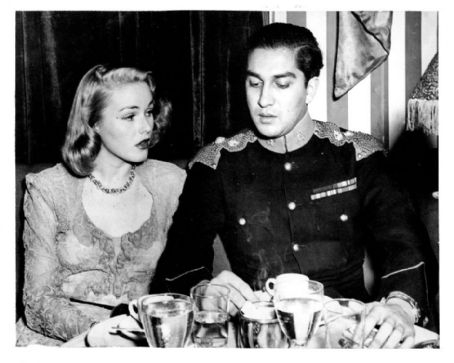
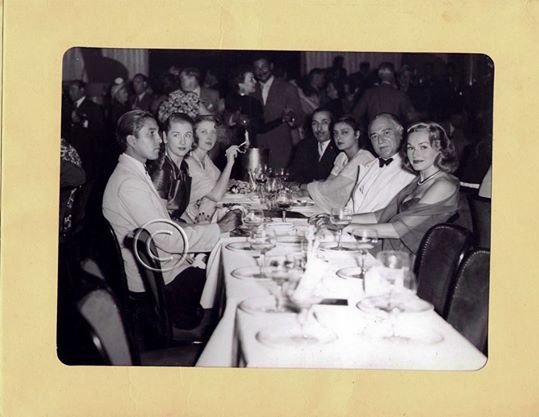
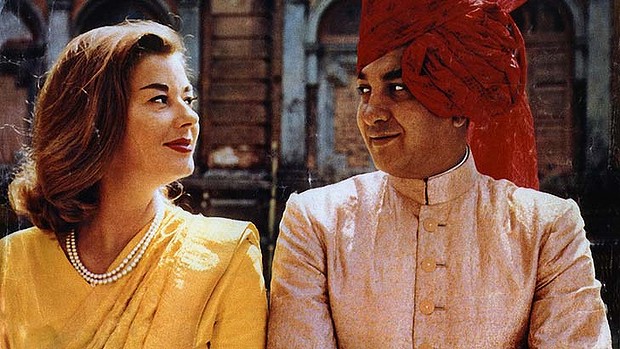
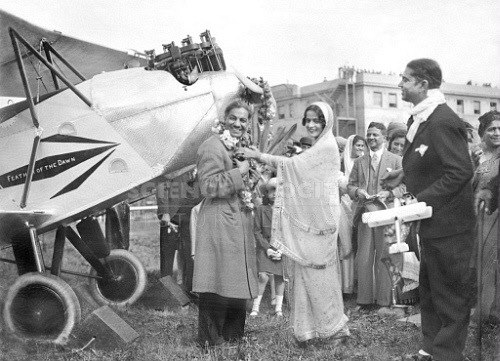
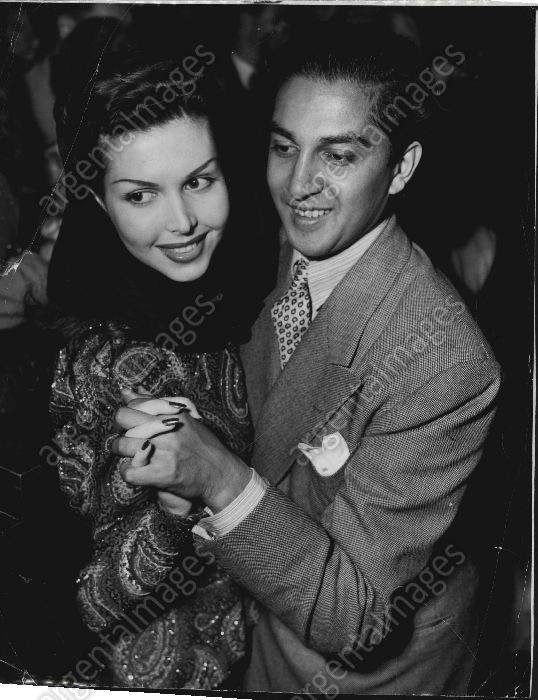
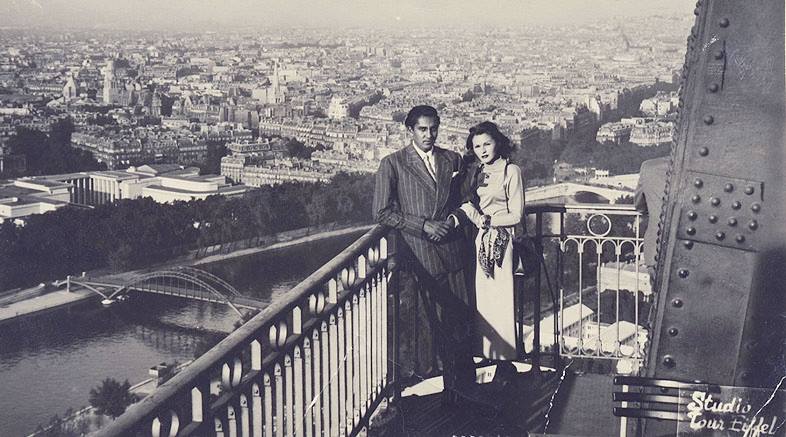
- Lt.-Col. Hon. HH Maharaja Sir JAGADDIPENDRA NARAYAN Bhup Bahadur, 22nd Maharaja of Cooch Behar 1922/1970, born at Cooch Behar Palace, educated at Harrow 1927/1929 and Trinity Hall, Cambridge 1929/1934, K.C.I.E. [cr.1945], 7th Light Cavalry Indian Army, served in World War II, granted full ruling powers on 6th April 1936, married 1stly, about 1950 (div.), Nancy Valentine, born St. Albans, Long Island, an Hollywood actress, married 2ndly, Maharani Gina (née Egan). He died spm 11th April 1970 in Calcutta. Maharani Gina Narayan passed away on 14th January 2013 at Peurto Banu, Marbella Spain. They adopted Virajendra Narayan, son of Maharaj Kumar Indrajitendra Narayan.
- HH Maharaja VIRAJENDRA NARAYAN Bhup Bahadur, 23rd Maharaja of Cooch Behar 1970/1992, born , married 1stly, Reena, married 2ndly, Anna, married 3rdly, Surekha Guring. He died sp in 1992.
Notable Figures
Viswa Singha (r. 1515–1540)
Viswa Singha was the founder of the Koch dynasty of the Cooch Behar state. He united the various Koch and Mech clans, defeated the regional Bhuyan chieftains, and established a consolidated sovereign kingdom in the region. He shifted his capital from Chikana to Hingulabas, paving the way for the rise of Cooch Behar as a significant regional power in Northeast India.
As a patron of Hinduism, Viswa Singha rebuilt the sacred Kamakhya Temple and invited learned Brahmins from Kanauj and Varanasi to settle in his territory. His reign marked the transition of the region from fragmented tribal chiefdoms to a structured monarchical state. More details about his life and reign can be found on Wikipedia's Viswa Singha page.
Nara Narayan (r. 1540–1587)
Maharaja Nara Narayan was the most celebrated and powerful ruler of the Koch dynasty, under whose reign the kingdom reached its zenith of geopolitical power and cultural prosperity. Along with his brilliant military commander and brother, Chila Roy, he launched successful campaigns that subjugated the Ahom kingdom, Jaintia, Manipur, and Tripura, bringing a vast territory under the hegemony of Cooch Behar.
Nara Narayan was also a legendary patron of art, literature, and religion. He welcomed and patronized the great Vaishnavite saint-reformer Srimanta Sankardev, facilitating a cultural and religious renaissance across the region. He reconstructed the Kamakhya Temple in its current form and supported the translation of Sanskrit epics into the local vernacular. For more information, visit Wikipedia's Nara Narayan page.
Chila Roy (Shukladhwaj) (1510–1571)
Bir Chila Roy, born Shukladhwaj, was the younger brother of Maharaja Nara Narayan and served as the commander-in-chief of the Koch army. He earned the moniker "Chila Roy" (meaning "Kite Prince") because of his lightning-fast military maneuvers and tactical genius. Under his military leadership, the Koch kingdom expanded its frontiers significantly, conquering several neighboring kingdoms in rapid succession.
His contributions to the cultural preservation of Assam and Cooch Behar, alongside his patronage of Srimanta Sankardev, made him a folk hero in Eastern India. His birth anniversary is officially celebrated as Bir Chila Roy Divas in Assam. Learn more about his military exploits on Wikipedia's Chila Roy page.
Pran Narayan (r. 1626–1665)
Maharaja Pran Narayan was an ambitious and dynamic ruler who took advantage of the Mughal war of succession to expand his kingdom's boundaries. He launched successful campaigns to capture Dhaka and Kamrup temporarily, challenging the mighty Mughal Empire. Although he eventually had to sign a peace treaty with the Mughals, his reign demonstrated the resilient military capability of the state.
Pran Narayan was also a great builder and patron of Sanskrit learning. He initiated the construction of the famous Jalpesh Temple dedicated to Lord Shiva and embellished his capital with magnificent gardens, temples, and palaces. Additional details can be read on Wikipedia's Pran Narayan page.
Harendra Narayan (r. 1783–1839)
Maharaja Harendra Narayan ascended the throne as an infant during a highly turbulent period marked by aggressive Bhutanese incursions into Cooch Behar. Following the Anglo-Cooch Behar Treaty of 1773, the British East India Company helped expel the Bhutanese forces, effectively reducing the state to a British tributary princely state. Harendra Narayan spent much of his adult reign resisting British administrative encroachment and asserting his sovereign rights.
He was a highly scholarly ruler who translated several Sanskrit epics into Bengali. He is also credited with permanently shifting the capital to its present location in Cooch Behar town. Further biographical information is available on Wikipedia's Harendra Narayan page.
Nripendra Narayan (r. 1863–1911)
Maharaja Nripendra Narayan is widely revered as the "Architect of Modern Cooch Behar." Educated in British institutions, he initiated extensive administrative, judicial, infrastructural, and educational reforms that modernized the state. He banned the practice of Sati, promoted women's education, and built the magnificent Cooch Behar Palace (Victor Jubilee Palace), which was modeled after Buckingham Palace.
He married Suniti Devi, the daughter of the famous Brahmo Samaj reformer Keshub Chandra Sen, which further cemented his standing as a progressive reformer. Under his rule, Cooch Behar became one of the most advanced and prosperous princely states in British India. Discover more on Wikipedia's Nripendra Narayan page.
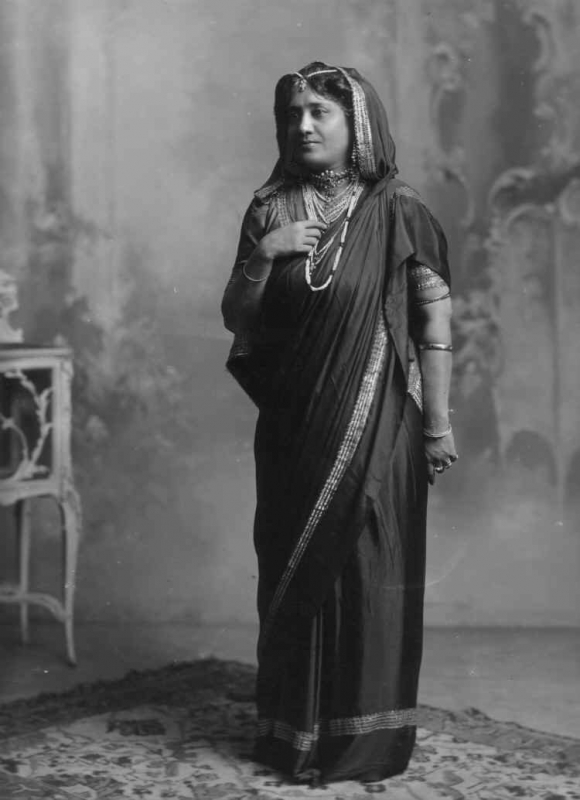
Suniti Devi (1864–1932)
Maharani Suniti Devi was the consort of Maharaja Nripendra Narayan and a highly prominent social reformer and educationist in her own right. Born to the legendary philosopher and Brahmo Samaj leader Keshub Chandra Sen, she brought progressive ideals to the royal court. She was a passionate advocate for women's development and founded the Suniti Academy to provide quality education to girls.
In 1887, she became the first Indian woman to be awarded the Companion of the Order of the Crown of India. She was widely respected in British royal circles and authored several books, including her famous memoir, The Autobiography of an Indian Princess. Learn more about her contributions on Wikipedia's Suniti Devi page.
Jitendra Narayan (r. 1913–1922)
Maharaja Jitendra Narayan succeeded his elder brother Rajendra Narayan II to the throne in 1913. He married Princess Indira Devi, the progressive daughter of Maharaja Sayajirao Gaekwad III of Baroda, creating a historic alliance between two of India's most reform-oriented royal families. Jitendra Narayan was a keen sportsman, an acclaimed cricketer, and a dedicated patron of public health and education during his short reign.
Though his reign was brief, his diplomatic engagements and elite standing consolidated Cooch Behar's position internationally. Read more about his life on Wikipedia's Jitendra Narayan page.
Indira Devi (1892–1968)
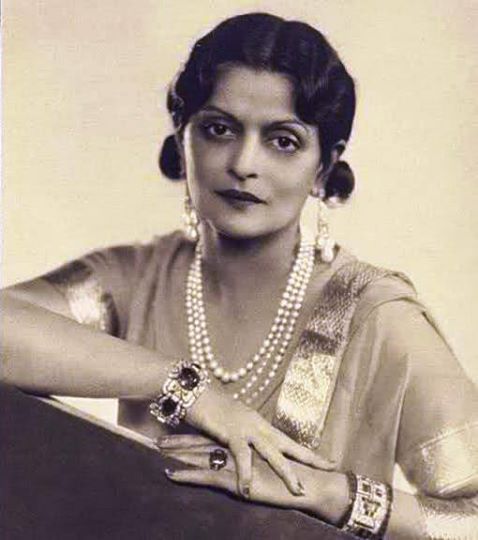
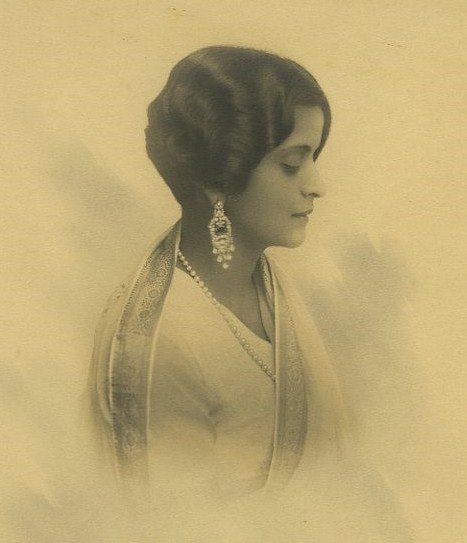
Maharani Indira Devi, born a princess of Baroda, was one of the most charismatic, modern, and high-profile Indian royal women of the 20th century. Following the untimely demise of her husband, Maharaja Jitendra Narayan, she served as the Regent of Cooch Behar during the minority of her son, Jagaddipendra Narayan. She maintained a powerful administrative presence and navigated the state through crucial modernizing phases.
Known for her fashion, intellect, and global social network, she was a patron of the arts and a key figure in high society both in India and Europe. She was also the mother of Maharani Gayatri Devi of Jaipur. Detailed biographical accounts are available on Wikipedia's Indira Devi page.
Jagaddipendra Narayan (r. 1922–1970)
Maharaja Jagaddipendra Narayan was the last ruling Maharaja of the princely state of Cooch Behar. Educated at Harrow and Cambridge, he was a distinguished military officer who served in the British Army during World War II. He signed the Instrument of Accession on August 20, 1949, which integrated Cooch Behar into the Dominion of India, subsequently becoming a district of West Bengal in 1950.
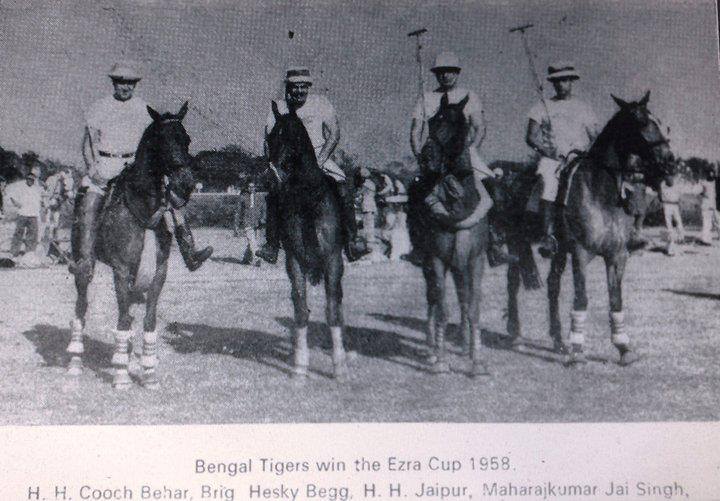
He was a highly accomplished first-class cricketer and a passionate polo player, remembered for his public service, humility, and dedication to his people during the transition into democratic India. Read more about his life and the accession of Cooch Behar on Wikipedia's Jagaddipendra Narayan page.
Gayatri Devi (1919–2009)
Born Princess Gayatri Devi of Cooch Behar, she was the daughter of Maharaja Jitendra Narayan and Maharani Indira Devi. She became the third Maharani consort of Jaipur through her marriage to Maharaja Sawai Man Singh II. Celebrated globally for her classical beauty and style, she was once named by Vogue magazine as one of the ten most beautiful women in the world.
Following India's independence, she entered politics and won a seat in the Lok Sabha with a record-breaking landslide victory under the Swatantra Party banner. She remained a lifelong advocate for women's education, healthcare, and heritage preservation in India. Learn more about her extraordinary journey on Wikipedia's Gayatri Devi page.