Present Head
- Rajkumari Adrija Kumari, born on .
- Rajkumari Bhanushri Kumari, born on .
History
Origin and Foundation of Baghal State
The history of the princely state of Baghal is deeply intertwined with the royal Parmar (Panwar) Rajput clan of Malwa. The royal lineage traces its ancestry back to Raja Aditya Panwar, who ruled the region surrounding the sacred Mount Abu in Rajasthan during the 5th century. Centuries later, the celebrated polymath and patron of arts, Raja Bhoj Dev (who ruled Malwa from 1010 to 1053 CE), consolidated the clan's power from his capital at Dhar (Dhara).
The immediate predecessor state of Baghal was founded in the 13th century (circa 1260 CE) by Rana Ajai Dev, the eldest son of Raja Amar Dev of Dhar. Ajai Dev served as the Prime Minister to his kinsman, Maharaja Jaitugideva (1239–1256) of Malwa, and subsequently to Maharaja Jayavarman II (1256–1269). During his tenure, the Malwa kingdom faced severe geopolitical pressure from neighboring Delhi Sultanate forces and Yadava rulers. In 1260 CE, Rana Ajai Dev embarked on a pilgrimage to the revered Badrinath Shrine in the Garhwal Himalayas. Seizing the opportunity to establish an independent sovereign domain free from the turbulent politics of Central India, he entered the Sairi Valley in the Punjab hill region. Through military alliances and strategic conquests of local chieftains, he founded the principality of Baghal.
Rana Ajai Dev's brothers also carved out their own paths: Rana Vijai Dev founded the neighboring princely state of Bhajji, while Madhan Dev embraced an ascetic life as a hermit. Today, Madhan Dev is deified and worshipped across Arki and Paonta Sahib as 'Dhar-ka-Dev' (the deity from Dhar).
The Medieval Period and Capital Shifts
During its initial centuries, the state's administration was highly decentralized, and the capital was frequently relocated to ensure strategic defense against rival hill states. The seat of government shifted between Shai, Dhundan, Darla, and Damras. This nomadic administrative phase ended when Rana Kasas Chand permanently established the capital at Dhundan.
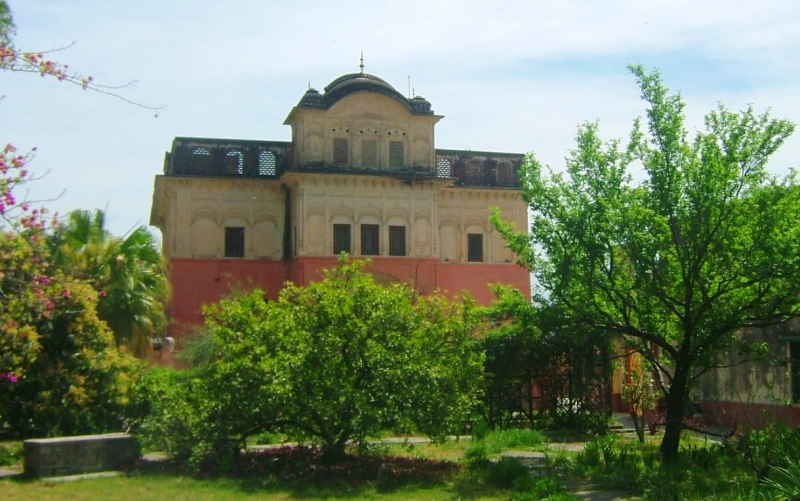
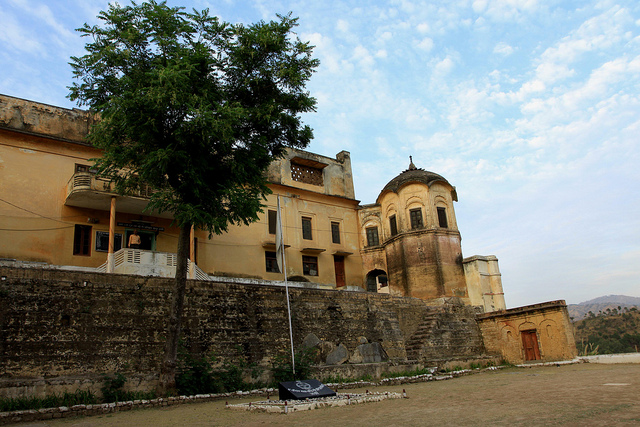
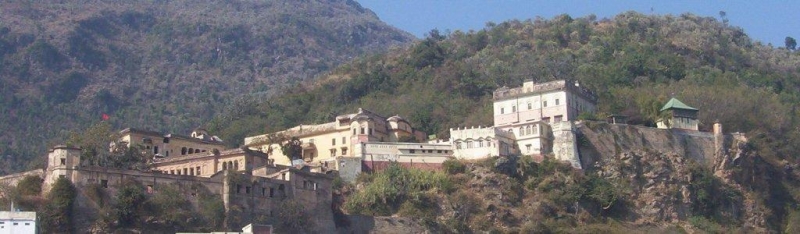
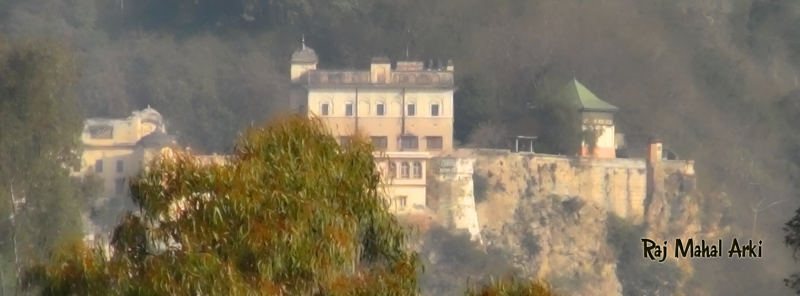
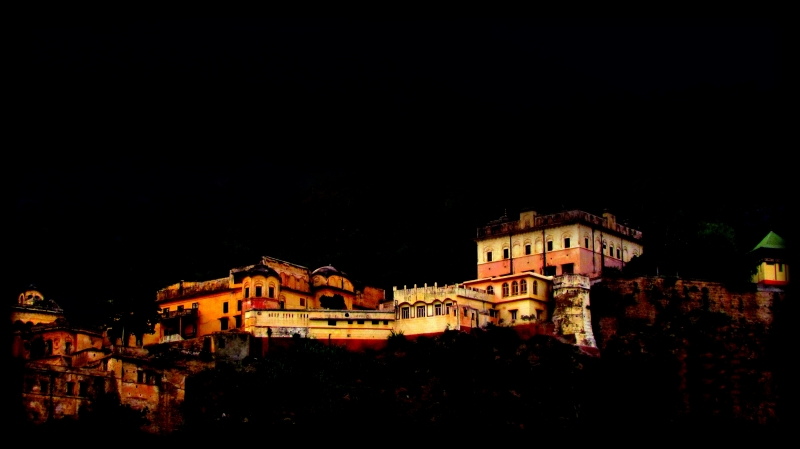
In 1643 CE, Rana Sabha Chand made a decisive strategic move by transferring the capital of Baghal to Arki. Sabha Chand constructed a grand palace and fort complex at Arki, taking advantage of its defensive mountainous terrain and its commanding position over trade routes connecting the plains of Punjab to the inner Himalayan valleys. Arki remained the permanent capital and cultural heart of the Baghal state until its accession to independent India.
The Gurkha Invasion and the British Era
At the turn of the 19th century, the expansionist Gurkha Empire of Nepal overran the western Himalayan hill states. Between 1803 and 1815, Baghal fell under heavy Gurkha occupation. The ruling chief, Rana Jagat Singh, was forced into a bitter seven-year exile in the neighboring state of Nalagarh. The oppression ended with the outbreak of the Anglo-Nepalese War (1814–1816). An alliance of local hill chiefs, including the exiled Rana of Baghal, cooperated with the British East Indian Company forces under General David Ochterlony to expel the Gurkhas.
Following the defeat of the Gurkhas, Rana Jagat Singh was restored to his ancestral throne. The British administration confirmed his sovereignty through a Sanad dated 3 September 1815. Under the British paramountcy, Baghal was ranked 8th in order of precedence among the Punjab Hill States (specifically the Simla Hill States Group), as detailed in the Gazetteer of the Simla Hill States, 1910.
The Golden Age of Arki: Art, Reform, and Modernization
The late 19th century ushered in a period of unprecedented administrative, agricultural, and cultural renaissance, primarily during the long and prosperous reign of Raja Kishen Chand (ruled 1840–1877). During the Indian Rebellion of 1857, Rana Kishen Chand rendered valuable military and logistical assistance to the British forces, helping secure the strategic Shimla hill tracts and deploying troops to Jalandhar. In recognition of his loyalty and exemplary administration, the British Crown officially conferred the hereditary title of Raja upon him in 1875.
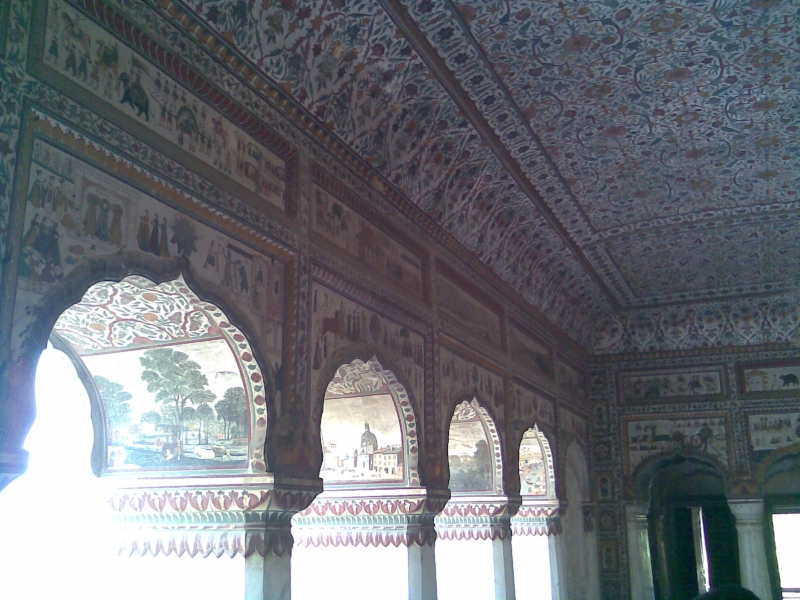
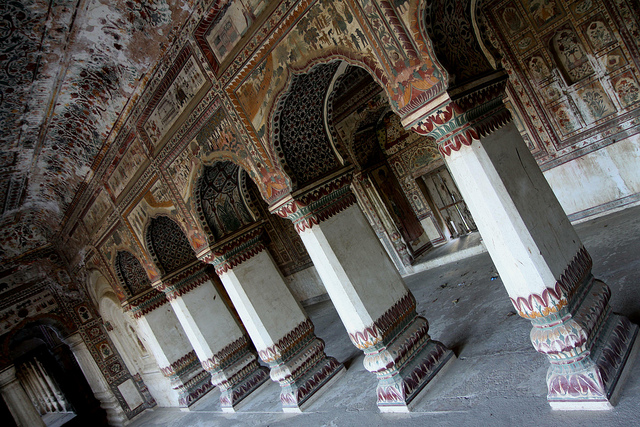
Raja Kishen Chand was an enlightened ruler and a profound patron of Pahari art. He rebuilt the historic bazaar of Arki, which had been devastated during the Gurkha wars, and transformed the Diwankhana (Hall of Public Audience) in Arki Castle. He commissioned legendary local artists to cover the interior walls of the palace with exquisite frescos and murals, blending the Kangra school of painting with distinct local folk styles, creating what art historians now classify as the "Arki School of Wall Paintings." His administration also introduced massive afforestation programs, established dairy cooperatives, and planted extensive mango orchards, turning Baghal into a model hill state.
Subsequent rulers continued this legacy of modernization:
- Raja Bikram Singh: Laid the foundations of modern public services by building the state's first western-style Middle School and establishing a public hospital in Arki.
- Raja Surendra Singh: Thoroughly reorganized the state treasury, digitized land records, and streamlined the financial administration.
- Raja Rajendra Singh: Introduced pioneering social and constitutional reforms. He established 16 democratic village panchayats, paired each with a primary school, upgraded the Arki Middle School to a high school, and converted the ancient Arki-to-Jutogh mule track into a motorable road, connecting the state directly to the imperial railway network at Shimla.
State Heraldry and Flag
The state of Baghal maintained a distinct heraldic identity reflecting its ancient solar Parmar ancestry and military history:
- The Flag: The state flag was a rectangular field of deep saffron (or yellow-ochre), a color traditionally associated with the Rajput clans of Mount Abu and Dhar, symbolizing sacrifice, purity, and courage.
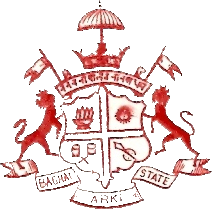
- The Coat of Arms: The state emblem featured a shield supported by two tigers, symbolizing courage and power. The shield itself depicted a representation of Mount Abu (the cradle of the Parmar clan) and a sword, representing the conquest of the Sairi valley. The crest above the shield featured a sacred flame, a direct reference to the legendary Agnikula (fire-born ) origin of the Parmar dynasty.
Post-Independence and Modern Era
Following India's independence from British rule in August 1947, the last ruling chief of Baghal, Raja Rajendra Singh, signed the Instrument of Accession, merging his state into the Dominion of India on 15 April 1948. Baghal was initially integrated as a key administrative unit of the Mahasu District of the newly formed Chief Commissioner's Province of Himachal Pradesh.
Today, the territory of the former princely state constitutes the Arki subdivision within the Solan District of Himachal Pradesh. Arki remains a popular cultural and heritage tourism destination, celebrated for its majestic Arki Castle, its unique murals, and its historical legacy. The descendants of the royal family continue to maintain the historic palace, preserving its heritage for future generations.
References and Historical Citations
- Hutchison, J., & Vogel, J. Ph. (1933). History of the Panjab Hill States. Lahore: Government Printing, Punjab. Available on Internet Archive.
- Punjab Government. (1911). Gazetteer of the Simla Hill States 1910: Baghal State. Lahore: Punjab Government Press. Available on Internet Archive.
- Aryan, Subhashini. (1994). Pahari Wall Paintings: The Arki School. New Delhi: Rekha Prakashan.
Genealogy
- Rana SABHA CHAND, 1st Rana of Baghal 1643/1670, made Arki the capital of Baghal in about 1650, married and had issue.
- Rana Prithvi Chand (qv)
- Rana PRITHVI CHAND, Rana of Baghal 1670/1727, married and had issue. He died .
- Rana Mehar Chand (qv)
- Rana MEHAR CHAND, Rana of Baghal 1727/1743, married and had issue. He died .
- Rana Bhoop Singh (qv)
- Kumari (name unknown), married Raja Devi Chand of Bilaspur.
- Rana BHOOP SINGH, Rana of Baghal 1743/1778, married and had issue. He died .
- Rana Jagat Singh (qv)
- Kumari (name unknown), married Raja Bhup Singh, Raja of Guler.
- Rana JAGAT SINGH, Rana of Baghal 1778/1828, in exile at Nalagarh for 7 years, during the occupation by the Gurkhas, attacked Arki with the help of the British General Ochterlony and Rana of Nalagarh and recaptured Arki in 1814, confirmed in his state by a sanad of 3rd September 1815, he married and had issue. He died .
- Rana Shiv Saran Singh (qv)
- Mian Raghunath Singh, married and had issue.
- Mian Kirpal Singh
- Mian Devi Singh
- Mina Bir Singh
- Mian Puran Singh
GURKHA OCCUPATION 1803/1815
- Rana SHIV SARAN SINGH, Rana of Baghal 1828/1840, born , married and had issue, three sons. He died .
- Raja Kishan Singh (qv)
- Mian Jai Singh, he was granted a valuable khillat for his services during the Indian Mutiny, married 1stly, a Kumari from Dhami, married 2ndly, a Kumari from Kangra, and had issue, six sons. He died .
- Raja Dhian Singh (qv)
- Mian Kapur Singh, died .
- Mian Man Singh, born , Wazir of Baghal 1897/1904, Regent of Baghal 1904/1908, married and had issue.
- Mian Durga Singh, born .
- Mian Hira Singh, born .
- Mian Narendra Singh, born .
- Mian Udham Singh, born , married and had issue.
- Raja Basant Singh, Raja of Basantpur, born , married and had issue
- Raja Chattar Singh, Raja of Basantpur, born , married and had issue
- Raja Mohinder Singh, Raja of Basantpur, born , married Rani Lalit Kumari, daughter of Kanwar Inder Vikram Singh of Keonthal, and his wife, Kanwarani Indumati Kumari, and has issue.
- Rajkumar Ajay Singh, married Kanwarani Seema Kumari, daughter of Lt.-Gen. Thakur Mahendra Singh of Reh (see Nurpur), and his wife, Thakurani Usha Kumari, and has issue.
- Kanwar Anirudh Singh, born .
- Rajkumar Sanjay Singh
- Rajkumar Sandeep Singh
- Rajkumar Rajiv Singh
- Rajkumar Ajay Singh, married Kanwarani Seema Kumari, daughter of Lt.-Gen. Thakur Mahendra Singh of Reh (see Nurpur), and his wife, Thakurani Usha Kumari, and has issue.
- Rajkumari (name unknown), married Thakur Dr. Jagdev Singh of Ambotah in Una, H.P., and has issue.
- Rani Asha Kumari, married Raja Digvijay Singh, Raja of Raghogarh, and has issue.
- Rajkumar Upender Singh, born , married and has issue, one and two daughters.
- Kuwarani Rachna Kumari, married Kuwar Harinarayan Singh of Bakhatgarh, born , and has issue, one son.
- Raja Mohinder Singh, Raja of Basantpur, born , married Rani Lalit Kumari, daughter of Kanwar Inder Vikram Singh of Keonthal, and his wife, Kanwarani Indumati Kumari, and has issue.
- Rajkumari Kamla Kumari, married Major Rajkumar Jai Chand of Chenani, and had issue, one son and one daughter.
- Raja Chattar Singh, Raja of Basantpur, born , married and had issue
- Mian Partab Singh, born , married and had issue. He died .
- Kumari (name unknown), married (as his third wife), 1929, Rana Vidyadhar Singh of Kumharsain. She died sp in 1936.
- Kanwar Ratan Singh, born , married and had issue, three daughters.
- Raja Basant Singh, Raja of Basantpur, born , married and had issue
- Rajkumari (name unknown), married Raja Rudra Sen of Suket.
- Rajkumari Subhadra Devi, married Kanwar Surjan Singh of Sirmur.
- Rajkumari (name unknown), married HH Raja Amar Chand Sahib Bahadur of Bilaspur.
- Rajkumari (name unknown), married HH Raja Amar Chand Sahib Bahadur of Bilaspur.
- Rajkumari (name unknown), married into Jaswan [?Raja Ran Singh, Raja of Jaswan]
- Rajkumari (name unknown), married 1881, Raja Dasht Nikandan Sen of Suket.
- Mian Bijai Singh, married and had issue, two sons. He died .
- Mian Ram Singh, married and had issue, two sons. He died .
- Mian Sher Singh, born .
- Mian Ranjor Singh, born .
- Mian Pardhan Singh
- Mian Ram Singh, married and had issue, two sons. He died .
- Rajkumari (name unknown), married Raja Kharak Chand of Bilaspur.
- Rajkumari (name unknown), married Raja Ranbir Chand of Lambagraon.
- Rajkumari (name unknown), married Raja Rudra Sen of Suket.
- Raja KISHAN SINGH, Raja of Baghal 1840/1877, born , he was granted the title of Raja and a valuable khillat for his services during the Indian Mutiny, Raja (personal)[cr.1860], (hereditary)[cr.1875], married Ranis from Jaswan, Guler, Kangra and Suket, and had issue. He died .
- Raja Moti Singh (qv)
- Rajkumari (name unknown), married Raja Raghunath Singh of Jaswan.
- Rajkumari (name unknown), married into Chamba.
- Raja MOTI SINGH, Raja of Baghal [23.7.1877] - [12.10.1877], he died sp on 12th October 1877.
- Raja DHIAN SINGH, Raja of Baghal 1877/1904; born ; was an enlightened ruler, popular with his people; installed on the gadi on 26th July 1878; married Ranis from Jammu and Kashmir, Suket, Madhan and Keonthal, and had issue, four sons. He died .
- Raja Bikram Singh (qv)
- Kanwar Bachitar Singh, born .
- Kanwar Mohan Singh, born .
- Kumari Pratibha Devi, married 1st February 1918 (as his second wife), Rana Vidyadhar Singh of Kumharsain.
- Kanwar Surat Singh, born in Arki, educated in Lahore; married twice and had issue, three daughters.
- Kumari Susheela Devi, born in Arki, married Thakur Rohan Singh Chandel of Faroukhabad, U.P., died , and has issue.
- Kumari Nalini Chandel, married Pradeep Singh Kanwar, and has issue, two sons.
- Amit Kanwar
- Tarun Kanwar
- Kumari Manju Chandel, unmarried.
- Kanwar Anil Chandel, married Kanwarani Sadhana Chandel, died , and has issue, one daughter.
- Ginny Chandel
- Kumari Nalini Chandel, married Pradeep Singh Kanwar, and has issue, two sons.
- Kumari Hem Lata Devi, married Shri B. K. Singh Chandel. She died sp in 2004
- Kumari Nirmal Devi, educated at Chandigarh University (B.Ed.), born , married 1967 in Shimla, Thakur Shri Manohar Singh, and has issue. She died .
- Kanwar Anup Singh, married Kanwarani Sarita Kanwar, and has issue, one daughter.
- Kumari Mini Kanwar
- Kumari Meena Kanwar, married Nitin Bhagat, and has issue, one son.
- Anubhav Bhagat
- Kumari Rachna Kanwar, married Tarun Khanna, and has issue, one son.
- Kabir Khanna
- Kumari Susheela Devi, born in Arki, married Thakur Rohan Singh Chandel of Faroukhabad, U.P., died , and has issue.
- Kumari (name unknown), married the Raja of Salangri (Mankot?).
- Raja BIKRAM SINGH, Raja of Baghal 1904/1922, born , succeeded to the gaddi on 23rd April 1904, granted ruling powers on 23rd April 1908, educated at Aitchison College, Lahore; married 1stly, a Princess of Manswal, married 2ndly, a Princess of Manswal, married 3rdly, the fourth daughter of HH Rana Padam Chand of Jubbal, married 4thly, Rajkumari Shyama Devi, fifth daughter of HH Rana Padam Chand of Jubbal. He died .
- Rajkumari (name unknown) (by 1st wife), died young of tuberculosis in Jubbal.
- Raja Surinder Singh (by a Jubbal Princess) (qv)
- Rajkumari (name unknown) (by 2nd wife), died young in Jubbal.
- Raja SURINDER SINGH, Raja of Baghal 1922/1945, born in Arki, succeeded to the gadi at the age of 13 on 3rd October 1922, invested with full rulling powers on 14th January 1932, married Rajkumari Laxmi Devi [Rani Laxmi Devi of Baghal], daughter of Rai Hira Singh of Sangri, and had issues, six children. He died at Haridwar, Uttaranchal.
- Raja Rajendra Singh (qv)
- Rajkumar Devendra Singh, born , unmarried.
- Rajkumar Mahendra Singh, born , unmarried.
- Rajkumari Lalita Devi [Rani Lalita Devi of Kutlehar], born , married (as his 1st wife), 13th April 1955, Raja Saheb Shri Mahendra Palji Bahadur of Kutlehar, and has issue, two sons and two daughters.
- Rajkumar Virendra Singh, born , married 31st October 1962, Kumari Vijaya Devi, daughter of Kanwar Karan Singh Mankotia from District Una, H.P. (see Mankot), and has issue, five children.
- Kanwar Ravi Singh, born .
- Kanwar Rakesh Singh, born .
- Kanwar Rajesh Singh, born .
- Kumari Anupama Devi, born .
- Kumari Archana Devi, born .
- Rajkumari (name unknown), died as an infant.
- Raja RAJENDRA SINGH, Raja of Baghal 1945/2010, born , educated at Col. Brown's School in Dehra Dun and Government College, Lahore; he overhauled the administration and introduced radical constitutional reforms, M.L.A., Commandant General of Home Guards, Director of Civil Defence, Himachal Pradesh, married 2nd November 1948, Rani Tara Devi, born on , died at the Indira Gandhi Hospital in Simla, daughter of Raja Hemendra Sen of Keonthal, and had issue, three children. He died of a heart attack.
- Tikka Pramod Singh, born , educated at St. Edward's High School, Simla and later at the Government College, Simla, married 28th April 1979, Rajkumari Poornima Devi [Tikka Rani Poornima Devi of Baghal], daughter of Raja Shiv Mohan Bux Singh of Khajurgaon in U.P., and his wife, Rani Ravija Devi, and had issue. He died at Simla in an automobile accident.
- Kanwar Harvashvardhan Singh, he succeeded as Raja Harvashvardhan Singh (qv)
- Tikka Ajay Dev Singh, born .
- Rajkumar Nagendra Singh, born , married 21st October 1986 in Simla, Kumari Vijaya Kumari, daughter of Kanwar Purshottam Singh of Amet in Udaipur (Rajasthan), and his wife, Kanwarani Lakshmi Kumari of Pisangan, and has issue, one son.
- Kanwar Rahul Dev Singh, born .
- Kumari Sunita Devi [Rani Sunita Kumari of Sirmathura], born , educated at Simla, married 30th October 1979, Kumar Narendra Singh [later Rao Narendra Singh] of Sirmathura, Dholpur Dist. in Rajasthan, born , son of Rao Raghubir Singh of Sirmathura, and his wife, Rani Rattan Kumari, daughter of Thakur Gopal Singh of Badnore, and has issue, two children.
- Rajkumari Radhika Kumari, born .
- Rajkumar Jai Singh, born .
- Tikka Pramod Singh, born , educated at St. Edward's High School, Simla and later at the Government College, Simla, married 28th April 1979, Rajkumari Poornima Devi [Tikka Rani Poornima Devi of Baghal], daughter of Raja Shiv Mohan Bux Singh of Khajurgaon in U.P., and his wife, Rani Ravija Devi, and had issue. He died at Simla in an automobile accident.
- Raja HARSHVARDHAN SINGH, Raja of Baghal (see above)