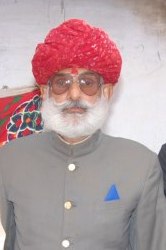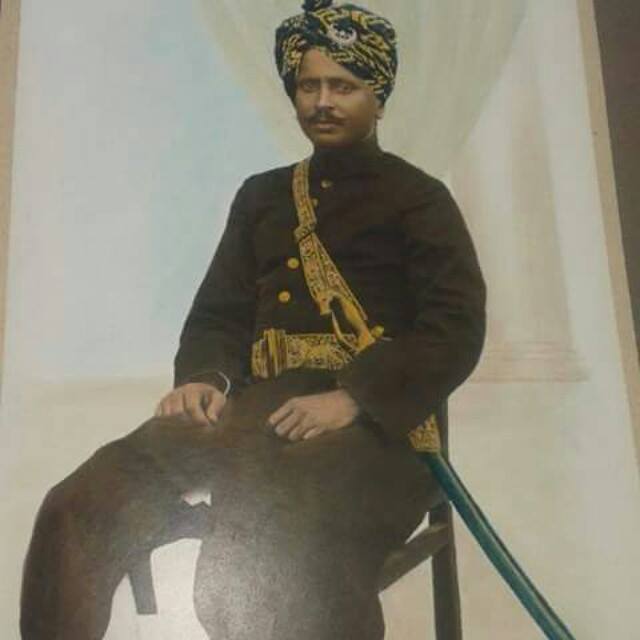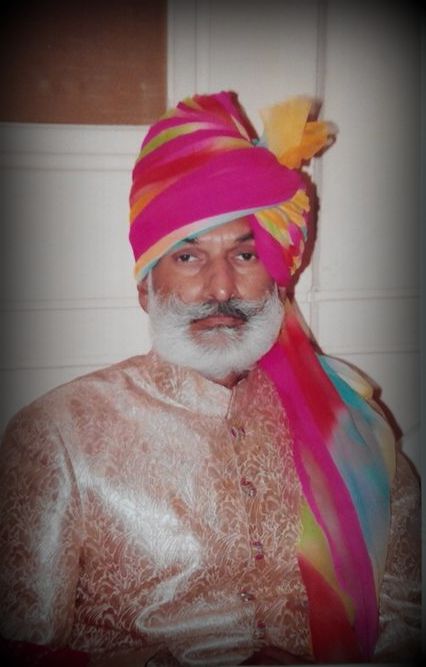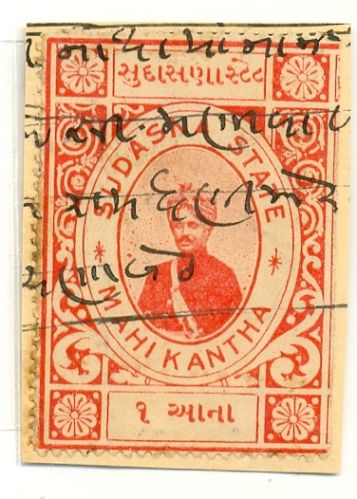
Present Head
History
Origin and Foundation of Sudasna State
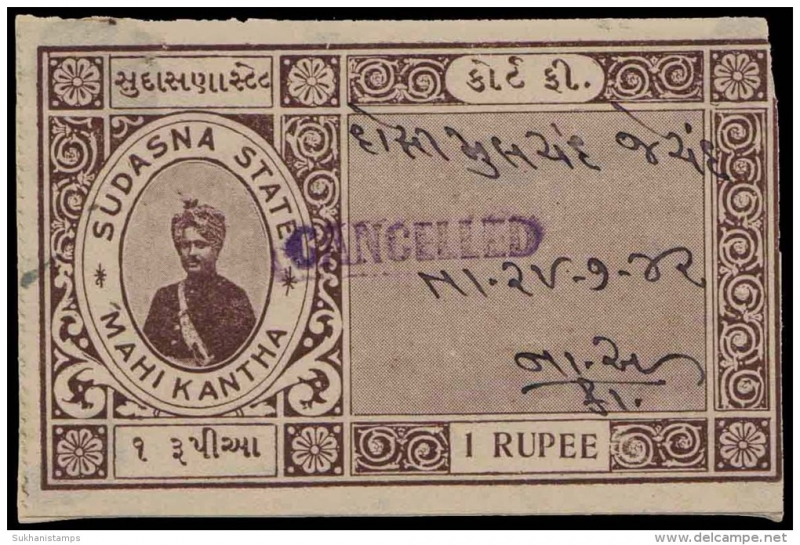
The state of Sudasna, situated in the historic Mahi Kantha region of Gujarat, was ruled by the Parmar (Puar) dynasty of Rajputs. The ruling clan of Sudasna claims a prestigious lineage, tracing their ancestry back to the legendary Emperor Vikramaditya of Ujjain and the medieval Parmar rulers of Chandravati. The family is an offshoot of the princely state of Danta State. During the late 16th and early 17th centuries, internal successions and territorial divisions within the Danta ruling family led to the establishment of separate estates, one of which consolidated into the principality of Sudasna.
The foundation of Sudasna as an independent estate is historically linked to the descendants of Rana Jagatpal of Danta. Over generations, these Parmar Rajputs established local dominance over the indigenous tribes of the region, transforming their fiefdom into a recognized state. The capital, Sudasna, was fortified to protect the clan from neighboring rivals and external invaders, establishing a localized seat of authority in the rugged terrain of northern Gujarat.
The Mughal and Maratha Epochs
During the height of the Mughal Empire, Sudasna maintained a semi-autonomous status, paying nominal allegiance to the Mughal Subahdars of Gujarat stationed at Ahmedabad. The rough geography of the Mahi Kantha hills provided a natural defense, allowing the rulers of Sudasna to preserve their internal sovereignty and traditional Rajput administrative systems.
With the decline of Mughal authority in the 18th century, the Maratha Empire, led by the Peshwas and subsequently the Gaekwads of Baroda, swept through Gujarat. The Gaekwads established a system of heavy tribute extraction known as Mulkgiri. Sudasna, along with other small principalities in the Mahi Kantha region, was subjected to annual military expeditions by Maratha forces collecting revenues. To secure peace and retain administrative control, the Thakors (rulers) of Sudasna agreed to pay a fixed tribute (ghasdana) to the Gaekwad of Baroda, a political arrangement that continued until the arrival of the British East India Company.
The British Raj and the Mahi Kantha Agency
In the early 19th century, the British East India Company sought to pacify the volatile Mahi Kantha region. Under the leadership of Major Ballantyne, the British negotiated settlements between the local chiefs and the Gaekwad state in 1812. This led to the establishment of the Mahi Kantha Agency, bringing Sudasna under British suzerainty.
Under the British administrative classification, Sudasna was categorized as a Fourth Class state. The Thakors of Sudasna wielded limited civil and criminal judicial powers within their territory. The state paid a regular tribute to the Gaekwad of Baroda, which was collected through the British Political Agent. Despite these limitations, the British respected the internal autonomy of the Thakor, and the state enjoyed a long period of peace, free from the external raids that had characterized the 18th century.
Key Reformers and Rulers
The rulers of Sudasna, styled as "Thakor", focused on local administration, agricultural development, and infrastructural improvements. Notable among them was Thakor Pratapsinhji and his predecessors, who worked closely with British Political Agents to introduce modern education and healthcare facilities to their subjects. Despite having a modest state treasury, the rulers funded the construction of primary schools, public wells, and basic road networks connecting Sudasna to neighboring trade hubs like Mehsana and Idar.
The administration of Sudasna was praised for maintaining communal harmony and protecting the rights of local agricultural communities, including the Bhils and Kolis, who inhabited the surrounding forest tracts. The rulers also patronized local temples and cultural traditions, preserving the rich folklore of the Parmar Rajputs.
Post-Independence and the Modern Era
Following the departure of the British and the partition of India in 1947, the last ruling Thakor of Sudasna signed the Instrument of Accession, integrating his state into the Dominion of India on June 10, 1948. Initially, Sudasna was merged into the Bombay State under the integration scheme of Sardar Vallabhbhai Patel.
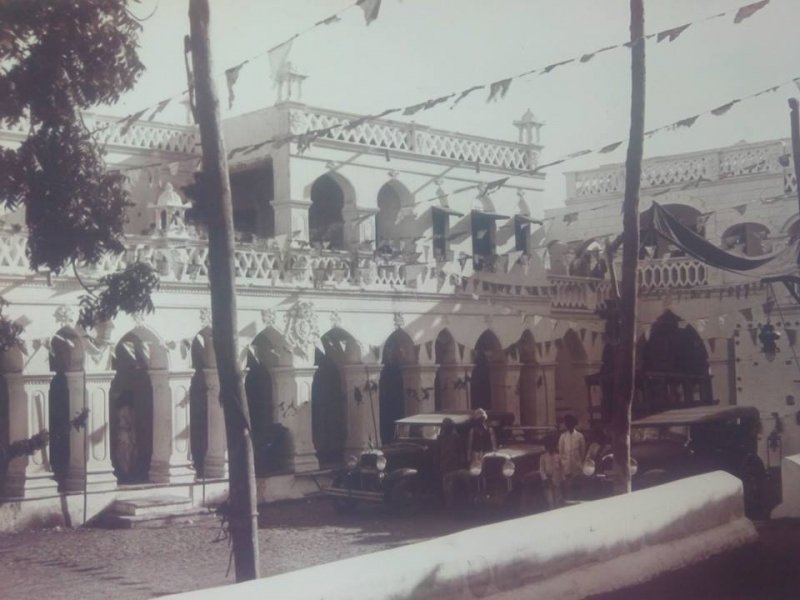
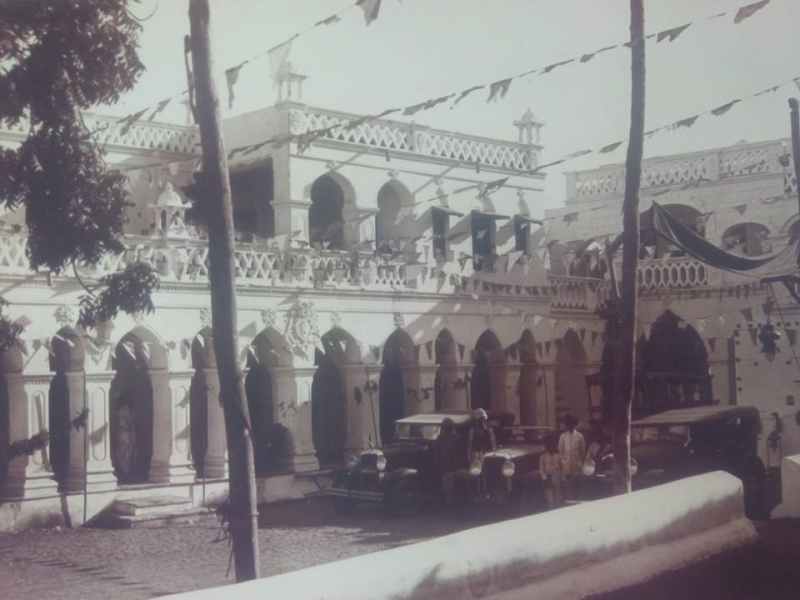
Following the linguistic reorganization of states in 1960, the territory of Sudasna became a part of the newly formed state of Gujarat. Today, Sudasna is situated within the Satlasana taluka of the Mehsana district. The descendants of the royal family continue to reside in the region, preserving their ancestral heritage, while the historical fortifications and palaces of Sudasna stand as enduring monuments to its rich princely past.
Genealogy
- Thakore Shri AMARSINHJI PUNJASINHJI, 1st Thakore Shri of Sudasna 16xx/-, married and had issue.
- Thakore Shri Hathioji Amarsinhji (qv)
- Thakore Shri HATHIOJI AMARSINHJI, 2nd Thakore Shri of Sudasna, married Rani (name unknown) (qv), and had issue.
- Thakore Shri Khomansinhji Hathioji (qv)
- Rani (name unknown), Regent of Sudasna
- Thakore Shri KHOMANSINHJI HATHIOJI, 3rd Thakore Shri of Sudasna -/1687, aged 18 months when he succeeded, he was deposed by the usurper Jasvoji of Ranpur.
- Thakore Shri JASVOJI, 4th Thakore Shri of Sudasna in 1687 (for three and a half months), married and had issue.
- Thakore Shri Sardarsinhji Jasvoji (qv)
- Thakore Shri SARDARSINHJI JASVOJI, 5th Thakore Shri of Sudasna 1687/-, married and had issue.
- Kumar Shri Umaidsinhji Sardarsinhji, married and had issue.
- Thakore Shri Amarsinhji II (qv)
- Thakore Shri Sartan Sinhji, granted estate of Dalisna
- Kumar Shri Pratapsinhji
- Kumar Shri Chandansinhji
- Kumar Shri Vakhatsinhji
- Maharani Takhtande Kunwar, married (as his second wife), Maharao Maan Singhji III, Maharao of Sirohi.
- Kumar Shri Umaidsinhji Sardarsinhji, married and had issue.
- Thakore Shri AMARSINHJI, 6th Thakore Shri of Sudasna, married and had issue.
- Thakore Shri Fatehsinhji Amarsinhji (qv)
- Thakore Shri FATEHSINHJI AMARSINHJI, 7th Thakore Shri of Sudasna -/1804, married and had issue.
- Thakore Shri Mohbatsinhji Fatehsinhji (qv)
- Thakore Shri MOHBATSINHJI FATEHSINHJI, 8th Thakore Shri of Sudasna 1804/1838, married and had issue.
- Thakore Shri Harisinhji Mohbatsinhji (qv)
- Thakore Shri Ratansinhji Mohbatsinhji (qv)
- Thakore Shri Pratapsinhji Mohbatsinhji (qv)
- Thakore Shri HARISINHJI MOHBATSINHJI, 9th Thakore Shri of Sudasna 1838/1842, born , died .
- Thakore Shri RATANSINHJI MOHBATSINHJI, 10th Thakore Shri of Sudasna 1842/1844, born , married and had issue. He died .
- Thakore Shri Bhupatsinhji Ratansinhji (qv)
- Thakore Shri BHUPATSINHJI RATANSINHJI, 11th Thakore Shri of Sudasna 1844/1845, born , died .
- Thakore Shri PRATAPSINHJI MOHBATSINHJI C.I.E., 12th Thakore Shri of Sudasna 1845/1885, born , married and had issue. He died .
- Thakore Shri Takhatsinhji Pratapsinhji (qv)
- Thakore Shri TAKHATSINHJI PRATAPSINHJI, 13th Thakore Shri of Sudasna 1885/1900, born , succeeded 31st January 1885, married and had issue. He died .
- Thakore Shri Prithisinhji Takhatsinhji (qv)
- Thakurani Man Kunwar, married as his second wife, Thakur Mohabat Singh of Nimbaj, and had issue.
- Thakore Shri PRITHISINHJI TAKHATSINHJI, 14th Thakore Shri of Sudasna 1900/1947, born , succeeded in 1900, he was granted ruling powers in 1905, married and had issue. He died in .
- Thakore Shri Ranjitsinhji Prithisinhji (qv)
- Thakore Shri RANJITSINHJI PRITHISINHJI, 15th Thakore Shri of Sudasna 1947/1952, born , married Baisa Mimnoo Kanwar [Thakorani Mimnoo Kanwar of Sudasna], daughter of Maharaj Shri Ratan Singhji Sahib of Raoti, and had issue. He died in .
- Thakore Shri Kirtikumar Singhji Ranjit Singhji (qv)
- Thakore Shri KIRTIKUMAR SINGHJI RANJIT SINGHJI, 16th Thakore Shri of Sudasna 1952/2026, born , educated at Daly College, Indore; married Thakorani Laxmi Kanwar (died on ), daughter of Colonel Maharaj Rao Saheb Shardool Singhji of Achrol, and his wife, Rani Indra Kumari, and has issue. He died on .
- Kumari Hemangani Kumari, died .
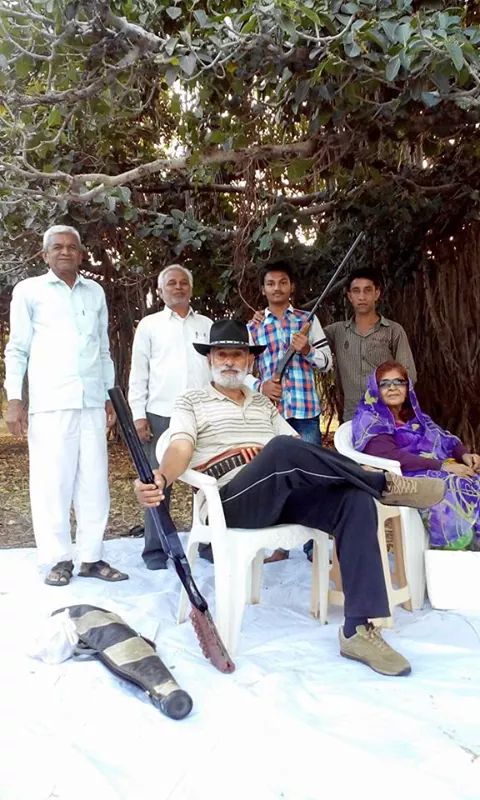
- Thakore Shri VIRENDRA SINGHJI, 17th Thakore Shri of Sudasna (see above)