Present Head
- Rajkumari Vaibhavi Kumari, born in Jaipur.
History
Origin and Foundation
The princely state of Khilchipur was established in 1544 by Dewan Ugra Sen, a noble Rajput belonging to the Khichi subclan of the historic Chauhan dynasty. The Khichi Rajputs had a celebrated lineage, famously associated with the formidable fort of Gagraun (located in modern-day Jhalawar, Rajasthan). Following intense family disputes and internal dissensions over succession and territorial rights at the Khichi capital of Gagraun, Dewan Ugra Sen chose to migrate southward into the fertile Malwa plateau. There, he carved out a new principality, which came to be known as Khilchipur.
Mughal Hegemony and Land Grants
To consolidate his newly acquired territories, Dewan Ugra Sen sought legitimacy from the dominant imperial power of northern India. The Mughal Emperor subsequently granted him a formal sanad (charter/grant of land). This extensive grant included the strategic adjoining parganas (administrative units) of Zirapur, Machalpur, and Shujalpur. Over the decades, as geopolitical dynamics shifted in Central India, Shujalpur was absorbed into Gwalior State, while Zirapur and Machalpur eventually became part of Indore State (ruled by the Holkars).
Maratha Ascendancy and Gwalior Suzerainty
During the late 18th century, the decline of the Mughal Empire paved the way for Maratha dominance in Malwa. In 1793, the rulers of Khilchipur were forced to submit to the military might of the Scindia dynasty of Gwalior. Consequently, Khilchipur became a tributary state, paying an annual tribute (tanka) to Gwalior.
With the expansion of the British East India Company and the conclusion of the Third Anglo-Maratha War, a settlement was mediated in 1819 by the British administrator Sir John Malcolm. Under this treaty, the British guaranteed the independence of Khilchipur from direct Gwalior intervention, while ensuring that the fixed tribute of 11,134 Rupees was regularly paid to Gwalior through the British Political Agent in Bhopal.
British Raj and Modernizing Reformers
Under the British administration, the state of Khilchipur was classified as a class-II state within the Bhopal Agency of the Central India Agency. The rulers initially held the title of Dewan, but their status was progressively elevated in recognition of their administrative efficiency and loyalty:
- Dewan Sher Singh (1819–1869): He restored administrative stability and successfully navigated the transition of the state under British paramountcy.
- Rao Bahadur Dewan Amar Singh (1869–1899): In 1873, the title of Rao Bahadur was conferred upon him as a personal distinction, which was subsequently made hereditary in 1877. By the late 19th century, the state maintained a disciplined force of 45 cavalry, 202 infantry, and 2 artillery guns, and was accorded a permanent 9-gun salute.
- Raja Sir Durjan Sal Singh (1899–1908): A reform-minded ruler who focused on modernizing the state's judicial system, improving land revenue collection, and developing basic infrastructure like roads and public schools.
- Raja Yashwant Singh (1908–1942): Under his progressive administration, the hereditary title of Raja was officially recognized by the British Crown in 1928, signaling Khilchipur's prominent position among the ruling houses of Central India.
Integration into Independent India
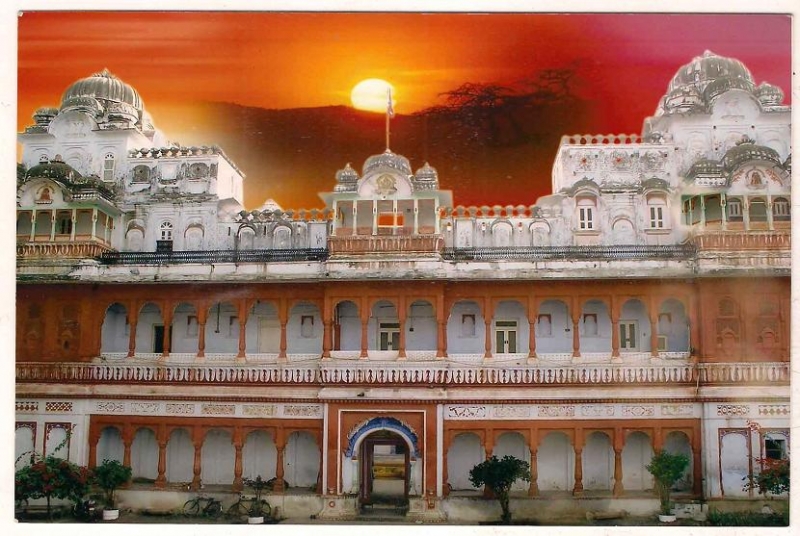
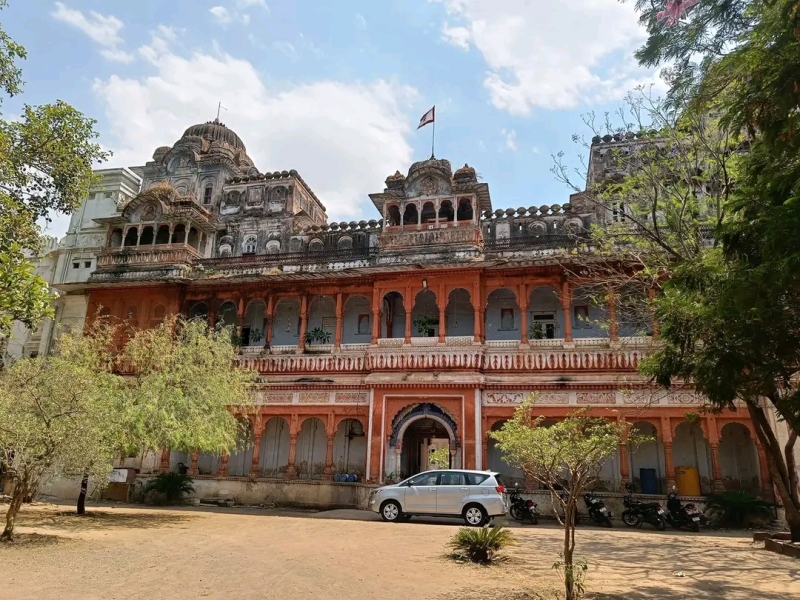
Following the partition of British India and the birth of an independent nation in 1947, the last ruling chief, Raja Aditya Singh Bahadur, signed the Instrument of Accession on June 15, 1948. Khilchipur formally merged into the newly formed state of Madhya Bharat. In 1956, during the linguistic reorganization of Indian states, Madhya Bharat was integrated into the modern state of Madhya Pradesh. Today, Khilchipur is a historic town and a tehsil within the Rajgarh district of Madhya Pradesh, preserving its rich architectural heritage, including the majestic Khilchipur Palace and various ancient temples.
References and Historical Sources
- For comprehensive records of Khilchipur under the Bhopal Agency, consult the Central India State Gazetteer Series: Bhopal Agency (available on Archive.org).
- Detailed accounts of treaties, gun salutes, and military strengths can be referenced in the Imperial Gazetteer of India, Volume XV (1908) on the Digital South Asia Library.
- For administrative reports and historical transitions of Central Indian princely states, visit the National Portal for Indian Culture.
Genealogy
- Dewan ANUP SINGH, Dewan of Khilchipur 1679/1715
- Dewan FATEH SINGH, Dewan of Khilchipur 1718/1738
- ......
- Dewan ABHAI SINGH, Dewan of Khilchipur 1770/1787, he lost some territories in 1770 when he was forced to make terms with Maharaja Scindia.
- Dewan DIP SINGH, Dewan of Khilchipur 1787/-
- Dewan DURJAN SAL (by Rani Gauriji), Dewan of Khilchipur -/1819, married 1stly, Rani Rajawatiji, married 2ndly, Rani Umatiji. He died sp 1819.
- Dewan BALWANT SINGH, Dewan of Khilchipur in 1819, he was placed on the throne by the mother and wife of the late Dewan, but an enquiry by the British authorities found Thakur Aman Singh to be more suitable, but because he was feuding with his relatives, his infant son was place on the throne instead.
- Dewan SHER SINGH, Dewan of Khilchipur 1819/1868, born about 1814, son of Thakur Aman Singh, a nearer relative of Dewan Durjan Sal. He died .
- Rao Bahadur AMAR SINGHJI, Rao Bahadur of Khilchipur 1868/1899, born , he succeeded his uncle to the gadi on 27th November 1868, Rao Bahadur (Hereditary) [cr. xx.4.1873], he abolished all transit duties in the state in 1884, except those on opium; he married and had issue.
- Rao Bahadur Bhawani Singh (qv)
- Rao Bahadur BHAWANI SINGH, Rao of Khilchipur 1899/1908
- Raja Rao Bahadur Sir DURJANSAL SINGH, Raja of Khilchipur 1908/1942, born and succeeded 19th January 1908. Raja [cr.1928]. He died .
- HH Raja Rao Bahadur YASHODAR SINGH, Raja of Khilchipur 1942/1961, born , married HH Rani Saraswati Devi, daughter of Raja Bahadur Bhagwant Singh, Yuvaraj Saheb of Orchha, and had issue. He died
- Rajkumari Indu Kumari [Rani Indu Kumari of Rawatsar], married 25th February 1963 in Khilchipur, Wing Cdr. (retd.) Rawat Ghanshyam Singhji of Rawatsar, and has issue, two children.
- Rajkumari Meenakshi Kumari, married the Late Rajkumar Sahib Arjun Singh of Barwari Bihar.
- HH Raja Rao Bahadur Bhartendra Singh (qv)
- Rajkumari Jaishree Kumari [Princess Pinky], born in Indore, married 10th November 1981 in New Delhi, Maharaj Saheb Prithviraj Singhji, born , son of HH Umdae Rajhae Buland Makan Maharajadhiraja Maharaja Sumar Singh Bahadur of Kishangarh, and has issue, two sons.
- Rajkumar Kraturaj Singh, born .
- Rajkumar Adhiraj Singh, born .
- HH Raja Rao Bahadur BHARTENDRA SINGH, Raja of Khilchipur 1961/-, born , married 20th May 1970, Maharajkumari Gayatri Kumari [HH Rani Gayatri Kumari of Khilchipur, now Rajmata Gayatri Kumari], daughter of HH Maharaja Lokendra Krishan Singh Ju Dev of Datia, and had issue.
- Maj. HH Raja Rao Bahadur Devvrat Singh (qv)
- HH Raja Rao Bahadur Priyavrat Singh (qv)
- Maj. HH Raja Rao Bahadur DEVVRAT SINGH, Raja of Khilchipur -/2006, born , married 4th February 1999, HH Rani Yogeshwari Kumari, and had issue. He died o f a brain haemorrhage on 31st July 2006 in Ethiopia in Northern Africa, and was accorded a state funeral in India at Khilchipur.
- Rajkumari Katyayni Kumari, born .
- HH Raja Rao Bahadur PRIYAVRAT SINGH, Raja of Khilchipur (see above)
Notable Figures
Dewan Ugra Sen (1544 - 1570)
Dewan Ugra Sen was the founder of the Khilchipur State in 1544. A descendant of the illustrious Khichi clan of the Chauhan Rajputs, he migrated from the historical stronghold of Gagron. He succeeded in carving out a separate territory in the Malwa region and established his capital at Khilchipur. Under his leadership, the early administration of the state was consolidated, and defensive outposts were built to secure the borders against rival local chieftains.
For more historical context on the establishment of the state, see the Khilchipur State Wikipedia Page.
Dewan Sher Singh (1819 - 1869)
Dewan Sher Singh's reign marked a pivotal era of transition for Khilchipur, bringing it under the protective umbrella of the British East India Company. In 1819, a treaty was mediated by the British between Khilchipur and the Scindia of Gwalior, resolving long-standing tribute disputes. This agreement ensured external security and internal autonomy for the state, protecting it from the chaotic Pindari raids that ravaged Central India during that period.
Details regarding this transition and British administrative arrangements can be found in the Khilchipur State Wikipedia Page.
Rao Bahadur Dewan Amar Singh (1869 - 1899)
Rao Bahadur Dewan Amar Singh ascended the gaddi (throne) in 1869. He was an enlightened administrator who introduced modern judicial and revenue systems to the state. His loyal service and efficient governance were highly regarded by the British administration, which conferred upon him the hereditary title of "Rao Bahadur" in April 1873. He worked closely with the political agents of the Bhopal Agency to improve civic amenities and infrastructure within the state.
Historical documentation of his title and reign can be referenced in The Golden Book of India (1893) by Sir Roper Lethbridge.
Rao Bahadur Dewan Durjan Sal Singh (1899 - 1908)
Rao Bahadur Dewan Durjan Sal Singh succeeded to the throne in 1899. His reign was largely dedicated to mitigating the devastating economic effects of the late-Victorian famines that struck Central India. He focused heavily on agrarian reforms, tax relief, and irrigation projects to assist his subjects. As he died without a direct male heir, he was succeeded by his adopted son, Yashodar Singh.
Further records of his tenure are detailed on the Khilchipur State Wikipedia Page.
Raja Rao Bahadur Yashodar Singh (1908 - 1942)
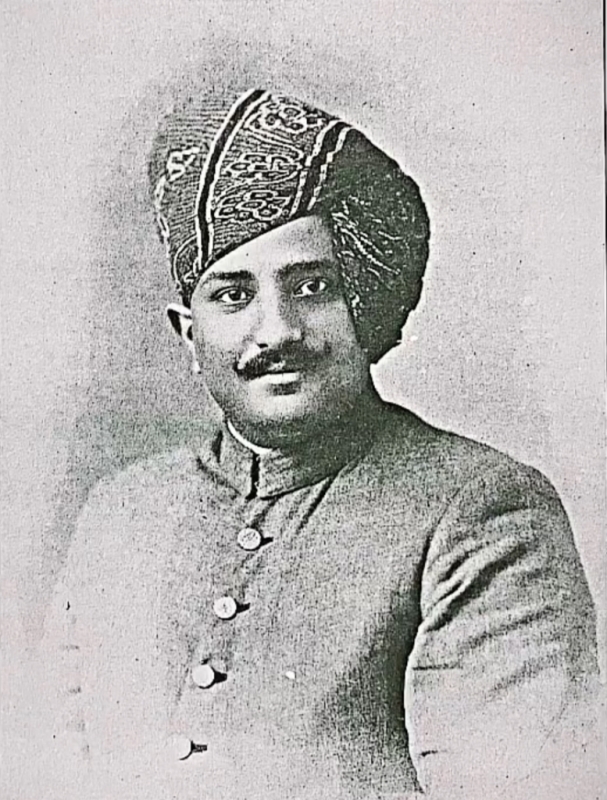
Raja Rao Bahadur Yashodar Singh ascended the throne as a minor in 1908 and was invested with ruling powers in 1918 after completing his education. He was a progressive ruler who prioritized public education, healthcare, and road connectivity. In recognition of his administrative reforms and contributions to the region, the British government elevated his title from Dewan to "Raja" on a hereditary basis in 1928. He was also an active member of the Chamber of Princes, representing the interests of smaller Central Indian states.
His administrative achievements and royal elevation are documented in the Khilchipur State Wikipedia Page.
Raja Birendra Singh (1942 - 1948)
Raja Birendra Singh was the last ruling chief of the princely state of Khilchipur. Ascending the throne during the height of World War II, his reign saw the dramatic political developments leading up to Indian independence. In 1947, he signed the Instrument of Accession, integrating Khilchipur into the Dominion of India. The state was formally merged into the newly created state of Madhya Bharat in 1948, which later became a part of Madhya Pradesh.
The details of the merger and accession are preserved on the Khilchipur State Wikipedia Page.