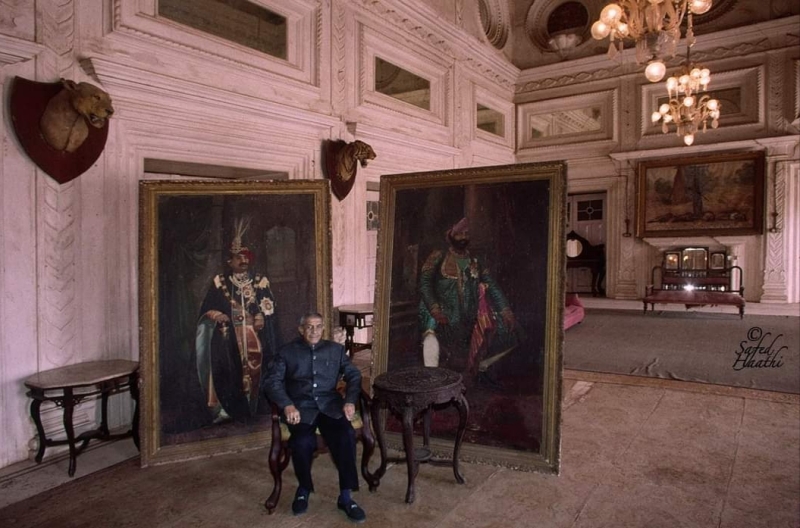
Present Head
History
Origin and Foundation
The princely state of Datia was founded in 1626 by Rao Bhagwan Rao, the second son of Raja Bir Singh Deo of Orchha. Bir Singh Deo, a powerful Bundela Rajput chieftain and a close ally of the Mughal Emperor Jahangir, partitioned his extensive territories among his sons. Bhagwan Rao received the region of Datia as his patrimony, establishing an independent principality. He fortified the town of Datia and laid the foundations of a dynasty that would play a significant role in the history of Bundelkhand. Detailed accounts of this founding era can be found in the Imperial Gazetteer of India.
Mughal and Maratha Periods
During the Mughal era, the rulers of Datia maintained close diplomatic ties with the imperial court in Delhi. Rao Bhagwan Rao and his successors served as prominent military commanders in various Mughal campaigns. Notably, Rao Dalpat (who ruled from 1689 to 1707) distinguished himself during the Deccan campaigns of Emperor Aurangzeb and was eventually killed fighting in the Battle of Jajau in 1707. In recognition of their military prowess, the Mughal emperors bestowed high mansabs (military ranks) and prestigious titles upon the Datia rulers.
With the decline of the Mughal Empire in the 18th century, the Maratha Empire expanded northward into Bundelkhand. Datia faced frequent incursions from the Peshwas and the Scindias of Gwalior. To preserve their sovereignty, the rulers of Datia were forced to pay tribute to the Marathas, navigating a complex geopolitical landscape of shifting alliances and regional conflicts.
British Suzerainty and Treaties
The political landscape of Datia shifted dramatically at the turn of the 19th century. Following the Treaty of Bassein in 1802 between the British East India Company and the Peshwa, the British assumed suzerainty over major portions of Bundelkhand. In 1804, a formal treaty of alliance and defensive protection was concluded between the British and Raja Parichhat of Datia. This treaty guaranteed British protection to the state in exchange for loyalty and cooperation. Datia's strategic position made it a crucial ally for the British in maintaining stability across Central India.
During the Indian Rebellion of 1857, the state remained loyal to the British crown. In recognition of this loyalty, the British government subsequently recognized the hereditary title of Maharaja for the rulers of Datia in 1865, replacing the older family title of Maharaja Rao Raja. By the late 19th century, the Maharaja maintained a formidable military force consisting of 945 cavalry, 5,203 infantry, and 124 guns, and was honored with a 15-gun salute.
Key Reformers and Modernization
The late 19th and early 20th centuries marked a period of administrative and social reform in Datia, largely under the rule of Maharaja Lokendra Sir Bhawani Singh Bahadur (who ruled from 1857 to 1907). He took active steps to modernize the state's administration, judiciary, and infrastructure. Roads were constructed, educational institutions were established, and public healthcare was improved. His successor, Maharaja Sir Govind Singh Bahadur, continued these progressive policies, focusing on agrarian reforms and the welfare of his subjects until the integration of the state into the Indian Union.
Heraldry and State Symbols
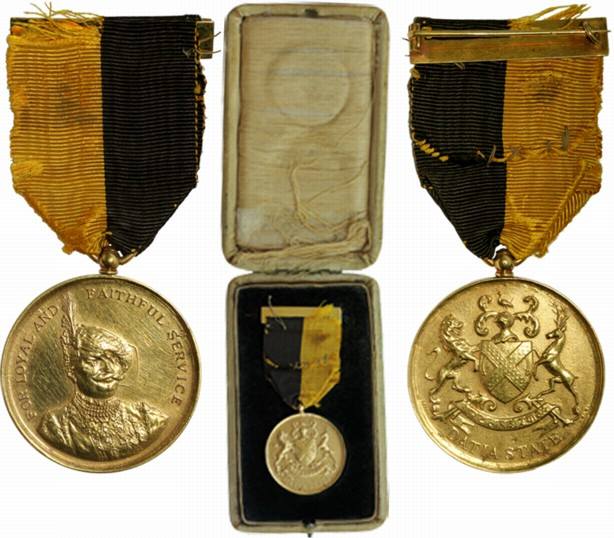
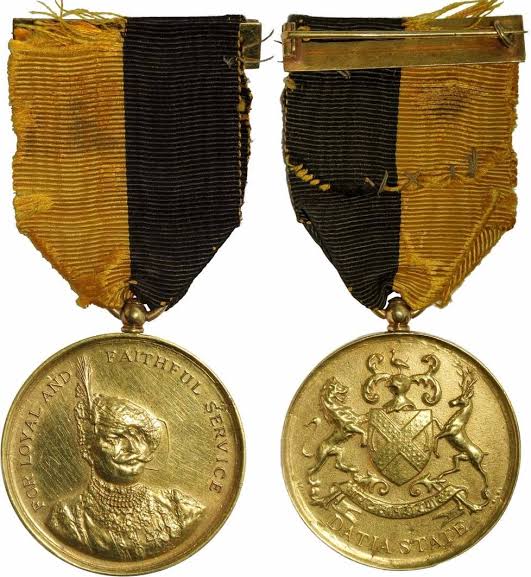
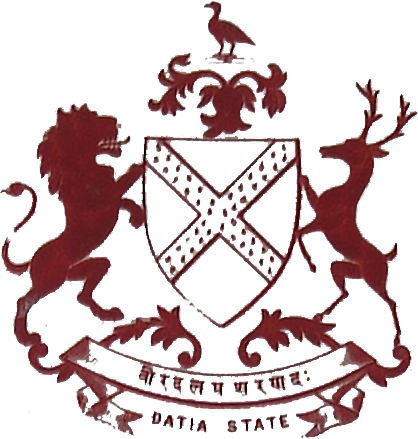
The state of Datia possessed distinctive symbols representing its martial heritage and royal lineage. The coat of arms featured a shield emblazoned with a wild boar, symbolizing strength and courage, supported by two Bundela warriors in traditional military attire. The crest above the shield depicted a hand holding a dagger. The state flag was a swallow-tailed bi-color flag, displaying the traditional colors of the Bundela Rajputs. The family motto inscribed on the state coat of arms was "Wir dalap Sharandah", which translates to "Lord of the Brave Army, Giver of Refuge", emphasizing the dual duty of the rulers to protect their people and command their forces with honor.
Post-Independence and Modern Era
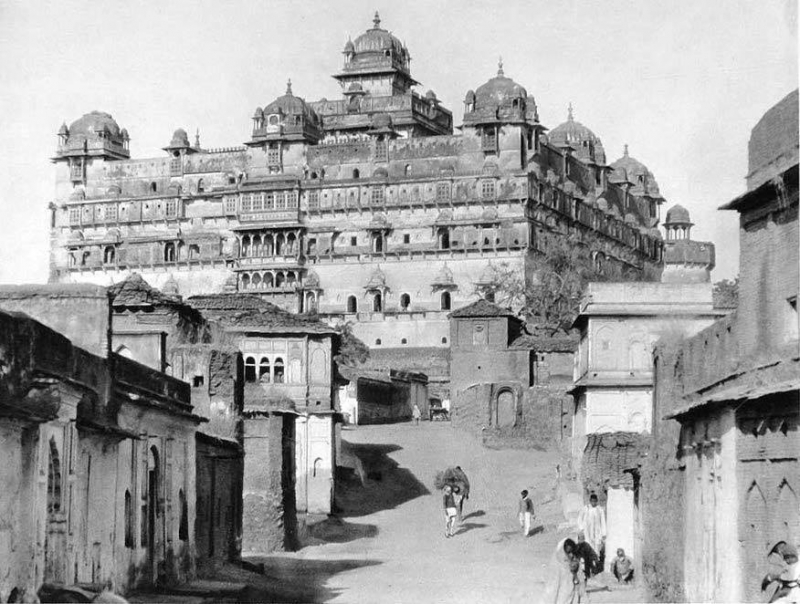
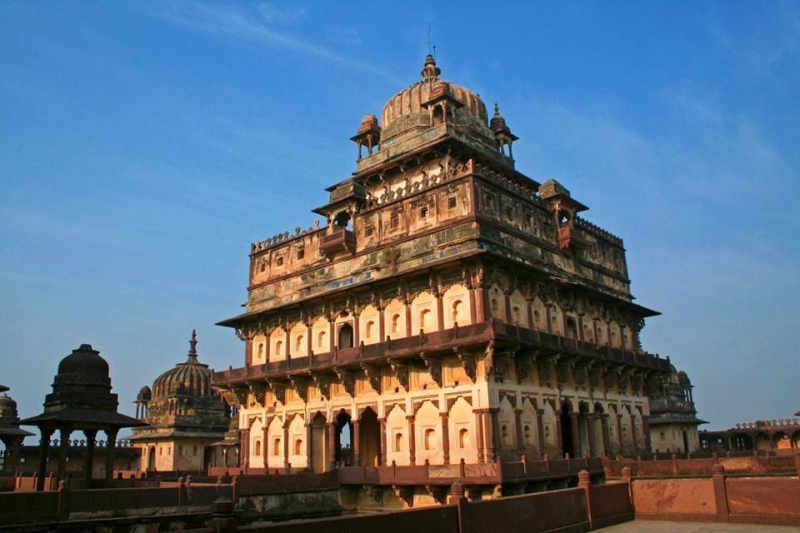
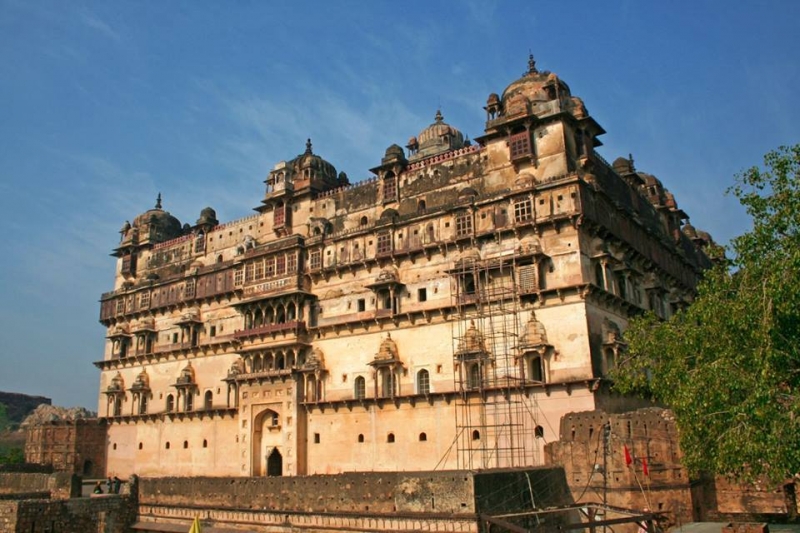
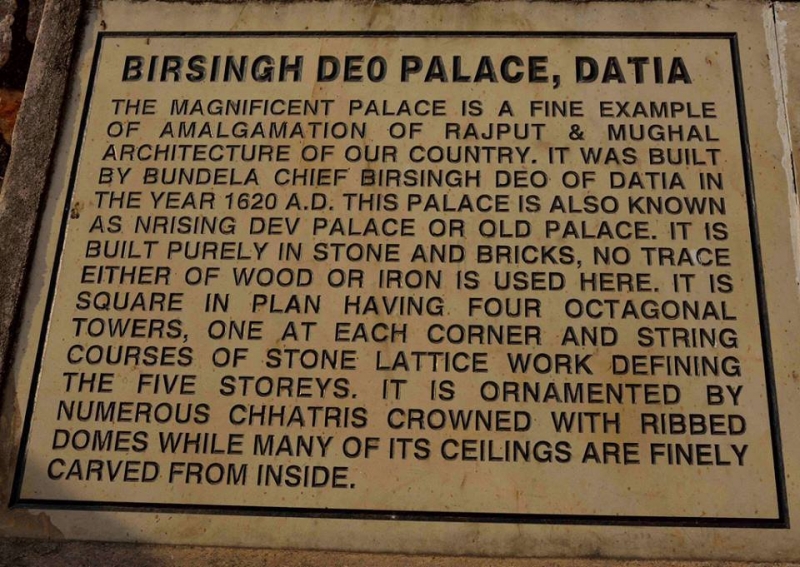
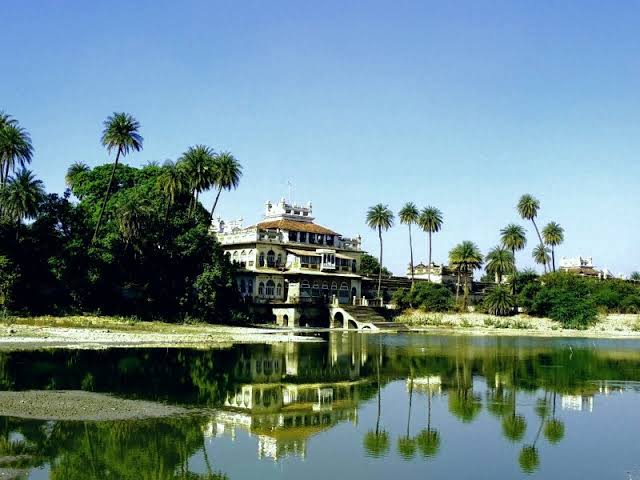
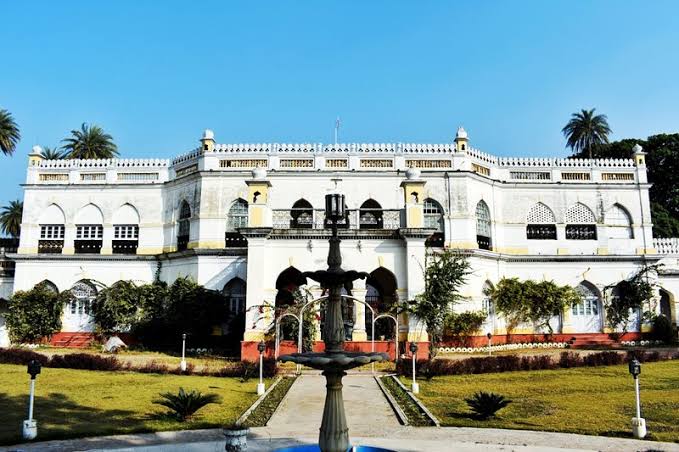
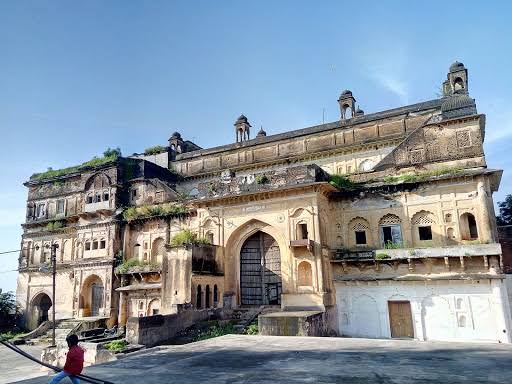
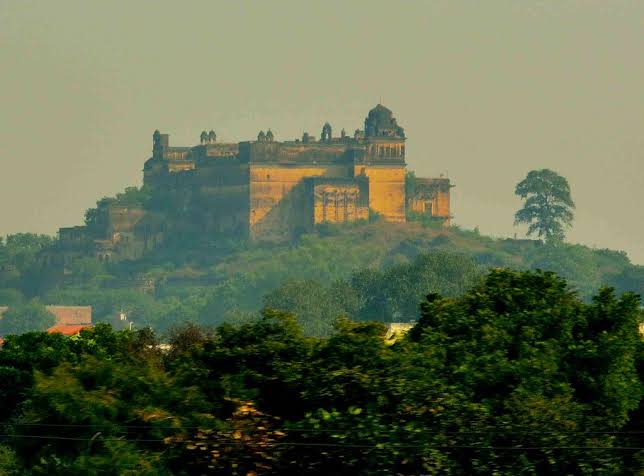
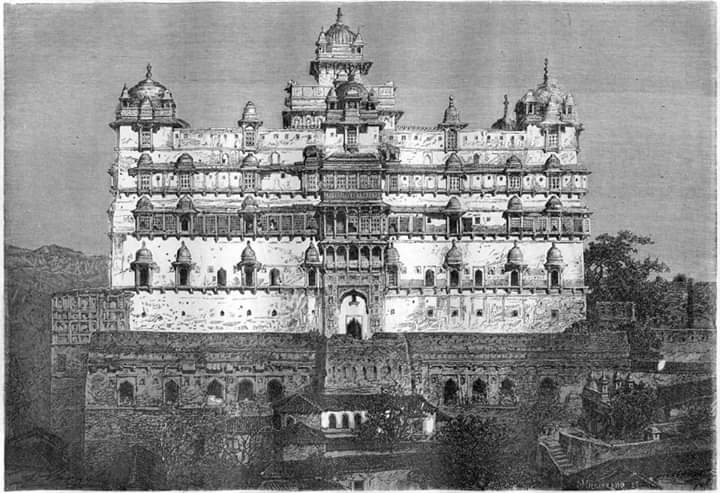
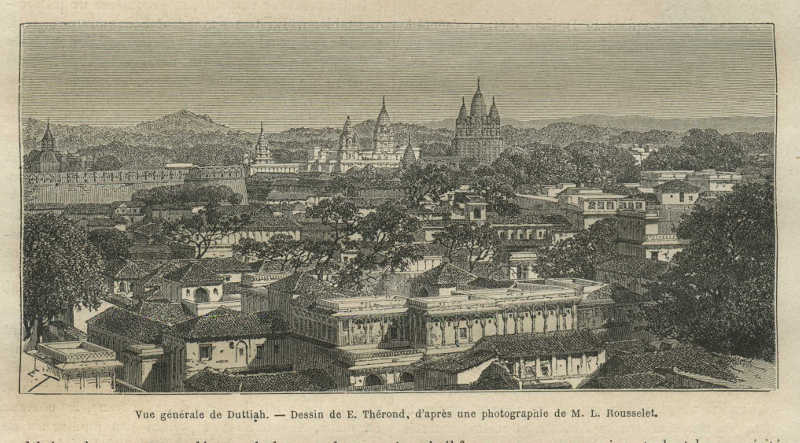
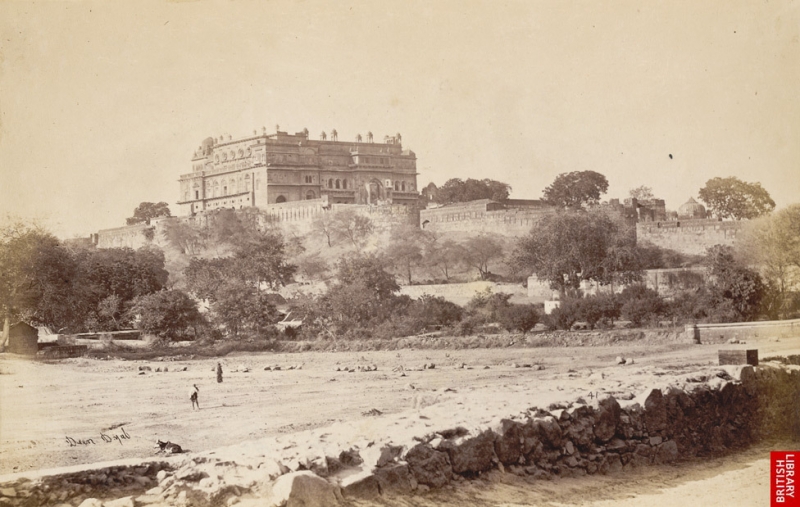
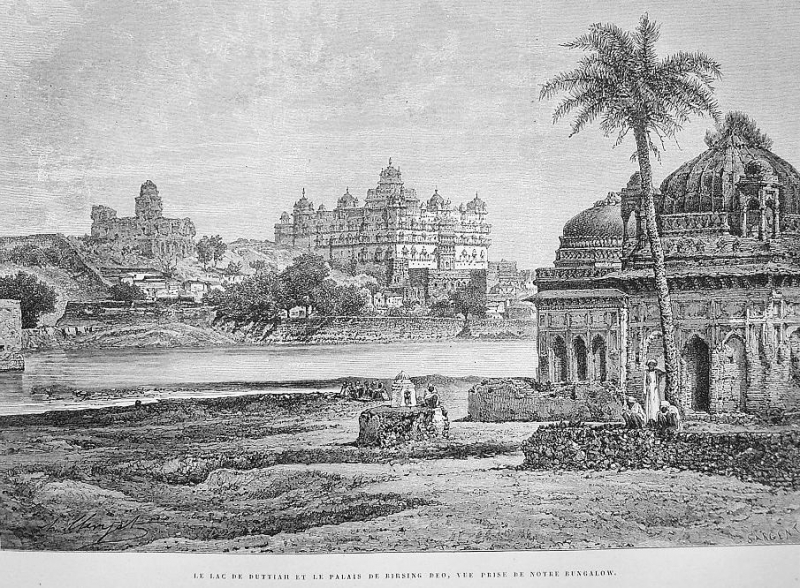
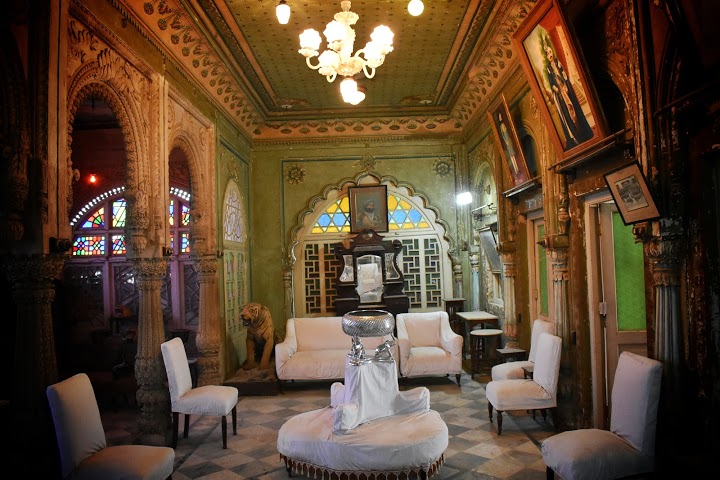
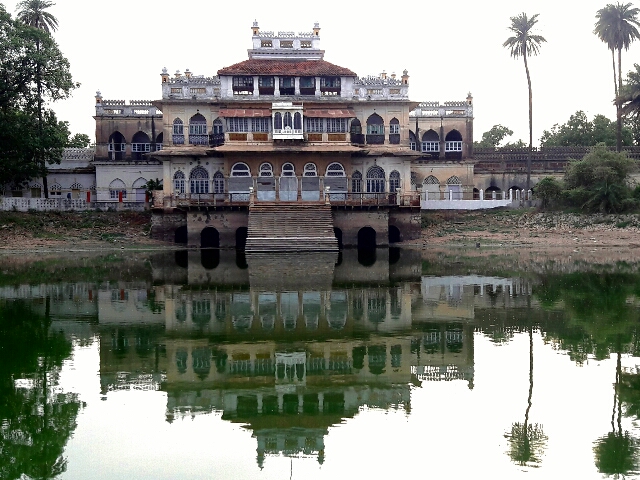
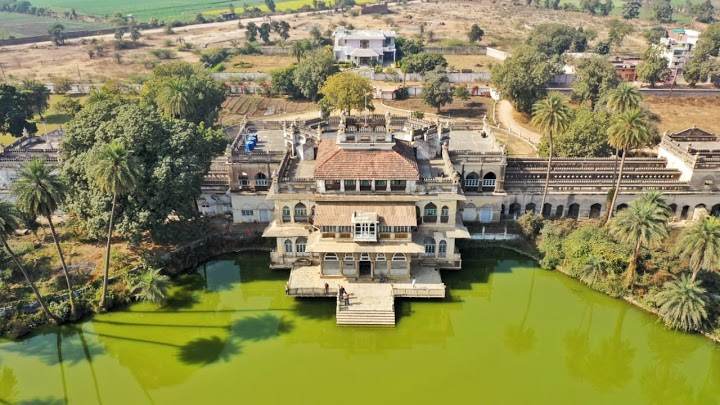
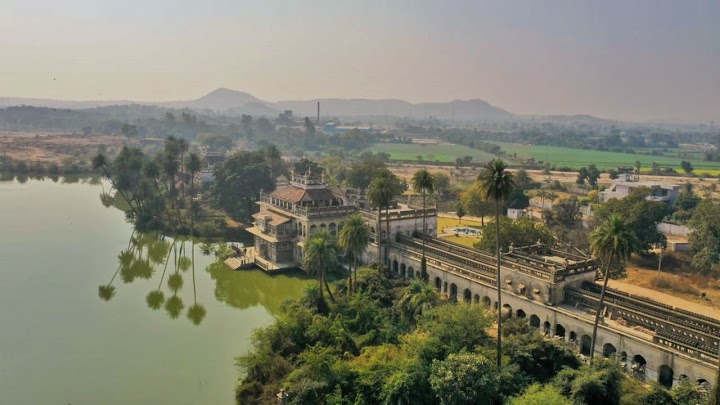
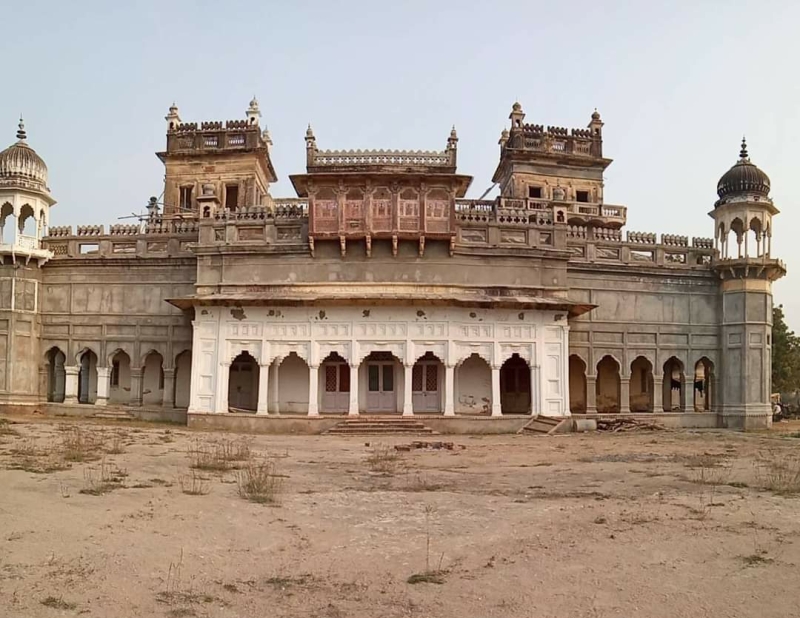
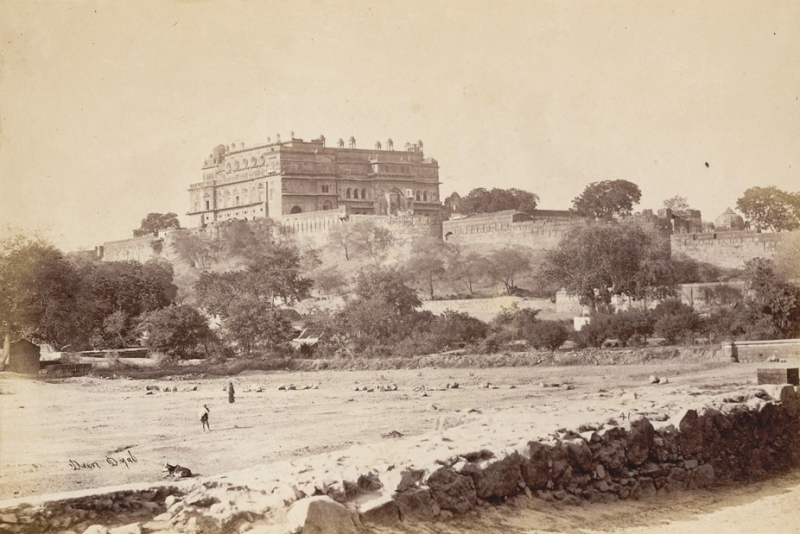
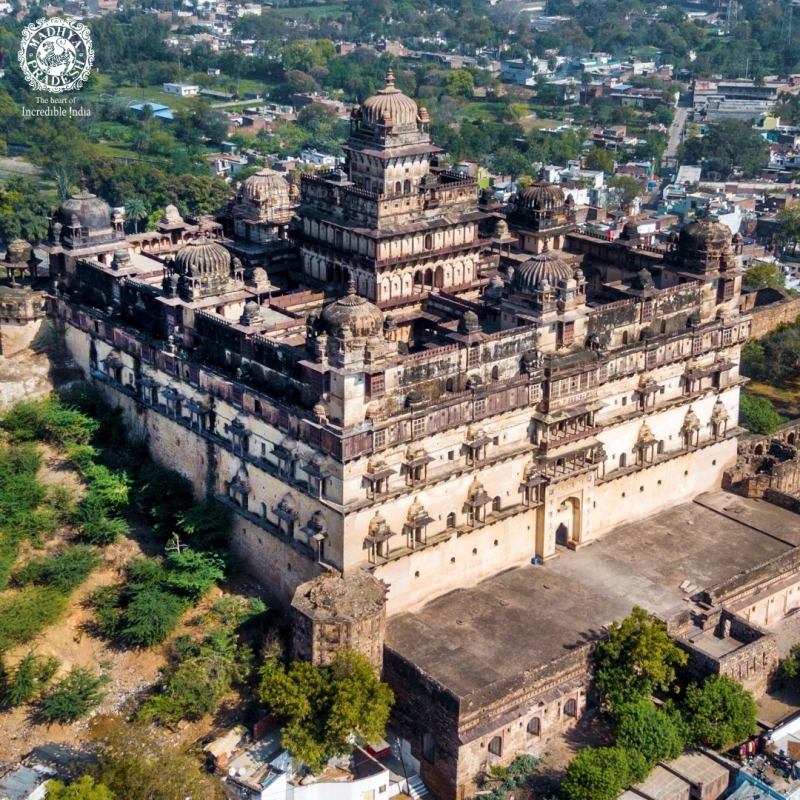
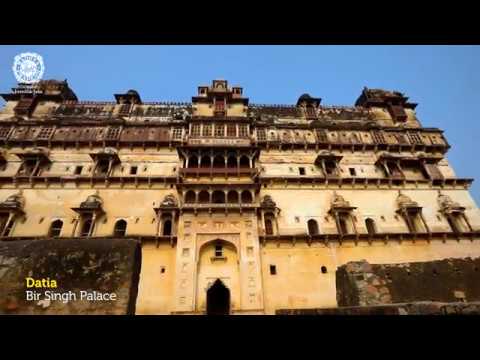
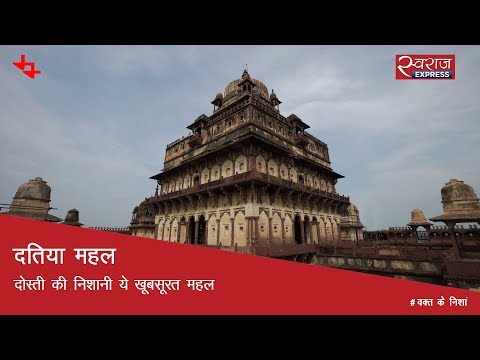
Following India's independence from British rule in August 1947, Maharaja Sir Govind Singh signed the Instrument of Accession, merging Datia into the Dominion of India. In 1948, Datia became part of the newly formed union of Vindhya Pradesh, which was later merged into the state of Madhya Pradesh in 1956 under the States Reorganisation Act. Today, Datia is recognized as a historic district in Madhya Pradesh, renowned for its magnificent seven-storied palace (Bir Singh Palace), its rich cultural heritage, and the famous Peetambara Peeth temple complex, attracting historians and tourists from across the globe.
Genealogy
- Rao BHAGWAN RAO, 1st Rao of Datia and Baroni 1626/1656, received Datia and Baroni from his father (Raja Bir Singh Deo of Orchha) in 1626 and established his own state. He died .
- Rao SUBHA KARAN, 2nd Rao of Datia 1656/1683, died
- Rao DALPAT SINGH, 3rd Rao of Datia 1683/1706
- Rao RAMCHANDRA SINGH, 4th Rao of Datia 1706/1733, died
- Rao INDRAJIT SINGH, 5th Rao of Datia 1733/1762
- Rao SHATRUJIT SINGH, 6th Rao of Datia 1762/1801
- Raja PARICHHAT SINGH, 7th Raja of Datia 1801/1839, he allied himself with the British throughout the subsequent wars with the Mahrattas; and was rewarded in 1817, on the deposition of the Peshwa, by a new treaty and enlarged territories, later he was granted the title of Raja in the 1820's., married and had adoptive issue. He died sp in 1839.
- Raja BIJAI SINGH Bahadur, 8th Raja of Datia 1839/1857, born , married 1sty, Senior Rani, died , married 2ndly, Junior Rani, and had illegitimate issue as well as adoptive issue. He died spl in 1857.
- Kunwar Arjun Singh, favoured for adoption as successor by the Junior Rani, he briefly contested the succession after his father's death.
- (A) HH Maharaja Lokendra Sir Bhawani Singh Bahadur (qv)
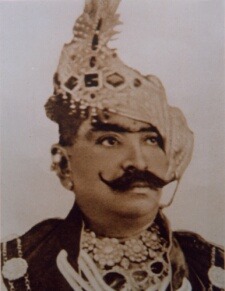
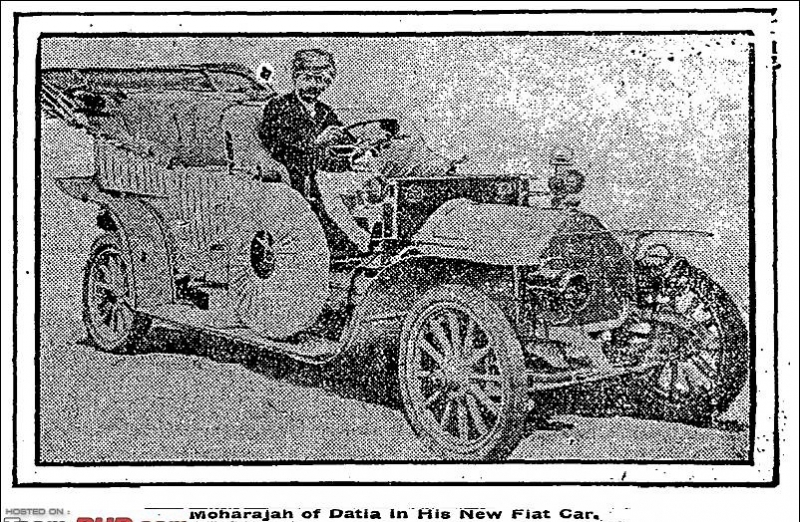
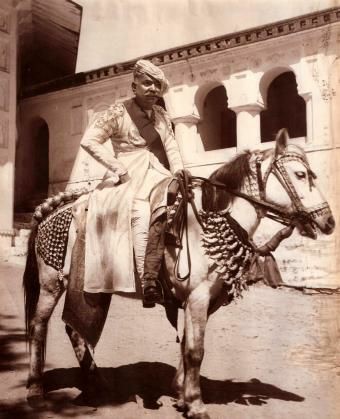
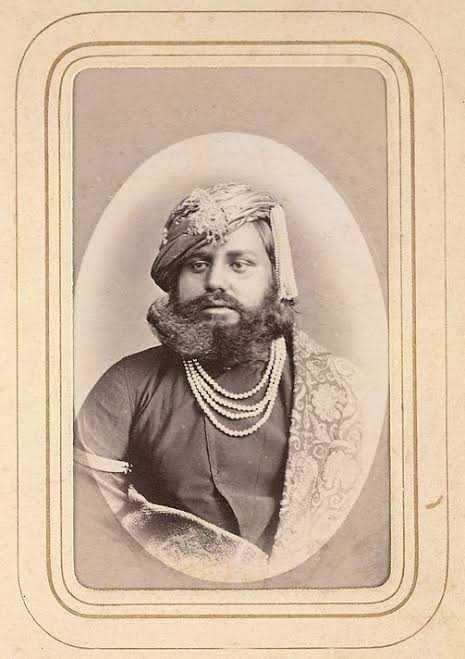
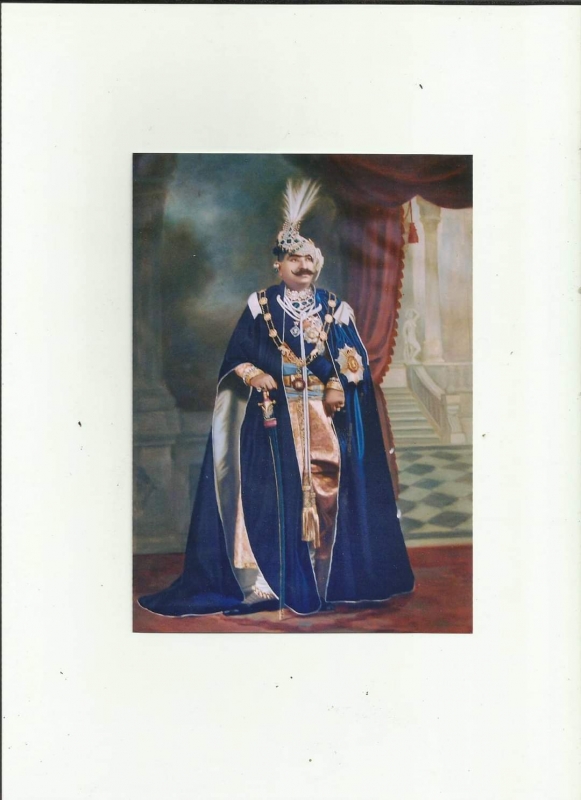
- HH Maharaja Lokendra Sir BHAWANI SINGH Bahadur K.C.S.I., 9th Maharaja of Datia 1857/1907, born (1854 ), he succeeded by adoption on 20th November 1857, he belonged to the Bhasnai branch of the Orchha Royal Family, descended from Kunwar Har Singh Deo, brother of Raja Bir Singh Deo of Orchha, the title of Maharaja was recognized as hereditary in 1865, and on 1st January 1877, at the Imperial Assemblage at Delhi, in honour of the Proclamation of Her Most Gracious Majesty as Empress of India, the additional title of Lokendra was granted, he enjoyed a personal gun salute of 19 which was granted in 1906, married and had issue, one son. He died .
- Hon. Lt.-Col. HH Maharaja Lokendra Sir Govind Singh Ju Dev Bahadur (qv)
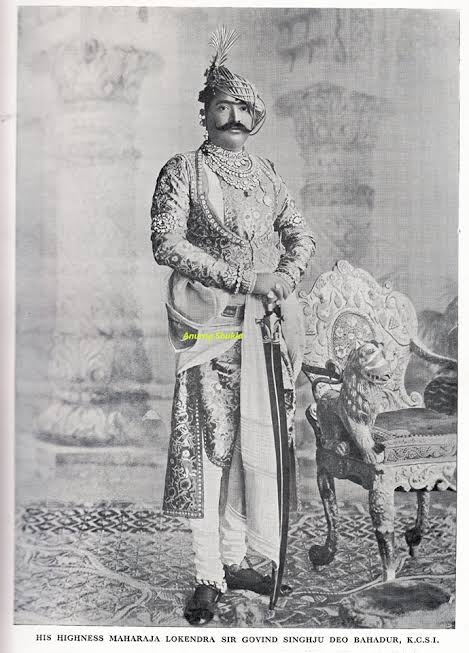
- Hon. Lt.-Col. HH Maharaja Lokendra Sir GOVIND SINGH Ju Dev Bahadur, 10th Maharaja of Datia 1907/1951, born , G.C.I.E. [cr.1932], K.C.S.I. [cr.1918], Vice President of the St John Ambulance Association and Patron of the Red Cross Society, married 1stly, 1902, a daughter of the Dhandera Jagirdar of Manpura in Gwalior, she died before 1935, married 2ndly, a daughter of Thakore Sahib of Sayla, married 3rdly, a daughter of the Thakur of Suara in Datia, and had issue. He died .
- HH Maharaja Lokendra Balbhadra Singh Ju Dev Bahadur (by 1st marriage) (qv)
- Maharajkumar Jashwant Singh (by 2nd marriage), born , married Rani Padma Kumari, daughter of Raja Raj Divijay Singh and Rani Tara Kumari, Taluqdar of Majhgai estate in the Awadh region, and had issue. He died .
- Late Maharaj Kunwar Mahendra Pratap Singh Ju Dev, married to Rani Sahiba Bhawana Raje of Ramgarh Estate, has issues.
- Maharaj Kumar Prithvi Singh Ju Dev, married Rajkumari Srikala Devi, only daughter of Raja Jitamitra Singh Deo of Khariar, and his wife, Rani Rajshree Devi.
- Maharaj Kumar Rajendra Pratap Singh Ju Dev educated at The Scindia School, Gwalior; married to Rani Sahiba Savitri Singh, daughter of Kunwar Tej Pratap Singh, Tauqdar of Aata-Paraspur estate in the Awadh region, and had issues. He Died .
- Maharaj Kumar Shivam Pratap Singh Ju Dev, born , educated at The Scindia School, Gwalior; married Rani Dayal Kanwar Sodha (Deepika Sodha), daughter of Thakur Sahab Ratan Singh Ji Sodha of Rar-Mau, Ratokot, and has issue.
- Rajkumar Devaditya Pratap Singh Ju Dev, born .
- Rajkumari Mrigakshi Singh, born .
- Raj Kumari Shalini Singh, married to Kunwar Jitendra Singh of Marwatia, District Basti, U.P.
- Maharaj Kumar Shivam Pratap Singh Ju Dev, born , educated at The Scindia School, Gwalior; married Rani Dayal Kanwar Sodha (Deepika Sodha), daughter of Thakur Sahab Ratan Singh Ji Sodha of Rar-Mau, Ratokot, and has issue.
- Late Maharaj Kunwar Mahendra Pratap Singh Ju Dev, married to Rani Sahiba Bhawana Raje of Ramgarh Estate, has issues.
- Rajkumari Roop Juraja (by 2nd marriage), married to Raja Virendra Shah judeo of Jagmanpur state.
- HH Maharaja Lokendra BALBHADRA SINGH Ju Dev Bahadur, 11th Maharaja of Datia 1951/1978 , born , married a daughter of Maharaja Bhagwati Prasad Singh, Taluqdar of Balrampur in Oudh, and had issue. He died .
- HH Maharaja Lokendra Krishan Singh Ju Dev Bahadur (qv)
- Maharajkumar Balram Singh, married Maharajkumari Urmila Kumari, daughter of HH Maharawat Sir Ram Singhji II Bahadur of Pratapgarh, born .
- HH Maharaja Lokendra KRISHAN SINGH Ju Dev Bahadur, 12th Maharaja of Datia 1978/2006, married and had issue. He died O ctober 2006.
- HH Maharaja Lokendra Rajendra Singh Ju Dev Bahadur (qv)
- Maharajkumar Harishchandra Singh, former Joint Director C.B.I., married Rani Uma Kumari, daughter of Thakur Gulab Singh of Siriyari, and his wife, Thakurani Hem Kanwar, and has issue.
- Rajkumar Taruraj Dev
- Maharajkumar Ghanshyam Singh, former Member of the Legislative Assembly in Madhya Pradesh, President of the Datia District Congress Committee, married and has issue.
- Rajkumari Ksheerja Kumari (Rani Saheba Ksheerja Kumari of Arki – Baghal State) married January 2007 Raja Saheb Harvashvardhan Singh of Arki/Baghal State, son of Tikka Pramod Singh of Baghal, and his wife, Tikka Rani Poornima Devi, and has issues, two daughter.
- Rajkumari Adrija Kumari, born .
- Rajkumari Bhanushree Kumari, born .
- Rajkumari Mandvi Kumari, educated from Daly College Indore and holds a degree in tourism. Presently, Mahila Pradesh Adhyaksh, Congress Party, married to Rajkumar Saheb Vishweshwar Saran Singh Deo of Surguja state.
- Rajkumari Ksheerja Kumari (Rani Saheba Ksheerja Kumari of Arki – Baghal State) married January 2007 Raja Saheb Harvashvardhan Singh of Arki/Baghal State, son of Tikka Pramod Singh of Baghal, and his wife, Tikka Rani Poornima Devi, and has issues, two daughter.
- Maharajkumari Gayatri Kumari [now Rajmata Gayatri Kumari of Khilchipur], married 20th May 1970, Raja Rao Bahadur Bhartendra Singhji of Khilchipur, and has issue.
- Rani Sahib Gargi Devi, married Rao Harshvardhan Singh of Vijayanagar.
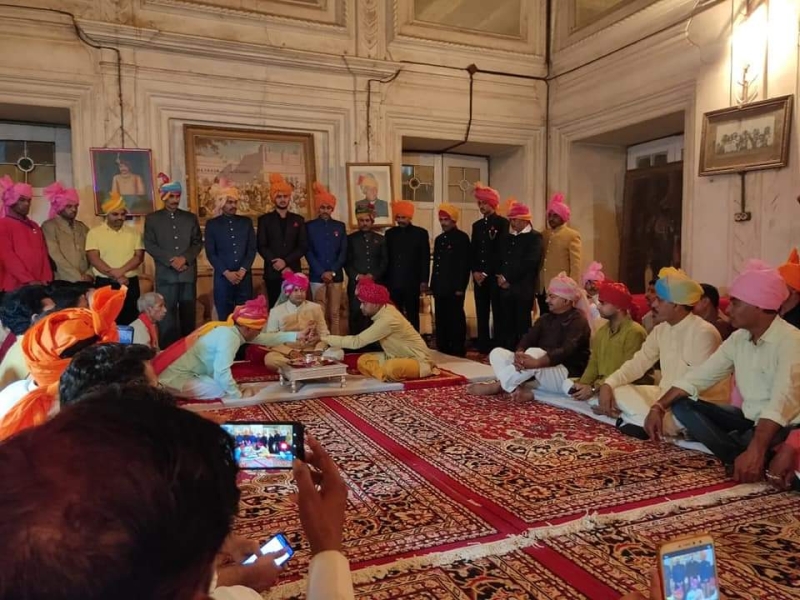
- HH Maharaja Lokendra RAJENDRA SINGH Ju Dev Bahadur, 13th Maharaja of Datia from 2006-2020. He died on .
- Arunaditya Singh Ju Dev (qv)
- HH Maharaja Lokendra ARUNADITYA SINGH Ju Dev Bahadur, 14th Maharaja of Datia (see above)
Notable Figures
Rao Bhagwan Rao (1626 - 1656)
Rao Bhagwan Rao was the founder of the Datia State, establishing its independence in 1626. He was the son of Raja Bir Singh Deo of Orchha, one of the most powerful Bundela rulers of the time. Bhagwan Rao received the region of Datia as a jagir from his father, which was subsequently recognized as an independent principality by the Mughal Emperor Shah Jahan in recognition of his military services and loyalty to the imperial throne.
Under his leadership, the foundations of the Datia administration were laid, and he successfully defended his newly formed territory against local rivals. His rule marked the beginning of Datia as a distinct political entity in Central India. For more details on the origins of the state, see the Wikipedia article on Datia State.
Rao Shubha Karan (1656 - 1683)
Rao Shubha Karan succeeded his father and was a distinguished military commander who served under the Mughal Emperor Aurangzeb. He participated in several crucial imperial military campaigns, particularly in the Deccan region, where he earned a reputation for tactical brilliance. His loyalty and valor earned him high mansabs (ranks) and honors from the Mughal court, which helped consolidate Datia's position as a prominent loyalist state.
His reign saw the expansion of the state's military capabilities and the construction of several administrative and defensive structures in Datia. His services to the empire are detailed in standard histories of the Bundela clan, such as the Wikipedia article on Bundelas.
Rao Dalpat Singh (1683 - 1707)
Rao Dalpat Singh was a highly celebrated warrior-king of Datia who played a significant role in the Mughal-Maratha wars. He spent most of his reign campaigning in Southern India under Aurangzeb, showcasing exceptional military leadership. In recognition of his bravery, he was granted the title of Rao and was entrusted with key strategic command positions by the Mughal administration.
Dalpat Singh met his end at the Battle of Jajau in 1707, fighting valiantly on the side of Prince Azam Shah during the Mughal war of succession. His heroic death cemented his legacy as one of the most formidable rulers of the dynasty. Historical records of his campaigns can be found in military histories of the late Mughal period.
Rao Indrajit Singh (1736 - 1762)
Rao Indrajit Singh ruled Datia during a period of immense political instability in Central India, characterized by the decline of the Mughal Empire and the rapid expansion of the Maratha Confederacy. Despite these challenges, he managed to maintain a level of autonomy for his state through strategic alliances and diplomatic maneuvering.
During his reign, he patronized art and literature, contributing to the development of the distinct Bundela style of painting and architecture. He successfully defended Datia from multiple Maratha incursions, preserving the state's sovereignty during a turbulent era.
Raja Parichhat Singh (1801 - 1839)
Raja Parichhat Singh was a pivotal ruler who guided Datia into the modern era. Recognizing the shifting balance of power in India, he entered into a protective treaty of alliance with the British East India Company in 1804. This treaty secured Datia from the aggressive expansions of the Maratha rulers of Gwalior and Indore, ensuring the state's internal sovereignty under British suzerainty.
In 1818, his status was formally recognized with the hereditary title of Raja. His long and peaceful reign allowed for administrative reforms and economic stability, transforming Datia into a progressive princely state. Details of his treaty are documented in the Wikipedia page on Datia.
Maharaja Lokendra Sir Bhawani Singh Bahadur (1857 - 1907)
Maharaja Lokendra Sir Bhawani Singh Bahadur was one of the most prominent and longest-ruling monarchs of Datia. Succeeding to the throne just before the Indian Rebellion of 1857, he maintained strict loyalty to the British Crown, which secured his position and earned him numerous imperial honors. In 1865, he was granted the hereditary title of Maharaja Lokendra, and his gun salute was eventually increased to 17 guns.
His fifty-year reign was characterized by extensive modernization, including the construction of schools, hospitals, public offices, and the expansion of the royal palace complex. He was a great patron of Bundeli literature and classical music. His administrative excellence is widely recognized in colonial gazetteers and historical records of Central India.
Maharaja Sir Govind Singh Bahadur (1907 - 1951)
Maharaja Sir Govind Singh Bahadur was the last ruling Maharaja of the Datia Princely State. He succeeded his predecessor in 1907 and continued the modernizing reforms of the state, focusing on judicial reforms, education, and agrarian development. He was an active member of the Chamber of Princes and represented the interests of Central Indian states in various national forums.
Following India's independence in 1947, Maharaja Govind Singh signed the Instrument of Accession, merging Datia State into the Union of India in 1948. The state subsequently became part of Vindhya Pradesh, which was later merged into Madhya Pradesh. He passed away in 1951, marking the end of the formal ruling line of the Datia Bundela dynasty. His life and legacy are detailed in the Wikipedia article on Datia State.