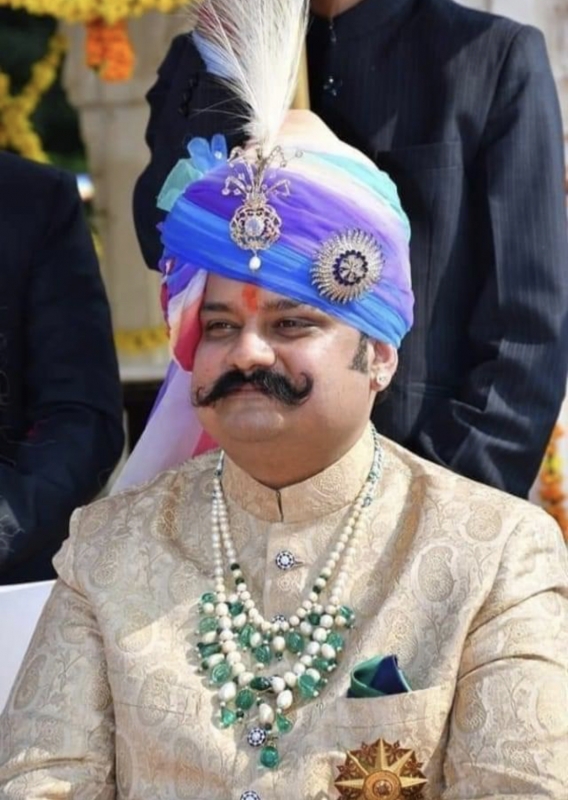
Present Head
History
Origin and Foundation of the Janwar Dynasty
The Balrampur estate, recognized historically as the largest and wealthiest Taluqdari in Oudh (Awadh), was ruled by the Janwar clan of Rajputs. The family traces its legendary lineage back to the Pandavas of the Mahabharata. According to clan genealogies, Raja Tansukhdeo, the 41st direct descendant of the Pandava warrior Arjuna, resided at the fortress of Bomgarh in Pawagarh, near Neemuch, and took service under the Delhi Emperor.
The historical establishment of the clan in Oudh began in the late 14th century with Bariar Shah, a descendant of Tansukhdeo. Bariar Shah entered the service of the Tughlaq Sultanate under Firuz Shah Tughlaq around 1374. As a reward for his military prowess in suppressing local lawlessness, he was granted extensive territories in the Terai region, establishing his seat at Ikauna in Bahraich. For further reading on the regional distribution of these estates, see the Balrampur State Wikipedia Page.
Foundation of Balrampur (circa 1600)
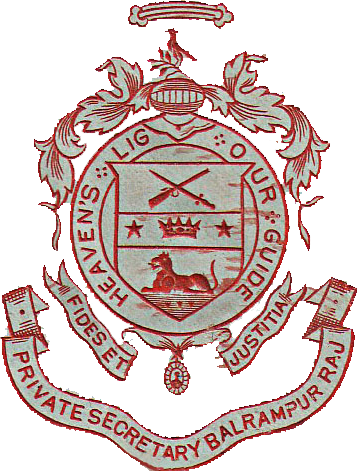
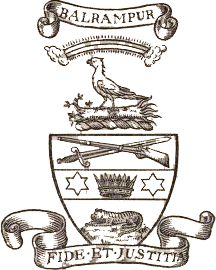
Over the generations, the Janwar estates expanded significantly. Around the year 1600, Raja Madho Singh, the ruler of Ikauna, partitioned his territories. His younger son, Kunwar Balram Das, was granted a portion of the estate. Kunwar Balram Das founded a new capital, naming it Balrampur after himself. Under his leadership, the estate asserted its independence from the parent branch of Ikauna, adopting the family motto "Fide et Justitia" (By Faith and Justice).
The Mughal and Nawabi Era
Throughout the 17th and 18th centuries, the Rajas of Balrampur maintained a highly autonomous status in the Terai region, situated between the plains of Awadh and the foothills of Nepal. The geographical isolation of the Terai, coupled with the dense forests, allowed the Janwar rulers to defend their territory effectively. They frequently engaged in skirmishes with the Nawabs of Awadh over revenue assessments and territorial boundaries, while successfully resisting external incursions by neighboring hill chieftains.
The Uprising of 1857 and British Alliance
The defining moment in the modern history of Balrampur occurred during the Indian Rebellion of 1857. While many Taluqdars of Oudh rallied around the Begum of Awadh and joined the uprising against the British East India Company, Raja Digvijay Singh of Balrampur chose a staunchly pro-British stance.
When the rebellion broke out in Gonda and Bahraich, Raja Digvijay Singh provided safe refuge to several British officers, including Charles Wingfield, the Commissioner of Bahraich. He escorted them safely to Gorakhpur under the protection of his personal troops. Despite immense pressure and threats from the rebel forces of Gonda and Lucknow, the Raja refused to switch allegiances.
Following the suppression of the rebellion, the British administration rewarded Raja Digvijay Singh’s loyalty with unparalleled generosity. He was granted the title of Maharaja Bahadur and Knight Commander of the Most Exalted Order of the Star of India (KCSI). More significantly, his estate was vastly expanded through the grant of forfeited lands confiscated from rebel chiefs, including the rulers of Gonda and the ancestral line of Ikauna. This acquisition transformed Balrampur into the premier Taluqdari of Oudh, encompassing over 500,000 acres of highly fertile land across the Gonda and Bahraich districts. Detailed accounts of this period can be found in the Imperial Gazetteer of India.
Philanthropy, Modernization, and Reforms
With vast revenues at their disposal, the late 19th-century and early 20th-century rulers of Balrampur became prominent philanthropists and civic leaders in northern India:
- Maharani Indra Kunwar: The widow of Maharaja Digvijay Singh, she continued her husband's charitable legacy by funding public health and educational initiatives in the region.
- Maharaja Sir Bhagwati Prasad Singh (K.C.I.E.): A visionary reformer, he contributed heavily to the establishment of the Balrampur Hospital in Lucknow, which remains one of the city's premier healthcare institutions. He was also a principal benefactor of Canning College (which later became the nucleus of Lucknow University) and the Colvin Taluqdars' College.
- Infrastructure and Welfare: The dynasty established schools, dispensaries, Sanskrit pathshalas, and modern irrigation canals across their estate, making Balrampur one of the most progressively managed agrarian estates in the United Provinces.
Post-Independence and Modern Era
The last ruling Maharaja of Balrampur was Maharaja Pateshwari Prasad Singh, who succeeded to the gadi in the early 20th century. Under his administration, further educational and social institutions were established, including the Maharaja Pateshwari Prasad College (MLK PG College) in Balrampur.
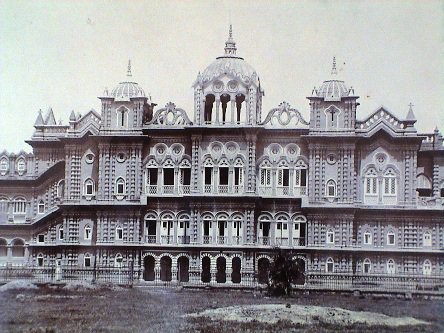
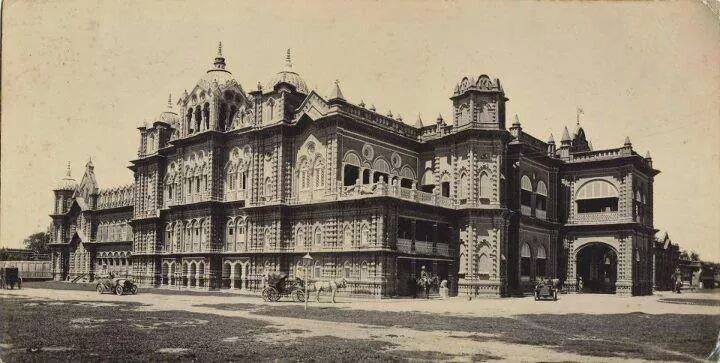
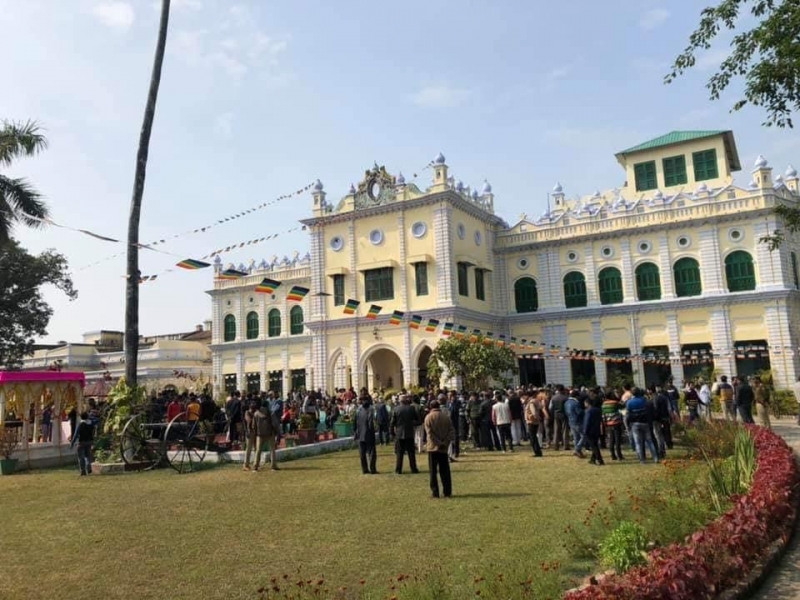
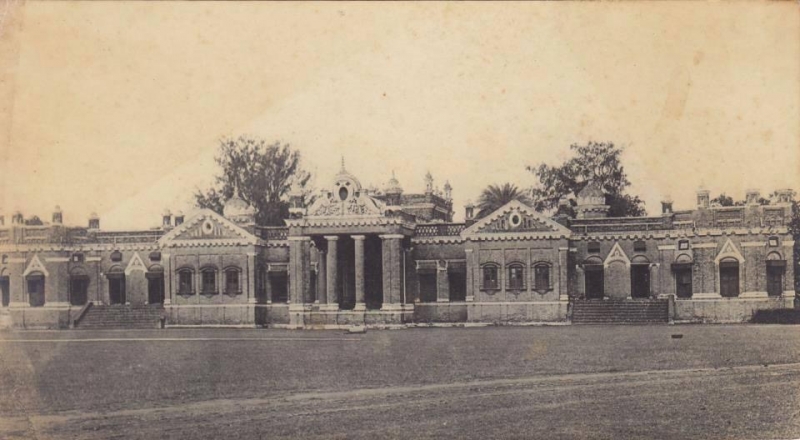
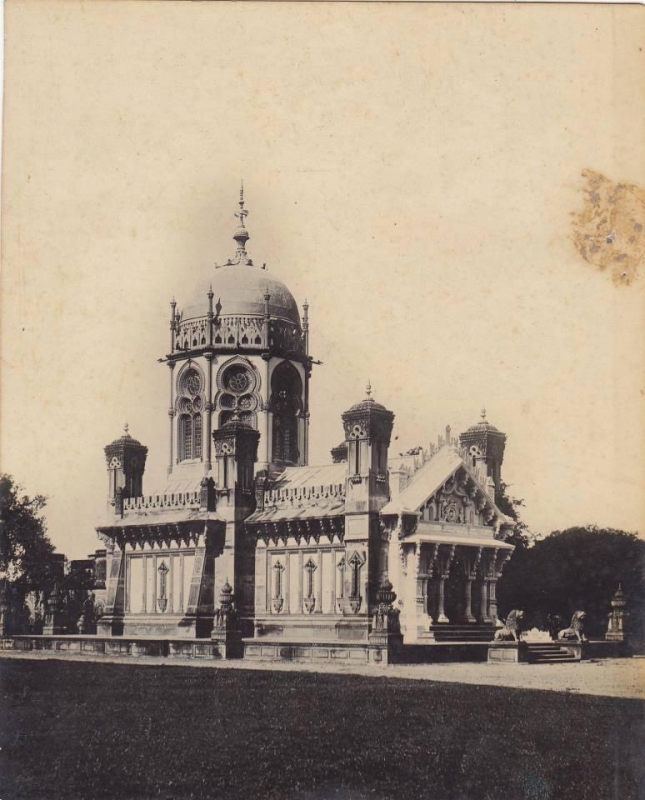
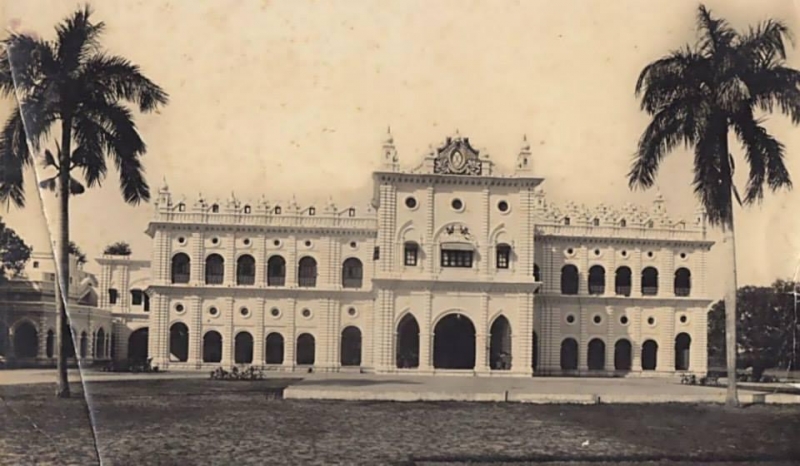
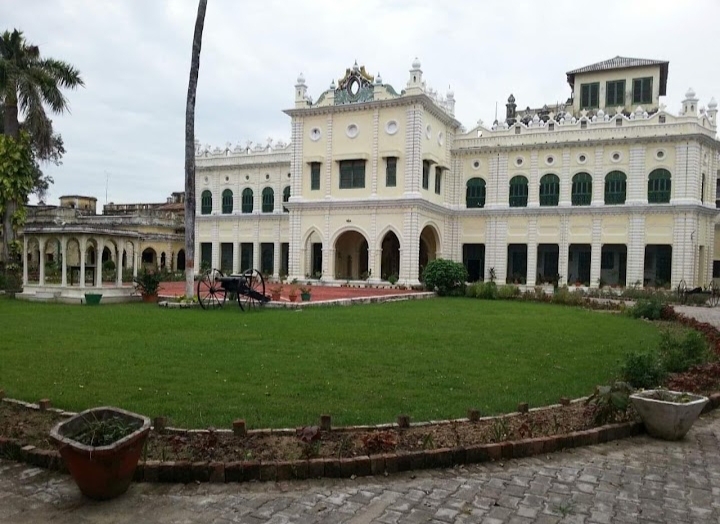
Upon India's independence in 1947, Maharaja Pateshwari Prasad Singh signed the Instrument of Accession, integrating the vast Balrampur estate into the Dominion of India. With the passage of the Uttar Pradesh Zamindari Abolition and Land Reforms Act in 1950, the agrarian taluqdari system was officially dismantled. Today, the legacy of the Janwar dynasty of Balrampur survives through the numerous educational institutions, hospitals, public trusts, and the imposing Balrampur Palace, which continues to stand as a historic landmark in eastern Uttar Pradesh.
Genealogy
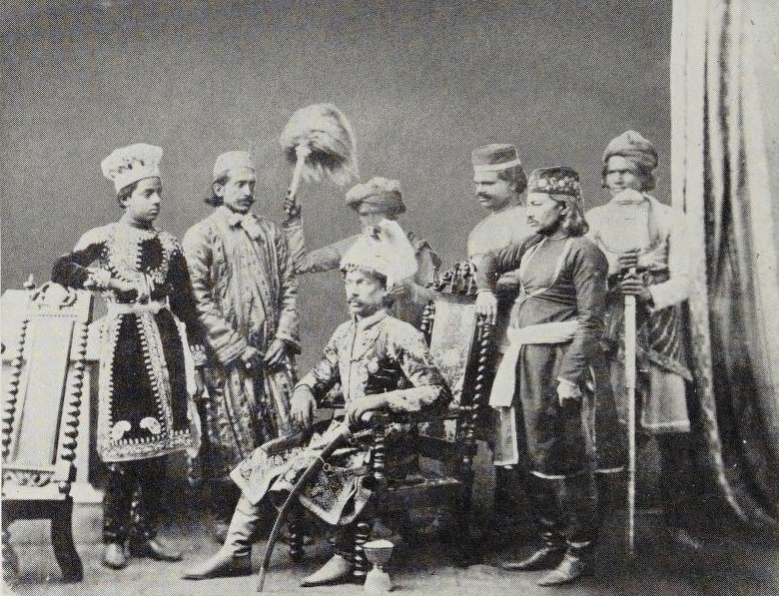
- Raja NAWAL SINGH, Raja of Balrampur 1777/-, one of the greatest warriors of the Janwars, repeatedly in conflict with the Nawab of Oudh, defeated, though never completely subjugated.
- Raja ARJUN SINGH, Raja of Balrampur, married and had issue.
- Raja Jai Narain Singh (qv)
- HH Hon. Maharaja Bahadur Sir Digvijay Singh (qv)
- Raja JAI NARAIN SINGH, Raja of Balrampur -/1836 , died .
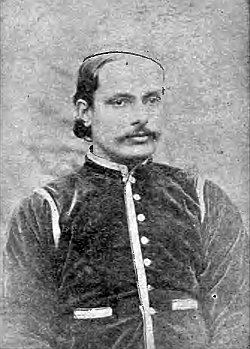
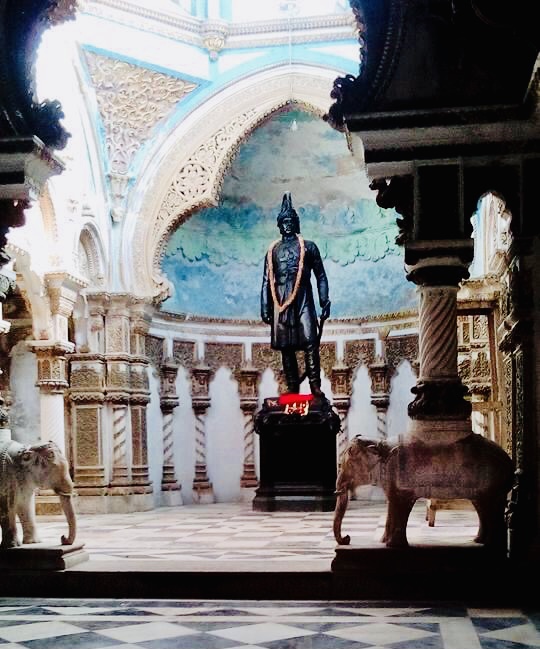
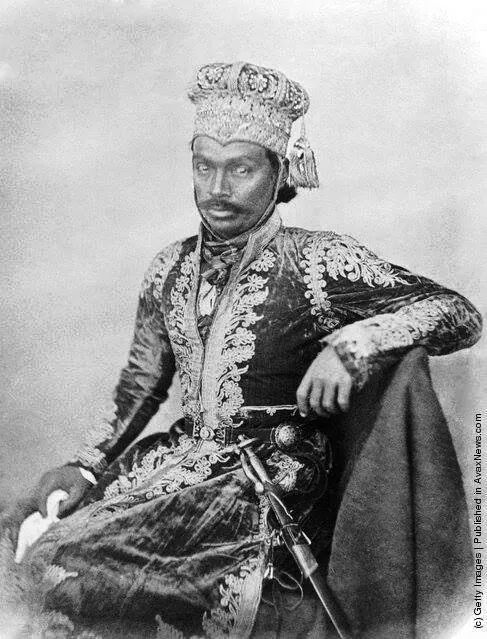
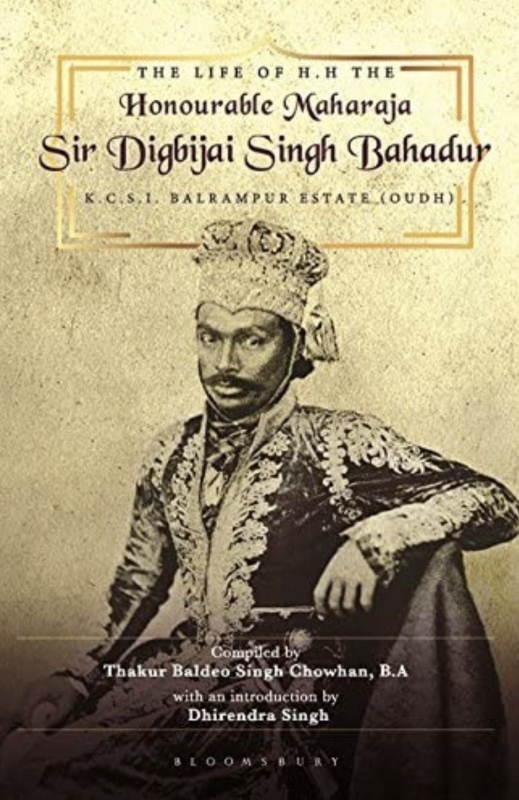
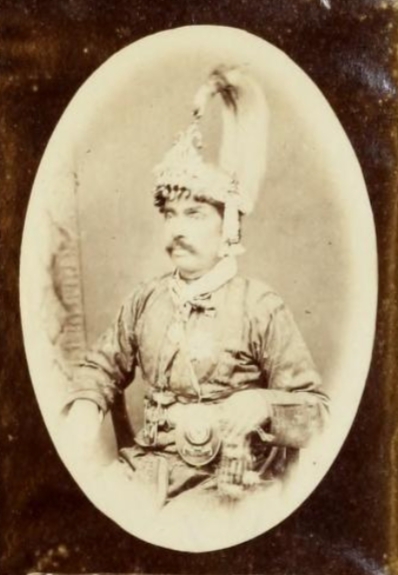
- Hon. HH Maharaja Bahadur Sir DIGVIJAY SINGH K.C.S.I., Raja of Balrampur 1836/1882, born , conspicuous for his loyalty to the British authorities during the Indian Mutiny in 1857, as a reward for his loyalty, large estates in Gonda and Bahraich were made over to him, he was awarded the K.C.S.I. in 1866 and granted the title of Maharaja Bahadur in October 1859, he also received a personal salute of 9 guns in 1877; he establised a High School and a Hospital at Balrampur, and another Hospital at Lucknow called the Balrampur Hospital; Member of the Governor General's Legislative Council; President of the British Indian Association 1861/1882, married HH Maharani Indra Kunwar (see below), and had issue by Imam Bandi, born shortly before 1831, a muslim lady in a secondary union. He died spl on 27th May 1882.
- Maharajkumar Bhaiya Jung Bahadur Singh (by Imam Bandi), born , he established a Hospital in Lucknow for the treatment of Europeans, married 1stly, 1861, Kunwarani Hansraj Kunwar, died , married 2ndly, 1872, Kunwarani Rajkali Kunwar, and had issue, as well as a further four sons by Najm-un-nissa, a muslim lady. He died .
- Rai Bahadur Bhaiya Ganga Bakhsh Singh (by Kunwarani Hansraj Kunwar), born , educated at the Lyall (Lyon?) Collegiate School, Balrampur; his name was entered in the Darbar list under orders of the Government in 1902 and he was appointed a Bench Honourary Magistrate in 1904, and an Honourary Magistrate for life in 1910 and a Munsiff in the same year; he was granted the title of Rai Bahadur in 1913.
- Bhaiya Sher Bahadur Singh (by Najm-un-nissa)
- Maharajkumar Bhaiya Jung Bahadur Singh (by Imam Bandi), born , he established a Hospital in Lucknow for the treatment of Europeans, married 1stly, 1861, Kunwarani Hansraj Kunwar, died , married 2ndly, 1872, Kunwarani Rajkali Kunwar, and had issue, as well as a further four sons by Najm-un-nissa, a muslim lady. He died .
- HH Maharani Indra Kunwar, Rani of Balrampur 1882/1886, she adopted Kunwar Udit Narayan Singh from Jewnar, Balrampur (son of Sir Gumaan Singh), who succeeded as Maharaja Bahadur Sir Bhagwati Prasad Singh. She died sp in 1893.
- (A) Maharaja Bahadur Sir Bhagwati Prasad Singh (qv)
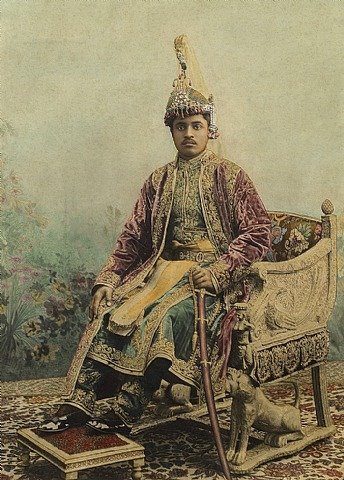
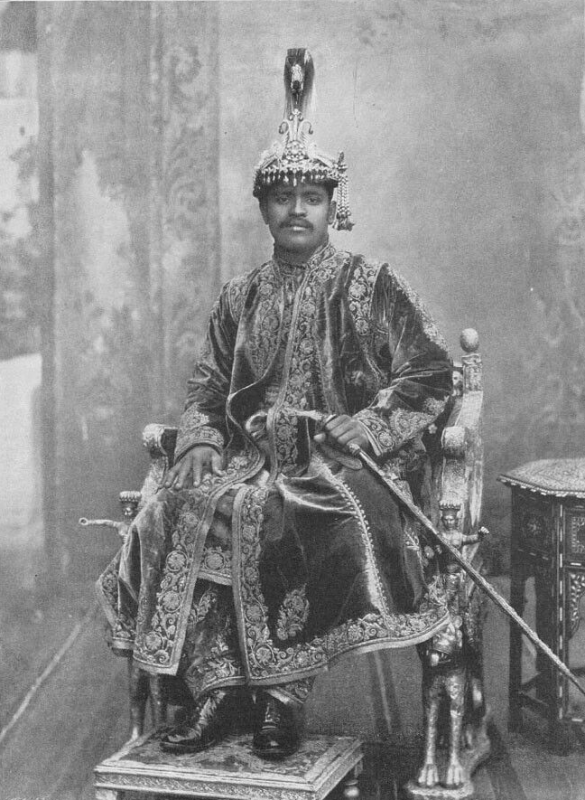
- Maharaja Bahadur Sir BHAGWATI PRASAD SINGH, Raja of Balrampur 1900/1921, born , K.C.I.E. [cr.1906], K.C.S.I., premier Taluqdar of Oudh after the Maharaja of Kapurthala, President of the British Indian Association 1906/1917 and 1920/1921, married and had issue. He died .
- Maharaja Bahadur Sir Pateshwari Prasad Singh (qv)
- Maharajkumari (name unknown), married HH Maharaja Lokendra Balbhadra Singh Ju Dev Bahadur, Maharaja of Datia, and had issue.
- Maharajkumari (name unknown), sixth daughter, married 16th January 1929, Capt. HH Bisam-Samar-Bijayi Mahamahodya Pancha-Srijukta Maharaja Manikya Sir Bir Bikram Kishore Deb Burman Bahadur of Tripura.
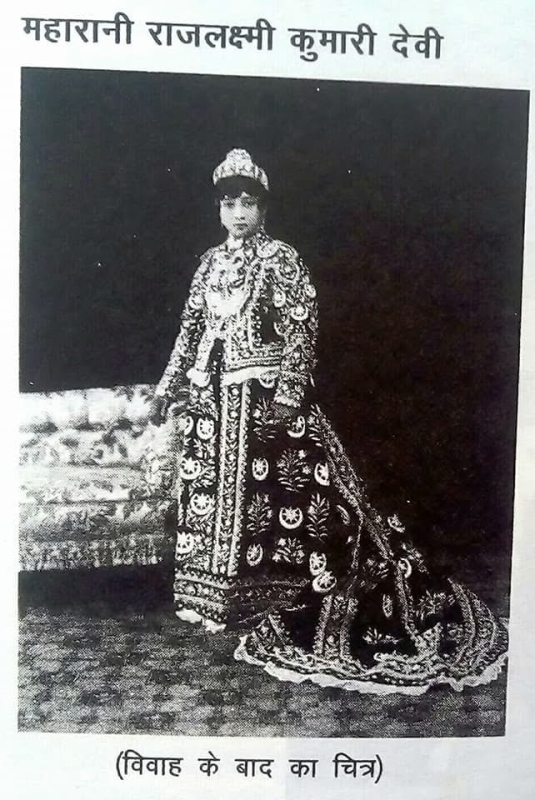
- Maharaja Bahadur Sir PATESHWARI PRASAD SINGH, Raja of Balrampur 1921/1964, born , educated at Mayo College, Ajmer; Kt. [cr.1941], under control of the Court of Wards 1921/1936, married 1932, Maharani Rajya Laxmi Kumari Devi, born , died sp 1999, daughter of HH Maharaja Chandra Shumsher Jung Bahadur Rana of Nepal. He died sp in 1964 and was succeeded by his adoptive son from Gangwal.
- (A) Kunwar Dharmendra Prasad Singh, son of Kunwar Bharat Singh of Gangwal, adopted by Maharaja Bahadur Sir Pateshwari Prasad Singh, and succeeded as Maharaja Bahadur Dharmendra Prasad Singh of Balrampur (qv)
- Maharaja Bahadur DHARMENDRA PRASAD SINGH, Maharaja of Balrampur since 1964. Born , educated at Mayo College, Ajmer; married 6th March 1980, Maharani Vandana Rajya Lakshmi, born , daughter of Lt. Col. Shri Ina Shumshere Jung Bahadur Rana of Nepal, and has issue. He died in .
- Maharaj Kumar Jayendra Pratap Singh (qv)
- Maharaj Kumari Vijayshree Singh, born .
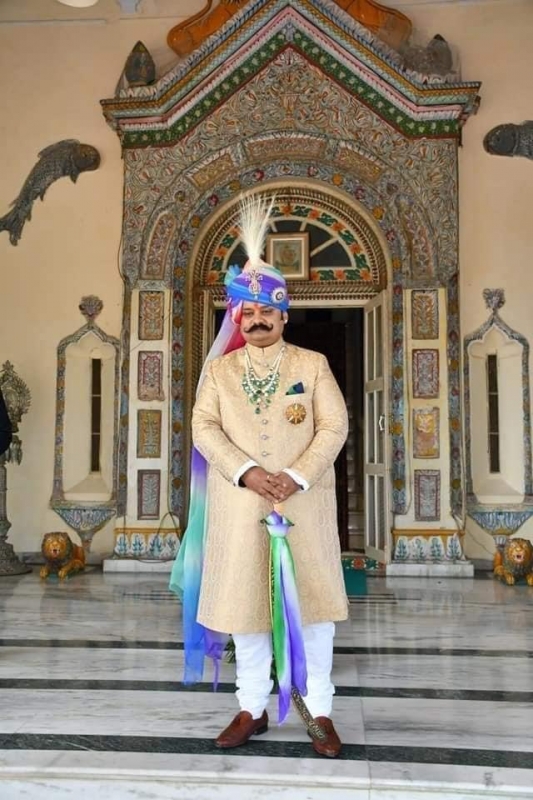
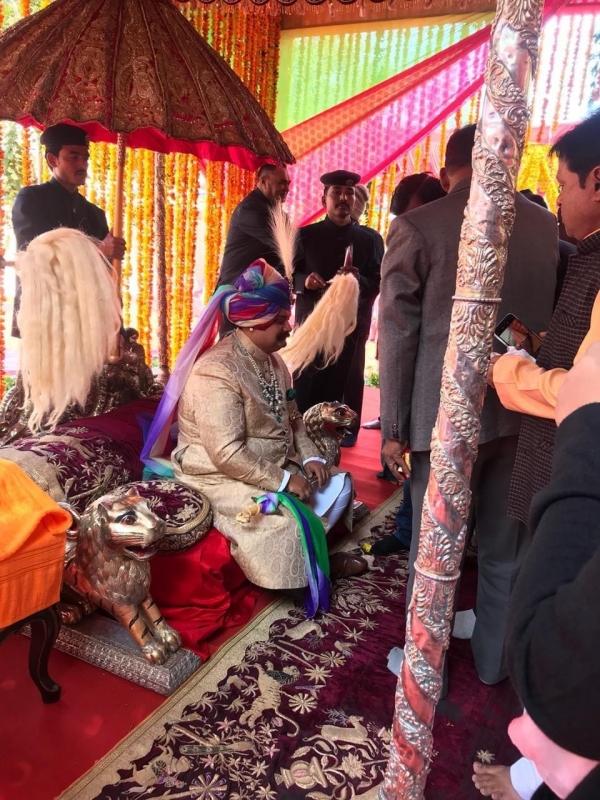
- Maharaja Bahadur JAYENDRA PRATAP SINGH, Raja of Balrampur (see above)