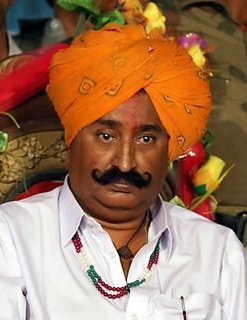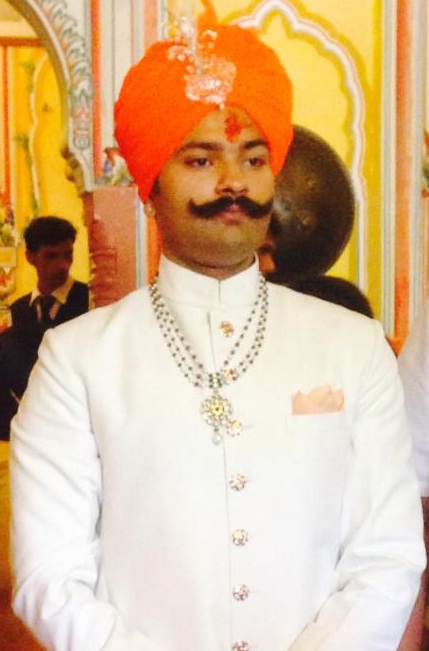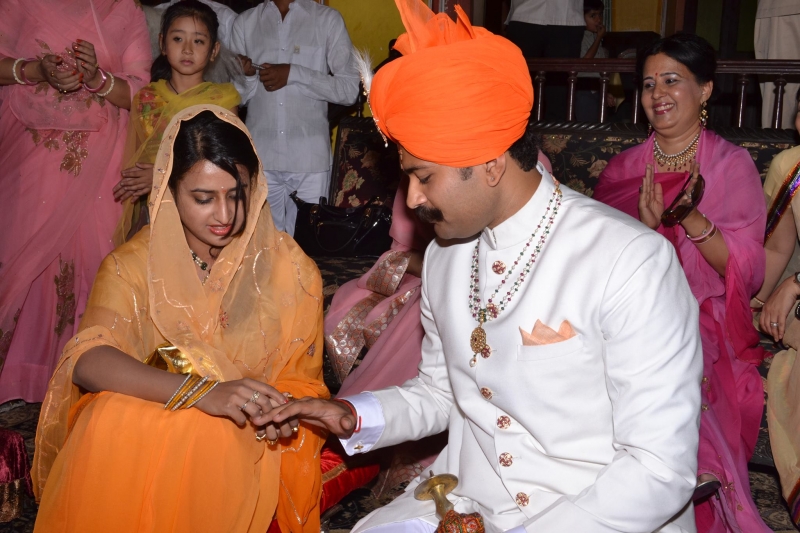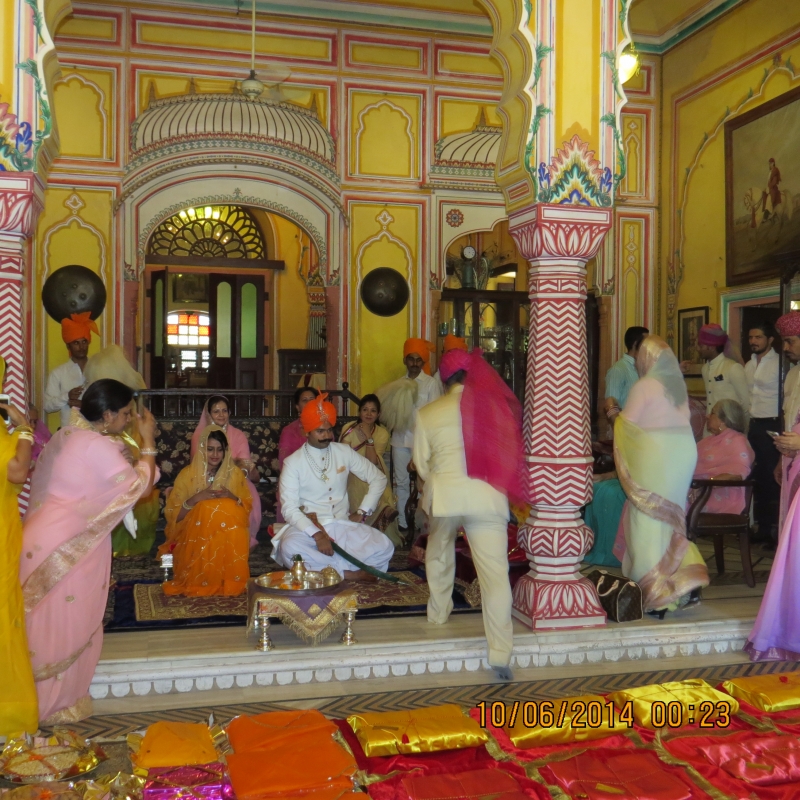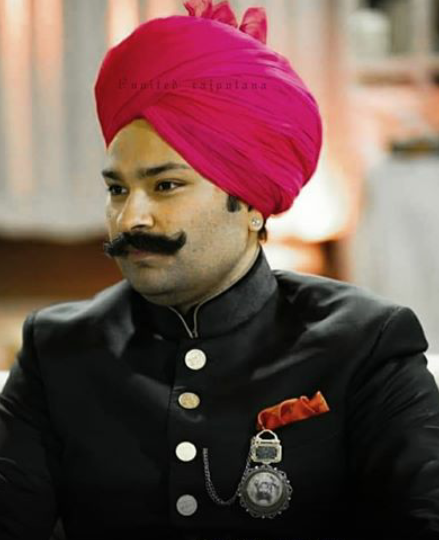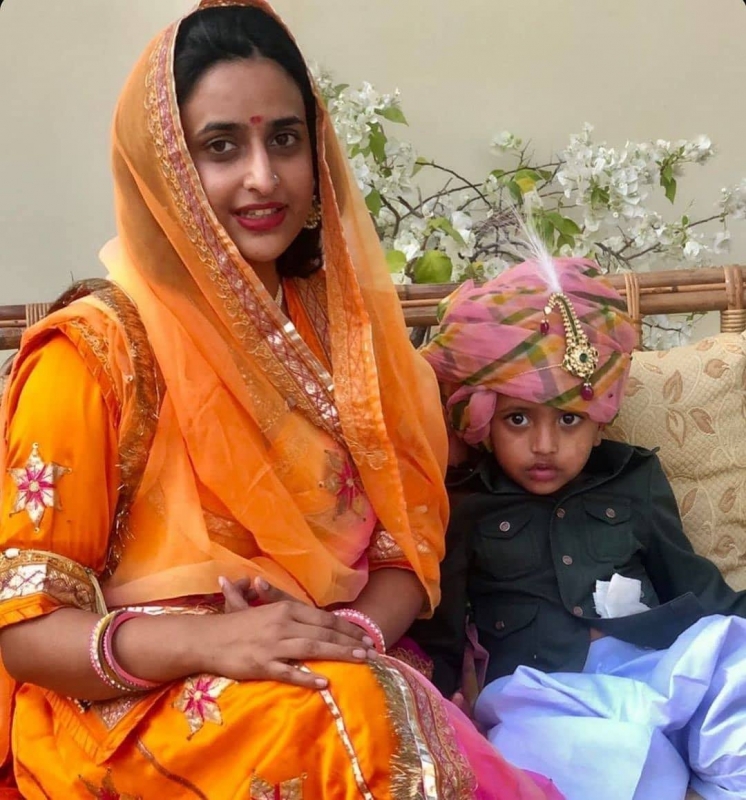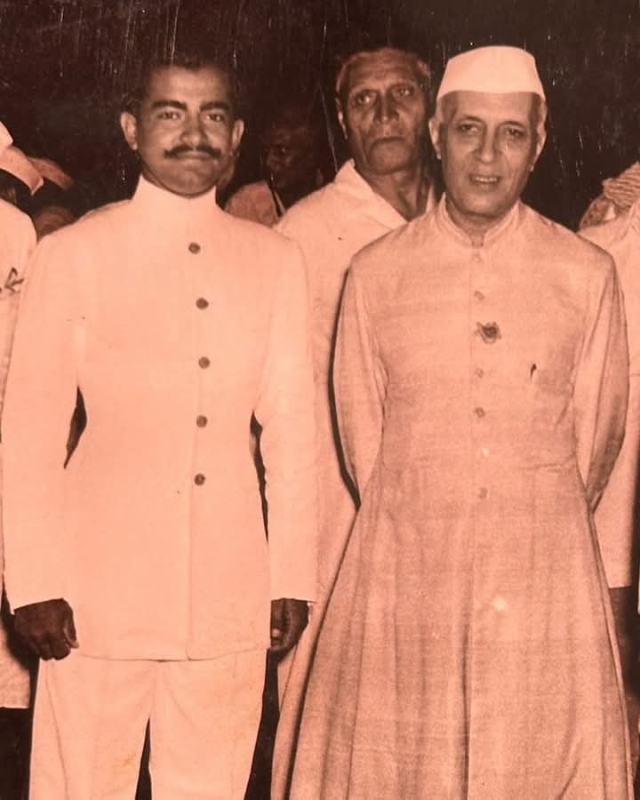
Present Head
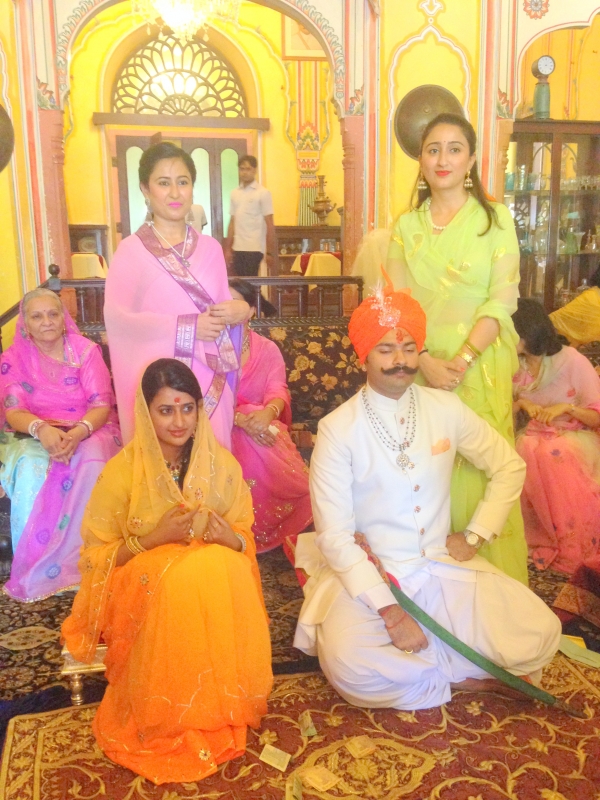
- Kumari Deval Sodha [from 1st wife], married 10th February 2004, Bhanwar Rudra Pratap Singh, son of Kanwar Gajendra Singh of Auwa, and his wife, Kanwarani Vishalakshi Devi, and has issues, one son and a daughter.
- Shiv Pratap Singh
- Simhasthita Singh
- Kumari Aprajita Sodha [from 1st wife] [Yuvrani Aprajita Devi of Awagarh], married April 2004, Yuvraj Ambrish Pal Singh, son of Raja Anirudh Pal Singh of Awagarh.
- Maharaj Kumarani Mahalaxmi Sodha [from 2nd wife], married February 2008, Maharaj Kumar Jayendra Pratap Singh, son and heir of Maharaja Bahadur Dharmendra Prasad Singh of Balrampur, and his wife, Maharani Vandana Rajya Lakshmi.
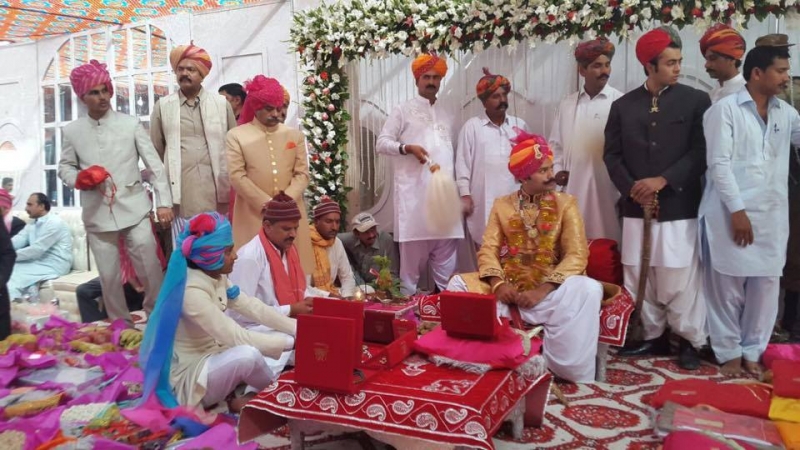
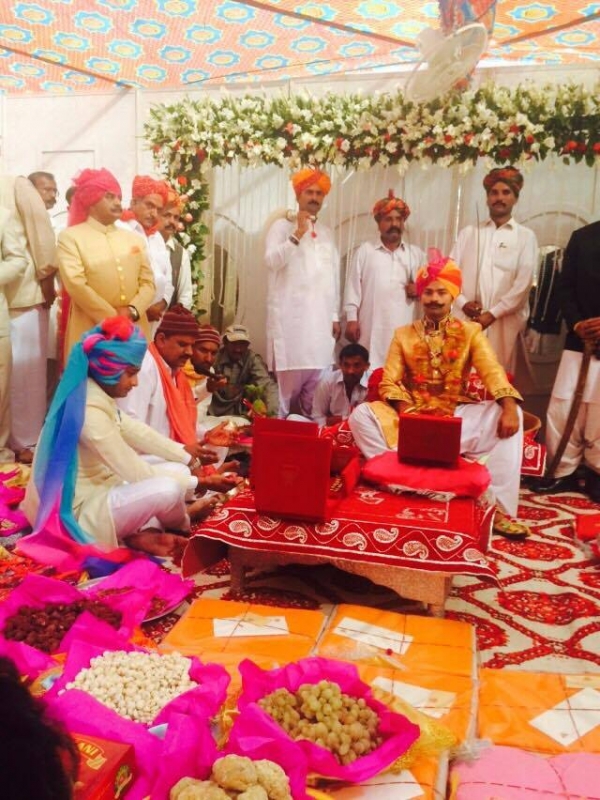
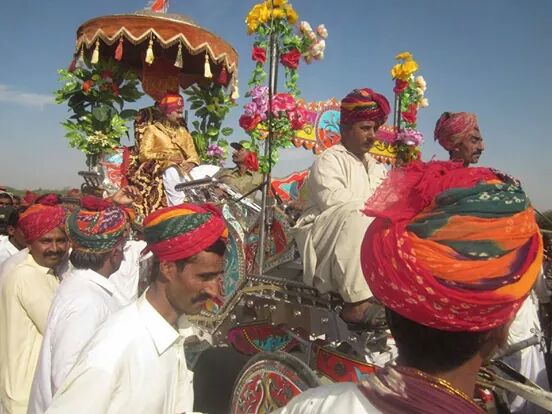
- Kunwar Karni Singh Sodha [from 2nd wife], married on 20th February 2015 to Baijilal Padmini Singh, daughter of Thakur Man Singh Rathore of thikana Kanota and has issue, one son. [TOI] [NDTV] [India-Today]
- Bhanwar Vishwaraj Singh Sodha, born .
History
Origin and Foundation of Amarkot
The foundation of the Amarkot Jagir (present-day Umerkot in Sindh, Pakistan) is deeply intertwined with the migration of the Sodha clan of the Parmar Rajputs. After establishing their dominance at Ratakot, the descendants of Rao Sodha pushed deeper into the Thar Desert. In the 13th century, Rana Parmar Dev was succeeded by Rana Rana Mal, whose descendants consolidated their hold over the region.
The town and fort of Amarkot were established as a strategic desert bastion, controlling the vital trade routes between Sindh and the Rajputana kingdoms of Jodhpur and Jaisalmer. The Sodha Ranas ruled this desert frontier with a unique administrative system, blending Rajput martial traditions with local Sindhi cultural practices. Over the centuries, they earned the respect of both Hindu and Muslim desert communities due to their chivalry and inclusive governance.
The Mughal Connection: Refuge to Humayun
The most celebrated chapter in the history of Amarkot occurred in 1542. The second Mughal Emperor, Humayun, was fleeing across the harsh Thar Desert after his defeat at the hands of Sher Shah Suri. Depleted of resources and pursued by enemies, Humayun sought refuge.
Rana Prasad (often referred to as Rana Parshad in Persian chronicles), the Sodha ruler of Amarkot, honored the ancient Rajput tradition of providing asylum to those seeking shelter. He welcomed the beleaguered emperor and his pregnant queen, Hamida Banu Begum, into his fort. It was during this period of sanctuary, on October 15, 1542, that the future Mughal Emperor Jalal-ud-din Muhammad Akbar was born at Amarkot. This act of safe harbor forged an enduring diplomatic bond between the Imperial Mughals and the Sodha Ranas, granting the Amarkot Jagir a highly respected status in the subcontinent's history.
Conflict with the Kalhoras and Talpur Mirs
During the 18th and early 19th centuries, as the Mughal central authority weakened, the regional powers of Sindh began asserting dominance. The Sodha Ranas of Amarkot faced continuous political pressure and military incursions from the Kalhora dynasty and, later, the Talpur Mirs of Sindh.
The strategic position of the Amarkot Fort made it a highly contested prize. In 1813, the Talpur Mirs of Hyderabad (Sindh) captured the fort, forcing the Ranas to pay tribute and severely restricting their sovereign administrative powers. Despite the military occupation of the fort, the Sodhas maintained their social influence and local authority as the traditional chieftains of the Thar desert region.
The British Raj and Administrative Reorganization
Following the British conquest of Sindh by Sir Charles Napier in 1843, the region's geopolitical dynamics shifted once again. Recognizing the historic influence of the Sodha clan, the British authorities entered into administrative settlements with the Ranas.
Amarkot was integrated into the Tharparkar district under the Bombay Presidency. The British recognized the Rana as a key political Jagirdar and local leader, granting them a political pension and confirming their land rights. The Ranas of Amarkot cooperated with the British administration to maintain peace in the volatile border region, while successfully preserving their ancient socio-cultural traditions and local court system.
Post-Independence and the Modern Era
The Partition of British India in 1947 placed Amarkot (Umerkot) within the Sindh province of the newly created Dominion of Pakistan. Unlike many Hindu royal families of Sindh and Baluchistan who migrated to India, the Ranas of Amarkot made the historic decision to remain with their subjects in Pakistan.
The modern era of the family was prominently shaped by Rana Chandra Singh (1931–2009), who was a highly respected political figure in Pakistan. He was a co-founder of the Pakistan Peoples Party (PPP), served as a federal minister multiple times, and later founded the Pakistan Hindu Party. His leadership ensured that the Sodha Rajputs maintained a strong, influential voice in Pakistani politics.
Today, his son, Rana Hamir Singh, serves as the titular 26th Rana of Amarkot. He continues to play an active role in regional politics and community leadership, serving as a vital symbol of interfaith harmony and cultural continuity in the Thar region of Sindh.
Genealogy
- Raja Dharnivrah, Raja of Nokoti in Marwar
- Rana Sodha, Rana of Ratakot, he moved to Amarkot and captured Ratakot, married and had issue, the Sodha clan of the Parmar Dynasty,
- Rana Raisi, Rana of Ratakot,
- Rana Chachakdev, Rana of Amarkot and Ratakot, in 1155 he captured Amarkot from the Umra Parmar Rajputs, a clan of the Parmar Dynasty
- Rana Jaibhram, Rana of Amarkot
- Rana Jasahad, Rana of Amarkot
- Rana Someshwar, Rana of Amarkot
- Rana Dharavarsh, Rana of Amarkot, married and had issue.
- Rana Durjanshal [aka Dalji] (qv)
- Rana Aasrao (see Parkar)
- Rana Durjanshal, Rana of Amarkot, married and had issue.
- Rana Avtarde (qv)
- Rani Natalde, married to Rao Ramdevji, son of Raja Ajmalji of Pokhran (see Ramdevra)
- Rana Avtarde, Rana of Amarkot
- Rana Thira, Rana of Amarkot
- Rana Hamir I, Rana of Amarkot
- Rana Beesa, Rana of Amarkot
- Rana Tejsi, Rana of Amarkot
- Rana Kumpa, Rana of Amarkot
- Rana Champa, Rana of Amarkot
- Rana Ganga, Rana of Amarkot
- Rana PARSHAD SINGH [aka Patta], Rana of Amarkot -/1540, he was a contemporary of the Mughal Emperor Humayum (1530/1556)
- Rana CHANDRASEN, Rana of Amarkot
- Rana BHOJRAJ, Rana of Amarkot
- Rana ISHWARDAS, Rana of Amarkot (1708)
- .......
- Rana BAHABUT SINGH, Rana of Amarkot, ancestor of the later Rana Sahebs of Amarkot.
- .......
- Rana MEHRAJ SINGH, 23rd Rana of Amarkot; married and had issue.
- Rana Arjun Singh (qv)
- Rana ARJUN SINGH, 24th Rana of Amarkot -/1947, married Rani Dev Kumari, daughter of Thakur Bheru Singhji of Khatipura and had issues. He died .
- Rana Chander Singh (see above)
- Thakur Saheb Inder Singhji, born .
- Thakur Saheb Balbeer Singhji, born , married Rani Indira Kumari, youngest daughter of Rawat Jai Singhji, 3rd Rawat Saheb of Meja.
- Kunwar Vikram Singh, married Rajkumari Kirti Kumari, daughter of Indrajit Singh Ji, Rao Saheb of Garhi and Rani Sampat Kumari, daughter of Maharaj Shri Ajit Singh Sahib of Jodhpur and has issue, one daughter.
- Baisa Kiran Kumari, married in 2015 to Kanwar Dhruv Singh of Alsisar.
- Thakur Rajvir Singh, married to Uma Kumari, daughter of Rawat Hari Singh of Begu.
- Thakur Vikram Singh, married to Kirti Kumari of Garhi, Banswara.
- Thakurani Sarita Kumari, married to Thakur Himmat Singh of Ghanerao.
- Thakur Trilokh Singh, married to Priya Kumari from Khawasa.
- Kunwar Vikram Singh, married Rajkumari Kirti Kumari, daughter of Indrajit Singh Ji, Rao Saheb of Garhi and Rani Sampat Kumari, daughter of Maharaj Shri Ajit Singh Sahib of Jodhpur and has issue, one daughter.
- Rana CHANDER SINGH, 25th Rana of Amarkot 1947/2009, born in Rana Jagir, Tharparkar District, he was one of the founder members of Pakistan Peoples Party (PPP) and was elected to the National Assembly of Pakistan from Umerkot, seven times with the PPP between 1977 and 1999; he served as Minister for Agriculture and Revenue, and was Chairman of the National Commission of Minorities; married Rani Subhadra Kumari, daughter of Rawat Tej Singhji of Rawatsar in Bikaner, and his wife, Rani Lakshmi Kumariji, and had issue, four sons and one daughter. He died in Karachi and was cremated at Rana Jagir.
- Kunwar Jungvijay Singh, born .
- Kunwar Hamir Singh, succededed as Rana Hamir Singh (qv)
- Kunwar Bhopal Singh, born . (U.S.A.)
- Late Kunwar Dr. Pritipal Singh Sodha, previously employed with the Aga Khan University Hospital, Karachi; married Kunwarani Ronilla Singh Ranawat, Administrative Coordinator of the Foundation Public School, daughter of Col. Thakur Ran Vijay Singh Ranawat of Kankarwa, and has issues, two sons.
- Kunwar Karan Singh Sodha
- Kunwar Bhawani Singh Sodha
- Rajkumari Sangeeta Kumari, married to Thakur Narpat Singh Ranawat of Shahpura, and has issue, two children.
- Kunwar Shatrunjay Pratap Singh, Conservationist working for the survival of tigers in India.
- Kunwar Aditya Singh
- Rana HAMIR SINGH, 26th Rana of Amarkot (qv)
- Thakur Aidan Singh, born about 1893 in Rana Jagir, married and had issue.
- Kunwar Jagat Singh
- Thakur Bher Singh, married and had issue.
- HH Maharani Sahib Hawa Kanwar, married 1927 (as his second wife), HH Maharajadhiraj Maharawal Girdhar Singhji of Jaisalmer, and had issue. She died .
- Kunwar Rajvir Singh, nephew of Rana Chander Singh, married Kanwarani Uma Kanwar, daughter of Rawat Sawai Hari Singhji II of Begun, and his first wife, Rani Kanchan Kunwar.
- Kunwarani Sarita Kumari, married Kunwar Himmat Singh, son of Thakur Sajjan Singhji of Ghanerao.
- HH Maharani Sahib Jadau [Het] Kanwar of Amarkot(?Umarkot), married (as his second wife), HH Maharajadhiraj Maharawal Sir Jawahir Singhji Bahadur of Jaisalmer.
- Kaurani Prakash Kanwar Sodha ji, married Maharaj Chanderveer Singhji of Ratlam.
- Thakur Verishal Singhji, married and had issue.
- Rani Nain Kanwar Sodisa, married Capt. Maharaj Mohan Singhji of Raoti, and has issue.