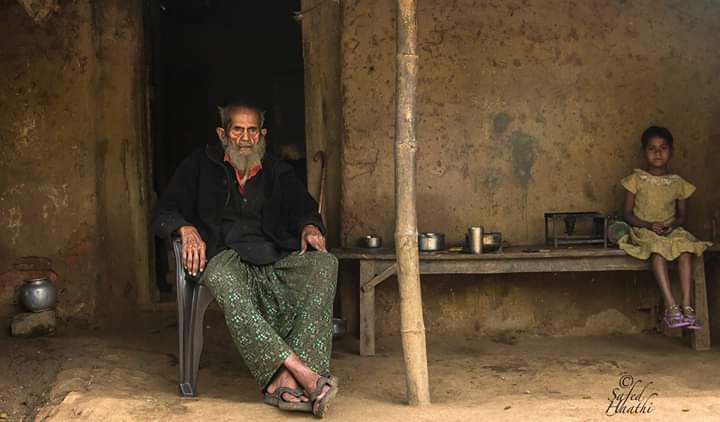
Present Head
History
Origin and Foundation of Tigiria State
The princely state of Tigiria (also known as Tigirya) was one of the smallest princely states of India during the British Raj, located in present-day Cuttack district of Odisha. The state was founded in 1246 CE by Raja Nityananda Tunga. According to local historical accounts and folklore, Raja Nityananda Tunga migrated from northern India and established his rule over the region after defeating local chieftains. The name "Tigiria" is widely believed to have been derived from the Sanskrit word Trigiri, meaning "Three Hills," referring to the prominent hillocks that bounded the territory.
The ruling dynasty belonged to the Kshatriya Tunga clan. Despite its small geographic footprint—covering an area of only about 46 square miles (approximately 119 square kilometers)—the rulers of Tigiria maintained a high degree of autonomy and successfully preserved their cultural and political identity against surrounding larger kingdoms.
The Medieval Period: Maratha and Mughal Influence
During the medieval era, Tigiria was positioned between larger, more aggressive neighboring states such as Athgarh, Baramba, and Dhenkanal. Like most of the Garhjat (tributary) states of Odisha, Tigiria paid nominal allegiance to the imperial powers ruling from Cuttack, including the Gajapatis of Odisha, the Mughals, and later the Marathas.
Under the Maratha Empire, the rulers of Tigiria paid a fixed annual tribute known as Peshkash. Despite these external demands, the internal administration of Tigiria remained largely undisturbed, allowing the local rulers to foster Odia culture, traditional military arts, and administrative systems peculiar to the hilly tracts of western and central Odisha.
The British Raj and Treaty of 1803
Following the defeat of the Marathas in the Second Anglo-Maratha War, the British East India Company took control of Odisha in 1803. In the same year, the ruler of Tigiria, along with other chiefs of the Orissa Tributary Mahals, signed a treaty engagement acknowledging British suzerainty. Under the British administration, Tigiria was classified as a non-salute state and was managed under the political supervision of the Commissioner of Orissa at Cuttack, who functioned as the political agent.
Despite its small size, the British administration recognized the ruler's local authority, granting them sanads (charters) that defined their administrative and judicial powers. The state paid a small tribute (taka) to the British treasury and was recognized for maintaining peaceful internal administration.
Key Reformers and Rulers
Several rulers of Tigiria left a lasting mark on the development of the state through administrative and social reforms:
- Raja Harihar Kshatriya Birbar Chamupati Singh Mahapatra: Ruling in the latter half of the 19th century, he was highly regarded for his benevolence, patronage of arts, and educational initiatives. He established primary schools, improved agricultural irrigation, and constructed temples, including the famous Prasanna Purusottama Temple.
- Raja Brajraj Kshatriya Birbar Chamupati Singh Mahapatra: Born in , he was the last coronated ruler of Tigiria. Known for his modern education and progressive views, he took over the administration in the twilight years of the British Raj and navigated the difficult transition during the integration of Indian states.
Post-Independence and Modern Era
Following India's independence in 1947, the rulers of the Orissa Feudatory States signed the Instrument of Accession. On January 1, 1948, Tigiria formally merged into the Dominion of India, eventually becoming a part of the newly formed state of Orissa (now Odisha).
The post-independence history of Tigiria is marked by the poignant story of its last ruler, Raja Brajraj Kshatriya Birbar Chamupati Singh Mahapatra. After the abolition of the privy purses by the Indian Government in 1971, the former ruler fell into extreme poverty, eventually selling his palace and living in a mud hut among his former subjects, who continued to hold him in high esteem until his death on November 30, 2015. His passing marked the end of an era, as he was widely reported as the last surviving formal ruler of the erstwhile princely states of Odisha.
Today, Tigiria is a bustling block and tehsil within the Cuttack district of Odisha. It is known for its rich handloom weaving traditions, scenic beauty, and historical temples that attract tourists and historians alike.
References and External Links
- Read more about the history of Tigiria on the Tigiria State Wikipedia Page.
- Explore historical and administrative data on the Official Website of Cuttack District.
- Read the obituary of the last ruler of Tigiria on BBC News.
Genealogy
- Raja SANKARASWAR Mandhata, Raja of Tigiria 1682/1742
- Raja GOPINATH CHAMUPATI SINGH, Raja of Tigiria 1743/-
- Raja JADUMANI RAI SINGH, Raja of Tigiria -/1793
- Raja JAGANNATH CHAMPUTI SINGH, Raja of Tigiria 1797/1844
- Raja HARIHAR BIRABARA KSHATRIYA CHAMUPATI SINGH Mahapatra, Raja of Tigiria 1844/1886, born , married and had issue. He died .
- Raja Banamali Birabara Kshatriya Singh Mahapatra (qv)
- Raja BANAMALI BIRABARA KSHATRIYA SINGH Mahapatra, Raja of Tigiria 1886/1933, born , succeeded 8th April 1886.
- Raja SUDHARSHAN BIRABARA KSHATRIYA CHAMUPATI SINGH Mahapatra, Raja of Tigiria 1933/1943, married Rani Bilaswati Devi, a Princess of Sonepur, died , and had issue, two sons and a daughter. He died at Manjusha.
- Rajkumar Ram Chandra Singh Deo, adopted into Manjusha and succeded there as Raja Jaganath Rajmani Raj Deo of Manjusha.
- Raja Brajraj Birabara Kshatriya Champuti Singh Mahapatra (qv)
- Rajkumari Kamal Kumari Devi [Rani Kamal Kumari Devi of Tekkali], married Raja Jagannath Deo Varman of Tekkali-Junior, and had issue, one daughter. She died .
- Rani Vedashree Devi, married the Raja Saheb of Tarla.
- Raja BRAJRAJ KSHATRIYA BIRBAR CHAMUPATI SINGH Mahapatra, Raja Saheb of Tigiria 1943-2015, born , died , he was a Life Member of the Governing Council of Rajkumar College in Raipur, he was a keen shikari and has written a number of short stories about his hunting exploits and experiences; married Rani Rasmanjari Devi, born , daughter of Shri Jashwant Singh Deo of Sonepur, she is a former member of the Orissa Legislative Assembly; and has issue, three sons and three daughters.
- Yuvaraj Bir Pratap Singh Deo, born , unmarried.
- Rajkumari Savita Devi, born , married Kumar Sitesh Sinha of Kolkata, no issue.
- Rajkumari Kavita Devi, born , married Kumar Ranendra Pratap Singh Deo, son of Rajkumar Shesh Pratap Singh Deo of Dhenkanal, and has issue, one son and one daughter.
- Kumar Jeetendra Pratap Singh Deo, born , married Kumari Nabonita Devi, daughter of Thakur Gajendra Singh of Dhamotar, and his wife, Thakurain Devendra Kumari, and has issue, one daughter.
- Kumari Mridvika aged 7 years.
- Kumari Aparna Devi, born , married in Pachlana, Kumar Vrish Kirti Rathore, and has issue, one daughter.
- Kumari Shamadmika
- Kumar Jeetendra Pratap Singh Deo, born , married Kumari Nabonita Devi, daughter of Thakur Gajendra Singh of Dhamotar, and his wife, Thakurain Devendra Kumari, and has issue, one daughter.
- Rajkumari Mamata Jee, born , married Anup Kumar Jee of Cuttack, and has issue, two daughters.
- Amrita Jee
- Anita Jee
- Pattayet Bikram Pratap Singh Deo, born , Committee Member of Rajkumar College, Raipur; married Pattayet Rani Rita Singh Deo of Riding, a Zamindari of Kharswan, and has issue, one son.
- Kumar Parameswar Pratap Singh Deo, studying in Rajkumar College, Raipur.
- Rajkumar Bijoy Pratap Singh Deo, born , works for Indian Airlines; married Kumari Parminder Singh Deo, and has issue, two daughters. (Hyderabad, India)
- Kumari Sneha Singh Deo
- Kumari Shruti Singh Deo
- Raja Bir Pratap Singh Deo (see above)