
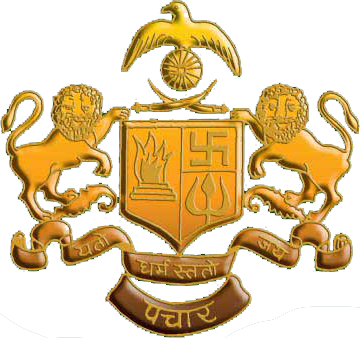
Present Head
- Kunwar Rajendra Singh Ji
- Bhanwar Dhananjay Singh, married to Radhika Kumari, daughter of Bhupendra Singh Ji of Baneria (Mewar).
- Baisa Vijya Raje Singh Shekhawat, born .
- Baisa Mahashree Raje Singh Shekhawat, born .
- Bhanwar Pramukh Raj Singh, married to Harshita Kumari Ranawat, daughter of Maharaj Nimiraj Singh Ji of Karjali.
- Bhanwar Dhananjay Singh, married to Radhika Kumari, daughter of Bhupendra Singh Ji of Baneria (Mewar).
- Kunwar Jitendra Singh Ji
- Bhanwar Himanshu Singh
- Kumari Geetanshu Shekhawat, married to Kunwar Adhiraj Singh Rathore (Harpalsar).
- Kumari Sneha Shekhawat
History
Origin and Ancestral Lineage
The historical lineage of the ruling family of Pachar is rooted in the Suryavanshi clan of Rajputs, tracing their ancestry back to the epic hero Lord Rama through his son, Kusha. Over the centuries, this branch evolved into the formidable Kachwaha dynasty. In the 15th century, Rao Shekha, a legendary warrior and descendant of this line, carved out an independent principality that came to be known as Shekhawati.
The Pachar family belongs to the Sawaldasot sub-clan of the Shekhawat Rajputs. They are the direct descendants of Thakur Sanwal Das Ji (also referred to as Sawal Das Ji), who was the son of Rao Lunkaran of Amarsar. In 1590 AD, in recognition of his military prowess and loyalty, Sanwal Das Ji was granted the prestigious estate (Jagir) of Pachar and Hastera, marking the political foundation of the estate.
The Founding of Pachar Garh
For the first few generations, the family governed their estate from established regional strongholds. However, in 1725 AD, Thakur Bhim Singh, the third descendant of Thakur Sanwal Das Ji, laid the foundation stone of the grand Pachar Garh (Pachar Fort). This fortification served as the administrative and military nucleus of the estate, consolidating the family's influence and providing a secure haven for trade and agriculture in the region.
The Era of Conflicts and the Title of 'Sarkar'
During the turbulent 18th century, the rulers of Pachar played a crucial role in the military campaigns of the Jaipur State. The most celebrated chapter in the history of Pachar was written by Thakur Guman Singh Ji. In December 1767, he led his forces in the historic Battle of Maonda and Mandoli, fought between the forces of Maharaja Sawai Madho Singh I of Jaipur and Maharaja Jawahar Singh of Bharatpur.
Thakur Guman Singh Ji exhibited exemplary valour and sacrificed his life on the battlefield. According to local folklore and historical accounts, so intense was his martial spirit that he continued to decapitate enemy soldiers even after being mortally wounded and beheaded. In honor of this legendary sacrifice and the family's unwavering allegiance, the Jaipur Durbar officially bestowed the highly prestigious hereditary title of 'Sarkar' upon his descendants.
Architectural Patronage and Cultural Heritage
The 19th and early 20th centuries were marked by peace, cultural patronage, and significant architectural developments. Thakur Sarkar Bagh Singh Ji, a deeply spiritual ruler, constructed the historic Narsingh Temple in Pachar, which became a vital spiritual hub for the local populace.
As the need for defensive fortifications gave way to administrative luxury, Thakur Sarkar Gopal Singh Ji initiated the construction of the grand residential palace (the present-day Castle Pachar). This magnificent structure, showcasing a blend of traditional Rajput and Shekhawati architectural styles, was later completed by his successor, Thakur Ganpat Singh Ji.
Post-Independence and the Modern Era
Following India's independence in 1947 and the subsequent integration of the princely states, the Jagirdari system was abolished. The royal family of Pachar successfully adapted to the democratic transition by turning their efforts toward heritage conservation and local philanthropy.
In 1995, Thakur Sarkar Shivnath Singh Ji and Thakur Surendra Singh Ji undertook a meticulous restoration of their ancestral palace, converting Castle Pachar into a premier heritage hotel. Today, the castle stands as a living museum of Shekhawati's glorious past, welcoming international travelers while preserving the deep-rooted cultural and historical traditions of the Sawaldasot Shekhawats.
Genealogy
- Rao Shekha Ji
- Rao Raimal Ji
- Rao Suja Singh Ji
- Rao Lunkaran Ji of Amarsar
- Thakur Sanwaldas ji
- Thakur Roop Singh Ji
- Thakur Rundh Singh Ji
- Thakur Bhim Singh Ji
- Thakur Sarkar Guman Singh Ji
- Thakur Sarkar Ram Singh Ji
- Thakur Sarkar Puran Mal Ji
- Thakur Sarkar Chand Singh Ji
- Thakur Sarkar Bagh Singh Ji
- Thakur Sarkar Keshari Singh Ji
- Thakur Sarkar Gopal Singh Ji
- Thakur Sarkar Kalyan Singh Ji (qv)
- Madho Singh Ji
- Udai Singh Ji
- Karan Singh Ji
- Thakur Sarkar Kalyan Singh Ji
- Thakur Sarkar Ganpat Singh Ji
- Thakur Sarkar Shivnath Ji (qv)
- Thakur Surendra Singh Ji
- Kunwar Mahendra Singh
- Bhanwar Yadunandan Singh
- Kunwar Yogendra Singh
- Kunwar Mahendra Singh
- Thakur Sarkar Shivnath Ji (see above)