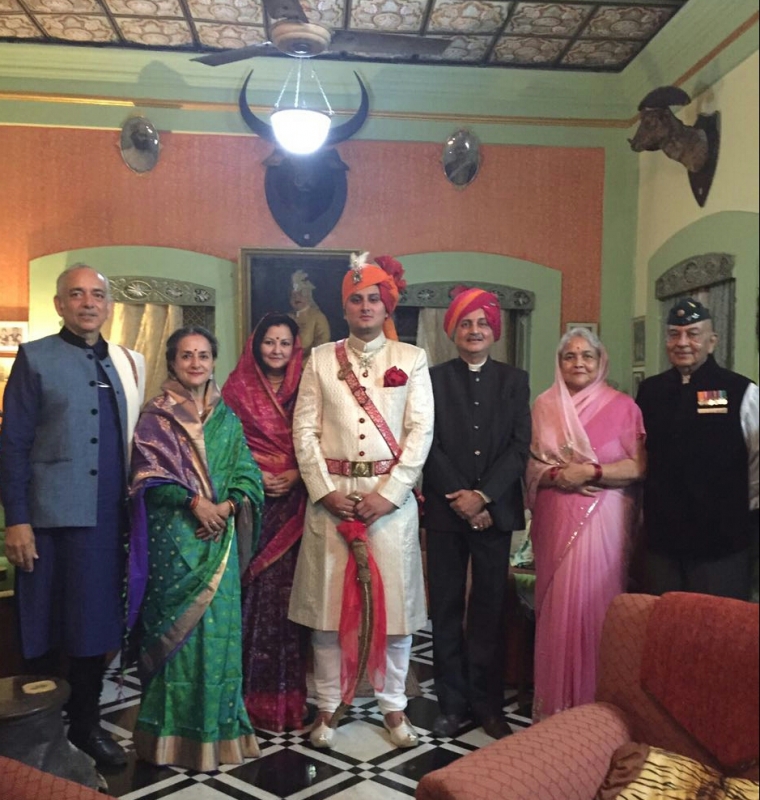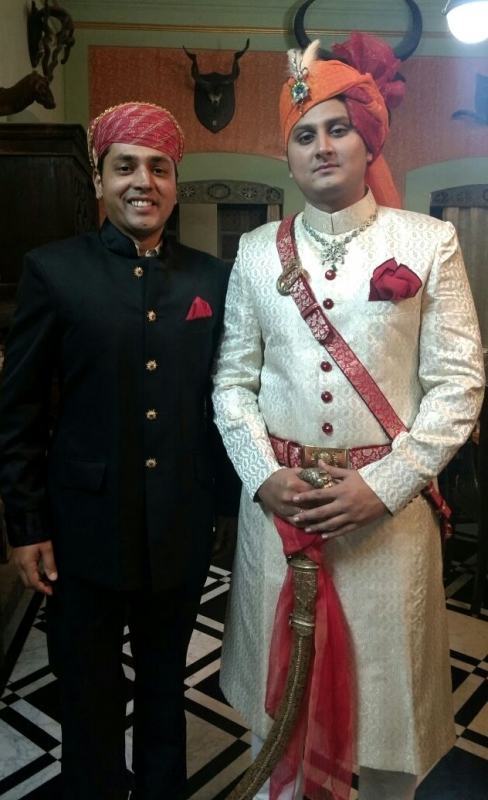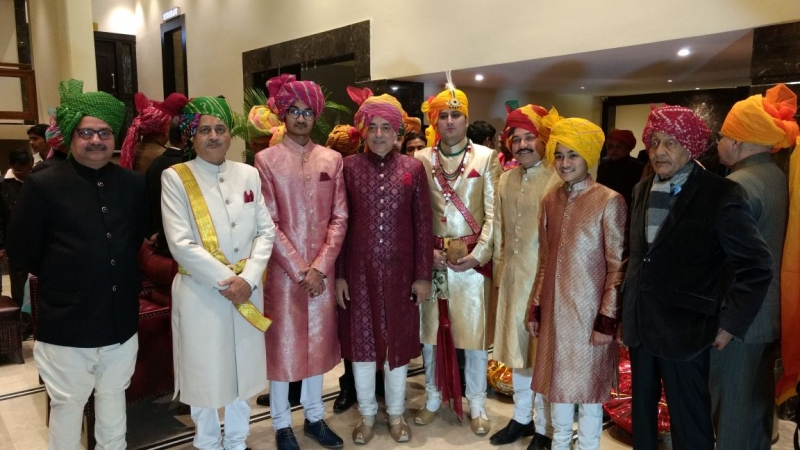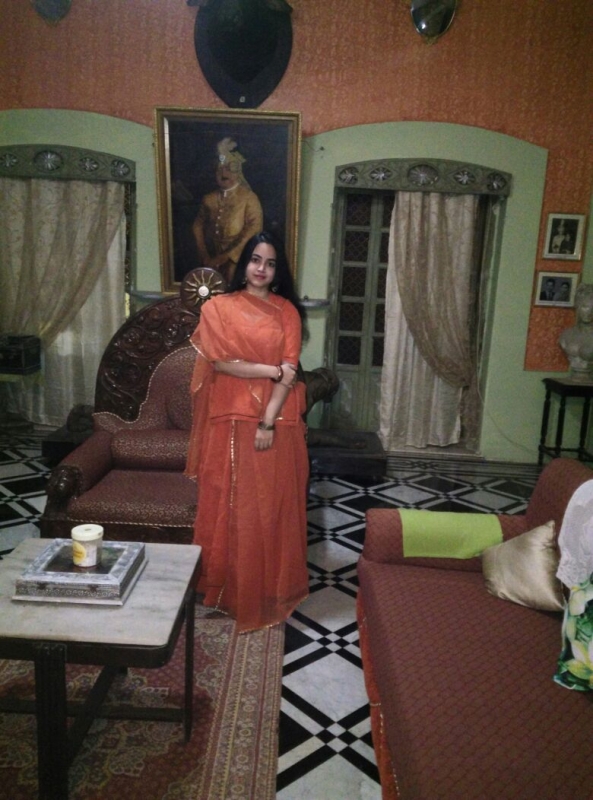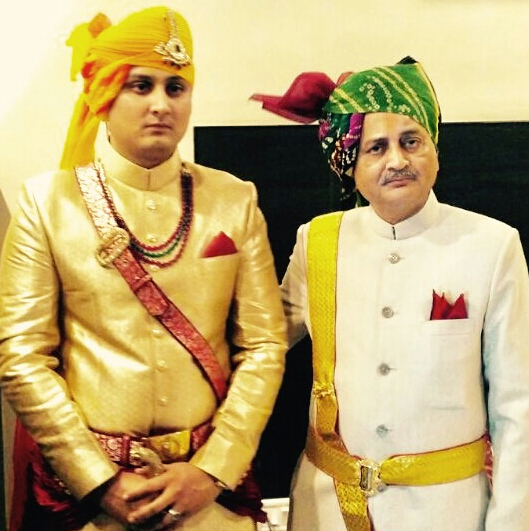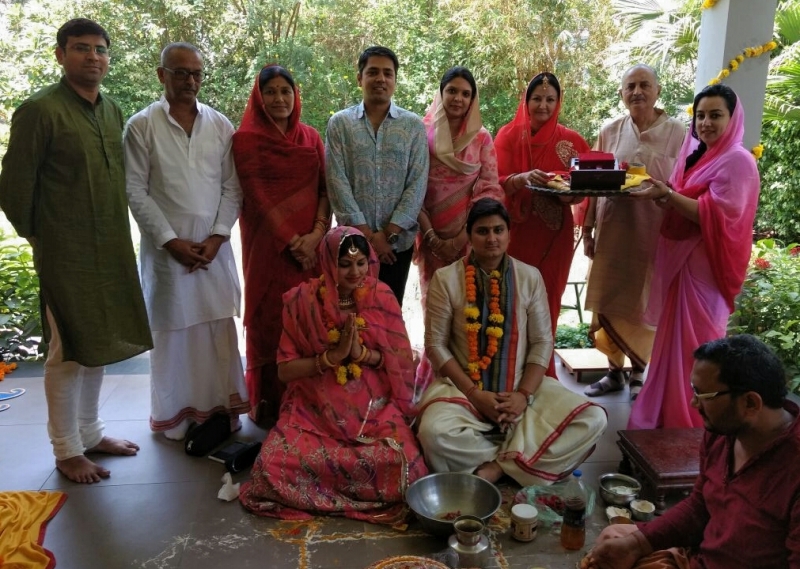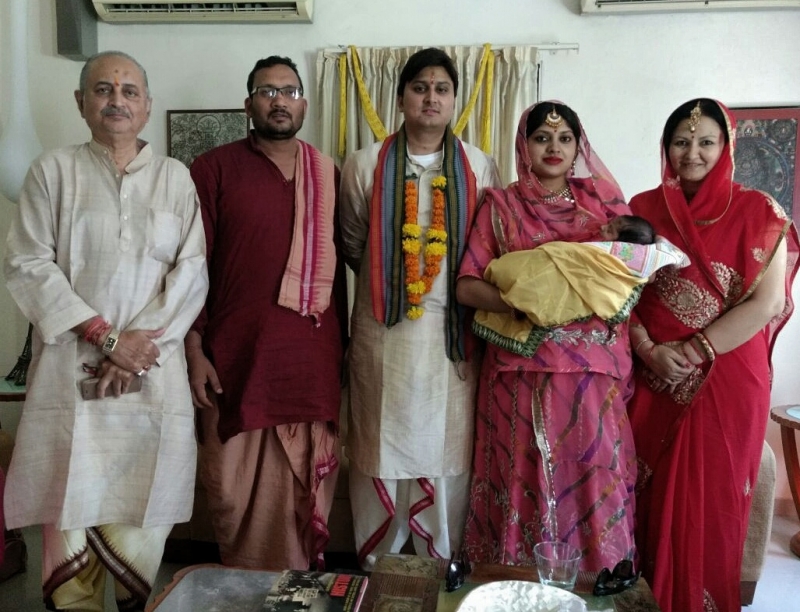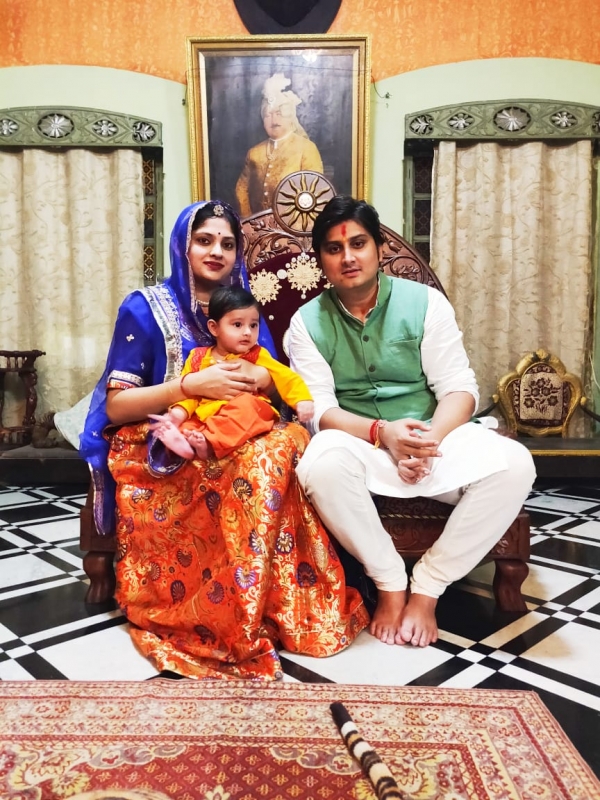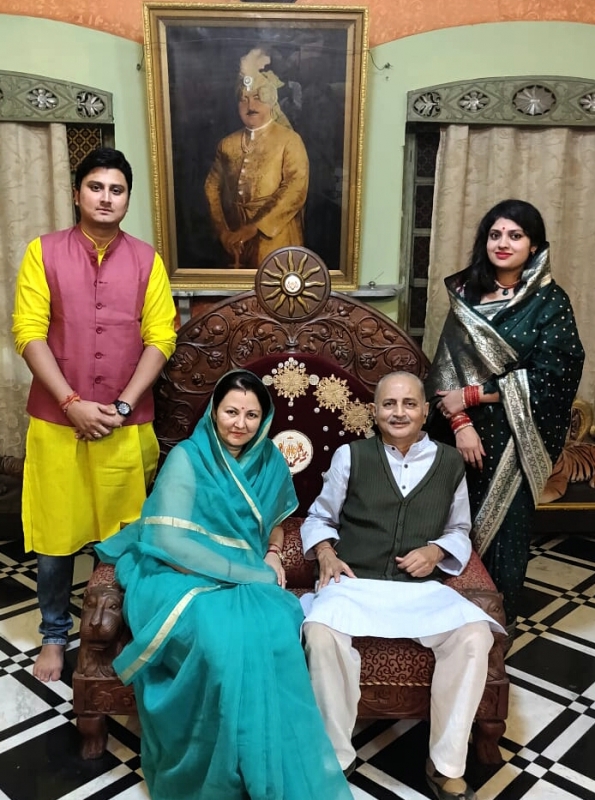
Present Head
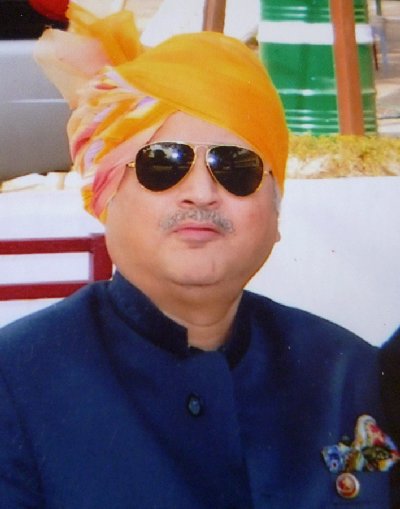
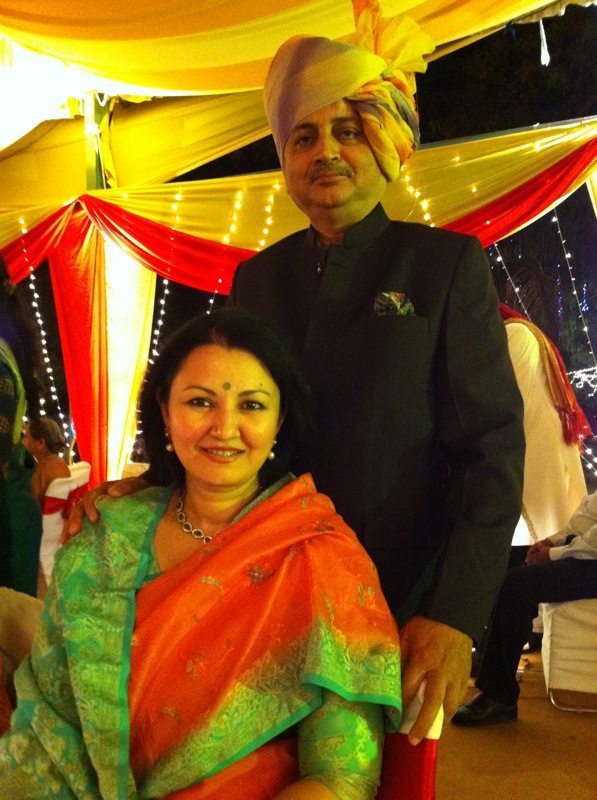
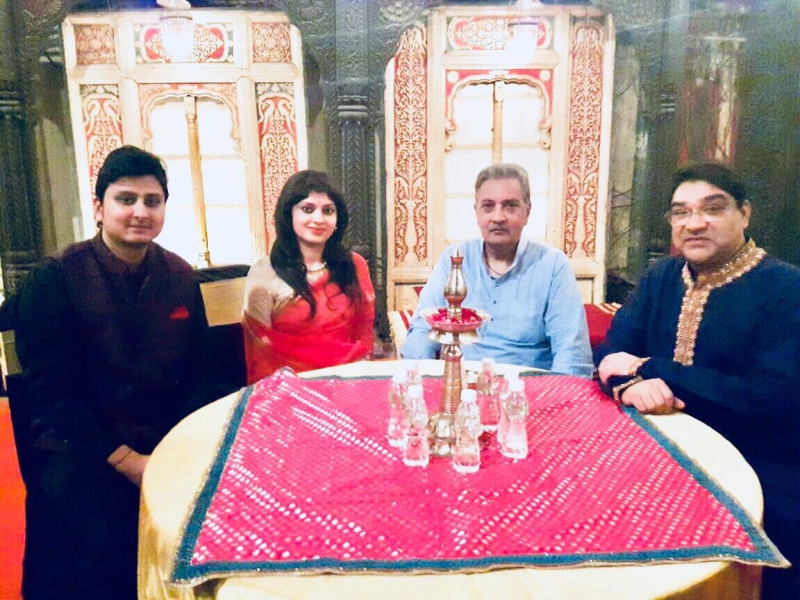
- Yuvraj Janmejay Chandra Mardaraj Harichandan, born ; educated at Rajkumar College Raipur, at Delhi Public School, Ahmedabad, at Utkal University (B.Com., Hons. with Distinction) and at Asia Pacific Institute of Management studies, New Delhi (M.B.A.), visited London as an Education Impactor Delegate in 2023 sponsored by FICCI Arise, Ahmedabad; married Rajkumari Harshita Singh, daughter of Raja Bahadur Ghanshyam Singh of Kothi, District Satna, Madhya Pradesh.
- Tikayet Raghvendra Chandra Mardaraj Harichandan, born .
History
Origin and Foundation of Nilgiri State
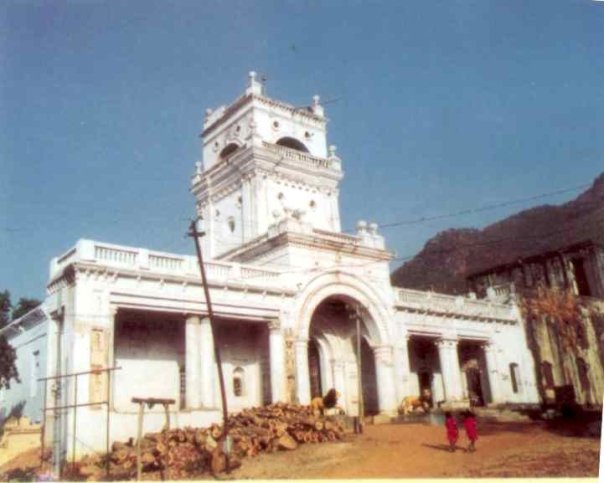
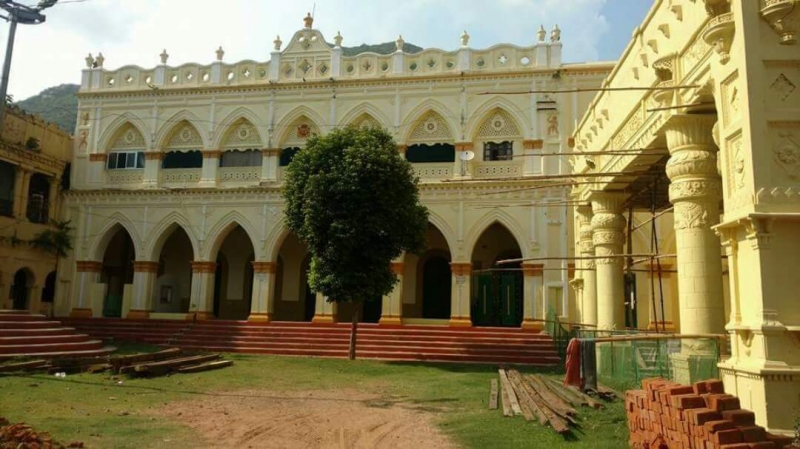
The princely state of Nilgiri, situated in the modern-day Balasore district of Odisha, boasts a rich and ancient lineage. Established in 1125 CE, the state was founded by Sri Ram Chandra Bhanj, a noble claiming descent from the legendary Bhanj dynasty. The ruling family belongs to the Solar dynasty (Suryavanshi) of Kshatriyas. According to regional folklore and historical chronicles, the state's name is derived from the majestic 'Nilgiri' (Blue Hills) that dominate its landscape, providing a natural defense system for the early rulers.
For centuries, the rulers of Nilgiri maintained their autonomy in the rugged terrain, building strong fortresses and fostering a unique blend of tribal and Rajput traditions. The early history of the state is characterized by constant consolidation of territory and alliances with neighboring kingdoms such as Keonjhar and Mayurbhanj.
Medieval Era: Mughal and Maratha Influence
During the medieval period, Nilgiri navigated complex geopolitical relationships with dominant regional powers. When the Mughal Empire expanded into Odisha under Emperor Akbar, the rulers of Nilgiri acknowledged Mughal suzerainty while retaining internal administrative autonomy. They paid regular tribute (Peshkash) to the Mughal Subahdar of Bengal and Odisha.
With the decline of the Mughals in the 18th century, the Marathas of Nagpur (the Bhonsles) extended their control over Odisha. Nilgiri, like other neighboring feudatory states, was subjected to the Maratha revenue collection system, paying regular taxes (Chauth) to avoid devastating raids. Despite these pressures, the ruling Bhanj dynasty successfully preserved their cultural identity and administrative structure.
British Period and Treaty Relations
Following the defeat of the Marathas in the Second Anglo-Maratha War, the British East India Company assumed control of coastal Odisha in 1803. The ruler of Nilgiri promptly entered into a treaty relationship with the British, which secured the state from external invasions in exchange for accepting British paramountcy. The state was classified as one of the Tributary Mahals of Odisha (later known as the Feudatory States of Odisha).
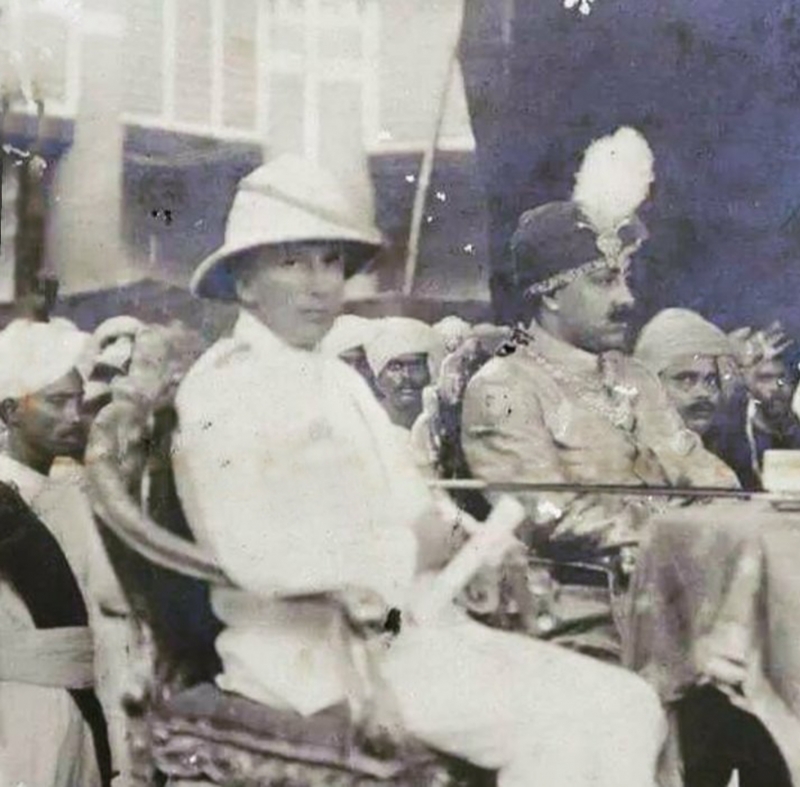
During the 19th and early 20th centuries, the British administration introduced several administrative reforms in Nilgiri, establishing structured land revenue systems and judicial courts. Rulers of this period, such as Raja Shyam Chandra Mardaraj Harichandan and Raja Kishore Chandra Mardaraj Harichandan, ruled under the supervision of the British Political Agent. Detailed records of this period can be found in L.E.B. Cobden-Ramsay's authoritative work, The Feudatory States of Orissa.
The Praja Mandal Movement and Key Reformers
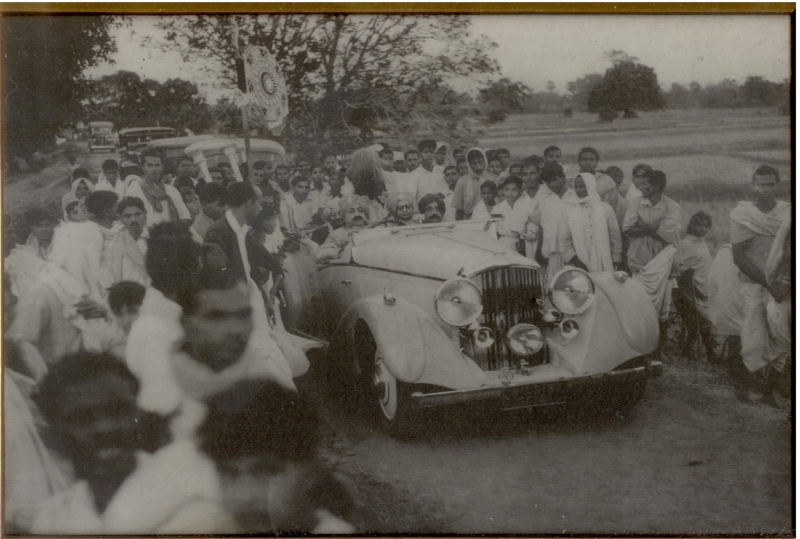
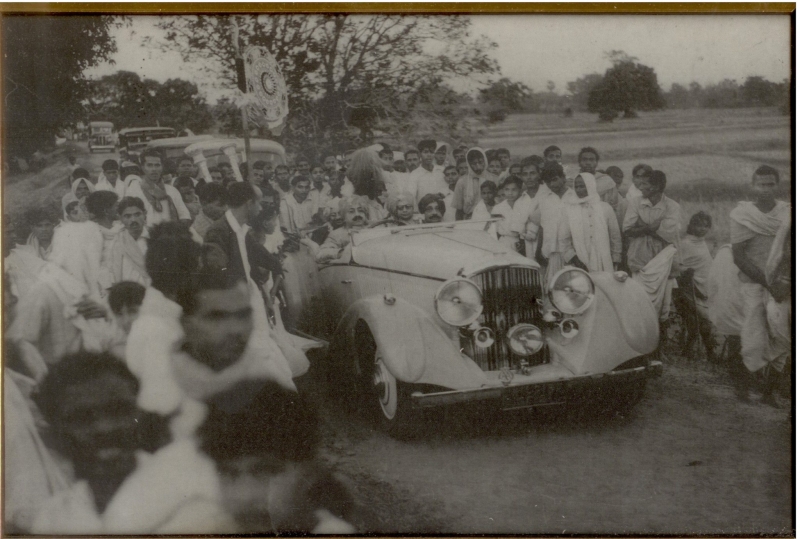
Nilgiri occupies a legendary position in modern Indian history as the epicenter of the Praja Mandal Movement (People's Association Movement) in the late 1930s. The movement arose as a strong peasant rebellion against the oppressive taxation, forced labor (Vethi and Begar), and monopolistic trade policies enforced by the state administration under Raja Kishore Chandra Mardaraj Harichandan.
Key reformers and freedom fighters who spearheaded this movement included:
- Kailash Chandra Mohanty: A charismatic local leader who mobilized the peasantry against royal excesses.
- Balaram Raj: Played a critical role in organizing protests and coordinating with national leaders.
- Harekrushna Mahatab: A stalwart of the Indian National Congress from Odisha, who provided strategic guidance to the local agitators.
The conflict escalated dramatically in 1947 when the ruler attempted to suppress the popular movement by employing tribal mercenaries (Santhals) to create communal divisions. This resulted in widespread anarchy, drawing the immediate attention of national leaders.
Integration into the Indian Union: A Historic First
The deteriorating law and order situation in Nilgiri prompted swift action from the newly formed Government of India. Led by the decisive intervention of India's Home Minister, Sardar Vallabhbhai Patel, and the local leadership of Harekrushna Mahatab, the provincial government of Odisha intervened. On 14 November 1947, the Government of India formally took over the administration of Nilgiri, displacing the ruling prince.
This event was highly historic, as Nilgiri became the first princely state in India to be practically integrated into the Indian Union after independence. This action served as a blueprint for the integration of the remaining 25 Odia princely states and, eventually, hundreds of other princely states across the country. The merger was officially formalized on 1 January 1948, as detailed in historical accounts on Wikipedia's Nilgiri State archive.
Post-Independence and Modern Era
Following its integration, Nilgiri was merged into the Balasore district of Odisha. Today, it functions as an important administrative sub-division of the district. The transition from a feudal autocracy to a vibrant democracy was seamless, with the royal family adapting to the changing political landscape while maintaining their ceremonial roles in local festivals.
In the modern era, Nilgiri has emerged as an important cultural and ecological hub in Odisha. The region is famous for:
- Panchalingeshwar Temple: Located on a hilltop, this famous shrine dedicated to Lord Shiva attracts thousands of pilgrims and tourists annually.
- Kuldiha Wildlife Sanctuary: A dense forest reserve home to elephants, gaur, and diverse flora and fauna, putting Nilgiri on the eco-tourism map. For more tourist and administrative details, you can visit the official Balasore District Website.
- Stone Carvings: The traditional stone-carving artisans of Nilgiri are celebrated across the state for their intricate craftsmanship, keeping the ancient artistic legacy of the region alive.
Genealogy
- Raja NARAYAN SINGH Bhujang Mandhata Birat Basant Harichandan, Raja of Nilgiri 1521/1564, a scion of the Chhota-Nagpur Royal Family, married about 1510, a daughter of Raja Pratap Rudra Dev of Orissa.
- ...... (23 intervening rulers)
- Raja RAM CHANDRA MARDRAJ HARICHANDAN, 32nd Raja of Nilgiri 1797/1832
- Raja GOVIND CHANDRA MARDRAJ HARICHANDAN, 33rd Raja of Nilgiri 1832/1833.
- Rani Chira Devi, 34th Rani of Nilgiri 1833/1843
- Raja KRISHNA CHANDRA MARDRAJ HARICHANDAN, 35th Raja of Nilgiri 1843/1893, born , succeeded 22nd November 1832, title of Raja formally recognised in 1874.
- Raja SHYAM CHANDRA MARDRAJ HARICHANDAN, 36th Raja of Nilgiri 1893/1913, adopted in 1882, son of Maharaja Krishna Chandra Bhanj of Mayurbhanj, married, and had issue, one son and one daughter.
- Raja Kishore Chandra Mardraj Harichandan (qv)
- Rani Basant Manjari Devi, born , entered politics as the Rajmata of Ranpur; M.L.A. (Orissa) 1952/1961 (two terms); Deputy Minister, Health (20.2.1952) - (6.4.1957); Health Minister of Orissa (27.4.1957) - (22.5.1959), she was the first Woman of the State to be included to the State Ministry; she proved to be popular and a TB Hospital in Chandpur is named after her; married 1928, Yuvaraj Biranchi Narayan Singh Deo of Ranpur, and had issue. She died .
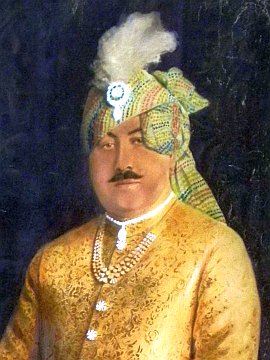
- Raja KISHORE CHANDRA MARDRAJ HARICHANDAN, 37th Raja of Nilgiri 1913/1960, born and succeeded as the 37th Raja Saheb of Nilgiri on 6th July 1913, he was granted full ruling powers on 2nd February 1925, and installed on 20th April 1925; educated at Mayo College, Ajmer; married 1stly, 28th February 1922, Rani Anand Kumari, daughter of HH Raja Sir Pratap Singhji of Alirajpur, married 2ndly, 19th June 1925, Rani Giriraj Kumari Devi, daughter of the Thakore Saheb of Thakurgaon in Ranchi, Bihar, and had issue, five sons and three daughters. He died .
- Rajkumari Kamlesh Manjari Devi (by Rani Anand Kumari), born , married 1944, Maharaj Naharsinghji, born , died , of Chhota Udaipur in Gujarat, and had issue, one son. She died .
- Maharaj Tarun Dev
- Rajkumari Swarnalata Manjari Devi (by Rani Giriraj Kumari), born , married Maharajkumar Shri Shri Shri Madhav Sundar Gajapathi Narayana Deo of Parlakhimedi (later Raja Madhav Sundar Gajapati Narayan Deo of Delang, Balaramnagar and Manikprasad), born , died , second son of Capt. Maharaja Saheb Shri Shri Shri Krishna Chandra Gajapathi Narayana Deo of Parlakhimedi, and had issue, one son.
- Rajkumar Birendra Gajpati, born , died unmarried 2001.
- Raja Rajendra Chandra Mardaraj Harichandan (by Rani Giriraj Kumari) (qv)
- Rajkumari Snehalata Manjari Devi [Maharani Suryamani Pattamahadei of Puri] (by Rani Giriraj Kumari), born , married Sri Gajapathi Maharaj Bira Kishore Deb of Puri, and had issue, two sons and one daughter. She died in .
- Rajkumar Chotrai Bharatendra Chandra Mardaraj Harichandan, born , married the daughter of Lal Saheb of Thakurgaon, Ranchi and has issue, one son and two daughters. He died .
- Kumar Gautam Mardaraj, married Rajkumari Sweta Devi, daughter of Lal Saheb of Palkot, Jharkand.
- Kumari Upasana Devi, married in Lucknow, Kunwar Myankeshwar Sharan Singh of Tiloi, and has issue.
- Kumari Archana Devi (now Rani Bhavanidevi Singh), married Raja Bahadur Devendra Pratap Singh of Raigarh State, Chattisgarh, and had issue.
- Yuvraj Vishwa Vijay Singh
- Rajkumar Trishivam Raje Singh
- Rajkumar Routrai Saheb Rathendra Chandra Mardaraj Harichandan (by Rani Giriraj Kumari), born in Nilgiri, educated at Rajkumar College, Raipur; married 9th May 1976 in Badagaon, Balasore, Rajkumarani Prativa Devi, daughter of Shri Radhashyam Das of Badagaon, Balasore, and has issue, one son and one daughter.
- Kumar Sandeep Mardaraj, married Debismita Samal of Jajpur.
- Kumari Vidya Devi, married Sri Prakash Misra of Balasore.
- Rajkumar Badkumar Surendra Chandra Mardaraj Harichandan (by Rani Giriraj Kumari), born , married the daughter of the Raja of Kalkala Estate, Cuttack, and has issue, one son. He died .
- Kumar Hara Prasad Mardaraj, married Sasmita Debi of Kalyansinghpur, Rayagada, Odisha and has issue.
- Rajkumar Sankumar Kirendra Chandra Mardaraj Harichandan (by Rani Giriraj Kumari), born , married Rajkumarani Renuka, daughter of a Lal Saheb of Jharia Estate, Ranchi, and has issue, two sons.
- Kumar Prakash Chandra Mardaraj, M.Sc., born , Ranchi, Jharkhand, graduated in 2006 with an M.Sc. degree in Wildlife and Conservation Biology, he was working with the Wildlife Institute, Dehradun and is presently pursuing a Doctorate degree on the Ecology of the Sloth Bear in Nilgiri, Odisha from University of Reading.
- Kumar Bikash Mardaraj Harichandan, born in , completed his Masters with Computer Science in 2018. Working with multinational IT firms, presently joined Tata Consultancy services, Hyderabad as a Senior System Engineer.
- Rajkumari Kamlesh Manjari Devi (by Rani Anand Kumari), born , married 1944, Maharaj Naharsinghji, born , died , of Chhota Udaipur in Gujarat, and had issue, one son. She died .
- Raja RAJENDRA CHANDRA MARDRAJ HARICHANDAN, 38th Raja of Nilgiri 1960/2001, born , succeeded his father on 29th March 1960; educated at Rajkumar College, Raipur, at Ravenshaw College, Cuttack, at MS Law College, Cuttack (LL.B.) and at Jadavpur University, Calcutta (M.A.); joined Ganatantra Parishad in 1960; he has helped to establish the Girls M. E. School at Nilgiri; Member of Managing Committee of Rajkumar College, Raipur; M.L.A. (Orissa) for three terms 1961/1967, 1974/1977 and 1977/1980; interests and pastimes were Reading, Music and Photography, Billiards, Tennis and Shikar; married Rani Indira Devi, only daughter of Raja Amarendra Mansingh Bhramarbar Rai of Dompada in Cuttack, and his wife, Rani Pritam Kumari, and had issue, two sons and one daughter. He died .
- Raja Jayant Chandra Mardraj Harichandan (qv)
- Maharajkumar Jagdish Mardaraj, born ; educated at Rajkumar College, Raipur, B.A. (HONS) from Utkal University; he is also specialized in Public Relations (PGDM) from Indian Foundation for PR Education and Research=. Presently, he is Head Corporate Communication & Administration at RSB Metaltech Pvt. Ltd, and have worked in past at Next Management Services Pvt. Ltd. as Senior Consultant; Reliance Group, VP Corporate Affairs; Reliance Industries Ltd, General Manager (Corporate Affairs); Indian Metals and Ferro Alloys Group, Manager (Liaison); Prachi Group of Hotels, Bhubaneswar, Manager (Operation, Administration & Sales). Also, he has been Founder President of ROTARACT club, Bhubaneswar; Founder Member & Chairman PRSI, Bhubaneswar, Vice President Eastern Region, PRS1 Member; Programme advisory committee, Doordarshan; Telecom Advisory Committee (Odisha Circle); ZRUCC, South Eastern Railways, Member, Bhubaneswar Club Ltd; President, Nilgiri Environmental Society; Member, Tourism Institute Bhubaneswar; Secretary, UN Organization, Orissa Chapter; Married on 6th Dec 1987 to Maharajkumari Jyotsna Devi Mardaraj, eldest daughter of Sri Lalchand Navani (Sindhi Kshatriya from Mirpur Khas), Retd. Vigilance Inspector Northern Railways. She has worked with Ballarpur Industries Ltd, Indian Airlines, has been an active member of Rotary Club. Presently, she is the Managing Director of Pritam Kumari Consultants Pvt. Ltd., Member of INTACH, Bhubneswar Club, Bhubneswar Music Circle; has issues, two daughters.
- Kumari Prakriti
- Kumari Akriti, a Lawyer by profession and passionate towards the cause of animal welfare and safeguarding heritage. She is a Patron at Council Of Royal Roots as part of the Chamber of Prince & Princess. She advocates Intellectual Property Rights and property-related matters. She is a registered Advocate under Delhi Bar Council Of India. She advises many prominent families and high net worth individuals on their estate and succession planning and family arrangements which typically include family members and assets situated in different jurisdictions. She believes her experience and knowledge in the field of legal services should benefit the one in need and it should become useful for the betterment of safeguarding Indian Art, Culture and Heritage.
- Rajkumari Jaishree Devi, married Rajkumar Dhruv Narain Singh of Shivrati, and has issue, one son.
- Shriman Maharaj Sahib Shri Raghav Raj Singh of Shivrati
- Raja JAYANT CHANDRA MARDRAJ HARICHANDAN, 39th Raja of Nilgiri (see above)