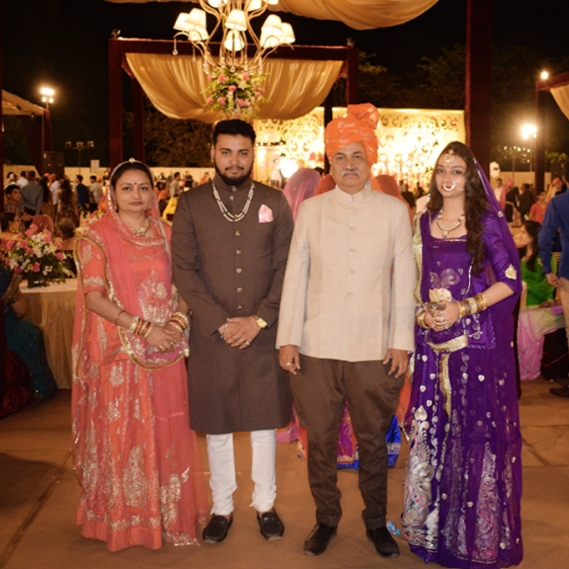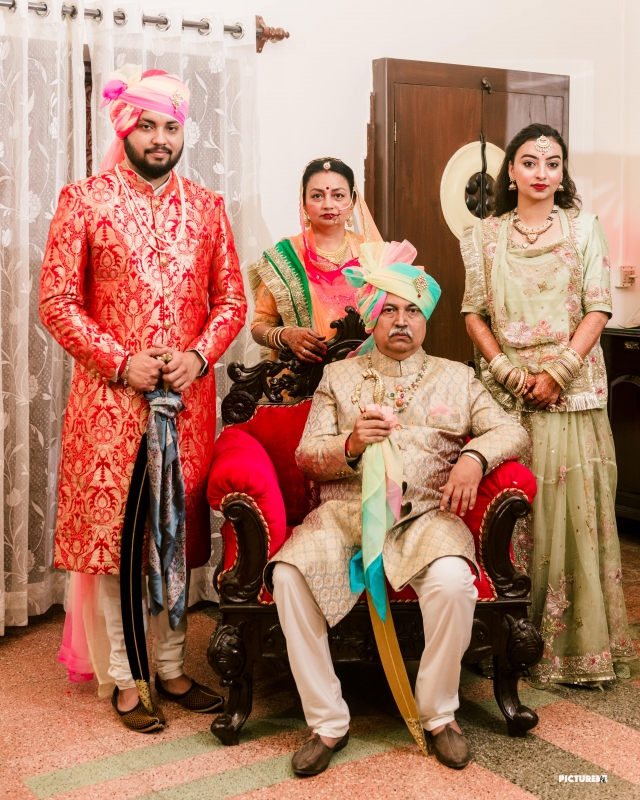
Present Head
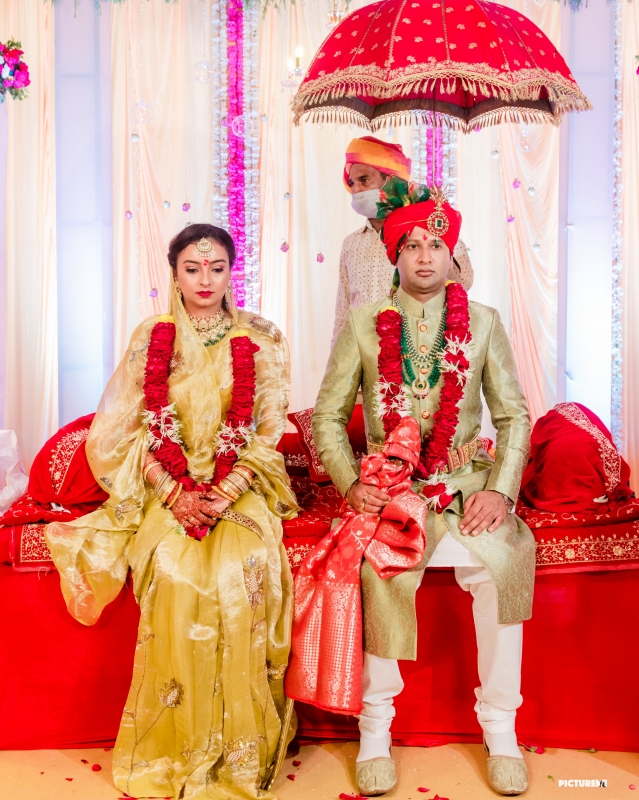
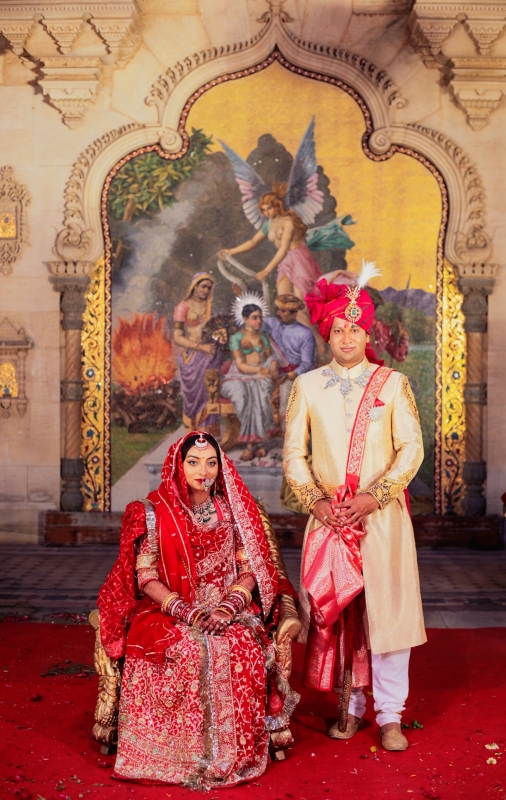
- Rajkumari Shivpriyakunwarba, born , married 14th April 2021, H.H.Rajasaheb Nav Chandra Deo of Rairakhol, Orissa.
- Yuvaraj Saheb Pruthvijeetsinhji Rajratansinhji, born , married to Yuvrani Shivranjanidevi, daughter of Rahees Numberdaar Thakur Saheb Dr. Pranveer Pratap Singh Tomar and Thakurani Saheba Priyamvada Singh Tomar of Thikana Sandhalpur, Uttar Pradesh.
History
Origin and Foundation of Mandva State
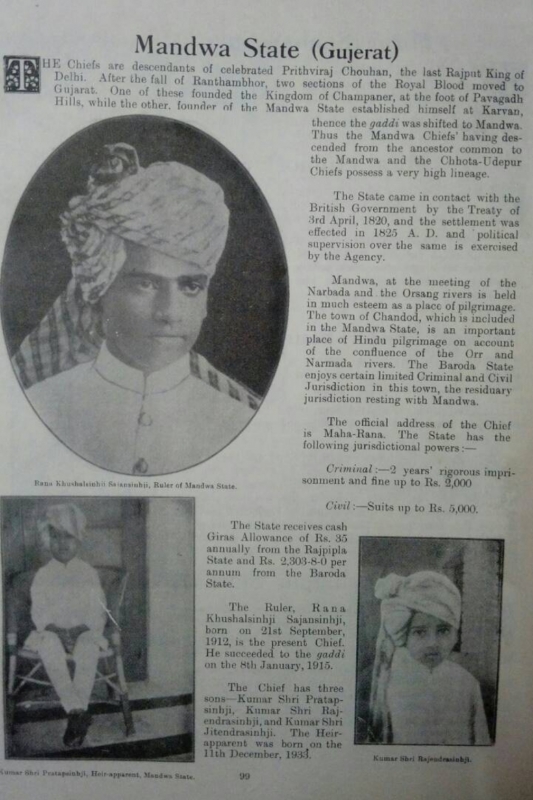
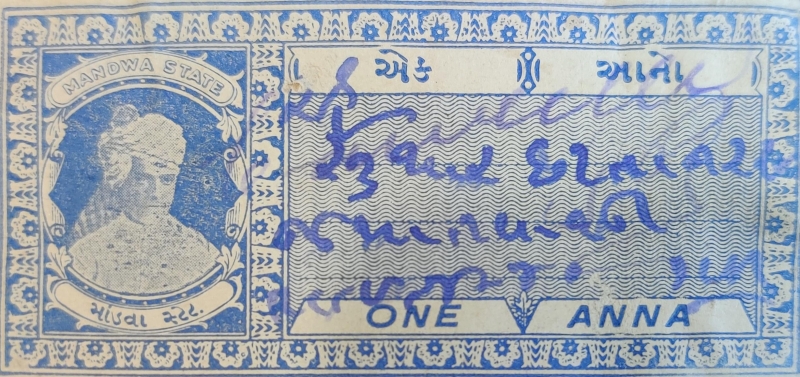
The princely state of Mandva (also transliterated as Mandwa) was a historic non-salute state located in the Rewa Kantha Agency of the Bombay Presidency during the British Raj, in what is today part of Gujarat, India. The ruling dynasty of Mandva belonged to the venerable Chauhan (Khichi) Rajput clan, tracing their lineage back to the illustrious rulers of Champaner.
Following the tragic fall of the historic fortress of Champaner in 1484 CE to the forces of Sultan Mahmud Begada of Gujarat, the surviving princes of the Chauhan dynasty, led by the descendants of Rawal Patai (Jaysinhdev), retreated into the rugged, forested terrains flanking the Narmada River. From these branches emerged several prominent states, such as Chhota Udepur and Devgadh Baria, alongside smaller estates like Mandva, Shanor, and Bhilodia. Mandva was established as an independent principality by one such branch of the family, carving out a strategic territory along the banks of the Narmada.
The Maratha Era and Geopolitical Struggles
During the 18th century, as the Mughal Empire's influence waned, the Maratha Empire expanded into Gujarat under the Peshwas and later the Gaekwads of Baroda. Mandva, due to its strategic and fertile position along the Narmada, faced frequent incursions. The state was forced to pay a tribute, known as ghasdana (forage money) or tanka, to the Gaekwads of Baroda.
This period was characterized by constant geopolitical negotiations. Despite the heavy financial demands and military pressure from the Marathas, the rulers of Mandva successfully preserved their internal autonomy and Rajput identity through a mix of defensive warfare and diplomatic treaties.
The British Period and Administrative Reforms
With the expansion of the British East India Company's influence in western India, stability was restored to the chaotic Rewa Kantha region. In 1820, under the mediation of British political agent Major Ballantyne, an agreement was brokered between the Gaekwad of Baroda and the local chiefs, including the Rana of Mandva. The British guaranteed the regular payment of tributes to Baroda, effectively taking the state under their protective umbrella and classifying Mandva as a state within the Sankheda Mehwas division of the Rewa Kantha Agency.
The rulers of Mandva, styled as Thakor Saheb or Rana, ruled over an area of approximately 16.5 square miles with a population primarily engaged in agriculture. Notable rulers of this era include:
- Rana Khushalsinhji: A ruler who steered the state through the transitional mid-19th century, ensuring agricultural stability.
- Rana Jitsinhji: Succeeded to the gaddi (throne) in the late 19th century. He was recognized for maintaining strong administrative ties with the British political agents while safeguarding local agrarian interests.
- Rana Ranjitsinhji Jitsinhji: Born in , he succeeded to the throne in 1915. Educated at the prestigious Rajkumar College in Rajkot, Rana Ranjitsinhji was a progressive ruler who modernized the state’s judicial and revenue collection systems.
Key Reformers and Social Development
Under the enlightened rule of Rana Ranjitsinhji, Mandva witnessed significant socio-economic reforms. Despite the small size of the state, the administration focused on:
- Education: Establishing primary schools to spread literacy among the rural population.
- Infrastructure: Developing irrigation facilities along the Narmada River to protect farmers from the vagaries of monsoons.
- Healthcare: Introducing basic healthcare and sanitation measures in the capital town and surrounding villages.
Post-Independence and the Modern Era
Following India's independence from British rule in August 1947, the last ruler of Mandva, Rana Ranjitsinhji, signed the Instrument of Accession to the Dominion of India. On June 10, 1948, Mandva officially merged into the Bombay State as part of the integration of the Rewa Kantha states.
Following the linguistic reorganization of Indian states in 1960, the territory of the former Mandva state became part of the Vadodara (and subsequently Narmada) district in the state of Gujarat. Today, the historical legacy of Mandva is preserved in the local culture, folklore, and the architectural remnants of its old fort and temples overlooking the Narmada.
References and Historical Sources
- To read more about the administrative history of the Rewa Kantha Agency, see the Imperial Gazetteer of India - Digital South Asia Library.
- For details on the ruling families of the Western India States, refer to Sir Roper Lethbridge's The Golden Book of India.
- For a broader understanding of the region's transition under British rule, explore the historical archives at the Digital South Asia Library hosted by the University of Chicago.
Genealogy
- Rana KHUMANSINHJI, Rana of Mandva -/1890, born .
- Rana JITSINHJI, Rana of Mandva 1890/-, born , succeeded 13th September 1890. Married amongst other, Anand Kunverba.
- Kesar Kunverba, married to Thakore Dilip Sinhji of Virpur.
- Maharana KHUSHALSINHJI SAJANSINHJI, Maharana of Mandva 1915/1981, born and succeeded 8th January 1915, married and had issue. He died .
- Yuvaraj Shri Pratapsinhji Khushalsinhji, born , married Yuvrani Praveena Kunvarba [the present Rajmata Shrimati Praveena Kunvarba Pratapsinhji of Mandva]. He died sp in 1976.
- Maharana Shri Rajendrasinhji Khushalsinhji (qv)
- Kumar Shri Jitendrasinhji Khushalsinhji, married Kumari Premkunvarba (from Madhya Pradesh), and has issue.
- Kumar Mahipalsinhji Jitendrasinhji, married, no issue.
- Kumari Meenakunvarba, married into the Mohanpur family.
- Maharana Shri RAJENDRASINHJI KHUSHALSINHJI, Maharana of Mandva, married Maharani Vijaykunvarba, and has issue, five children.
- Kumari Rajkunvarba, born .
- Kumari Shantikunvarba, born , married Shri Yogendrasinhji B. Rana.
- Kumari Shivrajkunvarba, born , married Shri Surendrasinhji Ajitsinhji Jadeja of Vaniagam near Jamnagar.
- Maharaj Shri Rajratansinhji Rajendrasinhji (qv)
- Kumar Shri Karmajitsinhji Rajendrasinhji, born , married to Kumari Avanidevi, daughter of Shri Hemendrarai R. Dholakia (Nagar) from Mangrol (Saurashtra), and has issue.
- Kumar Ruturajsinhji Karmajitsinhji, born , married on 13th February 2025 to Kuwarani Saheb Samriddhidevi, daughter of Thakor Saheb Ajaysinhji Rathore of Kasampur Garhi.
- Maharana Shri RAJRATANSINHJI RAJENDRASINHJI, Maharana of Mandva (see above)
Notable Figures
Thakor Saheb Jitsinhji
Thakor Saheb Jitsinhji was born in and succeeded to the gaddi (throne) of the Mandwa Princely State in 1890 as a minor. He belonged to the Khichi Chauhan clan of Rajputs, who traced their ancestry back to the historic rulers of Champaner. Because of his minority at the time of succession, the administration of the state was initially supervised under the British Rewa Kantha Agency.
During his active reign, Thakor Jitsinhji worked towards stabilizing the agrarian economy of the estate. Mandwa was classified as a third-class state under the Sankheda Mehwas group, and its revenue was heavily dependent on agriculture. He introduced several land reforms to assist local farmers during droughts and governed until his death in 1915.
Thakor Saheb Khushalsinhji Jitsinhji
Succeeding his father in 1915, Thakor Saheb Khushalsinhji Jitsinhji ruled Mandwa during a period of significant transition in Indian history, spanning the years of the First World War and the rising Indian national movement. He maintained cordial relationships with neighboring states, particularly the larger princely state of Chhota Udepur, which helped maintain peace and regional security along the borders.
His administration was marked by efforts to improve primary education and health services within the estate. He ruled with a combination of traditional Rajput administrative values and modern judicial reforms recommended by the British political agencies in Gujarat. He passed away in 1938, leaving the throne to his son.
Thakor Saheb Ranjitsinhji Khushalsinhji
Thakor Saheb Ranjitsinhji Khushalsinhji succeeded to the gaddi in 1938. Born in , he was highly educated and assumed power during the turbulent years leading up to the Second World War and the eventual independence of India. He was the last official ruling chief of the Mandwa Princely State.
Following India's independence from British rule, Ranjitsinhji signed the Instrument of Accession in 1948, merging the state of Mandwa into the Indian Union. The state was initially integrated into the Bombay State, which was later reorganized, making Mandwa a part of the modern state of Gujarat. He remained a respected public figure and patron of local heritage in the region post-independence.
References and External Sources:- To learn more about the history of the region and its administrative structure, visit the Mandwa State Wikipedia Page.
- For details on the political agency overseeing the state, consult the Rewa Kantha Agency Wikipedia Page.
- Historical records of the rulers of Rewa Kantha can be found in the digital archives of The Golden Book of India by Roper Lethbridge.