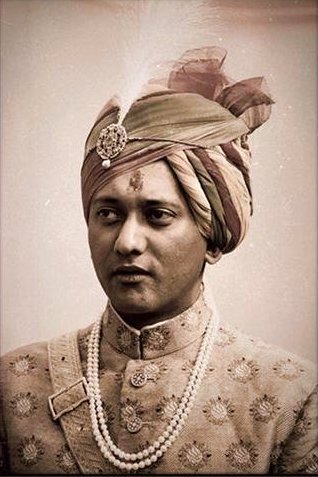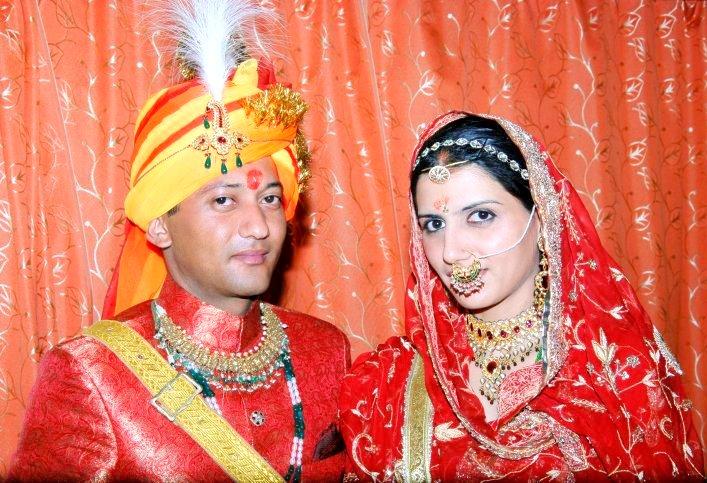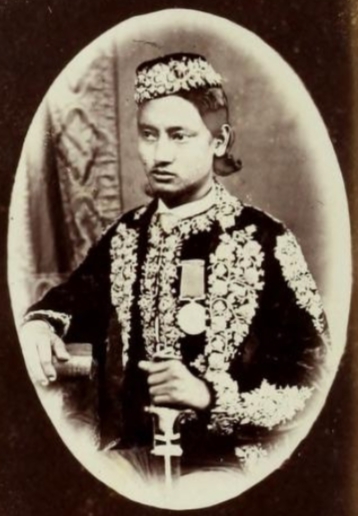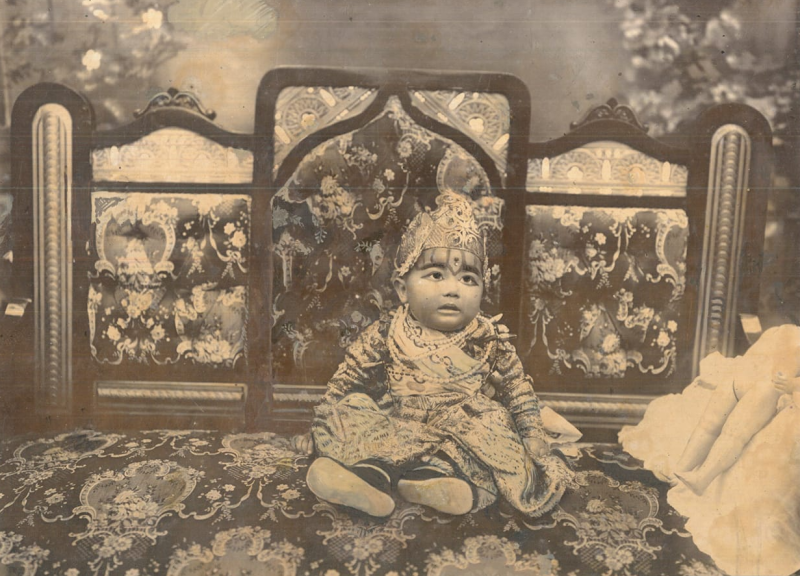
Present Head
History
Origin and Foundation of the State
The ruling family of the Khairigarh-Singahi estate claims a distinguished descent from the ancient Suryavanshi (Surajbansi) Rajput rulers of Ayodhya. Historically, a branch of this clan migrated northwards and established themselves in the region of Doti (now located in western Nepal). For generations, they ruled as independent chieftains in the hills. However, during the late 18th century, the expansion of the Gorkha Kingdom disrupted their rule. In 1790, Raja Dip Shah of Doti was expelled from Nepal by the advancing Gorkha forces.
Seeking refuge in the plains of Awadh (Oudh), Raja Dip Shah attempted to carve out a new principality in the fertile plains of the Khairigarh Pargana. This region was then dominated by powerful nomadic Banjara chieftains who resisted his encroachment. Though Raja Dip Shah initially met with strong resistance and failed to secure a foothold, he eventually gathered a sufficient force to decisively defeat the Banjaras. This victory allowed him to establish his authority over the entire Khairigarh Pargana, as well as parts of the neighboring Bhur pargana, laying the foundation of the Khairigarh-Singahi Raj.
Territorial Expansion and the British Era
The estate grew significantly under Raja Dip Shah's successors. In 1821, Raja Ganga Ram Shah, one of the ten sons of Raja Dip Shah, marched into the Terai tract at the foot of the Himalayas and conquered the Kanchanpur Pargana. This region had a complex geopolitical history: it had been annexed by the British East India Company in 1815 following the Anglo-Nepalese War under the Treaty of Sagauli, and subsequently transferred to the Nawab Wazir of Oudh in 1816 to settle a state debt of one million pounds sterling.
Upon the British annexation of Oudh in 1856, the first summary settlement of Khairigarh and Kanchanpur was made with Raja Randhwaj Shah. The tumultuous events of the Indian Uprising of 1857 temporarily disrupted the administration, but the second summary settlement of 1858–1859 was again finalized with him. In recognition of his status and cooperation, the Governor-General of India, Lord Canning, presented Raja Randhwaj Shah with a formal vernacular Sanad (proprietary decree) for the two estates at a grand Darbar held in Lucknow on 26th October 1859. Detailed historical accounts of these settlements can be found in the Gazetteer of the Province of Oudh (Vol. II).
The Singahi Regency and Key Reformers
In the late 19th and early 20th centuries, the administrative and residential seat of the taluk shifted to Singahi. One of the most prominent periods in the estate's modern history occurred under the stewardship of Rani Surat Kunwar, the widow of Raja Indra Bikram Sah. Following the Raja's death, the estate was briefly managed under the Court of Wards, but Rani Surat Kunwar later assumed active personal management of the taluk.
Rani Surat Kunwar is remembered as a benevolent and highly capable administrator. She undertook extensive public welfare works, including the construction of the famous Radhakrishna Temple in Singahi, the establishment of local schools, and the development of agricultural infrastructure. Her progressive administration of the estate is documented in the District Gazetteer of Kheri compiled by H.R. Nevill, which notes the prosperity of the tenantry under her care.
Post-Independence and Modern Era
With the independence of India in 1947 and the subsequent passage of the Uttar Pradesh Zamindari Abolition and Land Reforms Act in 1950, the zamindari rights and princely privileges of the Khairigarh-Singahi Raj were formally abolished. The extensive lands of the estate were redistributed, and the administrative functions were integrated into the Lakhimpur Kheri district of Uttar Pradesh.
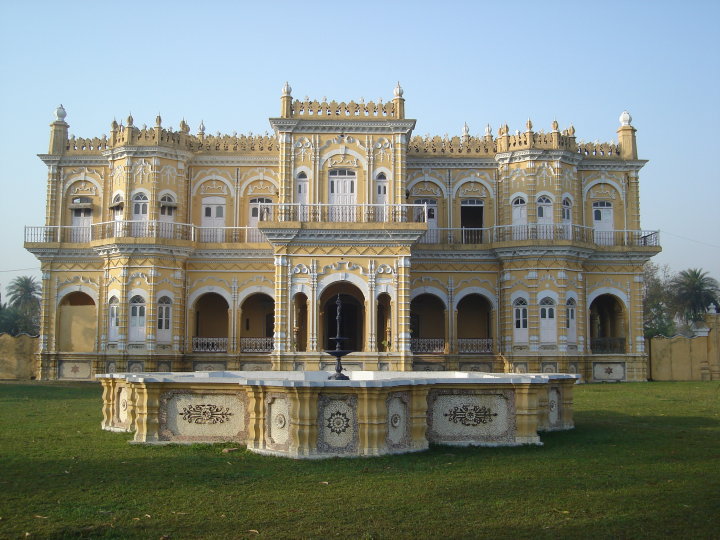
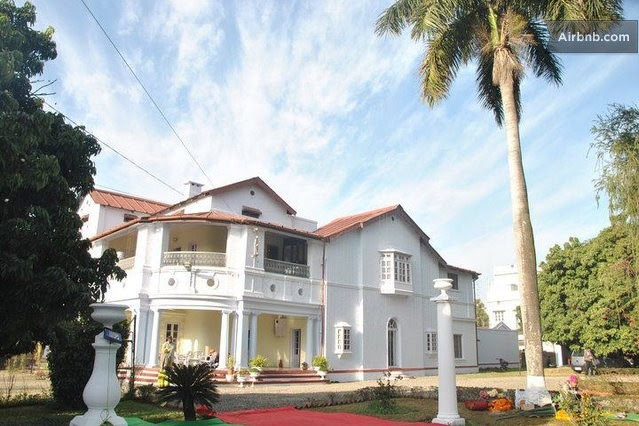
Today, the legacy of the Suryavanshi rulers survives through the heritage architecture of Singahi. The grand Singahi Rajbari (palace) and the historic temples constructed by the royal family remain prominent cultural landmarks in the region, serving as a testament to the family's transition from the hills of Nepal to the plains of Awadh.
Genealogy
- Raja DIP SHAH, Raja of Khairigarh, son of Raja Krishna Shah, Raja of Doti in Nepal; married and had issue, ten sons.
- Kunwar Maharaj Shah, married and had issue, three sons.
- Raja Hansdhwaj Shah (qv)
- Raja Ganga Ram Shah (qv)
- Kunwar Maharaj Shah, married and had issue, three sons.
- Raja HANSDHWAJ SHAH, Raja of Khairigarh, married and had issue.
- Kunwar Lal Bahadur Shah
- Raja GANGA RAM SHAH, Raja of Khairigarh, married and had issue.
- Raja Randhwaj Shah (qv)
- Kunwar Jang Bahadur Shah, married and had issue. He died .
- Raja Prithvi Dhwaj Shah (qv)
- Kunwar Dillipat Shah, married and had issue. He died .
- Kunwar Upendra Bahadur Shah
- Raj Kumari Lalita Devi, born , married in May 1907 to Raja Bhawani Sen of Mandi state as his 3rd wife, widowed on 8th February 1912 when Raja Bhawani Sen expired of brief illness on return from coronation Durbar of 15th Dec 1911 at New Delhi. On 8th April 1912, she adopted 8 year old Jogender Sen (son of Mian Kishen Singh of Mandi) as adopted son and future Ruler of Mandi state 1923-1947, subsequently a Gadar freedom fighter, Joined international movement for voting rights of women internationally. Founding member and 2nd president of all India womens congress AIWC. She died on .
- Rajkumari (name unknown) [Rani Sahiba Kacchawatji of Khairigarh], married Raja Bahadur Suraj Baksh Singh Sahib of Kasmanda.
- Raja RANDHWAJ SHAH, Raja of Khairigarh -/1866, married and had issue. He died .
- Raja Indra Bikram Shah (qv)
- Raja INDRA BIKRAM SHAH, Raja of Khairigarh 1866/1885, married 1stly, Rani Surat Kunwar (see below), born , died , daughter of Thakur Bhup Shah of Achan in Nepal, married 2ndly, Rani Subhadra Devi, died , married 3rdly, Rani Rajendra Lakshmi, died . He died sp 26th November 1885, succeeded by his first cousin, who was his nearest living male relative.
- Raja PRITHVI DHWAJ SHAH, Raja of Khairigarh 1885/1909, married and had issue. He died .
- Raja Pratap Bikram Shah (qv)
- Rani Surat Kunwar, Taluqdarani of Khairigarh 1909/1936, born , daughter of Thakur Bhup Shah of Achan in Nepal, married (as his first wife), Raja Prithvi Dhwaj Shah (see above). She died sp 1936.
- Rani Subhadra Devi, Taluqdarani of Khairigarh 1936/1942, married (as his second wife), Raja Prithvi Dhwaj Shah (see above). She died sp 22nd August 1942.
- Raja PRATAP BIKRAM SHAH, Raja of Khairigarh 1942/1964, born , married 1914, Maharajkumari Bhuvan Rajya Lakshmi Devi, born , daughter of HH Shri Tin Maharaja Dev Shumsher Jung Bahadur Rana of Nepal, and had issue, three children. He died in Lucknow.
- Raja Luv Shah (qv)
- Rajkumar Kush Shah, born , died .
- Rajkumari Gita Devi, born in , married Lt. General (retd.) Rajkumar Jasbir Singh of Jind, born in , Military Secretary to the Government of India, retired from the Indian Army in 1984, and had issue. She died in (Dehra Dun, India)
- Raja LUV SHAH, Raja of Khairigarh 1964/1988, born , married 1stly, a sister of Raja Dinesh Singh of Kalakankar, married 2ndly, Rani Meenakshi Devi, born , daughter of Kanwar Badri Singh of Sirmur, and had issue. He died at Lucknow.
- Raja Arya Shah (by 1st wife) (qv)
- Rajkumari Bibhu Shah [HH Maharani Bibhu Kumari Devi of Tripura] (by 2nd wife), born in Mussorie, Uttar Pradesh, B.A., educated at I.T. College, Lucknow, Uttar Pradesh, MP and Minister of State, married HH Maharaja Kirit Vikram Kishore Deb Burman Manikya Bahadur of Tripura and has issue.
- Rajkumari Bibha Shah (by 2nd wife), born at Lucknow, educated at Loreto Convent, Lucknow and graduated from Loreto Convent College, Lucknow; married February 1979 at Lucknow, Thakur Ranvir Singh Chauhan (originally from Khilchipur, M.P., but his ancestors settled in Kotah, Rajasthan), a producer of documentary films, and has issue, two children, a son and a daughter.
- Kunwar Manuraj Singh Chauhan, born at Lucknow, married 23rd January 2007, Kuwarani Pallavi Singh, born , daughter of Rajkumar Prithvi Singh of Garrauli.
- Kumari Minakshi Devi Singh, born at Lucknow, married 10th February 2008 at Lucknow, Gaurav Agarwal, son of Mr. and Mrs. Arun Agarwal of Lucknow.
- Rajkumari Vibhuti Shah (by 2nd wife) [Kanwar Rani Vibhuti Singh of Jubbal], born at Lucknow, educated at Loreto Convent School, Lucknow, and graduated from Loreto Convent College, Lucknow; contested the District Simla Zila Parishad election in December 1995 from Kedi-Kupvi ward in Tehsil Chopal (now in Southern Jubbal State) and defeated her opponent by a record margin of 8,352 votes, a member for 5 years, up to December 2000, married 12th December 1976 at Lucknow, U.P., Kanwar Uday Singh of Jubbal and has issue, one son and one daughter.
- Raja ARYA SHAH, Raja of Khairigarh 1988/2000, born in Lucknow, educated at Welham Boys School, Dehra Dun, Uttaranchal, and at Doon School, Dehra Dun, Uttaranchal till 1959, graduated in 1963, from St. Stephen's College, Delhi University, married 1971 at Lucknow, Rani Usha Kumari, died , daughter of late Maharaj Narpat Singh of Banswara, and his wife, Rani Shukla Kumari, and had issue. He died O ctober 2000.
- Raja Akshay Bikram Shah (qv)
- Rajkumari Yamini Kumari, married Rajkumar Vikram Singh of Luni in Jodhpur.
- Raja AKSHAY BIKRAM SHAH, Raja of Khairigarh (see above)
- Rai Bahadur Kunwar Bam Bahadur Shah, born , educated at Canning College, Lucknow; an Administrator and Honorary Magistrate exercising jurisdiction within the limits of the Khairigarh estate, in recognition of his public services the title of Rai Bahadur, as a personal distinction, was conferred on him in December 1911, on the occasion of the Delhi Durbar.
- Kunwar Badri Shah, married 1979, Kumari Sarochi Kumari, daughter of Kanwar Narendra Singh of Sirmur, and his wife, Kumari Surendra Kumari, and has issue, one son and one daughter.
- Kumari Shriya Kumari, born .
- A Kumari of Khairigarh, married Raja Balbir Sen, 74th Raja of Keonthal, and had issue.