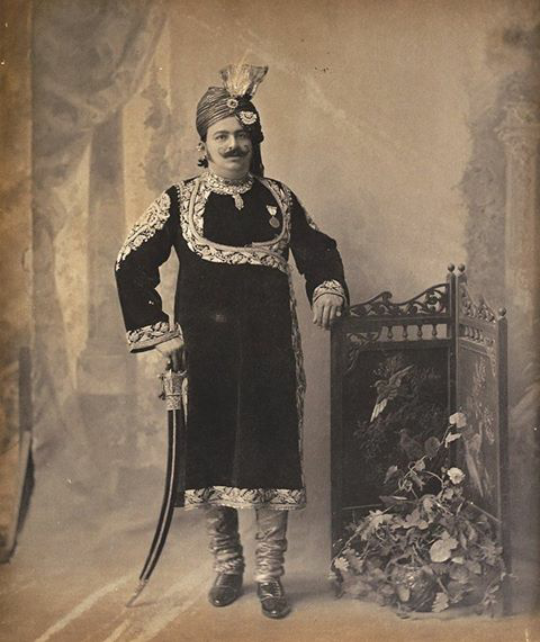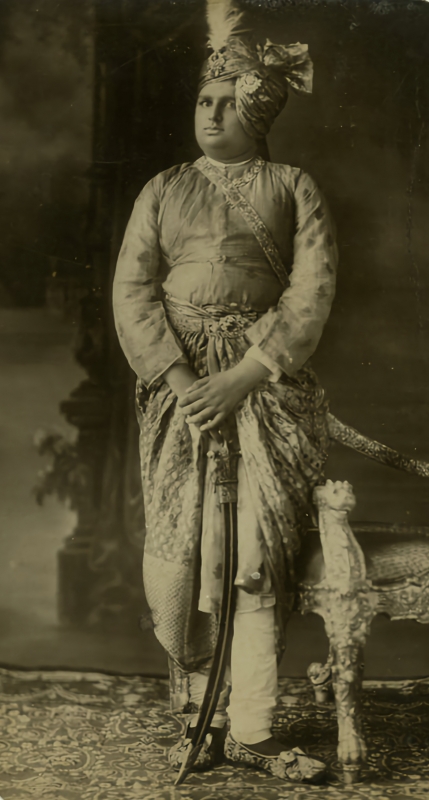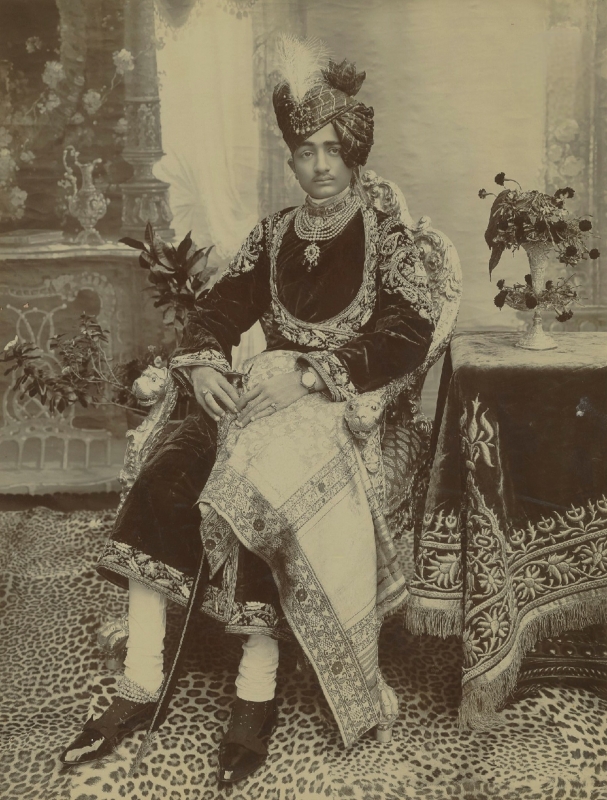
Present Head

- Veeranganakumari Jayveerendrasinhji Solanki
- Gauranganakumari Jayveerendrasinhji Solanki
History

Origin and Foundation of Bansda State
The princely state of Bansda (historically known as Wansda) was established by the Solanki (Chalukya) dynasty of Rajputs, who claimed descent from the illustrious rulers of Anhilwad Patan. Following the decline of the central Solanki power in Gujarat during the medieval era, a branch of the royal family migrated southward into the rugged, forested terrain of the Western Ghats. According to historical traditions, the state was founded around 1104 AD by Maharawal Virsinhji.
The capital of the state was strategically situated in a dense bamboo forest, which gave the state its name, "Vansda" or "Bansda" (derived from the Gujarati word Vans, meaning bamboo). Secure in their forested strongholds, the Solanki rulers maintained their independence for centuries, coexisting with the local indigenous tribal populations, such as the Bhils, Koknas, and Warlis, who formed the demographic backbone of the region.
The Maratha Influence and British Suzerainty
With the rise of the Maratha Empire in Western India during the late 17th and 18th centuries, the rulers of Bansda faced severe external pressure. The Maratha commanders, particularly the Peshwas and the Gaekwads of Baroda, penetrated the deep forests of the Dangs and Surat borders, forcing the Solanki chiefs to submit and pay Chauth (tribute).
This Maratha dominance persisted until the early 19th century. Following the collapse of the Peshwa’s power during the Anglo-Maratha Wars, the British East India Company assumed control over the region. Under the terms of the historic Treaty of Bassein (1802), the Peshwa ceded his tributary rights over Bansda to the British. Consequently, Bansda entered into a treaty of subsidiary alliance with the British, becoming a second-class princely state under the Surat Agency of the Bombay Presidency, as detailed in the Gazetteer of the Bombay Presidency (1880).
The Golden Era of Reform and Modernization
The late 19th and early 20th centuries marked a transformative period for Bansda under the rule of highly progressive and benevolent Maharawals, who prioritised social welfare, education, and infrastructural modernization.
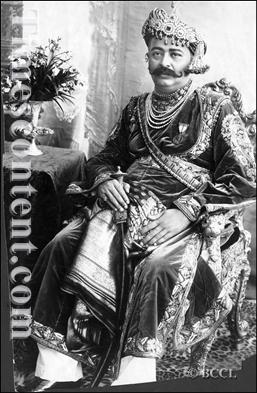
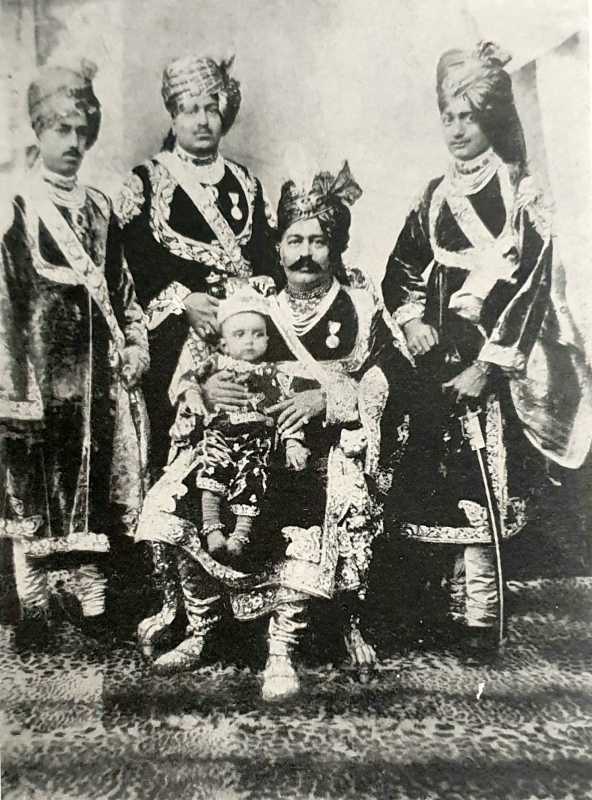
- Maharawal Shri Pratapsinhji Gulabsinhji (ruled 1876–1911): Ascending the gadi in 1876, Pratapsinhji initiated extensive administrative and economic reforms. He established the Bansda Municipality, with its entire operational cost born e directly by the state treasury, relieving the citizens of municipal taxes. He founded the first modern hospital, introduced mobile dispensaries to reach remote tribal hamlets, and initiated free primary education.
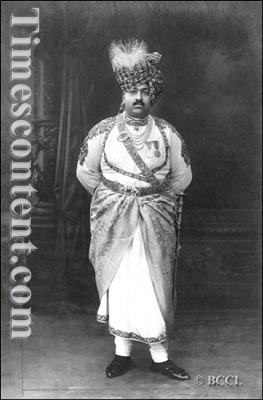
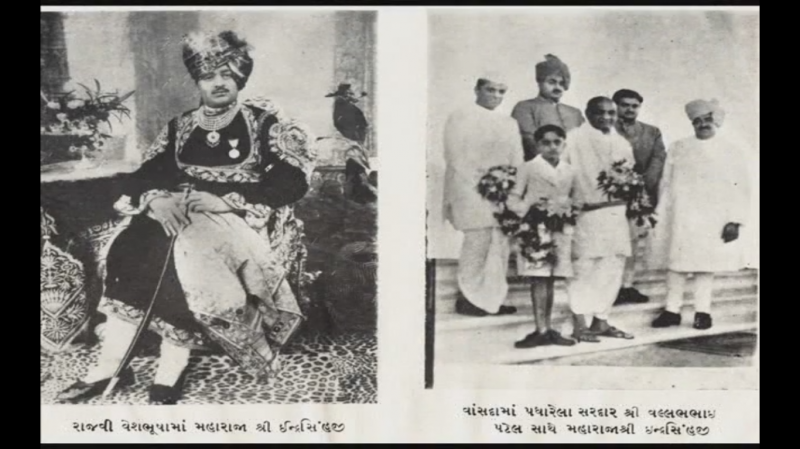
- Maharawal Shri Indrasinhji Pratapsinhji (ruled 1911–1947): Continuing his father's visionary policies, Maharawal Indrasinhji focused on elevating the standard of living for the local tribal populations. He abolished forced labour (veth), modernized agrarian practices, and expanded educational facilities. Under his patronage, the state constructed extensive road networks through difficult terrains, connecting the landlocked forest province to the railway lines of Surat and Billimora, thereby stimulating trade in valuable timber, bamboo, and agricultural produce.
Heraldry, Flag, and Royal Symbols
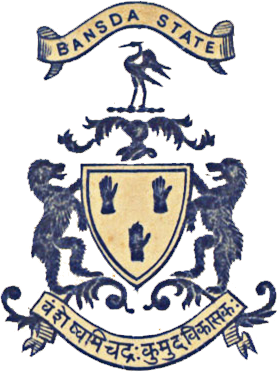
The heraldic insignia and state symbols of Bansda reflect both its geographic identity and the solar-lunar lineage of its rulers:
The state coat of arms features three black right hands (dexter hands appaumé) pointing upward, topped with flames on a field of gold within a red border. The crest shows an Ibis (Sara), a bird common to the wetlands of Southern Gujarat, resting on a helmet. The supporters are two bears, representing the rich wildlife of the local Dangs forests.
The royal motto, "Wansheshwapi Chandra" (translated as "The Moon even in the Bamboo Forest"), refers directly to the Solanki claim of belonging to the Lunar dynasty (Chandravansh) and shines as a metaphor for the rulers bringing the light of civilization and justice to the deep, dark forests of Vansda.
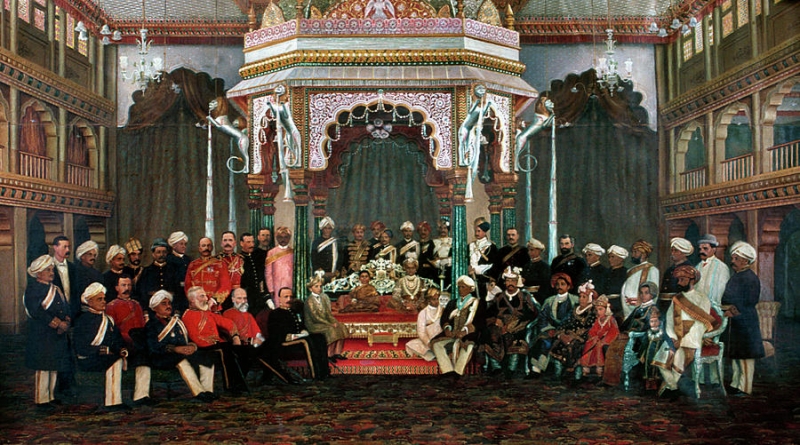
The state flag, originally formalized in 1877 during the Delhi Durbar, featured a pristine white field bordered with red, representing purity and Rajput valour.
Post-Independence Integration and Modern Legacy
At the dawn of India's independence, the last ruler, Maharawal Indrasinhji, signed the Instrument of Accession to the Dominion of India. On June 10, 1948, Bansda State officially merged into the Surat District of the Bombay Province.
Following the linguistic reorganization of Indian states in 1960, the territory of Bansda became a part of the Valsad district, and was later placed under the newly carved Navsari District of Gujarat. Today, Vansda is recognized as a ecologically diverse taluka, home to the famous Vansda National Park, a protected sanctuary harboring leopards, hyenas, and rare avian species, preserving the majestic forests that once defined the territory of the Solanki rulers.
References and Historical Citations
- Imperial Gazetteer of India, Volume 6, page 401 - Vansda State
- Gazetteer of the Bombay Presidency: Rewá Kántha, Nárukot, Sábari Kántha, and the Surat States, Volume VI (1880)
- The Ruling Princes and Chiefs of India - Technical Data on Bansda State
Genealogy
- Raja Sahib (name unknown), 1st Raja of Bansda
- Raja Sahib MULDEVJI, 2nd Raja of Bansda
- Raja Sahib KADHALDEVJI, 3rd Raja of Bansda
- Raja Sahib BALDEVJI, 4th Raja of Bansda
- Raja Sahib KARANDEVJI, 5th Raja of Bansda
- Raja Sahib UDAISINHJI I, 6th Raja of Bansda
- Raja Sahib MALKARANJI, 7th Raja of Bansda
- Raja Sahib UDAISINHJI II, 8th Raja of Bansda; married and had issue.
- Raja Sahib Virsinhji I Udaisinhji (qv)
- Raja Sahib VIRSINHJI I UDAISINHJI, 9th Raja of Bansda -/1716; married and had issue. He died .
- Raja Sahib Raybhanji Virsinhji (qv)
- Raja Sahib RAYBHANJI VIRSINHJI, 10th Raja of Bansda 1716/1739; married and had issue. He died .
- Raja Sahib Ghulabsinhji Raybhanji (qv)
- Kumar Shri Jorawarsinhji Raybhanji, he was granted the estate of Bisanpur after his father's death, but it was taken by the Maharaja of Baroda in 1763, married and had issue.
- Kumar Shri Virsinhji Jorawarsinhji, he disputed the succession of Raja Sahib Udaisinhji III Ghulabsinhji, but it was confirmed by the Peshwa and he was granted five villages in compensation; he was adopted by Raja Sahib Kiratsinhji Udaisinhji, and succeeded as Raja Sahib Virsinhji II Kiratsinhji, 14th Raja of Bansda (qv)
- Kumar Shri Naharsinhji Jorawarsinhji, adopted by his brother, Raja Sahib Virsinhji Kiratsinhji and succeeded as Raja Sahib Naharsinhji Virsinhji, 15th Raja of Bansda (qv)
- Raja Sahib GHULABSINHJI RAYBHANJI, 11th Raja of Bansda 1739/1753; married and had adoptive issue. He died .
- (A) Raja Sahib Udaisinhji III Ghulabsinhji (qv)
- Raja Sahib UDAISINHJI III GHULABSINHJI, 12th Raja of Bansda 1753/1770; a distant cousin of his predecessor, he succeeded by adoption; married and had. He died about 1770.
- Raja Sahib Kiratsinhji Udaisinhji (qv)
- Raja Sahib KIRATSINHJI UDAISINHJI, 13th Raja of Bansda 1770/1780; married and had adoptive issue. He died .
- (A) Raja Sahib Virsinhji II Kiratsinhji (qv)
- Raja Sahib VIRSINHJI II KIRATSINHJI, 14th Raja of Bansda 1780/1789; born as Kumar Shri Virsinhji Jorawarsinhji (see above), succeeded by adoption; married and had issue. He died .
- (A) Raja Sahib Naharsinhji Virsinhji (qv)
- Raja Sahib NAHARSINHJI VIRSINHJI, 15th Raja of Bansda 1789/1793, born as Kumar Shri Naharsinhji Jorawarsinhji (see above), succeeded by adoption; married and had issue. He died .
- Raja Sahib Raisinhji Naharsinhji (qv)
- Raja Sahib RAISINHJI NAHARSINHJI, 16th Raja of Bansda 1793/1815, married and had adoptive issue. He died .
- (A) Raja Sahib Udaisinhji IV Raisinhji (qv)
- Raja Sahib UDAISINHJI IV RAISINHJI, 17th Raja of Bansda 1815/1828, a distant cousin of his predecessor; married and had adoptive issue. He died .
- (A) Raja Sahib Hamirsinhji Udaisinhji (qv)
- Raja Sahib HAMIRSINHJI UDAISINHJI, 18th Raja of Bansda 1828/1862, born in or about April 1826, married and had adoptive issue. He died .
- (A) Raja Sahib Ghulabsinhji II Hamirsinhji (qv)
- Raja Sahib GHULABSINHJI II HAMIRSINHJI, 19th Raja of Bansda 1862/1876, born (1838), cousin of his predecessor; married and had adoptive issue. He died .
- (A) HH Maharaja Sahib Shri Pratapsinhji Ghulabsinhji (qv)
- HH Maharaja Sahib Shri PRATAPSINHJI GHULABSINHJI, 20th Raja of Bansda 1876/1911, born or 6th December 1863, succeeded 6th March 1876, educated at Rajkumar College, Rajkot; married and had issue. He died .
- HH Maharaja Sahib Shri Indrasinhji Pratapsinghji (qv)
- Thakur Pravinsinghji Pratapsinghji, married and had issue.
- Thakur Narendrasinghji Pravinsinghji
- Thakur Ghanshyhamsinghji Pravinsinghji
- Thakur Vikramsinghji Pravinsinghji
- Thakur Bhupendrasinghji Pravinsinghji, married and has issue.
- Thakur Shree Ajaypalsinghji Bhupendrasinghji, Assistant Commissioner, Central Excise and Customs, Baroda, married Thakurani Krishanakunverbasaheb of Sapar in Morvi, and has issue, one son.
- Kanwar Harshwardhan Singh, born , working for Jetairways Baroda, married Kumari Dhaneshwari Devi, daughter of Kumar Shri Shivrajsinhji Surendrasinhji of Sayla, and has issue, one son.
- Kumar Chandraaditya Sinhji Harswardhan Sinhji Solanki
- Kanwar Harshwardhan Singh, born , working for Jetairways Baroda, married Kumari Dhaneshwari Devi, daughter of Kumar Shri Shivrajsinhji Surendrasinhji of Sayla, and has issue, one son.
- Thakur Shree Ajaypalsinghji Bhupendrasinghji, Assistant Commissioner, Central Excise and Customs, Baroda, married Thakurani Krishanakunverbasaheb of Sapar in Morvi, and has issue, one son.
- Thakur Pradumansinghji Pravinsinghji
- Thakur Nrupendrasinhji Pravinsinghji
- Thakur Natwarsinhji Pratapsinhji, born , died .
- Thakur Kishorsinhji Pratapsinghji
- HH Maharaja Sahib Shri INDRASINHJI PRATAPSINHJI, 21st Raja of Bansda 1911/-, K.C.I.E., born and succeeded 21st September 1911, educated at Rajkumar College, Rajkot, married and had issue.
- Kunwari Shri Sushil Kunwarba [HH Maharani Sushil Devi of Ajaigarh], born , married HH Sawai Maharaja Devendra Vijaya Singh of Ajaigarh, and had issue.
- Maharajkumar Shri Digvirsinhji Indrasinhji, born .
- Maharajkumar Shri Harshadkumarsinhji Indrasinhji, born , died .
- HH Maharaja Sahib Shri Digvirendrasinhji Indrasinhji (qv)
- Maharani Sudheer Kunverba, married HH Maharaja Shri Mahendrasinhji Lakhdhirji of Morvi.
- HH Maharaja Sahib Shri DIGVIRENDRASINHJI INDRASINHJI, 22nd Raja of Bansda (19xx/2018) (Digvi Niwas, Gujarat, India), born , married to HH Maharani Sahib Usha Kumari Rathore, elder daughter of Rajkumar Dr. Raghubirsinhji Rathore of Sitamau. He died on .
- Jay Sinh Ji (qv)
- Amar Sinh Ji, married and has issues, two daughters.
- HH Maharaja Sahib Shri JAYVEERENDRASINHJI DIGVIRENDRASINHJI (see above)
Notable Figures
Maharawal Vir Singhji III (Reigned 1780 – 1789)
Maharawal Vir Singhji III was a pivotal ruler of the Bansda State who belonged to the venerable Solanki dynasty. He is most distinguished in the state's history for establishing the permanent capital at Vansda (historically known as Bansda) in the year 1781. Prior to this, the capital had shifted across various fortified locations due to political instability in the region.
During his reign, Vir Singhji III worked extensively to consolidate the frontiers of his small principality. This was a turbulent era in Gujarat's history, marked by the declining influence of the Mughals and the aggressive expansion of the Maratha Empire. His strategic diplomacy allowed Bansda to maintain its autonomy during these challenging transitions.
Maharawal Hamir Singhji (Reigned 1829 – 1861)
Ascending the throne in 1829, Maharawal Hamir Singhji governed the state during a period of expanding British hegemony in western India. Under his administration, Bansda entered into formal treaty relations with the British East India Company, effectively placing the state under the British Raj's protection as part of the Surat Agency within the Bombay Presidency.
Hamir Singhji’s reign was characterized by internal administrative stabilization. He succeeded in settling long-standing boundary disputes with neighboring tribal chieftains and the Gaekwads of Baroda, ensuring a period of relative peace and agrarian growth for his subjects.
Maharawal Gulab Singhji (Reigned 1861 – 1876)
Maharawal Gulab Singhji succeeded to the gaddi (throne) in June 1861. His tenure was marked by early attempts at administrative modernization, inspired by the administrative models of the British Bombay Presidency. He paid close attention to reforming the state's land revenue collection systems, which had previously been prone to inconsistencies.
He was also a builder who initiated the construction of public infrastructure, including early roads and state offices. His reign paved the way for the grand modernization efforts that would be carried out by his successor.
Maharawal Shri Pratapsinhji Gulabsinhji (Reigned 1876 – 1911)
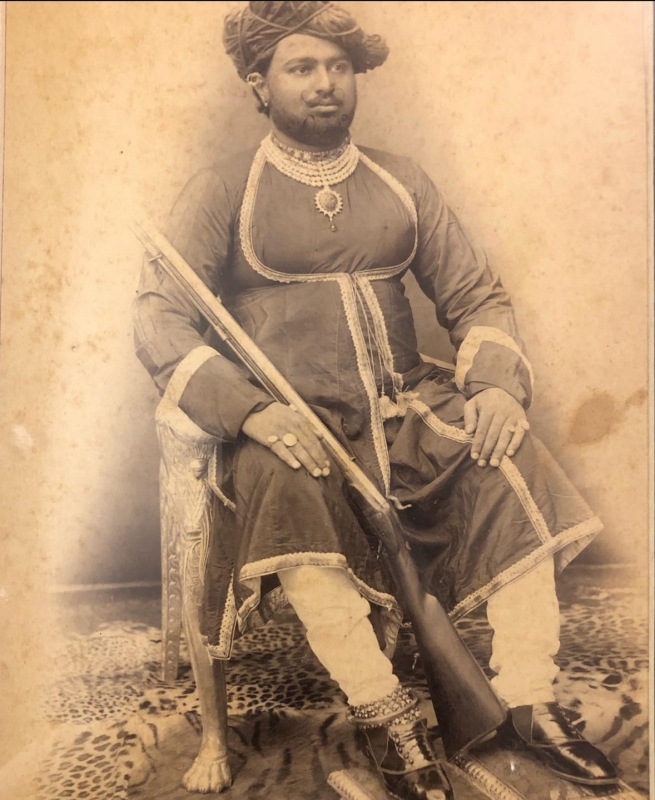
Maharawal Shri Pratapsinhji Gulabsinhji ascended the throne as a minor in 1876, with the state initially managed under a joint administration. Upon gaining full ruling powers, Pratapsinhji proved to be one of the most progressive and visionary rulers of Bansda. He introduced free primary education across the state, built modern schools, and established the first fully equipped state hospital to provide free healthcare to his subjects.
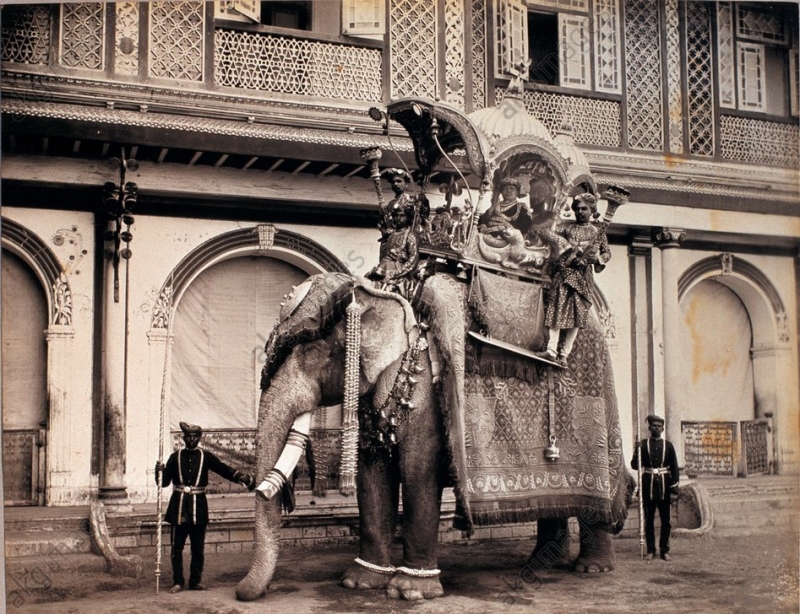
Pratapsinhji is also famous for commissioning the magnificent Digvir Niwas Palace, an architectural marvel blending European and Indian styles, named after his sons Digvirendrasinhji and Virrasinhji. His developmental reforms turned Bansda from a secluded forest principality into a well-connected and prosperous model state. Details of his progressive administration can be read in historical records of the Vansda State.
Maharawal Shri Sir Indrasinhji Pratapsinhji (Reigned 1911 – 1947)
Maharawal Shri Sir Indrasinhji Pratapsinhji succeeded his father in 1911 and carried forward the legacy of modernization. Educated at the Rajkumar College in Rajkot, he was a highly enlightened ruler who was later knighted as a KCIE (Knight Commander of the Order of the Indian Empire) by the British Crown. Sir Indrasinhji focused on economic self-reliance, introducing cooperative societies, agricultural reforms, and encouraging small-scale forest-based industries.
He was a great patron of sports, particularly cricket and motoring, and was deeply committed to the welfare of the local tribal population, who formed the majority of his subjects. On 15th August 1947, Sir Indrasinhji signed the Instrument of Accession, integrating the state of Bansda into the newly independent Dominion of India, which was later merged into the Bombay State.
Maharawal Digvirendrasinhji Indrasinhji (Modern Era / Titular)
Following the integration of princely states and the subsequent abolition of royal privy purses and titles by the Government of India, Maharawal Digvirendrasinhji remained a highly respected public figure and the titular head of the Bansda Solanki clan. He was widely known for his passion for heritage conservation, wildlife protection, and vintage automobiles.
Digvirendrasinhji worked diligently to preserve the family’s historical legacy, including the upkeep of the Digvir Niwas Palace, and continued to support local educational trusts and cultural initiatives in the Vansda taluka of Navsari district, Gujarat.