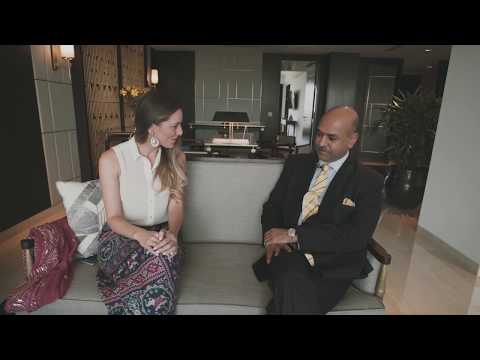
Present Head

- Yuvraj Parakram Sinh Rathore, born .
- Maharaj Kumar Rannvikram Sinh Rathore, born .
History
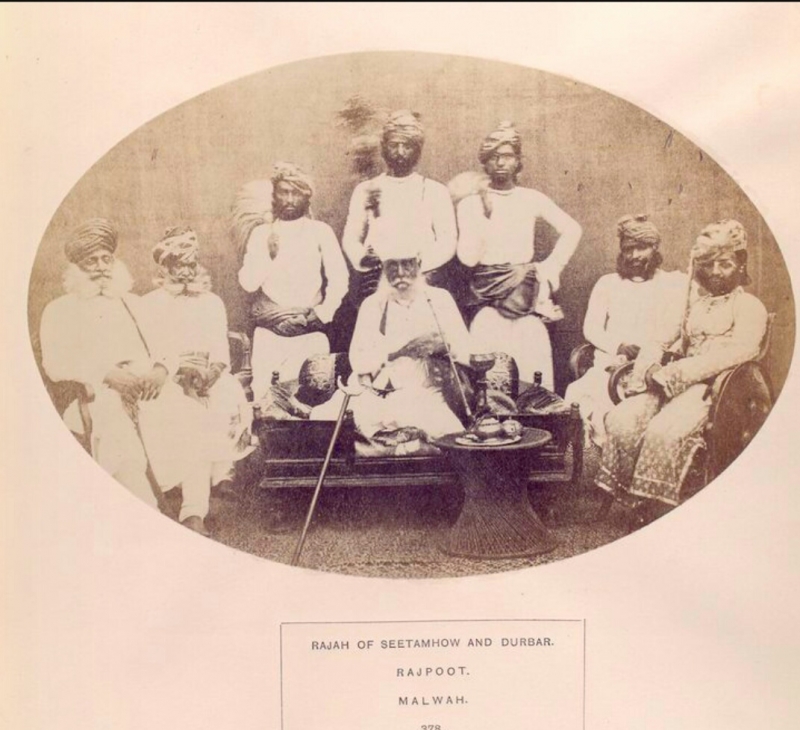
The princely state of Sitamau, located in the western Malwa plateau (modern-day Mandsaur district of Madhya Pradesh), holds a highly respected position as a premier Rathore Rajput principality. Born o ut of a dramatic 18th-century dynastic split within its senior sister state of Ratlam, Sitamau’s history is a compelling story of resilience against Maratha domination, proud preservation of its independent sovereignty, and a brilliant 20th-century legacy as a world-renowned center for historical research and literature.
The Foundation and the Fraternal Split (1701)
The establishment of Sitamau is directly rooted in the internal succession crises and martial rivalries that gripped the senior royal house of Ratlam following the death of its legendary founder, Raja Ratan Singh, at the Battle of Dharmat in 1658.
- The Founder: The state was founded in 1701 by Raja Keshav Das Rathore, a grandson of Raja Ratan Singh.
- The Succession Crisis: Following intense family disputes over the throne of Ratlam, Keshav Das—an exceptionally capable and politically astute prince—moved to carve out an independent domain.
- Imperial Recognition: Utilizing his influence in the Mughal court, Keshav Das secured a direct imperial decree (farman) from Mughal Emperor Aurangzeb. The decree granted him a sovereign territory in western Malwa, independent of the Jodhpur and Ratlam courts. He established his capital at an ancient settlement, naming it Sitamau. Despite this separation, Sitamau maintained a high status as the first major offshoot branch of the Malwa Rathores.
The Maratha Onslaught and the British Guarantee (1820)
During the mid-to-late 18th century, the rapid decline of the Mughal Empire left Sitamau completely vulnerable to the expanding Maratha Confederacy. Due to its position between Malwa and Rajputana, it became a frequent target for territorial annexations.
- The Scindia Extortion: The state was repeatedly invaded by the armies of the Scindia dynasty of Gwalior. To save his kingdom from absolute destruction, the Raja of Sitamau was forced to surrender vast portions of his territory and submit to a crushing, regular military tribute (tanka).
- The 1820 Settlement: Exhausted by decades of Maratha raids, Raja Raj Singh turned to the British East India Company following the conclusion of the Third Anglo-Maratha War. In 1820, under the diplomatic arbitration of Sir John Malcolm, a formal treaty was signed. The British legally guaranteed Sitamau’s internal sovereignty and fixed its annual tribute to Gwalior, routing it strictly through British channels to eliminate direct Maratha military incursions. Sitamau was classified as an independent 11-gun salute state within the Central India Agency.
The Renaissance of Letters: Maharaja Sir Ram Singh (1867–1899) and Dr. Raghubir Sinh
Sitamau entered its absolute golden age of administrative stability and intellectual renown during the late 19th and mid-20th centuries, transforming it from a minor military state into a major academic center.
- Maharaja Sir Ram Singh: Ascending the throne in 1867, Ram Singh was an exceptionally progressive administrator who laid down modern revenue systems, established state-funded schools, and built extensive roads connecting Sitamau to neighboring trading hubs. He was also a deeply religious scholar who patronized local literature and art.
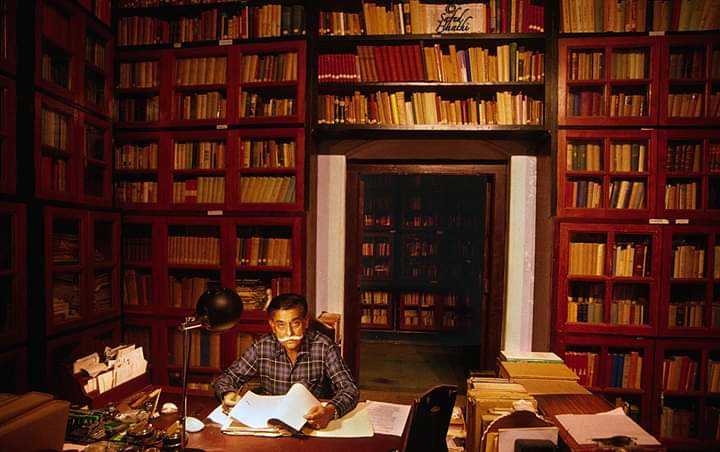
- The Raghubir Library: Sitamau's greatest contribution to modern Indian scholarship came from its brilliant twentieth-century heir-apparent, Maharajkumar Dr. Raghubir Sinh (r. as titular ruler 1967–1991). A highly celebrated historian, author, and Member of Parliament, Dr. Raghubir Sinh converted his royal inheritance into a lifelong dedication to history. He established the world-famous "Nutan Kharch" (Raghubir Library) in Sitamau, compiling a massive, unparalleled collection of rare medieval Persian, Sanskrit, Marathi, and Hindi manuscripts, making this remote Malwa town a legendary pilgrimage site for international historians and research scholars.
Vexillology and Heraldic Symbols
- The State Flag: Reflecting their elite northern desert lineage, the flag of Sitamau State was a traditional rectangular saffron (amaranthe) banner, the universal color of the Rathore clan, symbolizing sun-born heritage, martial valor, and spiritual protection.
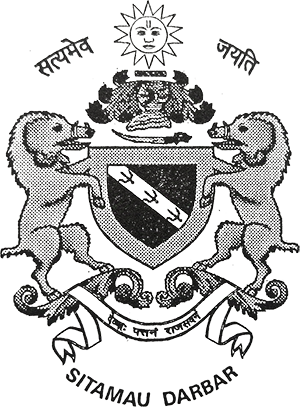
- The Coat of Arms: The official heraldic shield of Sitamau featured a central castle on a hill flanked by two royal falcons acting as supporters—a sacred nod to the goddess Karni Mata, the divine protector of the Rathore lineage. The state motto proudly emphasized strength born out of righteousness and defensive resilience.
Accession to Independent India
Following the end of British paramountcy in August 1947, the last ruling monarch, Maharaja Sir Ram Singh II, signed the Instrument of Accession to join the Union of India, concluding nearly two and a half centuries of sovereign Rathore hill rule.
In June 1948, Sitamau formally merged into the newly created state union of Madhya Bharat. Following the systemic reorganization of Indian states along linguistic lines in 1956, Madhya Bharat was dissolved, and the historic lands of Sitamau were permanently integrated as a vital subdivision and municipality within the Mandsaur district of Madhya Pradesh.
Genealogy
- Raja KESHO DAS, 1st Raja of Sitamau 1701/1748, during his reign in Ratlam prior to 1701, an important Mughal officer was killed in Ratlam by the state employees, as a result, the Mughal Emperor confiscated Ratlam and Maharaja Keshav Das went to Sitamau, which was given in jagir to him when he was forgiven by Padshah Aurangzeb, and he thus became the 1st Raja of Sitamau in 1701, he married and had issue.
- Raja Gaj Singh (qv)
- Raja GAJ SINGH, 2nd Raja of Sitamau 1748/1752, married and had issue.
- Raja Fateh Singh (qv)
- Raja FATEH SINGH, 3rd Raja of Sitamau 1752/1802, married and had issue.
- Raja Raj Singh(qv)
- Raja RAJ SINGH, 4th Raja of Sitamau 1802/1867, an able ruler, he remained faithful to the British Government during the mutiny of 1857, and received a khilat valued at Rupees 2,000; in 1865 the Chief agreed (No. CLXIV) to cede any land that might be required for railway purposes on the same terms as those mentioned in the cases of Ratlam and Sailana; married and had issue. He died .
- Maharajkumar Ratan Sinh was born in the palace of Laduna to the queen of Raja Raj Sinh, Rajkunwar Chawdiji on Monday, April 11, 1808 (Vaishak Vadi 1, Vikram Sanvat 1865). His childhood was spent entirely in the palaces of Laduna. Not much is known about the childhood of Ratan Sinh, but it is well-known that a lot of his time was spent in physical exercise and hunting apart from education. Through regular workouts, Ratan Sinh’s physique had become powerful and well-balanced. There are a lot of tales in circulation about his physical strength. Under the suitable guidance of Raja Raj Sinh, Ratan Sinh studied languages including Urdu, Persian, Hindi, Brij, Sanskrit, and Dingal. By inspiration of his father and teacher Guru Shrupdas, Ratan Sinh started writing poetries in Hindi, Brij, Dingal, Persian, and Urdu, under the pen name of ‘Natnagar’.
- Raja Bhawani Singh (qv)
- Maharajkumar Ratan Sinh was born in the palace of Laduna to the queen of Raja Raj Sinh, Rajkunwar Chawdiji on Monday, April 11, 1808 (Vaishak Vadi 1, Vikram Sanvat 1865). His childhood was spent entirely in the palaces of Laduna. Not much is known about the childhood of Ratan Sinh, but it is well-known that a lot of his time was spent in physical exercise and hunting apart from education. Through regular workouts, Ratan Sinh’s physique had become powerful and well-balanced. There are a lot of tales in circulation about his physical strength. Under the suitable guidance of Raja Raj Sinh, Ratan Sinh studied languages including Urdu, Persian, Hindi, Brij, Sanskrit, and Dingal. By inspiration of his father and teacher Guru Shrupdas, Ratan Sinh started writing poetries in Hindi, Brij, Dingal, Persian, and Urdu, under the pen name of ‘Natnagar’.
- Raja BHAWANI SINGH, 5th Raja of Sitamau 1867/1885, born , married and had adoptive issue. He died .
- (A) HH Raja Bahadur Singh (qv)
- HH Raja BAHADUR SINGH, 6th Raja of Sitamau 1885/1899, born (or 1854), elder son of Thakur Takht Singh of Chiklia, second cousin of Raja Bhawani Singh, he succeeded to the gaddi by adoption on 8th December 1885, married and had adoptive issue.
- (A) HH Raja Shardul Singh (qv)
- HH Raja SHARDUL SINGH, 7th Raja of Sitamau 1899/1900, succeeded to the gaddi by adoption in 1899.
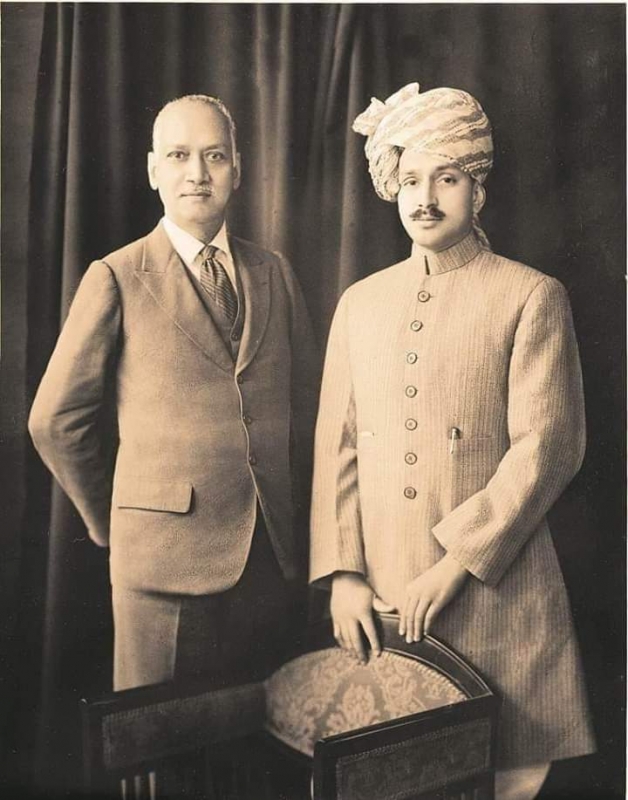
- HH Raja Sir RAM SINH II Bahadur, 8th Raja of Sitamau 1900/1967, adopted by his predecessor, son of Thakur Dalel Sinh of Kachhi-Baroda, born , K.C.I.E. [cr.1911], married 1stly, 1902, HH Chauhaniji Sahiba died , daughter of Maharawal Shri Motisinhji Jitsinhji of Chhota-Udaipur, married 2ndly, 1903, HH Rajawatiji Sahiba, died , daughter of the Thakur of Baleri in Bikaner, married 3rdly, 1915, HH Natyaniji Sahib, grand-daughter of the Thakur of Marauli in Udaipur, and had issue. He died .
- Rajkumar Dr. Raghubir Sinh, born , M.A., LL.B., D.Litt., declined succession to the gaddi in favour of his eldest son, President of the Sitamau State Raiya Parishad (Legislature) 1939/1941 and 1945/1946, Member of the Rajya Sabha 1952/1960, author of a large number of books in Hindi and English; married Rajkumar Rani Mohan Kumari, daughter of Yuvraj Man Singh of Pratapgarh, and his second wife, Yuvrani Bhuvaneshwari Devi, and had issue, two sons and two daughters. He died .
- HH Raja Krishan Sinh (qv)
- Kunwar Brijraj Singh, born , married 6th May 1967, Kunwar Rani Shrimati Rama Devi, daughter of HH Raja Lakshman Sen of Suket, and his wife, HH Rani Kalawati. He died .
- Maharani Usha Kumari, married Maharawal Digvirendra Singhji of Bansda.
- Rani Rama Kumari, married Raja Ramkrishnaju Deo of Jeypore (Orissa), and has issue.
- H.E. Rajkumar Raghunath Sinh, born , with the Indian Foreign Service, serving as Ambassador to many countries around the world, married Raj Kumarani Indumati Sinh, and had issue.
- Kunwar Sahib Jay Sinhji, worked with Air India and retired as the Deputy Commercial Director in 1997, married Kunwar Rani Sahiba Asha Kumari, daughter of the Rana Sahib Sri Jagdishwar Prasad Singhji of Chaugain in Bihar, and his wife, Rani Sushila Devi of Churhat, and has issue.
- Ajatshatru Sinhji, born , educated in the U.K., married 22nd November 2002, Kunwarani Sahib Taruna Kumari, born , daughter of Rajkumar Dalip Singh of Keonthal, and his wife, Rajkumar Rani Mankya Kumari, and has issue.
- Abhyudai Sinh, born .
- Ambika Kumari [Tikka Rani Sahiba Ambika Kumari of Mandi], born in Lusaka, Zambia, educated in Rome, Italy and the U.K. for five years, married 25th November 2001, Tikka Omeshwar Singh of Mandi, and has issue.
- Ajatshatru Sinhji, born , educated in the U.K., married 22nd November 2002, Kunwarani Sahib Taruna Kumari, born , daughter of Rajkumar Dalip Singh of Keonthal, and his wife, Rajkumar Rani Mankya Kumari, and has issue.
- Kunwar Sahib Ajai Sinhji, married Kunwarani Sahiba Shashi Kumari of Palaitha in Kotah, and has issue, two children.
- Ratan Sinh Rathore, married Rohini Singh from Una in Himachal Pradesh and has issue, one daughter.
- Rajkumari Riddhima Kumari Singh
- Anshuman Sinh Rathore, born in , B.Arch from Birla Institute of Technology Mesra, married in 2006 to Aditi Singh (M.Arch From School of planning and Architecture Delhi), daughter of Brig. Kunwar Kamal Singh, son of Thakur Himmat Singh of Khandela Junior.
- Ratan Sinh Rathore, married Rohini Singh from Una in Himachal Pradesh and has issue, one daughter.
- Kunwar Sahib Raj Sinhji, married Maharaj Kumari Sahiba Brijraj Kumari, daughter of HH Maharajadhiraj Mirzan Maharao Shri Madansinghji Vijayrajji Sawai Bahadur of Kutch, and his wife, HH Maharani Rajendra Kunverba, and has issue.
- Dhananjay Sinh
- Baijilal Aparajita Kumari
- Baijilal Vijayeta Kumari
- Baijilal Abhilasha Kumari
- Kunwar Sahib Jay Sinhji, worked with Air India and retired as the Deputy Commercial Director in 1997, married Kunwar Rani Sahiba Asha Kumari, daughter of the Rana Sahib Sri Jagdishwar Prasad Singhji of Chaugain in Bihar, and his wife, Rani Sushila Devi of Churhat, and has issue.
- Maharani Krishna Kumari, married (as his second wife), Maharaja Ambikeshwar Saran Singh Deo of Surguja, and had issue.
- Rani Saheb Chand Kanwar Ji, married to Rao Sawai Kesri Singh Ji of Bijolian, son of Rao Sawai Prithvi Singh Ji of Bijolian and Rani Saheb Jas Kanwar Ji of Chhaprel.
- Rajkumar Govind Singh Ji, married to Urmila Singh Ji.
- Rajkumar Dr. Raghubir Sinh, born , M.A., LL.B., D.Litt., declined succession to the gaddi in favour of his eldest son, President of the Sitamau State Raiya Parishad (Legislature) 1939/1941 and 1945/1946, Member of the Rajya Sabha 1952/1960, author of a large number of books in Hindi and English; married Rajkumar Rani Mohan Kumari, daughter of Yuvraj Man Singh of Pratapgarh, and his second wife, Yuvrani Bhuvaneshwari Devi, and had issue, two sons and two daughters. He died .
- HH Raja KRISHAN SINH, 9th Raja of Sitamau 1967/2008, he joined the Indian Police Service in 1959 and was a distinguished officer of the Madhya Pradesh cadre, he had an abiding interest in equitation and owned a number of horses; married HH Rani Yogeshwari Kumari (now Rajmata), daughter of Colonel HH 108 Sri Maharaj Adhiraj Raj Rajeshwar Ravi Kula Bushana-Mahi Mahindra Yavadarya Kula Kamaldhivakara Chattis Rajkul Singar Maharana Shri Bhagwat Singh Bahadur Hindua Suraj Hindupati of Udaipur, and his wife, HH Maharani Sushila Kunwari, and had issue. He died in .
- Rajkumari Vindhyeshwari Kumari
- HH Raja Puranjay Sinh (qv)
- Rajkumar Mritunjay Sinh
- HH Raja PURANJAY SINH, 10th Raja of Sitamau (see above)
- Princess of Sitamau, married Sawai Rao Kesri Singhji of Bijolian, and had issue.
Notable Figures
Raja Keshav Das (1701–1748)
Raja Keshav Das was the founder of the Sitamau Princely State. He was the grandson of Raja Ratan Singh, the illustrious founder of Ratlam State, and belonged to the Rathore clan originating from Jodhpur. Following intense succession disputes in Ratlam after his father's demise, Keshav Das was granted the parganas of Titrod, Nahargarh, and Alot by the Mughal Emperor Aurangzeb in 1701, which led to the establishment of Sitamau as an independent principality.
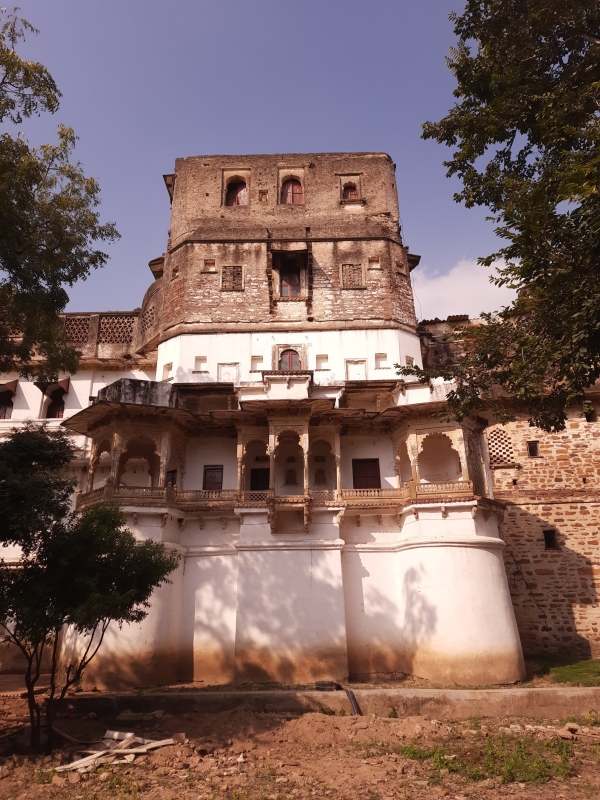
During his reign, he built the Sitamau Fort and successfully established his capital. He navigated the turbulent geopolitical landscape of the early 18th century, marked by the rapid decline of the Mughal Empire and the rise of Maratha incursions into the Malwa region. For further details on the establishment of his reign, see the historical records on Sitamau State on Wikipedia.
Raja Raj Singh I (1802–1867)
Raja Raj Singh ruled Sitamau during a highly critical period of transition in Indian history when the British East India Company was establishing supremacy over Central India. In 1820, under the mediation of Sir John Malcolm, Raja Raj Singh signed a treaty with the British. This treaty guaranteed the territorial integrity of Sitamau under British suzerainty, while the state agreed to pay a fixed tribute to the Scindias of Gwalior.
His long and stable reign of sixty-five years brought much-needed peace and administrative continuity to the region. He maintained loyal relations with the British Empire, particularly during the Indian Rebellion of 1857, ensuring that Sitamau remained undisturbed during the widespread political turmoil. His reign is documented in regional Gazetteers and the Sitamau State history.
Raja Sir Ram Singh II (1900–1947)
Raja Sir Ram Singh II succeeded to the throne in 1900 and proved to be one of the most progressive and modernizing rulers of the Rathore dynasty in Malwa. Highly educated and forward-thinking, he initiated comprehensive administrative, judicial, and social reforms within the state. He built modern schools, hospitals, and infrastructure, significantly improving the quality of life for his subjects.
He was appointed a Knight Commander of the Order of the Indian Empire (KCIE) for his exemplary governance and contribution to the region. As an active member of the Chamber of Princes, he played an important role in princely state diplomacy during the twilight years of the British Raj. He ruled until 1947, when he signed the Instrument of Accession, integrating Sitamau into the newly independent Union of India. His administrative achievements are outlined in the Imperial Gazetteer of India records for Sitamau.
Maharajkumar Dr. Raghubir Sinh (1908–1991)
Maharajkumar Dr. Raghubir Sinh was the eldest son and heir apparent of Raja Sir Ram Singh II. Rather than pursuing active administrative rulership, he dedicated his life to scholarship, literature, and history, becoming one of India's most distinguished historians. He earned his Doctor of Letters (D.Litt.) from Agra University, specializing in the history of the Malwa region, the Mughal Empire, and the Marathas.
He founded the prestigious Natnagar Shodh Samsthan in Sitamau, an internationally acclaimed archival and historical research institute that houses an invaluable collection of rare manuscripts, historical correspondence, and microfilms. In addition to his academic brilliance, Dr. Raghubir Sinh was a prominent politician, serving as a Member of Parliament in the Rajya Sabha (Upper House) for multiple terms. His life and scholarly contributions are extensively detailed on his dedicated Wikipedia biography.