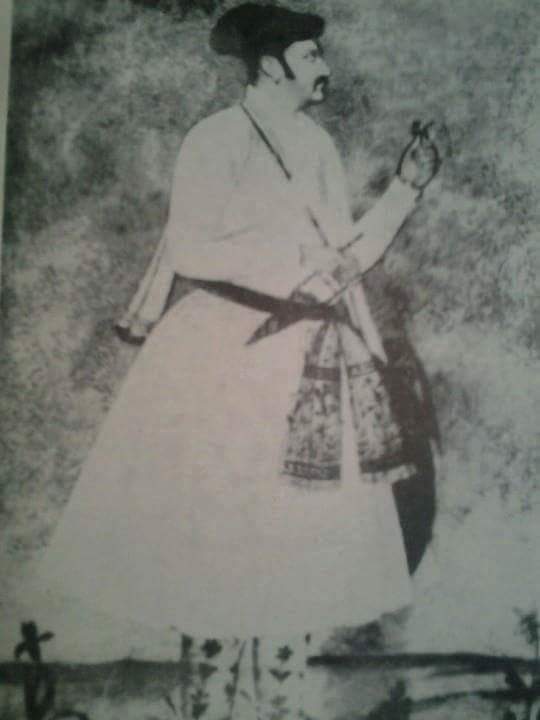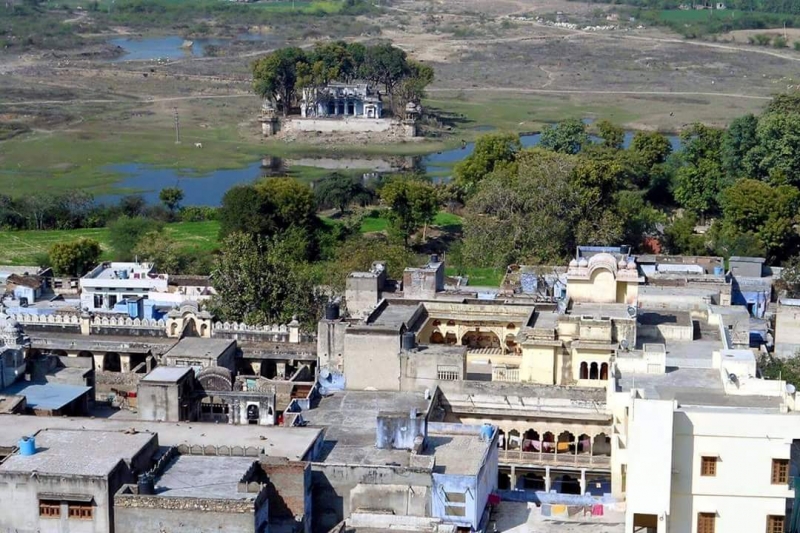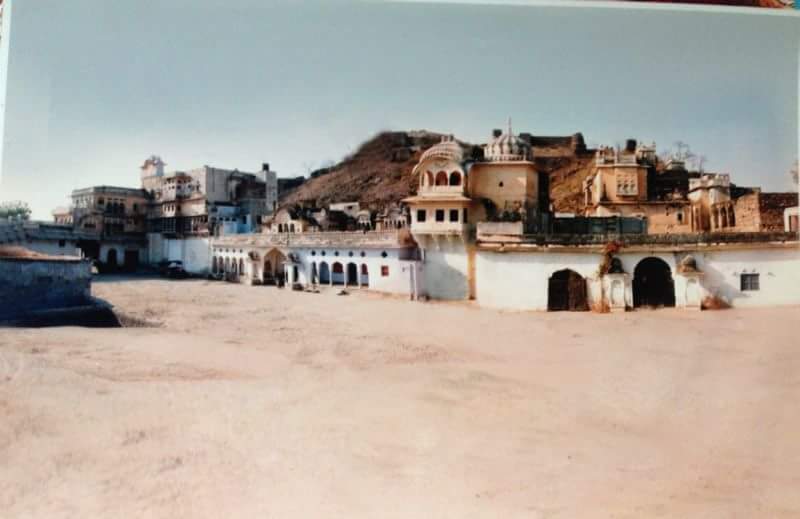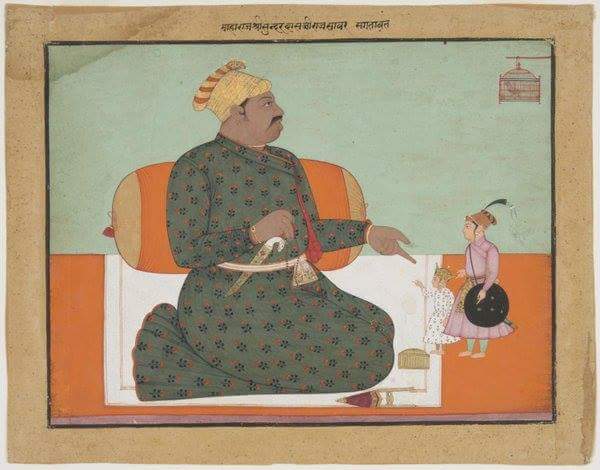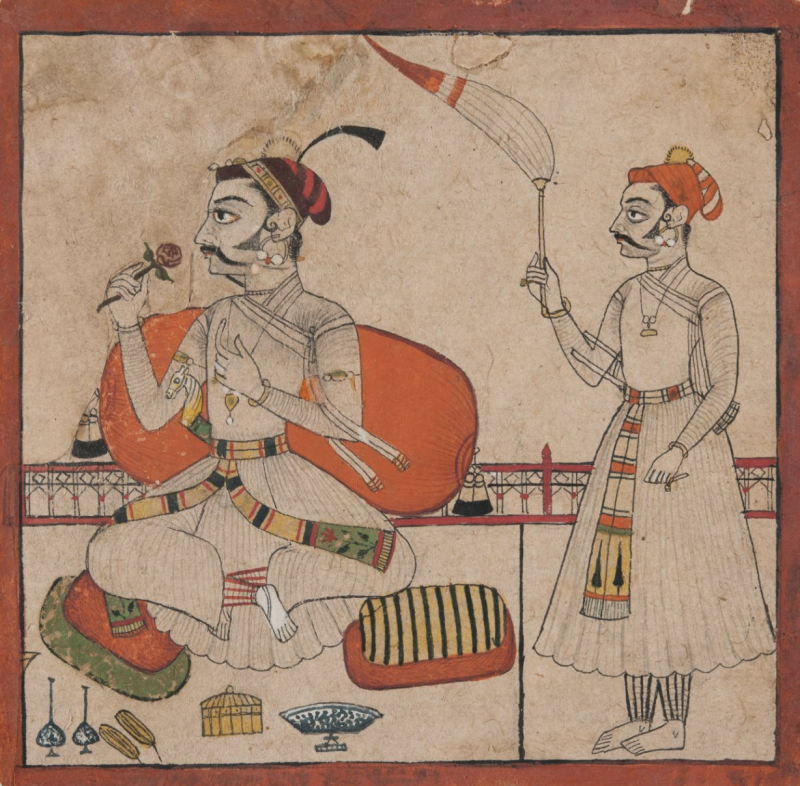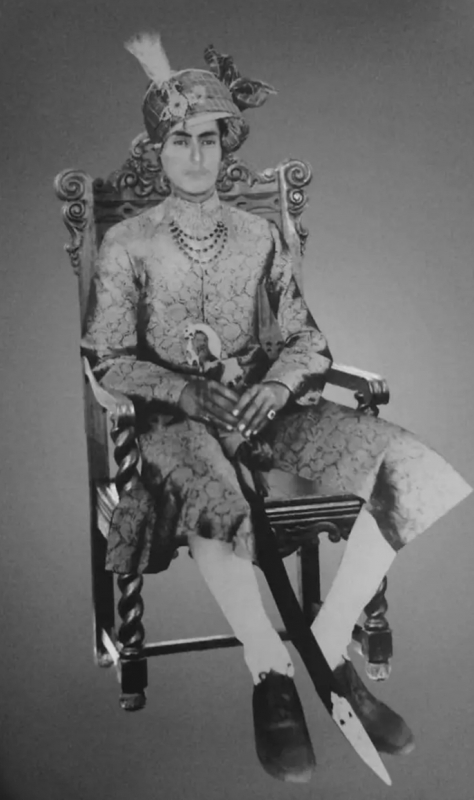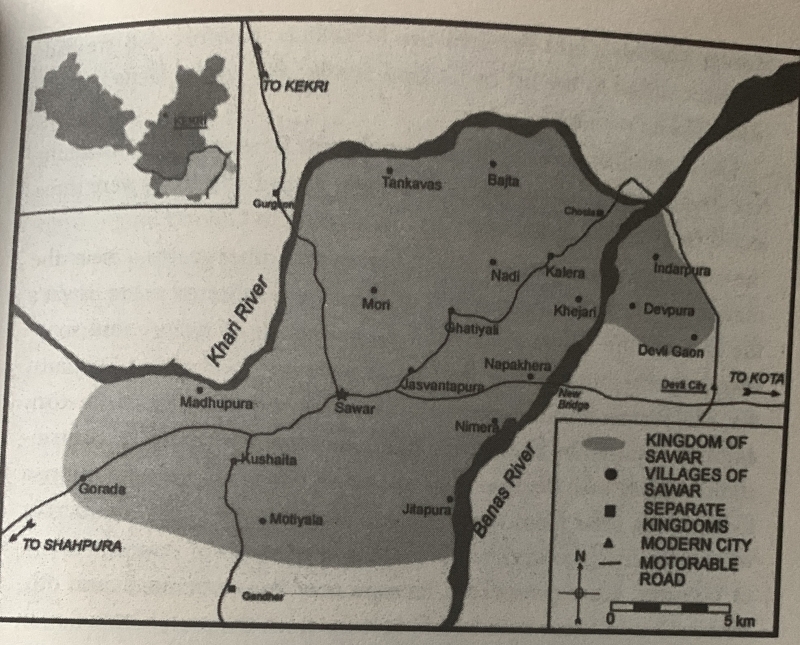
Present Head
- Kunwar Hemendra Singh
- Kunwar Puspendra Singh
History
Origin and Foundation
The state of Sawar was established in 1627 by Rajkumar Gokul Das, a prominent warrior of the Saktawat sub-clan of the Sisodia Rajputs. Gokul Das was the grandson of Maharaj Shakti Singh (the younger brother of Maharana Pratap of Mewar) and the son of Maharaj Achal Das, who famously laid down his life during the historic siege of Untala.
Recognizing his exceptional military valor and service, the Mughal Emperor Shah Jahan granted Gokul Das the pargana of Sawar in 1627. This grant established Sawar as an independent lordship, distinct from the main state of Mewar, although the rulers of Sawar maintained deep kinship and cultural ties with the royal house of Udaipur.
Mughal and Maratha Periods
During the 17th and 18th centuries, the rulers of Sawar played an active role in the regional politics of Rajputana. They defended their territories against various external incursions and maintained a delicate balance of power between the Maharana of Mewar, the Mughal court, and neighboring states.
As Mughal authority waned in the 18th century, the Marathas, particularly the Scindia dynasty of Gwalior, asserted hegemony over the Ajmer region. Sawar, owing to its strategic geographical position near Ajmer, was forced to navigate the turbulent period of Maratha revenue extractions (chauth) while keeping its administrative autonomy largely intact.
British Raj and Istimrari Status
With the advent of British rule in Rajputana and the signing of the Treaty of 1818, the administrative landscape of the region changed significantly. Ajmer and its surrounding territories were ceded to the British East India Company by Daulat Rao Scindia, forming the province of Ajmer-Merwara.
Under British administration, Sawar was recognized as one of the premier Istimrari estates (estates held under a permanent land revenue settlement). The Thakurs of Sawar were classified as Istimrardars, which exempted them from regular land surveys and allowed them to pay a fixed annual tribute (mamla) directly to the British Crown. The rulers exercised judicial and executive powers within their fiefdom and held a respected seat among the nobility of the Ajmer province.
Post-Independence and Modern Era
Following India's independence in 1947, the province of Ajmer-Merwara was initially kept as a separate Part 'C' State known as Ajmer State. In 1956, following the recommendations of the States Reorganisation Act, Ajmer was merged into the unified state of Rajasthan.
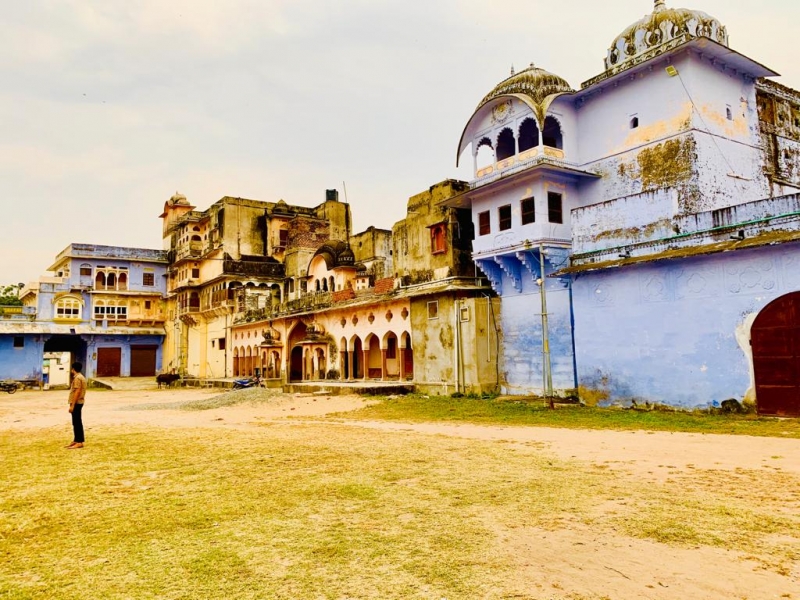
With the passage of the Rajasthan Land Reforms and Resumption of Jagirs Act, the traditional Istimrari rights and privy purses of the Sawar estate were formally abolished. Today, the historical legacy of Sawar is preserved through its architectural heritage, including the fort of Sawar, and the continued cultural influence of the Saktawat Sisodia lineage in the Ajmer and Bhilwara regions of Rajasthan.
Genealogy
- MAHARAJKUMAR GOKUL DAS, 1st King of Sawar (1627) , son of Rawat Bhan, Great Grandson of Maharaj Shakta Singh Brother of Maharana Pratap (king of Mewar). Maharaj was as a minister in the royal darbar of Jehangir. Later left the darbar after winning a war for Mughal Badshah and realizing that to be his downside went to Dungarpur for 14 months (elder Line of Maharanas Of Mewar).
- Thakur Sundar Das (qv)
- Thakur Kalyan Singh, survived in Sawar.
- Thakur Duda Ji, granted Badla.
- Thakur Viram Dev Ji, granted Chhota Mahua.
- Thakur Jujhar Singh Ji, granted kunchalvada.
- Thakur Hathi Singh Ji, granted Abhaypur.
- Thakur Ajib Singh Ji, granted Deokheri.
- Amir-ul-Amra Rai-I-Ryan Sawar Naresh Hindupati Raj Rajeshwar MAHARAJ SUNDAR DAS, 2nd king of Sawar Expanded the territory of kingdom eastwards conquering great Amount of Lands, during his reign Sawar state had area of 25,000 square kilometers equal to that of state of Jodhpur in late 17th century (circa).
- Thakur Pratap Singh (qv)
- Thakur Jay Singh of Piplaj.
- Thakur Ram Singh of Bisundani.
- Amir-ul-Amra Rai-I-Ryan Sawar Naresh Hindupati Raj Rajeshwar MAHARAJ PRATAP SINGH, 3rd King of Sawar (1680) Reigned during the Golden Age of Sawar Kingdom. Completed the construction of Sawar Fort.
- Thakur Raj Singh (qv)
- Thakur Bhagwan Singh ji, granted Baghera
- Thakur Chatar Singh of Chandthali, married and had issue.
- Amir-ul-Amra Rai-I-Ryan Sawar Naresh Hindupati Raj Rajeshwar MAHARAJ RAJ SINGH , 4th king of Sawar (circa 1710-1720). Eastern Territories were lost resulting in revolt of the local kingdoms and many more territories were lost to the Marathas. Still the kingdom flourished during the Reign of Raj Singh Ji due to his contributions to the Agriculture kingdom of Sawar comprising around 430 villages.
- Thakur Indar Singh (qv)
- Thakur Devi Singh ji, granted Rud.
- Thakur Bahadur Singh ji, granted Chousla.
- Sawar Naresh Darbar RAJA INDAR SINGH, 5th King of Sawar (1770s). Founded the capital of present day Sawar. Constructed the Sawar Fort.
- Thakur Shakti Singh (qv)
- Thakur Saheb Singh ji. granted Tankawas.
- Thakur Salam Singh Ji
- Sawar Naresh Darbar RAJA SHAKTI SINGH , 6th Thakur of Sawar, married and had issue.
- Thakur Bhup Singh (qv)
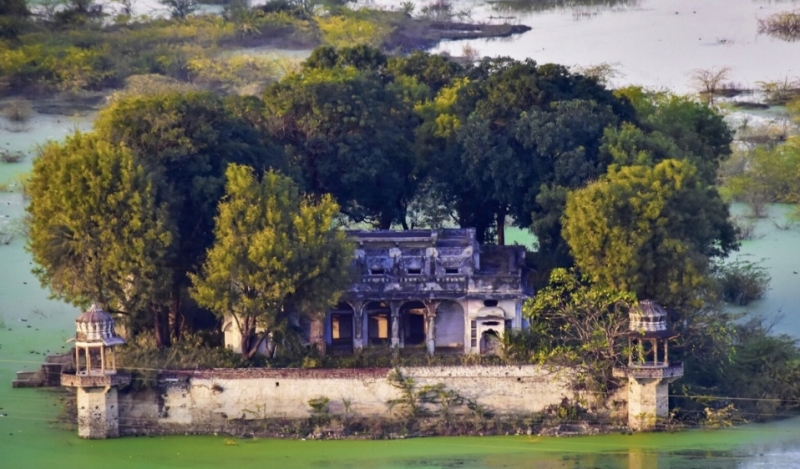
- Sawar Naresh Darbar RAJA BHUP SINGH, 7th King of Sawar, he was a patron of art and built The Lake Palace (Atma Niwas Mahal).
- Thakur Udai Singh (qv)
- Thakur Anand Singh ji, granted Madara.
- Sawar Naresh Darbar RAJA UDAI SINGH, 8th King of Sawar. The kingdom further shrunk only comprised of 40 villages by the time of Udai Singh Ji. Out of these 40, 27 villages were important hence Sawar was named (SAWAR-SATTAISA).
- Thakur Ajit Singh (qv)
- Thakur Foj Singh Ji
- Sawar Naresh Darbar RAJA AJIT SINGH, 9th King of Sawar (1825). Signed the British Crown’s Paramountcy completed the Construction of the New Sawar Palace near the Fort which became the new residence of Royal Family of Sawar.
- Thakur Jaswant Singh (qv)
- Thakur Zorawar Singh of Tankawas.
- Sawar Naresh Darbar RAJA JASWANT SINGH, 10th King of Sawar (1840), completed his higher studies in Mayo college; ascended the throne at a very young age.
- Raja Madho Singh (qv)
- DARBAR SHRI SHRI 108 RAJA MADHO SINGH JI , 11th King of Sawar (1865), completed his education in Mayo College. Honorary member of Chamber of Princes (1877); further increased the revenue of the state to around 2 Lakh Rupees due to his modern agriculture reforms.
- Thakur Ummed Singh (qv)
- DARBAR SHRI SHRI 108 RAJA UMMED SINGH JI, 12th King of Sawar, born , ascended throne (1880s) educated at Mayo College, Ajmer; Honorary Magistrate within Sawar. Commissioned the Sawar House on Srinagar Road. Had great relations with Maj.Gen. HH Maharaja Sir PRATAP SINGH Sahib Bahadur of Kashmir and frequent visitation with Shahpura Darbar, Kota Darbar, Udaipur Darbar for hunting Parties and was close with Alwar Darbar. He was known for his shooting skills in Rajputana.
- Thakur VanshPradeep Singh [Banspradip Singh] (qv)
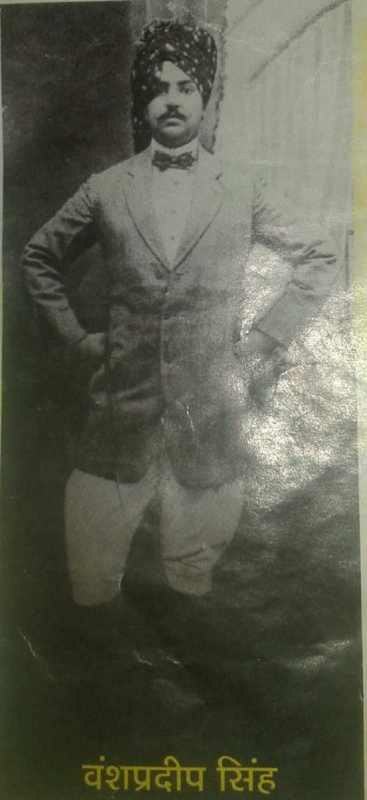
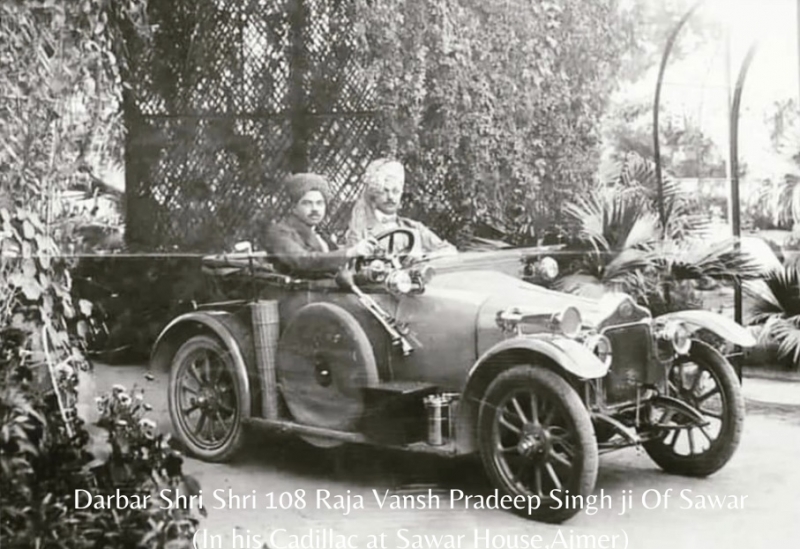
- DARBAR SHRI SHRI 108 RAJA VANSHPRADEEP SINGH JI , 13th King of Sawar, brilliant in Academics he completed his education at Mayo College. Maintained cavalry of 250 horses. 3 Elephants and 9 Camels with 30 Rifles and 7 Pistols. Married 1stly to Rani Khangarotji from Padalai, married 2ndly to Rani Bagheliji from Sohaval Princely State (Madhya Pradesh). He died spl on 28th September 1947.
- Thakur (name unknown) Singh, married and had issue.
- Thakur Himmat Singh, fl.1993
- (A) Thakur Brij Raj Singh (qv)
- Thakur (name unknown) Singh, married and had issue.
- DARBAR SHRI SHRI 108 RAJA BRIJ RAJ SINGH JI , adopted from Chousla from a distant cousin of Vansh Pradeep Singhji by Rani Baghelji, he succeeded after 4 years of Court Of Wards. Queen Baghelji signed the Instrument of Accession in 1948 making the Kingdom of Sawar part of the Indian Union with a Privy Purse amount of Rs.38,000.
- Thakur Devraj Singh (qv)
- Thakur Deviraj Singh
- Thakur Raghvendra Pratap Singh, of Tankawas
- Baisa Madhulika Shaktawat, Jewellery designer, founder of "Radiant by Madhulika"; married Kunwar Mahindra Singh Shekhawat of Meghsar, great grandson of Thakur Col. Kishan Singhji of Meghsar MBE, ADC.
- Vijay Pratap Singh
- Thakur Raghvendra Pratap Singh, of Tankawas
- Thakur Prithviraj Singh
- Thakur Ghanraj Singh
- Thakur Maniraj Singh
- Thakur DEVRAJ SINGH, 15th Thakur of Sawar, married and had issues.
- Thakur Bhupendra Singh (qv)
- Thakur Mahendra Singh Ji
- Thakur Rajendra Singh Ji
- Thakur Jitendra Singh Ji
- Thakur Mavendra Singh Ji
- Thakur Sheilendra Singh Ji
- Baisa Partap Kanwar [Rani Partap Kanwar of Tantoti], married Rao Gansham Singh, Rao Saheb of Tantoti.
- Thakur BHUPENDRA SINGH, 16th and present Thakur sahib of Sawar (see above)