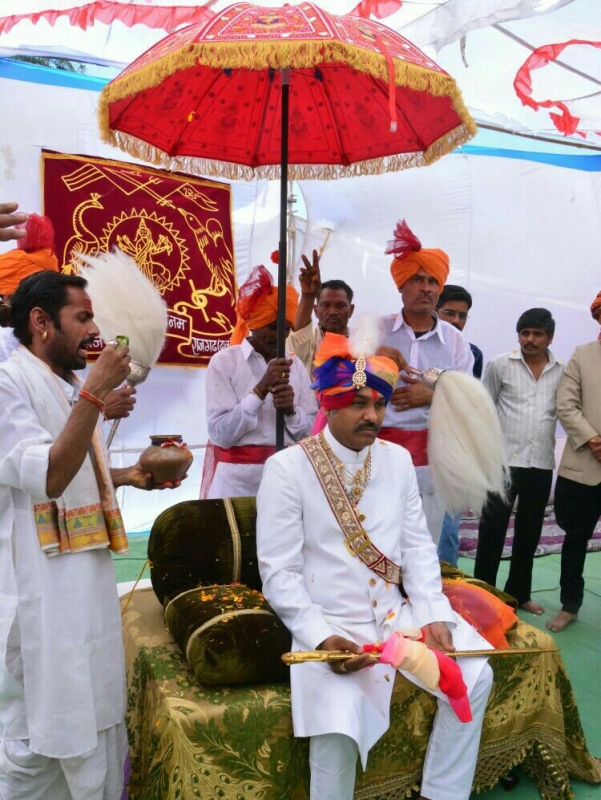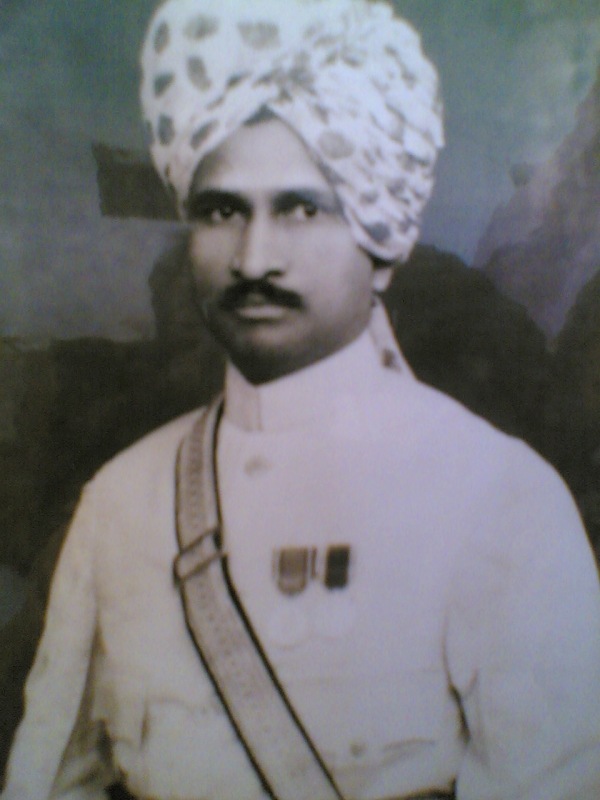
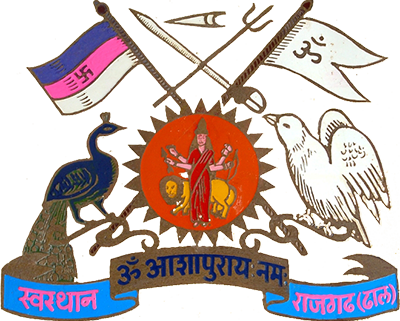
Present Head
- Shree Kumari Padmaja Rajgarh
- Shri Yuvraj Vanshraj Singh Rajgarh
History
Origin and Foundation of Rajgarh (Chauhan)
The State of Rajgarh (Chauhan) was established in 1560 amidst the rolling hills and fertile plains of the historic Malwa region. The dynasty was founded by Rawat Nanaji, a distinguished Rajput warrior belonging to the Chauhan clan. During the Mughal conquest of Malwa in 1560, Nanaji allied with Emperor Akbar's imperial army to depose the ruler of Malwa, Baz Bahadur. Nanaji displayed extraordinary tactical skill and valor, notably suppressing the rebellious nobles of the local Mangari sect who threatened the stability of the trade routes.
To reward this loyalty, Emperor Akbar formally recognized Nanaji's sovereignty in 1561, placing him on the Gaddi (throne) of Rajgarh. The imperial crown granted Nanaji several prominent villages, including Maheshwar, Dharampore, Bhwaniya, Lawani, Nalchha, and Betma. Along with these territories, he was honored with royal insignia such as the Danka (state kettle-drum), Nishan (state standard), Chhari (ceremonial mace), Abdagiri (royal parasol), and Jari Poshak (gold-embroidered ceremonial robes), establishing Rajgarh as an influential estate in Central India.
The Maratha Period and Geopolitical Struggles
During the 18th century, the decline of Mughal authority allowed the Maratha Empire to expand rapidly into Malwa. The Chauhan rulers of Rajgarh had to skillfully navigate their relations with the powerful Maratha houses, specifically the Holkars of Indore and the Pawars of Dhar. Operating as Bhumias (hereditary landholders and guardians of the mountain passes), the Rajgarh chiefs maintained their autonomy by paying tribute (tanka) and securing administrative sanads from the Maratha rulers, ensuring that their ancestral lands remained largely self-governing.
The British Period and the Malcolm Settlement
Following the defeat of the Marathas in the Third Anglo-Maratha War, the British East India Company assumed control over Central India. Under the diplomatic mediation of Sir John Malcolm in 1818, Rajgarh was recognized as a "Guaranteed Bhumiat" under the Bhopawar Agency. This guarantee legally protected the estate's territories and political rights against encroachments from larger princely states like Indore and Dhar.
The British treaties ensured that the Bhumia of Rajgarh received annual cash payments (tanka) from the neighboring rulers while preserving internal administrative, civil, and criminal powers over their subjects. Detailed accounts of these arrangements are preserved in the historical Central India State Gazetteer Series, which outlines the political boundaries and treaty obligations of the estate.
Late Administration and Succession
In the early 20th century, Rajgarh focused heavily on local governance, agricultural reforms, and administrative stability. Raja Saheb Ratan Singhji administered the state until his death in 1930. He was succeeded on April 5, 1930, by his grandson, Raja Saheb Ram Singhji, who became the 14th direct descendant of the state’s founder, Nanaji. Raja Ram Singhji ruled with delegated civil and criminal judicial powers, modernizing local infrastructure and maintaining close administrative ties with the British Political Agent of the Bhopawar Agency.
Post-Independence and Modern Era
With India gaining independence in August 1947, the ruling family of Rajgarh signed the Instrument of Accession, merging the princely estate into the Union of India. In 1948, Rajgarh was integrated into the newly formed state of Madhya Bharat, which eventually merged into the larger state of Madhya Pradesh in 1956.
Following the 26th Amendment to the Constitution of India in 1971, which abolished the privy purses and official royal titles, the royal family transitioned into private life. Today, the descendants of the Rajgarh Chauhan dynasty remain highly respected figures in the Malwa region, engaging in agricultural enterprises, local philanthropy, and the preservation of their ancestral forts, palaces, and historic temples.
Genealogy
- NANAJI, Bhumia of Rajgarh, in year 1560 he sought the help of Mughal forces in defeating Baz Bahadur of Mandu at the battle of Sarangpur, married and had issues.
- DHANAJI, he was killed, along with his four sons in the battle of Asirgarh.
- BHANAJI (qv)
- BHANAJI, Bhumia of Rajgarh Married and had issue.
- TANANJI (qv)
- TANANJI, Bhumia of Rajgarh, fought in the second battle of Asirgarh in 1601, married and had issue.
- KESHAVDASJI (qv)
- SUNDERJI, stayed with Shahzada Khurram, during his Deccan Victory, he revolted against Badshah Jahangir, and was killed in the battle of Agra, after which his head was cut off and brought before Badshah Jahangir on a golden platter.
- Raja KESHAVDASJI, Bhumia of Rajgarh, he was granted the titles of Raja and Miraj-e-Jung by Badshah Jahangir, married and had issue.
- Raja BHERUJI (qv)
- Raja BHERUJI, Bhumia of Rajgarh, married and had issue.
- Raja JASWANT SINGHJI (qv)
- Raja JASWANT SINGHJI, Bhumia of Rajgarh, married and had issue.
- Raja PREM SINGHJI (qv)
- Raja HARI SINGHJI (fifth son of Raja Jaswant Singhji and founder of Jamnia State)
- Raja PREM SINGHJI, Bhumia of Rajgarh, married and had issue.
- Raja GODHAN SINGHJI (qv)
- Raja GODHAN SINGHJI, Bhumia of Rajgarh, married and had issue.
- Raja KIRIT SINGHJI (qv)
- Raja KIRIT SINGHJI, Bhumia of Rajgarh, married and had issue.
- Raja MOHAN SINGHJI (qv)
- Raja MOHAN SINGHJI, Bhumia of Rajgarh, married and had issue.
- Raja FATEH SINGHJI (qv)
- Raja FATEH SINGHJI, Bhumia of Rajgarh, married and had issue.
- Raja CHAIN SINGHJI (qv)
- Raja CHAIN SINGHJI, Bhumia of Rajgarh, married and had issue.
- Raja RATAN SINGHJI (qv)
- Rajkumar GULAB SINGHJI
- Kr. Laxman Singhji, married and has issue.
- Th. Krishnendra Singhji, married and has issue.
- Th. Vishvendra Singhji, married and has issue.
- Kr. Rituraj Singhji, married with Bhakti Kanwar, dauther of Digvijay Singh Jadeja of Rajpara (Gujrat).
- Kr. Jayvardhan Singh
- Kumari Pallavi, married with Shree Jaydeep Singhji Parihar, son of Th. Tilakraj Singhji of Majhganva (Uttar Pradesh).
- Kr. Rituraj Singhji, married with Bhakti Kanwar, dauther of Digvijay Singh Jadeja of Rajpara (Gujrat).
- Th. Tamradhwaj Singhji, married and has issue.
- Kr. Krantidhwaj Singhji, married with Ritu Kanwar, daughter of Bhawani Singhji Bais of Allahbad (Uttar Pradesh).
- Kumari Swarnamani, married with Shree Vikas Singhji Parihar, son of Th. Tilakraj Singhji of Majhganva (Uttar Pradesh).
- Th. Dhirendra Singhji, married and has issue.
- Kr. Dhruvraj Singhji, married with Kishori Kanwar, daughter of Th. Devendra Singhji Rana (Sisodia) of Tonk (Rajansthan).
- Kr. Rudraraj Singh
- Kr. Yuvraj Singhji, married with Aasha Kanwar daughter of Th. Vanraj Singh Vaghela of Palasawa-Kutch (Gujarat).
- Kr. Advait Singh
- Kr. Dhruvraj Singhji, married with Kishori Kanwar, daughter of Th. Devendra Singhji Rana (Sisodia) of Tonk (Rajansthan).
- Kr. Bharat Singhji, married and has issues.
- Th. Harsh Singhji, married and has issue.
- Kumari Dr. Mansi, married with Dr. Apurva.
- Kumari Meera
- Th. Anand Singhji, married and has issue.
- Kr. Raghvendra Singhji
- Kumari Anshita
- Th. Harsh Singhji, married and has issue.
- Kr. Laxman Singhji, married and has issue.
- Rajkumar GIRIVAR SINGHJI
- Raja RATAN SINGHJI, married and had no issues, adopted Ram Singhji, son of GULAB SINGHJI.
- (A) Raja RAM SINGHJI (qv)
- Raja RAM SINGHJI, married and had issues.
- Raja FATEHBHAN SINGHJI (qv)
- Rajkumar NARENDRA SINGHJI, married and has issue.
- Kr. Jitendra Singhji, married with Poonam Kanwar.
- Kr. Yugvendra Singh
- Kr. Kavindra Singhji, married with Dipa Kanwar.
- Kr. Shivendra Singh
- Kumari Shalini, married with RBS Thakur.
- Kr. Jitendra Singhji, married with Poonam Kanwar.
- Rajkumar DHANENDRA SINGHJI,married with Durga Kanwar, daughter of Th. Chandravijay Singhji Jadeja of Nawanagar (Jamnagar) Gujarat and has issue.
- Kr. Jairaj Singhji, married with Bindiya Kanwar daughter of Th. Digvijay Singhji of Idar.
- Kr. Daivyaraj Singh
- Kr. Jairaj Singhji, married with Bindiya Kanwar daughter of Th. Digvijay Singhji of Idar.
- Raja FATEHBHAN SINGHJI, married and had issues.
- (A) Shailraj Singhji, son of DHANENDRA SINGHJI (qv)
- Shree Rajkumari Padmini Rajgarh, born , married with Th. Himanshu Singhji Jadeja of Pal (Gujarat).
- Raja SHAILRAJ SINGHJI, Present Ruler of Rajgarh (see above)