History
Origin and Ancestry of the Bachgoti Dynasty
The Patti Saifabad estate represents an important branch of the Bachgoti clan of Rajputs, who played a defining role in the medieval and modern history of the Awadh (Oudh) region. The Bachgotis claim descent from the illustrious Chauhan dynasty of Delhi. Following the fall of Prithviraj Chauhan, Bariar Singh, a Chauhan prince, migrated eastward and established a stronghold in the Sultanpur and Pratapgarh regions of present-day Uttar Pradesh. Over generations, his descendants bifurcated into several prominent septs, including the Rajkumars, the Rajwars, and the Bachgoti taluqdars of Pratapgarh.
The immediate ancestor of the Patti Saifabad branch was Rai Harbans Rai of the Adharganj (Dalippur) estate. Rai Harbans Rai was a powerful chieftain in the region. Upon his demise or the partition of his territories, his estate was divided among his sons. While the elder branch retained control of Adharganj, the younger son carved out a separate principality, laying the foundation of what would come to be known as the Patti Saifabad taluqa.
Establishment and the Mughal Era
The estate of Patti Saifabad, situated in the eastern part of the Pratapgarh district, grew in prominence during the Mughal and subsequent Nawabi periods. The term "Saifabad" is historically linked to Saif Khan, a Mughal administrator, reflecting the complex socio-political negotiations and administrative overlaps between the local Rajput chieftains and the imperial authorities. Despite these external pressures, the Bachgoti chieftains maintained significant autonomy over their ancestral land, acting as local lords who collected revenues and maintained regional stability.
The British Raj and Taluqdari Status
Following the annexation of Awadh by the British East India Company in 1856 and the subsequent upheaval of the Indian Rebellion of 1857, the British administration sought to stabilize the province by recognizing the landholding rights of local chiefs. Under the Oudh Estates Act of 1869, the Bachgoti chief of Patti Saifabad was formally recognized as a Taluqdar, securing hereditary proprietary rights over the estate. Detailed records of these holdings and their revenue assessments are documented in the historical gazetteers of the region, such as the Gazetteer of the Province of Oudh.
By the late 19th and early 20th centuries, like many other Awadh taluqas, Patti Saifabad suffered from severe financial mismanagement, heavy debts, and internal succession disputes. To prevent total disintegration, parts of the estate were placed under the administration of the Court of Wards. Eventually, prior to 1930, the proprietary rights of the Patti Saifabad estate were acquired by the wealthy and influential Maharaja of Balrampur, who integrated these lands into his expansive estate holdings.
Post-Independence and Modern Era
With the declaration of Indian Independence in 1947 and the subsequent passage of the Uttar Pradesh Zamindari Abolition and Land Reforms Act in 1950, the taluqdari system was formally abolished. The vast agricultural estates of Patti Saifabad, then under the administration of the Balrampur estate, were redistributed among the local tenant cultivators. Today, the legacy of the Bachgoti rulers lives on in the local culture, historical landmarks, and the enduring heritage of the Pratapgarh district. For more details on the geographical and administrative history of the area, see the official Pratapgarh District historical archives.
Genealogy
- Diwan NAHAR SINGH, founder of Patti Saifabad and younger brother of Dingar Singh of Adharganj.
- (5 generations)
- Diwan HIRDA SINGH, Diwan of Patti Saifabad, married and had issue.
- Diwan Jai Singh Rai (qv)
- Rai Agar Sen, founder of Raipur-Bichaur.
- Diwan JAI SINGH RAI, Diwan of Patti Saifabad, married and had issue.
- generation
- Diwan Dhir Singh (qv)
- Diwan Bhir Singh, he was granted the Taluq of Uriadih by his older brother.
- generation
- ......
- Diwan DHIR SINGH, Diwan of Patti Saifabad.
- .....
- Diwan ZABAR SINGH, Diwan of Patti Saifabad, died sp.
- Diwan AMAR SINGH, Diwan of Patti Saifabad, married and had adoptive issue. He died sp.
- (A) Diwan Ranjit Singh (qv)
- Diwan RANJIT SINGH, Diwan of Patti Saifabad, he succeeded by adoption.
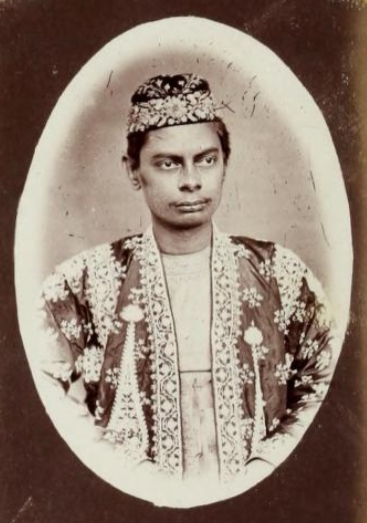
- Diwan RAN BIJAI BAHADUR SINGH, Diwan of Patti Saifabad 1861/-, born , succeeded 1861, the title od Diwan was made hereditary on 4th December 1877.
- Diwaniu Chhabraj Kunwar, Taluqdarani of Patti-Saifabad 9/20th Share in 1910, 1930. 1933
- Diwaniu Gajraj Kunwar, Taluqdarani of Patti-Saifabad 11/20th Share in 1910, 1930, 1933