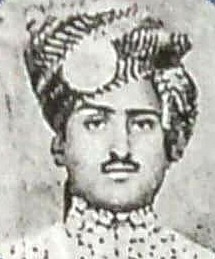
Present Head
- Kunwar Rajdeep Singh
- Baisa Priya Rathore
History
Origin and Foundation of Nokha Thikana
The rulers of the Nokha Thikana belong to the illustrious Karamsot branch of the Rathore dynasty. This lineage traces its descent from Rao Karamsi, the younger brother of Rao Bikaji, who founded the princely state of Bikaner. Rao Karamsi’s descendants, known as the Karamsot Rathores, established themselves as prominent warriors and landholders in the region.
During the mid-18th century, Thakur Saheb Zorawar Singhji, a direct descendant of Rao Karamsi, was conferred with the Thikana of Khiwansar in the Marwar region. His son, Thakur Saheb Chand Singhji, rendered exceptional services to the Bikaner state. In recognition of his loyalty and military prowess, Maharaja Gaj Singhji of Bikaner granted him the Thikana of Nokha in 1760 AD. This grant established the Nokha estate as a significant feudal seat within the Bikaner State, initially consisting of 12 vassal villages.
Feudal Prominence and Courtly Honors
As the premier nobles of Bikaner, the Thakurs of Nokha held an elevated standing in the royal court (Darbar). During the reign of Maharaja Dungar Singhji (1872–1887 AD), the Chief of Nokha was bestowed with the highly coveted honors of Dohri Tazim (double Tazim) and Kurab Hath (the privilege of the Maharaja placing a hand on the noble's shoulder). These rare honors allowed the Chief of Nokha to receive personal recognition from the Maharaja in court ceremonies, solidifying their rank among the leading nobles (Sirayats) of the state.
British Colonial Period
During the period of the British Raj, Bikaner State maintained a treaty of subsidiary alliance with the British Crown. The Chiefs of Nokha, aligned with the foreign policy of the Bikaner Darbar, managed their estate under the administrative and land reforms initiated by successive Maharajas. The Nokha Thikana contributed to the developmental and administrative progress of the region during this transition, ensuring local stability, tax collection, and governance within their jurisdiction.
Post-Independence and Modern Era
Following India's independence in 1947, Bikaner State formally merged into the United State of Rajasthan in 1949. With the passing of the Rajasthan Land Reforms and Resumption of Jagirs Act in the early 1950s, the traditional feudal privileges, land revenues, and administrative powers of the Nokha Thikana were legally abolished.
In the modern era, Nokha has transitioned from a historical feudal estate into a thriving municipality and major industrial hub within the Bikaner district. It is widely recognized today for its prominent agricultural market (Krishi Upaj Mandi), particularly as a major hub for moth pulses, and its flourishing small-scale industries, while still retaining vestiges of its royal Rathore heritage.
Genealogy
- Thakur Saheb Zorawar Singhji of Khiwansar (Marwar), married and had issue.
- Kunwar Chand Singh (qv)
- Thakur Saheb Chand Singhji, 1st Thakur of Nokha, married and had issue.
- Kunwar Salim Singh (qv)
- Thakur Saheb Salim Singhji, 2nd Thakur of Nokha, married and had issue.
- Kunwar Sabal Singh (qv)
- Thakur Saheb Sabal Singhji, 3rd Thakur of Nokha, married and had issue.
- Kunwar Sawant Singh (qv)
- Thakur Saheb Sawant Singhji, 4th Thakur of Nokha, married and had issue.
- Kunwar Raghunath Singh (qv)
- Thakur Saheb Raghunath Singhji, 5th Thakur of Nokha, married and had issue.
- Kunwar Roop Singh (qv)
- Thakur Saheb Roop Singhji, 6th Thakur of Nokha, married to daughter of Col. Thakur Prithviraj Singh of Daudsar and had issue.
- Kunwar Kushal Singh (qv)
- Thakur Saheb Kushal Singhji, 7th Thakur of Nokha, married and had issues.
- Malam Singh (qv)
- Surender Singh Ji, no issues.
- Ajit Singh Ji
- Bhanu Pratap Singh
- Aditya Pratap Singh
- Megh Singh Ji (Sarpanch)
- Baisa Dhritika Singh
- Pragyadev Singh
- Bajrang Singh Ji
- Baisa Shristi Singh
- Baisa Harsita Singh
- Gajendera Singh Ji
- Baisa Parul Singh
- Harshvardhan Singh
- Baisa Shiv Kanwar, married and has issues, one daughter and a son.
- Baisa Jaishree Naruka
- Parikash Naruka
- Baisa Anand Kanwar, married and has issues, one son and a daughter.
- Anirudh Pratap Singh Ranawat
- Baisa Supriya Ranawat
- Thakur Saheb Malam Singhji, 8th Thakur of Nokha (see above)