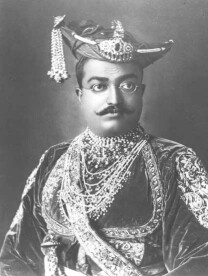
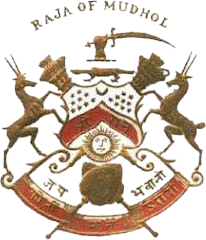
Present Head

History
Origin and Foundation
The Mudhol Princely State was a prominent Maratha territory ruled by the illustrious Ghorpade dynasty. The rulers of Mudhol traced their ancestry back to the Sisodia Rajputs of Udaipur (Mewar). Following the siege of Chittor by Alauddin Khalji in 1303, a branch of the Mewar royal family led by Raja Sujan Singh (also known as Sajjan Sinh) migrated south to the Deccan region around 1330. His descendants took up service under the Bahmani Sultanate, securing vast estates for their valor.
The fief of Mudhol was formally established around 1400. Over the centuries, the rulers consolidated their power in the southern Deccan, navigating the complex geopolitical rivalries between the Deccan Sultanates, the Mughal Empire, and the rising Maratha Empire.
The Legend of the "Ghorpade" Title
Originally known by their Rajput clan name, the family acquired the surname Ghorpade during their service under the Bahmani rulers. According to local historical lore, during the assault on a seemingly impregnable fort (often identified as Khelna or Vishalgad), one of the family's ancestors, Karna Singh, scaled a sheer, vertical rock face. He accomplished this extraordinary feat by securing a rope to a trained monitor lizard (known as a ghorpad in Marathi) that clung tightly to the fort wall. Impressed by this remarkable display of ingenuity and courage, the Bahmani Sultan bestowed upon the clan the hereditary title of "Ghorpade," which superseded their original surname.
Maratha Expansion and the Bijapur Alliance
Unlike their kinsmen, the Ghorpades of Kapshi who closely allied with Chhatrapati Shivaji Maharaj, the Mudhol branch remained loyal vassals of the Adil Shahi dynasty of Bijapur for a significant period. This political alignment placed Mudhol in direct opposition to the nascent Maratha Empire. The most notable ruler of this era, Baji Ghorpade, famously assisted the Adil Shahi forces in arresting Shahaji Raje (the father of Chhatrapati Shivaji Maharaj). This act sparked a deep-seated feud, which culminated in Shivaji Maharaj launching a retaliatory campaign against Mudhol, resulting in the defeat and death of Baji Ghorpade in battle.
Following the decline of the Bijapur Sultanate and the subsequent Mughal expansion into the Deccan, the Ghorpades of Mudhol eventually recognized Maratha suzerainty. During the Peshwa era, Mudhol existed as a semi-autonomous feudal state within the Maratha Confederacy.
The British Period and Administrative Eminence
With the defeat of the Peshwa in the Third Anglo-Maratha War (1818), Mudhol entered into a treaty of protective alliance with the British East India Company. Classified as a Second Class State, Mudhol held a position of high honor, with its Raja ranked first in order of precedence within the Kolhapur-Belgaum Agency (and later the Deccan States Agency). The state was later granted a hereditary 9-gun salute.
The 19th and early 20th centuries marked a period of peace, modernization, and stable governance. The rulers of Mudhol were passionate patrons of local culture, agriculture, and sports. Under their patronage, the famous indigenous dog breed, the Mudhol Hound, was selectively bred and popularized. Raja Shrimant Vyankatrao II Ghorpade famously presented a pair of these hounds to King George V, bringing international recognition to the breed.
Key Reformers and Modernization
The state witnessed rapid developmental strides under its final rulers. Raja Shrimant Sir Malojirao IV Ghorpade (who ruled from 1937 until integration) was a highly educated and progressive administrator. He implemented several far-reaching socio-economic reforms, including:
- The introduction of free primary education across the state.
- The establishment of cooperative credit societies to liberate farmers from debt.
- The construction of the Mudhol-Sajjan Sinh Water Works, providing piped drinking water to the capital.
- The elevation of civic amenities, medical facilities, and judicial systems on par with British Indian provinces.
Post-Independence and the Modern Era
Following India's independence in 1947, Raja Malojirao IV was one of the earliest rulers to voluntarily sign the Instrument of Accession. On 8 March 1948, Mudhol Princely State formally merged into the Dominion of India. The territory was initially integrated into the Bombay Province, which later became Bombay State.
Following the reorganization of states on a linguistic basis through the States Reorganisation Act of 1956, Mudhol became a taluk within the Bagalkot district of Karnataka state. Today, the town of Mudhol remains historically celebrated for its grand architectural heritage, its vibrant handloom silk industry, and the legacy of the Mudhol Hound, which is currently used by the Indian Armed Forces for canine surveillance and border security.
Historical References and Citations
- For more details on the administrative setup during the British Raj, refer to the Imperial Gazetteer of India, Volume 18.
- Read more about the Ghorpade dynasty and genealogical records on Wikipedia's Mudhol State Page.
Genealogy
- Rana BHAIRAVJI [Bosaji], 1st Rana of Mudhol, granted the Jagir of Mudhol, comprising 84 villages on the 25th, Rabilaval, 800H, with this ruler the family came to use Bhosale or Bhonsle as a family name, married and had issue. He died after 800H (ca1394).
- Rana Devraj Singh (qv)
- Shri Karan Singh, died 815H
- Rana DEVRAJ SINGH, 2nd Rana of Mudhol c1394/c1420, married and had issue. He died 825H
- Rana Ugrasen (qv)
- Shri Pratap Singh, died after 1460.
- Rana UGRASEN, 3rd Rana of Mudhol c1420/1453, married and had issue. He died .
- Rana Karan Singh (qv)
- Shri Shubha Krishna, he was granted a jagir in Mirat province, his descendants retained Bhonsle as their family name and were ancestors of the rulers of Kolhapur, Nagpur, Sattara and Tanjore.
- Rana KARAN SINGH, 4th Rana of Mudhol 1453/1469, married and had issue.
- Raja Bhim Singh (qv)
- Raja BHIM SINGH, 5th Raja of Mudhol 1469/- , he was granted the title of Raja Ghorpade Bahadur, henceforth his successors used Raja as their title, and Ghorpade as their family name, married and had issue.
- Raja Kheloji Ghorpade (qv)
- Raja KHELOJI GHORPADE, 6th Raja of Mudhol -/1514, married and had issue.
- Raja Maloji Ghorpade I (qv)
- Raja MALOJI GHORPADE I, 7th Raja of Mudhol 1514/-, married and had issue.
- Raja Akhaisingh Ghorpade (qv)
- Raja AKHAISINGH GHORPADE, 8th Raja of Mudhol -/-, married and had issue.
- Raja Karansingh Ghorpade (qv)
- Shri Bhimsingh Ghorpade, died .
- Raja KARANSINGH GHORPADE, 9th Raja of Mudhol -/1565, married and had issue. He died .
- Raja Cholaraj Ghorpade (qv)
- Raja CHOLARAJ GHORPADE, 10th Raja of Mudhol 1565/1578, received a mansab of 7000 foot, as well as 26 villages in Vijayanagar provinces and 40 more to the south of Shira, he married and had issue. He died .
- Raja Piraji Ghorpade (qv)
- Shri Vallabhasinh Cholaraj Ghorpade, ancestor of the Royal Families of Kapshi, Gajendragad and Dattawad.
- Shri Kanoji Cholaraj Ghorpade, ancestor of the Rajas of Sandur.
- Raja PIRAJI GHORPADE, 11th Raja of Mudhol -/-, married and had issue.
- Raja Prataprao Ghorpade (qv)
- Raja PRATAPRAO GHORPADE [Nahuji], 12th Raja of Mudhol -/1645, died .
- Raja BAJIRAJE GHORPADE, 13th Raja of Mudhol 1645/ca1666, married and had issue, four wives and six sons were killed about 1666. He was killed about 1666.
- Shrimant Raja Malojirao Ghorpade I (qv)
- Shri Shankroji Ghorpade [Jaisingh], died /1667 near Tasgaon.
- Shrimant Raja MALOJI GHORPADE I, 14th Raja of Mudhol ca1666/1700, during his rule, the jagir became an independent state in 1670, married and had issue. He died .
- Shrimant Raja Akhayajirao Malojirao Ghorpade (qv)
- Shrimant Raja AKHAYAJIRAO MALOJIRAO GHORPADE, 15th Raja of Mudhol 1700/1734, Governor of Bijapur -/1734, married and had issue. He died .
- Shrimant Raja Pirajirao Akhayajirao Ghorpade (qv)
- Shri Bajirao Akhayajirao Ghorpade
- Shrimant Raja PIRAJIRAO AKHAYAJIRAO GHORPADE, 16th Raja of Mudhol 1734/-, married and had issue. He died about 1738.
- Shrimant Raja Malojirao Pirajirao Ghorpade III (qv)
- Shrimant Sahib Shankrojirao Pirajirao Ghorpade, received lands in Bilgi, Bidri and Tikota.
- Several Generations
- Shrimant Raja Sankhraji of Bilgi, he died whereupon the jagir was resumed by the British government.
- Several Generations
- Shrimant Raja MALOJIRAO PIRAJIRAO GHORPADE III, 17th Raja of Mudhol -/1805, Governor of Bijapur 1738/-, married (a), a Rajput lady, married (b), another Rajput lady, married (c), a lady from Pole, married (d), a lady from Kathiawar, married (e), a Parmar lady, and married (f), a Solanki lady, and had issue. He died .
- Shrimant Sahib Govindrao Raje Malojirao Ghorpade (by 1st wife), married and had issue. He died about 1770.
- Shrimant Raja Narayanrao Gpvindrao Ghorpade (qv)
- Shrimant Sahib Maharrao Malojirao Ghorpade (by 1st wife)
- Shrimant Sahib Bajirao Malojirao Ghorpade (by 2nd wife)
- Shrimant Sahib Ranojirao Malojirao Ghorpade (by 3rd wife), married and had issue. He died .
- Shrimant Sahib Nahirjirao Ranojirao Ghorpade, he was granted the Jagir of Padsalgi.
- Shrimant Sahib Govindrao Raje Malojirao Ghorpade (by 1st wife), married and had issue. He died about 1770.
- Shrimant Raja NARAYANRAO GOVINDRAO GHORPADE, 18th Raja of Mudhol 1805/1815, married 1stly, a Solanki Rani (Senior Queen), married 2ndly, a Parmar Rani (Junior Queen), and had issue. He died .
- Shrimant Raja Vyankatrao Narayanrao Ghorpade I (by 1st wife) (qv)
- Shrimant Sahib Laxmanrao Ghorpade (by 1st wife), married Rani Laxmi Bai Saheb, married and had issue. He died after 1845.
- Shrimant Sahib Narayanrao Ghorpade
- Shrimant Sahib Govindrao Ghorpade (by 2nd wife), eldest son, though by the Junior Queen, contested the succession unsuccessfully, died at the Battle of Ashtee.
- Shrimant Raja VYANKATRAO NARAYANRAO GHORPADE I, 19th Raja of Mudhol 1815/1854, married and had issue. He died .
- Shrimant Raja Balwantrao Vyankatrao Ghorpade (qv)
- Shrimant Raja BALWANTRAO VYANKATRAO GHORPADE, 20th Raja of Mudhol 1854/1862, born , married 1857, a daughter of the Chief of Torgal, and his wife, Rani Ahilya Bai Sahib, and had issue. He died .
- HH Shrimant Raja Meherban Vyankatrao Balwantrao Raje Ghorpade [Bala Saheb] (qv)
- Rani Radhabai Sahib, born , married Meherban Shrimant Rajamanya Rajashri Jaisinhrao Narayanrao [Abasaheb] Ghatge Sarjerao Vajarat-ma-ab, 4th Chief of Kagal-Senior, and had issue. She died .
- HH Shrimant Raja Meherban VYANKATRAO BALWANTRAO RAJE GHORPADE II [BALA SAHEB], 21st Raja of Mudhol 1862/1900, born , succeeded 27th March 1862, educated at Rajkumar College, Rajkot; established a regular system of government in the State, married and had issue. He died .
- HH Shrimant Raja Meherban Sir Malojirao Vyankatrao Ghorpade IV [Nana Saheb] (qv)
- Rajkumar Laxman Singh, died after 1938.
- HH Shrimant Raja Meherban Sir MALOJIRAO VYANKATRAO GHORPADE IV [NANA SAHEB], 22nd Raja of Mudhol 1900/1937 (abdicated), born , K.C.I.E. [cr.1920], Hon. 2nd Lieutenant Indian Army, served with the British Forces in Egypt 1914/1918; he was granted the title of Raja as a hereditary distinction on 3rd June 1922; married 1stly, a sister of Col. HH Maharaja Shri Sir Udajirao II Puar Bahadur of Dhar, married 2ndly, a daughter of the Jadeja Giras family of Kathiawar, and had issue, two sons and one daughter.
- HH Shrimant Raja Bhairavsinhrao Malojirao Ghorpade II (qv)
- HH Shrimant Raja BHAIRAVSINHRAO MALOJIRAO GHORPADE II, 23rd and last Raja of Mudhol 1937/1984, born and succeeded 9th November 1937 as the 23rd Raja of Mudhol, married 1stly, Rani Pramila Raje of Rajkot, ?married 2ndly, Rani Indira Raje, and had issue. He died in a car accident.
- Rajkumari Menaka Raje Bhonsle
Notable Figures
Rana Bhimsinh (Karna Sinh)
Rana Bhimsinh (often referred to in genealogical records as Karna Sinh or Cholraj) is celebrated as the legendary patriarch of the Ghorpade clan. Descending from the royal Sisodia Rajput dynasty of Mewar, his branch of the family migrated south to the Deccan region during the 14th century. Serving under the Bahmani Sultanate, Bhimsinh and his family distinguished themselves in several military campaigns across the region.
He is famously credited with acquiring the distinct surname "Ghorpade" for his lineage. According to historical tradition, during a siege of a seemingly impregnable fort, Bhimsinh successfully scaled the sheer vertical walls by securing a rope to a trained monitor lizard, known as a ghorpad in Marathi. This legendary feat of military ingenuity earned his family the hereditary title of "Ghorpade," which eventually replaced their original Sisodia surname in the Deccan region. More details about the clan's origins can be found on the Mudhol State Wikipedia Page.
Raja Baji Ghorpade (died )
Raja Baji Ghorpade was one of the most prominent and powerful early rulers of the Mudhol jagir. Serving as a distinguished general under the Adil Shahi dynasty of Bijapur, he wielded immense political and military influence in the southern Deccan. He was deeply involved in the turbulent geopolitical transitions of the 17th century, representing the traditional Deccani nobility during the rise of the Maratha Empire.
Baji Ghorpade is historically remembered for his intense rivalry with the Bhonsle clan. On the orders of the Bijapur Sultan, he played a central role in the arrest of Shivaji's father, Shahaji Raje Bhonsle, in 1648. This action sparked a long-standing blood feud, which culminated in 1664 when Shivaji launched a surprise attack on Mudhol, resulting in a fierce battle in which Baji Ghorpade was killed. For a comprehensive look at his life and military career, visit the Wikipedia article on Baji Ghorpade.
Meherban Shrimant Raja Sir Malojirao Venkatrao Raje Ghorpade Bahadur (reigned 1900–1937)
Raja Sir Malojirao IV was a highly progressive, benevolent, and enlightened ruler of the Mudhol Princely State. Succeeding to the gadi in 1900, his reign ushered in a golden era of administrative reform, modernization, and social welfare. Highly educated at Rajkumar College, Rajkot, he later became an active and respected member of the Chamber of Princes, representing the interests of the Deccan states at the national level.
Under his administration, Mudhol witnessed significant advancements in public education, healthcare, and infrastructure. He made primary education free and accessible, abolished several regressive taxes, and constructed the historic Mudhol waterworks to provide clean drinking water to his subjects. In recognition of his exceptional administrative capabilities and loyalty, the British Crown honored him with a knighthood (KCIE) and elevated Mudhol to a 9-gun salute state. His tenure is well-documented on the Mudhol State Wikipedia Page.
Shrimant Raja Bhairavsinghji Malojirao Ghorpade II (reigned 1937–1947)
Raja Bhairavsinghji Ghorpade was the last ruling Maharaja of the Mudhol Princely State. Born in , he succeeded to the throne as a minor in 1937 following the demise of his father. During his minority, the state was governed by a regency council. He completed his education at the Shivaji Military School in Pune, where he developed a keen interest in administrative affairs and military training.
During his brief active reign, he guided Mudhol through the critical transition period of Indian independence. Demonstrating great statesmanship, he signed the Instrument of Accession on 8 March 1948, merging Mudhol State into the Bombay Presidency (which later became part of Karnataka state). He remained an influential public figure and was highly regarded for preserving the heritage of the famous Mudhol Hound dog breed until his untimely death in a car accident in 1984. Read more about his life and the accession of Mudhol on the Wikipedia page for Bhairavsingh Ghorpade.