Present Head

History
Introduction and Ancient Heritage
Dhar, located in the Malwa region of Madhya Pradesh, is a land of immense historical and cultural significance. Anciently known as Dharanagara (the city of sword blades), the region's history dates back to antiquity. It rose to prominence as the capital of the illustrious Paramara dynasty, which ruled Malwa from the 9th to the 14th centuries. The most celebrated ruler of this dynasty was Raja Bhoj (1010–1055 CE), a legendary polymath, patron of arts and literature, and a visionary builder. Under his reign, Dhar became a premier center of learning and culture in medieval India.
Following the decline of the Paramaras, Dhar witnessed successive waves of invasions and was governed by the Delhi Sultanate, the Khaljis, the Mughals, and eventually the Marathas. To explore more about the early historical remains and administrative evolution of the region, visit the Official District Portal of Dhar.
Foundation of the Puar State (1728)
The modern princely state of Dhar was founded in 1728 by Yashwant Rao Puar (also spelled Pawar). The Puars of Dhar claimed descent from the ancient Paramara Rajputs who had migrated to the Deccan and integrated into the Maratha confederacy. In the early 18th century, during the expansion of the Maratha Empire under Peshwa Baji Rao I, three prominent Maratha commanders were granted fiefs in Malwa: the Scindias of Gwalior, the Holkars of Indore, and the Puars of Dhar and Dewas.
The title of Viswas Rao ("Faithful") is said to have been conferred on this family by the Maharajas of Satara, who were the descendants of Chhatrapati Shivaji Maharaj and the ceremonial heads of the Maratha Empire. Although this prestigious title had not been officially recognized for several years prior to 1893, the rulers of Dhar maintained their high standing among the Maratha nobility. Historically, the Maharaja maintained a formidable military force of 367 cavalry, 1249 infantry, and 5 guns, and was entitled to a salute of 15 guns in the late 19th century.
The British Period and the Treaty of 1819
During the late 18th and early 19th centuries, Dhar suffered heavily from the ravages of neighboring states, particularly the Holkars of Indore and Scindias of Gwalior, as well as the marauding Pindari raids. The state was nearly dismembered until the British East India Company intervened during the Third Anglo-Maratha War.
In 1819, Dhar entered into a treaty of subsidiary alliance with the British East India Company. Under the treaty, the British guaranteed the protection of the state and restored several of its lost territories, while Dhar acknowledged British suzerainty. For detailed documentation on this transition and administrative reports from the era, refer to the Digital South Asia Library (DSAL) - Imperial Gazetteer of India.
The Uprising of 1857 and Restoration
Dhar played a turbulent role during the Indian Uprising of 1857. Following the mutiny of the Dhar State troops and the occupation of the Dhar Fort by rebel forces, the British government confiscated the state in 1857, alleging complicity by the minor Maharaja's regency. However, upon further investigation, it was determined that the young Maharaja Anand Rao Puar III was innocent of treason. In 1860, the state was restored to him, though some territory was annexed as a penalty, and the administration remained under British supervision until the Maharaja attained majority in 1864.
Reforms, Modernization, and Key Rulers
The late 19th and early 20th centuries marked an era of progressive administration, social reform, and modernization in Dhar under enlightened rulers:
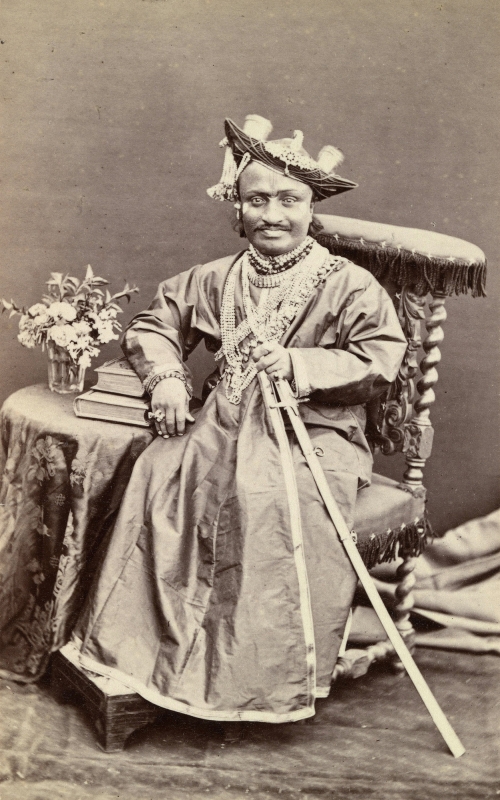
- Maharaja Anand Rao III (r. 1857–1898): He initiated extensive administrative, judicial, and educational reforms, establishing schools, hospitals, and public works. He was created a Knight Commander of the Star of India (KCSI).
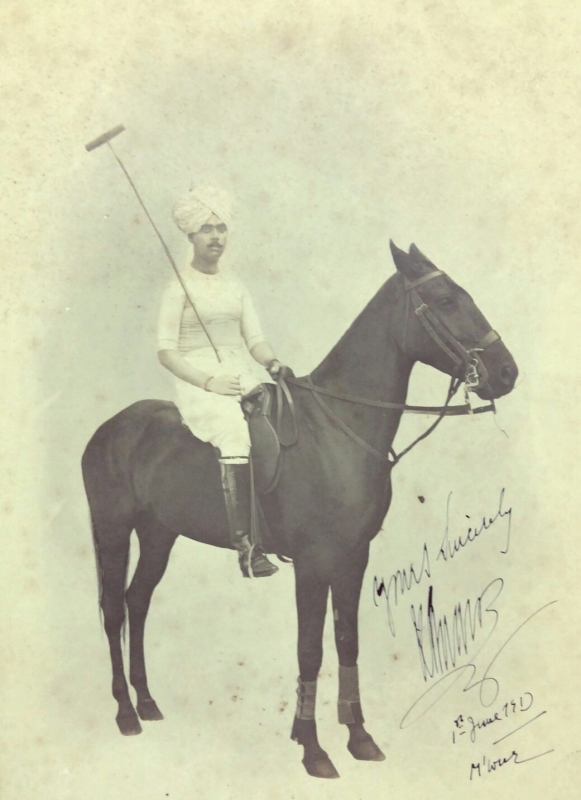
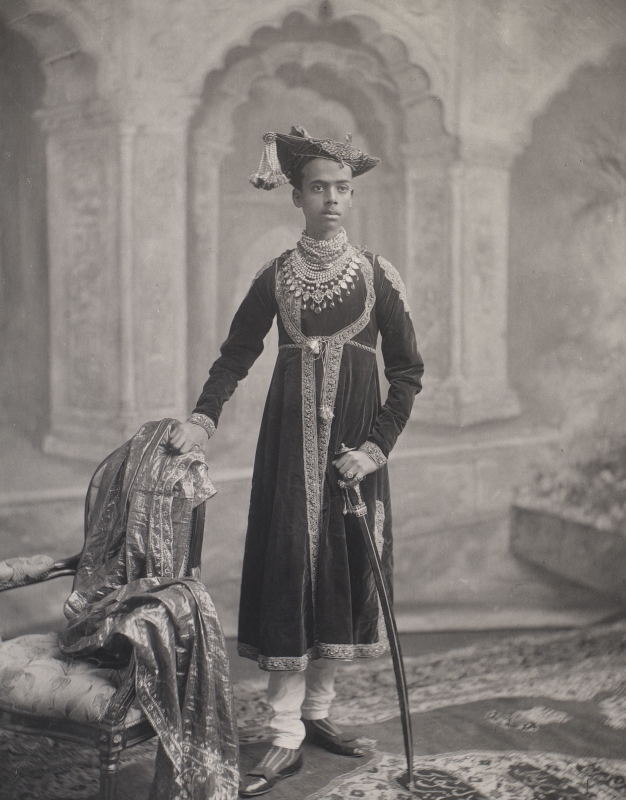
- Maharaja Udaji Rao Puar II (r. 1898–1926): Known for his philanthropic work and support for education, he established the Maharaja Bhoj Research Institute and made primary education accessible. He actively participated in the Chamber of Princes.
- Maharani Elisabeth: The French-born wife of Maharaja Anand Rao IV, she took a keen interest in preserving the cultural heritage, art, and craft of Dhar, particularly supporting the local Bagh print weavers and craftsmen.
Heraldry and State Flag
The coat of arms and flags of Dhar State represented its proud Rajput-Maratha lineage and ancient connections to the Paramara dynasty:
- The State Flag: The flag of Dhar was a rectangular banner featuring the traditional Maratha saffron color (Bhagwa), symbolizing valor, sacrifice, and the state's association with the Maratha Empire.
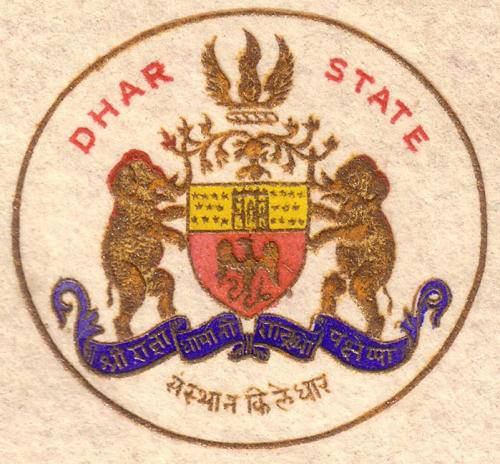
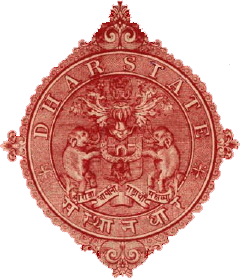
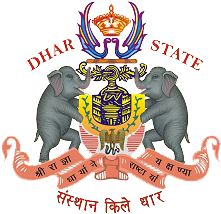
- Coat of Arms: The state emblem featured a shield supported by two lions, representing strength and sovereignty. The shield was charged with a representation of a dagger (Katar) and wings, symbolizing protection and swift justice. The crest featured a hand holding a sword, a nod to the name "Dharanagara" and the martial tradition of the Puars.
Post-Independence and Modern Era
Following India's independence in August 1947, the last ruling Maharaja of Dhar, Anand Rao Puar IV, signed the Instrument of Accession to the Dominion of India. On 15th June 1948, the state was officially merged into the newly formed state of Madhya Bharat.
In 1956, following the reorganization of Indian states along linguistic lines, Madhya Bharat was integrated into the state of Madhya Pradesh. Today, Dhar is a thriving district headquarters known for its rich archeological sites, including the Dhar Fort, the Lat Masjid, and the nearby historic ruined city of Mandu, attracting historians and travelers from across the globe.
Genealogy
- Raja UDAJIRAO I PUAR, 1st Raja of Dhar 1728/1732 (abdicated), died .
- Raja ANANDRAO I PUAR, 2nd Raja of Dhar 1732/1736 (abdicated), he was acknowledged by the Peshwa, Baji Rao, to be the head of the Puar Rajput clan, married and had issue. He died .
- Raja Jaswantrao Anandrao Puar (qv)
- Shrimant Sardar Rayajirao Pawar (Amdabadkar), married and had issue, the Amdabadkar Pawar estate holders of Amdabad, Pune District, Maharashtra; married and had issue, two sons.
- Shrimant Sardar Malharrao Rayajirao Pawar, married and had issue, one son.
- Shrimant Sardar Balwantrao Malharrao Pawar, married and had issue.
- Shrimant Sardar Malharrao Balwantrao Pawar, married and had issue.
- Shrimant Sardar Krushnajirao alias Sardar Rayajirao Pawar, married and had issue.
- Shrimant Sardar Malharrao Rayajirao Pawar, married and had issue.
- Shrimant Sardar Sambhajirao Malharrao Pawar, married and had issue.
- Sardar Bhupendra Sambhajirao Pawar (France)
- Sardar Ravindra Sambhajirao Pawar, married and has issue, two sons.
- Sardarkumar Himanshu Ravindra Pawar, born .
- Sardarkumar Hrisshikesh Ravindra Pawar, born .
- Shrimant Sardar Sambhajirao Malharrao Pawar, married and had issue.
- Shrimant Sardar Malharrao Rayajirao Pawar, married and had issue.
- Shrimant Sardar Krushnajirao alias Sardar Rayajirao Pawar, married and had issue.
- Shrimant Sardar Malharrao Balwantrao Pawar, married and had issue.
- Shrimant Sardar Balwantrao Malharrao Pawar, married and had issue.
- Shrimant Sardar Vitthalrao Rayajirao Pawar (Ladavad), he died sp.
- Shrimant Sardar Malharrao Rayajirao Pawar, married and had issue, one son.
REGENCY 1736/1745
- Raja JASWANTRAO I PUAR, 3rd Raja of Dhar 1736/1761, born , died in the Battle of Painipat in 1761.
- Raja Khanderao Jaswantrao Puar (qv)
Rajmata Gahenabai Raje Sahib Puar, Regent of Dhar 1761/1777
- Raja KHANDERAO PUAR, 4th Raja of Dhar, Raja of Dhar 1761/1782, born , died . Rajmata Nubadhabai Raje Sahib Puar, Regent of Dhar 1782/1798
- Raja ANANDRAO II PUAR, 5th Raja of Dhar 1782/1807, born , married Rani (later Rajmata) Minabai Sahib Puar, she was celebrated for her courage and abilities, and the determination with which she resisted the attacks of Scindia and Holkar, and had adoptive issue. He died .
- (A) Raja Ramchandrarao Anandrao Puar (qv)
Rajmata Mainabai Raje Sahib Puar, Regent of 1807/1810, she adopted her sister's son in 1810, with the consent of the neighbouring Chiefs, and he succeeded as Raja Ramchandrarao Puar II (qv)
- Raja RAMCHANDRARAO I PUAR, 6th Raja of Dhar 1807/1810, born , died . REGENCY 1810/1827
- Raja RAMCHANDRARAO II PUAR, 7th Raja of Dhar 1810/1833, he succeeded by adoption, born , married and had adoptive issue. He died .
- (A) Raja Jaswantrao Ramchandrarao Puar (qv)
REGENCY 1833/1840
- Raja JASWANTRAO II PUAR, 8th Raja of Dhar 1833/1857, born , he succeeded by adoption. He died sp in 1857. Rajmata Sri Draupadibai Raje Sahib Puar, Regent of Dhar [23.5.1857] - [19.1.1858] STATE CONFISCATED [19.1.1858] - [1.5.1860], for rebellion during the uprising. REGENCY [1.5.1860] - [1.10.1864]
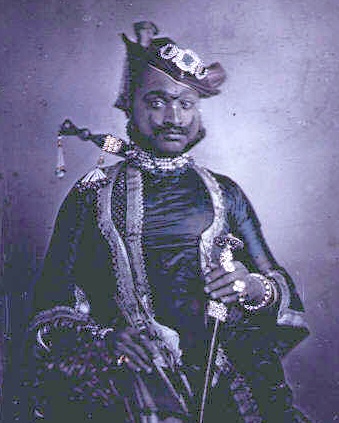
- HH Maharaja Sir ANANDRAO PUAR III Bahadur K.C.S.I., C.I.E., 9th Raja of Dhar 1860/1898, born , he succeeded by adoption, investiture was held on 21st November 1864, he was granted the right of adoption by a Sanad (note to No. LXIV) in 1862 by the Government of India; on the occasion of the Imperial Assemblage at Delhi on 1st January 1877, the title of Maharaja was conferred upon him as a personal distinction, and he was also appointed a Knight Commander of the Most Exalted Order of the Star of India; the further decoration of Companion of the Most Eminent Order of the Indian Empire was conferred upon him on 1st January 1883; married 1stly, Maharani (name unknown), died in , married 2ndly, 1890, Maharani (name unknown), and had adoptive issue. He died sp in 1898.
- (A) Shrimant Udajirao Sambajirao Puar, younger son of the late Maharaja's half-brother, Shrimant Sambajirao Puar [Appa Sahib] of Malthan, he succeeded as Lt.-Col. HH Maharaja Shri Sir Udajirao Anandrao Puar Bahadur (qv)
REGENCY COUNCIL 1898/1904
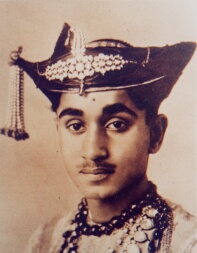
- Lt. Col. HH Maharaja Shri Sir UDAJIRAO II PUAR Bahadur K.C.S.I., C.I.E., K.B.E., 10th Raja of Dhar 1898/1926, born , he succeeded by adoption, Maharaja [cr.1918], K.C.S.I. [cr.1911], K.C.V.O., K.B.E., married HH Maharani Sahiba, Regent of Dhar, died , and had issue, seven daughters. He died .
- Maharajkumari Vijaya Raje Puar, born , Member of the Rajya Sabha 1952/1957, married Lt. Dr. Maharajkumar Basant Narain Singh of Ramgarh. (Raj Bungalow, Post Office and District Hazaribagh, Bihar).
- Rani Urmila Devi [Sumitraraje], born , married May 1939, Chhatrapati Shri Shahumaharaj Bhonsle of Satara, and had issue. She died in Pune.
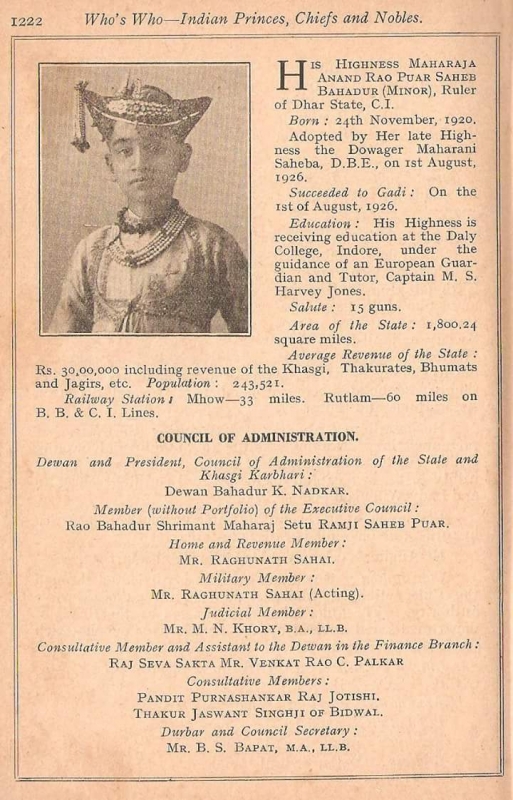
Dowager Maharani Laxmibai Sahiba Pura, Regent of Dhar 1926/1931 REGENCY COUNCIL 1931/1940
- HH Maharaja ANANDRAO IV PUAR Bahadur, 11th Raja of Dhar 1926/1989, born , he succeeded by adoption, married 1951 (div.), HH Maharani Mrunalini Devi, Chancellor of Sayaji University of Baroda, daughter of HH Maharaja Gaekwad Sir Pratapsinghrao Gaekwad Sena Khas Khel Shamsher Bahadur Farzand-i-Khas-i-Daulat-i-Inglishia of Baroda, and his first wife, HH Maharani Shanta Devi Saheb. He died sp 1989.
- HH Maharaja Shri JUGDEO RAO PUAR Bahadur, born ; Heir of his brother.
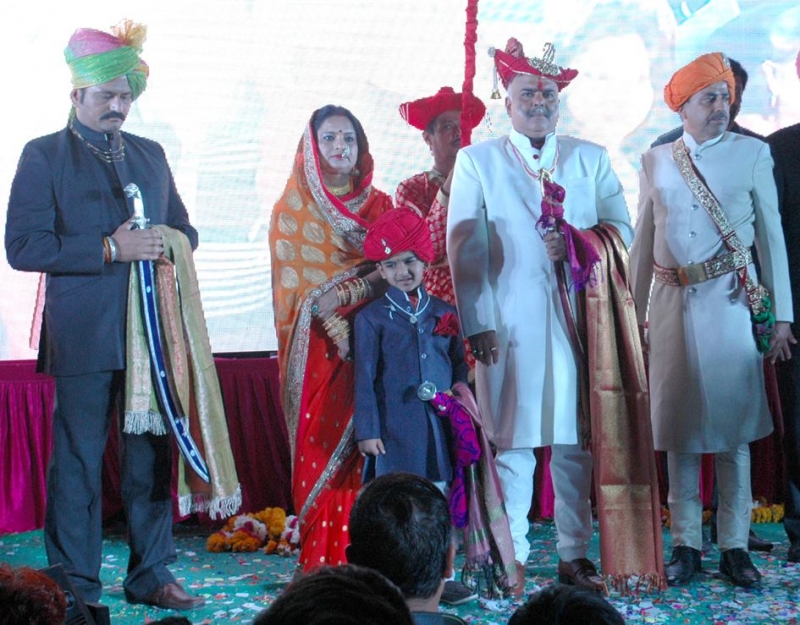
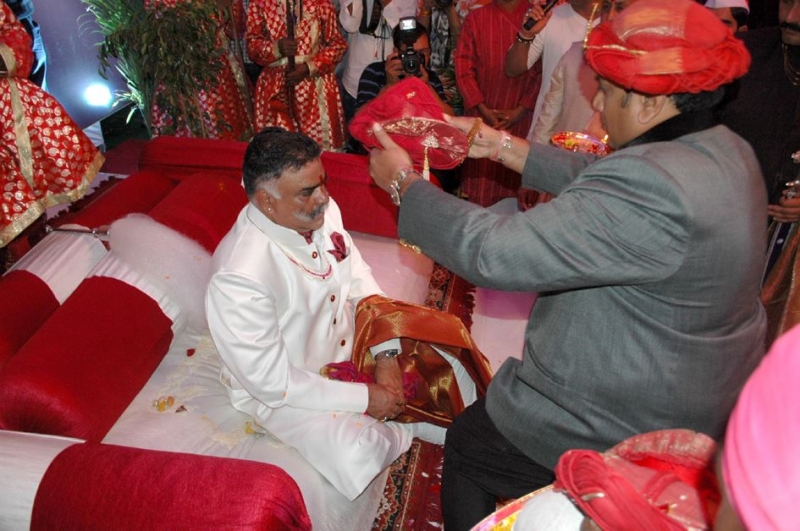
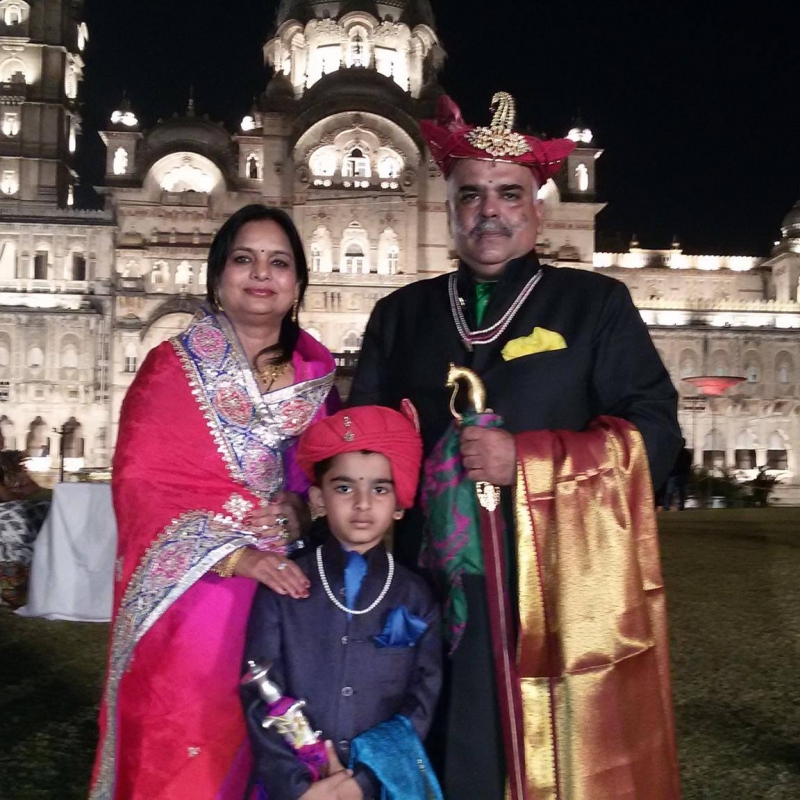
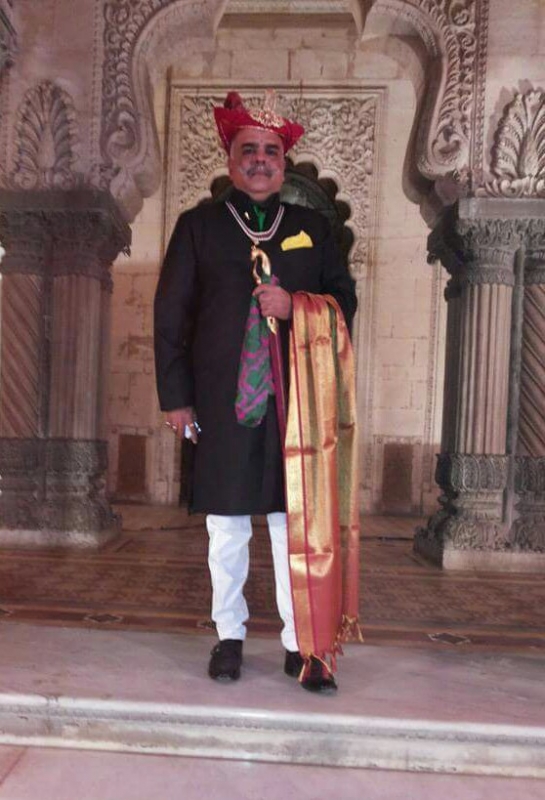
- HH Maharaja Shrimant HEMENDRA SINGH PUAR Bahadur, coronated as the 12th Raja of Dhar on 15th January 2015. Married to Shaila Raje and has issue, one son [Times of India] [Hindustan Times]. He died on due to cancer illness.
- Kumar Prathameshwar Singh Puar (qv)
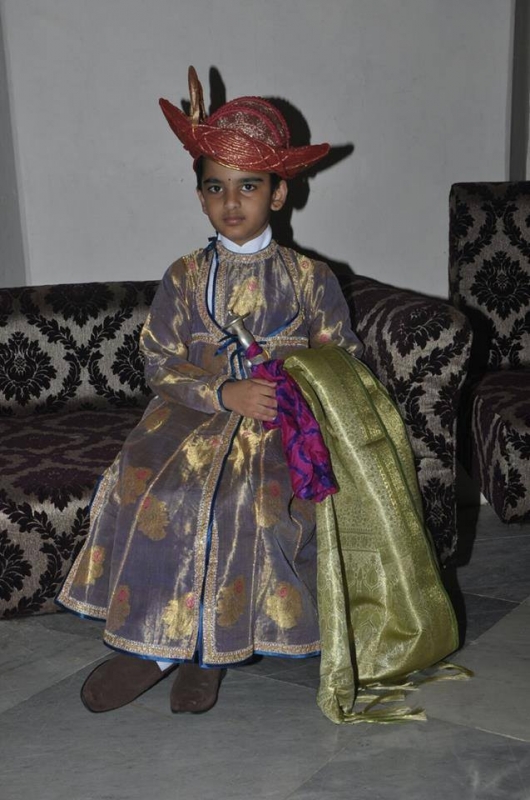
- HH Maharaja Shrimant PRATHAMESHWAR SINGH PUAR Bahadur (see above).
Notable Figures
Raja Anand Rao I Puar (1728 – 1749)
Raja Anand Rao I Puar was the founder of the princely state of Dhar in the early 18th century. He was a distinguished Maratha commander who claimed descent from the ancient Paramara (Parmar) dynasty of Malwa. He was granted the fief of Dhar and its surrounding regions by Peshwa Baji Rao I in 1728, successfully re-establishing his clan's authority over their ancestral territories. His reign laid the geopolitical foundation of the state amidst the rapid expansion of the Maratha Empire.
More information can be found on the Dhar State Wikipedia Page.
Raja Yashwant Rao I Puar (1749 – 1761)
The son and successor of Anand Rao I, Raja Yashwant Rao I Puar was a renowned warrior who actively participated in the northern expansion campaigns of the Maratha Confederacy. He is immortalized in Indian military history for his heroic role and ultimate sacrifice in the historic Third Battle of Panipat in 1761, where he fought valiantly against the Afghan forces of Ahmad Shah Abdali.
More details are available on the Yashwant Rao Puar Wikipedia Page.
Raja Khande Rao Puar (1761 – 1782)
Succeeding to the gaddi as a minor after his father's demise at Panipat, Khande Rao's early reign was managed by regents. Throughout his rule, the young state of Dhar faced persistent territorial incursions and pressure from rival Maratha factions, notably the Scindias of Gwalior and the Holkars of Indore. Despite these immense challenges, he successfully consolidated his authority and preserved the state's integrity through astute diplomacy.
Further information is documented on the historical overview of Dhar State.
Raja Anand Rao II Puar (1782 – 1807)
Born posthumously to Raja Khande Rao, Anand Rao II's reign was marked by severe political instability, internal rebellions, and external threats. His rule is highly notable for the extraordinary leadership of his consort, Maharani Maina Bai. When the state was threatened by rival Maratha commanders, she defended the state capital, famously giving birth to their successor in the safety of the Dhar Fort and actively commanding the state's administration and military defense.
Read more about this era on the Dhar State History portal.
Raja Ramchandra Rao I Puar (1807 – 1833)
Succeeding as an infant under the regency of his capable mother, Maharani Maina Bai, Raja Ramchandra Rao's reign witnessed a pivotal shift in Dhar's geopolitical status. In 1818, the state signed a treaty of subsidiary alliance with the British East India Company. This historic treaty protected Dhar from further raids by neighboring states and Pindaris, restoring several lost territories and bringing long-term administrative stability to the region.
Historical context of this treaty can be explored on the Dhar State Treaty Records.
Raja Yashwant Rao II Puar (1833 – 1857)
Adopted by the widow of Ramchandra Rao I, Raja Yashwant Rao II was a progressive administrator who dedicated his reign to peace and public welfare. He introduced key agrarian reforms, streamlined the revenue collection system, and funded the construction of critical public infrastructure. He passed away just as the rebellion of 1857 began to spread across Central India.
Refer to his lineage details on the Dhar Dynasty records.
Raja Anand Rao III Puar (1857 – 1898)
Raja Anand Rao III succeeded to the throne as a minor during the turbulent year of 1857. Because of the participation of the Dhar state troops in the Indian Rebellion of 1857, the British government temporarily confiscated the state. It was eventually restored to him in 1860, and he assumed full ruling powers in 1864. He went on to become a highly respected ruler, receiving the personal title of Maharaja and the Knight Commander of the Star of India (KCSI) for his contributions to education and local governance.
More details are available on the Anand Rao III Wikipedia Page.
Maharaja Udaji Rao II Puar (1898 – 1926)
Commonly known as Baba Saheb, Maharaja Udaji Rao II was one of the most visionary and modernizing rulers of the Puar dynasty. Educated at Daly College in Indore, he implemented extensive reforms in education, healthcare, and infrastructure. He established municipal systems, built hospitals, and was a prominent patron of arts and sports. For his administrative excellence and contribution to the war efforts during World War I, he was granted the hereditary title of Maharaja.
Read about his life on the Udaji Rao II Puar Wikipedia Page.
Maharaja Anand Rao IV Puar (1926 – 1989)
The last ruling Maharaja of Dhar, Anand Rao IV succeeded as a minor and assumed full ruling powers in 1940. He continued the progressive policies of his predecessor, focusing on industrialization, modern agricultural practices, and public health. Following the independence of India, he signed the Instrument of Accession in 1947, merging Dhar State into the Union of India, which subsequently became part of Madhya Bharat and later Madhya Pradesh.
Read his full biography on the Anand Rao IV Wikipedia Page.
Maharani Mrinalini Devi Puar (1936 – 2015)
A highly prominent modern figure of the Dhar royal family, Maharani Mrinalini Devi Puar was the consort of Maharaja Anand Rao IV. She was a distinguished academician, educational administrator, and social worker. She held the prestigious position of Chancellor of the Maharaja Sayajirao University of Baroda for over two decades, making her the first woman chancellor of a Gujarati university and leaving a monumental legacy in modern Indian higher education.
Further details on her academic career can be found on the Mrinalini Devi Puar Wikipedia Page.