Present Head
History
The Origins and Foundation of Khandpara State
The princely state of Khandpara, situated in the modern-day Nayagarh district of Odisha, has a rich and storied past that dates back to the late 16th or early 17th century. Historically, Khandpara was an integral part of the neighboring state of Nayagarh. The foundation of Khandpara as an independent principality is tied to the ruling dynasty of Nayagarh, which traced its ancestry to the Baghela (or Vaghela) Rajput dynasty of Rewah (now in Madhya Pradesh).
According to historical records, the separation occurred during the reign of Raja Raghunath Singh of Nayagarh. Upon his demise, a division of the territory took place between his two sons. The elder son, Harihar Singh, ascended the throne of Nayagarh as the rightful successor. The younger son, Jadunath Singh Mangraj, was granted a small appanage consisting of four strategic Garhs (forts): Kadua, Ghuntsahi, Sardhapur, and Khepada. Armed with these estates and a fierce ambition, Jadunath Singh consolidated his authority and established Khandpara as an independent state around 1599–1601 AD. In recognition of his martial prowess, he assumed the title of Mangraj, which became a hereditary title born e by successive rulers of the state.
Territorial Expansion and Geopolitical Ascent
Under the early rulers, Khandpara steadily expanded its borders through military conquest and diplomatic alliances. The most significant expansion occurred during the reign of Raja Narayan Singh Mangraj. Raja Narayan was an ambitious military tactician who successfully pushed the state's boundaries in all cardinal directions. Under his rule, Khandpara reached its zenith, extending:
- East: Up to the borders of the Banki State.
- West: To Balaramprasad in the Daspalla State.
- North: Up to Kantilo, a highly prosperous trading center on the banks of the Mahanadi River, famous for its brass and bell-metal industries and the historic Nilamadhav Temple.
- South: Up to Jogiapali on the border of Nayagarh.
This territorial footprint secured Khandpara's control over crucial trade routes along the Mahanadi River, boosting the state's economic prosperity and political leverage in the region.
The Maratha Influence and British Suzerainty
During the 18th century, as the Mughal Empire declined, Odisha came under the direct administration of the Maratha Empire's Bhonsle rulers of Nagpur. Like other tributary states (known as the Garhjat states or Tributary Mahals), Khandpara was forced to pay annual tribute (peshkash) to the Marathas. Despite the heavy taxation, the rulers of Khandpara managed to maintain internal autonomy.
In 1803, following the British victory in the Second Anglo-Maratha War, the Marathas ceded Odisha to the British East India Company under the Treaty of Deogaon. Recognizing the strategic importance of the hill states, the British negotiated treaties with the local rulers. Khandpara came under British protection, and the ruling chief executed a treaty engagement (Kabulyat) with the British government in 1803. Under British administration, Khandpara was classified as one of the Tributary Mahals of Orissa. For a detailed historical account of this administrative transition, researchers can refer to The Feudatory States of Orissa by L.E.B. Cobden-Ramsay.
Key Reformers and the Legacy of Pathani Samanta
Khandpara holds a distinguished place in the intellectual history of India due to its patronage of science, literature, and arts. The most celebrated figure associated with the state is Mahamahopadhyaya Samanta Chandra Sekhar Harichandan Mahapatra, popularly known as Pathani Samanta (1835–1904). Born in to the noble family of Khandpara, he was a self-taught astronomer of extraordinary genius.
Without the aid of modern telescopes or Western mathematical tools, using only traditional instruments fabricated by himself from bamboo and wood (such as the Mana Yantra), he measured the movements of stars and planets with astonishing accuracy. His monumental Sanskrit astronomical treatise, the Siddhanta Darpana, was highly acclaimed by both Indian and European scientists of the era. The British government honored him with the title of Mahamahopadhyaya in 1893. His contributions are preserved at the Pathani Samanta Planetarium and detailed in publications by the Government of Odisha.
State Military, Heraldry, and the State Flag
By the late 19th century, Khandpara was recognized as a well-administered state. According to the imperial records of 1892, the Raja of Khandpara maintained a disciplined state military force consisting of 1,085 infantrymen and an artillery unit equipped with 12 operational guns. This force was primarily used for state ceremonies, maintaining internal security, and guarding the state boundaries.
The heraldry of Khandpara reflected its Rajput ancestry and local religious affiliations. The state emblem featured a tiger and a peacock, symbolizing courage and the pristine natural landscape of the Eastern Ghats. The state flag was a traditional rectangular swallow-tailed banner, predominantly featuring yellow or saffron, which symbolized the state's devotion to Lord Jagannath and its Suryavanshi Rajput heritage.
Post-Independence Integration and the Modern Era
Following India's independence from British rule in August 1947, the process of integrating the princely states into the Indian Union commenced under the leadership of Sardar Vallabhbhai Patel. The last ruling chief of the state, Raja Harihar Singh Mardaraj Bhramarbar Ray, signed the Instrument of Accession, merging Khandpara into the Dominion of India on January 1, 1948.
Initially, Khandpara was integrated into the district of Puri. Later, following administrative reorganizations, it became a part of the newly created Nayagarh district in 1993. The Privy Purse and the official titles of the rulers were formally abolished by the Government of India through the 26th Amendment to the Constitution of India in 1971.
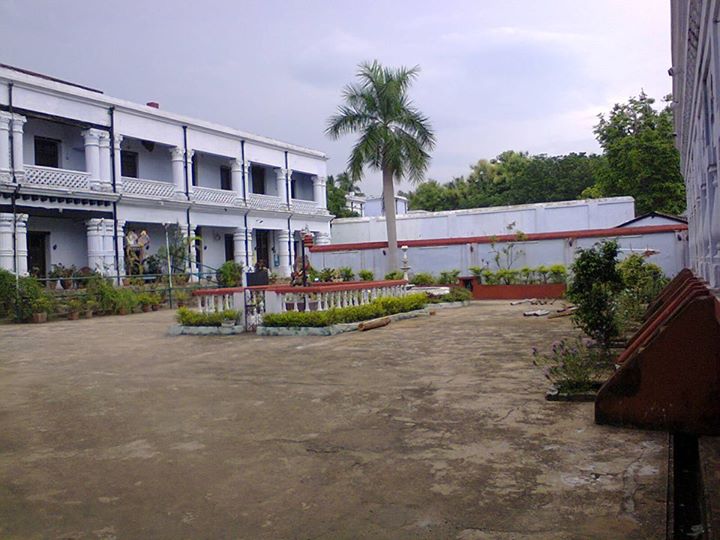
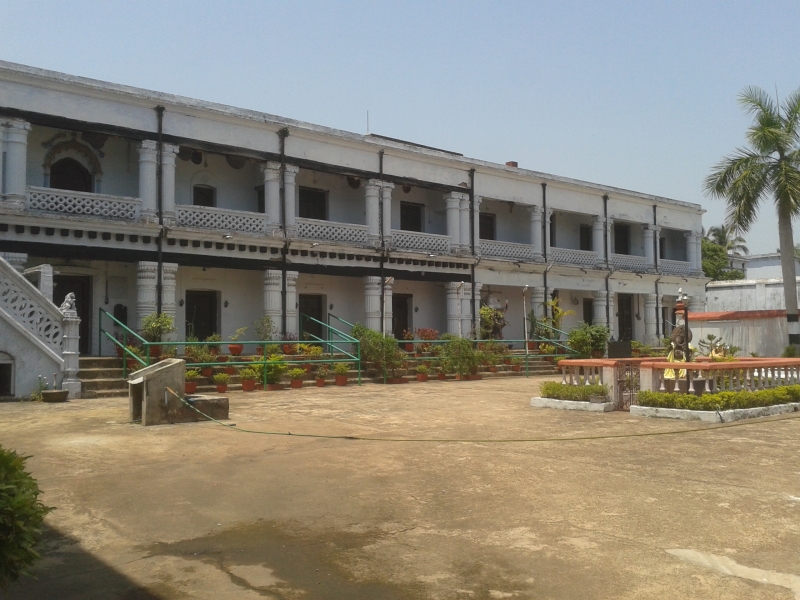
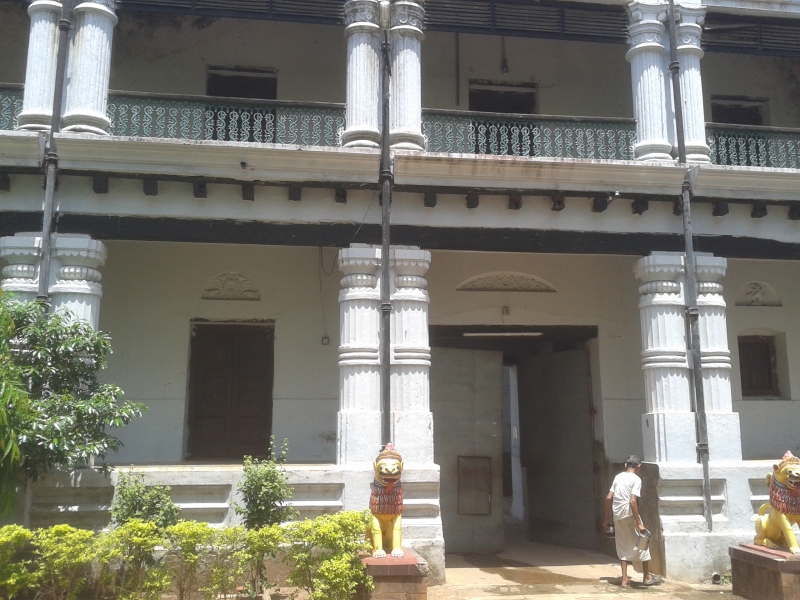
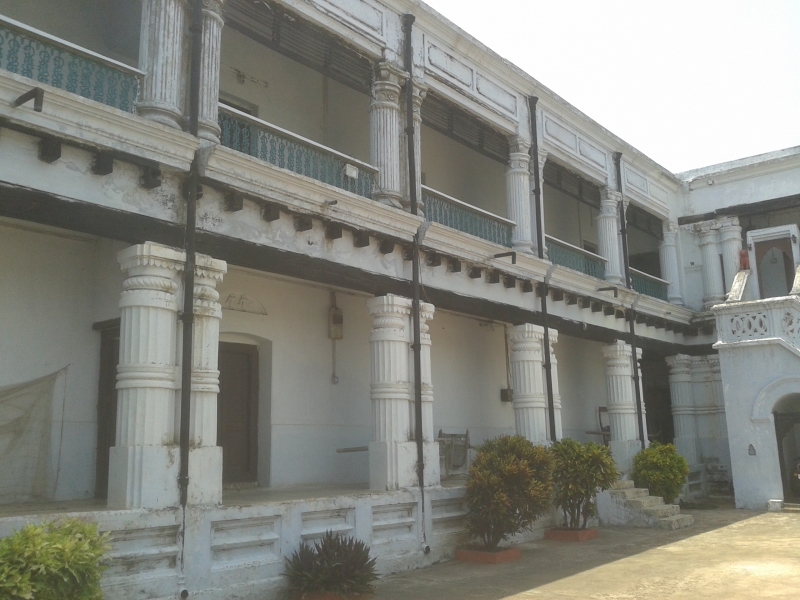
Today, Khandpara is a vibrant assembly constituency and block within the Nayagarh district. The historic palace of Khandpara, though private property, stands as a majestic monument reflecting the architectural grandeur and cultural heritage of a bygone era. For official demographic and modern administrative data regarding the region, please visit the Official Website of Nayagarh District.
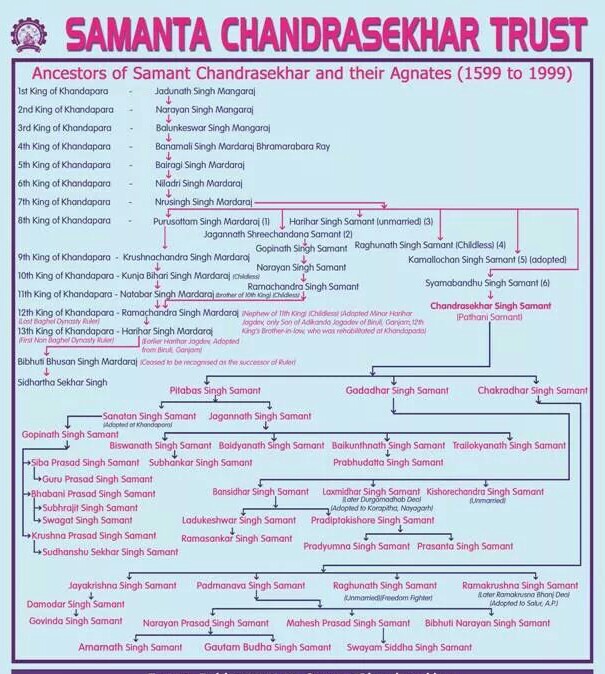
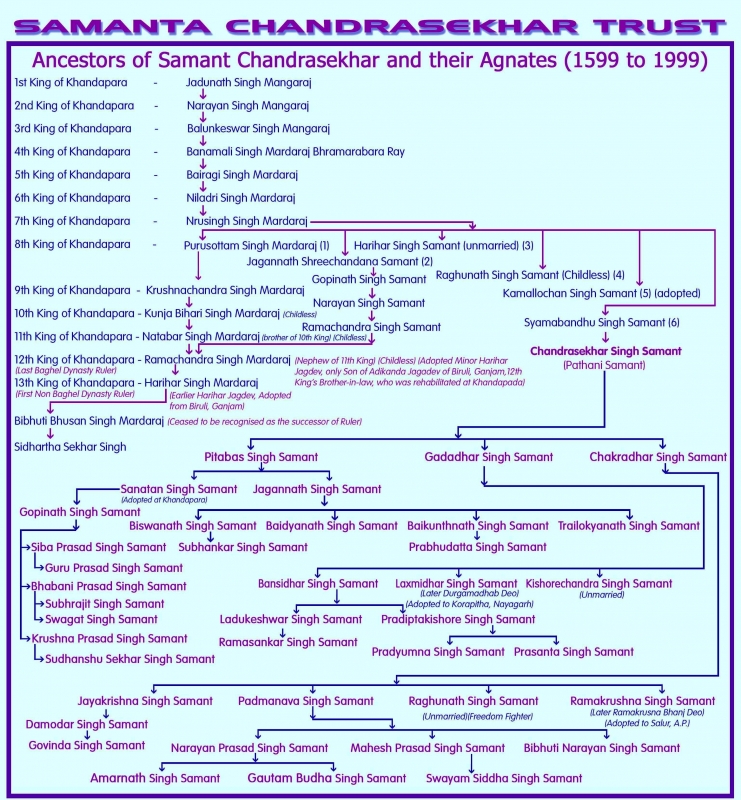
Genealogy
- Raja JADUNATH SINGH Mangraj, 1st Raja of Khandpara 1599/1675, he received the title of Mangraj from the Maharaja of Orissa, and it was enjoyed from his time down to Balunkeswar Singh, married and had issue.
- Raja Narayan Singh Mardraj (qv)
- Raja PITABAS SINGH Mangraj, (2nd) Raja of Khandpara, married and had issue.
- Raja Narayan Singh Mardraj (qv) cf. above
- Raja NARAYAN SINGH Mangraj, 2nd Raja of Khandpara 1675/1709, married and had issue.
- Raja Balunkeshwar Singh Mardraj (qv)
- Raja BALUNKESHWAR SINGH Mangraj, 3rd Raja of Khandpara 1709/1723, he gradually extended his dominions and strengthened the State, he defeated the petty local Chiefs, gave education to the savages, cleared the jungles, formed villages, and civilised the country, married and had issue.
- Raja Banamali Singh Mardraj (qv)
- Raja BANAMALI SINGH Mardraj Bhramarbar Rai, 4th Raja of Khandpara 1723/1732,he was a brave and powerful Raja, and expert in war, when Makund Dev Bhanj, the adopted son of the Raja of Baudh, appealed to him for his help, he easily defeated the Raja of Baudh and made Makund Dev Bhanj, Raja over a part of Baudh state which was later named Daspalla, he also defended the Maharaja of Orissa from the attacks of his enemies, for which he was rewarded with the title of Bhai Mardraj Bhramarbar Rai, married and had issue.
- Raja Bairagi Singh Mardraj Bhramarbar Rai (qv)
- Raja BAIRAGI SINGH Mardraj Bhramarbar Rai, 5th Raja of Khandpara 1734/1770, married and had issue.
- Raja Niladri Singh Mardraj Bhramarbar Rai (qv)
- Raja NILADRI SINGH Mardraj Bhramarbar Rai, 6th Raja of Khandpara 1770/1794, he was given a flag by Raghoji Bhonsle, the Maharaja of Nagpur, which was used till independence, married and had issue.
- Raja Nrusingh Singh Mardraj Bhramarbar Rai (qv)
- Raja NARASIMHA SINGH Mardraj Bhramarbar Rai [Nrusingh Singh Mardraj], 7th Raja of Khandpara 1794/1815, he gave assistance to the chief military officers of the British Government, when they first conquered Orissa and received an elephant and a cannon in recognition thereof, married and had issue.
- Raja Purusottam Singh Mardraj Bhramarbar Rai (qv)
- Rajkumar Jagannath Shreechandra Singh Mardraj, married and had issue.
- Kumar Shri Gopinath Singh Mardraj, married and had issue.
- Kumar Shri Narayan Singh Mardraj, married and had issue.
- Kumar Shri Ramchandra Singh Mardraj, adopted by Raja Natabar Singh Mardraj Bhramarbar Rai, and succeeded as Raja Ramchandra Singh Mardraj Bhramarbar Rai of Khandpara (see below)
- Kumar Shri Narayan Singh Mardraj, married and had issue.
- Kumar Shri Gopinath Singh Mardraj, married and had issue.
- Rajkumar Harihar Singh Mardraj, died unmarried.
- Rajkumar Raghunath Singh Mardraj, died sp.
- Rajkumar Kamallochan Singh Mardraj, adopted out.
- Rajkumar Shyamabandu Mardraj, married and had issue.
- Mahamahopadhyaya Kumar Shri Chandrasekhar Singh Samanta [Pathani Samant], born in Cuttack Distt., Orissa, Mahamahopadhyaya [cr.1893], he was a world famous astroscientist who was esteemed greater than the Tycho Brahe; author of the treatise "Sidhanta Darpan" on Hindu Astronomy that was published in 1899; married and had issue. He died .
- Kumar Shri Pitabas Singh Mardraj, married and had issue.
- Kumar Shri Sanatan Singh Mardraj, adopted out within Khandpara.
- Kumar Shri Jagannath Singh Mardraj, married and had issue.
- Kumar Shri Bishwanath Singh Mardraj, married and had issue.
- Kumar Shri Subhankar Singh Mardraj
- Kumar Shri Baidyanath Singh Mardraj
- Kumar Shri Baikunthanath Singh Mardraj, married and had issue.
- Kumar Shri Prabhudatta Singh Mardraj
- Kumar Shri Trailokyanath Singh Mardraj
- Kumar Shri Bishwanath Singh Mardraj, married and had issue.
- Kumar Shri Gadadhar Singh Mardraj, married and had issue.
- Kumar Shri Bansidhar Singh Mardraj, married and had issue.
- Kumar Shri Ladu Kishore Singh Mardraj, married and had issue.
- Kumar Shri Ramasankar Singh Mardraj
- Kumar Shri Pradipta Kishore Singh Mardraj, married and had issue.
- Kumar Shri Pradyumna Singh Mardraj
- Kumar Shri Prasanta Singh Mardraj
- Kumar Shri Ladu Kishore Singh Mardraj, married and had issue.
- Kumar Shri Laxmidhar Singh Mardraj, adopted to Korapitha.
- Kumar Shri Kishorechandra Singh Mardraj, unmarried.
- Kumar Shri Bansidhar Singh Mardraj, married and had issue.
- Kumar Shri Chakradhar Singh Mardraj, married and had issue.
- Kumar Shri Jayakrishna Singh Mardraj, married and had issue.
- Kumar Shri Damodar Singh Mardraj, married and had issue.
- Kumar Shri Govinda Singh Mardraj
- Kumar Shri Damodar Singh Mardraj, married and had issue.
- Kumar Shri Padmanava Singh Mardraj, married and had issue.
- Kumar Shri Narayan Prasad Singh Mardraj, married and had issue.
- Kumar Shri Amarnath Singh Mardraj
- Kumar Shri Gautam Budha Singh Mardraj
- Kumar Shri Mahesh Prasad Singh Mardraj, married and had issue.
- Kumar Shri Swayam Siddha Singh Mardraj
- Kumar Shri Bibhuti Narayan Singh Mardraj
- Kumar Shri Narayan Prasad Singh Mardraj, married and had issue.
- Kumar Shri Raghunath Singh Mardraj, Freedom Fighter, died unmarried.
- Kumar Shri Ramakrishna Singh Mardraj, adopted to Salur, A.P.
- Kumar Shri Jayakrishna Singh Mardraj, married and had issue.
- Kumar Shri Pitabas Singh Mardraj, married and had issue.
- Mahamahopadhyaya Kumar Shri Chandrasekhar Singh Samanta [Pathani Samant], born in Cuttack Distt., Orissa, Mahamahopadhyaya [cr.1893], he was a world famous astroscientist who was esteemed greater than the Tycho Brahe; author of the treatise "Sidhanta Darpan" on Hindu Astronomy that was published in 1899; married and had issue. He died .
- Raja PURUSHOTTAM SINGH Mardraj Bhramarbar Rai, 8th Raja of Khandpara 1815/1821, married and had issue.
- Raja Krushnachandra Singh Mardraj Bhramarbar Rai (qv)
- Raja KRUSHNA CHANDRA SINGH Mardraj Bhramarbar Rai, 9th Raja of Khandpara 1821/1842, married and had issue.
- Raja Kunja Bihari Singh Mardraj Bhramarbar Rai (qv)
- Raja Natabar Singh Mardraj Bhramarbar Rai (qv)
- Raja KUNJA BIHARI SINGH Mardraj Bhramarbar Rai, 10th Raja of Khandpara 1842/1867, he died sp.
- Raja NATABAR SINGH Mardraj Bhramarbar Rai, 11th Raja of Khandpara 1867/1905, born , he succeeded to the gadi on 28th February 1867, the title of Raja is hereditary in the family, and dates from the period of the Mahratta dominion in Orissa, it was formally recognised by the British Government in 1874, married and had adoptive issue. He died sp in 1905.
- (A) Raja Ram Chandra Singh Mardraj Bhramarbar Rai (qv)
- Raja RAM CHANDRA SINGH Mardraj Bhramarbar Rai, 12th Raja of Khandpara 1905/1922, succeeded by adoption, married and had adoptive issue from Biruli in Ganjam District.
- (A) Raja Harihar Singh Mardraj Bhramarbar Rai (qv)
- Raja HARIHAR SINGH Mardraj Bhramarbar Rai, 13th Raja of Khandpara 1922/1977, born and succeeded by adoption 26th December 1922, educated at Rajkumar College, Raipur (Diploma 1933), and Training in Administration at Sambalpur; M.L.A. (Orissa) 1952/1971 (four terms), Minister in the Government of Orissa; assumed control of the administration of Khandapara State in 1934, entered the Political field in 1952 and was elected as an Independent Candidate and later joined the Congress Party; Qualified in flying and obtained 'A' Class Pilots licence; Member All-India and Bengal Flying Clubs; Secretary, Orissa Flying Club; interests were Games, Shooting, Flying and Photography; married Rani S. M. Devi, and had issue, two sons and one daughter. He died (before 6th September).
- Yuvaraj (name unknown), died young vpsp.
- Raja Saheb Bibhuti Bhushan Singh (qv)
- Rani Parvati Devi, married Raja Shri Pradip Chandra Deo Samant, Raja Saheb of Athmalik, and has issue, one daughter and one son.
- Raja Saheb BIBHUTI BHUSHAN SINGH Mardraj Bhramarbar Rai B.A., 14th Raja Saheb of Khandpara since 1977 (Rajbati, P.O. - Khandapara Garh, Dist. - Nayagarh, Orissa, India). Born , M.L.A. (Orissa) 1980/1990 and 1995/2000 (three terms); Minister of State (Ind), Tourism and Culture (7.12.1989) - (3.3.1990); Minister of State, Planning and Coordination (7.12.1989) - (3.3.1990); Deputy Speaker (15.3.1996) - (29.2.2000); Student leader, Presidential candidate of B.J.B. College Student's Union; represented B.J.B. College, Bhubaneswar in Table Tennis at College and University levels 1973/1974 and 1974/1975; joined the Congress (I) Party in 1980 after being elected Independently from Khandpara Assembly Constituency; Life member, Bhubaneswar Plant Lover's Association; Member, Bhubaneswar Club, Bhubaneswar; Vice-President, Chinmoya Mission, Bhubaneswar; Life member, Bengal cricket Association, Calcutta; President, District Youth Congress, Puri, 1981/1984; Member, Consultative Committee for Irrigation, Power and works, 1982/1984; interests and pastimes include Writing articles, Photography and Playing Cricket; he has compiled a work on Khandapara Ithas in English; married Rani Devaki Devi Kumari, and has issue, one son and one daughter.
- Yuvraj Sidharth Shekhar Singh (qv)
- Rajkumari Aradhana Rathore, married Major Shakti Singh Rathore of Peeh, Rajasthan, an acclaimed Polo Player, and has issue, one daughter.
- Kumari Ayesha Rathore
- Raja Saheb SIDHARTH SHEKHAR SINGH Mardraj Bhramarbar Rai, 15th Raja of Khandpara (see above)