Present Head
- Kunwar Siddhesh Pratap Singh
History
Introduction and Origins of Jaso State
Jaso State (also historically spelled as Jassu) was a sovereign princely state in the Bundelkhand region of central India. It was founded in 1732 by Bharti Chand, a descendant of the legendary Bundela chieftain Maharaja Chhatrasal of Panna. Following the death of Maharaja Chhatrasal in 1731, his vast territories were partitioned among his sons and his ally, Peshwa Baji Rao I. Bharti Chand, the fourth son of Chhatrasal, received the territory of Jaso as his share, establishing it as an independent chiefship. The capital of this newly formed state was set up at Jaso, located in the modern-day Satna district of Madhya Pradesh.
The Maratha Hegemony and Mid-18th Century Challenges
During the mid-18th century, Bundelkhand became a battleground of competing interests between local Bundela rulers, the Mughal Empire, and the expanding Maratha Empire. Jaso State, due to its strategic location, frequently faced incursions and administrative pressure from the Marathas. Despite these pressures, the rulers of Jaso maintained a degree of autonomy through tactical alliances with neighboring sister Bundela states like Panna, Maihar, and Ajaygarh. The state resisted complete annexation by paying tribute (chauth) to the Marathas, preserving its internal administrative sovereignty under local Bundela Rajputs.
The British Era and Sanad Grants
Following the decline of the Maratha Empire after the Anglo-Maratha Wars, the British East India Company established political dominance over the Bundelkhand region. In 1807, during the reign of Murat Singh, the British government granted a Sanad (charter of recognition) to the ruler of Jaso, confirming his ancestral proprietary rights over the territory. This effectively placed Jaso under the protection of the British Crown, making it a feudatory state under the Bundelkhand Agency of the Central India Agency.
The state went through a period of succession disputes in the mid-19th century. After the death of Murat Singh in 1860, disputes arose regarding the rightful claimant to the gaddi (throne). The British government intervened to stabilize the state, eventually recognizing Satarjit Singh as the ruler. To prevent future succession crises, the British Government granted the rulers of Jaso an Adoption Sanad in 1862, which guaranteed them the right to adopt an heir in the absence of natural issue, ensuring the continuity of the dynasty.
Detailed records of these treaties and administrative changes can be studied in C.U. Aitchison's comprehensive historical compilation, A Collection of Treaties, Engagements, and Sanads Relating to India and Neighbouring Countries.
State Administration, Key Reformers, and Social Development
Despite being a small state with limited revenues, the rulers of Jaso introduced several progressive reforms in the late 19th and early 20th centuries. Under the administration of Dewan Gajraj Singh (who ruled from 1889 to 1918) and his successor Raja Girwar Singh, the state underwent significant modernization:
- Judicial and Land Reforms: The traditional feudal panchayat system was integrated with formal civil and criminal courts. Land revenue assessment was regularized, reducing the burden on local farmers and preventing arbitrary extractions by local landlords.
- Education and Healthcare: The first state-funded primary schools and a modern vernacular school were established in Jaso town. Free basic medical dispensaries were also set up to serve the rural population.
- Infrastructure: Roads connecting Jaso to Nagod and Satna were improved, facilitating trade in agricultural products, timber, and local minerals.
A historical overview of the state's demographics and economy during this era is preserved in the Imperial Gazetteer of India, Volume XIV.
Heraldry, Flag, and Insignia
The heraldic symbols of Jaso State reflected its martial Bundela Rajput heritage:
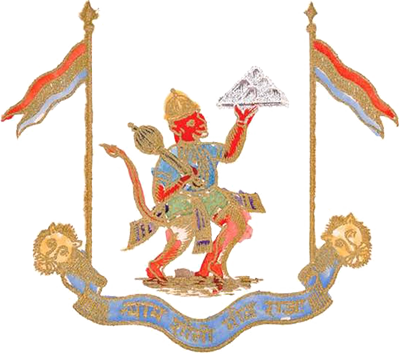
- The State Flag: The flag of Jaso was a traditional rectangular swallow-tailed banner (Panchranga or dual-color variants), prominently featuring saffron (representing valor and sacrifice) and green.
- Coat of Arms: The state coat of arms featured a shield supported by two tigers, symbolizing courage and power. The shield contained a representations of traditional weapons, including the Bundela dagger (Katar) and a shield, showcasing their military ancestry.
- Motto: The state's motto emphasized loyalty, righteousness, and the protection of the realm under the divine grace of their tutelary deities.
Biographical listings and brief genealogical notes of the ruling family during the late British Raj can be found in Sir Roper Lethbridge's The Golden Book of India.
Post-Independence Integration and Modern Era
Upon the departure of the British from India in August 1947, the last ruling chief of Jaso, Raja Radha Charan Singh, signed the Instrument of Accession to merge the state with the Dominion of India. On April 4, 1948, Jaso formally integrated into the newly formed United State of Vindhya Pradesh.
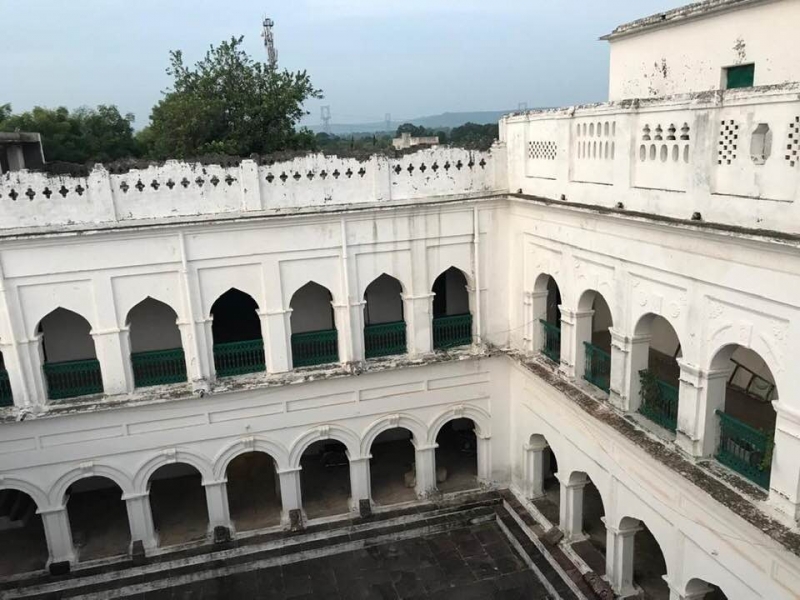
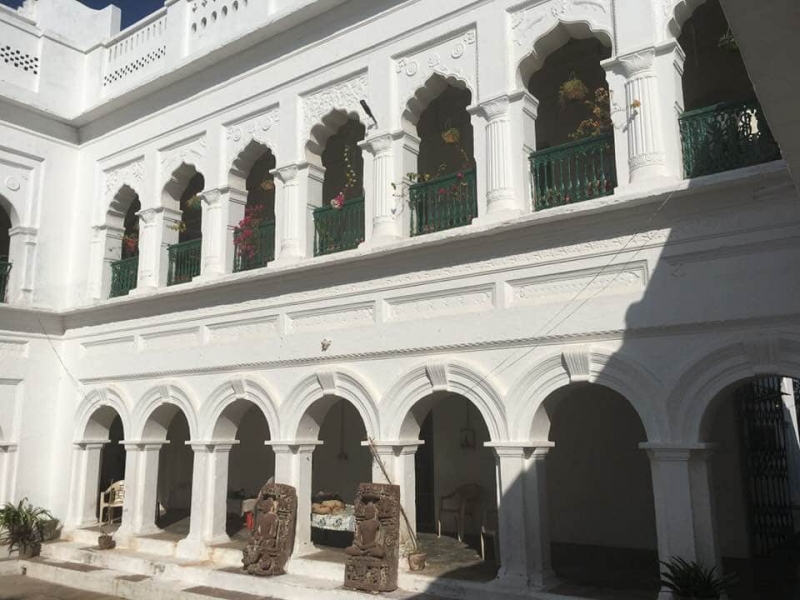
In 1956, following the States Reorganisation Act, Vindhya Pradesh was dissolved, and Jaso became a part of the unified state of Madhya Pradesh. Today, Jaso is a historical town located within the Satna district of Madhya Pradesh. The descendants of the royal family continue to command respect among the local populace, preserving their cultural heritage, traditional festivals, and historical monuments, including the ancient Jaso Fort and local temples.
Genealogy
- Dewan BHARTI CHAND, 1st Dewan Sahib of Jaso 1732/1750, brother of Raja Hirdesah of Panna, married and had issue, two sons. He died .
- Dewan Hari Singh (qv)
- Kunwar Durjan Singh, received the estate of Baghaura, married and had issue.
- Kunwar Medini Singh, died sp, whereupon Bhagaura reverted to Dewan Chet Singh.
- Dewan HARI SINGH, 2nd Dewan Sahib of Jaso 1750/1775, married and had issue.
- Dewan Chet Singh (qv)
- Dewan CHET SINGH, 3rd Dewan Sahib of Jaso 1775/1786, married and had issue.
- Dewan Murat Singh (qv)
- generations
- Kunwar Shatrujit Singh, adopted by Dewan Ram Singh and succeeded as Dewan Shatrujit Singh of Jaso (see below)
- Dewan MURAT SINGH, 4th Dewan Sahib of Jaso 1786/1830, married and had issue.
- Dewan Ishwari Singh (qv)
- Dewan ISHWARI SINGH, 5th Dewan Sahib of Jaso 1830/1860, married and had issue. He died .
- Dewan Ram Singh (qv)
- Dewan RAM SINGH, 6th Dewan Sahib of Jaso 1860/1865, died sp in 1865.
- Dewan SHATRUJIT SINGH, 7th Dewan Sahib of Jaso 1865/1869, adoptive son and descendant of Dewan Chet Singh, married and had issue.
- Dewan Gopal Singh (qv)
- Dewan GOPAL SINGH, 8th Dewan Sahib of Jaso 1869/1888 , married and had issue.
- Dewan Gajraj Singh (qv)
- Dewan GAJRAJ SINGH, 9th Dewan Sahib of Jaso 1888/1905, married and had issue.
- Dewan Girwar Singh (qv)
- Dewan GIRWAR SINGH, 10th Dewan Sahib of Jaso 1905/1915, educated at Daly College, Indore;
- Dewan RAM PRATAP SINGH, 11th Dewan Sahib of Jaso 1915/1942, born , succeeded 21st November 1918; married 1stly, 1928, a daughter of Jangre Raja Raghuraj Singh of Isanagar in Kheri District of Oudh, she died , married 2ndly, Rani Sidheshwari Devi, and had issue, two sons.
- Kunwar (name unknown) (by 1st marriage), born , died .
- Dewan Anand Pratap Singh (qv)
- Col. Thakur Bhanu Pratap Singh, died , married Thakurani Bhuvan Kumari, daughter of Raja Chaturpal Singh of Kotla, and his wife, Rani Janki Kumari, and has issue.
- Kunwar Aditya Pratap Singh, married Kunwarani Shrutikirti Kumari, daughter of Maharaj Ranti Dev Singhji of Nagod, and his wife, Rani Rama Rajya Laxmi, and has issue, one daughter.
- Baisa Meenakshi Kumari
- Dewan ANAND PRATAP SINGH, 12th Dewan Sahib of Jaso, married to Hem Lata Devi of Amargarh State in Uttar Pradesh and has issues, 3 sons. He died on .
- Kunwar Harsh Pratap Singh (qv)
- Kunwar Dinesh Pratap Singh, married to Jaya Singh and has issue.
- Kunwar Jayesh Pratap Singh
- Kunwar Yash Pratap Singh, married Kunwarani Manisha Singh, daughter of Rao Aditya Pratap Sahi of Deara of Deara Estate in Uttar Pradesh, and his wife, Rani Karuna Sahi of Badnore Thikana in Rajasthan, and has issue, one daughter.
- Baisa Shivranjani Kumari
- Dewan HARSH PRATAP SINGH, 13th Dewan Sahib of Jaso (see above)