Present Head
- Tikka Praduman Singh, born in Calcutta.
History
The Origin and Foundation of Guler State
Guler State, nestled in the Shivalik hills of the lower Himalayas in modern-day Himachal Pradesh, holds a legendary status among the Rajput hill states. Founded in 1415 CE by Raja Hari Chand, Guler was established as an offshoot of the ancient Katoch dynasty of Kangra. According to local historical chronicles, the birth of Guler was the result of a remarkable twist of fate. While on a hunting expedition, Raja Hari Chand of Kangra accidentally fell into a deep, dry well. After several days of unsuccessful searches, his retinue presumed him dead. Consequently, his younger brother, Karam Chand, was coronated as the ruler of Kangra, and the Raja's queens performed the rite of Sati.
When Hari Chand was eventually rescued by a passing merchant, he refused to reclaim the Kangra throne to avoid a fratricidal conflict. Instead, he chose to carve out a new principality for himself. He selected a strategic site at the confluence of the Banganga and Beas rivers, building the formidable Haripur Fort and establishing his capital at Haripur. This new state came to be known as Guler (derived from Gwala, meaning cowherd, in honor of a local cowherd who pointed out the auspicious site for the fort). As the senior branch of the Katoch lineage, the Rajas of Guler historically held ceremonial precedence over the rulers of Kangra.
Mughal Alliance and Military Distinction
During the medieval era, Guler maintained active political relations with the Mughal Empire. Unlike several other hill states that constantly rebelled against Mughal authority, Guler often aligned with Delhi to safeguard its sovereignty. Under the reign of Raja Rup Chand (r. 1610–1635), Guler's military prowess reached its peak. Rup Chand became a trusted military commander under Emperor Jahangir and later Shah Jahan. He led crucial imperial campaigns in the Deccan and the northern hills, earning the title of Bahadur and being awarded valuable jagirs.
Subsequent rulers, such as Raja Man Singh (r. 1635–1661) and Raja Raj Singh (r. 1675–1695), continued this tradition of military service. Raja Man Singh was nicknamed "Bakhat Bali" by the Mughals due to his immense physical strength and successful campaigns in the rugged terrains of the northwest frontier. This period of Mughal collaboration brought wealth, political stability, and administrative sophistication to Guler, setting the stage for its subsequent cultural golden age.
The Cultural Zenith: Cradle of Pahari Painting
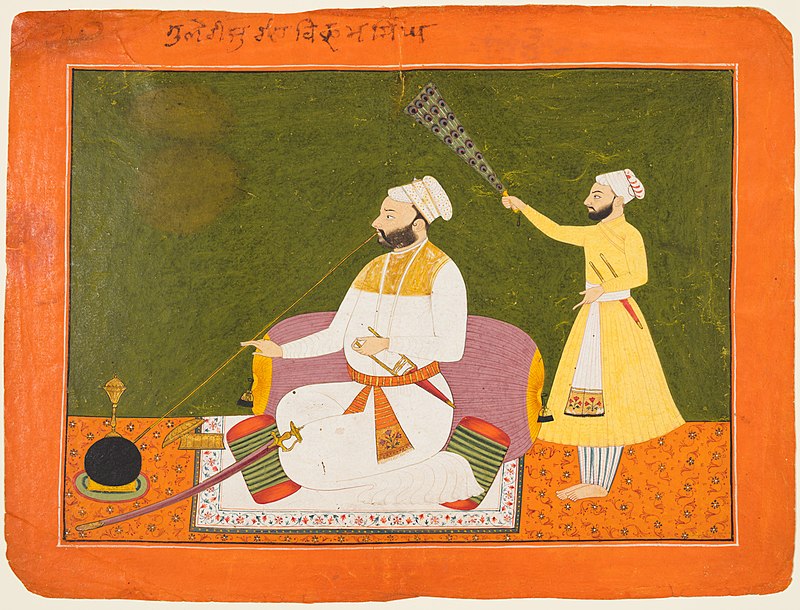
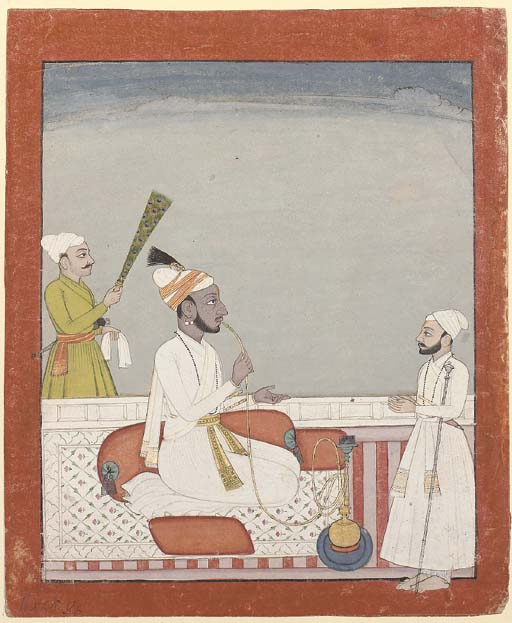
Guler's most enduring legacy is its monumental contribution to Indian art. In the 18th century, under the patronages of Raja Dalip Singh (r. 1695–1741) and Raja Govardhan Chand (r. 1741–1773), Guler became the cradle of the famous Guler School of Painting, which is the progenitor of the broader Pahari Miniature Painting tradition.
Following the decline of the Mughal court in Delhi, several highly skilled artists migrated to the peaceful hill states. Guler welcomed these master craftsmen, most notably Pandit Seu and his brilliant sons, Manaku and Nainsukh. Under Govardhan Chand’s enlightened patronage, the stiff, formal Mughal style merged with local folklore, Vaishnavite poetry, and the natural beauty of the hills. This fusion gave birth to an art form characterized by delicate draftsmanship, soft pastel colors, lyrical naturalism, and exquisite depictions of feminine grace. This stylistic evolution directly influenced the later, globally acclaimed Kangra school of painting.
Sikh Suzerainty and British Annexation
The late 18th and early 19th centuries brought geopolitical turmoil to the Punjab hills. The rise of the Sikh Empire under Maharaja Ranjit Singh and the expansion of the Gurkha Empire from Nepal disrupted Guler's peace. During the Gurkha invasion of Kangra (1805–1809), Guler suffered severe economic devastation.
In 1813, Maharaja Ranjit Singh set his sights on the complete integration of the hill states into his empire. The Sikh forces, led by Dewan Mokham Chand, marched into Guler. Raja Bhup Singh (r. 1790–1826) was summoned to Amritsar, where he was pressured into surrendering his sovereign rights. Guler was formally annexed into the Sikh Empire in 1813, and the royal family was granted a small jagir for sustenance, reducing the sovereign state to a fiefdom.
Following the defeat of the Sikh Empire in the First Anglo-Sikh War (1845–1846), Guler passed under the control of the British East India Company under the terms of the Treaty of Lahore. Raja Shamsher Singh (r. 1826–1877) supported the British during the second Anglo-Sikh War in hopes of restoring his ancestral kingdom, but the British opted to retain direct administrative control, confirming only the family's jagir rights and title of Raja.
Heraldry, Emblem, and State Flag
The heraldry of Guler reflected its royal Katoch ancestry and military heritage. The state flag was a traditional triangular or rectangular pennon, predominantly saffron (sacred Rajput color) or red, symbolizing sacrifice, courage, and devotion.
The state's coat of arms featured a shield supported by two royal falcons (representing the Shahin or hunting birds favored by the hill Rajas). At the crest of the arms was the image of the family deity, representing Durga or Jawalamukhi, whose blessings the Katoch clan invoked before battle. The motto of the house emphasized honor, duty, and steadfastness in the face of adversity.
Post-Independence and the Modern Era
Following India's independence in 1947, Raja Baldev Singh, the last titular ruler of Guler, signed the Instrument of Accession, merging the historical state into the Union of India on April 15, 1948. It was initially integrated into the newly formed province of Himachal Pradesh.
The mid-20th century brought a poignant transformation to Guler. In the 1970s, the construction of the Pong Dam (Maharana Pratap Sagar) on the Beas River caused the submergence of vast tracts of the historic Guler state, including parts of the ancient capital, Haripur, and its fertile agricultural lands. Today, during the dry winter months, the ruins of ancient temples, stepwells, and structures emerge from the receding waters of the reservoir, standing as silent, haunting monuments to Guler's glorious past.
The descendants of the Guler royal family continue to preserve their rich cultural heritage. The surviving portions of the Haripur Fort, along with Guler's exquisite miniature paintings preserved in museums worldwide—including the National Museum in New Delhi and the Victoria and Albert Museum in London—continue to attract historians, art lovers, and tourists from across the globe.
Historical References and Citations
- For an exhaustive history of the ruling family and its political shifts, see J. Hutchison and J. Ph. Vogel's seminal work, History of the Panjab Hill States, available on the Internet Archive.
- To explore Guler's pioneering role in Pahari art, consult B.N. Goswamy's groundbreaking research on the master artist Nainsukh at Google Books.
- Detailed geographical and administrative records of the Haripur-Guler region can be referenced through the Imperial Gazetteer of India (Digital South Asia Library).
Genealogy
- Raja HARI CHAND, 1st Raja of Guler 1415/-, he was originally the Raja of Kangra to 1415, but whilst hunting one day, he fell into a dry well, and was presumed dead, his brother was then named Raja of Kangra; he was eventually discovered, but rather than fight over his rights, he founded the town of Haripur on the flat below the fort, on the Banganga River; married and had issue.
- Raja BHAUN CHAND, 2nd Raja of Guler
- Raja SUVARN CHAND, 3rd Raja of Guler
- Raja UDHYAN CHAND, 4th Raja of Guler
- Raja NARINDAR CHAND, 5th Raja of Guler
- Raja UDHARN CHAND, 6th Raja of Guler
- Raja RATAN CHAND, 7th Raja of Guler
- Raja NAND CHAND, 8th Raja of Guler
- Raja GARUDA CHAND, 9th Raja of Guler
- Raja GAMBHIR CHAND, 10th Raja of Guler
- Raja ABHAYA CHAND, 11th Raja of Guler
- Raja UTTAM CHAND, 12th Raja of Guler
- Raja PRITHVI CHAND, 13th Raja of Guler
- Raja KARAN CHAND, 14th Raja of Guler
- Raja RAM CHAND, 15th Raja of Guler, married and had issue. fl.1540
- Raja Jagdish Chand (qv)
- Raja JAGDISH CHAND, 16th Raja of Guler 1570/1605, married and had issue.
- Raja Vijaya Chand (qv)
- Raja Rup Chand Bahadur (qv)
- Raja VIJAYA CHAND, 17th Raja of Guler 1605/1610
- Raja RUP CHAND Bahadur, 18th Raja of Guler 1610/1635, he was granted the title of Bahadur by the Mughal Emperor Jahangir, as well as a khilat, married and had issue. He died .
- Raja Man Singh (qv)
- Raja MAN SINGH, 19th Raja of Guler 1635/1660 (abdicated), first to use Singh as a family name, conferred on him by the Mughal Emperor, built the fort of Mangarh, married (amongst others), Rani Kalyan Devi, and had issue. He died at Benares.
- Raja Bikram Singh (qv)
- Mian Gopal Singh, Wazir of Guler, married and had issue.
- Mian (name unknown), married and had issue.
- Mian (name unknown), married and had issue.
- Mian Dhian Singh, Wazir of Guler, he established his own state of Kotla in 1785.
- Mian Kishan Singh, he succeeded his brother in Kotla.
- Gulab Singh
- Mallu Singh
- Sunder Singh, served as Captain in British Army.
- Karan Bhadhur Singh (Colonel in Indian Army)
- Rameshwar Singh (Ex Sarpanch of Mirthal)
- Charanjeet Singh
- Inder Singh, served as Captain in British Army, married Rattan Devi Mankotia had issues, four sons.
- Baldev Singh, well known Political figure of his time, married to Bholan Devi and had issues, three sons.
- Kewal Singh
- Saroop Singh, Hon. Captain in Indian Army
- Anoop Singh
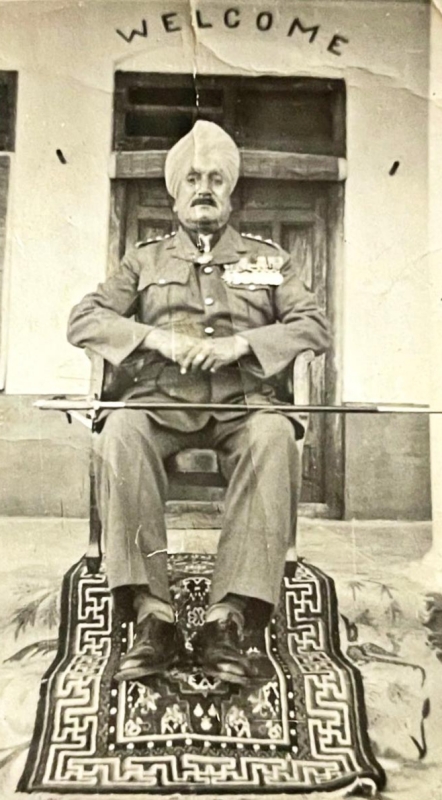
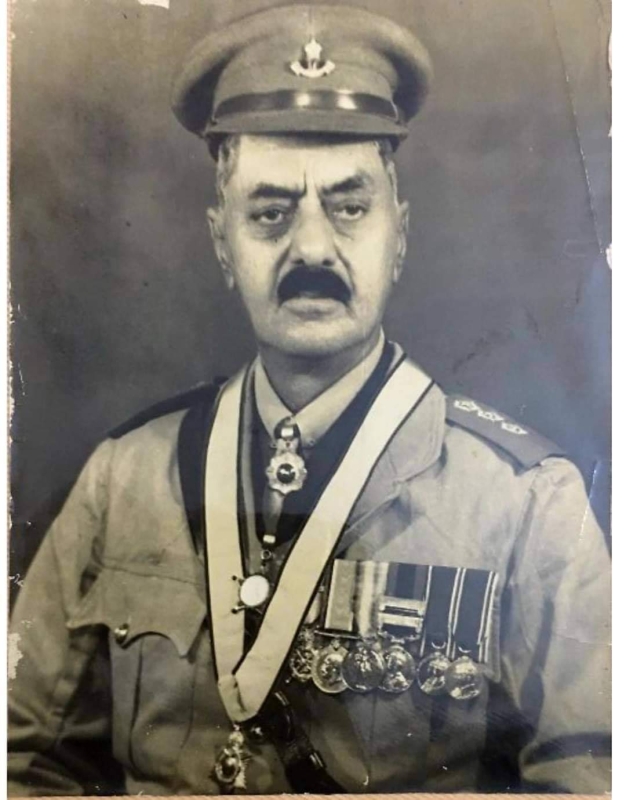
- Kanwar Yudhvir Singh, British Army officer and later well known political figure in District Gurdaspur, married to Shushila Kumari and had issues, three sons.
- Kunwar Brijmohan Singh, Ex. Sarpanch and Zilla Parishad Member of Mukerian constituency, married to Uma Sambyal and has issues, one son and a daughter.
- Jung Bhadhur Singh, married to Suman Soharu.
- Meenakshi Guleria, married to Dr Deepek Minhas.
- Kunwar Vijay Singh, married to Beeloma Pathania of Nagrota Bhagwan and has issues, one son and a daughter.
- Daneshwar Singh, Engineer in Australia, married to Isha Guleria
- Kunwar Beraj Singh
- Bharti Singh Guleria, married to Aman Singh Rana
- Daneshwar Singh, Engineer in Australia, married to Isha Guleria
- Jagmohan Singh, Colonel in Indian Army, married to Anita Soharu, daughter of Mr KS Soharu of Hamirpur and has issues, one son and a daughter.
- Yashvardhan Singh
- Sanshrita Guleria
- Kunwar Brijmohan Singh, Ex. Sarpanch and Zilla Parishad Member of Mukerian constituency, married to Uma Sambyal and has issues, one son and a daughter.
- Kanwar Balbir Singh
- Krishn Singh, Senior Engineer in HP Electricity Board.
- Baldev Singh, well known Political figure of his time, married to Bholan Devi and had issues, three sons.
- Sunder Singh, served as Captain in British Army.
- Mallu Singh
- Gulab Singh
- Mian (name unknown), married and had issue.
- Mian (name unknown), married and had issue.
- Raja BIKRAM SINGH, 20th Raja of Guler 1660/1675, Emperor Aurangzeb conferred a mansab of 2500, with valuable khilats and made him Thanadar of the Kangra Hills, married Rani Shyam Devi, and had issue. He died at Chauntra.
- Raja Raj Singh (qv)
- Raja RAJ SINGH, 21st Raja of Guler 1675/1695, married Rani Bilas Devi, Regent of Guler 1695/1705, and had issue. He died .
- Raja Dalip Singh (qv)
- Raja DALIP SINGH, 22nd Raja of Guler 1695/1741, born , married 1stly, Rani (name unknown), married 2ndly, Rani Kalyan Devi, and had issue. He died .
- Mian Bishan Singh (by 1st Rani)
- Mian Mahipat Singh (by 1st Rani)
- Raja Govardhan Singh (by Rani Kalyan Devi)(qv)
- Mian Basant Singh (by Rani Kalyan Devi)
- Kumari (name unknown) (by Rani Kalyan Devi), married Raja Medini Pal of Basohli, and had issue.
- Raja GOVARDHAN CHAND, 23rd Raja of Guler 1741/1773, born , Regent of Guler 1730/1741; married (amongst others), a daughter of Raja Dhiraj Pal of Basohli, and had issue. He died .
- Raja Prakash Chand (qv)
- Mian Prakaram Chand, married and had issue.
- Mian Jagat Chand, married and had issue.
- Mian Badan Chand, married and had issue.
- Mian Ram Singh, married and had issue.
- Kanwar Mohar Singh
- Mian Jawahar Singh, married and had issue.
- Kanwar Purab Singh, married and had issue.
- Kanwar Bhagwan Singh
- Kanwar Jodh Singh
- Kanwar Budhi Singh
- Kanwar Purab Singh, married and had issue.
- Mian Ram Singh, married and had issue.
- Mian Badan Chand, married and had issue.
- Mian Devi Chand
- Mian Jagat Chand, married and had issue.
- Raja PRAKASH CHAND, 24th Raja of Guler 1773/1790 (abdicated), born , married 1stly, Rani Ananta Devi, daughter of Raja Umed Singh of Chamba, married 2ndly, a daughter of Raja Shamsher Singh of Mandi, and had issue. He died .
- Raja Bhup Singh (by Rani Ananta Devi) (qv)
- Raja BHUP SINGH, 25th and last Sovereign Raja of Guler 1790/1826, born , last ruling Chief of Guler, the state was annexed in 1813, he was granted 20,000Rs for the maintenance of his female household, married 12 Ranis, including a daughter of Rana Bhup Chand of Baghal, and had issue. He died .
- Raja Shamsher Singh (qv)
- Raja Jai Singh (qv)
- Raja SHAMSHER SINGH, 26th Raja of Guler 1826/1877, born , he received the fort of Haripur, married and had issue. He died spm in 1877 without male heirs and the state lapsed.
- Kumari (name unknown), married Raja Gopal Singh of Chamba, and had issue.
- Raja JAI SINGH, 27th Raja of Guler 1878/1884, born , he was allowed to succeed after a year and was also granted the title of Raja, as a Hereditary distinction on 28th February 1878; married a daughter of Rai Ratan Chand of Babhaur, and had issue. He died .
- Raja Raghunath Singh (by the Babhaur Rani) (qv)
- Kunwar Hardit Singh, born , married and had issue. He died .
- Kunwar Bhagwant Singh, born , married Kunwarani Chandrika Kumari, daughter of Kanwar Rudra Singh of Koti, and had issue,
- Kunwar Ramesh Chand Guleria
- Kunwar Suresh Chand Guleria
- Kunwar Mahesh Chand Guleria
- Kunwar Dhanesh Chand Guleria
- Kunwar Jagroop Chand Guleria
- Kunwar Ajit Singh, born , married and had issue.
- Kunwar Nagendra Singh
- Kunwar Bajrendra Singh
- Kunwar Shailendra Singh
- Kunwar Girender Singh
- Kunwar Bhagwant Singh, born , married Kunwarani Chandrika Kumari, daughter of Kanwar Rudra Singh of Koti, and had issue,
- Kumari (name unknown), married Raja Bijai Sen of Mandi.
- Kumari (name unknown), married (as his first wife) 1900, Raja Bijey Sen of Keonthal, and had issue.
- Kumari (name unknown), married (as his second wife) 1900, Raja Bijey Sen of Keonthal, and had issue. (cf. below)
- Raja RAGHUNATH SINGH, 28th Raja of Guler 1884/1920, born (or 1860), the title of Raja was conferred as a hereditary distinction on 15th March 1909 by the Viceroy, married and had issue. He died .
- Raja Baldev Chand (qv)
- Kumari (name unknown) [Rani Guleriya of Tehri-Garhwal], married Raja Pratap Shah of Tehri-Garhwal, and had issue.
- Kumari (name unknown), married (as his second wife) 1900, Raja Bijey Sen of Keonthal. She died sp. (cf. above)
- Kumari (name unknown), married Mian Shiv Singh of Bilaspur, and had issue, one daughter.
- Raja BALDEV CHAND, 29th Raja of Guler 1920/1959, born , 1st Viceregal Darbari in Kangra District, exercises criminal and civil powers within his jagir; married the daughter of Raja Pratap Shah of Tehri-Garhwal, and had issue. He died .
- Tikka Shri Nardev Chand, born , married Tikka Rani Sanyukta Kumari, and had issue. He died vp in 1958.
- Raja Shri Brijesh Chand (qv)
- Rajkumari Ravinder Kumari, married Kunwar Sujan Singh, and has issue.
- Rajkumari Pradeep Kumari, married Kunwar Surjeet Singh, and has issue.
- Tikka Shri Nardev Chand, born , married Tikka Rani Sanyukta Kumari, and had issue. He died vp in 1958.
- Raja Shri BRIJESH CHAND, 30th Raja of Guler (see above)
- Mian Ajab Singh of Guler, married and had issue.
- Kumari (name unknown), married (as his second wife), Raja Pradyuman Shah of Garhwal.
- Mian Ranjit Singh Guleria of Poprola, married and had issue.
- HH Maharani Harbans Kaur, married 16th April 1886 (as his first wife), Col. HH Farzand i-Dilband Rasikhul-Itiqad Daulat-i-Inglishia Raja-i-Rajgan Maharaja Sir Jagatjit Singhji Bahadur of Kapurthala, and had issue.
- Kumari (name unknown) [Rani Guleriya of Suket], married Raja Ranjit Sen of Suket, and had issue.
- Kanwarani Madhvi Kumari, married (as his first wife), Kanwar Baldev Singh of Sirmur.
- Kumari (name unknown), sister of Mian Kishen Singh of Guler, married (as his fourth wife), Raja Bijai Sen, Raja of Mandi.
- Kumari Sonia Kumari, married Rajkumar Devinder Singh of Jaswan, and has issue.
- Balvinder Singh Guleria, married Kumari Anjana, daughter of Kunwar Sohan Singh of Nadaun, and his wife, Kunwarani Durga Devi, and has issue.
- Sardar Bahadur Captain Inder Singh Guleria, married at Sidhpur Ghar (Bharmad) near Jawali with Rattan Devi of Mankotia family.
- Kunwar Baldev Singh Guleria
- Kunwar Yudhvir Singh Guleria, married, Kunwarani Sushila Kumari of Mirthal, and has issue.
- Kunwarani Chitter Rekha Kumari, married 5th December 1981 at Mukerian, Punjab, Kunwar Kiran Dev Pal Singh Chauhan, born at Agra, M.A. (English, Honours), currently holding the office of Assistant Excise and Taxation Commissioner, Department of Excise and Taxation, Government of Himachal Pradesh, and has issue (see Nadaun).
- Kunwar Balbir Singh Guleria
- Kunwar Kishan Singh Guleria