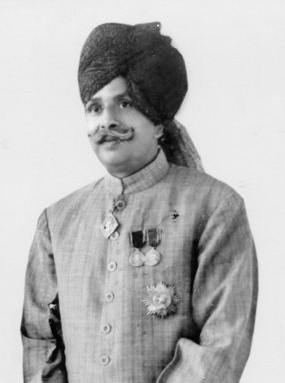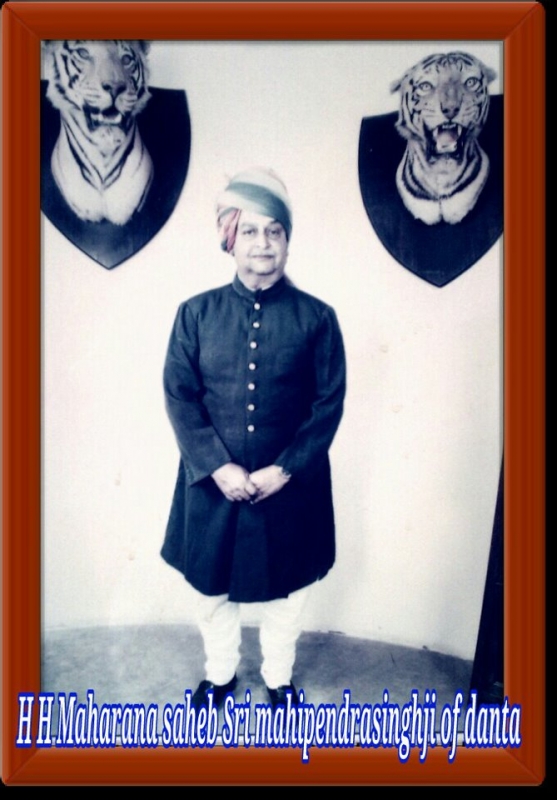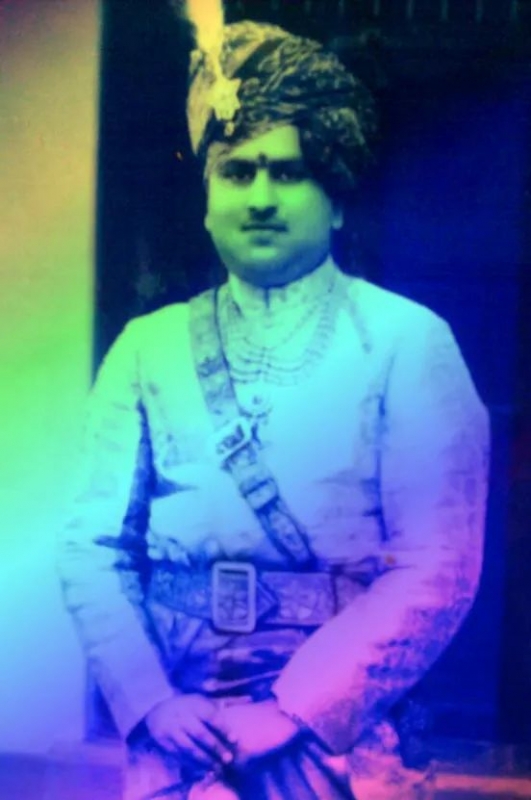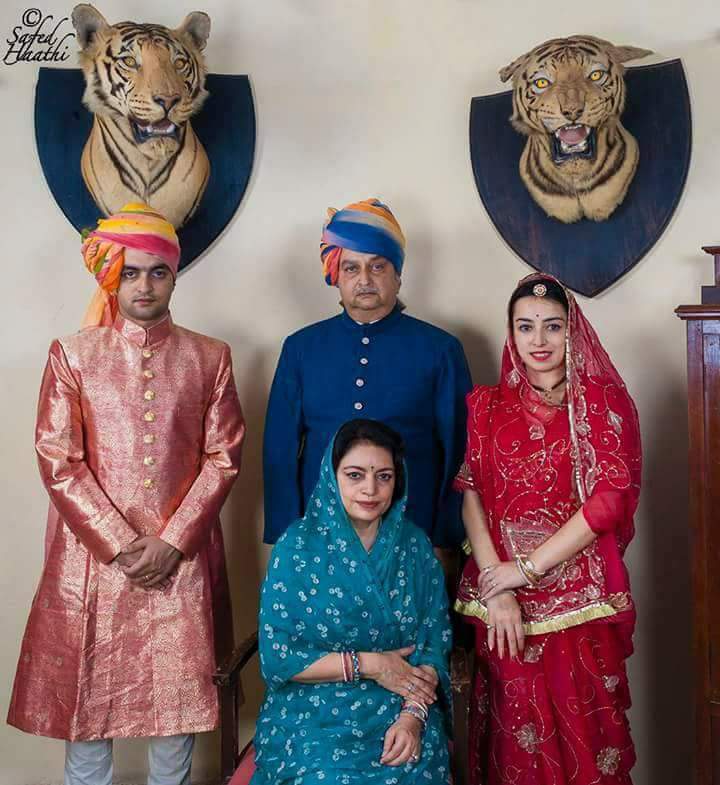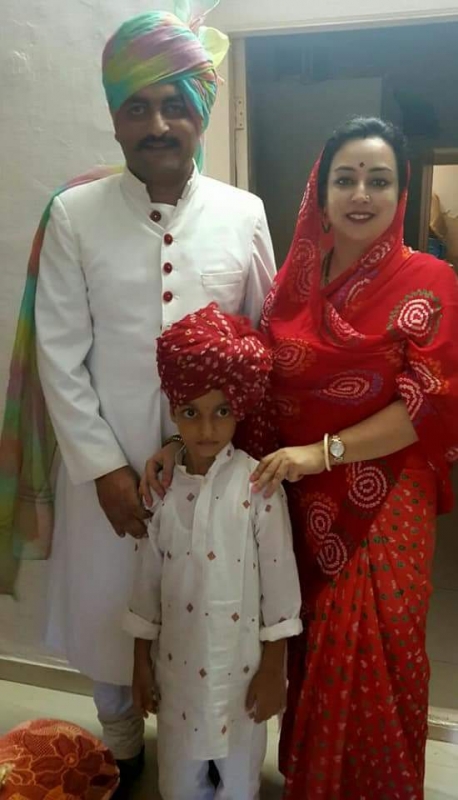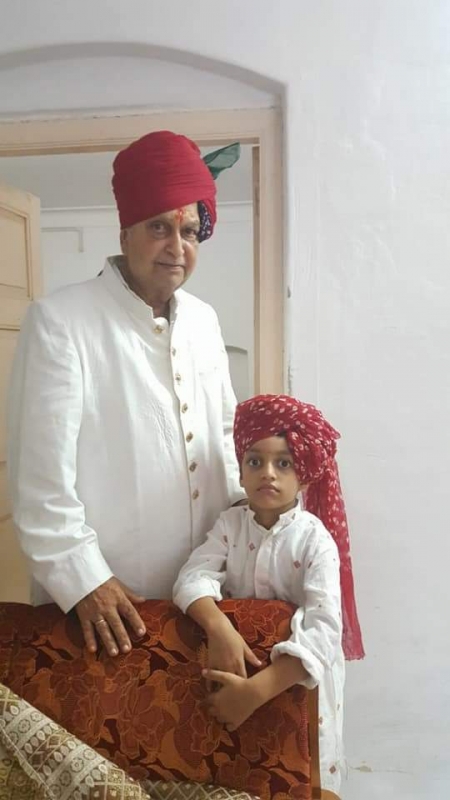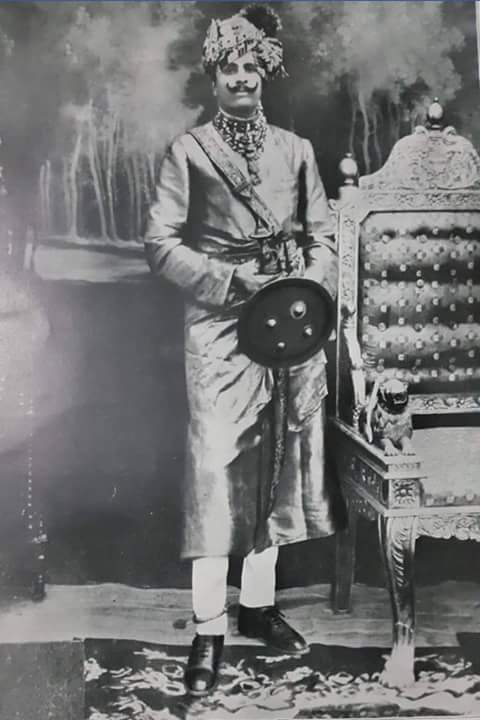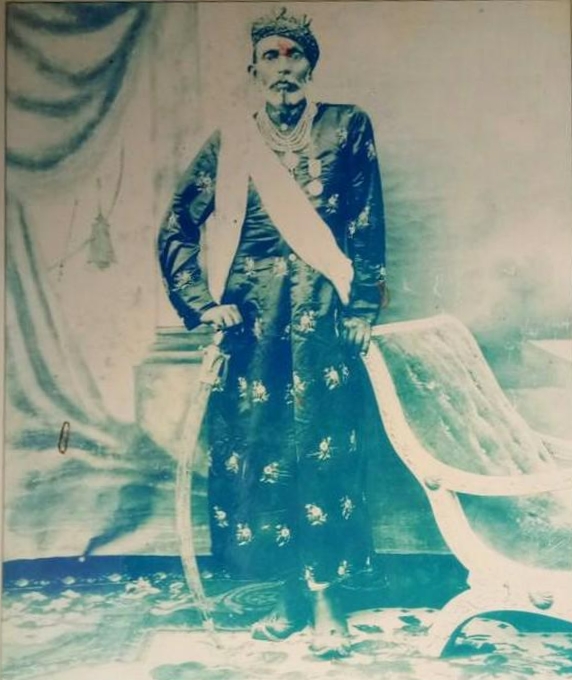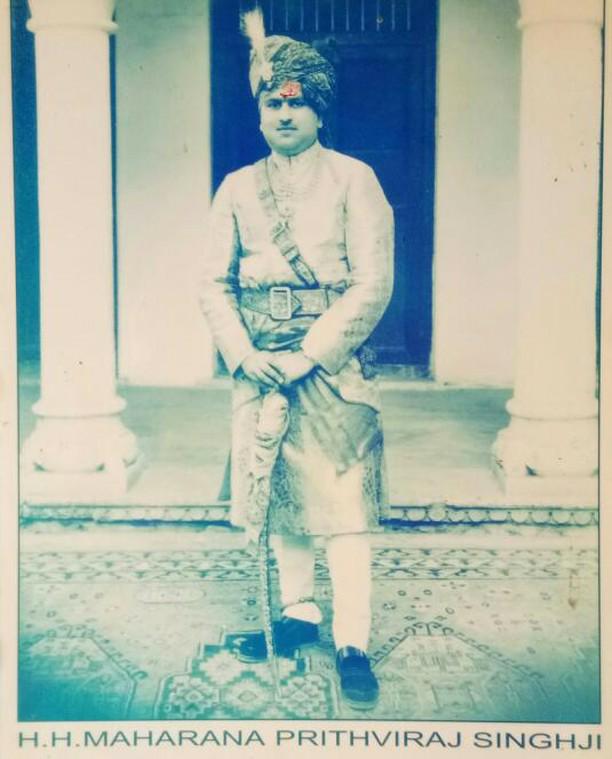

Present Head
History
Introduction and Geographical Context
Danta State was a prominent second-class princely state situated in the Mahi Kantha Agency of the Bombay Presidency during the British Raj. Located in the rugged, mountainous terrain of North-Eastern Gujarat, east of Palanpur, the state was characterized by its dense forests and the sacred Arasur hills. Historically, Danta maintained a unique geopolitical position, frequently navigating alliances and disputes with its larger neighbors, Palanpur and Idar. The state paid an annual tribute of 3,983 Rupees, which was settled through British mediation to resolve overlapping claims by neighboring powers. According to military records from 1893, the Maharana of Danta maintained a disciplined localized military force consisting of 70 cavalry and 67 infantry to safeguard its borders and maintain internal security.
Origin and Royal Lineage
The ruling family of Danta belonged to the ancient Barad (Parmar) clan of Rajputs, claiming direct patrilineal descent from the legendary Emperor Vikramaditya of Ujjain. Following the fall of the Paramara Empire of Malwa, a branch of the clan migrated westward and established themselves at Chandravati, an ancient city near Mount Abu. Around 1061 AD (some sources cite 1068 AD), Rana Jaspalji (also known as Jasraj) established the foundation of the dynasty's independent territory in the rugged tracts of Arasur. The capital was eventually shifted to Danta in the 15th century by Maharana Mandanji, providing a more defensible stronghold deep within the Aravalli foothills.
The Sacred Bond with Ambaji and Medieval Struggles
The history of Danta is indissolubly linked to the highly revered shrine of Arasuri Ambaji Mata Temple, one of the 51 sacred Shakti Peethas of Hinduism. The Maharanas of Danta served as the hereditary patrons and guardians of this ancient temple. According to local folklore, the goddess Amba herself presented a divine sword to the early rulers of Danta, which was worshipped as a state regalia.
During the medieval era, the state faced persistent incursions from the Gujarat Sultanate and later the Mughal Empire. Despite these pressures, the difficult mountainous terrain and the guerrilla warfare tactics employed by the Parmar Rajputs enabled Danta to retain a high degree of autonomy. During the decline of the Mughal Empire, the Maratha Empire, led by the Gaekwads of Baroda, levied heavy tributes (ghasdana) on the region, forcing Danta into financial strain and political instability.
The British Period and Administrative Reforms
To secure protection from the predatory raids of the Marathas and neighboring chieftains, Danta entered into a treaty of subsidiary alliance with the British East India Company in 1820 under the supervision of the Mahi Kantha Agency. The British stabilized the borders and regulated the tribute payments to Palanpur and Idar. Detailed administrative accounts of this era can be found in the Imperial Gazetteer of India (Volume 11).
Under British suzerainty, Danta transitioned into a period of modernization. Key reformers among the rulers included:
- Maharana Jaswantsinhji (1876–1908): He initiated primary education, constructed public dispensaries, and developed road connectivity through the difficult mountain passes to facilitate trade and pilgrimage to the Ambaji temple.
- Maharana Hamirsinhji II (1908–1925): He focused on forest conservation, revenue reforms, and streamlined the judicial system by establishing regular courts of law.
- Maharana Bhavanisinghji (1925–1948): An enlightened ruler who constructed the magnificent Bhavani Villa Palace. He championed the cause of free primary education, rural electrification, and established cooperative societies to assist local farmers.
Heraldry and State Flag
The heraldic emblems of Danta reflected its deep religious devotion and martial heritage:
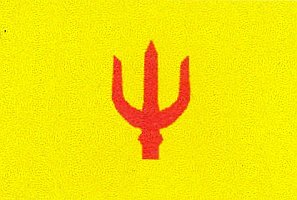
- The State Flag: A rectangular saffron (bhagwa) banner, symbolizing spirituality, sacrifice, and Rajput sovereignty.
- The Coat of Arms: Features a shield supported by two Rajput warriors armed with swords and shields. The center of the shield depicts a Trishul (Trident), representing Goddess Amba, surmounted by a rising sun representing the Solar lineage of the Parmars. The state motto inscribed below translates to "Under the Protection of the Divine Mother".
Post-Independence and Modern Era
Following the partition of British India, Maharana Bhavanisinghji signed the Instrument of Accession to the Dominion of India on 15 August 1947. The state was formally merged into the Bombay Province on 10 June 1948, which was later reorganized under the States Reorganisation Act. Today, the territory of Danta forms a vital part of the Banaskantha district in the state of Gujarat.
The royal family of Danta continues to maintain their historic ties with the Ambaji Temple trust and works actively in preserving the heritage of the region. The grand Bhavani Villa Palace remains a prominent landmark, partially converted into a heritage homestay that promotes eco-tourism and cultural preservation in North Gujarat. For further historical reading on the region's princely states, researchers can refer to the archival resources at Internet Archive.
Genealogy
- Rana Shri JASRAJI, 1st Rana Shri of Danta 1068/1069
- Rana Shri KEDARSINHJI, 2nd Rana Shri of Danta 1069/-
- Rana Shri JASPALJI, 3rd Rana Shri of Danta
- Unknown number of Ranas
- Rana Shri JAGATPALJI, Rana Shri of Danta 1395/1445
- Rana Shri ASKARANJI, 1st Mahrana Shri of Danta 1445/-, he received the title of Maharana from Imperial Delhi in 1445.
- Mahrana Shri VAGHJI, 2nd Mahrana Shri of Danta -/1544
- Mahrana Shri JETPALJI, 3rd Mahrana Shri of Danta 1544/ca1545
- Mahrana Shri JAIMALJI, Mahrana Shri of Danta ca1545/-
- Mahrana Shri PRATAPSINHJI, Mahrana Shri of Danta
- Mahrana Shri MANSINHJI I, Mahrana Shri of Danta for five years
- Mahrana Shri GAJSINHJI, Mahrana Shri of Danta -/1687
- Maharana Sri PRITHVISINHJI GAJSINHJI, Maharana of Danta 1687/1743
- Maharana Sri Vikramdeoji Prithvisinhji (qv)
- Udai Kunverba, married to Maharaja Anand Singhji of Idar.
- Maharana Sri VIKRAMDEOJI, Maharana of Danta in 1743
- Maharana Sri KARANSINHJI, Maharana of Danta 1743/-, married and had issue.
- Maharana Sri Ratansinhji Karansinhji (qv)
- Maharana Sri Abhaisinhji Karansinhji (qv)
- Suraj Kunverba, married to Maharaja Shiv Sinhji of Idar.
- Maharana Sri RATANSINHJI KARANSINHJI, Maharana of Danta for five years
- Maharana Sri ABHAISINHJI KARANSINHJI, Maharana of Danta -/1795, married and had issue.
- Maharana Sri Mansinhji Abhaisinhji (qv)
- Maharana Sri Jagatsinhji Abhaisinhji (qv)
- Maharana Sri Naharsinhji Abhaisinhji (qv)
- Maharana Sri MANSINHJI II ABHAISINHJI, Maharana of Danta 1795/1800
- Maharana Sri JAGATSINHJI ABHAISINHJI, Maharana of Danta 1800/1823
- Maharana Sri NAHARSINHJI ABHAISINHJI, Maharana of Danta 1823/1847, married and had issue.
- Maharana Shri Jhalamsinhji Naharsinhji (qv)
- Maharana Sri Harisinhji Naharsinhji (qv)
- Rani Daulat Kunwar, married 1834 (as his sixth wife), Maharao Shri Sheo Singhji of Sirohi, and had issue.
- Maharana Sri JHALAMSINHJI NAHARSINHJI, Maharana of Danta 1847/1859, married and had issue.
- Maharana Sri Sardarsinhji Jhalamsinhji (qv)
- Maharajkumari Guman Kumari [HH Maharani Guman Kunwar of Sirohi], married in May 1876 (as his first wife), HH Maharao Kesari Singhji Bahadur of Sirohi, and had issue. She died .
- Maharana Sri SARDARSINHJI JHALAMSINHJI, Maharana of Danta 1859/1860
- Maharana Sri HARISINHJI NAHARSINHJI, Maharana of Danta 1860/1876, born , married and had issue. He died .
- Maharana Sri Jashwantsinghji Harisinhji (qv)
- Maharana Sri JASHWANTSINHJI HARISINGHJI, Maharana of Danta 1876/1908, born , succeeded 1st December 1876, married and had issue. He died .
- HH Maharana Sri Hamirsingji Jashwantsinghji (qv)
- Maharajkumar Fatehsinghji Jashwantsinghji, married and had issue, three daughters.
- Maharaj Dalpatsinghji Jashwantsinghji, born , died on .
- Maharajkumari Fateh Kunverba, married as his second wife, HH Sri Raj-i-Rajan Maharawal Sir Prithvi Singhji Bahadur of Banswara, and had issue.
- HH Maharana Sri HAMIRSINHJI JASHWANTSINHJI, Maharana of Danta 1908/1925, born , succeeded 16th June 1908; married HH Maharani (name unknown) [later Rajmata Bhatianiji of Danta], born , died on , and had issue. He died .
- HH Maharana Sri Bhawanisinhji Hamirsinhji (qv)
- Anand Kunverba, married to Maharaj Vijay Singh of Mandal.
- HH Maharana Sri BHAWANISINHJI HAMIRSINHJI K.C.S.I., Maharana of Danta 1925/1948 (abdicated 30th January 1948), born and succeeded 20th November 1925; married 1stly, 1914, HH Maharani Vijay Kanwar, born , died sp in 1923, daughter of Maharaj Shri Mool Singhji of Raoti, Rao of Dattigaon, and his third wife, Rani Sundar Kanwar, married 2ndly, HH Maharani (name unknown), died spm in 1923, a daughter of Raja Bhagwant Raj Bahadur Singh, Raja of Sohawal in Bundelkhand, married 3rdly, HH Maharani Anand Kanwarji, a daughter of Kunwar Pratap Singh of Auwa in Jodhpur, and had issue, three sons and seven daughters. He died .
- HH Maharana Sri Prithvirajsinhji Bhawanisinhji Sahib Bahadur (qv)
- Maharajkumari Jitendra Kumari (by Maharani Baghelji Sahiba), born , married (as his first wife), 19th May 1937 at Danta, Raja Ram Singh of Khandela-Senior, and had issue. She died sp on 19th August 1944 at Danta.
- Rani Krishna Kumari (fourth daughter), married 1945, Raja Devi Singhji, Raja Sahib of Asope, and had issue, two sons and four daughters. She died .
- Maharajkumar Madhu Sudan Singh, born .
- Maharajkumar Raghubir Singh, born .
- Padam Kunverba, married to Kunvar Govind Sen of Pisangan in Ajmer.
- Shringar Kunverba, married to Rao Vijay Singh of Masuda in Ajmer.
- HH Maharana Sri PRITHVIRAJSINHJI BHAWANISINHJI Sahib Bahadur, Maharana of Danta 1948/1989, born , married 30th January 1948, HH Maharani Hemant Kumari (died on ), daughter of HH Rai-i-Rayan Maharawal Shri Sir Lakshman Singhji Bahadur of Dungarpur, and his second wife, HH Maharani Manhar Kunwar, and had issue. He died .
- HH Maharana Sri Mahipendra Singh (qv)
- Maharaj Ajay Raj Singh
- HH Maharana Sri MAHIPENDRA SINGH, present Maharana Saheb of Danta since the 10th of July 1989. (Bhavani Villa, Danta Bhawangad - 385120, Gujarat, India). Born in Bombay, married 6th March 1975 in Jaipur, HH Maharani Chandra Kumari, daughter of Yuvraj Surendra Pal Deo of Karauli, and his wife, Yuvrani Narendra Kumari, and has issue.
- HH Maharani Rituja Kumari Devi, born , married Maharajkumar Anant Pratap Deo, son of HH Maharaja Shri Udit Pratap Deo of Kalahandi, and his wife, HH Maharani Padma Manjari Devi, and has issue, one daughter.
- Maharajkumar Riddhiraj Singh (qv)
- HH Maharana Sri RIDDHIRAJ SINGH (see above)
Notable Figures
Maharana Jagat Singhji (Founder of Danta Capital)
Maharana Jagat Singhji was a pivotal early ruler of the Parmar dynasty of Danta, credited with establishing Danta as the permanent capital of the state in 1638 AD. Prior to this, the capital was located at Tarsang. The strategic relocation to Danta, nestled deep within the rugged and heavily forested Arasur hills, provided a formidable natural defense against the geopolitical pressures from the expanding Mughal Empire and neighboring Rajput clans.
Under his reign, the foundations of the modern Danta state were solidified. He consolidated territories surrounding the sacred Arasur hills and fostered critical alliances with the local tribal populations, particularly the Bhils, who served as loyal guardians of the state's mountain passes and formed an integral part of Danta's military defense. For more on the history of the region, see the Danta State Wikipedia Page.
Maharana Hari Singhji (c. 1843 – 1876)
Maharana Hari Singhji ascended the throne during a transitional period in western India, characterized by the growing administrative oversight of the British East India Company. Danta, classified under the Mahi Kantha Agency, required a ruler of astute diplomatic skill to maintain internal sovereignty while complying with colonial treaty obligations. Hari Singhji successfully navigated these challenges, ensuring stability and peace in a region historically prone to border conflicts.
His administration focused heavily on settling long-standing boundary disputes with the neighboring states of Sirohi and Idar. By encouraging trade and securing pilgrimage routes, he helped stabilize the state's economy, which had been severely strained by previous decades of military unrest.
Maharana Jaswant Singhji (1876 – 1908)
Maharana Jaswant Singhji succeeded Hari Singhji in 1876 and is remembered as a deeply pious and benevolent administrator. He was a devout patron of the famous Ambaji Temple, one of the primary Shakti Peethas of India, which lay within the territory of Danta State. Under his patronage, the temple saw increased administrative organization, and pilgrim security was significantly enhanced, which boosted both the state's prestige and its treasury.
During his long and peaceful reign, Jaswant Singhji introduced several progressive reforms. He modernized the judicial apparatus of the state, established the first formal schools, and opened public dispensaries. He also oversaw the construction of improved cart roads connecting the remote hilly terrain of Danta with the wider plains of Gujarat, greatly facilitating commerce.
Maharana Hamir Singhji II (1908 – 1925)
Maharana Hamir Singhji II ascended the gadi in 1908. His reign was marked by efforts to combat the economic setbacks caused by regional droughts and famines in western India. He prioritized agricultural development by initiating land reclamation projects, digging new wells, and providing subsidised grain and relief to the agrarian and tribal communities of his domain.
He maintained a highly cooperative relationship with the British political agents while staunchly defending the internal autonomy of Danta. Hamir Singhji II placed a strong emphasis on primary education, particularly for the rural and tribal populations, establishing several vernacular schools across the state during his tenure.
Maharana Sir Bhawani Singhji Bahadur (1925 – 1948)
Maharana Sir Bhawani Singhji was perhaps the most prominent and modernized ruler of the Danta Princely State. Born in , he was educated at the prestigious Mayo College in Ajmer, which prepared him to introduce modern administrative standards to his state upon ascending the throne in 1925. He was an active and respected member of the Chamber of Princes and was knighted for his administrative efficiency and contributions to public welfare.
Under his enlightened rule, Danta underwent extensive modernization, including the establishment of a state treasury, modernized police forces, and updated civil courts. He was instrumental in upgrading the infrastructure of the Ambaji temple town to accommodate the growing influx of modern tourists. In 1947, following India's independence, he signed the Instrument of Accession, officially merging Danta into the Dominion of India in 1948.
Maharana Prithi Singhji (1948 – 1989)
Maharana Prithi Singhji succeeded his father as the titular head of the Danta Royal Family after the state's integration into the Indian Union. Although he did not hold formal administrative power, he remained an incredibly influential public figure in northern Gujarat, dedicating his life to philanthropy, education, and heritage conservation.
He was highly regarded for his efforts in preserving the historical legacy of the Parmar dynasty, including converting parts of the royal estate into heritage properties to promote tourism and local employment. His dedication to the welfare of the local communities around the Arasur hills ensured that the historical bond between the royal house of Danta and its erstwhile subjects remained strong well into the modern era.