History
Origin and Foundation
The Khichi Chauhan dynasty of Asothar (located in the modern-day Fatehpur district of Uttar Pradesh) was established in the mid-16th century. The family traces its lineage back to Deogaj Singh, a close kinsman (variously described as a brother or uncle) of Raja Ugrasen of Raghogarh in Central India. Migrating to the fertile Doab region, Deogaj Singh established matrimonial alliances with the dominant local clans. He married the daughter of the Gautam Rajput Raja of Aijhi, and subsequently succeeded to the estates and possessions of his father-in-law, laying the foundation of the Asothar Thikana.
The Rise of Khichi Power and Conflict with the Mughals
Over the next century, the Khichis of Asothar consolidated their hold over the region, often defying local imperial governors. The most illustrious ruler of this house was Raja Bhagwant Rai Khichi, who ruled in the early 18th century. Bhagwant Rai was a fierce warrior and an ambitious chieftain who refused to acknowledge the authority of the Mughal court at Delhi or the Nawabs of Awadh.
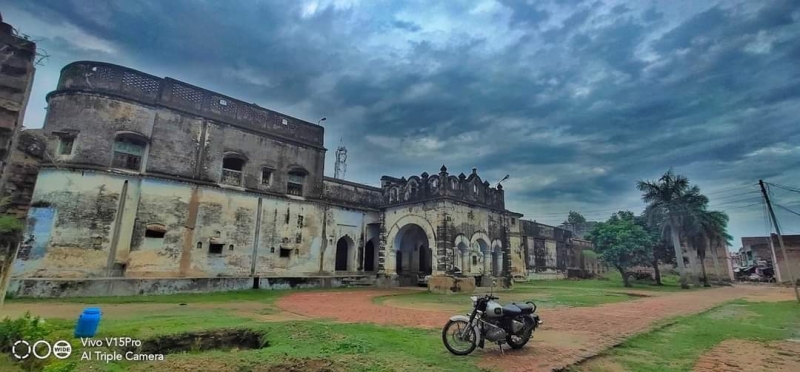
He fortified his strongholds at Asothar and Ghazipur, and successfully defeated the Mughal general Jan-nisar Khan. This act of defiance forced Saadat Khan I (Burhan-ul-Mulk), the founder of the Awadh dynasty, to personally lead a massive campaign against Asothar. After a heroic resistance, Raja Bhagwant Rai was killed in battle circa 1735. His exploits and valor remain deeply embedded in the local folklore of the Fatehpur region, often sung in traditional ballads. Detailed historical records of these campaigns can be accessed via the Official Website of Fatehpur District.
Awadh Hegemony and Territorial Loss
Following the death of Bhagwant Rai, the power of the Asothar state began to decline under pressure from the Nawabs of Awadh. During the late 18th century, under the tenure of Raja Bariyar Singh, the Nawab Wazir of Awadh, Asaf-ud-daulah, launched a series of administrative and territorial consolidations. Most of the family possessions and territories of Asothar were resumed by the Awadh state, leaving the Raja with only a nominal title, minor landholdings, and a government pension.
British Raj and the Modern Era
With the cession of the Doab territories to the British East India Company in 1801, Asothar came under British administration. The Rajas of Asothar were recognized as local landholders and taluqdars, retaining their social prestige but losing their sovereign administrative authority.
Following India's independence in 1947, the Uttar Pradesh Zamindari Abolition and Land Reforms Act of 1950 brought an end to the traditional feudal landholding system. The descendants of the Asothar royal house transitioned into the democratic era, shifting their focus toward agriculture, local leadership, and preserving the rich historical heritage of the Khichi Chauhans in Uttar Pradesh.
Genealogy
- Rai Araru Singh [aka Aram Singh], Rai of Asothar -/1734, he is said to have made a discovery of treasure, and subsequently, he acquired possession of Asothar, and the parganas of Aijhi, Muttar and Ayasah, with possibly 16 more parganas in the districts of Fatehpur and Cawnpore; he came into conflict with Jan Nisar Khan, Governor of Khora, killed him, but himself died as a large force was sent against him; married and had issue. He died 1734.
- Rai Bhagwant Singh (qv)
- Rai Bhagwant SINGH, Rai of Asothar 1734/1745, he built the fort at Ghazipur, maintained his independence for several years, and successfully opposed the emperor’s troops, but eventually he was captured by treachery and killed by Nawab Sa’adat Khan, married and had issue. He was killed in battle in 1745.Rai Rup Singh (qv)
- Rai Rup Singh (qv)
- Rai Rup SINGH, Rai of Asothar 1745/1780, he submitted to the Government of Oudh and was able to maintain his estate; married and had issue. He died
- Raja Bariyar Singh (qv)
- Raja Bariyar SINGH, Raja of Asothar 1780/-, he was not strong enough to resist Nawab Asafuddaulah, and 16 of 19 parganas were resumed, while the remaining three were assigned by the Nazim to Raja Sital Prasad, the Governor of Khora; he then retired to Chirka in the Banda district, living on a small pension assigned to him by the Oudh Government; married and had adoptive issue. he died sp.
- Raja Duniapat SINGH, Raja of Asothar -/1850, he succeeded by adoption; his pension was stopped by Nawab Baqar Ali Khan, which prompted a reprisal by the Raja who gathered a large body of followers and ravaged the parganas of Ekdala and Ghazipur, a step which at once procured a resumption of his pension; at the cession of the district, his pension was again resumed, prompting the same tactics his father had employed, he was attacked by the Collector of Allahabad, who was wounded and he fled across the Jumna, but in 1804, he made his submission to the Mr. Cuthbert, the new Collector and obtained a confirmation of his father’s pension from the British government on 23rd May 1805; married and had adoptive issue.
- Kunwar Raghubir Singh, nephew and adoptive son, married and had adoptive issue. He died vp before 1850.
- Raja Lachhman Prasad Singh, he was adopted by the widow of Raghubir Singh, and succeeded his grandfather to the gadi (qv)
- Raja Lacchman Prasad SINGH, Raja of Asothar 1850/1891, born , an Honorary Magistrate, 3rd Class; married and had issue, two sons. He died .
- Raja Narpat Singh (qv)
- Thakur Chandra Bhushan Singh, born , married and had issue. He died .
- Rani Pratap Kunwar, born , married Raja Vijai Pratap Narayan Bahadur Pal of Mahson, and had issue, one son and two daughters. She died .
- Kunwar Lal Chandan Singh, married Kunwarani Sashi Prabha, died , daughter of Thakur Pratap Singhji of Pipla, and his wife, Thakurani Vimleshwari Kumari, and had issue, three sons and three daughters. He died .
- Kunwarani Mridul Singh, married Rajkumar Jai Singh of Pawayan, and has issue, one son.
- Pattayet Rani Suneeta Singh Deo, married Lt. Rajkumar Pratap Kesari Singh Deo of Manjusha, and has issue, one daughter.
- Rani Pratap Kunwar, born , married Raja Vijai Pratap Narayan Bahadur Pal of Mahson, and had issue, one son and two daughters. She died .
- Raja Narpat SINGH, Raja of Asothar 1891/1906, born , appointed an Honorary Magistrate for the thanas of Asothar, Ghazipur and Thariaon; married and had issue. He died in .
- Raja Kishanpal Singh (qv)
- Kunwar Parsotam Prasad Singh
- Raja Kishanpal SINGH, Raja of Asothar 1906/1918, married and had adoptive issue. He died sp on 23rd November 1918.
- Raja Bishnath Singh aka Raja Vishwananth (qv)
- Raja BISHNATH SINGH, Raja of Asothar, born , son of Maharaj Hateh Singh of Khilchipur, he succeeded his adoptive father to the gadi by adoption on 23rd November 1918. Married to Kumari (name unknown) of Jagamanpur. He died sp on 15th February 1965.
- (A) Raja Vishwendra Pal Singh (qv)
- Raja VISHWENDRA PAL SINGH, Raja of Asothar, born on and was adopted on Dhanteras in October 1964. The official registration of his adoption took place on 1st November 1964. He married Rani Mithilesh Kumari, the daughter of Raja Anand Pratap Singh of Baraundha, and had issue. He died on .
- Yuvraj Yashwant Rai Singh Chauhan, born . He married Yuvrani Devanshi Singh, the daughter of Dr. B. M. Singh of Satna, and has issue, one son.
- Bhanwar Ranvijay Maan Singh, born on .
- Yuvraj Yashwant Rai Singh Chauhan, born . He married Yuvrani Devanshi Singh, the daughter of Dr. B. M. Singh of Satna, and has issue, one son.