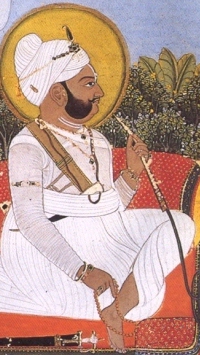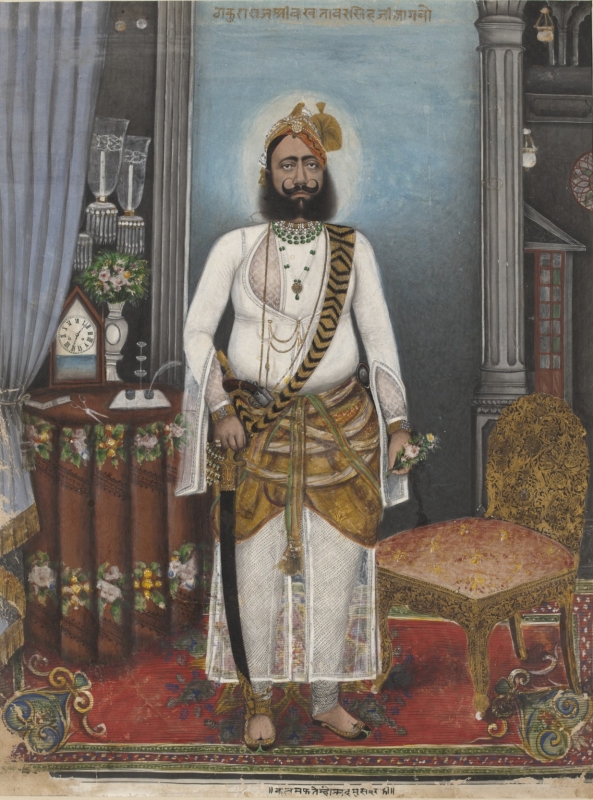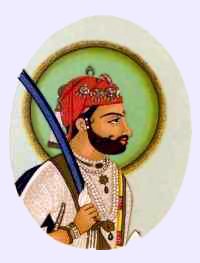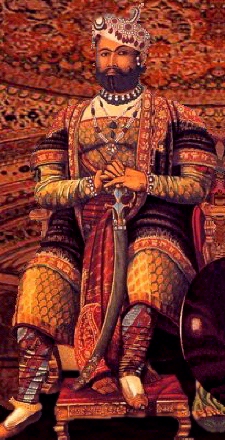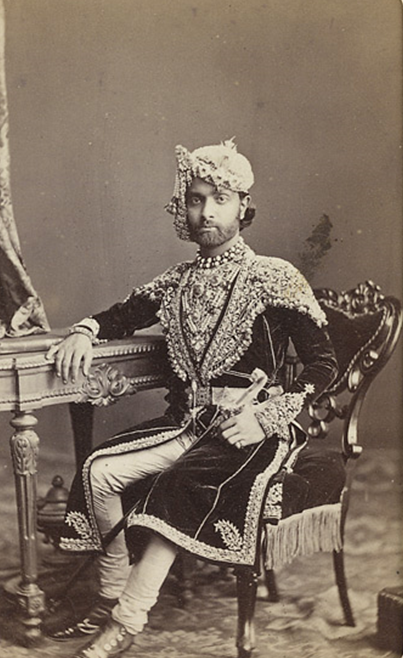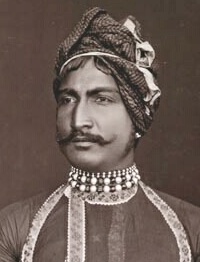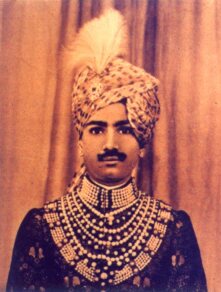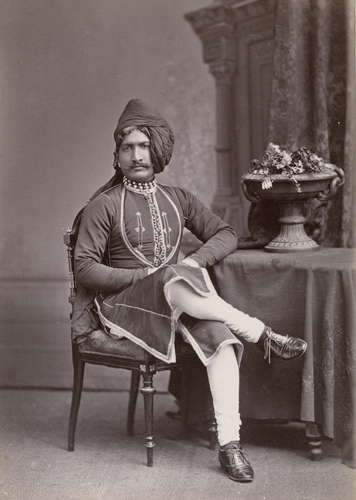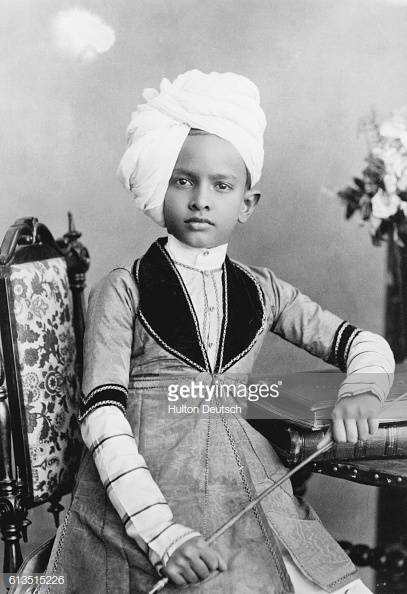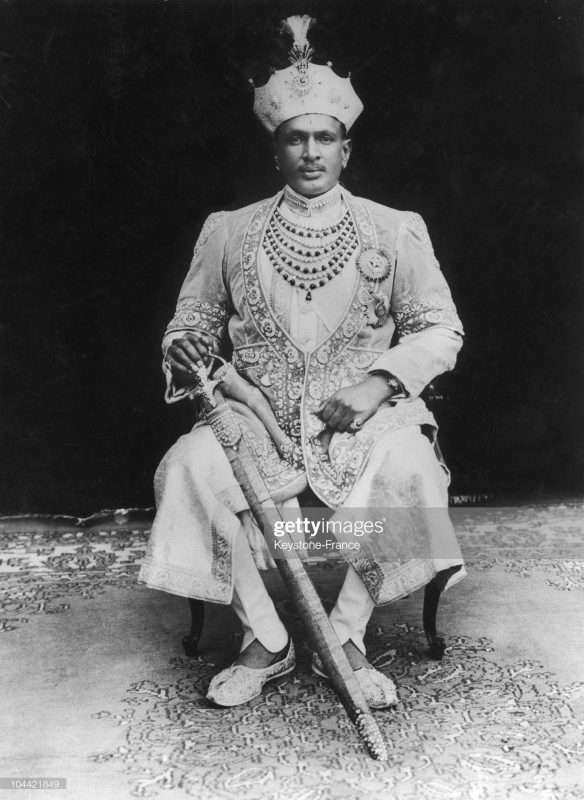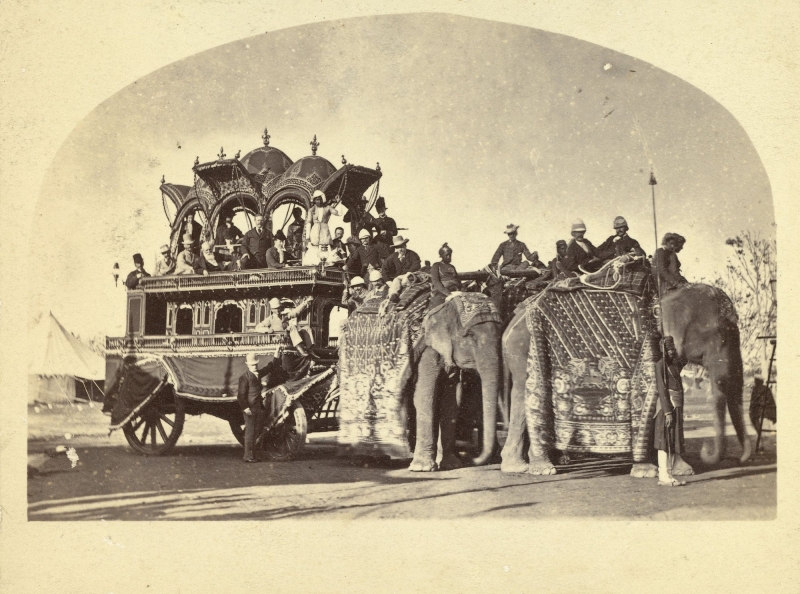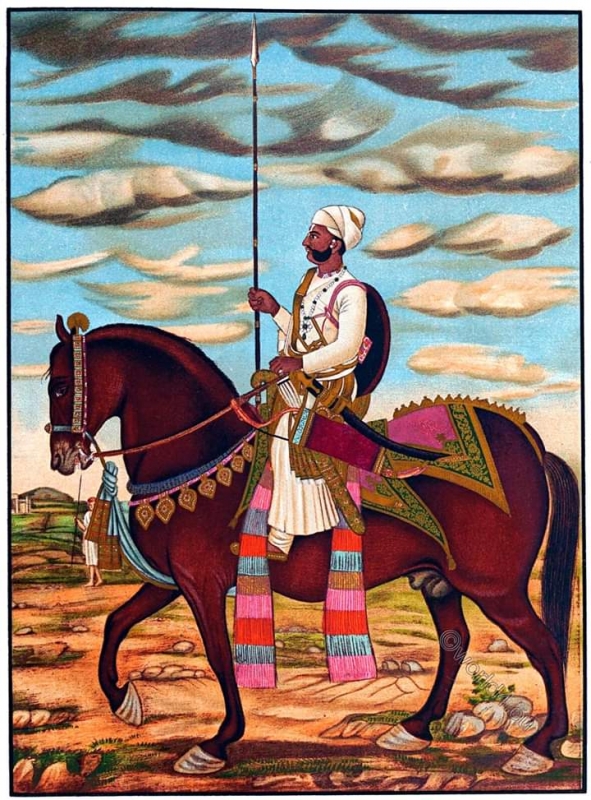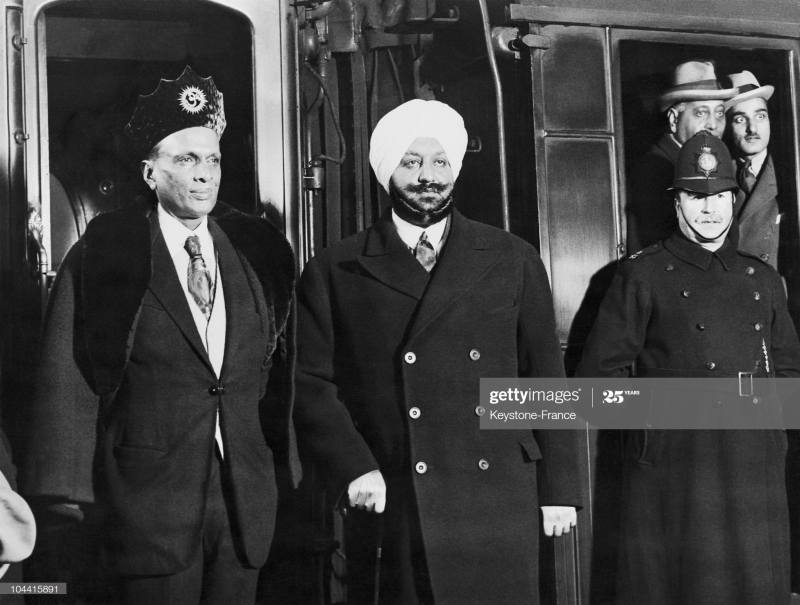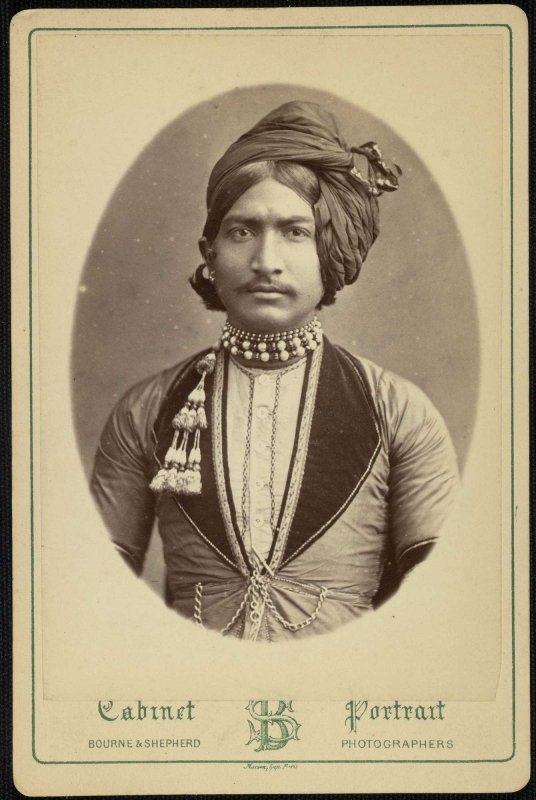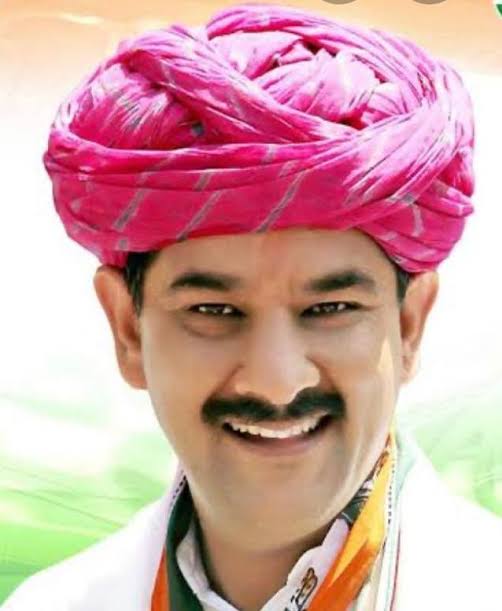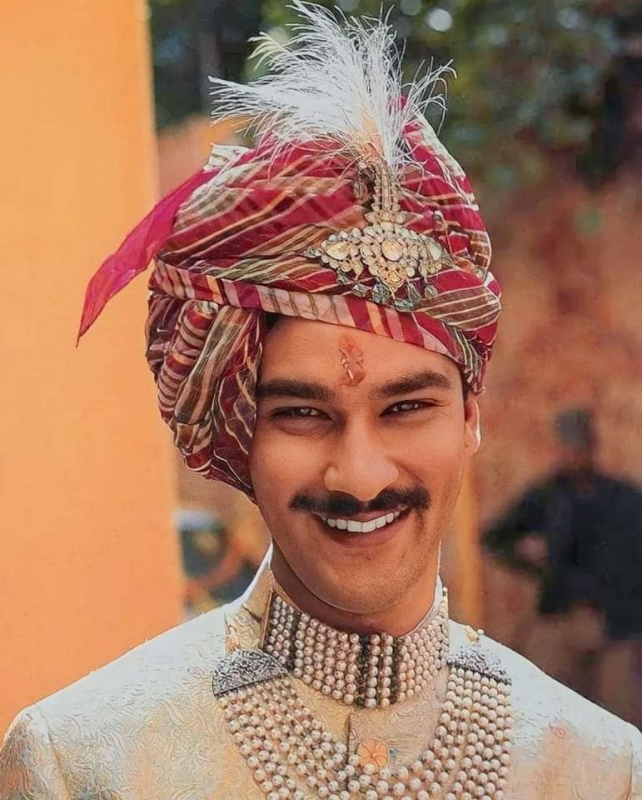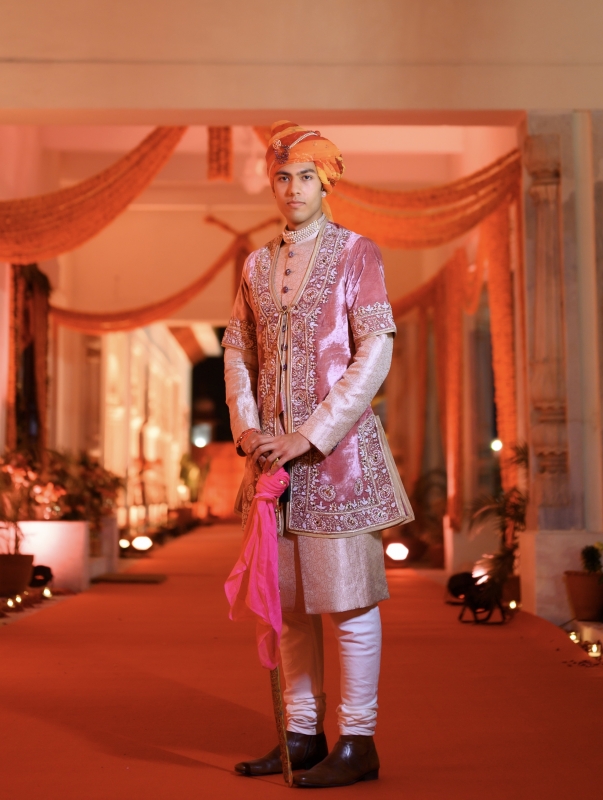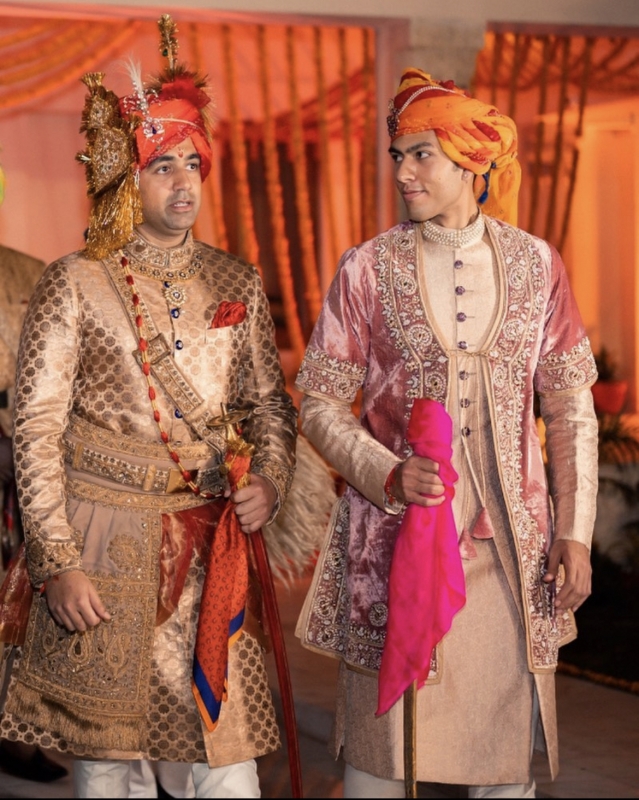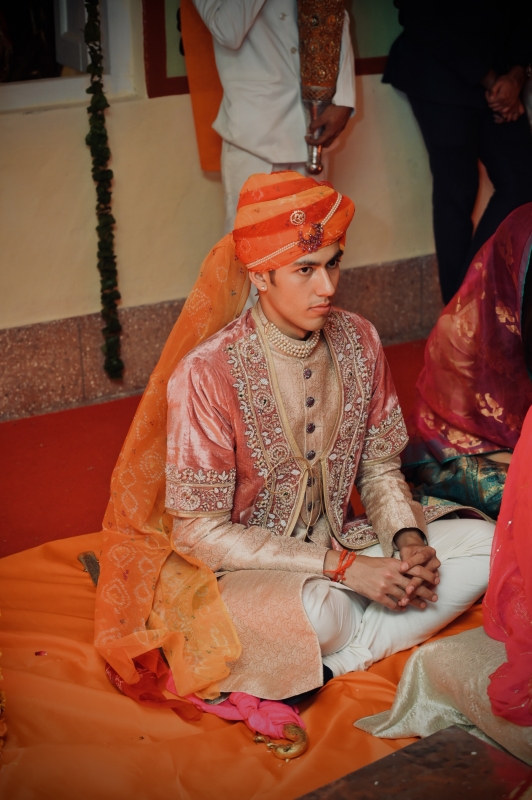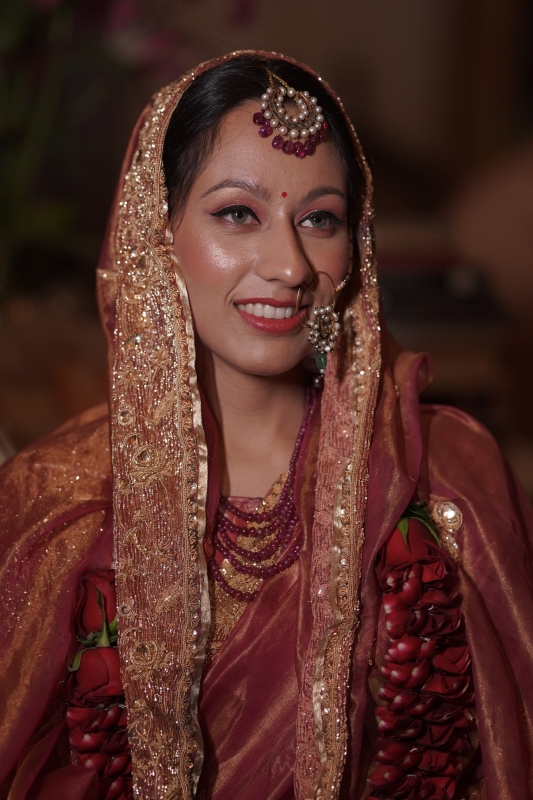
Present Head

- Maharajkumari Manavika Kumari, born , married to Kunwar Avijit Singh of Rohet.
- Maharajkumari Janaki Kumari, born .
- Yuvraj Manavendra Pratap Singh, born .
History
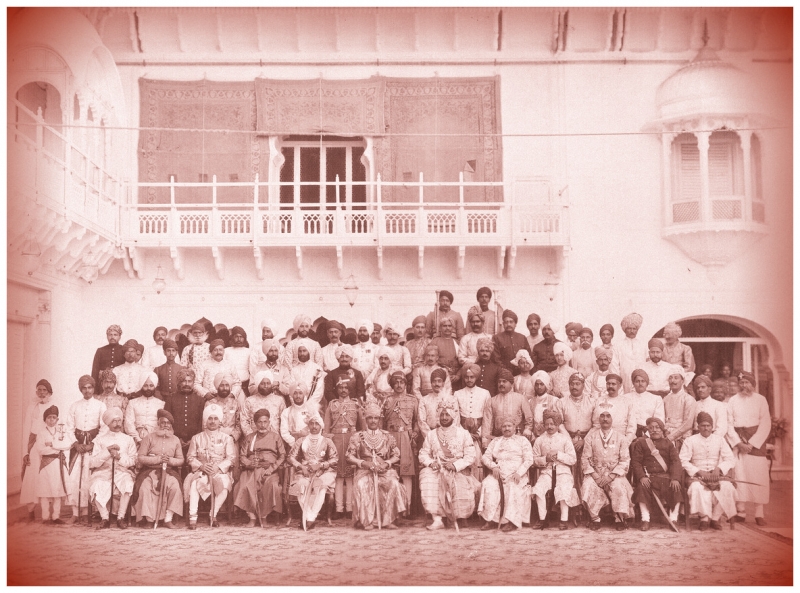
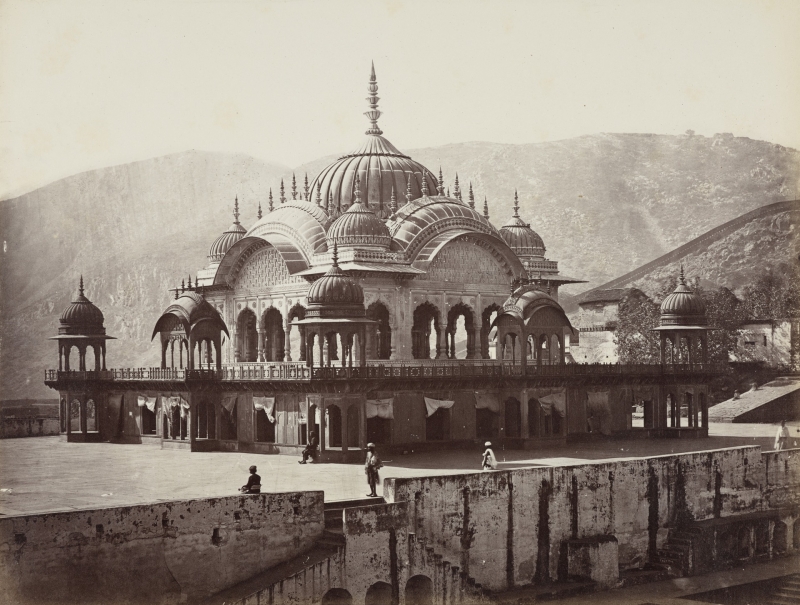
The Princely State of Alwar, situated in the historic Mewat region of northeastern Rajputana (now Rajasthan), was a prominent salute state during the British Raj. Established in the late eighteenth century, Alwar was ruled by the Naruka clan of the Kachwaha Rajputs, a powerful lineage that branched out from the royal house of Amber (Jaipur).
Foundation and Early Sovereignty (1775–1803)
The state of Alwar was founded in 1775 by Pratap Singh Naruka, a brilliant military commander and diplomat who initially held the fief of Machheri under Jaipur. Capitalizing on the political chaos caused by the decline of the Mughal Empire and Maratha incursions, Pratap Singh seized the strategic Alwar Fort from the Jat rulers of Bharatpur. He declared independence and established Alwar as a sovereign principality. His successor, Maharao Raja Bakhtawar Singh, consolidated the state's territories and expanded its borders through strategic alliances and military campaigns.
The British Alliance and Consolidation
Alwar holds the historic distinction of being the first state in Rajputana to sign a treaty of Offensive and Defensive Alliance with the British East India Company. Concluded in 1803 by Maharao Raja Bakhtawar Singh following the Maratha defeat at the Battle of Laswari, this treaty granted Alwar British protection in exchange for military cooperation. This alliance stabilized the state's borders, shielded it from external invasions, and allowed subsequent rulers to focus on internal administration, revenue collection, and the construction of grand palaces and forts.
The Reign of Maharaja Mangal Singh (1874–1892)
The late nineteenth century marked a period of significant modernization and administrative reform under Maharaja Mangal Singh. He was the first ruler of Alwar to receive the hereditary title of Maharaja from the British Crown. During his reign, Alwar established a modern judicial system, introduced western education, and organized the Alwar State Forces into highly disciplined Imperial Service Troops. This era also saw the construction of the grand modern palaces, extensive road networks, and the integration of Alwar into the regional railway system.
The Era of Maharaja Jai Singh and the Twilight of the State (1892–1947)
The reign of Maharaja Jai Singh Prabhakar was one of the most brilliant, controversial, and turbulent periods in Alwar's history. A highly educated, fiercely nationalistic, and eloquent ruler, Jai Singh was a champion of Indian culture and a prominent figure at the Round Table Conferences in London. However, his heavy tax policies and administrative eccentricities led to widespread agrarian unrest, most notably the Alwar peasant uprising and the tragic Neemuchana massacre of 1925. Due to escalating communal tensions and financial mismanagement, the British government forced Maharaja Jai Singh into exile in 1933, placing the administration under British supervision until his death in 1937.
Accession and Integration into India
The last ruling monarch of Alwar was Maharaja Tej Singh Dev. Following the end of British paramountcy and the partition of India in 1947, Alwar faced severe communal violence. Maharaja Tej Singh signed the Instrument of Accession, officially merging the state into the Dominion of India. On March 18, 1948, Alwar joined the neighboring princely states of Bharatpur, Dholpur, and Karauli to form the Matsya Union. This union was later integrated into the greater state of Rajasthan in May 1949, officially bringing an end to the administrative history of the Alwar Princely State.
Army: 1800 Cavalry, 4,750 Infantry, 10 field and 290 other guns and 369 Artillery men.Major Produce of the State: Millets, Bajra, Jour, Barley, Gram, Cotton, Indian corn, Wheat pulses, Oil seeds, Sugarcane, Tobacco and Opium. Slate, Marble(black, white and pink), slate coloured sandstone, Talc, Red ochre, Iron, Copper, Lead and Potash are to be had in abundance in the hills.
Manufacture: Paper, inferior glass from a peculiar kind of earth.

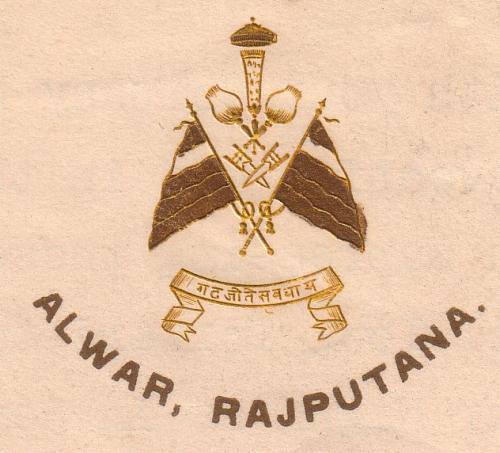
Alwar State Original Flag (1775): State flag dating back to the founding of the state (c. 1775). The shield of the coat of arms of the Maharaja, in use from 1877 to 1931, showed stripes of the same colors and the same provision.
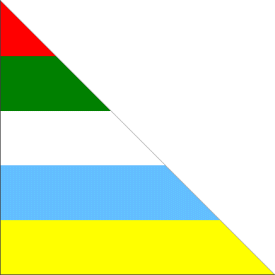
Alwar State Flag(1931): Classic banner of the Rajputs (panchranga, the five colors), the flag was changed in 1931 to the sequence of colors (and since 1933, also returned to being banner of the Maharaja). It remained officially in use until 1949.

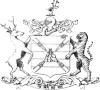
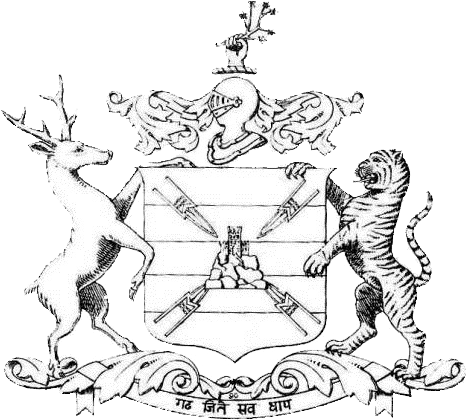
Arms: Barry of five Gules, Vert, Argent, Azure and Or, between four kutars in saltire, hilted Or, a tower on a crag proper.
Crest: On a helmet to the dexter, lambrequined Gules and Or, a hand holding in bend sinister a branch of a kuchnar-tree.
Supporters: A sambur (Rusa unicolor - Cervidæ) and a tiger (Panthera tigris - Felidæ).
Motto: GADH JITE SAB GAAYE
The original COA was granted to H.H. Maharao Raja Shri Sheodan Singhji Veerendra Shiromani Dev Bharat Prabhakar Bahadur, Maharao Raja of Alwar (1857 - 1874).

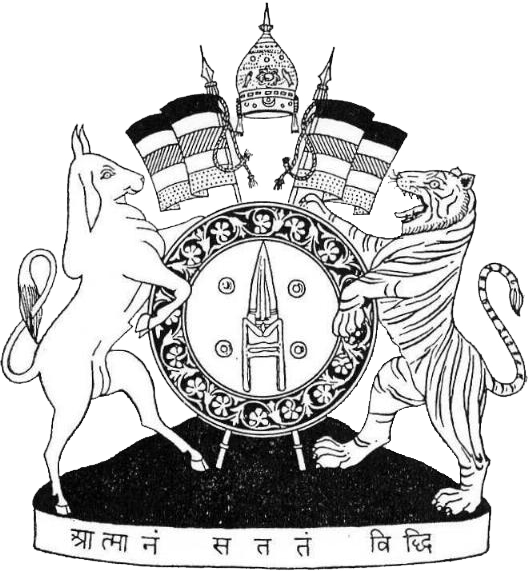
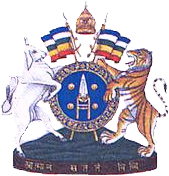
Arms: Azure, bossed and a kutar per pale, within a bordure, voided of the field and ornamented with acanthus-leaves Or.
Crown: The royal crown of Alwar.
Supporters: Two national flags, being barry of Gules, Vert, Argent, Azure and Or in saltire and on the dexter a bull and on the sinister a tiger.
Compartment: A grassy ground, porper
Motto: ATMANAM SATATAM VIDDHI (Always know yourself) in white lettering on a purple ribbon
The Original COA was changed by Lieutenant-Colonel H.H. Raj Rishi Shri Sawai Maharaja Sir Mangal Singhji Veerendra Shiromani Dev Bharat Prabhakar Bahadur, Maharaja of Alwar (1874 - 1892) by writing a letter to the Government of India. Maharaja Mangal Singhji discarded Taylor’s (Robert Taylor of the Bengal Civil Service and the designer of the COAs of the Indian Princely States ) design and gave his reasons why he substituted his own. Taylor had designed four kutars in a very un-heraldic layout with the Panchranga barry of the field.
Item by item the Maharaja eliminates everything, and leaves just Azure, a Kutar erect Or on a round shield. The solitary kutar recalls the following story. Mairaj, the father of Naru, the founder of the Narukha clan, was at war with Kalodar Jhala of Jhalrapatan. After much fighting, an interview was arranged between the two monarchs. When they were squatting on the ground facing one another, four of Jhala’s men pinioned Mairaj’s arms from behind with intent to murder him. Mad at the treachery, but unable to use his hands, Mairaj gripped Jhala’s katar with his toes, pulled it out of his waistband and ended the opponent’s life by thrusting it in his stomach with a vigorous kick.
(Source)
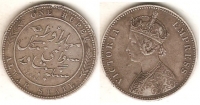
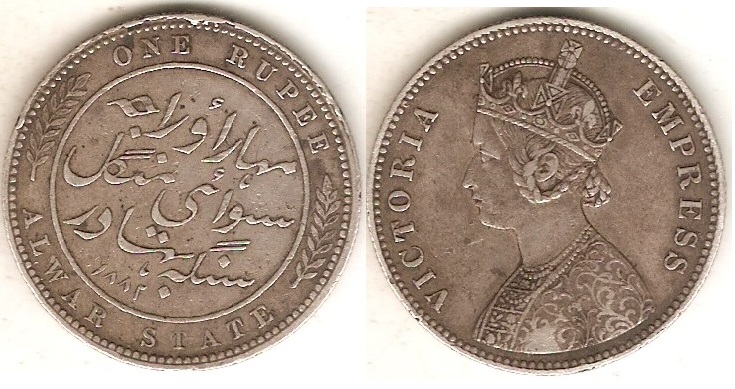
1 Rupee. Year: 1882. Weight: 11.66g. Metal: 0.916 Silver.
Obverse: Maharao Raja Sawai Mangal Singh Bahadur.
Reverse: Victoria Empress.
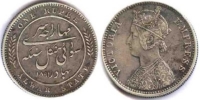
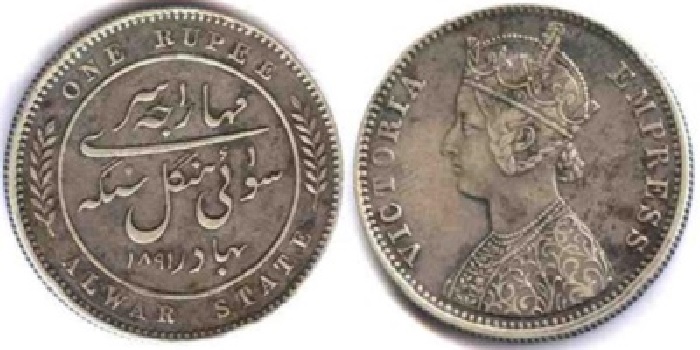
1 Rupee. Year: 1891. Weight: 11.66g. Metal: 0.916 Silver.
Obverse: Maharaja Shri Sawai Mangal Singh Bahadur.
Reverse: Victoria Empress.(notice the age of the Empress in the face structure. Such was the perfection of the Rajput rulers in administering their Kingdoms.)
Source: Imperial Gazetteer of India, Native States of India, The golden book of India.
Genealogy
- Raja UDAYAKARNA 1367/1389, Raja of Amber, married and had issue.
- Raja Nara Singh, Raja of Amber (Jaipur)
- Rao Bar Singh, received Mojad (Mozamabad) and was ancestor of the rulers of , Uniara, Lawa etc, married and had issue.
- Rao Maharaji, married and had issue.
- Rao Naru, eponymous founder of the Naruka clan, married and had issue.
- Rao Dasaji, married and had issue, the Dasawat clan. He was poisoned to death by Raja Prithvi Raj of Amber.
- Rao Chandan Dasji, married and had issue, two sons, ancestors of the families of Ladana, Lawa etc.
- Rao Karam Chandji, succeeded in Mozamabad, he made an attempt on the Amber gaddi but was murdered; married and had issue, six sons. He was killed shortly after 1525.
- Rao Singhji, married and had issue, three sons.
- Rao Jiatsiji, married and had issue.
- Rao Chandrabhan, received Uniara in Jagir from Padshah Shah Jehan in 1638.
- Rao Jiatsiji, married and had issue.
- Rao Prithirajji, succeeded to Kumhera in Jaipur, married and had issue, eleven sons.
- Rao Chaturbhujji, married and had issue, one son.
- Rao Raikunwarji, married and had issue, the families of Garhi and Jaoli in Alwar.
- Rao Chaturbhujji, married and had issue, one son.
- Rao Abhai Ram, he and his brother did not receive a share in their fathers estate, and therefore left Mozamabad and settled in Maujpur in Alwar where they held sway over a big estate.
- Rao Anand Ram, his descendants are said to be the Thakurs of Garhi in Alwar.
- Rao Singhji, married and had issue, three sons.
- Rao Jaimalji of Uniara, he sided with his brother in his attempt on the Amber gaddi.
- Rao Lalaji, ancestor of the Lalawat clan, married and had issue.
- Rao Udai Singh, married and had issue.
- Rao Lar Khan, married and had issue.
- Rao Fateh Singh, married and had issue.
- Rao Kalyan Singh (see below)
- Rao Karan Singh
- Rao Akhay Singh
- Rao Ranchor Das
- Rao Fateh Singh, married and had issue.
- Rao Lar Khan, married and had issue.
- Rao Udai Singh, married and had issue.
- Rao Chitarji
- Rao Tejaji
- Rao Nathaji [Jeta]
- Rao Dasaji, married and had issue, the Dasawat clan. He was poisoned to death by Raja Prithvi Raj of Amber.
- Rao Naru, eponymous founder of the Naruka clan, married and had issue.
- Rao Maharaji, married and had issue.
- Rao Baloji, third son, granted the village of Barwara near Amarsar in 1390, married and had issue. He died .
- Rao Mokalji 1430/1445 of Barwara, married 4 wives, and had issue. He died
- Rao Shekhaji (Shekha of Amarsar) 1445/1488, born , became independent of Jaipur in 1471 and was ancestor of the Shekhawat clan. He died .
- Rao Khemraji
- Rao Kharudji, married and had issue.
- Rao Khumanji, ancestor of the Khumawats, now likely extinct.
- Rao Mokalji 1430/1445 of Barwara, married 4 wives, and had issue. He died
- Rao Patalji of Loni
- Rao Sheo Brahmaji of Nidar (one of the 12 bara Kotri)
- Rao Kalyan Singh, received the grant of Macheri from the Mirza Raja Jai Singh of Amber in about 1671, ancestor of the panch tikanas (five families) and the bara kotri (12 chambers) of the Alwar nobility, married and had issue.
- Rao Agar Singh, ancestor of the rulers of Macheri, Bijnor and Alwar, married and had issue.
- Rao Hathi Singh, married and had issue.
- Rao Mukund Singh, married and had issue.
- Rao Tej Singh, married and had issue.
- Rao Zorawar Singh of Macheri, married and had issue.
- Rao Mohabat Singh of Macheri, married and had issue.
- Rao Raja Sri Sawai Pratap Singh, 1st Rao Raja of Alwar, see .
- Rao Mohabat Singh of Macheri, married and had issue.
- Rao Zalim Singh, ancestor of the Bijnor family.
- Rao Zorawar Singh of Macheri, married and had issue.
- Rao Tej Singh, married and had issue.
- Rao Mukund Singh, married and had issue.
- Rao Hathi Singh, married and had issue.
- Rao Amar Singh, founder of the Khara or Khora family.
- Rao Shyam Singh, ancestor of the rulers of Para, Thana and Srichandpura, married and had issue.
- Rao Nathu Singh, ancestor of the Thakurs of Para.
- Rao Madho Singh of Thana (5 villages), married and had issue.
- Rao Bridh Singh, married and had issue.
- Rao Dhir Singh, married and had issue.
- Rao Salah Singh, married and had issue.
- Rao Hanwant Singh of Thana (5 villages and revenue of 5,000Rs in 1893), married and had issue.
- Rao Hardeo Singh of Thana -/1872, Member of the State Council, married and had issue.
- Thakur Surtan Singh of Thana 1872/-, educated at Thakur School in Alwar, Bakhshi Fauj, married and had issue.
- Thakur Ram Singh, born .
- Baisa (name unknown) [Rani Sahiba of Nimrana], married Raja Janak Singhji of Nimrana.
- HH Shri Sawai Maharaja Sir Mangal Singhji Virendra Shiromani Dev, 6th Maharaja of Alwar (see below).
- Baisa (name unknown) [Rani Sahiba of Junian], married Rao Kalyan Singh of Junian.
- Thakur Surtan Singh of Thana 1872/-, educated at Thakur School in Alwar, Bakhshi Fauj, married and had issue.
- Rao Hardeo Singh of Thana -/1872, Member of the State Council, married and had issue.
- Rao Nand Singh of Srichandpur, married and had issue.
- Unknown Generation/s
- Raja Ganga Singhji of Srichandpura, married Rani Hawa Kanwar, daughter of Maharaj Salam Singhji of Nachana in Jaisalmer, and his wife, Rani Badal Kanwar, and had issue.
- HH Shri Sawai Maharaja Sir Tej Singh Dev Bahadur, Maharaja of Alwar (see below).
- Rajkumari Saheba Inder Kanwar, married Maharaj Ridmal Singh of Raoti, and had issue, two sons and one daugter.
- Raja Ganga Singhji of Srichandpura, married Rani Hawa Kanwar, daughter of Maharaj Salam Singhji of Nachana in Jaisalmer, and his wife, Rani Badal Kanwar, and had issue.
- Unknown Generation/s
- Rao Raja Binay Singh, 4th Rao Raja of Alwar (see below).
- Rao Hanwant Singh of Thana (5 villages and revenue of 5,000Rs in 1893), married and had issue.
- Rao Raja Bakhtawar Singh, 2nd Rao Raja of Alwar (see below).
- Rao Salah Singh, married and had issue.
- Rao Dhir Singh, married and had issue.
- Rao Bridh Singh, married and had issue.
- Rao Isri Singh of Palwa
- Rao Jodh Singh of Pai
- Rao Agar Singh, ancestor of the rulers of Macheri, Bijnor and Alwar, married and had issue.
- Rao Raja Sri Sawai PRATAP SINGH, 1st Rao Raja of Alwar 1775/1791, initially Raja of Macheri, born , son of Rao Mohabat Singh of Macheri, he was granted the title of Rao Raja and Panch Hazari Mansab by the Mughal Emperor, Shah Alam, died sp 26th September 1791.
- Rao Raja BAKHTAWAR SINGH, 2nd Rao Raja of Alwar 1791/1815, born , adopted from Thikana Thana, son of Rao Dhir Singh (see above), married 1stly, 1793, a daughter of Thakur Suryamal of Kuchaman, Marwar, married 2ndly, Moosi, committed sati, and had illegitimate issue. He died .
- Rao Raja Balwant Singh (natural son) (qv)
- Rao Raja BALWANT SINGH, 3rd Rao Raja of Alwar 1815/1826 (deposed), died sp in exile at Tijara 1845.
- Rao Raja BINAY SINGH, 4th Rao Raja of Alwar 1815/1857, nephew of Rao Raja Bhaktawar Singh but was not formally adopted, married (amongst others), Sujan Kanwarji, daughter of Rao Laxman Singh Chandrawat, Rathorji (Bikawatji) Shiv Kanwarji, daughter of Kunwar Jai Singh and grandfather of Maharaja Raj Singh of Bikaner, and had issue. He died .
- Rao Raja Shivdan Singh (qv)
- Rajkumari Bhoor Kanwarji [Maharani Sahiba of Bikaner], married 13th June 1855, Maharaja Sardar Singhji of Bikaner.
- Rao Raja SHIVDAN SINGH, 5th Rao Raja of Alwar 1857/1874, born circa 1845, only installed in 1867, married 1861, Roop Kanwarji, daughter of HH Maharaj Rana Prithvi Singhhi of Jhalawar. He died spl 11th October 1874.
- Rao Raja Daljit Singh, married Rani Madan Kunwar, and had issue, one daughter and a son.
- Rani Rajeshwari Kumari, married Rao Raja Hukum Singh of Jodhpur, and has issue.
- Rao Raja Mahipal Singh, married Rani Aprajita Kumari, daughter of Thakur Ajit Singh Chandel of Dhar, (M.P) and has issues, one son and a daughter.
- Prithvi Raj Singh, married to Rupika Kumari Chauhan, daughter of Thakur Dilip Singh Chauhan of Baneria and has issue, one daughter.
- Baisa Jasvika Kumari
- Rajkumari Nidhi Kumari, married Abhimanyu Singh Rathore of Daspan (Marwar) and has issues, one daughter and a son.
- Bai Sahiba Dwija Rathore
- Bhanwar Dwij Rathore
- Prithvi Raj Singh, married to Rupika Kumari Chauhan, daughter of Thakur Dilip Singh Chauhan of Baneria and has issue, one daughter.
- Rao Raja Daljit Singh, married Rani Madan Kunwar, and had issue, one daughter and a son.
- HH Shri Sawai Maharaja Sir MANGAL SINGHJI Virendra Shiromani Dev, 6th Maharao Raja of Alwar 1874/1892, born , adopted from Thikana Thana, installed upon the gaddi on 14th December 1874, in preference to Kunwar Lakhdir Singh of Bijwar, Maharaja [cr.1889], G.C.S.I., married (amongst others), (a) 1877, the second daughter of Maharaja Prithvi Singhji of Kishangarh, married (b), 1878, Maharajkumari Rajeshree Kishankunwar Ji, daughter of Raja Bhairon Singhji of Ratlam, and had issue. He died in Nainital due to alcoholic poisoning.
- Col. HH Raj Rishi Shri Sawai Maharaja Sir Jai Singhji Virendra Shiromani Dev Bharat Dharam Prabhakar (by the Ratlam Maharani) (qv)
- Col. HH Raj Rishi Shri Sawai Maharaja Sir JAI SINGHJI Virendra Shiromani Dev Bharat Dharam Prabhakar, 7th Maharaja of Alwar 1892/1933 (deposed), born , K.C.I.E. [cr.1911], K.C.S.I. [cr.1909], G.C.I.E. [cr.1919], G.C.S.I. [cr.1924], installed upon the gaddi 10th December 1903; Member of Standing Committee of Indian Princes' Chamber; General-in-Chief of Alwar State Forces; represented India at Imperial Conference 1923; married 1stly, 8th December 1897, a daughter of the Maharaja of Kishengarh, she died , married 2ndly, 17th April 1914, a lady of Khirasra and a niece of the Jam of Jamnagar, died , married 3rdly, 7th December 1919, daughter of Thakorsaheb Aashajiraj Waghjiraj of Rajpara and a relative of the Jam of Jamnagar. He died spm on 20th May 1937 in Paris.
- HH Raj Rishi Shri Sawai Maharaja Sir TEJ SINGHJI Virendra Shiromani Dev Bharat Dharam Prabhakar, 8th Maharaja of Alwar 1933/2009, born , second son of Raja Ganga Singhji of Srichandpura (see above), adopted by his kinsman whom he succeeded in 1933, officially installed on 22nd July 1937 after the death of his predecessor, K.C.S.I. [cr.2nd June 1943], married 1931, HH Maharani Chand Kumari, daughter of Maharaj Akhay Singh of Raoti in Jodhpur, and has issue, two sons and two daughters. He died .
- Yuvaraj Shri Pratap Singh, born , Yuvaraj of Alwar 1933/1976, married 26th of April 1962, Yuvarani Mahendra Kumari [Maharajkumari Mahendra Kumari of Bundi (Princess Kitten)], born , Member of the Tenth Lok Sabha 1991/1996, died at New Delhi, and had issue. He died .
- Yuvaraj Jitendra Singh, succeeded as HH Shri Sawai Maharaja Jitendra Singhji Virendra Shiromani Dev Bharat Dharam Prabhakar (qv),
- Maharajkumar Yashwant Singh, born , married Kanwarani Sahiba Brinda Kumari, daughter of HH Thakore Sahib Shri Sir Bahadursinhji Mansinhji of Palitana, and his wife, HH Thakorani Bai Shri Sita Ba Kunverba Sahiba, and has issue, two daughters and a son.
- Bhanwar Yogendra Singh [Prince Tubby], born in New Delhi; educated at St. Stephens College, Delhi University (B.A.), National Junior Squash Champion (India) in 1977, represented India in the World Team Championship in 1978 and 1980, coach of the Indian national team 1994/1998, undertook a refereeing course with the Singapore Squash Racquet Association in 1992, an Internationally qualified squash referee, the only Indian and one of only 30 in the world, World Squash Federation (WSF) International Squash Referee since 1995; married 5th November 1987 in New Delhi, Bhanwarani Neena Singh.
- Bhanwar Baisa Bhuvneshwari Kumari [Princess Candy], born in New Delhi, educated at Delhi University (B.A.); Womens National Squash Champion from 1977 to 1992 (16 years in a row), winner of 41 State titles and 2 International titles (Kenyan Open 1988 and 1989); Honours and Awards include, Delhi Sports Journalist Association Award (For The Best Sports Woman 1983), Rajasthan Sports Award Council 1984, Maharana Mewar Foundation "Aravali Award" (For the most Outstanding Sportswoman of the year 1990), K.K. Birla Foundation Award for Sports (For Outstanding Performance in 1991 and Holding the Maximum Number of Individual National Titles Won), Bombay Sports Journalist Association Award (For Best Sportswoman for the year 1992), listed in the Limka Book of Records (For Sports Person of The Year 1992 and for The Most Number of Titles Won in Indian Sports), Rajasthan Olympic Association Award (For Best Woman Player 1993-94), awarded the Maharaja Sawai Madho Singh Award for excellence in sports (squash), on 27th October 2001, winner of the Arjuna Award in 1982, and awarded the Padma Shri in 2001.
- Rajkumari Sohini Kumari, born in New Delhi, a Professional Qualified Tennis Coach, National Tennis Champion Doubles six years in a row, represented India in Federation Cup (Womens Davis Cup) 1991,1992 and 1995, Gold Medalist SAF Games 1991, represented India in Squash in Asian Games 1998 Bangkok, Asian Seniors Squash 1998 - Malaysia; received the Aravali Award for Outstanding Sportsperson 1992 - Udaipur; holds a Place in Limka Book of Records for representing India in two Sports (Tennis and Squash).
- Maharajkumari Pratap Kumari, married (div.), Yuvraj Dr. Digvijay Sinhji [later HH Maharana Raj Saheb Dr. Digvijaysinhji] of Wankaner. She died .
- Maharajkumari (name unknown) Kumari, married HH Thakore Saheb Shri Manoharsinhji Pradyumansinhji of Rajkot, and has issue.
- Maharajkumari Bhanu Kumari, married Maharaj Parakram Singh of Pratapgarh.
- Yuvaraj Shri Pratap Singh, born , Yuvaraj of Alwar 1933/1976, married 26th of April 1962, Yuvarani Mahendra Kumari [Maharajkumari Mahendra Kumari of Bundi (Princess Kitten)], born , Member of the Tenth Lok Sabha 1991/1996, died at New Delhi, and had issue. He died .
- HH Raj Rishi Shri Sawai Maharaja JITENDRA SINGHJI Virendra Shiromani Dev Bharat Dharam Prabhakar (see above)
- Rao Raja Jashwant Singh fl.1934
Notable Figures
Rao Raja Pratap Singh (1775–1791)
Rao Raja Pratap Singh was the founder of the Alwar Princely State. Belonging to the Naruka branch of the Kachwaha clan, he was originally a prominent feudatory of the Jaipur State, holding the fief of Machheri. Leveraging the declining power of the Mughal Empire and internal dissensions in Jaipur, he declared his independence. In 1775, he captured the strategic Alwar Fort from the Jat rulers of Bharatpur, thereby establishing the independent principality of Alwar.
Pratap Singh was a brilliant military strategist and diplomat. During his reign, he successfully consolidated his territory, defended it against neighboring rival powers, and laid the administrative groundwork of the new state. He was succeeded by his adopted son, Bakhtawar Singh. For more details, see his Wikipedia biography.
Rao Raja Bakhtawar Singh (1791–1815)
Rao Raja Bakhtawar Singh succeeded Pratap Singh and played a critical role in securing the sovereignty of Alwar during a turbulent period of Maratha expansion. In 1803, he formed a crucial alliance with the British East India Company following the Battle of Laswari, where British forces led by Lord Lake defeated the Marathas. This alliance made Alwar one of the first princely states in India to sign a defensive treaty with the British, ensuring its protection against external threats.
Bakhtawar Singh was also a great patron of literature and religious tolerance. Although his reign saw several military campaigns, it also established peace and prosperity in the region. His life and legacy are detailed further in the Wikipedia article on Bakhtawar Singh.
Rao Raja Bane Singh (1815–1857)
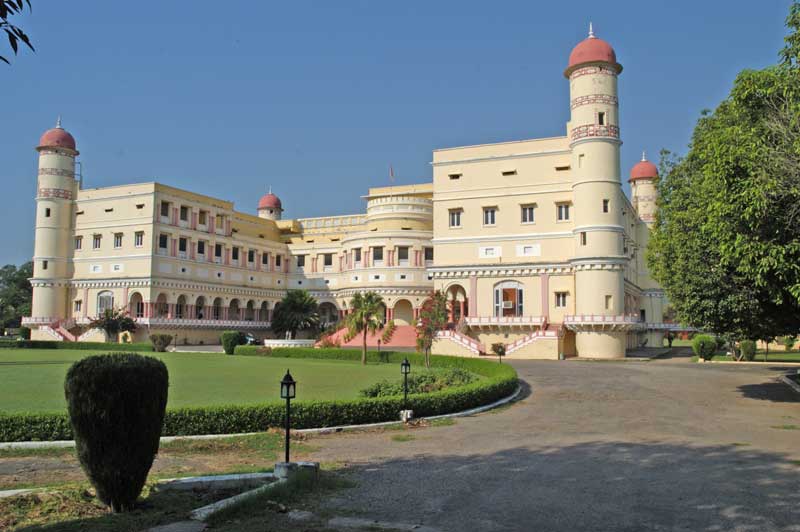
Rao Raja Bane Singh (also known as Vinay Singh) succeeded to the throne after a brief period of succession disputes. His reign is widely considered the golden age of Alwar's art, culture, and civic architecture. He was responsible for constructing the iconic City Palace of Alwar (Vinay Vilas Mahal) and the beautiful Siliserh Lake and Palace, which served as a summer retreat for his queen. He was a great patron of painting, particularly the Alwar school of miniature paintings, and commissioned several exquisite manuscripts.
During the Indian Rebellion of 1857, Bane Singh remained loyal to the British Crown and sent a contingent of troops to assist the British garrison at Agra, though many of his soldiers revolted. He passed away shortly before the rebellion was fully suppressed. Learn more about his contributions via his Wikipedia profile.
Rao Raja Sheodan Singh (1857–1874)
Rao Raja Sheodan Singh ascended the throne as a minor under the regency of a British political agent. His personal reign, once he attained majority, was marked by severe administrative mismanagement and sectarian conflict. He fell heavily under the influence of his Muslim Dewan, which alienated the traditional Hindu Rajput nobility of Alwar and eventually led to a major rebellion by the Rajput thakurs.
To restore order, the British intervened in 1870, stripped the Maharaja of his administrative powers, and established a council of state to run the administration. Despite the domestic turmoil, his reign saw some modernization in judicial and police systems. His historical details can be found in the Wikipedia article on Sheodan Singh.
Maharaja Sir Mangal Singh Bahadur (1874–1892)
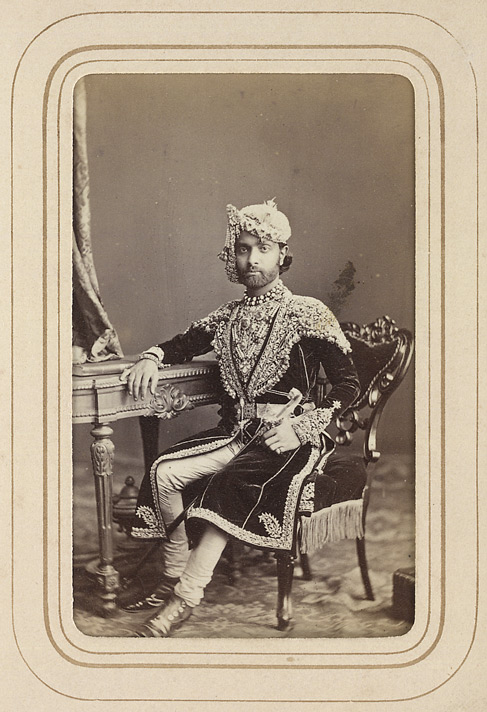
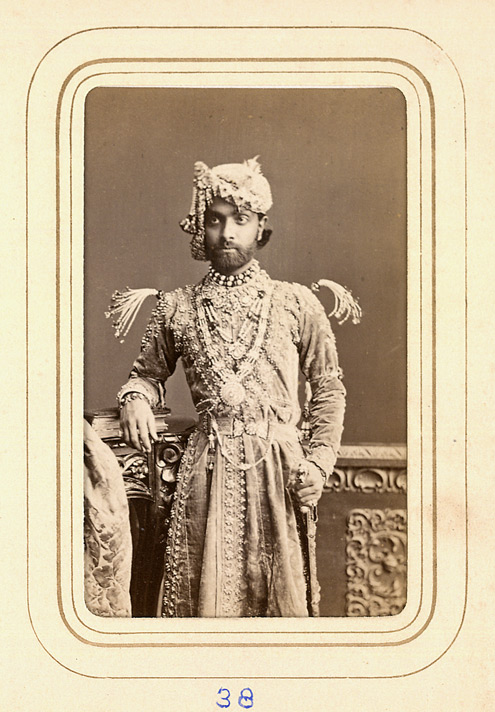
Maharaja Sir Mangal Singh was selected from a collateral branch of the Naruka family to succeed Sheodan Singh. He was the first ruler of Alwar to receive a modern Western education at the newly established Mayo College in Ajmer. In recognition of his loyalty and progressive governance, the British Government granted him the hereditary title of "Maharaja" in 1889.
Mangal Singh was an active reformer who reorganized the state's revenue department, established schools and hospitals, and modernized the Alwar State Forces. He died at a relatively young age in 1892. His life and administrative reforms are documented in the Wikipedia page of Mangal Singh.
Maharaja Sir Jai Singh Prabhakar Bahadur (1892–1937)
Maharaja Sir Jai Singh Prabhakar was one of the most brilliant, highly educated, and controversial rulers of modern India. He was a powerful orator, a passionate nationalist, and played an active role in the Chamber of Princes and the Round Table Conferences in London. Under his administration, Alwar saw significant educational expansion, the abolition of child marriage, and the declaration of Hindi as the official state language.
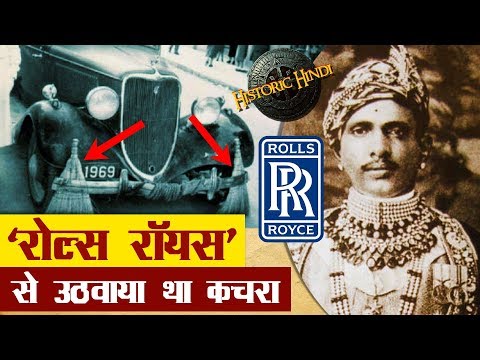
However, his later years were marred by financial instability, agrarian distress, and severe communal tensions, particularly the Meo uprising in 1932. Due to administrative failures and rising conflicts, the British government forced him into exile in 1933, and he passed away in Paris in 1937. He is also famously associated with legendary popular folklore regarding his interactions with Rolls-Royce. Detailed historical accounts of his life can be read on the Wikipedia page of Jai Singh Prabhakar.
Maharaja Sir Tej Singh Prabhakar Bahadur (1937–2009)
Maharaja Sir Tej Singh Prabhakar was the last ruling Maharaja of Alwar. Installed on the throne following the demise of Jai Singh, he ruled during the highly tumultuous period leading up to Indian Independence. He was a strong proponent of Hindu nationalism and patronized various social organizations. In August 1947, he signed the Instrument of Accession, officially merging the Alwar State into the Dominion of India.
In early 1948, following the assassination of Mahatma Gandhi, Maharaja Tej Singh and his Prime Minister, Dr. N.B. Khare, were placed under house arrest in Delhi by the Indian Government on suspicion of complicity and supporting extremist elements. They were later fully exonerated after an inquiry. Alwar was subsequently integrated into the Matsya Union, which later merged into the state of Rajasthan. Further details about his life and the transition period are available on his Wikipedia biography.