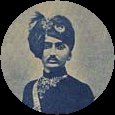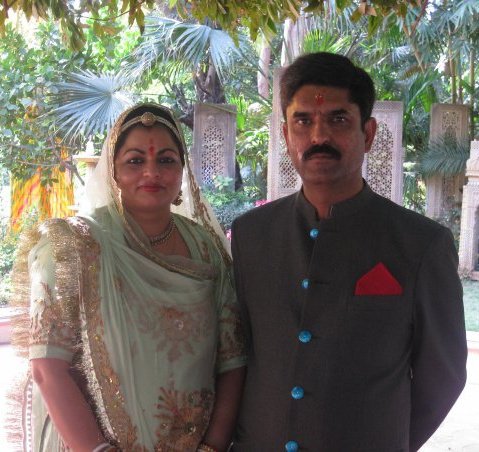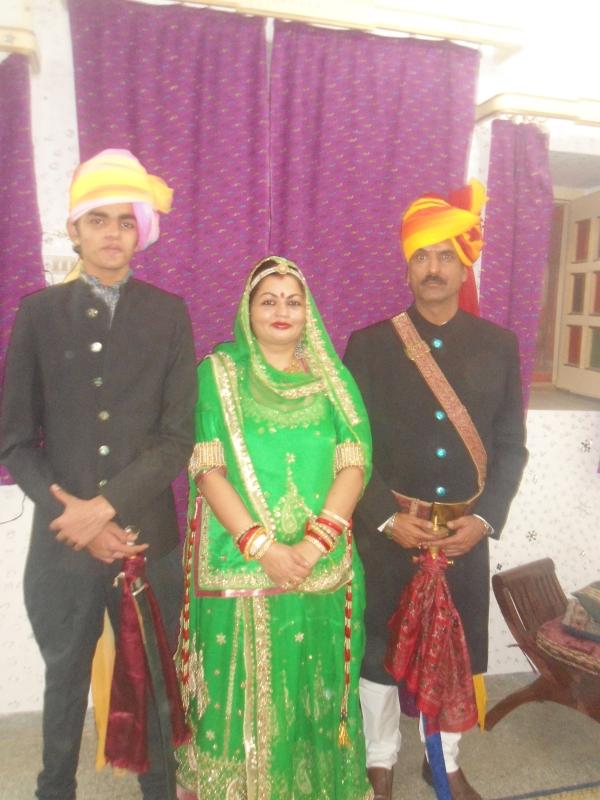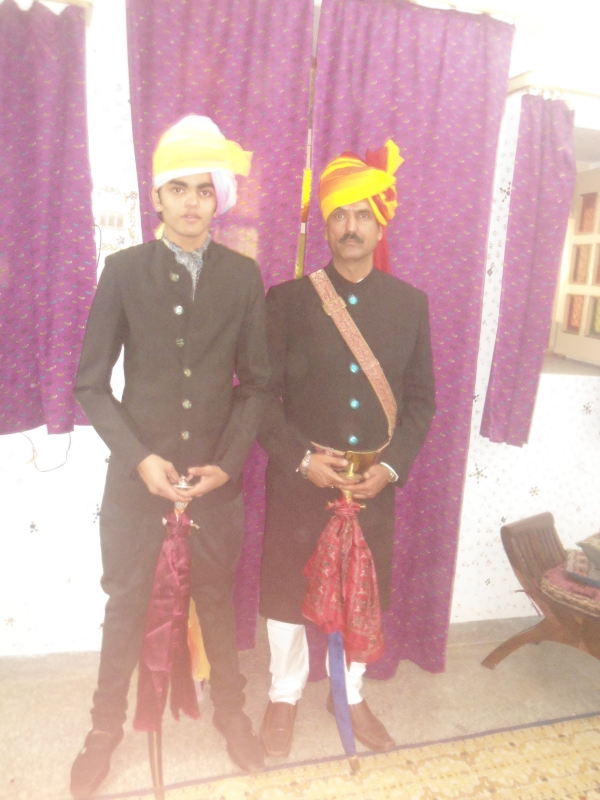

Present Head
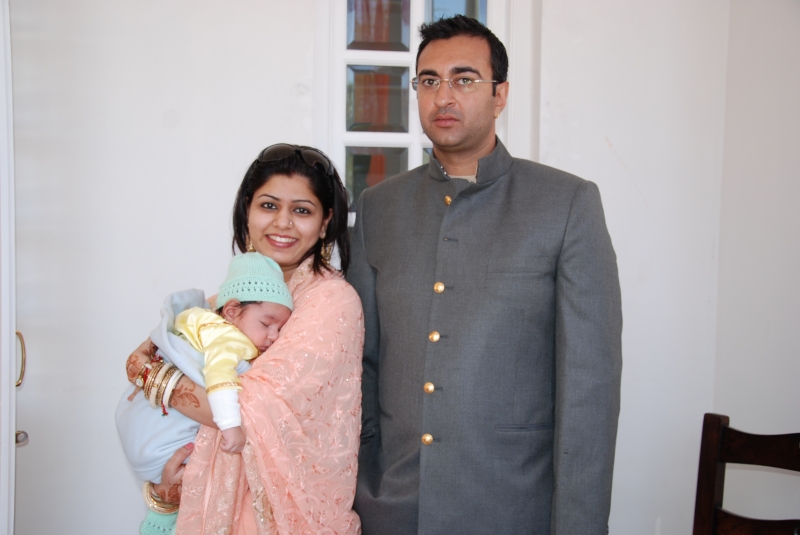
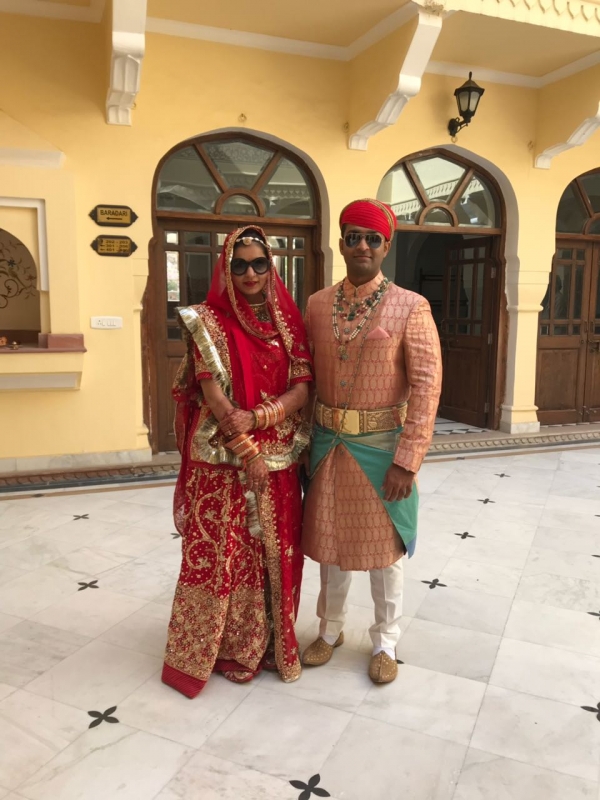
- Baijilal Chandrika Kumari Rathore, born , studied in Mayo College Girls Shool (2005), married 14th February 2009, Kanwar Sahib Shivarjun Singhji, son of Thakur Sahib Kesari Singhi of Mandawa.
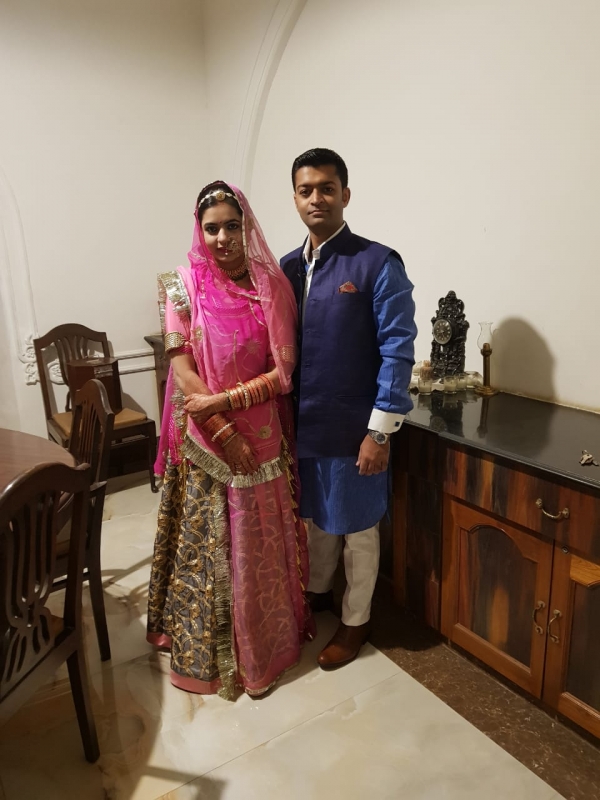
- Baijilal Kritika Kumari Rathore, born , educated at Mayo College, Ajmer. Married to Kunwar Mayurdhwaj Singh, son of Rawat Shri Veerbhadra Singh and Rani Namrata Singh of Deogarh.
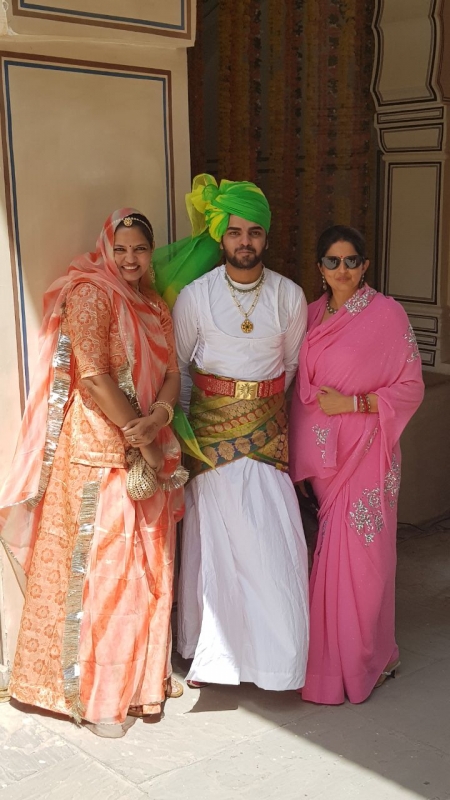
- Rajkumar Vishva Vardhan Singh Rathore, born , education from Mayo College Ajmer (2011), studied Economics Honours from St. Xavier College; worked with G-Adventures for 5 yrs.
History
The princely state of Vijaynagar (historically known as Pol State or Polo State, and briefly as Ghodadar) was a prominent entity located in the rugged, heavily forested Sabarkantha region of northern Gujarat. Situated along the mountainous frontiers of the Mahi Kantha Agency during the British Raj, Vijaynagar’s history is a compelling narrative of a Rathore Rajput clan navigating deep connections to the legendary medieval empires of the south, managing complex relationships with tribal Bhil populations, and fiercely maintaining its financial and structural autonomy against both Maratha and British intervention.
Origins and The Descent from Idar
The ruling family of Vijaynagar belonged to the elite Rathore clan of Rajputs. The state's origin is tied directly to the early expansionist history of the nearby parent state of Idar.
- The Founding (1577): The principality was established in 1577 by Rajput kinsmen who moved into the dense, naturally fortified valleys near the ancient city of Polo. The initial stronghold was located in a strategic mountain defile known as the "Pol" (meaning gate or gateway), which connected the plains of Gujarat with the kingdom of Mewar in Rajputana.
- The Capital Shifts: For nearly three centuries, the state operated from this historic valley, widely recognized as Pol State. Between 1864 and 1877, under the administration of Rao Hamirsinhji I, the capital was permanently shifted out of the dense forest valley to a newly planned town, which was named Vijaynagar ("City of Victory"). Following this migration, the entire state formally adopted the name of its new urban seat. The rulers of the state bore the traditional hereditary title of Rao.
Strategic Isolation and Sovereign Autonomy
Unlike many of its neighbors in the Mahi Kantha Agency who suffered severe economic exhaustion due to the expansionist Maratha Confederacy, Vijaynagar’s geographic landscape served as a natural defensive bulwark.
- The Financial Anomaly: Throughout its entire modern history, Vijaynagar held a highly unique and rare status within colonial India: it was a non-salute, tribute-free state. It did not pay any regular annual tribute (tanka or ghasdana) to the British Government, nor did it owe financial allegiance to the Gaekwads of Baroda or the Scindias of Gwalior.
- The Bhil Dynamics: The population of Vijaynagar was heavily comprised of independent indigenous Bhil tribes. The Raos of Vijaynagar ruled through a decentralized, feudal arrangement that relied heavily on maintaining the goodwill of the tribal chieftains. This delicate balance was occasionally disrupted; most notably in 1881, when a massive uprising of the local Bhils forced the reigning Rao to renegotiate and settle traditional tribal land and judicial claims.
Administrative Structure and Colonial Stature
Within the complex administrative framework of the British Raj, Vijaynagar spanned an area of roughly 140 square miles, encompassing over 85 villages. The state was initially placed under the administrative jurisdiction of the Mahi Kantha Agency, before later being transferred to the Western India States Agency (under the sub-division of the Baroda Agency).
Despite its modest population and size, the high aristocratic pedigree of its Rathore line was fully recognized. Vijaynagar was granted original constituent membership in the Imperial Chamber of Princes (Narendra Mandal), giving its ruler a direct voice in the political evolution of late colonial India. Under the British "Attachment Scheme" of 1943—designed to merge smaller enclaves into self-sustaining units—the political administration of Vijaynagar was temporarily linked with its larger ancestral sister state of Idar and transferred to the Rajputana Agency.
Vexillology and State Symbols
- The State Flag: Reflecting its proud desert heritage and solar Rathore lineage, the flag of Vijaynagar State featured a traditional rectangular layout utilizing the sacred saffron-red color palette common to the senior Rajput houses of Marwar.
- The Historic Ruins of Polo: The visual and cultural identity of the state was anchored by the ancient, monolithic stepwells, Jain temples, and Shaivite brick ruins scattered throughout the Polo Forest, which served as silent testaments to the state's medieval architectural golden age.
Accession to Modern India
Following the declaration of Indian Independence and the lapse of British paramountcy in August 1947, the last ruling monarch, Rao Hamirsinhji II Hindupatsinhji, signed the formal Instrument of Accession to merge his state into the Dominion of India on August 8, 1947.
The historical territories of Vijaynagar were initially absorbed into the districts of Bombay State. Following the linguistic reorganization of states in 1960, the region became a permanent part of the Sabarkantha district within the state of Gujarat, where the ancient capital remains celebrated today as the gateway to the protected Polo Forest ecological sanctuary.
Genealogy
- Rao Shri HAMIRSINHJI I GULABSINHJI, 27th Rao Shri of Pol 1864/- and 1st Rao Shri of Vijaynagar -/1889, married and had issue.
- Rao Shri Mohobatsinhji Hamirsinhji (qv)
- Rao Shri Prithisinhji Hamirsinhji (qv)
- Rao Shri Bhupatsinhji II Hamirsinhji (qv)
- Rao Shri PRITHISINHJI HAMIRSINHJI, 2nd Rao Shri of Vijaynagar 1889/1905, born , he died sp in 1905. REGENCY 1905/1906
- Rao Shri BHUPATSINHJI II HAMIRSINHJI, 3rd Rao Shri of Vijaynagar 1906/1913, born , married and had adoptive issue. He died .
- (A) Rao Shri Mohobatsinhji Bhupatsinhji (qv)
- Rao Shri MOHOBATSINHJI BHUPATSINHJI, 4th Rao Shri of Vijaynagar 1913/1914, born , former Jagirdar of Verabar 1906/1914, succeeded by adoption, married and had adoptive issue. He died .
- (A) Rao Shri Hamirsinhji Mohibatsinhji (qv)
REGENCY 1914/1924
- Rao Shri HAMIRSINHJI II MOHOBATSINHJI, 5th Rao Shri of Vijaynagar 1914/1986, born as Kumar Shri Hamirsinhji Hindupatsinhji, he was installed 27th June 1916, married and had issue. He died .
- Rao Sahib Shri Pratapsinhji Hamirsinhji (qv)
- Rao Sahib Shri PRATAP SINGHJI, 6th Rao Shri of Vijaynagar 1986/2000, born , he was installed in April 1986, married 1954, Rani Sahib Sugankanwar Devi, daughter of HH Maharajadhiraj Maharawal Girdhar Singh Bahadur of Jaisalmer, and his first wife, HH Maharani Sahib Damayanti Devi, and had issue. He died .
- Rao Sahib Shri Harshwardhan Singhji (qv)
- Maharaj Vijay Vardhan Singh (qv)
- Rajkumari Hitendra Kumari, married Maharaj Mahendra Singh Parmar of Santrampur in Panchmahal Distt., Gujarat, and has issue. (Veracruz, Mexico)
- Sheila Parmar
- Dr. Abhimanyu Singh (Kush) Parmar, MD-PhD student at Harvard University, Boston (Med. and M.I.T. combined program), married to Rajkumari Padmaja Kumari, daughter of Maharaj Shri Arvind Singhji of Udaipur, and his wife, Rani Raj Vijayraj Kumari.
- Rao Sahib Shri HARSHWARDHAN SINGHJI, 7th Rao Shri of Vijaynagar from 20th June 2000 to 28th January 2025; born , Installed on the gaddi on 3rd July 2000, married Rani Sahib Gargi Devi of Datia. He died on .
- Rao Sahib Shri VIJAY VARDHAN SINGHJI, 8th Rao Shri of Vijaynagar (see above)