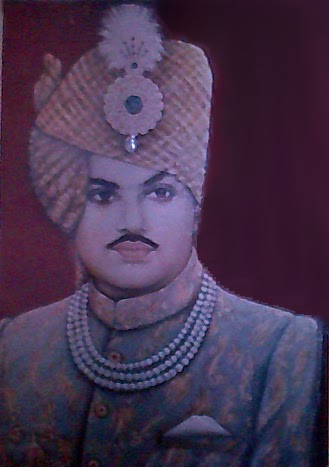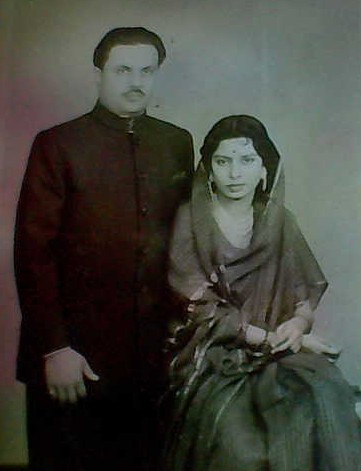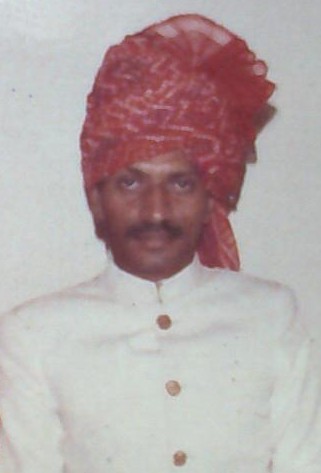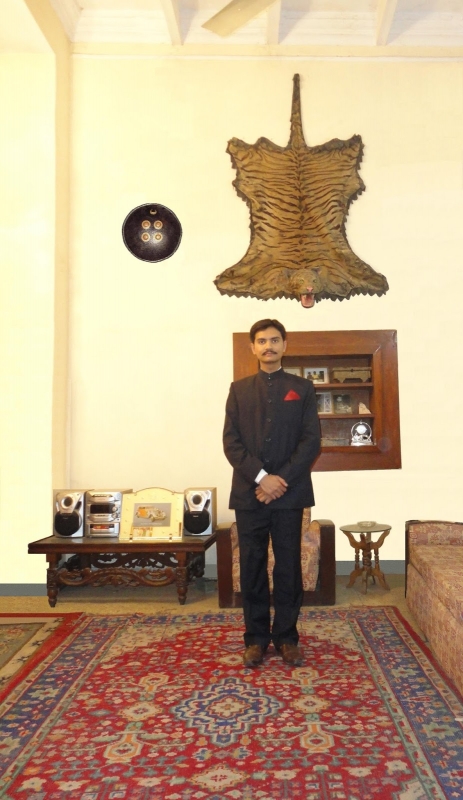
Present Head

History
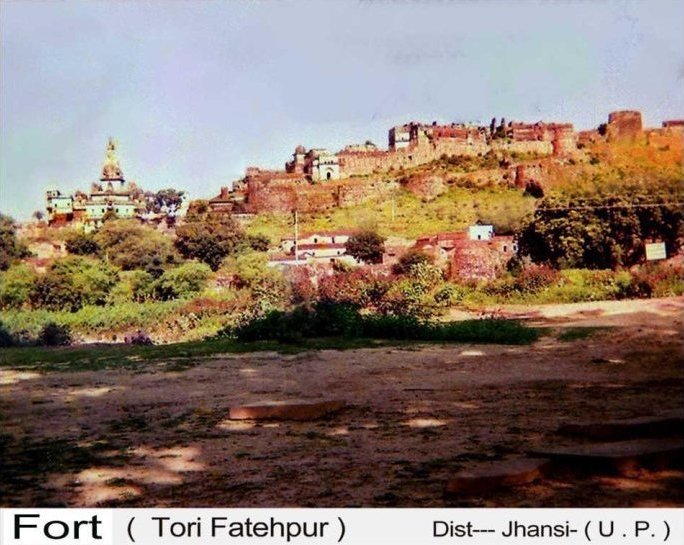
Tori Fatehpur is situated on a hillock in Jhansi District (Bundelkhand Region) of Uttar Pradesh on the Jhansi - Khajuraho Road , 30 kms East of Mauranipur and 100 kms from Jhansi.This fort is more than 300 years old and was built before the coming of the Mughals in India, its structure is made in three parts - one part of the fort has Rajasthani art and the other two parts are from Mughal and British period.
The history goes that it was under the sovereignty of Gusain Sun Jogra. In 1731 the Bundela invasion took place under a powerful ruler Diwan Hindupath Singh Ju Deo who was great, great grandson of HH Maharaja Bir Singh Ju Deo of Orchha. After winning the battle against Gusain Sun Jogra, Kuwar Hindupath was proclaimed the Diwan of Tori by his father Diwan Rai Singh as he was the eldest son, and as the fort was built on a hillock (toriya) and named it Tori and he captured Fatehpur village and got victory (fateh) thus its name became " Tori Fatehpur."
Origin and the Hasht-Bhaiya Jagirs
The princely state of Tori Fatehpur owes its origin to the expansion of the Bundela Rajput clan, which branched out from the royal house of Orchha. Diwan Rai Singh of Baragaon, a descendant of the legendary Maharaja Bir Singh Dev of Orchha, divided his extensive estates among his eight sons. This division gave rise to the historic group of estates known as the Hasht-Bhaiya (Eight Brothers) Jagirs. Over time, due to lapses and confiscations, only four of these estates survived into the British era: Tori Fatehpur, Dhurwai, Bijna, and Pahra.
Diwan Hindupat Singh Ju Deo, the eldest son of Diwan Rai Singh, conquered the territories of Tori from the local ruler Gusain Sun Jogra in 1731. He established his stronghold on a small hillock (locally known as toriya) and subsequently annexed the neighboring village of Fatehpur to commemorate his victory (fateh), thus establishing the name Tori Fatehpur.
The Maratha Influence and British Paramountcy
During the mid-to-late 18th century, the expansion of the Maratha Empire under the Peshwas severely impacted the Bundelkhand region. The Maratha Subedars of Jhansi asserted authority over the Hasht-Bhaiya jagirs, demanding tribute and military allegiance. Tori Fatehpur frequently found itself caught in geopolitical struggles between the rising Maratha influence, the Mughal Empire's waning power, and rival Bundela chiefs.
Following the fall of the Maratha Peshwa's hegemony after the Third Anglo-Maratha War, the British East India Company assumed political control over Bundelkhand. Under the policy of pacification, the British chose to recognize the hereditary rights of local chieftains who submitted to their authority. In 1823, a British Sanad (charter of allegiance and ownership) was formally granted to Diwan Har Prasad, confirming his ancestral possession of the Tori Fatehpur estate under the supervision of the Bundelkhand Agency.
Key Rulers and Administrative Developments
The rulers of Tori Fatehpur, styled as Diwans or Raos, made significant contributions to the defense, architecture, and civic life of the state:
- Diwan Har Prasad (r. early 19th Century): He stabilized the state's borders and secured British recognition through the Sanad of 1823, bringing long-awaited peace to the war-torn territory.
- Diwan Prithvi Singh (r. 1853–1880): He ruled during the turbulent period of the Indian Rebellion of 1857. While neighboring Jhansi witnessed intense fighting, Tori Fatehpur navigated the crisis by maintaining internal order and avoiding direct conflict with British forces.
- Diwan Arjun Singh (r. 1880–1940s): Known as a progressive administrator, he introduced several land revenue reforms, established primary schools, and commissioned the construction of irrigation tanks to assist local farmers.
- Rao Bahadur Diwan Bir Singh Dev (r. 1941–1948): The last ruling chief of the state, who championed modern administrative reforms and oversaw the transition of the state during the twilight of the British Raj.
Post-Independence and the Modern Era
Following India's independence in August 1947, Rao Bahadur Diwan Bir Singh Dev signed the Instrument of Accession, merging Tori Fatehpur into the Union of India. In 1948, the estate was formally integrated into the newly created state of Vindhya Pradesh. Following subsequent territorial reorganizations and the States Reorganisation Act, the territory of Tori Fatehpur was transferred to the Jhansi district of Uttar Pradesh.
Today, the magnificent fort of Tori Fatehpur remains a prominent historical landmark in Bundelkhand, attracting historians and heritage enthusiasts keen to study the unique syncretic architecture of the region.
References and Historical Citations
- To explore the official treaties and British relations with Tori Fatehpur, see A Collection of Treaties, Engagements, and Sanads Relating to India and Neighbouring Countries (Vol. V) by C.U. Aitchison.
- For historical statistics and geographical descriptions of the Hasht-Bhaiya Jagirs, refer to the Imperial Gazetteer of India (Volume 23) available on the Digital South Asia Library.
- To study the broader history of the Bundela Rajputs and the Orchha State, consult The History of the Bundelas by M.N. Khan.
Genealogy
- Raja Saheb Hindupath Singhji 1731 A.D to 1765 A.D
- Raja Saheb Mednimal Singhji 1766 A.D to 1788 A.D
- Raja Saheb Dhurmangal Singhji 1789 A.D to 1811 A.D, adopted from Bijna State.
- Raja Saheb Harprasad Singhji 1816 A.D to 1858 A.D, adopted from Bijna State.
- Raja Saheb Prithvi Singhji 1858 A.D to 1879 A.D, adopted from Bijna State.
- Raja Saheb Arjun Singhji 1879 A.D to 1942 A.D adopted from Bijna State, married to Rani Sahiba Manek Ju Raja.
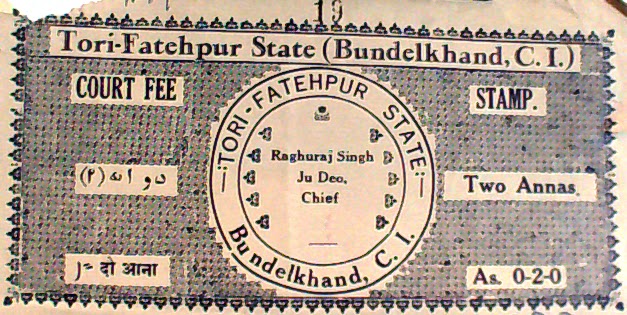
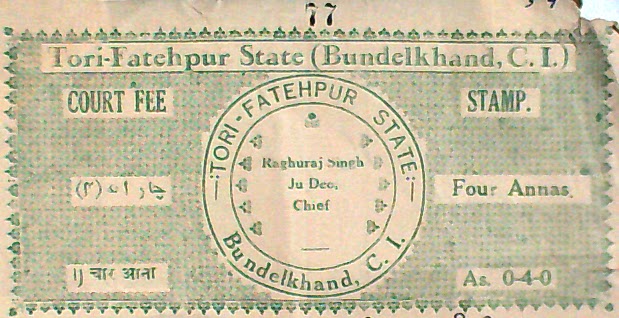
- Raja Saheb Raghuraj Singh
- Raja Saheb Raghuraj Singh Ju Deo (1942 to 1964 A.D), born A.D, married 1stly to Rani Saheba from Jharkuwa and 2ndly to Rani Sahiba Raghuvansh Kumari from Madhopur.
- Raja Saheb Brijendra Singhji (qv)
- Rajkumari Sahiba Kirti Kumari, married to Kuwar Saheb Sudhendra Narayan Singhji Deo of Seraikella.
- Rajkumari Sahiba Brijend Kumari, married to Kuwar Saheb Hanumat Singhji of Sumel (Rajasthan).
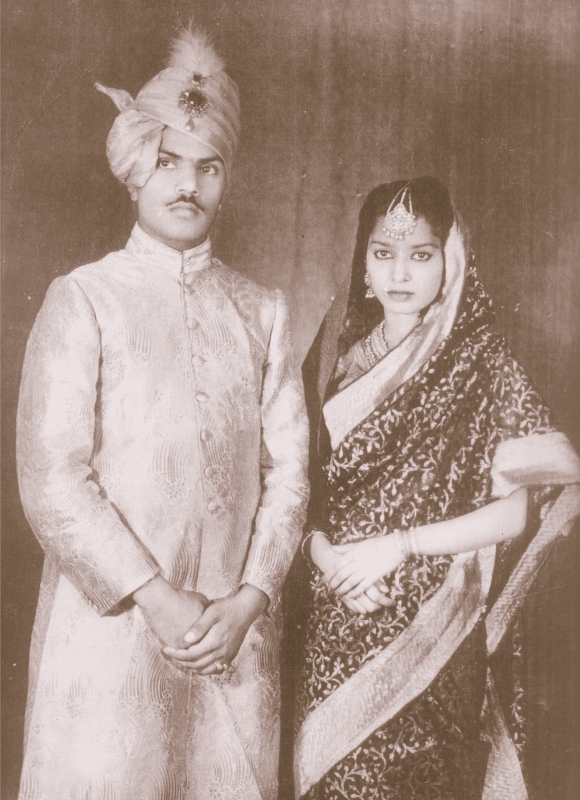
- Raja Saheb Brijendra Singh Ju Deo, born on , was the last ruling Raja, married Rani Sahiba Revati Kumari (Princesses of Haraha State, Dist-Barabanki) on 3rd July 1949. She died on . They had four issues, three sons and one daughter. He died on .
- Raja Saheb Kaushlendra Singh Ju Deo, married Rani Sahiba Aruna Kumari, daughter of Shri Thakur Saheb Harpal Singhji Chauhan and has two issues
- Rajkumari Sahiba Vijaya Kumari
- Rajkumar Saheb Vikramaditya Singh Ju Deo
- Rajkumari Sahiba Mandvi Raje, married on 7th March 1975 to Kuwar Saheb Krishan Narayan Singhji of Thikana Bhartholi, Gaya, Bihar and has two issues.
- Kumari Preeti Raje, married to Yuvraj Saheb Shivendra Singh Ju Deo, son of HH Raja Saheb Surendra Singh Ju Deo of Beri, and has issues, two sons.
- Kumari Priyanka Raje
- Raja Saheb Pushpendra Singh Ju Deo, married on 12th Dec 1977 to Rani Sahiba Ambalika Devi, daughter of HH Thakur Saheb Shri Manohar Sinhji Praduyuman Sinhji of Rajkot, by his wife, the younger daughter of HH Shri Sawai Maharaja Sir Tej Singhji Dev Bahadur of Alwar, and has issue two sons.
- Rajkumar Saheb Hemkaran Singh Ju Deo
- Rajkumar Saheb Govind Singh Ju Deo
- Raja Saheb Bhanupratap Singh Ju Deo, married on 7th July 1988 to Rani Sahiba Kiran Kumari, daughter of Kuwar Saheb Shri Ranjit Singhji of Bilkha State (Saurashtra, Gujarat) and his wife Kaurani Sahiba Ela Kumari, youngest daughter of HH Maharawat Sir Ram Singhji II Bahadur K.C.S.I of Pratapgarh State (Rajasthan) and Senior HH Maharani Sahiba Meghraj Kumari, daughter of Hon. Maharaja Bahadur Sir Keshav Prasad Singhji of Dumraon, and has issues.
- Rajkumari Sahiba Hirneshwari Kumari
- Rajkumar Saheb Manvendra Pratap Singh Ju Deo
- Raja Saheb Kaushlendra Singh Ju Deo, married Rani Sahiba Aruna Kumari, daughter of Shri Thakur Saheb Harpal Singhji Chauhan and has two issues
Notable Figures
Diwan Hindupat (c. 1690 – 1715)
Diwan Hindupat was the eldest son of Diwan Rai Singh and became the founder of the Tori Fatehpur estate in 1690. He established his capital at Tori, constructing a hilltop fortress to defend his territories from rival regional factions. Under his rule, the estate emerged as a distinct political entity under the suzerainty of Orchha, laying down the early administrative structure of the principality.
Diwan Har Prasad (c. 1823 – 1858)
Diwan Har Prasad was a significant ruler who consolidated the state's status during the expansion of British influence in Central India. In 1823, he received a formal sanad (possessional charter) from the British East India Company, which recognized his autonomous authority over Tori Fatehpur in exchange for allegiance. This treaty provided much-needed stability to the state, shielding it from external invasions during the turbulent early 19th century.
Rao Bahadur Diwan Prithvi Singh (1858 – 1880)
Succeeding to the gaddi in 1858, Rao Bahadur Diwan Prithvi Singh navigated the politically volatile period following the Indian Rebellion of 1857. He maintained cordial relations with the British Empire and was subsequently rewarded with the personal title of "Rao Bahadur". His reign was marked by administrative reforms and the revival of the state's agrarian economy, which had been disrupted by regional unrest.
Rao Bahadur Diwan Arjun Singh (1880 – 1941)
Rao Bahadur Diwan Arjun Singh succeeded to the throne as a minor in 1880. During his minority, the state was administered under the supervision of the British political agent in the Bundelkhand Agency. He was invested with full ruling powers in 1897. Over his remarkable sixty-year reign, he modernized the state's legal framework, introduced public education initiatives, and commissioned several public works, including irrigation tanks and roads.
Rao Bahadur Diwan Raghuraj Singh (1941 – 1950)
The last formal ruling chief of the state, Rao Bahadur Diwan Raghuraj Singh, ascended the gaddi in 1941. He ruled through the final years of the British Raj and the transition of India to independence. On 1 January 1948, he signed the Instrument of Accession, merging Tori Fatehpur State into the newly formed United State of Vindhya Pradesh, which was later integrated into modern India.
References and Historical Sources:- Tori Fatehpur State - Wikipedia
- Imperial Gazetteer of India, Volume 23, page 417 - Digital South Asia Library
- Memoranda on the Indian States, 1940 - Internet Archive