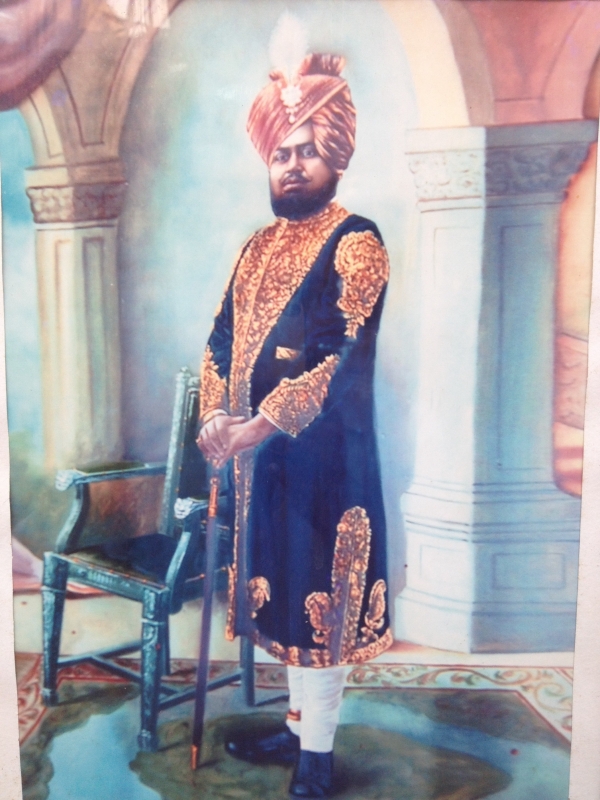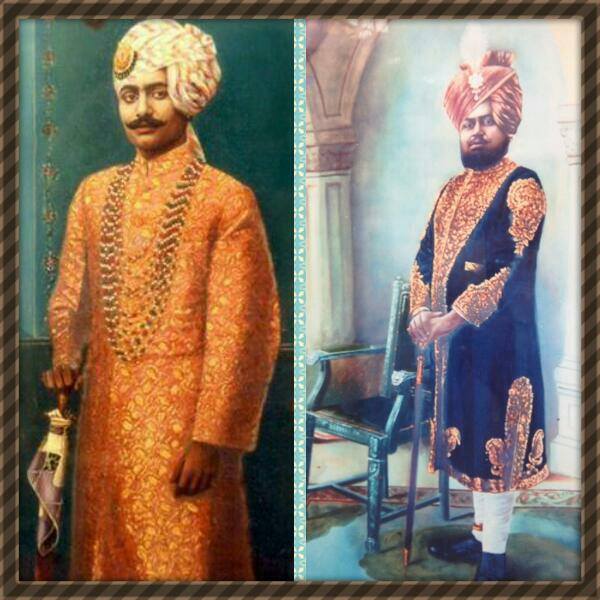
Present Head

History
Origin and Foundation of Tharad
Tharad, historically known as Thirpad or Tharapad, is an ancient town and former princely state located in the Banaskantha district of northern Gujarat, India. The origin of the state is deeply intertwined with the migration and political consolidation of the Rajput clans in the borderlands of Gujarat and Rajasthan. According to local chronicles and historical records, the territory was originally established in the 10th century by the Chauhan Rajputs, who ruled the region as feudatories and independent chieftains. The town was named after its founder, Thara Parmar, or according to other legends, derived from the word 'Thar', denoting its proximity to the Thar Desert.
The Rise of the Vaghela Dynasty
In the late 13th and early 14th centuries, the political dynamics of northern Gujarat shifted. The Chauhan dominance gave way to the Vaghela Rajputs, a prominent branch of the Solanki (Chalukya) dynasty of Anhilwad Patan. The Vaghelas of Tharad claim descent from the rulers of Sardhargadh. Following the fall of the Solanki-Vaghela empire in Patan to the Delhi Sultanate, various branches of the clan carved out independent principalities in the rugged terrains of northern Gujarat and the Kankrej region. The Vaghela chiefs established firm control over Tharad, transforming it into a secure fortress-state and defending it against frequent incursions from neighboring desert clans and central imperial forces.
Mughal and Maratha Periods
During the era of the Mughal Empire, Tharad was recognized as an influential local chiefdom. The Mughal governors of Gujarat maintained a tributary relationship with the Vaghela Thakors of Tharad, granting them semi-autonomous rights in exchange for military service and border security. The strategic location of Tharad, acting as a gateway between Gujarat, Sindh, and Rajputana, made it a crucial outpost for imperial trade routes.
With the decline of Mughal authority in the early 18th century, the region witnessed intense power struggles. The Maratha Empire, led by the Peshwa and the Gaekwad of Baroda, extended their sphere of influence into northern Gujarat. Tharad was subjected to the imposition of Chauth (tribute) by the Marathas. Despite these external pressures, the Vaghela Thakors managed to preserve their internal autonomy through strategic alliances and guerrilla resistance.
British Suzerainty and the Palanpur Agency
The turn of the 19th century brought significant challenges to Tharad, primarily due to devastating raids by the Khosas—a predatory tribe from the deserts of Sindh. Unable to repel these incursions independently, the Vaghela rulers sought the protection of the British East India Company. In 1819, British forces intervened to restore order in the region.
In 1821, Tharad formally entered into a treaty of subsidiary alliance with the British, becoming a British protectorate. The state was placed under the political supervision of the Palanpur Agency (later reorganized as the Banaskantha Agency of the Western India States Agency). Under British administration, the boundaries of the state were secured, and the tribute payable to the Gaekwad of Baroda was mediated and fixed. Notable rulers like Thakor Vakhatsinhji focused on administrative reforms, agricultural development, and maintaining peaceful relations with neighboring states like Radhanpur and Vav.
Post-Independence and the Modern Era
Following India's independence in 1947, the last ruling Thakor of Tharad signed the Instrument of Accession to the Union of India. In 1948, the state was officially merged into the Bombay Province. Following the linguistic reorganization of states in 1960, Tharad became an integral part of the newly formed state of Gujarat.
Today, Tharad is a bustling municipality and a key agricultural hub in the Banaskantha district. The legacy of the Vaghela Rajputs survives in the local culture, historical monuments, stepwells, and temple architecture that dot the region. The modern town continues to thrive as an important center for trade, connecting the border areas of Gujarat with southwestern Rajasthan.
Historical References and External Links
- To read more about the administrative history of the Palanpur Agency and Tharad during the British Raj, consult the Gazetteer of the Bombay Presidency: Cutch, Palanpur, and Mahi Kantha (1880) on the Internet Archive.
- For geographical and modern demographic details of the region, visit the official Banaskantha District Administration Portal.
- Read a detailed overview of the town's history on the Tharad Wikipedia Page.
Genealogy
- Thakore Shri KHANJI, 1st Thakore Saheb of Tharad 1759/1786, a descendant of the Vaghela Chief of Sardhar, founded Tharad in 1759, married and had issue. He died .
- Kumar Shri Anandsinhji Khanji
- Thakore Shri Harbhamji Khanji (qv)
- Thakore Shri Karansinhji Khanji (qv)
- Thakore Shri HARBHAMJI KHANJI, 2nd Thakore Saheb of Tharad 1786/1823, died .
- Thakore Shri KARANSINHJI KHANJI, 3rd Thakore Saheb of Tharad 1823/1859, married and had issue. He died .
- Yuvraj Saheb Vanaji Karansinhji, married and had issue.
- Thakore Shri Khengarji Vanaji (qv)
- Kumar Shri Bhupatsinhji Vanaji
- Kumar Shri Prathirajsinhji Vanaji
- Kumar Shri Prabhatsinhji Karansinhji
- Yuvraj Saheb Vanaji Karansinhji, married and had issue.
- Thakore Shri KHENGARSINHJI VANAJI, 4th Thakore Saheb of Tharad 1859/1892, born , married and had issue. He died .
- Thakore Shri Abhaisinhji Khengarji (qv)
- Thakore Shri ABHAISINHJI KHENGARJI, 5th Thakore Saheb of Tharad 1892/1910, married and had issue. He died .
- Thakore Shri Daulatsinhji Abhaisinhji (qv)
- Kumar Shri Raisinhji Abhaisinhji
- Kumar Shri Samtsinhji Raisinhji.
- Kumar Shri Bahadursinhji Samtsinhji
- Kumar Shri Balvantsinhji Bahadursinhji
- Kunwar Lavendra Singh Balvantsinhji, born .
- Kunwar Kuspendra Singh Balvantsinhji
- Kumar Shri Balvantsinhji Bahadursinhji
- Kumar Shri Bahadursinhji Samtsinhji
- Kumar Shri Samtsinhji Raisinhji.
- Kumar Shri Sardarsinhji Abhaisinhji, married and had issue.
- HH Rani Hari Kunwarba Sahiba, married (as his third wife), HH Raj Sahib Sir Ajitsinhji Jashwantsinhji of Dhrangadhra.
- Thakore Shri DAULATSINHJI ABHAISINHJI, 6th Thakore Saheb of Tharad 1910/1921, born , succeeded 23rd January 1911, married and had issue. He died .
- Thakore Shri Bhimsinhji Daulatsinhji (qv)
- Kumar Shri Kesarsinhji Daulatsinhji
- Kumar Shri Devisinhji Kesarsinhji
- Kumar Shri Dhirajsinhji Devisinhji
- Kumar Shri Narpatsinh Dhirajsinhji
- Kumar Shri Yuvrajsinh Dhirajsinhji
- Kumar Shri Hadmatsinhji Devisinhji
- Kumar Shri Aniruddhsinh Hadmatsinhji
- Kumar Shri Hindusinhji Devisinhji
- Kumar Shri Dashrathsinh Hindusinhji
- Kumar Shri Dhirajsinhji Devisinhji
- Kumar Shri Devisinhji Kesarsinhji
- Kumar Shri Bhagwansinhji Daulatsinhji
- Kumar shri Natwarsinhji Bhagwansinhji
- Kumar shri Karansinhji Natwarsinhji
- Kumar shri Himmatsinhji Karansinhji
- Kumar shri Tanerajsinhji Himmatsinhji
- Kumar shri Ravirajsinhji Himmatsinhji
- Kumar shri Swaroopsinhji Karansinhji
- Kumar shri RajyvardhanSinhji Swaroopsinhji
- Kumar shri Himmatsinhji Karansinhji
- Kumar shri Karansinhji Natwarsinhji
- Kumar shri Manharsinhji Bhagwansinhji
- Kumar shri Udaysinhji Manharsinhji
- Kumar shri Ajeetsinhji Udaysinhji
- Kumar shri Virendrasinhji Udaysinhji
- Kumar shri Udaysinhji Manharsinhji
- Kumar shri Natwarsinhji Bhagwansinhji
- Thakore Shri BHIMSINHJI DAULATSINHJI, 7th Thakore Saheb of Tharad 1921/-, born and succeeded 19th February 1921, educated at Rajkumar College, Rajkot, married and had issue, five sons and one daughter.
- Thakore Shri Jorawarsinhji Bhimsinhji (qv)
- Kumar Shri Vijaysinhji Bhimsinhji, married and had issue, two sons.
- Kumar Shri Parveensinhji Vijaysinhji, married and had issue, two sons.
- Kumar Shri Kishansinhji Parveensinhji
- Kumar Shri Vikram Singh
- Kumar Shri Shripal Singh
- Kumar Shri Balwantsinhji Parveensinhji
- Kumar Shri Jaswant Singh
- Kumar Shri Bhanupratap Singh
- Kumari Anu Kanwar
- Kumari Dasrath Kanwar Parveen Singh Ji Vaghela, married in Bakhasar Dist.Barmer (Raj.)
- Kumari Kiran Kanwar Parveen Singh Ji Vaghela, married in Mandoli nagar Dist.jalore (Raj.)
- Kumari Mina Kanwar Parveen Singh Ji Vaghela, married in Kalapura Dist. Jalore (Raj.)
- Kumari Sohan Kanwar Parveen Singh Ji Vaghela, married in Panchota Dist. Jalore (Raj.)
- Kumar Shri Kishansinhji Parveensinhji
- Kumar Shri Midhusinhji Vijaysinhji, married and had issue, one son.
- Kumar Shri Baldevsinhji Midhusinhji
- Swaroop Kanwarba, married in Thikana Elana, district Jalore.
- Sajjan Kanwarba, married in Thikana Badoda Ganv, district Jaisalmer.
- Santosh Kanwarba, married in Thikana Panchota, district Jalore.
- Kumar Shri Parveensinhji Vijaysinhji, married and had issue, two sons.
- Kumar Shri Madhavsinhji Bhimsinhji, married and had issue, two sons.
- Kumar Shri Janaksinhji Madhavsinhji, married and has issue, two sons.
- Kumar Jaideepsinh Janaksinhji
- Kumar Shri Dhurav Singh
- Kumar Arjunsinh Janaksinhji
- Kumar Kirtiraj Singh Arjun Singh
- Kumar Jaideepsinh Janaksinhji
- Kumar Shri Harishchandrasinhji Madhavsinhji
- Kumar Shri Janaksinhji Madhavsinhji, married and has issue, two sons.
- Kumar Shri Radmalsinhji Bhimsinhji, married and had issue, one daughter.
- Kumari Kailashkuwar
- Kumar Shri Jagdishsinhji Bhimsinhji, married and had issue, one son.
- Kumar Surandarsinh Jagdishsinhji
- Kumar Shri Sawai Singh
- Kumar Surandarsinh Jagdishsinhji
- Kumari Nirmala Kumari, married Kumar Shri Divyarajsinhji Kishorsinhji Zala of Lakhtar, and has issue, one son.
- Thakore Shri JORAWARSINHJI BHIMSINHJI, 8th Thakore Saheb of Tharad, married and had issue.
- Thakore Shri Bharatsinhji Jorawarsinhji Vaghela (qv)
- Thakore Shri BHARATSINHJI JORAWARSINHJI, 9th Thakore Saheb of Tharad educated at Rajkumar College, Rajkot; married August 2008, a Kumari of Thikana Akhawas in Jodhpur, Rajasthan and has issue. He died on .
- Kumar Shri Mahaveersinhji Bharatsinhji Vaghela (qv)
- Thakore Shri MAHAVEERSINHJI BHARATSINHJI, 10th Thakore Saheb of Tharad (see above)
- Kumari (name unknown), married Bhanwar Anu Vikram Singh of Karjali, and has issue.